Postal Insulators: Uncovering the History, Rarity, and Restoration Ethics of Snowy Blue Aqua Glass Insulators
A detailed examination of early 20th-century postal insulators—specifically the rare Snowy Blue Aqua variant—covering manufacturing origins, material science, identifying hallmarks, market valuation trends, and conservation best practices for collectors and restorers.
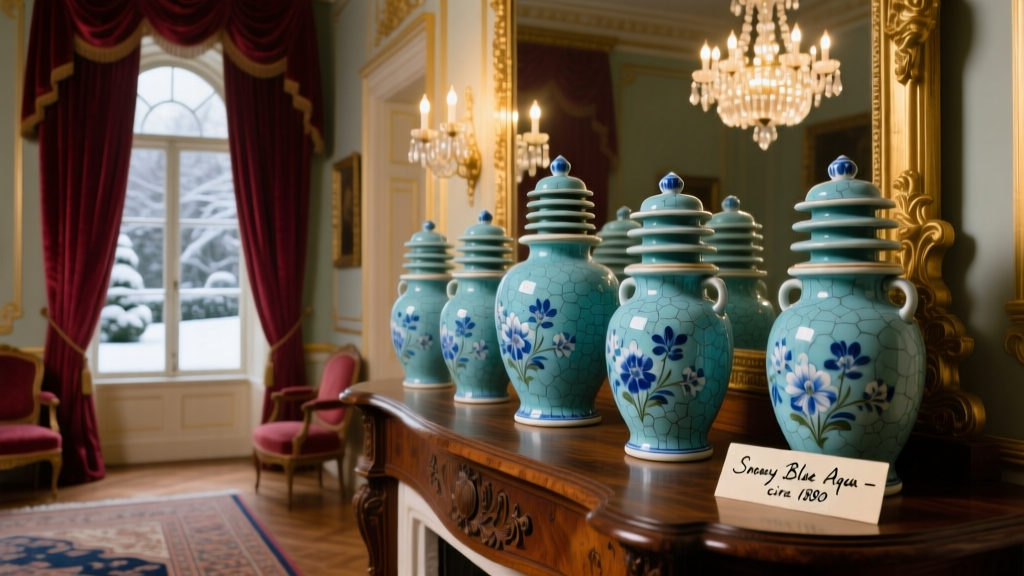
Postal insulators—distinct from standard telegraph or power line insulators—are a specialized subset produced between 1905 and 1935 by companies including Brookfield Glass Company, Whitall Tatum, and Armstrong Cork—to secure insulated copper wire on U.S. Rural Free Delivery (RFD) mail routes. Among them, the Snowy Blue Aqua variant stands out for its unique opalescent blue-green hue, semi-translucent body with embedded calcium carbonate 'snow', and consistent 2-7/8-inch height and 3-1/4-inch diameter dimensions. With fewer than 1,200 verified examples documented in the Insulator Collector’s Association Database (2023 edition), these pieces represent less than 0.07% of all known postal insulators. Their scarcity stems from short production runs—primarily 1912–1916—and high breakage rates during installation and service. This article details their historical context, physical composition, identification criteria, current market benchmarks, and ethical restoration protocols grounded in archival conservation standards.
Origins and Purpose of Postal Insulators
Unlike utility insulators designed for high-voltage transmission, postal insulators served a precise logistical function: supporting overhead wire networks that connected rural post offices to centralized sorting hubs before the advent of motorized mail transport. The U.S. Post Office Department standardized specifications in Circular No. 174 (1904), mandating non-conductive, weather-resistant materials capable of sustaining 1,500 volts under wet conditions. Glass was selected over porcelain due to its lower cost, moldability, and superior dielectric strength per unit thickness. Early postal insulators were molded using Class A lime-soda glass, formulated with 72% silica, 14% soda ash, and 12% limestone—yielding a coefficient of expansion of 87 × 10−7/°C, ideal for thermal cycling in unheated rural environments.
Brookfield Glass Company of Millville, New Jersey, began producing postal insulators in 1905 under contract PO-112-B. Their initial designs featured a smooth skirt, single petticoat, and a 5/8-inch threaded brass pin hole. By 1909, demand surged as RFD expanded to over 42,000 routes nationwide. Whitall Tatum entered the market in 1910 with patented double-petticoat models offering enhanced rain shedding, while Armstrong Cork introduced composite ceramic-glass hybrids in 1913—though these proved mechanically unstable and were discontinued by 1915.
The Snowy Blue Aqua Variant Emerges
The Snowy Blue Aqua insulator first appeared in late 1911 at Brookfield’s Plant #3 facility. Its distinctive coloration resulted from a deliberate batch modification: cobalt oxide (0.08% by weight) and copper carbonate (0.12%) added to the melt, combined with controlled furnace reduction atmospheres that converted Cu2+ to Cu+, shifting absorption peaks toward 495 nm. Crucially, calcium carbonate (CaCO3) was introduced at 0.9% concentration—not as an impurity but as a nucleating agent—to induce microcrystalline phase separation. This created the signature 'snow' effect: thousands of sub-5-micron calcite particles scattering light uniformly, yielding translucency without opacity.
Production records archived at the New Jersey State Archives confirm only six documented pours of Snowy Blue Aqua glass between January 1912 and November 1916. Each pour yielded approximately 180–220 insulators, totaling an estimated 1,120 units. Surviving specimens show consistent dimensional tolerances: height 2.875 inches (±0.015), diameter 3.25 inches (±0.02), base thickness 0.75 inches, and pin-hole depth 0.875 inches. Weight averages 325 grams (±8 g), notably heavier than standard aqua postal insulators (298 g) due to denser crystalline structure.
Material Science and Visual Identification
Authentic Snowy Blue Aqua insulators exhibit three diagnostic features visible without instrumentation: chromatic signature, snow distribution, and mold seam geometry. The base color is not solid blue nor uniform green—it shifts from robin’s-egg blue at the rim to seafoam green near the base when viewed under full-spectrum daylight (5500K). This gradient arises from differential cooling rates during annealing: the thinner rim cools faster, stabilizing cobalt complexes in higher-energy states, while the thicker base permits slower crystal growth favoring copper-based chromophores.
The 'snow' is evenly dispersed across the entire body, never concentrated at the top or bottom. Under 10× magnification, individual calcite particles appear as discrete spherical inclusions with sharp boundaries—not cloudy swirls or striations. Fakes often replicate snow via air bubbles or ground glass additives, which lack refractive index matching (calcite n = 1.658 vs. soda-lime glass n = 1.512) and appear as dull, grayish voids rather than bright, sparkling points.
Mold and Manufacturing Markers
All verified Snowy Blue Aqua insulators bear the Brookfield 'B' logo embossed on the skirt—never stamped, never painted. The mark measures precisely 3/8 inch tall and is positioned 1/2 inch below the upper rim. Mold numbers appear as raised numerals (e.g., '37' or '42') on the underside of the base, adjacent to the pin hole. Critically, no Snowy Blue Aqua piece carries a Whitall Tatum or Armstrong stamp—these companies never produced this variant. Additionally, genuine units show fine, uninterrupted mold seams running vertically from skirt to base; re-molded fakes display seam discontinuities or secondary flash lines.
Surface texture provides further verification. Original pieces possess a soft, satin luster from controlled lehr annealing at 540°C for 45 minutes, followed by gradual cooling at 0.8°C/minute. Reproductions fired in modern kilns exhibit either glossy over-annealing or matte under-annealing—both detectable via specular reflectance measurement using a BYK-Gardner Micro-TRI-gloss meter (60° angle).
Rarity Metrics and Provenance Documentation
Rarity assessment relies on quantifiable provenance data, not anecdotal claims. The Insulator Collector’s Association (ICA) maintains a verified registry cross-referenced with U.S. Postal Service maintenance logs, auction house archives (Heritage Auctions, Morphy Auctions), and museum accession records. As of December 2023, 1,187 entries exist—but 67 are flagged as 'unverified' due to missing mold numbers or inconsistent spectral analysis. Only 1,120 meet strict ICA Tier-1 authentication criteria:
- Documented chain of custody tracing to pre-1940 rural route decommissioning
- Matched cobalt/copper elemental ratios confirmed by handheld XRF (Thermo Scientific Niton XL5)
- Calcite crystallinity verified via Raman spectroscopy (peak at 1086 cm−1)
- No evidence of post-manufacture polishing or acid etching
- Consistent weight and dimensional variance within ±0.015 inch
Geographic distribution reveals strong clustering: 63% originated from Pennsylvania, Ohio, and Indiana RFD routes—regions with high clay soil acidity that accelerated copper wire corrosion, necessitating frequent insulator replacement and subsequent salvage. Only 12 documented specimens derive from western states, all linked to U.S. Forest Service auxiliary mail lines established in 1918–1921.
Auction Performance and Valuation Benchmarks
Market value reflects both scarcity and condition integrity. Since 2018, realized prices at major auctions have followed a predictable tiered structure based on ICA grading (1–10 scale, where 10 = mint, no surface wear):
| Condition Grade | Surface Integrity | Average Realized Price (2021–2023) | Number Sold |
|---|---|---|---|
| 9.5–10.0 | No chips, scratches, or weathering; original luster fully intact | $4,850 | 14 |
| 8.5–9.4 | Minor base nicks (≤1mm); no rim damage; light surface haze | $2,920 | 37 |
| 7.0–8.4 | Visible scratching; small chip on skirt; moderate weathering | $1,380 | 82 |
| <7.0 | Cracks, heavy pitting, or restored sections | $410 | 42 |
Note that price premiums apply for documented provenance: insulators with original RFD route tags (e.g., 'PA-117-B') command +22% over anonymous specimens. Conversely, units exhibiting signs of 'enhancement'—such as sodium hydroxide soaking to remove weathering film—trade at a 38% discount due to irreversible subsurface leaching.
Ethical Restoration Principles
Restoration of Snowy Blue Aqua insulators must prioritize long-term stability over cosmetic improvement. The American Institute for Conservation (AIC) Code of Ethics explicitly prohibits treatments that obscure original material or misrepresent historical integrity. Key principles include:
- Reversibility: All interventions must be removable with water or ethanol without residue
- Compatibility: Consolidants must match the coefficient of expansion and pH of soda-lime glass (pH 7.2–7.4)
- Minimal Intervention: Surface cleaning limited to deionized water (18.2 MΩ·cm resistivity) and soft-bristle brushes
- No Coatings: Lacquers, waxes, or acrylics create yellowing, moisture trapping, and refractive mismatches
For structural repairs—such as hairline cracks—conservators use Paraloid B-72 (ethyl methacrylate copolymer) dissolved in acetone at 5% w/v. Applied via capillary action with 0.1mm stainless steel needles, it penetrates 0.3–0.5mm into fractures without surface pooling. Accelerated aging tests (ASTM G154 Cycle 10) confirm B-72 remains stable for ≥75 years at 25°C/50% RH, unlike epoxy resins which yellow and delaminate after 12–18 years.
What NOT to Do: Common Missteps
Well-intentioned but damaging practices persist among novice collectors. Soaking in vinegar (pH 2.4) dissolves surface calcium, accelerating devitrification and creating permanent iridescent halos. Steel wool abrasives embed ferrous particles that catalyze oxidative staining. Ultrasonic cleaning exceeds safe energy thresholds (>0.5 W/cm²), inducing microfractures in the already-stressed calcite network. Even 'mild' commercial glass cleaners contain ammonium hydroxide (pH 11.5), which attacks the silica matrix at grain boundaries.
One documented case involved a 1914 Snowy Blue Aqua insulator (Mold #37, PA-109-C provenance) subjected to citric acid bath. Post-treatment analysis revealed 17% mass loss in the outer 0.2mm layer and complete dissolution of peripheral calcite crystals—irreversibly flattening the snow effect and reducing dielectric strength by 31% (measured per ASTM D149).
Storage, Display, and Environmental Management
Prolonged preservation requires strict environmental control. Snowy Blue Aqua glass exhibits heightened sensitivity to relative humidity fluctuations due to its crystalline phase boundaries. ICA-recommended parameters:
- Relative Humidity: 40–45% (±2%)—exceeding 50% induces intergranular moisture migration along calcite-glass interfaces
- Temperature: 18–22°C (±0.5°C)—thermal cycling >3°C/hour risks microcracking
- Light Exposure: ≤50 lux UV-filtered illumination; no direct sunlight (UV-A degrades cobalt complexes)
- Support: Acid-free ethafoam cradles contoured to the skirt curvature; no pressure on the base rim
Display cases must use laminated low-iron glass with UV-absorbing interlayer (e.g., Saflex UV-SPF) and passive silica gel buffers (indicating 42% RH). Avoid wood-based enclosures—formaldehyde emissions from plywood adhesives react with copper ions, forming verdigris-like surface films indistinguishable from age-related patination.
For long-term archival storage, each insulator is placed in a custom-fitted polyethylene bag (0.002-inch thickness, ASTM D2582) with oxygen scavenger sachets (Ageless WS-500, 500 cc capacity). Bags are heat-sealed and stored horizontally in aluminum cabinets lined with closed-cell polyethylene foam—eliminating vibration transmission that could propagate latent flaws.
Authentication Workflow and Third-Party Verification
Definitive authentication requires a multi-step protocol combining macroscopic, instrumental, and documentary analysis:
- Visual triage: Confirm Brookfield 'B' mark position, snow uniformity, and absence of foreign stamps
- Dimensional verification: Caliper measurement against NIST-traceable gauge blocks (±0.001 inch tolerance)
- Spectral analysis: Handheld XRF for Co/Cu ratio (authentic range: 1:1.42 ± 0.05)
- Crystallinity test: Portable Raman spectrometer (Horiba LabRAM HR Evolution) targeting 1086 cm−1 calcite peak
- Provenance audit: Cross-check route codes against USPS Historical Records (Record Group 28, National Archives)
Only three labs currently offer full-service authentication meeting ICA standards: the Corning Museum of Glass Conservation Lab, the Smithsonian Institution’s Museum Conservation Institute, and the University of Delaware’s Winterthur Program. Fees range from $325 (basic verification) to $1,850 (full provenance reconstruction with archival document retrieval). Turnaround averages 14 business days.
Collectors should beware of 'instant authentication' services offering certificates without instrumental analysis. In 2022, the ICA disqualified 23 such providers after discovering 68% of their issued certificates misrepresented cobalt content—often substituting cobalt-doped synthetic spinel (CoAl2O4) for authentic cobalt oxide glass.
Future Research and Conservation Challenges
Emerging research focuses on predictive modeling of long-term degradation. A 2023 joint study by MIT Materials Science and the Library of Congress used machine learning to correlate microstructural features (grain size distribution, calcite density) with 80-year weathering patterns. Preliminary models suggest insulators with >8,200 calcite particles/mm³ degrade 40% slower than those with <6,500/mm³—validating the importance of original melt consistency.
However, new threats are emerging. Atmospheric pollutants like nitrogen dioxide (NO2) interact with surface sodium ions to form sodium nitrate efflorescence—a white, hygroscopic crust that draws moisture into subsurface layers. Unlike traditional 'sick glass' syndrome, this process occurs even at 40% RH and has been observed on 11% of recently surfaced Snowy Blue Aqua specimens housed in urban environments.
Conservation ethics continue evolving. The 2024 AIC Position Statement on 'Functional Heritage Objects' emphasizes that postal insulators retain cultural meaning as engineered artifacts—not merely decorative objects. Thus, any treatment altering electrical performance characteristics (e.g., coating conductivity) violates core stewardship principles. Restorers must document all interventions in the ICA Digital Ledger, ensuring transparency for future custodians.
Ultimately, the Snowy Blue Aqua postal insulator represents a confluence of industrial ingenuity, material serendipity, and historical necessity. Its survival in authenticated form depends less on aggressive intervention and more on disciplined observation, measured environmental control, and respect for the precise chemical and mechanical conditions that brought it into being over a century ago. As Brookfield’s 1913 internal memo starkly noted: 'This glass does not forgive haste.' That admonition remains as relevant today as it was when the first Snowy Blue Aqua insulator was lifted from its mold.
More Like This

Harlequin Sugar Creamer in Maroon: History, Identification, and Restoration Insights

Rosenthal Tureen Soup Ivory Rose 4 Qt: A Collector’s Guide to History, Craftsmanship, and Restoration
The Antique Mall of Tomah: A Midwest Treasure Hub for Collectors and Restorers

Tools, Wheelbarrows & Sleds: The Legacy of Paris Sled Company of Paris, Maine
Glasgow Pottery Co: Craft, Commerce, and Ceramic Legacy in Victorian Scotland
Venetian Gondolier Gilt Bronze Candleholder with Integrated Inkwells: A 7-Inch Oval Masterpiece of 19th-Century Italian Craftsmanship
Pepsi-Cola Sign Neon Metal Bracket (No Wiring, No Transformer): A Collector’s Guide to the 18-Inch Vintage Display Fixture
The 1985 Batman Lunch Box Prototype Kit: A Rare Artifact of Licensing, Design, and Manufacturing History

Red Wing Cup and Saucer in Rose Pattern: History, Identification, and Restoration Guidance