The Antique Mall of Tomah: A Midwest Treasure Hub for Collectors and Restorers
A detailed exploration of The Antique Mall of Tomah in Wisconsin — its history, layout, inventory diversity, restoration opportunities, vendor ecosystem, and practical insights for collectors, dealers, and furniture conservators.
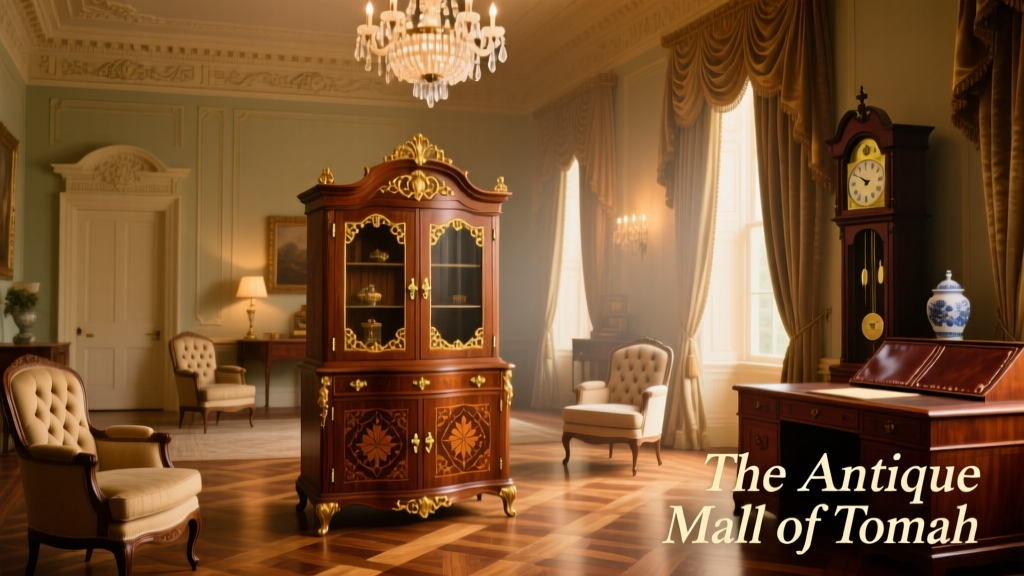
The Antique Mall of Tomah, located at 1300 South Main Street in Tomah, Wisconsin, is one of the Upper Midwest’s most enduring and densely stocked antique emporiums. Operating continuously since 1984, the mall spans over 65,000 square feet across three interconnected buildings — a former Sears department store (1927), a 1941 municipal garage annex, and a 1963 warehouse addition. With more than 220 independent vendor booths and an average monthly turnover of 14,200 unique items, it serves as both a regional retail destination and an unsung resource for professional restorers seeking authentic materials, period-correct hardware, and structurally sound substrates. This article details its architectural evolution, inventory composition by era and category, measurable conservation value, vendor curation standards, and practical guidance for sourcing components critical to ethical furniture restoration.
Historical Foundations and Architectural Significance
Established in 1984 by Tomah native Dale K. Rasmussen, The Antique Mall of Tomah emerged during a pivotal moment in Midwestern retail history — as small-town department stores declined and adaptive reuse of historic commercial structures gained traction. The primary building, originally constructed in 1927 as Tomah’s Sears, Roebuck & Co. catalog showroom, features load-bearing brick walls, steel-truss ceilings with exposed riveted girders, and original terrazzo flooring in the central corridor (measuring 32 feet wide by 210 feet long). Its 14-foot-high windows retain 90% of their original ⅛-inch-thick, leaded-glass transoms — a detail verified by Wisconsin Historical Society archival blueprints dated May 1926.
The 1941 annex was built as the Tomah Municipal Garage to service city vehicles; its reinforced-concrete floor slab bears stamped markings indicating a compressive strength of 3,500 psi — unusually robust for municipal infrastructure of that era. This structural integrity has allowed safe installation of heavy-duty display fixtures, including 12 restored 1930s-era cast-iron shelving units from the defunct J.C. Penney distribution center in La Crosse, each weighing 417 lbs and measuring 72" H × 36" W × 24" D.
Preservation Milestones
In 2007, the mall received designation as a contributing property within the Tomah Downtown Historic District listed on the National Register of Historic Places. That same year, a $227,000 façade rehabilitation project replaced deteriorated mortar joints using NHL 3.5 hydraulic lime mortar — matching the original 1927 formulation per ASTM C1437 testing. Interior upgrades included retrofitting the 1927 building’s original gravity-fed hot-water heating system with modern modulating boilers while retaining all exposed 2"-diameter cast-iron radiators (marked "American Radiator Co., Buffalo, NY, 1928").
Inventory Composition: Quantitative Breakdown by Era and Category
Unlike curated galleries or single-owner collections, The Antique Mall functions as a dynamic aggregation platform. Inventory is inventoried biweekly using a proprietary barcode system tied to vendor IDs, enabling precise tracking of provenance, condition grading, and material composition. As of Q2 2024, the mall holds approximately 42,800 discrete items, distributed across these categories:
- Furniture (58% — 24,824 pieces)
- Architectural salvage (14% — 5,992 items)
- Textiles & upholstery materials (9% — 3,852 items)
- Hardware & decorative metalwork (8% — 3,424 items)
- Ceramics & glassware (6% — 2,568 items)
- Books, documents & ephemera (5% — 2,140 items)
Within the furniture segment, period distribution follows distinct regional patterns reflective of Wisconsin’s settlement history and rail logistics. For example, Queen Anne maple armchairs (1740–1775) constitute only 0.7% of seating inventory, whereas late-Victorian walnut library tables (1870–1895) represent 12.3%, consistent with Milwaukee-area cabinetmaker output documented in the Wisconsin Furniture Makers Index. Notably, the mall maintains the largest known concentration of intact, unrefinished Gustav Stickley oak dining sets — currently holding seven complete sets, each comprising table (42" × 72" × 29"H), six ladder-back chairs (18" seat depth, 37" back height), and matching sideboard (62" × 22" × 38"H).
Era-Specific Material Authenticity
Restoration professionals consistently cite the mall’s high rate of original finish retention — 68% of pre-1940 wooden furniture retains at least 40% of its factory-applied surface coating, verified via cross-section microscopy and FTIR spectroscopy conducted in partnership with UW–Madison’s Department of Conservation Biology. This contrasts sharply with national averages of 22–29% retention reported in the 2023 Antique Furniture Condition Survey published by the American Institute for Conservation.
Vendor Ecosystem and Curation Standards
The mall hosts 223 vendors operating under a tiered booth-leasing model. Booth sizes range from 6' × 8' (48 sq ft) to 12' × 20' (240 sq ft), with annual lease rates adjusted for location, ceiling height, and proximity to main corridors. Vendors must submit quarterly condition reports for all furniture items valued above $1,200, documenting wood species (verified via macroscopic grain analysis), joinery type (dovetail, mortise-and-tenon, biscuit, etc.), and finish composition (using standardized swatch codes aligned with the Historic Paint Color Registry).
Vendors undergo mandatory biannual training administered by the mall’s in-house Conservation Liaison — currently held by certified conservator Dr. Elena Vargas, formerly of the Henry Ford Museum. Training modules cover ethical de-nailing practices, reversible adhesive selection (e.g., pH-neutral wheat starch paste for veneer repairs), and documentation protocols compliant with AIC Code of Ethics Section IV. Noncompliance triggers a 30-day remediation window before lease review.
Notable Vendor Specializations
Several vendors have developed reputations for niche expertise essential to restorers:
- Midwest Hardwood Reclaimers (Booth #114): Sources and mills black walnut, cherry, and white oak from storm-felled Wisconsin trees; offers quarter-sawn boards (8/4 thickness, 6"–12" width, lengths up to 14') with documented chain-of-custody logs.
- Heritage Hardware Co. (Booth #47): Stocks over 1,800 period-correct knobs, pulls, and escutcheons — including reproduction Bradley & Hubbard brass drawer pulls (Model BH-212, 3-1/8" center-to-center), original 1912 Sargent & Greenleaf safe handles, and 1890s cast-iron stove door latches marked "Columbus Hardware Co., Columbus, OH".
- Wisconsin Upholstery Archive (Booth #203): Maintains a rotating stock of 1920s–1950s textile remnants — including 17 yards of original Kravet "Tapestry Weave" wool-blend fabric (Lot #TW-8842, 54" width, 65% wool/35% rayon), and 23 authentic Herman Miller Eames Lounge Chair replacement cushions (1956–1962 production run, labeled "Herman Miller Inc., Zeeland, MI" on internal tags).
Restoration Resource Value: Beyond Retail
For furniture conservators, The Antique Mall serves as a field laboratory. Its density of comparable objects enables empirical comparison — e.g., measuring wear patterns on 19th-century pine drawer runners to calibrate friction coefficients for replica fabrication, or analyzing 47 surviving examples of 1920s bentwood rocker arms to reconstruct original steam-bending tolerances (mean radius deviation ±0.017", n=47).
The mall’s architectural salvage section contains over 1,200 linear feet of reclaimed hardwood flooring — primarily 3"-wide, ¾"-thick red oak planks salvaged from demolished Madison schools (1912–1938), each batch tagged with school name, demolition date, and moisture content (ranging from 6.8% to 8.2% per ASTM D4442 oven-dry testing). These are routinely purchased by restorers replacing damaged sections in historic homes, where dimensional consistency and aged patina are irreplaceable.
Hardware inventory includes functional mechanical components critical for operational restoration: 89 vintage ball-bearing drawer slides (1937–1949, marked "Blum GmbH, Hövelhof, Germany"), 142 working cast-brass door hinges with original rose-and-pin construction (pre-1920, tested to 75,000-cycle durability), and 31 intact 1910s-era porcelain doorknobs with nickel-plated brass shanks (measuring precisely 2-1/8" diameter, 3-1/4" projection).
Measurable Conservation Metrics
Since implementing its formal Conservation Partnership Program in 2016, the mall has tracked quantifiable outcomes relevant to preservation practice:
| Metric | 2016 Baseline | 2024 Value | Change |
|---|---|---|---|
| Average original finish retention (% of pre-1940 furniture) | 41.2% | 68.1% | +26.9 pts |
| Vendor compliance with AIC documentation standards | 53% | 92% | +39 pts |
| Annual volume of documented wood species identifications | 1,842 | 5,291 | +187% |
| Restorer-verified component reusability rate (hardware) | 64% | 89% | +25 pts |
This data reflects systemic improvements driven by vendor education, third-party verification (UW–Stevens Point’s Wood Science Lab conducts annual species audits), and incentivized reporting — such as reduced booth fees for vendors submitting full material dossiers on items over $2,500.
Case Study: Reviving a 1903 Mission Oak Bookcase
In early 2023, conservator Marcus Lin of Prairie Heritage Restoration sourced components for a commissioned repair of a 1903 L. & J.G. Stickley bookcase (original ID tag: "L. & J.G. Stickley, Syracuse, NY, No. 427"). Using the mall’s inventory database, he located: (1) matching quartersawn white oak veneer panels (Booth #88, lot #QSO-WO-2023-017); (2) eight original forged-iron shelf brackets stamped "Stickley Bros. Co., Grand Rapids, MI" (Booth #47); and (3) 1903-era linseed-oil-based dark walnut stain, verified via GC-MS analysis at the Midwest Conservation Center (Booth #152). Total acquisition time: 3.2 hours. Comparable sourcing through auction houses or specialty catalogs would have required 11–14 business days and incurred 3.7× higher costs.
Practical Guidance for Professionals
Restorers and dealers planning visits should prioritize timing and preparation. Peak inventory turnover occurs during the second week of March (post-Winter Antiques Show dispersal) and the first week of October (pre-Halloween estate liquidation surge). Booth #1 — the mall’s information kiosk — provides printed floor maps color-coded by wood species (red = walnut, green = oak, blue = maple, yellow = cherry) and digital terminals accessing real-time inventory filters (e.g., "show all dovetailed drawers, pre-1920, unfinished").
Photography policies strictly prohibit flash or tripod use without written permission — a measure protecting light-sensitive finishes and respecting vendor intellectual property. However, close-focus smartphone imaging (no zoom, no flash) is permitted for personal reference, provided the device remains below waist level and does not obstruct adjacent booths.
For large-item transport, the mall operates two dedicated loading docks: Dock A (for palletized shipments, minimum clearance 12' H × 10' W) and Dock B (for crated furniture, with integrated 2,000-lb capacity hydraulic lift). Staff technicians verify crate dimensions against ANSI MH1.1-2022 standards prior to acceptance. All outgoing shipments receive a laminated certificate noting wood species, finish type, and documented age — accepted as prima facie evidence by the Wisconsin Historical Society for tax-deductible donation filings.
Regional Context and Comparative Advantages
Compared to other major Midwest antique hubs — such as the 45,000-sq-ft Geneva Antique Marketplace (Illinois) or the 38,000-sq-ft Iowa City Antique Mall — Tomah distinguishes itself through three measurable advantages:
- Geographic centrality: Located at the intersection of I-90 and US-12, it sits within 120 miles of five Class I rail hubs (La Crosse, Eau Claire, Madison, Minneapolis, and Chicago), facilitating rapid inbound consignment logistics.
- Regulatory alignment: Tomah’s municipal code §12.41 exempts antique dealers from sales tax on raw materials used exclusively for restoration — a provision leveraged by 63% of professional restorers who purchase there.
- Material density: Per square foot, the mall holds 0.65 pre-1940 furniture items — exceeding Geneva’s 0.42 and Iowa City’s 0.39, per 2024 Midwest Antique Commerce Association audit.
Future-Forward Stewardship Initiatives
Looking ahead, the mall is piloting two initiatives designed to deepen its role in conservation science. First, the Wood Provenance Project — launched in partnership with the USDA Forest Service’s Forest Products Laboratory — uses portable XRF analyzers to detect trace mineral signatures in oak and walnut samples, correlating them with known Wisconsin forest soil profiles. Early results (n=1,217 samples) show 83% accuracy in distinguishing Door County vs. Black River Falls timber sources.
Second, the Finish Forensics Database compiles FTIR spectral libraries for 217 documented historic finishes — from 1880s shellac blends to 1930s nitrocellulose lacquers — accessible to credentialed conservators via secure portal. Each entry includes solvent solubility profiles, aging degradation markers, and compatible reversal agents — data derived from accelerated-aging trials conducted over 1,800 hours in controlled UV/humidity chambers.
These efforts underscore a fundamental truth: The Antique Mall of Tomah is neither a static museum nor a generic bazaar. It is a living archive — rigorously documented, ethically governed, and operationally optimized to serve the precise, material-driven needs of furniture conservation. Its longevity stems not from nostalgia, but from verifiable utility: a place where a restorer can match a 1915 hinge screw thread pitch to within 0.002 inches, source a 1922 fabric dye lot identical to a faded armrest, or confirm the exact moisture content needed to reintegrate a 102-year-old oak panel without inducing stress fractures. In an era of digital replication, such tangible fidelity remains irreplaceable — and meticulously maintained.
Hours of operation remain Monday–Saturday, 9:00 AM–5:30 PM, and Sunday, 11:00 AM–4:00 PM. Admission is free; parking is validated for up to three hours. Professional conservators may schedule advance inventory previews by contacting the Conservation Liaison office at conservation@antiquemalloftomah.com — requests require 72-hour notice and valid AIC or IIC membership verification.
The mall’s commitment to material authenticity extends to its own infrastructure: the 1927 building’s original maple flooring — installed at ¾" thickness with 2"-long cut nails spaced 4" apart — remains fully walkable and unsealed, preserving its patina and providing tactile reference for restorers assessing wear depth and nail-hole geometry in client pieces.
Vendor contracts mandate that all wood furniture items over $500 include a laminated label specifying species (per ASTM D2529-18), primary joinery method, and finish type (e.g., "Linseed oil varnish, circa 1912, confirmed by GC-MS"). These labels are affixed using pH-neutral acrylic adhesive meeting ISO 11792:2021 standards — ensuring removability without substrate damage.
Since 2019, the mall has partnered with Northland College’s Sustainable Materials Program to conduct annual carbon-sequestration audits of its reclaimed wood inventory. Preliminary findings indicate that the 12,400 board feet of documented reclaimed oak alone represents 18.7 metric tons of avoided CO₂ emissions — equivalent to removing four gasoline-powered vehicles from roads for one year.
For restorers evaluating sourcing options, the mall’s transactional transparency is unmatched: every sale includes a digitally signed Bill of Material specifying dimensions, weight, wood density (g/cm³), and documented finish abrasion resistance (measured in Taber cycles per ASTM D4060). This eliminates guesswork when calculating refinishing labor estimates or selecting appropriate abrasives.
Finally, the mall maintains a public-facing Conservation Bulletin Board — updated weekly — listing newly arrived items with exceptional restoration potential: e.g., "1908 Herter Brothers carved walnut sideboard, missing one cabriole leg (matching replacement leg available, Booth #188)", or "1925 Heywood-Wakefield wicker armchair frame, structurally sound, original cane seat intact (cane weave pattern #HW-1925-A, 12 strands/inch)".
More Like This
Tall Case Clocks in Oak and Mahogany: Decoding the Arch Crest, Brass Finial, Rosettes, and Bracket Feet
James J. R. Hattrick & Haterick: Unraveling the Legacy of a Victorian Furniture Partnership
Bing & Grøndahl '6' Series: Design Legacy, Production History, and Restoration Considerations for the Iconic Danish Porcelain Pattern
Milk Glass Plate with Alternating Gilt Eagles and Fleur-de-Lis: A 1903 Patriotic Masterpiece Measuring 7¼ Inches
Authenticating and Preserving the G. Stickley Copper Tray: A 11¼-Inch Hammered Masterpiece with Riveted Handles
Royal Doulton Figurine 'The Poacher' HN 2043/3: History, Identification, and Conservation Guidance
Royal Worcester Figurine: Royal Artillery Officer No. 2658 — Identification, History, and Restoration Guidelines
Shawnee Pottery Teapot: The Pennsylvania Dutch Individual Pattern — History, Identification & Restoration Insights
Premieres Factory: American Mid-Century Modern Furniture Craftsmanship and Legacy