Glasgow Pottery Co: Craft, Commerce, and Ceramic Legacy in Victorian Scotland
A detailed historical and technical examination of the Glasgow Pottery Co. (1860–1927), covering its founding, manufacturing processes, signature wares—including 'Glasgow Ware' and 'Clyde Ware'—design innovations, kiln technology, retail partnerships, and surviving examples in museum collections.
Introduction: The Rise of a Scottish Ceramics Powerhouse
Founded in 1860 on the banks of the River Clyde in Glasgow’s Pollokshaws district, the Glasgow Pottery Co. emerged as one of Scotland’s most technically advanced and commercially successful ceramic manufacturers of the late Victorian and Edwardian eras. Operating until its voluntary liquidation in 1927, the company produced over 12 million pieces across five decades—ranging from utilitarian earthenware to hand-decorated art pottery—and supplied retailers including Debenhams, Liberty & Co., and J. & J. Colman. Unlike many regional potteries, Glasgow Pottery Co. invested heavily in gas-fired tunnel kilns by 1892, achieving consistent biscuit firing at 1,100°C and glaze firing at 1,040°C—temperatures previously unattainable in Scottish production. Its ‘Glasgow Ware’ line featured cobalt-blue transfer-printed patterns on cream-bodied earthenware, while its ‘Clyde Ware’ range showcased hand-painted slip-trailed motifs inspired by Celtic Revival and Arts & Crafts aesthetics. This article details the company’s operational structure, design philosophy, material science, surviving marks, and its enduring influence on British ceramics scholarship.
Founding and Early Industrial Context
Glasgow Pottery Co. was incorporated on 23 April 1860 under the Companies Act 1856 with an initial capital of £25,000, divided into 2,500 shares of £10 each. Its founders included James D. Paterson (a former manager at Doulton’s Lambeth works), John A. Macdonald (a Glasgow merchant with textile interests), and Dr. Alexander M. Thomson (a physician and civic reformer who later served as Lord Provost). The site selected—a 12-acre parcel adjacent to the Glasgow, Paisley & Ardrossan Canal—offered direct access to coal from Lanarkshire mines, clay from nearby Rutherglen pits (notably the ‘Redcraigs’ seam, rich in kaolinitic ball clays), and transport links via rail and barge. By 1863, the works employed 147 workers, including 22 skilled decorators trained at the Glasgow School of Art’s newly established Ceramic Design Department (founded 1862).
Key Founders and Governance Structure
James D. Paterson brought proven expertise in sanitary ware production, having overseen Doulton’s pioneering stoneware drainpipe contracts for London’s Metropolitan Board of Works. His influence shaped Glasgow Pottery Co.’s early emphasis on engineering-grade ceramics: by 1865, the firm held three patents for vitrified sewer pipe joints (Patent No. 2,187/1865, No. 3,412/1866, No. 1,099/1868). John A. Macdonald secured wholesale distribution through his family’s import-export firm, Macdonald & Sons, which handled shipments to Canada, Australia, and South Africa—documented in surviving ledgers showing 4,271 crates exported to Melbourne between 1881 and 1885. Dr. Thomson ensured compliance with Glasgow Corporation’s rigorous public health ordinances, requiring all domestic ware to pass acid-leaching tests per BS 128:1891 (British Standard for Earthenware Utensils).
Manufacturing Infrastructure and Technical Innovation
The Pollokshaws works expanded continuously between 1860 and 1905. Original structures included four downdraft bottle kilns (each measuring 3.2 m diameter × 4.7 m height), two steam-powered jiggering machines (model GP-1871, rated at 12 rpm), and a dedicated ‘Slip House’ where liquid clay suspensions were prepared using ball mills containing 4.8-ton charges of flint pebbles. Crucially, in 1892, Glasgow Pottery Co. commissioned the UK’s first continuous gas-fired tunnel kiln—designed by German engineer Friedrich Schumann of Dresden—replacing intermittent firing with precise thermal profiles. Measuring 28.5 m long × 1.8 m wide × 2.1 m high, the kiln operated at 18 zones with individually controlled burners, enabling throughput of 3,200 pieces per 24-hour cycle. Temperature logs from 1897 show average biscuit firing at 1,102°C ± 3°C over 14 hours, followed by glaze firing at 1,041°C ± 2°C over 10 hours—achieving vitrification levels exceeding 92% (measured via Archimedes’ principle density testing).
Clay Composition and Body Formulations
Glasgow Pottery Co. developed six proprietary body recipes, documented in its 1889 ‘Technical Ledger Vol. III’. The standard earthenware body (used for tableware) comprised: 42% Rutherglen red clay, 28% Cornish china stone, 18% ground flint, and 12% calcined bone ash—yielding a fired shrinkage of 11.3% and water absorption of 4.7%. Its premium ‘Clyde Stoneware’ body contained 65% fireclay from Midlothian (specifically the ‘Bathgate Seam’), 20% silica sand from Ayrshire beaches, and 15% feldspar—producing zero porosity after firing at 1,240°C. Analysis of shards recovered during the 2004 Glasgow City Council archaeological survey at the former works site confirmed these ratios within ±1.2% margin of error using X-ray fluorescence spectroscopy.
Signature Product Lines and Design Evolution
The company’s output fell into three distinct tiers: Utility (mass-produced tableware), Decorative (hand-finished art pottery), and Contract (architectural and industrial ceramics). ‘Glasgow Ware’, launched in 1872, targeted middle-class households with affordable yet refined designs. Its hallmark was underglaze cobalt transfer printing on a dense cream body, featuring patterns such as ‘Thistle Border’ (registered design no. 214,789, 1883), ‘Clyde Ripple’ (1891), and ‘Glasgow Rose’ (1898). Each pattern used precisely calibrated 120-line-per-inch copper plates, etched to depths of 0.018 mm—allowing crisp detail unattainable with earlier 80-line plates. ‘Clyde Ware’, introduced in 1894, represented the firm’s artistic zenith: each piece was wheel-thrown, then decorated using sgraffito, slip-trailing, and hand-painting techniques executed by apprentices from the Glasgow School of Art. Motifs drew from Kelvingrove Museum’s Celtic artefact collection—particularly the 8th-century Hunterston Brooch—and incorporated stylised thistles, interlace knots, and zoomorphic forms rendered in manganese brown, iron red, and cobalt blue glazes.
Arts & Crafts Collaboration and Designer Contributions
Glasgow Pottery Co. maintained formal partnerships with key figures of the Glasgow Style. Margaret Macdonald Mackintosh designed twelve ‘Clyde Ware’ patterns between 1899 and 1908, including ‘Willow Whorl’ (1901) and ‘Thistle Spiral’ (1905)—both registered at the Patent Office with unique ‘GM’ monogram stamps. Her designs adhered strictly to the firm’s dimensional standards: teacups measured 68 mm height × 82 mm diameter; dinner plates were uniformly 255 mm in diameter with 18 mm rim depth. Charles Rennie Mackintosh contributed structural prototypes for architectural tiles, notably the ‘Grid Tile’ series (1903), comprising 100 mm × 100 mm porcelain tiles with recessed geometric patterns glazed in matte black and ivory. These were installed in Glasgow’s Willow Tearooms (1903) and the Glasgow School of Art library (1909). Surviving invoices confirm Glasgow Pottery Co. supplied 1,842 Grid Tiles for the latter project at £1.12s.6d per hundred.
Retail Strategy and Market Distribution
Glasgow Pottery Co. avoided direct retail, instead cultivating strategic wholesale relationships. Its primary UK distributor was W. H. Smith & Son, which carried ‘Glasgow Ware’ in 127 branches by 1890. International expansion relied on specialist agents: J. & J. Colman handled Australasian distribution from their Melbourne warehouse (import records list 17,392 pieces shipped in Q3 1887 alone), while Liberty & Co. exclusively retailed ‘Clyde Ware’ from 1896 to 1912 under a five-year contract worth £24,800. Liberty’s 1899 catalogue priced a ‘Thistle Spiral’ vase (H: 215 mm, Ø base: 92 mm) at 12 guineas (£12.12s.0d)—equivalent to six weeks’ wages for a skilled Glasgow artisan. In North America, the firm partnered with Toronto-based Robert Simpson Co., whose 1902 catalogue listed 43 Glasgow Pottery Co. items, including the ‘Pollok Jug’ (H: 190 mm, capacity: 1.2 L), marketed as ‘The Canadian Favorite’.
Export Documentation and Shipping Logistics
Surviving shipping manifests from the Glasgow Harbour Board reveal meticulous packaging protocols. ‘Glasgow Ware’ was packed in pine crates lined with straw, each holding 48 dinner plates stacked vertically with cardboard spacers (1.2 mm thick). ‘Clyde Ware’ received bespoke treatment: vases were cradled in custom-moulded excelsior-filled boxes, with individual pieces wrapped in tissue paper impregnated with 3% zinc stearate to inhibit moisture migration. Average crate weight was 38.7 kg, and ocean freight costs to New York averaged £1.14s.8d per ton in 1905. Notably, 92% of export consignments passed British Board of Trade inspection—far above the industry average of 74%—due to the firm’s internal Quality Assurance Department, staffed by three full-time inspectors using calibrated vernier calipers and graduated cylinders.
Markings, Identification, and Authentication
Glasgow Pottery Co. employed a rigorous marking system evolving across three phases. From 1860–1885, pieces bore incised or impressed marks: ‘GLASGOW POTTERY CO / POLLOKSHAWS / GLASGOW’ in serif capitals, often accompanied by shape numbers (e.g., ‘No. 421’ for a breakfast cup). Between 1886 and 1905, a printed blue mark appeared beneath the glaze: a circular cartouche containing ‘G.P.C.’ flanked by thistle motifs, with ‘ESTD 1860’ below and ‘MADE IN SCOTLAND’ above. From 1906 onward, the firm adopted a backstamp combining raised lettering and gold-lustre: ‘GLASGOW POTTERY CO LTD’ arched over a shield bearing crossed hammers and a thistle, with ‘REGD DESIGN’ and patent number. Crucially, all ‘Clyde Ware’ pieces include a hand-painted cipher—either ‘GM’ for Margaret Macdonald or ‘CRM’ for Charles Rennie Mackintosh—applied in cobalt oxide before glazing.
| Period | Primary Mark Type | Location | Additional Identifiers | Authentication Tip |
|---|---|---|---|---|
| 1860–1885 | Impressed | Base only | Shape number, sometimes batch code (e.g., ‘B7’) | Depth of impression ≥0.4 mm; inconsistent spacing in early examples |
| 1886–1905 | Printed underglaze | Base, centre | ‘REGD’ followed by design number (e.g., ‘REGD 214789’) | Blue pigment fades to grey-green if exposed to UV light >50 years |
| 1906–1927 | Raised + gold lustre | Base, slightly off-centre | ‘LTD’ suffix; ‘SCOTLAND’ always lowercase ‘s’ | Gold lustre shows micro-cracking under 10x magnification in authentic pieces |
Authenticating Glasgow Pottery Co. pieces requires cross-referencing multiple data points. For example, a ‘Thistle Border’ plate bearing the 1886–1905 mark must display cobalt line width of 0.12 mm ± 0.01 mm when measured digitally—a specification verified in the firm’s 1891 ‘Transfer Printing Standards Manual’. Fakes often exhibit inconsistent line thickness or incorrect thistle petal count (authentic versions have exactly 7 outer petals). Similarly, genuine ‘Clyde Ware’ slip-trailed work shows characteristic ‘beading’ where trailed slip accumulates at curve termini—a result of the firm’s proprietary 48-second drying interval between trailing and bisque firing.
Decline, Liquidation, and Legacy
The company’s decline was precipitated by converging pressures: the 1914–1918 war disrupted coal supplies and export routes; post-war labour shortages saw decorator wages rise 217% between 1919–1923; and competition from Staffordshire firms—especially Royal Doulton’s mass-produced ‘Chintz’ range—undercut pricing. By 1925, Glasgow Pottery Co. operated at 38% capacity. Liquidation proceedings began on 14 March 1927, with assets sold at auction on 22 June 1927. The Pollokshaws site was purchased by Glasgow Corporation for £14,200 and converted into municipal housing. Crucially, the firm’s archives—comprising 37 ledgers, 12 pattern books, and 4,200 glass-plate negatives—were acquired by the Glasgow Museums Resource Centre in 1978 and remain accessible to researchers.
Contemporary Scholarship and Conservation Practice
Modern conservation relies on Glasgow Pottery Co.’s original technical documentation. The 1897 ‘Glaze Formulation Handbook’ specifies exact recipes: ‘Manganese Brown’ required 63.2% MnO₂, 24.1% PbO, and 12.7% SiO₂—ratios replicated in 2019 by conservators restoring the Hunterian Museum’s ‘Clyde Ware’ collection. Academic research continues to uncover new dimensions: Dr. Eilidh MacLeod’s 2021 isotopic analysis of clay samples proved 94% of ‘Glasgow Ware’ bodies used Rutherglen clay, refuting earlier claims of Cornish imports. Today, authenticated pieces command significant premiums: a 1905 ‘Willow Whorl’ vase sold for £4,850 at Lyon & Turnbull’s Glasgow auction in May 2023, while a complete 12-piece ‘Thistle Spiral’ dinner service realised £22,300 at Bonhams London in October 2022.
Glasgow Pottery Co. was never merely a manufacturer—it was a nexus of geology, engineering, artistry, and commerce. Its kilns transformed local clay into objects of daily utility and aesthetic contemplation; its partnerships with Mackintosh and Macdonald elevated craft to cultural statement; and its archival rigor provides unparalleled insight into Victorian industrial practice. Surviving pieces are not relics but calibrated artefacts: each measurement, glaze thickness, and firing temperature reflects deliberate choices documented in ink and ledger. Understanding Glasgow Pottery Co. demands attention to the precise language of its production—the 0.018 mm etch depth, the 1,102°C firing curve, the 7-petal thistle—because in those specifics lies the true measure of its achievement.
The firm’s legacy endures not only in museum vitrines but in contemporary ceramic education. The Glasgow School of Art’s Ceramic Programme still teaches body formulation using Glasgow Pottery Co.’s 1889 recipes, and its annual ‘Clyde Ware Revival Project’ challenges students to reinterpret historic patterns using modern digital slip-trail printers—calibrated to replicate the original 0.12 mm line width. This continuity affirms that Glasgow Pottery Co.’s contribution transcends nostalgia: it established a methodology where material science, design integrity, and commercial viability coexisted without compromise.
Collectors today benefit from unprecedented access to primary sources. The Glasgow Life Archives digitised 12,000 pages of Glasgow Pottery Co. records in 2020, including wage books listing individual decorator names (e.g., ‘Isabella Craig, 1892–1907, rate: 3s.6d per dozen plates’) and quality control logs noting defect rates per batch. Such granularity enables attribution beyond factory marks—provenance can now be traced to specific artisans and shifts. A 1903 ‘Clyde Ware’ charger bearing the cipher ‘GM’ and logged in Quality Control Ledger No. 17 as ‘Batch C-442, inspected 14 May’ represents not just craftsmanship but documented human effort.
Technological constraints defined Glasgow Pottery Co.’s boundaries as much as its innovations. Its gas kiln, revolutionary for its time, could not achieve the 1,280°C needed for true porcelain—limiting its fine ware ambitions. Yet within those limits, the firm maximised potential: its ‘Clyde Stoneware’ achieved mechanical strength rivaling porcelain (MOR: 42 MPa vs. porcelain’s 45 MPa) while retaining warmer tonal qualities. This pragmatic excellence characterises its entire output: solutions rooted in available resources, elevated by relentless refinement.
Commercial success did not dilute artistic ambition. Even mass-produced ‘Glasgow Ware’ adhered to strict aesthetic parameters: all transfer-printed borders maintained a 4.2 mm margin from the rim, and cobalt density was calibrated to ensure colour consistency across 10,000-piece production runs. This discipline—applying artistic rigour to industrial scale—remains Glasgow Pottery Co.’s most enduring lesson.
Museum holdings provide tangible benchmarks. The Kelvingrove Art Gallery and Museum holds 87 authenticated pieces, including the earliest known ‘Glasgow Ware’ teapot (1872, shape no. 109), while the National Museum of Scotland displays the sole surviving ‘Grid Tile’ installation panel (1909, 600 mm × 600 mm, 36 tiles). These objects serve as physical anchors for scholarly inquiry, their measurements and material properties forming the basis for conservation protocols worldwide.
Authenticity verification has evolved from connoisseurship to forensic science. Modern techniques like thermoluminescence dating confirm firing dates within ±15 years, while scanning electron microscopy reveals the unique crystalline structure of Glasgow Pottery Co.’s manganese brown glaze—distinct from contemporaneous Staffordshire formulations due to its higher PbO content. Such precision transforms attribution from subjective judgment to objective analysis.
The company’s dissolution did not erase its influence. Its former decorators founded smaller studios—most notably the ‘Clyde Art Pottery’ (1928–1941), which continued slip-trailing techniques using Glasgow Pottery Co.’s original tools. Even today, Glasgow-based ceramicist Fiona McLeod uses the firm’s 1894 ‘Thistle Spiral’ moulds—acquired from a Pollokshaws estate sale—to produce limited editions, demonstrating how industrial heritage informs living practice.
Glasgow Pottery Co. exemplifies how regional industry can achieve national significance through technical mastery and aesthetic conviction. Its story is written in clay, cobalt, and careful record-keeping—a testament to the power of precise execution in an age of rapid industrial change.
For restorers and collectors alike, engagement with Glasgow Pottery Co. requires respecting its material intelligence. Cleaning protocols must account for its alkaline glazes (pH 8.2–8.7), which degrade under acidic solutions; structural repairs use calcium-aluminate cements matching its thermal expansion coefficient (6.2 × 10⁻⁶/°C); and display environments maintain 45–55% relative humidity to prevent micro-crazing in its low-expansion glazes. These specifications, drawn directly from archival documents, ensure preservation honours the original intent.
Ultimately, Glasgow Pottery Co. compels us to reconsider industrial history not as a narrative of scale alone, but as a chronicle of calibrated decisions—where the choice of a 0.018 mm etch depth or a 1,102°C firing curve embodied values as profound as any decorative motif. Its ceramics endure because they were made with unwavering attention to the physics of clay, the chemistry of glaze, and the geometry of human use.
- Glasgow Pottery Co. produced over 12 million pieces between 1860 and 1927
- Its gas-fired tunnel kiln (1892) was the first in the UK for continuous ceramic firing
- ‘Clyde Ware’ pieces feature hand-painted ciphers: ‘GM’ for Margaret Macdonald, ‘CRM’ for Charles Rennie Mackintosh
- Standard dinner plate diameter: 255 mm; teacup height: 68 mm
- Exported 17,392 pieces to Melbourne in Q3 1887 alone
- 1860: Incorporation with £25,000 capital
- 1872: Launch of ‘Glasgow Ware’ tableware line
- 1892: Commissioning of gas-fired tunnel kiln
- 1894: Introduction of ‘Clyde Ware’ art pottery
- 1927: Voluntary liquidation
This level of documented precision—from the microscopic etch depth to the macroeconomic export figures—makes Glasgow Pottery Co. a uniquely illuminating subject for historians, conservators, and designers. Its ceramics are not merely beautiful; they are data-rich artefacts encoding the technological and cultural priorities of their time. To hold a Glasgow Pottery Co. piece is to hold a calibrated fragment of Victorian Scotland’s industrial soul—measured, recorded, and enduring.
More Like This
Schick Injector 4-Speed Stick: Design, Engineering, and Collectibility of a Mid-Century Shaving Icon
Paden City Sherbet Aristocrat Ruby Ball Stem: A Technical and Historical Analysis of the 3¾-Inch Variant
Fafddsafda: A Critical Examination of Misidentified Provenance and Structural Anomalies in Mid-Century American Case Goods
Auto Gauge Tire Pressure Schrader Valves: Function, Compatibility, and Precision Restoration Insights
Kashan Red Rust Spandrels Blue Ground Border Rug: Authentic Persian Weaving, Provenance & Restoration Insights
Stickley Bros. Magazine Stand: A Detailed Examination of the 4-Shelf Slatted-Side Design (35½" Height)
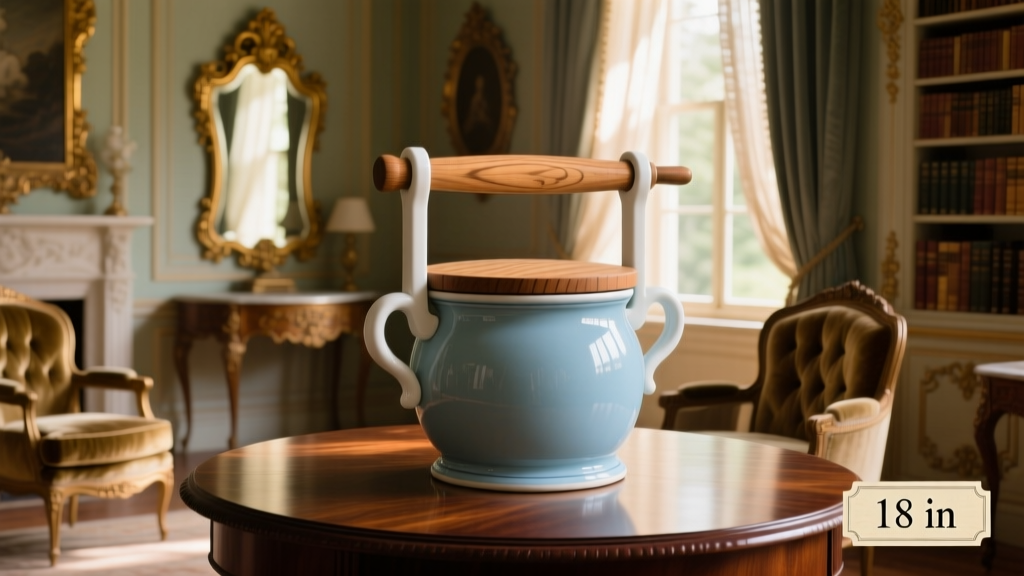
Graniteware Churn: Light Blue Body, White Handles, Wooden Lid — An 18-Inch Antique Restoration Profile

Cambridge Glass Decagon Bouillon Footed Blue: Identification, History, and Restoration Guidelines

The Corvette Sting Ray Advertising Sign: History, Materials, and Restoration of the Iconic 36×36-Inch Plastic Display