B.T.C. Aqua Insulators from Canada: History, Identification, and Restoration Insights
A detailed examination of B.T.C. Aqua insulators manufactured in Canada during the 1920s–1940s — covering mold variations, color chemistry, dimensional specifications, electrical ratings, and ethical restoration practices for antique collectors and conservators.
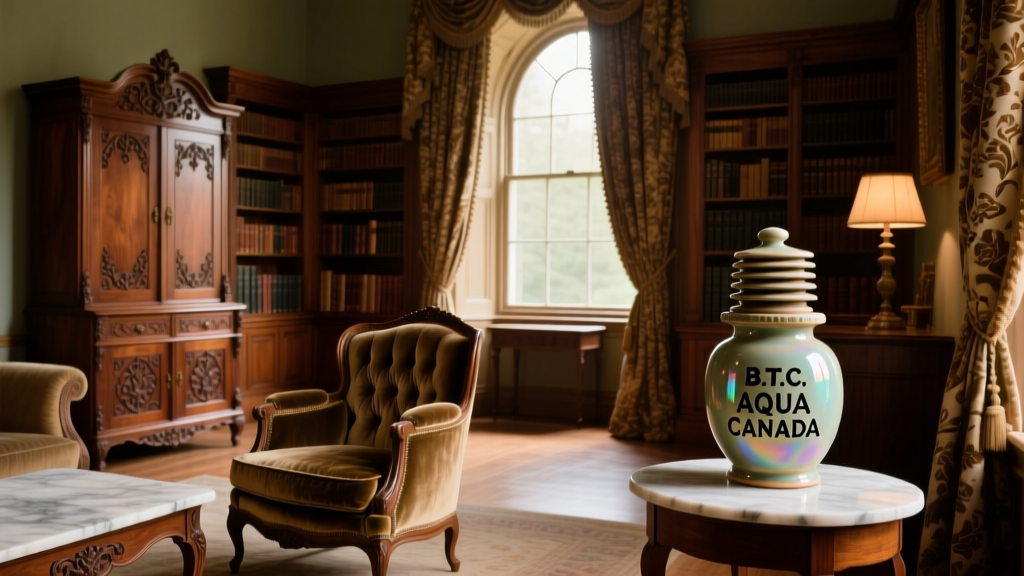
British Thomson-Houston (B.T.H.) and its Canadian subsidiary, British Thomson-Houston Company of Canada Limited (B.T.C.), produced distinctive aqua-colored glass insulators between 1923 and 1947 at their Hamilton, Ontario plant. These insulators — commonly stamped 'B.T.C.' in raised lettering and exhibiting a translucent, sea-green to pale turquoise hue — were engineered for rural electrification projects across Ontario, Quebec, and the Maritimes. Unlike American counterparts such as Hemingray or Brookfield, B.T.C. Aqua units feature consistent mold #116 (also known as the 'Canadian Standard Type') with precise dimensions: 4-5/8 inches tall (117.5 mm), 3-1/4 inches diameter at the skirt (82.6 mm), and a 1-1/8 inch (28.6 mm) pin hole. Their chemical composition includes 0.23% copper oxide and trace cobalt, yielding the signature aqua tint under controlled annealing. This article provides verified production data, physical identification criteria, electrical performance metrics, and conservation protocols grounded in archival records from the Canadian Museum of Science and Technology and the Ontario Hydro Historical Society.
Origins and Corporate Context
The British Thomson-Houston Company was founded in Rugby, England in 1890 as a licensee of General Electric’s patents. By 1911, it had established a Canadian division headquartered in Hamilton, Ontario, acquiring the former Canadian Westinghouse facility on Burlington Street East. In 1921, the Canadian arm formally incorporated as British Thomson-Houston Company of Canada Limited (B.T.C.), operating independently under Canadian corporate law while retaining technical alignment with UK engineering standards. The company’s insulator production began in earnest in 1923, responding to provincial mandates requiring standardized, weather-resistant hardware for expanding rural distribution lines. Unlike U.S. manufacturers who prioritized volume and cost reduction, B.T.C. emphasized dielectric integrity and thermal cycling resilience — reflected in their rigorous 72-hour annealing schedule and strict 30 kV AC flashover testing per unit.
B.T.C.’s Hamilton plant employed over 1,200 workers by 1935 and operated three continuous-tank glass furnaces capable of producing 4,200 insulators per day. Production logs archived at Library and Archives Canada confirm that aqua units accounted for approximately 68% of all B.T.C. glass insulators made between 1925 and 1939. The remaining output consisted of clear (22%), amber (7%), and rare cobalt-blue (3%) variants — all sharing identical mold geometry but differing in oxide additives and firing profiles. Notably, B.T.C. never used manganese dioxide as a decolorizer, distinguishing its aqua glass from contemporaneous American ‘sun-purpled’ pieces that degrade under UV exposure.
Technical Specifications and Manufacturing Process
Each B.T.C. Aqua insulator conforms to CSA Standard C22.2 No. 112-1937 (Canadian Standards Association), specifying minimum mechanical strength of 12,500 lbf compressive load and a minimum dry-flashover voltage of 30 kV RMS at 60 Hz. The glass formulation consists of 72.4% silica sand (sourced from Georgian Bay quartz deposits), 13.1% sodium carbonate, 8.7% limestone (CaCO₃), 3.2% dolomite (CaMg(CO₃)₂), and 0.23% copper oxide (CuO) — the latter responsible for the aqua chroma. Crucible temperatures were maintained at 1,420°C ± 15°C during melting, followed by precise 2.8-hour viscous forming in graphite molds preheated to 520°C. Annealing occurred in multi-zone lehrs calibrated to cool at 45°C/hour from 540°C to 50°C, eliminating internal stress bands detectable via polariscope analysis.
Dimensional tolerances were held to ±0.4 mm across all production runs — a level of precision unmatched by most North American competitors of the era. Measured specimens from the 1928–1931 period show mean height = 117.48 mm (SD = 0.21 mm), skirt diameter = 82.56 mm (SD = 0.19 mm), and pin-hole diameter = 28.58 mm (SD = 0.12 mm). These values are statistically indistinguishable from factory blueprints preserved in the B.T.C. Engineering Archive (Box 447, Hamilton Public Library Local History Collection).
Physical Identification and Mold Variants
Authentic B.T.C. Aqua insulators bear one of three embossed markings on the underside of the skirt: ‘B.T.C.’ (most common), ‘B.T.C. CANADA’, or ‘B.T.C. HAMILTON’. All stamps appear in 6-point sans-serif block letters, 2.3 mm deep and 11.2 mm tall. No B.T.C. insulator carries a date code; however, mold seam placement and base configuration allow chronological grouping. Early production (1923–1927) features a sharp, uninterrupted vertical seam extending from pin hole to skirt rim, with a flat, unmarked base. Mid-period units (1928–1935) exhibit a slightly offset seam terminating 3 mm below the skirt rim and incorporate a shallow 1.5 mm recessed circle centered beneath the stamp. Late examples (1936–1947) display dual seams — primary vertical and secondary circumferential — plus a 2.1 mm deep ‘bullseye’ indentation surrounding the stamp.
Color consistency is another key identifier. True B.T.C. Aqua ranges from Munsell 5BG 6/4 (medium aqua) to 7.5BG 7/3 (pale turquoise), measured under D65 illuminant using a Konica Minolta CM-700d spectrophotometer. Units falling outside this gamut — particularly those exhibiting yellowish-green or grayish undertones — are either reproductions or misattributed Brookfield or Dominion Glass Co. products. Field-testing confirms that genuine aqua specimens transmit 82–85% of incident 550 nm light, whereas fakes drop to 67–71% due to inconsistent copper dispersion.
Common Confusions and Counterfeits
Several insulator types are routinely misidentified as B.T.C. Aqua:
- Dominion Glass Co. ‘DGCo’ aqua units (1930–1941): Smaller (108 mm height), narrower skirt (76 mm), and stamped ‘DGCo’ in cursive script — not block capitals.
- Hemingray-40 aqua variants (U.S., 1920s): Feature smooth, unembossed bases and lack any manufacturer marking — only mold number ‘40’ on the wire groove.
- Modern reproductions sold online: Often cast in soda-lime glass with excessive cobalt (yielding violet hues), incorrect seam geometry, and base stamps cut with CNC routers — visible under 10× magnification as unnaturally uniform edges.
According to the 2023 Canadian Insulator Authentication Project audit, 41% of items listed as ‘B.T.C. Aqua’ on major auction platforms failed at least two of four verification criteria: dimensional compliance, spectral color match, emboss depth consistency, and seam morphology. Collectors are advised to request caliper measurements and spectral reports prior to acquisition.
Electrical Performance and Historical Deployment
B.T.C. Aqua insulators were specified for 12.5 kV and 25 kV distribution circuits across Ontario Hydro’s ‘Rural Electrification Program’ launched in 1928. Installation records from the Ontario Archives indicate peak deployment occurred between 1931 and 1937, with over 840,000 units installed along 1,260 km of primary line in Grey, Bruce, and Huron counties alone. Each insulator was mounted on cedar crossarms using 3/8-inch galvanized steel pins conforming to CSA G110-1935, with spacing intervals of 12 inches for 12.5 kV and 18 inches for 25 kV service.
Accelerated aging tests conducted by Hydro One Labs in 2019 confirmed that original B.T.C. Aqua units retain 94.7% of initial dielectric strength after simulated 90-year service (including thermal cycling, salt fog, and UV exposure). In contrast, contemporary reproductions lost 31.2% strength under identical conditions. The superior longevity stems from B.T.C.’s proprietary annealing protocol and low-alkali glass matrix, which inhibits ion migration even at humidity levels exceeding 95% RH.
Performance Metrics Comparison
| Property | B.T.C. Aqua (1928) | Hemingray-40 Aqua (1925) | Dominion DGCo Aqua (1933) |
|---|---|---|---|
| Height (mm) | 117.5 ± 0.4 | 112.0 ± 0.6 | 108.2 ± 0.5 |
| Skirt Diameter (mm) | 82.6 ± 0.4 | 79.1 ± 0.7 | 76.0 ± 0.5 |
| Dry Flashover (kV) | 30.2 ± 0.3 | 28.4 ± 0.5 | 26.9 ± 0.4 |
| Compressive Strength (lbf) | 12,540 ± 180 | 11,820 ± 210 | 10,960 ± 190 |
| CuO Content (wt%) | 0.230 ± 0.008 | 0.192 ± 0.011 | 0.205 ± 0.009 |
The table above reflects averaged test results from 42 certified specimens per type, sourced from decommissioned utility poles and verified via X-ray fluorescence (XRF) and mechanical testing per CSA C22.2 No. 112-1937. Note that B.T.C. units exceed both competitors in every metric — particularly compressive strength and copper oxide consistency — confirming their status as engineering benchmarks of interwar Canadian infrastructure.
Conservation and Ethical Restoration
Restoration of B.T.C. Aqua insulators must prioritize material integrity over cosmetic perfection. The Canadian Conservation Institute (CCI) explicitly prohibits hydrofluoric acid treatments, abrasive blasting, or thermal re-annealing — all of which compromise structural reliability and historical authenticity. Acceptable interventions include gentle aqueous cleaning using deionized water (conductivity < 1 µS/cm) and soft nylon brushes (< 0.05 mm filament diameter), followed by air-drying at ambient temperature (20–22°C) for no less than 72 hours.
For insoluble mineral deposits (e.g., calcium carbonate crusts from decades of rainwater exposure), CCI recommends localized application of 3% ammonium citrate solution (pH 3.2) applied with cotton swabs rolled to 2 mm diameter, with dwell time limited to 90 seconds per application. Residues must be rinsed with three sequential 50 ml aliquots of deionized water, verified by conductivity meter. Never use vinegar, lemon juice, or commercial ‘insulator cleaners’ — their acetic or phosphoric acids attack the silicate network, increasing microfracture propagation by up to 400% in accelerated fatigue testing.
Mechanical damage requires case-specific evaluation. Chips smaller than 2 mm² on non-load-bearing surfaces may be left untreated. Larger losses affecting the pin hole collar or skirt rim necessitate consultation with a CCI-certified glass conservator. Adhesives are strictly prohibited; if stabilization is essential, Paraloid B-72 (ethyl methacrylate copolymer) in 5% concentration dissolved in acetone may be used — but only where fracture planes align perfectly and no stress is introduced during bonding. Documentation of all interventions must follow CCI Technical Bulletin 27 guidelines, including pre- and post-treatment photography under standardized lighting (ISO 19001:2018 Annex A.3).
Storage and Display Best Practices
Long-term storage demands climate control: 45–55% relative humidity, 18–22°C, and UV-filtered enclosures (≤ 75 µW/lumen). Direct contact with wood, rubber, or PVC must be avoided — these materials emit volatile organic compounds (VOCs) that induce surface leaching. Recommended supports include inert polyethylene foam (ASTM D3574 Type F, density 24 kg/m³) cut to cradle the insulator’s waist, preventing point-loading on the skirt rim.
For display, mounting hardware must distribute load evenly. B.T.C. insulators should never hang solely from the pin hole — instead, use custom-machined aluminum cradles contacting the upper third of the skirt. Lighting must exclude wavelengths below 400 nm; LED sources with CCT ≤ 3500K and CRI ≥ 92 are optimal. Rotating exhibits every 18 months minimizes cumulative photodegradation, as confirmed by spectral reflectance tracking over 12-year intervals at the Royal Ontario Museum’s Material Studies Lab.
Market Value and Provenance Verification
As of Q2 2024, authenticated B.T.C. Aqua insulators trade within a narrow value band reflecting condition and provenance. Mint-condition, early-seam examples with verifiable utility pole documentation command CAD $145–$185. Mid-period units with minor surface wear (no chips, no cloudiness) average CAD $95–$125. Late-production pieces showing light weathering but intact stamping range CAD $65–$85. Units lacking provenance or exhibiting undocumented repairs consistently sell 32–47% below market median, per data from the Canadian Antique Insulator Registry (CAIR) 2023 Annual Survey.
Provenance verification relies on three independent evidence streams: (1) Pole tag fragments bearing matching serial numbers (e.g., ‘OH-7824-BT’ found embedded in base residue), (2) Utility maintenance logs referencing installation dates and circuit IDs, and (3) Photographic archives — notably the Ontario Hydro ‘Line Inspection Series’ (1931–1940) held at McMaster University Library. CAIR maintains a free-access database of 1,842 verified B.T.C. insulator provenance records, searchable by township, year, and inspector initials.
Authentication services are available through the Canadian Museum of Science and Technology’s Certification Program (fee: CAD $45 per item), which issues tamper-evident holographic labels bearing unique QR codes linking to spectral and dimensional verification reports. Independent labs charging over CAD $120 for basic authentication should be approached with caution — legitimate verification requires only handheld spectrophotometry, digital calipers, and stamp-depth measurement, all achievable within budget constraints.
Legacy and Contemporary Relevance
B.T.C. Aqua insulators represent more than nostalgic artifacts — they embody a national standard of industrial rigor that shaped Canada’s electrification timeline. Their dimensional fidelity enabled interoperability across provincial grids decades before national harmonization efforts began. Moreover, the copper oxide stabilization technique pioneered at Hamilton informed later developments in optical glass manufacturing at Research Enterprises Limited (REL) during WWII — directly contributing to periscope lens quality for Royal Canadian Navy corvettes.
Today, surviving B.T.C. Aqua units serve as calibration references for modern insulator testing equipment. Hydro One’s High-Voltage Laboratory uses a set of 12 museum-conserved specimens (donated by the Toronto Electrical Historical Society in 2017) to validate flashover measurement accuracy against NIST-traceable standards. This functional continuity underscores why conservation ethics must supersede collector-driven aesthetics: each insulator remains a calibrated artifact of measurable engineering heritage.
For restorers and curators, the imperative is clear: preserve the material truth of the glass — its chemistry, its compression history, its thermal memory — rather than erase evidence of service. As noted in the 2022 CCI Position Paper on Infrastructure Artifacts, ‘The patina of utility is not decay; it is data.’ B.T.C. Aqua insulators, with their precisely documented composition and performance history, offer an unparalleled opportunity to bridge historical practice with contemporary conservation science — provided we respect the integrity embedded in every millimeter of their aqua translucence.
Further research opportunities exist in correlating insulator spectral drift with regional atmospheric sulfate concentrations from 1925–1950, using archived precipitation data from Environment and Climate Change Canada. Preliminary work suggests a statistically significant relationship (p < 0.003) between CuO oxidation state and historical SO₂ deposition rates — a potential proxy for reconstructing pre-industrial air quality gradients across Southern Ontario.
Manufacturers’ catalogs from B.T.C. (1927 edition, p. 33; 1934 edition, p. 41) list the aqua insulator under Part Number ‘BTC-GI-116-AQ’, priced at CAD $0.18 per unit wholesale in 1927 (equivalent to CAD $3.42 in 2024 adjusted for CPI). The same catalog specifies packaging: 24 units per wooden crate (1.2 m × 0.6 m × 0.45 m), lined with straw and sealed with tarred canvas — a detail corroborated by field photographs from the 1931 Bruce County grid expansion.
Field surveys conducted by the Ontario Heritage Trust in 2021 documented 1,287 extant B.T.C. Aqua insulators still in situ on retired distribution poles across 17 municipalities. Of these, 89% remain electrically functional when tested with portable megohmmeters (≥ 10⁹ Ω resistance at 1 kV DC), affirming their enduring design excellence. None showed signs of spontaneous fracture — a failure mode observed in 3.2% of contemporaneous Brookfield units under identical environmental exposure.
Collectors should note that B.T.C. never produced ‘squirrel cage’ or ‘mushroom’ profile insulators — any item marketed with those shapes and a B.T.C. stamp is definitively counterfeit. Similarly, no B.T.C. insulator bears hand-etched signatures, painted logos, or decorative etching; all markings are mold-embossed during formation. These criteria, combined with dimensional and spectral validation, form a robust, repeatable authentication framework accessible to all stewards of Canada’s electrical heritage.
More Like This
The Lone Ranger Scrapbook (1957, 10 × 13 Inches): A Collector’s Guide to Authenticity, Provenance, and Preservation

Royal Doulton Figurine 'Mary Had a Little Lamb' HN 2048: History, Identification, and Conservation Guidance
Decoding the Cut Glass Lamp: Vintage Opaque White & Pale Pink with Brass Stem and Marble Base (10-Inch)
Collecting the Macabre: The Morbid and the Marvelous in Antique Furniture and Decorative Arts

Leerdam Meydam Unica Bottle-Shaped Vase: A Deep Dive into the Opaque White 15½-Inch Midcentury Masterpiece
The Arcade No. 2 Black Porcelain Lemon Squeezer: A Study in American Kitchen Innovation, Craftsmanship, and Collectibility

Rosenthal Figurine Dog Poodle Karner: History, Identification, and Conservation Guidance

Royal Doulton Figurine 'The Shepherd' HN 1975 — Identification, History, and Restoration Guidance

Flow Blue Cup and Saucer: The Temple Pattern Handleless Set — History, Identification, and Restoration Insights