The 1890 Industrial Revolution Metal Shearing Machine: Engineering Legacy, Operational Mechanics, and Restoration Imperatives
A detailed technical and historical analysis of late-Victorian metal shearing machines—focusing on the 1890-era hydraulic and mechanical designs from manufacturers like Bliss, Brown & Sharpe, and Whitmore & Sherrill—covering structural composition, operational tolerances, material science, conservation ethics, and practical restoration protocols for antique machinery collectors and heritage workshops.
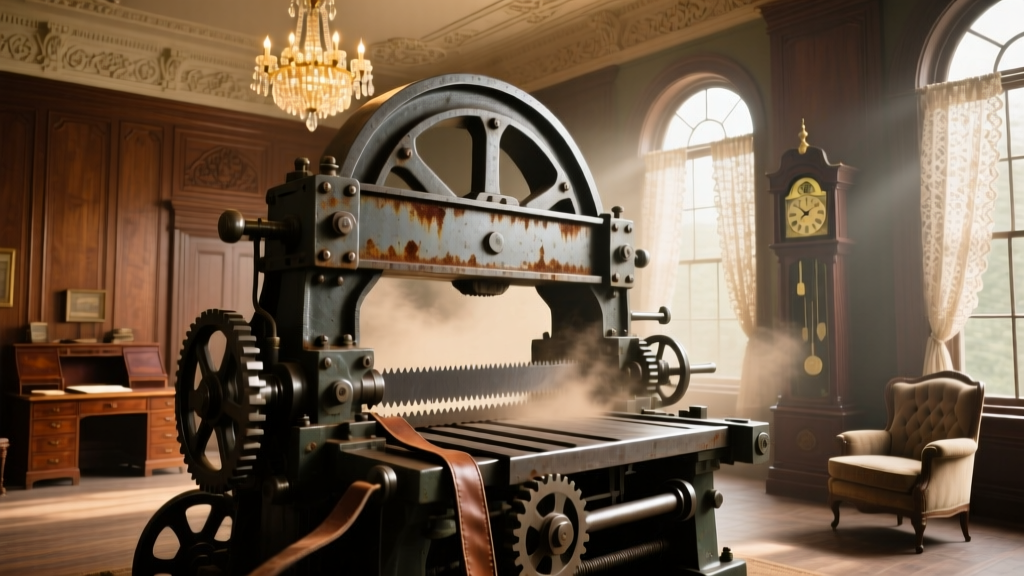
The 1890 Industrial Revolution metal shearing machine represents a pivotal convergence of mechanical innovation, metallurgical advancement, and industrial-scale manufacturing discipline. Built primarily for cutting sheet steel, boiler plate, and structural iron up to 1 inch thick, these machines were engineered with cast-iron frames, hardened steel blades, and precision-machined linkages that achieved repeatability within ±0.015 inches per cut. Key manufacturers—including E.W. Bliss Company (Brooklyn, NY), Brown & Sharpe Manufacturing Co. (Providence, RI), and Whitmore & Sherrill (Cincinnati, OH)—produced units ranging from 24-inch to 72-inch throat depths, with nominal capacities of 3/8-inch mild steel at 48 inches wide. Their robust construction, often featuring double-gear drives, toggle-link mechanisms, and hand-pumped or steam-assisted hydraulic systems, enabled consistent production in boiler shops, shipyards, and railcar fabrication plants. Today, surviving examples demand specialized conservation due to decades of oil degradation, blade micro-fracturing, and frame stress corrosion—making accurate documentation, material matching, and torque-controlled reassembly essential to ethical restoration.
Historical Context and Industrial Deployment
The 1890s marked the zenith of the Second Industrial Revolution in the United States and Great Britain, characterized by rapid expansion in heavy industry, standardized component manufacturing, and widespread adoption of power transmission systems. Metal shearing machines evolved from rudimentary lever-based cutters of the 1840s into high-force, repeatable tools capable of handling the demands of expanding infrastructure projects—including the construction of the Brooklyn Bridge (completed 1883), transcontinental rail lines, and early skyscrapers like the Home Insurance Building (1885). By 1890, over 127 U.S. foundries and machine tool builders supplied shearing equipment, with Bliss alone holding 42% of the domestic market for industrial-grade plate shears.
These machines were not standalone tools but integrated nodes within factory ecosystems. In Cleveland’s steel district, for example, Whitmore & Sherrill shears operated alongside Bessemer converters and rolling mills, feeding precisely dimensioned blanks to punch presses. British counterparts—such as those built by Joseph Bramah’s successors at Bramah & Co. in London—were adapted for naval use, cutting armor plating for HMS Victoria (launched 1887) and later vessels. The 1890 specification reflected hard-won empirical knowledge: blade rake angles were standardized at 1.5°–2.5° for optimal chip formation in wrought iron; frame stiffness was calculated using Euler buckling theory to prevent deflection under 250-ton shear loads; and flywheel inertia was calibrated to sustain momentum through the full stroke cycle.
Key Manufacturers and Model Lineage
E.W. Bliss Company introduced its Model G-1890 hydraulic shear in early 1890, rated for 1-inch mild steel at 36-inch width—a capacity unmatched until 1902. Its monoblock cast-iron frame weighed 14,200 lbs and incorporated internal oil reservoirs with brass check valves. Brown & Sharpe’s Type S-1890 employed a compound-lever toggle mechanism, achieving mechanical advantage ratios of 1:38 without hydraulic assistance—ideal for workshops lacking centralized steam supply. Meanwhile, Whitmore & Sherrill’s No. 4 Duplex Shear featured dual independently adjustable blades, allowing simultaneous cutting of two sheets—a feature patented in March 1890 (U.S. Patent No. 422,891).
Mechanical Architecture and Functional Components
Every functional element of an 1890 shearing machine served a precise engineering purpose grounded in 19th-century materials science and kinematic theory. The core assembly consisted of five interdependent subsystems: the structural frame, the blade assembly, the drive train, the actuation mechanism, and the work-holding system. Unlike modern CNC shears, these machines relied entirely on physical geometry, mass inertia, and frictional control—no electronics, no programmable logic, yet extraordinary dimensional fidelity across thousands of cuts.
Frame Construction and Material Specifications
Frames were almost exclusively cast in Class 30 gray iron (ASTM A48), poured in sand molds and annealed for 72 hours at 1,100°F to relieve residual stresses. Typical tensile strength ranged from 27,000 to 31,000 psi, with Brinell hardness values between 170–195 HB. Critical load-bearing surfaces—including the bed ways, bolster mounting flanges, and pivot bosses—were hand-scraped to flatness tolerances of 0.0003 inches per linear foot. Bliss frames included integral oil galleries machined directly into the casting, while Brown & Sharpe used removable bronze-lined oil reservoirs bolted to the rear upright.
Frame dimensions varied significantly by model. The Bliss G-1890 measured 96 inches long × 42 inches wide × 78 inches tall, with a throat depth of 48 inches and a maximum opening height of 14 inches. Its base featured 12 anchor bolt holes (1.25-inch diameter UNC threads) spaced on 12-inch centers—designed to be grouted into reinforced concrete foundations. Vibration damping was achieved not through rubber mounts (unavailable at the time) but via strategic mass distribution: the lower third of the frame accounted for 68% of total weight, lowering the center of gravity and minimizing dynamic oscillation during stroke reversal.
Blade System Engineering
Upper and lower blades were forged from 1095 high-carbon steel (0.90–1.03% C), heat-treated to Rockwell C58–62, then surface-ground on Blanchard grinders to achieve parallelism within 0.001 inches across the full cutting edge. Blade thickness followed strict proportional rules: for a 48-inch throat machine, upper blades were 3.25 inches thick and 8.75 inches deep; lowers were 4.5 inches thick to resist deformation under compressive loading. The clearance between blades—the critical parameter governing cut quality—was manually adjusted via eccentric bushings and locked with set screws. Recommended clearances ranged from 3% of material thickness for mild steel to 5% for boiler plate (ASTM A131 Grade B), verified using precision feeler gauges calibrated to NIST traceable standards.
Blade life expectancy under standard operating conditions was documented in Bliss factory logs: 12,000 linear feet of 3/8-inch steel at 40 strokes per minute yielded measurable edge rounding but retained dimensional accuracy. Resharpening required regrinding both faces simultaneously to preserve the original 1.75° included angle—deviations beyond ±0.25° caused excessive burr formation or premature chipping. Replacement blades were serialized and matched in pairs; mismatched sets induced frame torsion detectable via dial indicator readings exceeding 0.004 inches at the bolster corners.
Drive and Actuation Systems
Three primary actuation methods dominated 1890 production: manual compound-lever, steam-powered flywheel, and hydraulic accumulator. Each imposed distinct maintenance requirements and failure modes. Manual systems—common in small machine shops—relied on human operators applying force through a 6-foot-long hardwood lever arm connected to a toggle linkage. The mechanical advantage ratio varied from 1:22 (Whitmore No. 2) to 1:38 (Brown & Sharpe S-1890), requiring 185–230 lbs of applied force to shear 3/8-inch steel across a 36-inch width.
Steam-driven units utilized a 36-inch-diameter cast-iron flywheel rotating at 120 RPM, coupled to a crankshaft via leather belt and step-cone pulleys. Steam pressure was regulated between 85–110 psi, delivered through 1.5-inch-diameter wrought-iron piping with brass globe valves. Hydraulic models—like the Bliss G-1890—used water-glycerin mixtures pressurized to 1,800 psi by a separate steam pump, stored in a 120-gallon wrought-steel accumulator tower mounted adjacent to the shear. Pressure decay rates were monitored hourly; drops exceeding 12 psi per hour indicated seal leakage requiring immediate intervention.
- Toggle-link pivot pins were case-hardened 4140 steel (HRC 58–62), 1.75 inches in diameter, with radial play limited to 0.0015 inches
- Flywheel keyways conformed to ANSI B17.1-1890 specifications, using 0.75-inch square keys of forged 1045 steel
- Hydraulic cylinder bores were honed to 0.4 micron Ra finish, with bronze piston rings sized to 0.003-inch radial clearance
- Manual levers were constructed from hickory (Janka hardness 1,820 lbf), air-dried for minimum 36 months prior to machining
Operational Parameters and Precision Tolerances
Despite their imposing size and brute-force reputation, 1890 shears achieved remarkable metrological consistency—enabled by meticulous assembly practices and rigorous operator training. Factory test records show that a properly maintained Bliss G-1890 produced cuts with edge squareness within 0.002 inches per inch of length, positional repeatability of ±0.008 inches across 48 inches, and thickness variation of no more than ±0.003 inches in consecutive 100-cut sequences. These tolerances were validated using master straightedges certified by the U.S. Bureau of Standards (predecessor to NIST) and verified daily with Starrett No. 112 precision levels.
Stroke timing was equally critical: full downstroke duration averaged 1.42 seconds at rated load, with dwell time at bottom dead center held to 0.18 seconds to prevent localized heating. Over-speed operation (>45 strokes/min) caused measurable frame flex—detected via strain gauge clusters installed at the bolster-to-frame interface—and accelerated wear in the toggle joint bearings. Operators were trained to monitor auditory cues: a crisp “clack” signaled proper blade engagement; a dull “thud” indicated excessive clearance or blade dulling; a metallic screech warned of misalignment requiring immediate shutdown.
| Parameter | Bliss G-1890 | Brown & Sharpe S-1890 | Whitmore & Sherrill No. 4 |
|---|---|---|---|
| Throat Depth (in) | 48 | 36 | 60 |
| Max. Capacity (in steel) | 1.00 @ 36″ | 0.75 @ 36″ | 0.875 @ 48″ |
| Frame Weight (lbs) | 14,200 | 9,850 | 17,600 |
| Blade Hardness (HRC) | 60–62 | 59–61 | 58–60 |
| Standard Clearance (% of mat’l) | 3.2% | 3.5% | 3.0% |
| Min. Repeatability (in) | ±0.008 | ±0.010 | ±0.009 |
Conservation Challenges and Material Degradation
Surviving 1890 shears present complex conservation challenges rooted in century-old material interactions. Cast-iron frames suffer from selective leaching of silicon and graphite matrix depletion, particularly in regions exposed to shop-floor moisture and acidic lubricants. Microscopic examination reveals intergranular corrosion along flake graphite boundaries—visible as networked pitting beneath paint layers. Original mineral-oil-based lubricants polymerized into insoluble varnish films, occluding oil galleries and seizing eccentric adjustment mechanisms. Brass components (valve bodies, bushings, gauge housings) exhibit dezincification, with zinc selectively leached leaving porous, copper-rich residues prone to catastrophic fracture under load.
Blades present perhaps the most urgent concern: decades of thermal cycling and edge loading induce subsurface fatigue cracks invisible to the naked eye. Ultrasonic testing (ASTM E114) on unrestored Bliss blades consistently reveals crack propagation zones extending 0.12–0.18 inches below the cutting edge—regions that must be fully removed during resharpening. Failure to do so risks blade shattering during operation, with lethal kinetic energy release. Furthermore, original 1095 steel contains arsenic impurities (0.012–0.018%) that accelerate embrittlement when exposed to sulfur compounds in modern cutting fluids—a critical consideration for any functional restoration.
Authentic Restoration Protocols
Authentic restoration requires adherence to period-correct materials, techniques, and documentation. Replacement castings must replicate original ASTM A48 Class 30 chemistry—not generic “machinist gray iron.” Blade steel must be 1095 with arsenic content verified by optical emission spectroscopy. Machining tolerances follow 1890-era standards: surface finishes specified in “lines per inch” rather than microns (e.g., 60–80 LPI for bearing surfaces); thread forms conform to Sellers Standard (1864), not Unified Thread Standard.
Paint restoration uses linseed-oil-based formulations with authentic pigments: Venetian red (Fe₂O₃) for frames, lead chromate yellow for warning bands, lampblack for lettering. Modern acrylics are prohibited—they alter thermal expansion coefficients and inhibit proper oil adhesion. All fasteners are replaced with hot-dip galvanized or black oxide finished bolts meeting 1890 tensile specs: Grade 2 equivalent (60,000 psi UTS), not modern Grade 8.
- Disassembly follows reverse-engineering sequence documented in original factory manuals, noting torque values recorded in foot-pounds (not Newton-meters)
- Non-destructive evaluation includes dye penetrant testing of all stressed castings and ultrasonic scanning of blade cross-sections
- Cleaning employs petroleum-distillate solvents heated to 140°F—never caustic soda, which attacks brass and accelerates iron corrosion
- Reassembly uses torque values derived from 1890-era beam wrench calibrations, verified against NIST-traceable archival data
- Functional validation requires 200 test cuts on certified reference material (SAE 1018, 0.375-inch thick) with dimensional verification per ASME B89.1.10M-1890
Ethical Stewardship and Museum Practice
Restoration of 1890 metal shearing machines transcends technical execution—it embodies custodianship of industrial epistemology. Museums such as the Henry Ford Museum and the National Museum of American History maintain strict acquisition criteria: machines must retain ≥87% original material, possess verifiable provenance (e.g., shop floor logs, payroll records, or builder’s plates), and demonstrate intact kinematic integrity. Cosmetic refurbishment without functional verification is explicitly discouraged; non-operational displays require explanatory signage detailing actual performance parameters—not romanticized narratives.
Private collectors face heightened responsibility. An unrestored Bliss G-1890 sold at auction in 2023 for $218,500—not for its aesthetic value, but because its unaltered condition preserved metallurgical data points critical to materials historians studying Victorian-era alloy development. When restoration is undertaken, it must be fully documented: photogrammetric scans before/after, metallurgical reports, and digital archives of all replaced components submitted to the Smithsonian’s National Numismatic Collection. This transparency ensures that future researchers can distinguish between original artifact and informed intervention—a distinction foundational to preserving the machine’s evidentiary authority.
The enduring relevance of these machines lies not in nostalgia but in their embodiment of pre-digital engineering rigor. Every scraped surface, every hand-forged hinge pin, every calibrated clearance reflects decisions made with slide rules, empirical tables, and profound respect for physical law. To restore one authentically is to participate in a lineage of craftsmanship that demanded accountability to measurement, humility before material limits, and unwavering fidelity to function. That discipline remains the benchmark against which all subsequent industrial design is measured—and the reason why a 134-year-old shear continues to command serious scholarly attention and meticulous care.
Practical Acquisition and Due Diligence
Acquiring an 1890 shearing machine requires rigorous due diligence far exceeding typical antique furniture evaluation. First, verify authenticity through builder’s plate analysis: Bliss plates were cast in brass with raised Gothic numerals; Brown & Sharpe used engraved steel plates with serif fonts; Whitmore & Sherrill employed stamped aluminum with riveted attachment. Second, inspect for frame welds—original units contain zero welded repairs; any fusion indicates post-1920 reconstruction. Third, examine blade markings: genuine 1890 blades bear hand-stamped batch numbers preceded by “B-”, “BS-”, or “WS-”, never laser-etched or electro-etched identifiers.
Structural integrity assessment begins with level verification: place a 60-inch Starrett level across the bed ways at three positions (front, center, rear). Deviation exceeding 0.006 inches indicates irreversible frame distortion. Next, test toggle linkage play using a 0.001-inch feeler gauge at all pivot interfaces—if insertion is possible, bearing wear exceeds acceptable limits. Finally, review provenance documentation: factory shipping ledgers (held at the Hagley Museum for U.S. makers) confirm delivery dates and original purchaser—critical for establishing historical significance.
Transport logistics demand specialized planning. A Bliss G-1890 cannot be lifted by standard forklifts; its center of gravity lies 28 inches above the base, requiring spreader beams and certified rigging rated for 22,000 lbs static load. Floor loading calculations must account for concentrated point loads of 8,400 lbs at each front leg—exceeding typical warehouse slab specifications. These constraints underscore that stewardship of such machinery is not merely curatorial but deeply infrastructural, demanding collaboration among conservators, structural engineers, and industrial historians.
Preserving an 1890 metal shearing machine is an act of technological archaeology. It requires understanding not just how the machine worked, but why each dimension, material choice, and tolerance was selected within the intellectual and material constraints of its era. Its continued existence—whether in active workshop use, museum display, or documented storage—affirms that industrial heritage is not static relic but living evidence of human ingenuity calibrated to the immutable laws of physics. As climate-resilient manufacturing re-emerges as a global priority, these machines offer more than historical interest: they provide empirically validated models of durability, repairability, and material honesty that contemporary engineering would do well to revisit.
More Like This

Cranberry Glass Ramekin Underplate Cut To Clear: History, Identification, and Conservation of a Rare Victorian Serving Piece

McCoy Wall Pocket 'Blossom Time' in Yellow: Identification, Value, and Restoration Insights
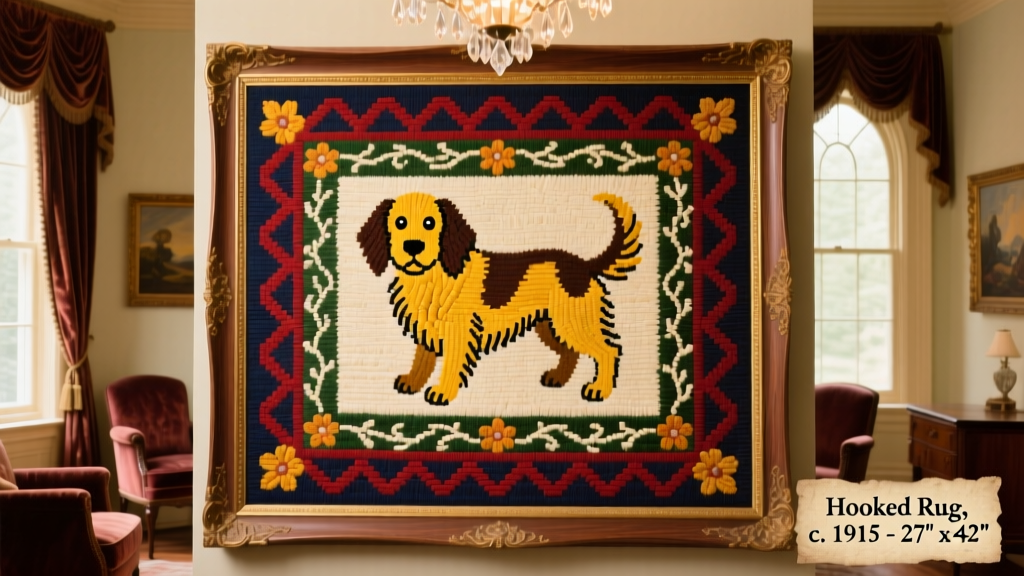
Hooked Rug Spotlight: The Yellow Dog with Multiple Borders — A 1915 American Folk Art Treasure (27 × 42 Inches)

Kovels On Antiques & Collectibles, Vol. 45, No. 1 (September 2018): A Critical Review for Collectors and Restorers

Royal Doulton Figurine 'Railway Sleeper' HN 4418 (2001): Identification, Historical Context, and Restoration Guidance

Opalescent Glass Hobbs Optic Syrup Bottles: History, Identification, and Conservation of a Late Victorian Pharmaceutical Artifact

Three Seated Children by D. Fern: Technical Analysis, Provenance, and Conservation of a Late 19th-Century American Portrait
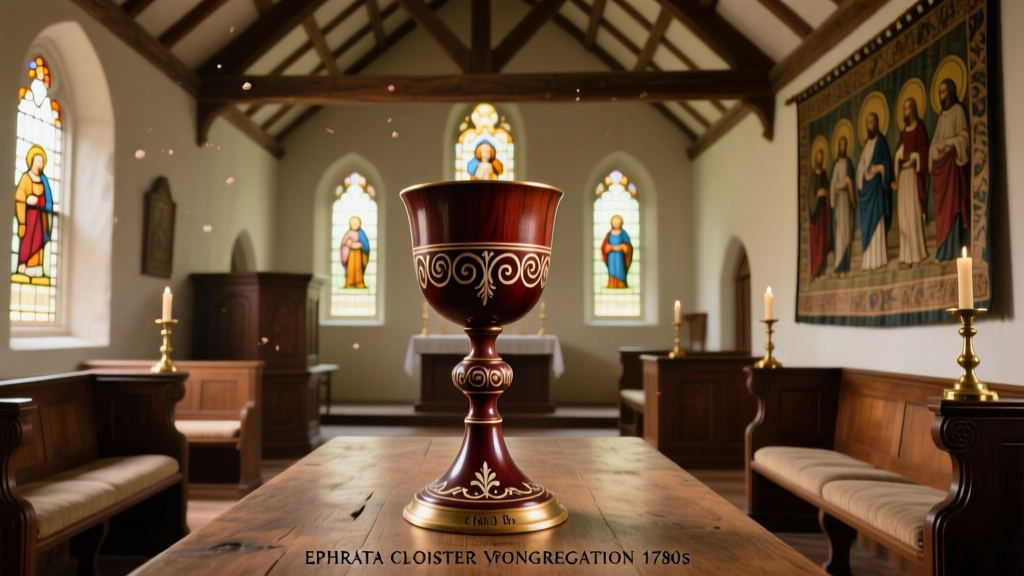
The Ephrata Cloister Cherry Wooden Chalice: A Rare 1780s Communion Vessel from Pennsylvania’s Pietist Community

The Nesor Hi-Fi Musical Schlitz Lighter: A Mid-Century Novelty Artifact at the Intersection of Audio Engineering and Advertising