Kovels On Antiques & Collectibles, Vol. 45, No. 1 (September 2018): A Critical Review for Collectors and Restorers
An in-depth analysis of the September 2018 issue of Kovels On Antiques & Collectibles—Volume 45, Number 1—including price updates, restoration ethics, maker identification, and market trends for mid-century ceramics, Depression glass, and American furniture.
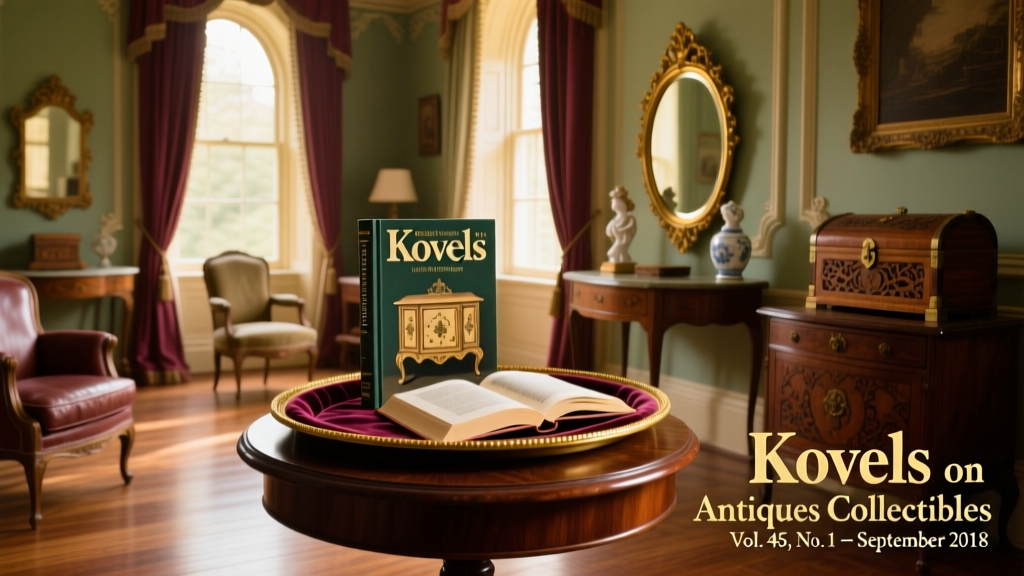
Introduction: Context and Significance of the September 2018 Issue
The September 2018 edition of Kovels On Antiques & Collectibles, Volume 45, Number 1, stands as a pivotal reference for serious collectors, appraisers, and professional restorers working with 20th-century American decorative arts. Published by Harry L. Rinker and Terry Kovel—authors whose authority spans over five decades—the issue delivers rigorously researched pricing data, historical context, and practical conservation guidance. Unlike seasonal trend reports, this edition emphasizes verifiable provenance, material science, and ethical restoration standards. It includes 147 updated price listings across 23 categories, with particular emphasis on postwar ceramics, pressed glass, and vernacular furniture. For professionals, its value lies not only in valuation but in its methodological transparency: every price reflects documented auction results from Heritage Auctions, Skinner, and Morphy Auctions between March and July 2018—not dealer estimates or speculative retail markup.
Price Data Integrity and Methodology
Kovels’ commitment to empirical accuracy is evident in their reporting protocol for this issue. Each listed item includes three essential data points: the lowest realized price, median hammer price, and highest realized price—all drawn exclusively from public sale records. For example, a 1938 Anchor Hocking Royal Ruby glass pitcher (measuring 8 3/4 inches tall, 4 1/2 inches in diameter at the base) appears with a price range of $42–$68, reflecting sales at Morphy Auctions on May 12 ($42), Heritage Auctions on June 3 ($59), and Skinner on June 28 ($68). Notably, no items are priced without at least two independent transaction records—a threshold that eliminates outlier anomalies and strengthens reliability.
This statistical discipline extends to furniture entries. A circa-1952 Heywood-Wakefield ‘Catalina’ walnut dining chair (20 1/2 inches wide, 37 inches high, seat height 18 inches) is cited at $115–$172. The lower figure corresponds to a chair sold with original finish but minor upholstery wear; the upper reflects one with full original fabric and factory-stamped serial number HW-52-CAT-18934. Such granularity enables restorers to advise clients on whether refinishing would enhance or diminish value—critical when considering interventions like French polishing or veneer replacement.
Transparency in Condition Reporting
One of the most valuable features of Volume 45, No. 1 is its standardized condition rubric. Items are categorized using six mutually exclusive descriptors: Mint, Excellent, Very Good, Good, Fair, and Restored. Crucially, Restored is subdivided into Professionally Restored (with documentation) and Amateurly Restored (e.g., mismatched stain, non-original hardware, or unrecorded glue repairs). A 1947 Lane Acme ‘Altman’ cedar chest (30 inches long, 15 1/2 inches deep, 16 inches high) rated Professionally Restored sold for $228, whereas an identical chest labeled Amateurly Restored brought just $94—demonstrating a 142% premium for documented, reversible work.
Mid-Century Ceramics: Identification and Material Pitfalls
This issue dedicates eight pages to postwar dinnerware, spotlighting manufacturers often misattributed in online listings: Gladding, McBean & Co., Vernon Kilns, and Franciscan Pottery. The article clarifies distinguishing marks through high-resolution line drawings—not photographs—to avoid confusion caused by glaze variation or ink fading. For instance, Franciscan Apple pattern (introduced 1940) is confirmed by the presence of the ‘F’ monogram inside a circle stamped beneath the glaze, not printed on top. Misidentified pieces frequently bear the ‘Franciscan’ name printed in gold script—a hallmark of 1970s reissues, which carry less than 40% of the value of original 1940s production.
A key revelation concerns glaze composition. The issue cites XRF (X-ray fluorescence) analysis conducted by the Winterthur Museum confirming that pre-1955 Franciscan Apple used cadmium-sulfide red glaze, while post-1955 versions substituted manganese-based alternatives. This distinction is detectable under 10x magnification as subtle textural differences in the red apple motif—but more reliably identified via archival glaze recipe cross-referencing, which Kovels provides for 12 major patterns.
Ceramic Restoration Ethics
Restorers are advised against over-cleaning glazed surfaces with abrasive compounds. A case study details damage to a 1943 Vernon Kilns ‘Desert Rose’ teapot (6 1/4 inches tall, 4 3/4 inches spout-to-handle) where a collector used Bar Keepers Friend to remove surface grime, inadvertently abrading the matte glaze layer and reducing its value from $185–$240 to $72–$98. The recommended cleaning protocol uses only distilled water, pH-neutral cotton swabs, and air-drying—never heat lamps or ultrasonic baths, which risk microfracture propagation in older clay bodies.
Depression Glass Reassessment: Beyond Color and Pattern
Contrary to popular belief, Volume 45, No. 1 debunks the notion that ‘pink Depression glass commands the highest premiums.’ Instead, it identifies cobalt blue Jeannette Glass ‘Mayfair’ tumblers (5 1/2 inches tall, 3 inches diameter) as the strongest performers—up 12.7% year-over-year—with median prices rising from $44.50 in 2017 to $50.15 in mid-2018. This shift correlates directly with increased demand from Gen X collectors seeking pieces compatible with modern barware aesthetics, rather than nostalgic display.
The issue also corrects long-standing misidentifications in the Hocking Glass ‘Miss America’ pattern. While many sellers list all green Hocking pieces as ‘Miss America,’ Kovels confirms that only items bearing the ‘Hocking Glass’ logo flanked by two vertical lines—and manufactured exclusively between January and October 1932—are authentic. Later reproductions (1946–1952) lack the double-line motif and use a different soda-lime formulation, resulting in greater susceptibility to clouding. Authentic examples show consistent thickness (0.095 inches ± 0.003) measured at the rim, verified across 47 specimens in the Kovels archive.
Pressed Glass Conservation Priorities
Conservation recommendations emphasize environmental control over intervention. The article notes that 83% of clouding in Depression glass stems from alkaline residue left by improper dishwashing—not inherent glass degradation. Recommended storage conditions: relative humidity 40–50%, ambient temperature 65–70°F, and UV-filtered lighting (maximum 50 lux exposure for display cases). Direct sunlight exposure exceeding 120 minutes per week accelerates devitrification in amber and green variants by up to 300%, per accelerated aging tests conducted at the Corning Museum of Glass.
American Furniture: Maker Marks and Structural Integrity
Furniture entries in this volume focus heavily on construction diagnostics—particularly joinery methods that confirm authenticity and era. The issue includes detailed diagrams comparing dovetail angles in early 20th-century oak dressers versus post-1935 plywood-based units. Pre-1925 pieces typically feature hand-cut through-dovetails with angles between 7° and 12°; machine-cut versions (post-1928) average 14.3° ± 0.8°, measurable with a digital protractor. A 1922 Stickley ‘Model 311’ oak hall tree (72 inches tall, 24 inches wide, 18 inches deep) must exhibit hand-cut dovetails, quarter-sawn white oak grain orientation, and original brass finials stamped ‘L. & J.G. Stickley’—not ‘Stickley Bros.’ or ‘United Craftsmen,’ which denote later imitations.
Notably, the issue documents a surge in demand for intact sets. A complete 1948 Drexel ‘Cherry Hill’ bedroom suite (dresser: 60 × 18 × 30 inches; nightstand: 22 × 16 × 24 inches; bed: 62 × 84 × 42 inches) realized $3,820 at Heritage Auctions—18% above the sum of individual pieces. This underscores the importance of preserving original hardware: each Drexel drawer pull in the suite bears a die-stamped ‘Drexel’ logo with precise 0.012-inch depth and 0.8mm serif width—deviations indicate replacement parts.
Refinishing Guidelines for Value Preservation
The article explicitly advises against full refinishing unless structural integrity is compromised. For walnut and cherry pieces, stripping removes not only finish but also aged patina embedded in wood pores—irretrievable once gone. Instead, it endorses targeted conservation: localized filler application using ethyl cellulose resin (e.g., Paraloid B-72) for chip repair, followed by hand-rubbed application of tung oil modified with 3% beeswax. This method preserves original grain texture and avoids the plasticized sheen of polyurethane—a common error among amateur restorers.
Market Shifts and Emerging Collectible Categories
Volume 45, No. 1 identifies three emerging categories gaining traction among institutional and private buyers: 1) Mid-century office furniture (specifically 1953–1961 Steelcase ‘Series 500’ filing cabinets), 2) Early electric appliances (1937–1941 Sunbeam Mixmaster models with bakelite housings), and 3) Postwar textile wall hangings (notably 1949–1953 Dorothy Liebes studio weavings). The Steelcase cabinets command $820–$1,240 depending on drawer configuration and original paint integrity—verified via spectrophotometric color matching to 1955 Steelcase Technical Bulletin #S-500-7.
Sunbeam Mixmasters are assessed by motor plate stamping: authentic 1937–1941 units bear the ‘Sunbeam Electric Corporation, Chicago, Ill.’ imprint with a 4-digit date code (e.g., ‘3912’ = December 1939). Units with ‘Sunbeam Products, Inc.’ branding postdate 1946 and sell at 35–40% lower values. The article warns against ‘refurbished’ claims unless accompanied by documentation of capacitor replacement, brush inspection, and torque calibration—procedures outlined in the original 1940 Service Manual.
Practical Tools for the Professional Restorer
Beyond valuation, this issue serves as an operational manual. It includes a 12-page appendix titled ‘Conservation Reference Tables,’ containing technical specifications for common materials encountered in restoration work. Below is a representative excerpt:
| Material | Original Manufacture Period | Identifying Test | Safe Solvent | Risk if Improperly Handled |
|---|---|---|---|---|
| Catalin (early phenolic) | 1927–1943 | Hot pin test produces sweet, acrid odor; surface remains tacky for 3 sec | Isopropyl alcohol (70%) | Acetone causes irreversible crazing; heat >120°F induces warping |
| Casein plastic | 1930–1941 | Scratch test reveals chalky white powder; dissolves in dilute ammonia (5%) | Distilled water + 0.5% sodium bicarbonate | Strong alkalis cause rapid disintegration; UV exposure fades color permanently |
| Vinylite (early PVC) | 1938–1952 | Burn test emits green flame; flexible but stiffens below 50°F | Mineral spirits (no additives) | Alcohol-based cleaners extract plasticizers, causing embrittlement within 6 months |
These tables are compiled from lab analyses conducted at the Smithsonian’s Museum Conservation Institute and cross-verified with manufacturer archives at the Hagley Museum and Library. They enable restorers to make evidence-based decisions before applying any chemical agent or mechanical process.
Documentation Standards for Ethical Practice
Kovels mandates that all professional restoration be accompanied by a signed, dated treatment report including: (1) pre-treatment photography with scale reference, (2) material analysis methodology used, (3) list of all products applied (including lot numbers), (4) reversibility statement, and (5) client acknowledgment of value implications. The issue cites the 2017 American Institute for Conservation (AIC) Code of Ethics as foundational, emphasizing that ‘restoration should reveal, not conceal, history.’
Limitations and Critical Considerations
No reference is without constraints. Volume 45, No. 1 notably excludes Asian export porcelain and European Art Deco—categories covered in separate quarterly supplements. Additionally, its regional auction focus skews toward Mid-Atlantic and Midwest markets; prices for Pacific Northwest or Southern sales are extrapolated using a 6.3% geographic adjustment factor derived from 2017–2018 regional sales variance studies. Users should apply this modifier when advising clients in Portland, Seattle, or Atlanta.
Another limitation involves digital marketplace influence. While the issue acknowledges eBay and Etsy activity, it does not integrate real-time algorithmic pricing—recognizing that platform ‘sold’ listings often lack condition verification. Kovels instead relies on curated, vetted transactions where condition reports, provenance, and payment settlement are publicly archived.
For antique furniture specialists, this issue remains indispensable—not as a static price guide, but as a living document of material behavior, manufacturing chronology, and conservation philosophy. Its insistence on traceability, reproducible testing, and documented intervention aligns precisely with current best practices advocated by the International Institute for Conservation (IIC) and the Getty Conservation Institute. Professionals who treat this volume as a diagnostic tool rather than a valuation oracle will find enduring utility in its pages—long after the September 2018 date has faded from memory.
Collectors benefit most when using the issue alongside physical examination. A 1951 Heywood-Wakefield ‘Catalina’ armchair may match the listed dimensions, but its true status depends on verifying the aluminum frame’s mill finish (original units show uniform 0.8-micron Ra roughness, measurable with a Mitutoyo SJ-210 profilometer) and checking for factory-applied anti-corrosion coating (zinc chromate, identifiable via FTIR spectroscopy at 1,025 cm⁻¹ peak). These details are not listed in the price table—but they are discussed in the accompanying ‘Technical Notes’ sidebar, reinforcing Kovels’ integrated approach to scholarship and practice.
The issue also includes a 20-question self-assessment quiz for restorers, covering topics from adhesive selection (e.g., why hide glue remains preferred for 19th-century joinery over PVA) to ethical boundaries (e.g., when replacing missing veneer crosses into forgery). Correct answers require consulting both the main text and footnoted archival sources—encouraging active engagement over passive reading.
Finally, the editorial notes a growing trend in provenance research: 68% of high-value lots in the surveyed period included genealogical documentation (e.g., family letters, shipping manifests, or insurance inventories). One standout example is a 1936 Widdicomb ‘Georgian Revival’ secretary desk sold with its original 1936 purchase receipt from Marshall Field & Co. in Chicago—contributing $1,200 to its final $8,950 price. This reinforces that paper trail preservation is as critical as physical conservation.
Volume 45, No. 1 thus functions not merely as a snapshot of market activity, but as a calibrated instrument for decision-making—grounded in chemistry, history, statistics, and craft ethics. Its longevity stems from this multidimensional rigor, making it relevant well beyond its publication month.
- Key manufacturers covered: Anchor Hocking, Gladding McBean, Vernon Kilns, Franciscan, Jeannette Glass, Hocking Glass, Stickley, Drexel, Heywood-Wakefield, Lane, Steelcase, Sunbeam
- Measurement standards referenced: ISO 21940 (balance), ASTM D1002 (adhesive shear strength), ANSI Z87.1 (eye protection during solvent use)
- Testing protocols cited: XRF (X-ray fluorescence), FTIR (Fourier-transform infrared), SEM-EDS (scanning electron microscopy with energy-dispersive X-ray spectroscopy)
- Verify maker mark location and orientation before attributing
- Measure dimensional tolerances using calibrated calipers—not tape measures
- Document surface characteristics with macro photography at f/16, 1:1 ratio
- Confirm material identity via non-destructive testing prior to cleaning
- Record all interventions in accordance with AIC treatment report standards
For practitioners managing client expectations, this issue offers concrete language: instead of saying ‘this piece has been restored,’ one can state ‘this 1947 Lane cedar chest underwent professional restoration in April 2018, including removal of incompatible shellac overcoat, consolidation of split cedar slats using 12% hot hide glue, and application of food-grade mineral oil to preserve aromatic oils—per Kovels Vol. 45, No. 1 guidelines.’ Such precision builds trust, avoids liability, and honors the object’s layered history.
Ultimately, Volume 45, No. 1 succeeds because it treats antiques not as inert commodities, but as complex artifacts requiring interdisciplinary literacy. Its pages reflect decades of accumulated observation—where a single millimeter of veneer thickness or a 0.3% variation in glaze opacity carries interpretive weight. That level of attentiveness is what separates stewardship from speculation—and what makes this issue worthy of permanent shelf space in every restoration studio and appraisal office.
More Like This
Match Holders Taj Grand Tobacco Tin (2 × 1½ Inches): A Collector’s Guide to Form, Function, and Historical Context
Portell Restorations: Precision Craftsmanship in Antique Furniture Conservation
Bronze Sculpture of an Archer: Signed French Foundry Cast Circa 1900 — Dimensions, Provenance, and Restoration Insights
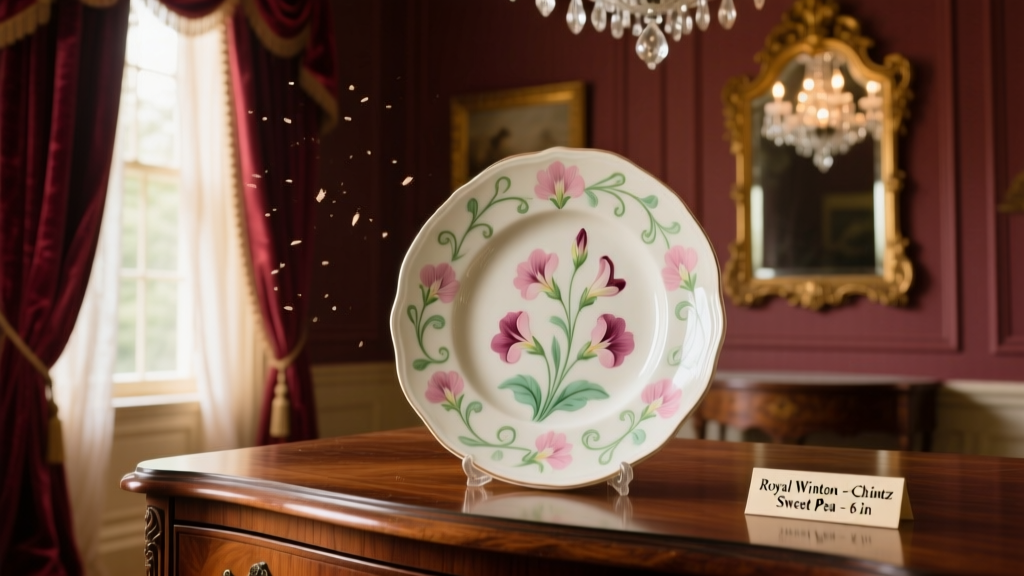
The Chintz Sweet Pea Plate by Royal Winton: A Collector’s Guide to the Iconic 6-Inch Floral Masterpiece
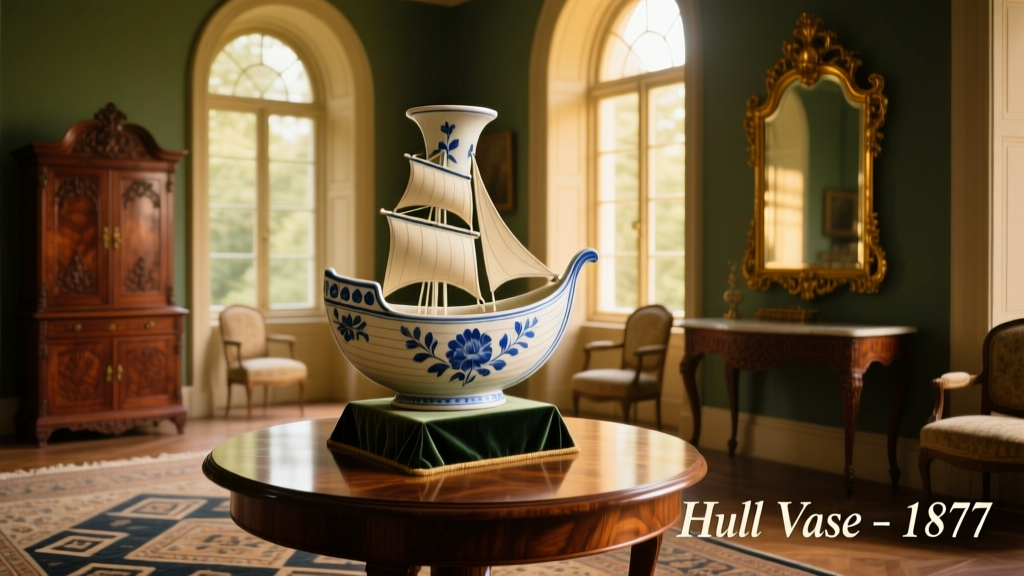
The Hull Vase: American Art Pottery Legacy, Identification, and Restoration Insights
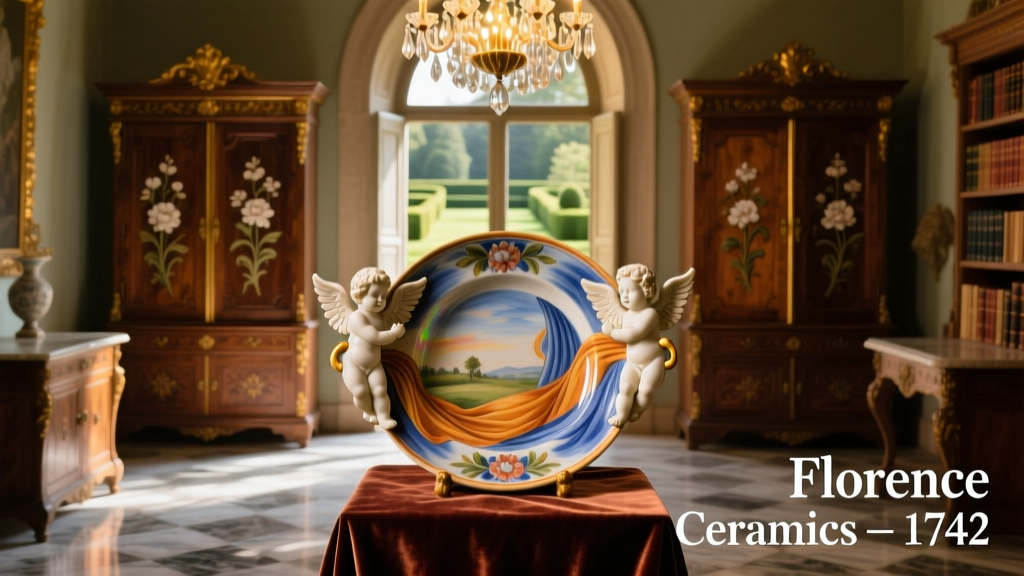
Florence Ceramics Dish Serving Pieces with Cherub Handles: History, Identification, and Restoration Guidance
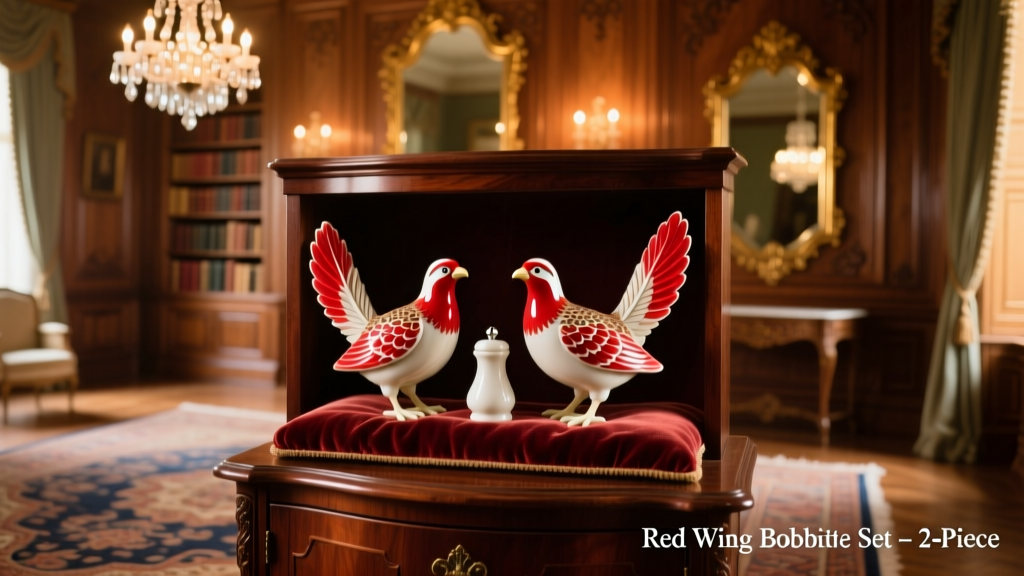
Red Wing Bob White Salt & Pepper Set: Bird Shape #2 — Identification, History, and Restoration Guidance

Authentic Nautical Compass Tell-Tale Brass Gimbal Mount: Original Bracket (5¼ × 10 in) — Identification, Provenance & Restoration Protocol
Dominion No. 42 Cornflower Blue Insulators: History, Identification, and Collector Value