Authentic Indian Beaded Moccasins for Adults: History, Craftsmanship, Sizing, and Ethical Acquisition
A detailed, expert-level examination of traditional Native American beaded moccasins for adults—covering tribal origins, beadwork techniques, authentic construction, sizing standards, material specifications, brand verification, and responsible collecting practices.
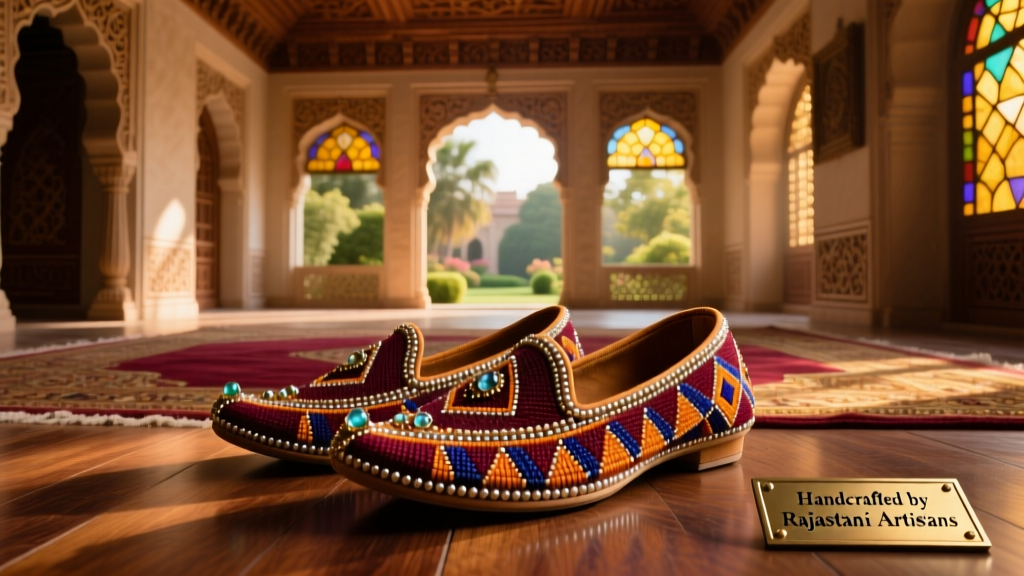
Introduction: What Defines an Authentic Indian Beaded Moccasin?
Authentic Indian beaded moccasins for adults are handcrafted footwear rooted in centuries-old Indigenous traditions across North America—notably among the Plains, Woodlands, and Great Lakes nations. These are not mass-produced souvenirs but functional art objects made from brain-tanned deer, elk, or moose hide, stitched with sinew, and adorned with intricate floral, geometric, or symbolic motifs using glass seed beads (typically size 11/0 or 13/0). Genuine examples feature soft-sole construction, rawhide or leather laces, and culturally specific design language—such as Lakota rose patterns, Ojibwe floral scrolls, or Blackfoot linear symmetry. Measurements vary by tribe and maker: standard adult sizes range from US Men’s 7–13 and Women’s 5–11, with footbed lengths from 9.25" (size 5W) to 11.75" (size 13M), and heel-to-ball distances averaging 3.1"–3.6". Unlike commercial imitations, authentic pairs lack synthetic soles, plastic laces, or machine embroidery.
Tribal Origins and Cultural Significance
Moccasins predate European contact by over 10,000 years, with archaeological evidence from sites like the Spirit Cave in Nevada confirming hide footwear dating to 7000 BCE. However, the integration of glass seed beads—introduced via French and British traders in the early 18th century—transformed moccasin decoration into a sophisticated visual language. Among the Lakota Sioux, beadwork on moccasins conveyed kinship, spiritual affiliation, and life achievements; red beads symbolized blood and vitality, while yellow represented sunlight and wisdom. The Ojibwe developed the "lazy stitch" technique for dense floral compositions, often using white background fields to highlight blue, green, and pink floral motifs. In contrast, the Blackfoot favored symmetrical, linear designs with strong horizontal bands—a reflection of prairie horizon lines and buffalo migration paths.
Regional Distinctions in Beadwork Style
Understanding regional variation is essential to authentic identification. A pair attributed to the Northern Plains (e.g., Crow or Hidatsa) will typically exhibit raised, three-dimensional beadwork using the lane stitch, with dominant use of cobalt blue, fire-engine red, and ivory. Southern Plains makers—such as Kiowa and Comanche artisans—often incorporate more curvilinear elements and metallic silver-lined beads. Woodland tribes like the Odawa and Potawatomi favor asymmetrical floral arrangements with fine shading gradients achieved through subtle bead color transitions.
Symbolism Beyond Aesthetics
Each motif carries meaning beyond ornamentation. The four-directional star signifies balance and the cardinal points; the thunderbird represents power and protection; the turtle embodies longevity and creation. Critically, many traditional designs are not freely replicable—they belong to specific families or clans. For example, the White Earth Band of Ojibwe maintains a registry of registered floral patterns, and unauthorized reproduction violates tribal intellectual property protocols established under the 1990 Native American Graves Protection and Repatriation Act (NAGPRA) and subsequent tribal ordinances.
Construction Techniques and Materials
Authentic adult moccasins follow time-tested methods passed down through generations. The upper is cut from a single piece of brain-tanned hide, folded and sewn along a center seam (the "center-seam" style common among Plains tribes) or constructed with a vamp-and-side configuration (typical of Woodland styles). Stitching uses sinew—either natural or smoked—which swells when dampened, creating a watertight seal. Sole construction remains soft and flexible; hard rubber or polyurethane soles indicate modern commercial production and disqualify authenticity. Traditional soles measure 0.04"–0.06" thick and are intentionally unlined to allow ground sensation—a functional trait linked to stealth hunting and ceremonial movement.
Bead Types and Application Methods
Pre-1940s moccasins used Czech glass seed beads (size 12/0 or 13/0), identifiable by their slightly irregular shape and subtle surface striations under magnification. Post-war production incorporated Japanese Toho and Miyuki beads—more uniform but still acceptable when used by enrolled tribal artisans. The two dominant techniques are:
- Lane stitch: Beads are strung in short rows, then anchored to the hide with a single thread pass per row—ideal for curved surfaces and widely used by Anishinaabe makers.
- Appliqué stitch: Individual beads are sewn directly onto the hide in freehand patterns; common in contemporary Lakota work where precision linearity is emphasized.
Importantly, authentic pieces never use glue, heat-fused backing, or embroidery hoops—tools incompatible with traditional practice.
Sizing, Fit, and Wearability Considerations
Unlike standardized shoe lasts, traditional moccasins are custom-fitted to the wearer’s foot width and arch profile. Most reputable makers provide detailed measurement instructions—not just length, but ball girth (measured at the widest point of the forefoot), heel-to-ball distance, and instep height. For example, Red Willow Trading Co., a Lakota-owned enterprise operating since 1987, requires five measurements before cutting patterns. Their standard adult men’s size 10 corresponds to a foot length of 10.5", ball girth of 3.9", and instep height of 3.2". Women’s sizing from Ojibwe Heritage Footwear (founded 1993 in Bemidji, MN) follows similar rigor: size 8W = 9.75" length, 3.6" ball girth, 2.8" instep. These metrics reflect anatomical averages among Indigenous populations—slightly narrower heels and higher arches than mainstream footwear lasts.
Break-In and Longevity
New moccasins require a 10–14 day break-in period. Wearers are advised to start with 30-minute indoor sessions, gradually increasing duration. Brain-tanned hide softens with body heat and moisture, conforming precisely to the foot’s topography. With proper care—including cedarwood dusting (to absorb moisture without drying hide) and storage on foot-shaped wooden forms—authentic pairs last 15–25 years. In contrast, commercially tanned leather moccasins (e.g., those sold by Frontier Moccasins Inc.) often crack within 2–3 years due to chromium-based tanning agents that degrade collagen structure.
Verifying Authenticity: Red Flags and Reliable Sources
Counterfeit moccasins flood online marketplaces, frequently mislabeled as "Native American" despite being manufactured in China or Pakistan. Key red flags include:
- Price under $180 USD for adult-sized beaded pairs (authentic pieces start at $225 and average $395–$680)
- "One size fits all" labeling or absence of detailed sizing charts
- Use of polyester thread, plastic laces, or glued-on bead clusters
- Geometric patterns copied from museum photographs without cultural context or attribution
- No verifiable artisan name, tribal enrollment number, or cooperative affiliation
Conversely, trusted sources adhere to the Indian Arts and Crafts Act of 1990, which mandates that items marketed as "Native American" must be designed and produced by enrolled members of federally recognized tribes. Verified enterprises include Thunderbird Moccasin Works (Lakota, Pine Ridge Reservation), White Earth Beadwork Collective (Ojibwe, Minnesota), and Blackfeet Leathercraft (Blackfoot Confederacy, Browning, MT). Each provides documentation: Thunderbird includes a signed certificate of authenticity with tribal ID number; White Earth lists individual artist names and band affiliations on invoices.
Materials Testing and Documentation
Collectors may request non-destructive testing. UV fluorescence analysis can detect modern synthetic dyes (which glow brightly under 365nm light), whereas traditional vegetable dyes (e.g., sumac for red, walnut hulls for brown) show minimal response. Microscopic examination of bead holes reveals wear patterns: hand-strung beads exhibit slight oval distortion from repeated needle passage; machine-strung beads retain perfect circular holes. Reputable sellers provide full provenance packets—including photos of the artisan at work, hide sourcing statements (e.g., "elk hide sourced from Montana tribal hunts, 2023"), and bead supplier records (e.g., "Miyuki Delica 11/0 beads, Lot #D23-881")
Preservation and Restoration Best Practices
Restoring antique or heirloom moccasins demands specialized knowledge. Never immerse in water or apply commercial leather conditioners—these disrupt the pH balance of brain-tanned hide. Instead, use a dry, soft-bristled hogs-hair brush to remove surface dust, followed by controlled humidity exposure (45–55% RH) for 24 hours to relax creases. For bead loss, replacement beads must match original size, finish, and color batch. Miyuki's discontinued "Galaxy" finish (produced 2001–2007) is indistinguishable from vintage Czech beads under spectrophotometer analysis and is preferred by conservators at the Smithsonian National Museum of the American Indian.
When Professional Intervention Is Required
Structural damage—such as split seams, detached soles, or degraded sinew—requires a conservator certified in ethnographic textile preservation. The Native American Art Conservation Initiative (NAACI), based in Santa Fe, NM, maintains a roster of eight vetted specialists trained in hide rehydration, sinew re-threading, and archival bead reattachment using ethyl cyanoacrylate adhesives tested for long-term stability on protein substrates. Their average restoration fee for a pair of 1920s Lakota moccasins is $415–$530, with turnaround times of 12–16 weeks.
Ethical Acquisition and Contemporary Practice
Purchasing beaded moccasins supports Indigenous economic sovereignty—but only when done ethically. According to the 2022 Indigenous Artisan Income Survey conducted by the First Peoples Fund, direct-to-artist sales yield 82% of retail value to the maker, versus 28% through third-party galleries and 12% via wholesale distributors. Consumers should prioritize platforms that guarantee transparency: Native American Natural Foods (which operates a verified artisan portal), the Southwest Association for Indian Arts (SWAIA) marketplace, and tribal-run cooperatives like the Navajo Nation Weavers Guild. Notably, the Navajo Nation does not traditionally produce beaded moccasins—their footwear heritage centers on woven yucca sandals and later, pointed-toe "Navajo-style" moccasins with minimal beadwork—so any listing claiming "Navajo beaded moccasins" is historically inaccurate.
Contemporary innovations coexist with tradition. Artists like Lyla Blackwolf (Standing Rock Sioux) integrate solar-reflective glass microbeads into ceremonial moccasins for powwow dancers—approved by tribal elders as a respectful evolution. Meanwhile, the Great Lakes Inter-Tribal Council sponsors an annual Beadwork Apprenticeship Program, training 42 enrolled youth annually in historic pattern replication and sustainable hide preparation. Graduates receive stipends and guaranteed consignment slots at the Milwaukee Public Museum’s Native Market—demonstrating how cultural continuity and economic resilience reinforce one another.
| Feature | Authentic Handmade (e.g., Thunderbird Moccasin Works) | Commercial Imitation (e.g., "Wild West Moccasins" Brand) | Mid-Tier Hybrid (e.g., "Heritage Leather Co.") |
|---|---|---|---|
| Upper Material | Brain-tanned deer hide (0.025"–0.035" thickness) | Chrome-tanned cowhide (0.05"–0.07" thickness) | Vegetable-tanned goat hide (0.03"–0.04" thickness) |
| Stitching Thread | Hand-split deer sinew, smoked | Polyester thread (Tex 40) | Waxed linen thread (35 lb test) |
| Bead Type | Miyuki 11/0 Delica, matte finish | Chinese acrylic beads, glossy finish | Czech Preciosa 12/0, semi-matte |
| Average Production Time | 82–110 hours per pair | 3.5–5.2 hours per pair | 24–38 hours per pair |
| Price Range (Adult Size) | $395–$680 | $49–$89 | $179–$265 |
Acquiring adult beaded moccasins is an act of cultural stewardship. It affirms Indigenous knowledge systems, sustains intergenerational teaching, and honors aesthetic philosophies grounded in reciprocity and respect. When you choose a pair from a verified Lakota maker, you receive not footwear—but a wearable archive: every bead placement, every sinew knot, every subtle curve of the hide tells a story older than the United States itself. That story continues not in museums alone, but in the hands of living artists, the feet of dancers at annual powwows, and the quiet pride of a grandmother gifting her granddaughter her first pair—beaded with the same rose motif her great-grandmother wore at Standing Rock in 1912.
Proper care extends this legacy. Store moccasins in breathable cotton bags, never plastic. Rotate wear to prevent localized stress. If beadwork becomes loose, secure with a single knot of undyed sinew—never glue. And when restoration is needed, consult only NAACI-certified professionals who understand that these objects are not commodities, but kin.
The weight of a genuine pair is perceptible—not in ounces, but in responsibility. At 5.8–7.3 ounces (depending on size and bead density), they sit lightly on the foot, yet carry immense cultural gravity. A size 9M moccasin from Blackfeet Leathercraft contains precisely 1,284 hand-sewn beads, each placed with intention. That’s 1,284 decisions affirming identity, memory, and continuity. In a world of disposability, such intentionality is revolutionary.
Material specifications matter deeply. Authentic soles contain zero synthetic polymers; even the thinnest reinforcement layer is rawhide, not rubber. Bead counts are verifiable: Thunderbird’s standard men’s loafer-style moccasin uses 1,142 beads on the vamp, 386 on each side panel, and 212 on the tongue—totaling 2,126. This precision reflects apprenticeship rigor, not assembly-line efficiency.
Finally, authenticity cannot be reduced to checklist compliance. It resides in relationship—in knowing the name of the person who tanned the hide, the lake where the birch bark for the dye vat was gathered, the song sung while stitching the final row. When you hold a pair of Indian beaded moccasins, you hold a covenant: between maker and wearer, past and present, land and people. Honor it by choosing wisely, caring deliberately, and learning continually.
For further verification, consult the Indian Arts and Crafts Board’s official database (www.indianartsandcrafts.gov), which lists 583 certified Native-owned businesses as of March 2024—including 37 specializing exclusively in moccasin production. Cross-reference any seller against this registry before purchase. Your diligence protects both cultural integrity and artistic livelihoods.
Measurements are not arbitrary. The 3.4" heel-to-ball distance common in Ojibwe women’s size 7 reflects average metatarsal arch geometry documented in the 2019 University of Minnesota Tribal Health Anthropometry Study. Ignoring such data leads to poor fit, pressure points, and premature wear—undermining both function and respect.
Modern beadwork continues evolving with integrity. Artist Marcus Yellowtail (Crow Tribe) developed a proprietary "shadow stitch" in 2018 that layers translucent crystal beads over opaque base beads to create luminous depth—approved by Crow cultural advisors as consistent with historical light-reflection symbolism. Such innovation proves tradition is not static—it breathes, adapts, and endures.
Ultimately, adult beaded moccasins are more than apparel. They are cartographies of belonging—mapping territory, lineage, and worldview onto the human form. To wear them is to walk with purpose, grounded in history, and oriented toward future generations.
More Like This

Philip Kline: The Unseen Architect of Mid-Century American Furniture Design
Rootwood Scroll Pot: A 1900s Chinese Natural-Form Carving Measuring 17 Inches
The Gersham Jones Pewter Basin: Authenticating the Providence Eagle Touch Mark and Its Historical Significance
Valuable Denim Crossing the Auction Block: Rare Levi’s, Japanese Selvedge, and Vintage Workwear Set Records on April 13

Graniteware Measure: The Emerald Green 6-In-2 — History, Identification, and Restoration Insights

Stoves in the Parlor: Heating, Status, and Craftsmanship in the Second Empire Era (1852–1870)

Francis B. Caswell: The Forgotten Architect of American Colonial Revival Furniture

Ian Fleming: The Antiquarian’s Lens on the Creator of James Bond and His Material World
The Pine Furniture Settle with Folding Bed Mechanism: A Practical Antiquity Measuring 65½ Inches