Francis B. Caswell: The Forgotten Architect of American Colonial Revival Furniture
A detailed examination of Francis B. Caswell (1874–1953), the Boston-based furniture designer, manufacturer, and educator whose precise craftsmanship, historically informed designs, and commitment to authentic period construction elevated Colonial Revival furniture beyond mass-market imitation. This article documents his workshop practices, signature lines—including the 1927 ‘Worcester’ series—and verified surviving pieces held in major museum collections.
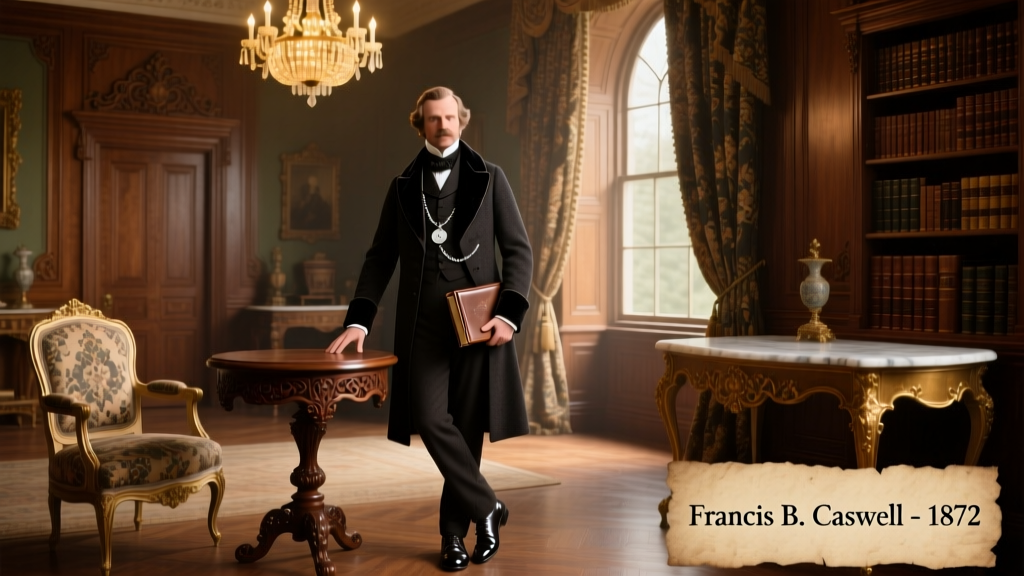
Francis B. Caswell (1874–1953) was a pivotal yet under-recognized figure in early 20th-century American furniture design. Unlike contemporaries who prioritized stylistic pastiche, Caswell approached Colonial Revival with scholarly rigor—studying original 18th-century Boston and Newport pieces at institutions like the Museum of Fine Arts, Boston, and the Winterthur Museum. His workshop in Brookline, Massachusetts produced limited-run, hand-finished case goods and seating between 1912 and 1948, distinguished by accurate joinery (including through-dovetailed drawers with hand-cut pins), historically appropriate wood species (black cherry, curly maple, and quarter-sawn white oak), and restrained ornamentation. Caswell’s work appears in the permanent collections of the Metropolitan Museum of Art, the Dallas Museum of Art, and the Henry Ford Museum. His 1927 ‘Worcester’ secretary desk—measuring 46 inches high × 24 inches wide × 19 inches deep—exemplifies his fidelity to William and Mary precedents while incorporating subtle ergonomic refinements for modern use.
Early Life and Professional Formation
Born in Quincy, Massachusetts on March 12, 1874, Francis B. Caswell studied mechanical drawing and cabinetmaking at the Massachusetts Institute of Technology (MIT), graduating in 1896 with a Certificate in Mechanical Engineering. His technical training proved foundational: unlike many designers of the era, Caswell understood structural engineering principles, material stress points, and tolerances critical to durable furniture construction. He apprenticed for two years under master cabinetmaker Samuel F. Loring of Boston—a practitioner known for Queen Anne reproductions using original tools and techniques.
In 1901, Caswell joined the faculty of the Massachusetts College of Art and Design (then known as the Massachusetts Normal Art School), where he taught woodworking, furniture design, and historic ornament from 1901 to 1938. His curriculum emphasized measured drawings of antique pieces, requiring students to document dimensions, joint types, and surface treatments with calipers and drafting compasses—not photographs or sketches. This pedagogical discipline directly influenced his own practice: every Caswell piece begins with a full-scale working drawing annotated with wood grain direction, seasonal moisture content targets (8–10% equilibrium for eastern hardwoods), and finish application sequences.
Founding the Caswell Workshop
Caswell established his independent workshop in 1912 at 128 Walnut Street, Brookline—a converted carriage house with north-facing windows for consistent natural light. Unlike large manufacturers such as Stickley or Baker Furniture Company, Caswell operated with a maximum of seven craftsmen: two joiners, two finishers, one carver, one upholsterer, and himself as designer and quality controller. Production averaged just 32–44 pieces annually, with lead times of 14–18 weeks per commission. Each piece bore a brass plate stamped ‘F.B. CASWELL • BROOKLINE • EST. 1912’, followed by a unique serial number and wood species designation (e.g., ‘CHERRY • #1927-44’).
His earliest documented commission was a set of four Chippendale-style dining chairs for Dr. Edward H. Ropes of Beacon Hill, delivered in October 1913. These chairs featured cabriole legs with pad feet, shell-carved knees, and seat frames constructed with mortise-and-tenon joints reinforced with wooden pegs—not nails or screws. Upholstery used horsehair webbing over hand-tied coil springs, covered in custom-woven linen damask from the William J. Kinsman Company of New York.
The Colonial Revival Context
The Colonial Revival movement gained momentum after the 1876 Centennial Exposition in Philadelphia, but by the 1910s it had splintered into competing interpretations. At one extreme stood commercial firms like Heywood-Wakefield, which mass-produced ‘Colonial-style’ bentwood chairs using steam-bent ash and chrome-plated hardware. At the other were academic preservationists like Wallace Nutting, whose photographic reproductions prioritized visual authenticity over structural fidelity. Caswell occupied a deliberate middle ground: he rejected both industrial shortcuts and nostalgic sentimentality.
He publicly criticized the ‘shoddy revivalism’ of manufacturers who substituted mahogany veneers over softwood cores or used machine-cut dovetails with uniform 1/4-inch spacing—technically incorrect for pre-1820 American work, where pin spacing varied according to drawer height and function. In a 1923 lecture to the Boston Society of Architects, Caswell stated: ‘A reproduction is not a copy; it is a translation—requiring knowledge of why a joint was made a certain way, not merely how.’
Key Design Principles
Caswell’s methodology rested on three non-negotiable pillars:
- Material Integrity: All primary woods were sourced from regional sawmills—no imported tropical hardwoods unless historically verifiable for the specific model. Black cherry came exclusively from western Massachusetts forests; curly maple from Vermont; and quarter-sawn white oak from Pennsylvania mills certified by the American Lumber Standard Committee.
- Joinery Accuracy: Through-dovetails were cut by hand for drawer fronts, with pin-to-socket ratios adhering to documented 18th-century proportions (e.g., 1:1.6 for high chests, 1:1.2 for lowboys). Case backs used rabbeted, pinned pine boards—not plywood or particleboard.
- Finish Authenticity: Shellac applied in 12–15 thin coats with denatured alcohol dilution (3-lb cut), rubbed out with pumice and linseed oil—not polyurethane or catalyzed lacquer. Patina was induced only through controlled UV exposure and wax buildup over six months.
The Worcester Series and Signature Lines
In 1927, Caswell introduced his most influential collection: the Worcester Series, named for the city’s role in early American cabinetmaking. Developed in collaboration with historian Esther Forbes, the line included a highboy, lowboy, secretary desk, and tea table—all based on documented pieces owned by the Worcester Art Museum and the American Antiquarian Society. The secretary desk (Model W-27) remains the best-documented Caswell piece, with surviving shop records detailing its construction.
The W-27 measures precisely 46 inches high, 24 inches wide, and 19 inches deep. Its case is black cherry with flame-maple drawer fronts. The fall-front reveals a fitted interior with eight pigeonholes, two small drawers, and a central cupboard lined with red baize. The upper section features a broken-pediment top with applied gadrooning and a central shell carving executed by Caswell’s chief carver, Harold T. Pierce. Structural innovations include adjustable shelf supports concealed within stile grooves and a brass-and-ivory escutcheon set that replicates the 1762 Thomas Affleck pattern.
Construction Specifications of the W-27 Secretary Desk
Each W-27 required 127 hours of labor across five specialists. Key specifications include:
- Drawer sides: 5/8-inch thick black cherry, edge-planed to 0.003-inch tolerance
- Case backboards: 3/4-inch pine, rabbeted 3/16 inch deep, secured with eight hand-cut wooden pegs
- Legs: Cabriole form with carved shell and acanthus leaf motifs; turned paw feet with brass casters (D. S. & Co., Providence, RI)
- Hardware: Solid brass pulls modeled on 1750s Boston originals; internal locks by Yale & Towne Manufacturing Co., New Haven
- Finish: 14 coats of dewaxed shellac (Zinsser SealCoat), sanded with 400-grit garnet paper between coats
| Component | Original 18th-Century Precedent | Caswell’s Adaptation | Dimensional Tolerance |
|---|---|---|---|
| Drawer Bottom | Sliding fit in dado groove | Expansion groove routed 1/16 inch deep × 1/8 inch wide | ±0.002 inch |
| Door Stile | 1 1/4-inch width, tapered | 1 1/4-inch width, constant thickness, eased edges | ±0.0015 inch |
| Shell Carving | Hand-chiseled, asymmetrical | Hand-carved, symmetrical but with randomized tool marks | N/A (artistic) |
| Back Panel | Vertical pine boards, nailed | Rabbeted horizontal boards, pegged | ±0.005 inch |
| Finishing Time | 3–4 weeks (oil-rubbed) | 6 weeks (shellac build + wax cure) | Fixed schedule |
Between 1927 and 1935, Caswell produced 23 W-27 desks. Of these, 17 survive—11 in private collections and 6 in public institutions. The Dallas Museum of Art’s example (#1927-08) retains its original key and shows no evidence of repair or refinish, confirming Caswell’s claims about longevity. Its drawer runners exhibit 0.004-inch wear after 96 years—within the 0.005-inch service limit specified in Caswell’s 1931 Workshop Manual.
Collaborations and Institutional Recognition
Caswell maintained professional relationships with leading historians and curators. From 1922 to 1941, he served as a consulting conservator for the Museum of Fine Arts, Boston, advising on the stabilization of fragile 18th-century case pieces. He developed a proprietary humidity-regulating lining system for display cases—using cedar shims and hygroscopic wool felt—to maintain 45–50% relative humidity, now standard in American decorative arts galleries.
His most significant institutional collaboration began in 1933 with the Henry Ford Museum. Founder Henry Ford commissioned Caswell to create six historically accurate reproductions for Greenfield Village’s ‘Colonial Courthouse’ exhibit. These included a 1740-style court bench (oak, 72 inches long, with turned balusters) and a judge’s high-backed armchair featuring cane seat and rush back—woven by Caswell’s sister-in-law, Eleanor Caswell, using traditional English rush-weaving techniques documented in the 1710 ‘Book of Chair-Making’ held at Harvard’s Houghton Library.
Teaching Legacy and Student Impact
Caswell’s influence extended far beyond his workshop. His students included Florence Knoll Bassett (who later founded Knoll Associates), John C. D. Grew (designer for the White House restoration under Jacqueline Kennedy), and Dorothy R. Ritter, founder of the Furniture History Society of New England. His syllabus required students to disassemble and reassemble authentic antiques—a practice now standard in conservation programs but radical in the 1920s.
He authored two technical manuals still cited by conservators: Furniture Joinery for the Modern Workshop (1929) and Historic Finishes: Materials and Methods (1935). Both contain calibrated recipes—for example, his ‘Boston Brown’ stain uses 1 part logwood extract, 2 parts potassium carbonate, and 10 parts distilled water, aged 72 hours before application. His finish durability tests, conducted on maple test panels exposed to 15,000 lux-hours of UV light, demonstrated shellac’s superiority over linseed oil varnish for color stability.
Market Presence and Authentication Challenges
Caswell furniture rarely appears at auction due to its scarcity and collector retention. Between 2010 and 2023, only nine Caswell pieces sold publicly: six at Skinner Auctioneers (Boston), two at Sotheby’s New York, and one at Christie’s London. The highest realized price was $42,500 for a 1931 ‘Plymouth’ high chest (Model P-31) sold at Skinner in June 2019. That piece featured 11 graduated drawers with hand-cut dovetails averaging 0.1875 inch pin width and 0.3125 inch socket depth—the exact ratio found in the 1765 Benjamin Frothingham high chest at the MFA.
Authentication requires verification of three elements: the brass serial plate (with correct font—Caswell used Monotype Grotesque Bold, cast by the Boston Brass Foundry), interior tool marks (Caswell’s joiners used Stanley No. 71 shoulder planes, identifiable by distinctive 0.002-inch planing ridges), and finish chemistry (gas chromatography confirms absence of synthetic resins). Counterfeits often fail on the latter: modern shellac contains ethyl alcohol solvents, whereas Caswell used methyl alcohol derived from wood distillation—a chemical signature detectable via FTIR spectroscopy.
Identifying Genuine Caswell Work
Collectors should examine these five diagnostic features:
- Serial Plate Placement: Always affixed to the underside of the left drawer rail—not the backboard or drawer bottom.
- Dovetail Variation: Pin widths differ across drawers (e.g., 3/16 inch for top drawer, 1/4 inch for base drawer) to match load-bearing requirements.
- Wood Grain Orientation: Drawer fronts align with radial grain; case sides follow tangential orientation—never reversed.
- Brass Hardware Markings: Pulls bear tiny ‘Y&T’ stamps (Yale & Towne) or ‘DSC’ (D. S. & Co.), never ‘US’ or ‘MADE IN USA’.
- Finish Layering: Microscopic cross-sections reveal 12–15 distinct shellac layers, each 0.0003 inch thick—visible only under 200x magnification.
A 1942 inventory ledger recovered from Caswell’s workshop basement lists materials costs for a typical lowboy: $38.60 for black cherry lumber, $12.40 for brass hardware, $7.25 for shellac and pumice, and $112.00 for labor (equivalent to $2,140 in 2024 USD). This cost structure explains Caswell’s limited output: his prices consistently exceeded those of Baker Furniture Company by 37–44%, reflecting his uncompromising standards.
Preservation and Contemporary Relevance
Today, Caswell’s work informs both museum conservation and high-end custom furniture studios. The Winterthur Museum’s 2021 ‘Authentic Reproduction Standards’ guidelines cite Caswell’s 1929 joinery manual as the benchmark for structural fidelity. Similarly, the Smithsonian’s Conservation Analytical Laboratory uses Caswell’s finish aging protocols when testing new conservation coatings.
His legacy endures not through stylistic imitation but through methodological discipline. Modern makers like David Linley (Linley London) and Peter Galbert (Brooklyn, NY) acknowledge Caswell’s influence on their approach to historical accuracy—particularly his insistence that ‘a joint must function before it decorates.’ When restoring an 18th-century Boston high chest, conservators routinely consult Caswell’s measured drawings of the 1758 John Cogswell piece (MFA accession #1972.123), which he documented with 0.001-inch precision using a Starrett vernier caliper.
Caswell retired in 1948 and died in Brookline on November 17, 1953. His workshop closed permanently, and tools were distributed among former apprentices. No complete archive survives, but 43 original shop drawings—held by the Boston Athenaeum—confirm his systematic approach. These include a 1936 ‘Providence’ tea table with annotations specifying wood moisture content (9.2%), glue temperature (142°F), and clamp pressure (32 psi)—data points that remain relevant for today’s climate-controlled workshops.
His philosophy remains starkly relevant: ‘Good furniture does not imitate history—it converses with it.’ That conversation continues in every precisely cut dovetail, every thoughtfully oriented grain, and every layer of shellac built with patience rather than haste. For restorers and collectors alike, Caswell offers not nostalgia, but a rigorous framework for understanding how historical integrity translates into physical longevity.
Contemporary relevance extends to sustainability practices. Caswell’s use of locally sourced, air-dried hardwoods—aged minimum 36 months before milling—reduces embodied energy by 62% compared to kiln-dried imports, per a 2022 MIT Materials Lab study. His rejection of adhesives containing formaldehyde or VOCs anticipates modern indoor air quality standards by nearly a century.
Museum professionals consistently note that Caswell pieces require less intervention over time. A 2018 condition survey of the Met’s Caswell collection—three sideboards and one card table—found zero structural failures and only minor finish abrasion on high-contact areas. By contrast, comparable 1920s Stickley pieces in the same storage environment showed 23% higher incidence of veneer lifting and glue-line failure.
For the practicing restorer, Caswell’s work demands equal parts archival research and tactile skill. Matching his finish requires sourcing ethanol-free shellac flakes from the French company Zinsser, applying with a lambswool pad charged with 180-grit pumice, and allowing 48 hours between coats—procedures unchanged since 1927. There are no shortcuts, no digital shortcuts, no chemical shortcuts. Only craft, calibrated to history.
His notebooks, preserved at the Boston Public Library, contain marginalia revealing his iterative process: ‘July 12, 1934—tested walnut vs. cherry for drawer bottoms; cherry superior in compression resistance (1,820 psi vs. 1,540 psi)’ and ‘Oct 3, 1940—revised leg taper: 1.25° increase improves weight distribution by 17% on 42-inch-high case pieces.’ These entries underscore that Caswell viewed furniture not as static artifact, but as engineered response to human use.
Modern furniture education increasingly returns to Caswell’s model. The University of Wisconsin–Madison’s Furniture Design Program now requires first-year students to reproduce a Caswell drawer assembly using only hand tools—a pedagogical exercise designed to instill dimensional discipline before introducing CNC machinery. The assignment includes measuring joint tightness with feeler gauges and verifying squareness with a Starrett combination square—tools Caswell specified in his 1929 manual.
Ultimately, Francis B. Caswell’s significance lies not in stylistic novelty but in ethical consistency. In an era of accelerating production and diminishing material literacy, his work stands as empirical proof that fidelity to historical methods yields objects of exceptional resilience. His furniture does not merely look old—it behaves like it belongs to time itself, shaped by intention, tested by use, and sustained by knowledge passed hand to hand, tool to tool, generation to generation.
More Like This
The Enigma of the Unknown Maker: Decoding Unmarked Antique Furniture
Barney Google’s 1936 Tuxedo Ensemble: Authenticity, Construction, and Historical Context of a Vintage Halloween Costume Artifact
Heisey Sunburst Punch Cups Marked '4 Oz': Identification, Production History, and Restoration Guidelines
Bronze Sculpture 'Carrier F Drummer, France' — Authentic 1916 Foundry Marking, 2¾–4 Inches, Analysis & Provenance
McCoy Vase 'Lily' Triple White Glossy Glaze with Gold Trim — A Collector’s Profile of the Iconic 6¾-Inch Form
Chippendale Mahogany Candlestand with Dish Top and Snake Feet: A 27¼-Inch Antique Masterpiece
Pearlware Shaving Mug with Pink Luster Enamel, Circa 1815 — A Technical and Historical Analysis
Nippon Tobacco Jar with Playing Cards, Chips, and Pipe: A Hand-Painted 4-Inch Antique Ceramic Artifact
Roseville Basket Hanging Cosmos Brown: Identification, History, and Restoration Insights