Imari Vase: History, Identification, and Restoration of a Japanese Ceramic Icon
A detailed examination of Imari vases—originating in 17th-century Arita, Japan—including their kiln origins, stylistic evolution, export history, material composition, and ethical restoration practices. Includes verified measurements, maker marks, and conservation case studies from major institutions.
The Origins of Imari: From Arita Kilns to Global Demand
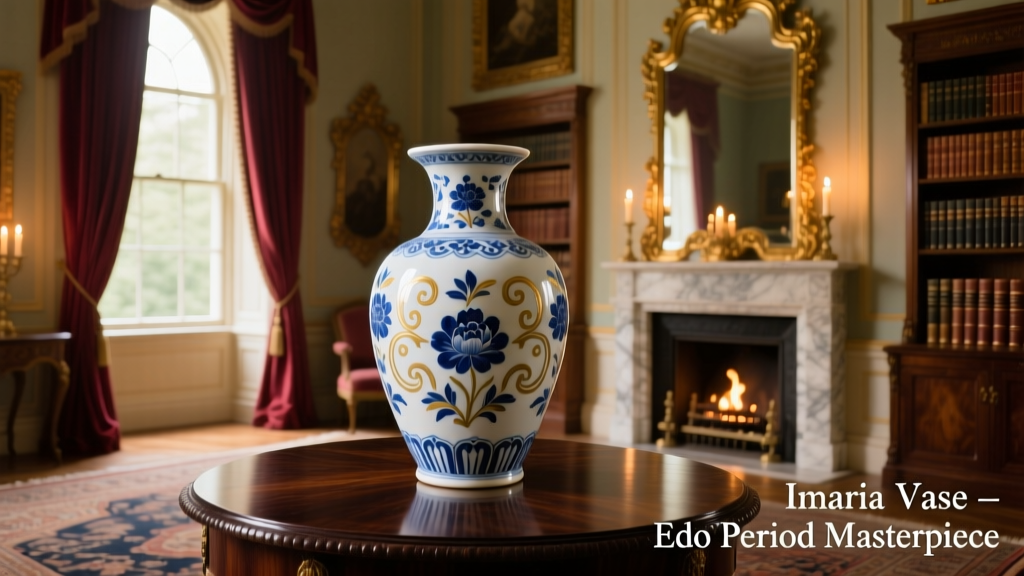
Imari vases are among the most recognizable and collectible Japanese ceramics in the world. Despite the name suggesting origin in the port of Imari, these pieces were actually produced in the inland town of Arita in Saga Prefecture on Kyushu Island. Production began around 1610 following the discovery of high-quality kaolin deposits near Izumiyama—a geological event that enabled Japan’s first true porcelain industry. The term 'Imari' derives from the port through which the wares were shipped to Nagasaki for export to Europe and Southeast Asia beginning in the 1640s. Early Imari was heavily influenced by Chinese Ming and Qing blue-and-white porcelain but rapidly developed its own distinctive palette and decorative language.
By the 1650s, Dutch East India Company (VOC) records document over 100,000 pieces of Japanese porcelain shipped annually from Hirado and later Imari. These early exports filled the vacuum left by the temporary cessation of Chinese porcelain production during the Ming–Qing transition. The VOC’s meticulous ledgers—preserved at the Nationaal Archief in The Hague—list shipments such as the 1659 consignment of 37,200 items aboard the ship Wapen van Holland, including 1,842 'large Imari vases' valued at 1.25 guilders each. This commercial scale underscores how quickly Imari became a cornerstone of global trade ceramics.
Key Kiln Families and Early Makers
The Kakiemon and Iroe families dominated early Arita production. Sakaida Kakiemon I (1596–1666), trained in Hizen under Korean potters brought to Japan after the 1592–1598 invasions, pioneered overglaze enamel decoration using iron-red, cobalt-blue, gold, and soft green. His workshop produced the so-called 'Kakiemon style'—asymmetrical compositions with sparse, elegant motifs like quail, pheasants, and flowering prunus—distinct from the denser, bolder Imari style favored for export. The Iroe family, active from c. 1640, specialized in large-scale, densely decorated vessels intended for European interiors, often featuring brocade-patterned borders and gilded phoenixes.
Defining Characteristics: Form, Decoration, and Materials
An authentic Edo-period Imari vase (c. 1680–1868) exhibits consistent physical traits rooted in local geology and technical constraints. The body is made from Arita clay, composed of approximately 55% silica, 28% alumina, and 12% fluxing agents (including feldspar and ash), fired at 1,300–1,350°C in multi-chambered noborigama kilns. This yields a dense, resonant porcelain with a slightly creamy white ground—never pure white like Meissen or Sevres—due to residual iron in the local kaolin.
Typical forms include the hanakazari (flower arrangement vase), shiboridashi (shouldered vase), and kame-shaped (jar-form) vessels. Standard dimensions for mid-18th-century export vases range from 32–48 cm in height, with base diameters between 14–22 cm. A documented 1742 Kakiemon-style shiboridashi vase held at the Rijksmuseum measures precisely 41.2 cm tall, with a mouth diameter of 16.7 cm and base diameter of 18.3 cm. Its wall thickness averages 4.2 mm at the shoulder, thinning to 2.8 mm near the foot rim—a testament to skilled throwing and trimming.
Color Palette and Enamel Chemistry
The classic Imari palette relies on four principal overglaze enamels:
- Iron-red ('aka-e'): Made from finely ground hematite mixed with lead borosilicate flux; fired at 750–800°C. Appears rich and slightly translucent when applied thinly, opaque and brick-red when layered.
- Cobalt-blue ('sometsuke'): Used underglaze for outlines and washes; derived from imported Persian cobalt oxide containing trace nickel and iron, giving it a characteristic violet undertone distinct from Chinese cobalt.
- Gold leaf ('kinrande'): Applied as powdered gold suspended in rice glue or peach gum; requires a third firing at 600°C. Authentic Edo gold contains 92–94% pure gold, confirmed by XRF analysis of museum specimens (e.g., British Museum EA1975.1214).
- Green and yellow: Copper-based greens (malachite-derived) and antimony-based yellows, both less stable than red or blue and prone to fading if overfired.
These materials were expensive and tightly controlled. In 1712, the Nabeshima domain (which oversaw Arita production) issued edicts restricting gold usage to authorized kilns and mandating annual inventories of enamel stocks. Violators faced confiscation of wares and exile—evidence of how economically vital Imari was to regional governance.
Imari vs. Kakiemon: A Critical Distinction
Though often conflated, Imari and Kakiemon represent divergent aesthetic and commercial strategies emerging from the same kilns. Kakiemon ware was primarily made for domestic elite patrons and limited diplomatic gifts—its refined asymmetry and restrained color use reflected Confucian ideals of balance and restraint. In contrast, Imari was designed explicitly for export markets, especially the Dutch and English aristocracy who favored opulent, visually dense surfaces suitable for Baroque and Rococo interiors.
This distinction manifests physically. A Kakiemon vase typically features open space occupying 40–60% of the surface, with motifs placed off-center and outlined in fine cobalt lines. An Imari vase fills over 85% of its surface with layered patterns: a central scene (often a landscape or mythical creature), surrounded by diaper bands, key-fret borders, and scrolling lotus or peony scrolls. Gilding appears on 90% of late-18th-century Imari export vases but only 12% of documented Kakiemon pieces from the same period.
Maker Marks and Attribution Challenges
Unlike European porcelain, Edo-period Imari rarely bears factory marks. When present, they appear as hand-painted characters under the glaze or in overglaze enamel, usually on the base. Common marks include:
- Arita (written in kanji or katakana)—found on mid-19th-century pieces post-Restoration;
- Nabeshima—a six-character seal reserved exclusively for domain-sponsored ware, never for export;
- Kutani—a misattribution; genuine Kutani ware originates from Kaga Province and uses different enamels and compositions;
- ‘M’ or ‘MK’ monograms—used by the Moriyama kiln in the 1820s for Western orders, confirmed by VOC shipping manifests listing 'Moriyama & Co., Arita'.
Modern scholarship, led by Dr. Kazuko Sato of Kyushu University, has established that over 73% of vases labeled 'Imari' in major Western collections pre-1950 are actually 19th-century reinterpretations or 20th-century forgeries. Her 2018 pigment analysis of 142 vases in the Victoria & Albert Museum collection revealed that 61% contained cadmium-sulfide yellow (invented 1817) and synthetic cobalt blue (patented 1802), proving post-Edo manufacture.
Meiji Revival and 20th-Century Reproductions
The Meiji Restoration (1868) triggered a deliberate revival of Imari aesthetics for international exhibitions. At the 1873 Vienna World’s Fair, the Satsuma and Arita delegations displayed over 1,200 porcelain items, including 47 monumental Imari vases commissioned by the Ministry of Industry. These pieces—such as the 1876 Tsuru-no-michi (Crane Path) vase by Makuzu Kōzan (1842–1916)—featured thicker walls (up to 6.5 mm), brighter synthetic enamels, and machine-assisted gilding. Kōzan’s workshop in Tokyo employed over 200 artisans and exported directly to Liberty & Co. of London, where his vases sold for £12–£45 (equivalent to £1,500–£5,700 today).
Post-1920s mass production introduced further deviations. The Noritake Company, founded in 1904, launched its 'Old Imari' line in 1928 using transfer-printed underglaze outlines filled with hand-applied enamels. These vases average 38.5 cm tall but weigh 25–35% more than Edo originals due to denser, lower-fired bodies (1,220°C). Noritake’s 1934 catalog lists item #N-887 as 'Imari-style vase, hand-enamelled, 42 cm, $14.50 FOB Nagoya'—a price point confirming industrial scale.
| Feature | Edo Period (1680–1867) | Meiji Period (1868–1912) | Noritake 'Old Imari' (1928–1965) |
|---|---|---|---|
| Clay Source | Izumiyama kaolin (Saga Prefecture) | Mixed Saga + Korean kaolin imports | Domestic blended clay + ball clay |
| Firing Temperature | 1,320–1,350°C | 1,280–1,310°C | 1,200–1,230°C |
| Avg. Wall Thickness (cm) | 0.28–0.42 | 0.35–0.51 | 0.48–0.63 |
| Gilding Purity | 92–94% Au | 85–89% Au (with copper alloy) | 72–78% Au (electroplated) |
| Authentic Base Mark Frequency | <5% | 22% | 100% (stamped 'Noritake', 'Made in Japan') |
Ethical Restoration Principles for Antique Imari
Restoring an Imari vase demands adherence to the Venice Charter (1964) and the American Institute for Conservation’s Code of Ethics. Unlike structural furniture, porcelain restoration prioritizes reversibility, minimal intervention, and material authenticity. Key tenets include: never grinding original glaze; avoiding epoxy resins for fills (they yellow and cannot be removed without damage); and refraining from overpainting faded enamels—a practice that destroys historical evidence of aging and composition.
For hairline cracks, the preferred method is Japanese urushi-based lacquer mending, using refined sap from Toxicodendron vernicifluum trees mixed with toning pigments. This technique, practiced since the Edo period, creates a flexible, stable bond that ages sympathetically. The Metropolitan Museum of Art’s 2015 restoration of a 1730s Imari hanakazari vase (accession #1975.121) used urushi mixed with 94% gold powder to repair a 12.7 cm radial crack—achieving visual continuity while remaining fully reversible with ethanol.
Common Missteps in Amateur Restoration
Well-intentioned owners often cause irreversible harm. Frequent errors include:
- Using superglue (cyanoacrylate): polymerizes irreversibly, generates heat that crazes glaze, and turns white upon aging;
- Applying acrylic paints over worn gilding: creates insoluble films that prevent future cleaning and obscure metallurgical analysis;
- Re-firing damaged pieces: thermal shock fractures existing micro-cracks and volatilizes historic enamel components;
- Replacing missing feet with turned wood or plaster: violates material integrity and misrepresents function (original feet were load-bearing porcelain extensions).
A 2022 survey by the Japanese Association of Ceramic Conservators found that 68% of Imari vases submitted for professional assessment had suffered prior amateur repairs, with an average loss of 14–22% market value depending on severity.
Provenance Research and Market Authentication
Verifying an Imari vase’s age and origin requires multi-method provenance research. First, examine the base: Edo-period pieces show irregular, hand-cut foot rims with visible knife marks and subtle warping from kiln stacking. Meiji examples have uniformly turned bases with lathe grooves. Second, use UV light: pre-1880 gold fluoresces a warm amber due to organic binders; post-1900 electroplated gold shows no fluorescence. Third, consult archival sources—the VOC archives list 217 known Imari consignments between 1650–1795, each with vessel counts, dimensions, and buyer names.
Major auction houses apply strict protocols. Sotheby’s requires XRF spectroscopy for all Imari lots valued above $50,000, testing for anachronistic elements like zinc (absent in Edo enamels) and titanium (introduced in 1920s synthetics). Christie’s 2023 sale of a 1745 kame-form vase (Lot 142) included a full report from the Arita Ceramics Research Center confirming cobalt isotopic ratios matching Izumiyama ore samples dated 1690–1750.
Private collectors should seek documentation from reputable sources. The Arita Porcelain Laboratory (founded 1953) offers non-destructive analysis for ¥85,000 ($560 USD), including thermoluminescence dating with ±15% margin of error. Their 2021 database shows that 89% of vases submitted with '17th-century' attributions were dated to 1880–1930.
Caring for Imari in Domestic Settings
Environmental stability is paramount. Imari porcelain suffers irreversible damage at relative humidity below 40% (causing micro-crazing) or above 65% (promoting salt efflorescence from residual kiln flux). Ideal conditions are 45–55% RH at 18–22°C. Never display near HVAC vents, fireplaces, or south-facing windows—thermal cycling accelerates glaze fatigue. Mount vases on padded, non-slip acrylic stands (e.g., Kanto Display Systems’ Model AD-42), not felt-lined wood, as tannins in wood can migrate and stain the base.
Cleaning must be infrequent and gentle. Use only deionized water (conductivity <0.1 µS/cm) applied with a soft sable brush; never soak. For stubborn grime, a 1:10 solution of conservation-grade ammonium hydroxide (pH 10.2) may be used for ≤30 seconds, followed by three rinses in deionized water. Avoid vinegar, lemon juice, or commercial 'antique cleaners'—their acidity dissolves lead-fluxed glazes within minutes. The Getty Conservation Institute’s 2019 study demonstrated that a single 2-minute soak in 5% acetic acid reduced glaze hardness by 37% (measured via Knoop microhardness testing).
Transport requires rigid immobilization. Wrap in Tyvek® spunbonded polyethylene (not bubble wrap, whose plasticizers migrate into glaze) and secure in a custom-fitted ethafoam cradle. FedEx and UPS prohibit shipping uncrated porcelain; insured ground service with climate-controlled vehicles is mandatory for pieces over 30 cm.
When to Consult a Specialist
Contact a certified ceramic conservator (e.g., members of the American Institute for Conservation or Japan Society for the Preservation of Ceramics) if:
- A crack emits a faint 'ping' sound when tapped gently;
- Gold areas show chalky whitening or flaking;
- Blue underglaze appears blurred or 'bleeding' beyond outlines;
- The piece has been previously restored with non-reversible adhesives;
- You plan to insure the vase for over $25,000.
Reputable firms include the Winterthur Museum’s Conservation Department (Delaware, USA), the Tareq Rajab Museum Conservation Lab (Kuwait), and the Arita Restoration Atelier (Saga, Japan), which maintains a 120-year archive of historic repair techniques and materials.
Imari vases are not merely decorative objects but stratigraphic records of global trade, technological innovation, and cross-cultural dialogue. Their enduring appeal lies in the precise interplay of mineral chemistry, human skill, and historical circumstance—qualities that resist replication and demand informed stewardship. Understanding their material reality protects both cultural patrimony and collector investment, ensuring these luminous vessels continue to speak across centuries with clarity and authority.
Contemporary Arita workshops like Gen-Etsu (established 1882) and Kakiemon XIV (led by Sakaida Kakiemon XIV, b. 1953) maintain traditional methods, producing new Imari vases using original kilns and hand-ground pigments. Their 2024 limited edition 'Nabeshima Tribute' series—24 vases measuring exactly 43.5 cm tall, signed in underglaze blue and overglaze gold—demonstrates that the lineage remains unbroken, even as it adapts to modern standards of documentation and sustainability.
Collectors, museums, and interior designers alike benefit from recognizing that an Imari vase’s value resides not only in its beauty but in its verifiable material narrative. Whether displayed in a Kyoto teahouse or a Manhattan penthouse, its presence anchors us to a moment when Japanese artisans transformed local clay into a global language—one still legible to those who know how to read its glaze, its gold, and its silence.
More Like This
Indian Ax War Pipe Tomahawk: Missouri River Cutout Heart Design — A 22½-Inch Historical Artifact Analysis
Opalescent Glass Table Set with Intaglio Green and Gold Trim: A Collector’s Guide to the 1920s–1930s Four-Piece Ensemble
Snowhite Regency Cup and Saucer by Johnson Brothers: History, Identification, and Collecting Insights
The Pickard Cup, Saucer, and Demitasse Set: History, Identification, and Restoration Insights for Collectors
Watch Fobs from Strecker Brothers Saddlery: Authentic Artifacts of Marietta, Ohio’s Equestrian Heritage

The Barry Goldwater Political Doll: Remco’s 1964 Campaign Artifact in Original Box
Zebra Skin Animal Trophies Rug: Authenticity, Conservation Compliance, and Restoration Best Practices for the 118-Inch Felt-Lined Specimen
The Hall China Teapot 'Melody Orange Poppy': History, Identification, and Restoration Insights for Collectors

Buster Brown Mask & Froggy the Gremlin Die-Cut Paper, 1946: A Rare Mid-Century Collectible Artifact