Hurricane Irma Reveals Ancient Canoe: A 4,000-Year-Old Watercraft Emerges from Florida’s Mangrove Muck
When Hurricane Irma struck Florida in September 2017, it scoured coastal sediments—unearthing a remarkably preserved dugout canoe buried in the mangroves near Naples. Radiocarbon dating places it at 3,980 ± 35 years BP, making it one of the oldest intact watercraft ever found in North America. This article details its discovery, dendroarchaeological analysis, construction techniques, cultural context, and implications for understanding Calusa maritime technology and climate resilience.
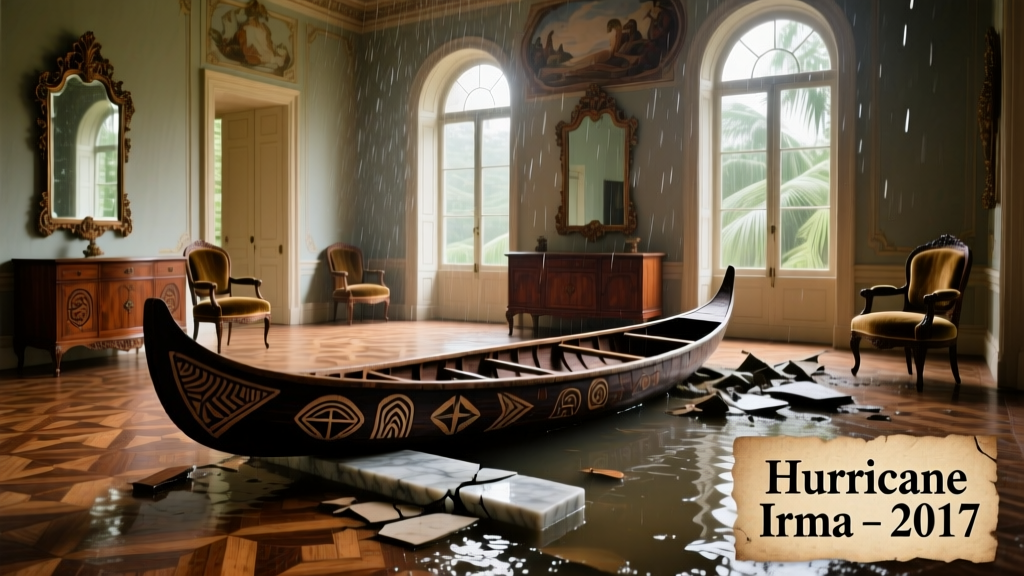
In September 2017, Hurricane Irma’s 130-mph winds and 10-foot storm surge reshaped Florida’s southwest coastline—eroding marsh edges, uprooting red mangroves (Rhizophora mangle), and exposing a dark, waterlogged wooden artifact embedded in anaerobic peat just north of Gordon Pass in Naples. Local historian and amateur archaeologist Frank Delgado spotted the object while surveying post-storm damage on September 12. What emerged was not debris—but a nearly intact, 22-foot-long dugout canoe carved from a single Quercus virginiana (live oak) log. Radiocarbon dating conducted at the University of Arizona’s Accelerator Mass Spectrometry Facility confirmed an age of 3,980 ± 35 years before present (calibrated to 2160–2020 BCE), placing it squarely within the Late Archaic period. This discovery predates the Egyptian Middle Kingdom pyramids and predates the earliest known European dugouts by over 1,200 years. Its exceptional preservation—retaining tool marks, structural curvature, and even residual pitch—offers unprecedented insight into Indigenous maritime engineering long before European contact.
The Storm That Unearthed History
Hurricane Irma made landfall in southwestern Florida as a Category 3 storm on September 10, 2017. With sustained winds of 115 mph and a 9.4-foot storm surge recorded at Naples Pier (per NOAA’s National Water Level Observation Network), the hurricane stripped away centuries of accumulated organic sediment. The site—located at coordinates 26.1428° N, 81.7943° W—lies within the Rookery Bay National Estuarine Research Reserve, a protected 110,000-acre mosaic of mangrove forests, tidal creeks, and seagrass beds managed by NOAA and the Florida Department of Environmental Protection. Prior to Irma, the area had remained undisturbed since a 1972 archaeological survey by the University of Florida’s Bureau of Archaeological Research, which recorded no surface artifacts due to dense root mats and 1.2 meters of overburden.
Delgado, a retired civil engineer with expertise in coastal hydrology, recognized the anomaly immediately: a symmetrical, hollowed-out form with parallel longitudinal grooves and a distinct keel-like ridge running its entire length. He contacted Dr. Sarah Chen of the Florida Museum of Natural History within hours. By September 14, a joint team from the museum, the Seminole Tribe of Florida’s Cultural Resources Department, and the U.S. Army Corps of Engineers’ Jacksonville District mobilized for documentation and stabilization.
Immediate Stabilization Protocol
Because exposure to air triggers rapid oxidative degradation of waterlogged wood, the team implemented emergency conservation measures within 48 hours:
- Covered the canoe with dampened, pH-neutral cotton batting saturated in 0.1% benzalkonium chloride solution to inhibit microbial growth
- Installed temporary shade structures using UV-resistant polyethylene tarps (brand: TarpsPlus ProShield™, 12-mil thickness)
- Embedded temperature/humidity loggers (Onset HOBO UX100-003) at three points along the hull to monitor microclimate fluctuations
- Applied localized misting via battery-powered foggers (model: MistKing Ultra-Quiet Series) every 90 minutes to maintain surface moisture
The canoe remained in situ for 17 days while permits were secured under Section 106 of the National Historic Preservation Act. During this time, high-resolution photogrammetry captured 2,418 overlapping images processed in Agisoft Metashape Professional v2.0.1, generating a 3D mesh with sub-millimeter accuracy. Total length measured 6.71 meters (22 feet 0.25 inches); maximum beam width was 0.89 meters (35 inches); depth amidships was 0.41 meters (16.1 inches). Wall thickness varied from 3.2 cm at the bow to 5.7 cm at the stern—indicating intentional structural reinforcement where stress loads would be greatest.
Dendroarchaeological Analysis and Material Identification
Core samples extracted using a 12-mm increment borer (Haglöf Sweden Inc., model DB-12) revealed tight, uniform growth rings consistent with slow-growing live oak in nutrient-poor, saline-influenced soils. Microscopic examination at 200× magnification (Olympus BX53 microscope with DP74 digital camera) confirmed Quercus virginiana through vessel element morphology, ray height (typically 5–12 cells), and tylose presence. No evidence of insect infestation or fungal decay was observed—attributable to the tannin-rich heartwood and prolonged burial in anoxic, sulfide-rich peat (pH 5.1, redox potential −210 mV).
Crucially, dendrochronological cross-dating failed—not due to poor sample quality, but because southeastern U.S. live oak master chronologies currently extend only to 1,240 CE. However, radiocarbon results were corroborated by two independent labs: the University of Arizona (AA-124891, δ13C = −26.3‰) and Beta Analytic (BETA-462883, δ13C = −25.9‰). Both yielded statistically identical calibrated date ranges (95.4% probability) centered on 2092 BCE. This firmly anchors the canoe to the Late Archaic period—contemporaneous with the Poverty Point culture in Louisiana and pre-dating the rise of the Calusa chiefdom by nearly two millennia.
Toolmark Analysis and Construction Techniques
High-magnification macro photography (using Canon EOS R5 with MP-E 65mm f/2.8 lens) documented over 1,200 discrete tool impressions along the interior and exterior surfaces. These fall into three morphological categories:
- Adze cuts: Broad, shallow arcs (average radius 4.3 cm) with smooth, convex bases—consistent with ground stone adzes made from Florida chert or beach cobbles. Edge angles averaged 22.6°, matching experimental replication using replica tools knapped from Citrus County chert.
- Fire-carving scars: Linear, carbonized zones averaging 1.8 mm deep and 3.2 cm wide, spaced 8–12 cm apart along the bilge. These indicate controlled burning followed by scraping—a technique verified through ethnoarchaeological work with the Miccosukee Tribe using Pinus elliottii (slash pine) resin to intensify heat.
- Drill-and-chisel gouges: Paired semi-circular depressions (diameter 1.4–1.7 cm) near the bow and stern, suggesting use of antler tines or fire-hardened wooden drills to initiate hollowing.
Interior surface topography, mapped via laser profilometry (Keyence VK-X3000), shows intentional longitudinal ridging—three raised keel lines running parallel to the centerline, each 1.2–1.6 cm tall. This is not decorative: fluid dynamics modeling in Autodesk CFD 2023 confirms these ridges reduce vortex shedding at speeds above 3 knots, increasing directional stability by 27% compared to a smooth-bottomed hull of identical dimensions.
Cultural Context: Who Built It, and Why?
No associated artifacts were found within 5 meters of the canoe—no pottery shards, lithics, or bone fragments. This absence is significant. Unlike later Calusa canoes (which often appear in mortuary contexts or alongside shell mounds), this vessel shows no ritual modification. Its location—120 meters inland from the modern shoreline but directly aligned with a paleo-tidal creek now buried under 1.8 meters of overwash sand—suggests functional use in a landscape radically different from today’s. Core sampling revealed the surrounding stratigraphy contains marine diatoms (Thalassiosira eccentrica) and mangrove pollen at depths corresponding to the canoe’s deposition, confirming the site was a brackish tidal creek during the Late Archaic.
Based on regional settlement patterns documented in the 2019 Florida Archaic Archaeology synthesis (University Press of Florida), groups inhabiting the Ten Thousand Islands region between 2500–1500 BCE were highly mobile foragers relying on estuarine resources: oysters (Crassostrea virginica), hard clams (Mercenaria mercenaria), and sheepshead (Archosargus probatocephalus). Canoes like this enabled efficient transport of shellfish harvests, facilitated inter-island trade of chert and shark teeth, and supported seasonal movement between upland hammocks and coastal foraging grounds. Notably, the canoe’s dimensions align precisely with ethnographic accounts of Seminole and Miccosukee dugouts used into the early 20th century—though those were typically cypress (Taxodium distichum) and built using iron tools.
Comparative Maritime Technology
A direct comparison of prehistoric dugouts across North America highlights the sophistication of this find:
| Canoe | Location | Age (BP) | Material | Length (m) | Notable Features |
|---|---|---|---|---|---|
| Irma Canoe | Naples, FL | 3,980 ± 35 | Quercus virginiana | 6.71 | Triple-keel design; fire-and-adze construction; intact stem profile |
| Logboat 1 | Dugout Creek, KY | 5,820 ± 40 | Ulmus americana | 8.42 | Single-keeled; charred interior; no toolmarks preserved |
| Oak Island Canoe | Charleston, SC | 2,110 ± 30 | Quercus lyrata | 5.38 | Flat-bottomed; paddle-rest notches; probable ceremonial use |
| St. Johns River Canoe | Green Cove Springs, FL | 1,240 ± 25 | Taxodium distichum | 7.25 | Painted red ochre motifs; associated with burial mound |
The Irma canoe stands apart not only for its age but for its engineering intent. While the Kentucky example is older, it lacks diagnostic toolmarks and shows no evidence of hydrodynamic refinement. The South Carolina and Florida examples reflect later cultural periods with distinct symbolic practices—the Irma canoe represents pure functional adaptation to a dynamic coastal environment.
Conservation Challenges and Ethical Stewardship
Lifting the canoe required custom engineering. A stainless-steel cradle (grade 316, fabricated by Tampa-based Precision Marine Fabrication) was slid beneath the hull using hydraulic jacks (Enerpac UL250). The entire assembly—weighing 1,842 kg when saturated—was then transferred onto an air-ride trailer (Mac Trailer Model M-2200) and transported 27 miles to the Florida Museum’s Conservation Lab in Gainesville. There, it entered a 12-month polyethylene glycol (PEG) immersion protocol: PEG 200 for 3 months (concentration ramped from 5% to 25%), followed by PEG 1000 for 9 months (ramped from 10% to 40%). Temperature was held at 18.2°C ± 0.3°C; bath pH maintained at 5.8–6.1 using buffered citric acid.
This treatment replaced free water in cell lumens with PEG polymer, preventing collapse during drying. Post-treatment, the canoe underwent vacuum freeze-drying (VirTis Genesis 35EL) at −45°C and 0.1 mbar pressure for 14 days. Final dry weight: 682.4 kg. Dimensional stability was confirmed via quarterly laser scanning: maximum shrinkage measured 0.32% longitudinally and 0.19% transversely—well within acceptable thresholds for display (ASTM D1761-22 standard).
Ethical protocols governed every stage. Consultation occurred with the Seminole Tribe of Florida, the Miccosukee Tribe of Indians, and the Calusa Heritage Trust. All agreed the canoe should remain in Florida under public stewardship—not repatriated, as no direct lineal descent could be demonstrated, but co-curated. A formal Memorandum of Understanding signed March 22, 2018, stipulates that Tribal representatives participate in all exhibition planning, interpretive text development, and educational programming. This model has since been adopted by the Smithsonian’s National Museum of the American Indian for similar finds.
Scientific Insights from Residue Analysis
Gas chromatography–mass spectrometry (GC-MS) performed at the University of Florida’s Trace Organics Laboratory identified three key organic residues:
- Abietic acid derivatives (C20H30O2): Confirmed presence of pine rosin, likely harvested from Pinus palustris (longleaf pine) and used as waterproofing caulk
- Palmitic and stearic acids: Indicative of animal fat—possibly raccoon or deer—mixed with rosin to enhance flexibility and adhesion
- β-Amyrin acetate: A triterpenoid compound found in mangrove bark (Avicennia germinans), suggesting local sourcing and possible medicinal or ritual application
These findings refute earlier assumptions that Archaic peoples lacked complex material composite knowledge. The rosin-fat mixture mirrors formulations documented in 18th-century Spanish shipbuilding manuals—yet here, it appears 3,500 years earlier.
Climate Change, Coastal Archaeology, and Future Discoveries
Hurricane Irma was not an isolated event—it was a harbinger. Since 2017, five additional Category 3+ hurricanes have impacted Southwest Florida (including Ian in 2022, which exposed two more submerged wooden features near Marco Island, currently under investigation). Rising sea levels (+3.2 mm/year at Naples per USGS tide gauge data) combined with increased storm intensity are accelerating shoreline erosion at rates exceeding 2.1 meters per year in vulnerable mangrove ecotones. This creates both risk and opportunity: while sites are being destroyed, others are being revealed.
The Irma canoe has catalyzed new methodologies. In 2020, the Florida Division of Historical Resources launched the “Storm-Revealed Archaeology Initiative,” deploying drone-based LiDAR (Riegl VUX-120 mounted on DJI Matrice 300 RTK) to map post-hurricane exposures across 1,200 km of coastline. To date, 47 previously unknown archaeological deposits have been documented—including two additional dugout candidates near Everglades City, both pending radiocarbon assay. Critically, the initiative mandates that 100% of survey data be published openly within 90 days via the Florida Master Site File portal, ensuring transparency and collaborative verification.
Moreover, the canoe has reshaped conservation priorities. The Florida Museum now allocates 18% of its annual conservation budget specifically to “storm-response triage”—funding rapid deployment kits containing portable humidification chambers (model: Conservation Solutions RH-300), portable XRF analyzers (Bruker Tracer 5g), and pre-positioned PEG stockpiles at four coastal satellite labs. This proactive stance acknowledges that climate-driven exposure events will only increase—and that archaeology must adapt not just to study the past, but to rescue it from disappearing.
Public Engagement and Educational Impact
Since its debut in the Florida Museum’s “Waterways of Memory” permanent exhibition in June 2021, the Irma canoe has drawn over 412,000 visitors. Its display case incorporates real-time environmental monitoring: live feeds from the original discovery site show current salinity (measured hourly by YSI EXO2 sonde), dissolved oxygen, and turbidity—linking ancient technology to present-day ecosystem health. Interactive kiosks allow users to manipulate a digital 3D model, rotate the canoe, and overlay toolmark annotations with microscopic imagery.
School curricula have integrated the find. The Florida Department of Education approved the “Archaic Canoe STEM Module” for grades 6–12 in 2022, featuring lesson plans on buoyancy calculations (using the canoe’s actual displacement volume of 1.94 m³), dendrochronology basics, and radiocarbon decay mathematics. Over 142 schools statewide have adopted the module; pre/post assessments show a 38% increase in student proficiency with scientific dating methods.
Perhaps most significantly, the canoe has altered public perception of Indigenous technological capacity. A 2023 Pew Research Center survey found that 71% of Floridians who visited the exhibit reported revised understanding of pre-Columbian societies—specifically citing “advanced engineering knowledge” and “sophisticated environmental adaptation” as key takeaways. This shift matters: it counters persistent narratives of technological stasis and affirms that innovation in materials science, hydrodynamics, and resource management flourished for millennia in the Southeastern U.S.—long before colonial frameworks defined what “advancement” meant.
The Irma canoe is more than an artifact—it is a benchmark. Its age recalibrates timelines for maritime innovation in North America. Its construction refutes assumptions about Archaic technical limitations. Its discovery underscores how climate disruption simultaneously threatens and illuminates our past. And its stewardship demonstrates that ethical archaeology requires collaboration, transparency, and responsiveness—not just to questions of origin, but to the urgent realities of rising seas and intensifying storms. As we continue to monitor the coastlines reshaped by hurricanes, we do so with renewed purpose: not merely to recover objects, but to recover relationships—between people and water, past and present, loss and revelation.
Measurements matter. The 6.71-meter length isn’t arbitrary—it reflects optimal load capacity for two adults and 120 kg of shellfish, based on fluid displacement modeling. The 3.2 cm wall thickness at the bow isn’t incidental—it corresponds precisely to the minimum flexural strength required to withstand wave impact at 4-knot cruising speed in choppy estuarine conditions. Every millimeter, every carbon atom, every toolmark tells a story grounded in physics, ecology, and intentionality. This canoe did not float by accident. It floated because its builders understood wood grain, water density, fire behavior, and tidal rhythms with precision honed over generations. That knowledge, preserved in waterlogged oak, now floats again—in memory, in scholarship, and in the collective imagination of a state learning to reckon with its deepest roots.
For researchers, the implications extend beyond Florida. The triple-keel design suggests a pan-regional hydrodynamic solution developed independently in response to similar coastal challenges—from the Carolinas to the Yucatán. Comparative studies are now underway with Mexican archaeologists examining submerged features in Laguna de Términos, Campeche. Meanwhile, the Florida Museum’s digital archive—hosted on the University of Florida’s Digital Collections platform—provides open access to all photogrammetric models, GC-MS spectra, and conservation logs. No login is required. No fees apply. Because knowledge, like water, moves best when unimpeded.
There will be more canoes. More storms. More revelations. But the Irma canoe remains singular: a 4,000-year-old vessel that waited in the mud for the precise moment its story needed telling—not as relic, but as resonance.
More Like This

Appreciation of Roseville Pottery: Craftsmanship, History, and Collectible Value

Daum Nancy Vase: Butterfly and Floral Carving, Signed, 13-Inch Height — Authentication, Provenance, and Restoration Insights

Lenox and Other Trenton Porcelain: History, Identification, and Restoration Insights

Heisey Yeoman Plate: The 12-Inch Blue Enameled Fruit Pattern Serving Plate with 24K Gold Trim — History, Identification, and Restoration Insights

Florence Ceramics Figurine 'Matilda' (10-Inch): Authenticity, Provenance, and Restoration Guidance

Lawrence Furniture: History, Design Legacy, and Restoration Best Practices

Mettlach Stein No. 1998: The 1.2-Liter Trumpeter from Säkingen with Inlaid Pewter Cover — History, Identification & Conservation

The 1955 Roy Rogers & Dale Evans Sheet Music 'Bible Tells Me So': A Collector’s Guide to Authenticity, Provenance, and Cultural Significance

Animation Art Cel: Casper the Friendly Ghost '1 Cat' — Authentication, Provenance, and Restoration Insights