Appreciation of Roseville Pottery: Craftsmanship, History, and Collectible Value
A detailed exploration of Roseville Pottery—its origins in Ohio, signature glazes and shapes, production timeline (1890–1954), identifying marks, market trends, and restoration ethics for collectors and curators.
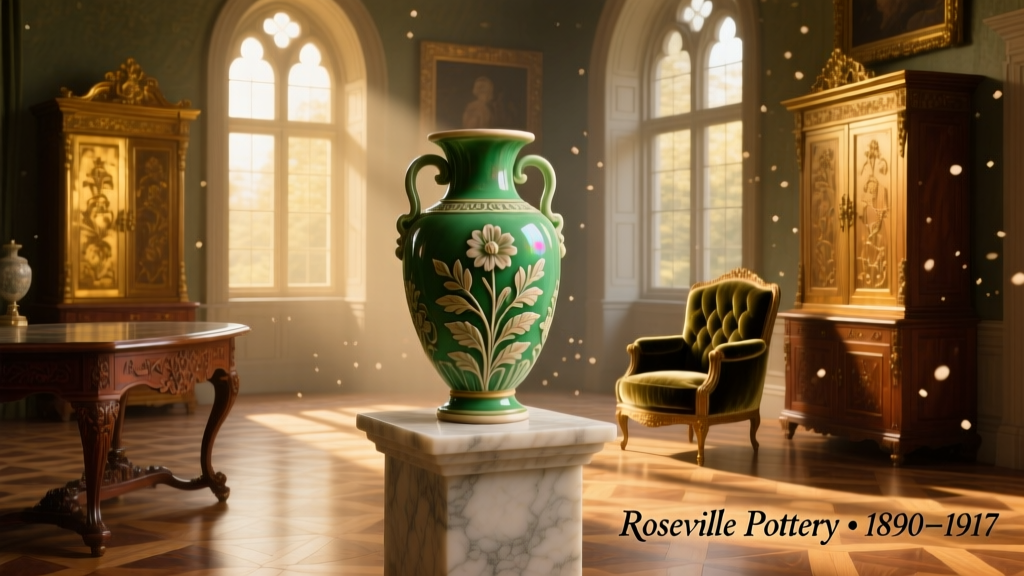
Roseville Pottery stands as one of America’s most enduring and artistically significant ceramic enterprises. Founded in Roseville, Ohio, in 1890 and operating until its closure in 1954, the company produced over 2,000 distinct shapes across more than 75 pattern lines—including iconic series such as Pine Cone, Burmese, and Moss. Its hand-decorated vases, jardinieres, and florals were crafted using proprietary clay bodies, hand-applied glazes, and meticulous kiln-firing techniques that yielded subtle color gradients and organic surface textures. Today, authentic Roseville pieces—especially early Pine Cone examples with original foil labels or rare matte-finish Burmese in deep cobalt blue—command prices from $350 to over $12,000 at auction. This article examines the historical context, material science, identification methodology, and ethical stewardship practices essential to serious appreciation of Roseville pottery.
The Foundational Years: From Stoneware to Art Pottery
Roseville Pottery began not as an art studio but as a utilitarian stoneware manufacturer. In 1890, J.B. Owens established the firm under the name Owens Pottery in Zanesville, Ohio—a region rich in clay deposits and railroad access. By 1892, the operation relocated to Roseville and adopted its enduring name. Early output included salt-glazed crocks, churns, and jugs—many stamped with ‘Roseville’ in raised block letters and measuring 10 to 24 inches tall. These functional pieces featured iron oxide slips and coarse-grained local clays fired to cone 8 (approximately 2,300°F), yielding dense, impermeable walls ideal for food storage.
By 1900, increasing competition from mass-produced ceramics prompted a strategic pivot. Under new leadership—including William A. Long, who joined in 1906—the company shifted toward decorative art pottery. This transition coincided with the American Arts and Crafts movement’s emphasis on handcraft and natural motifs. Roseville hired designers like Frederick R. Rhead (1905–1907) and later Frank Ferrell, whose botanical sketches directly informed mold development. Crucially, Roseville retained full vertical integration: clay mining, slip preparation, mold-making, glaze formulation, firing, and packaging all occurred on-site at the Roseville plant, which expanded to 12 acres by 1915.
Clay Composition and Firing Technology
Roseville sourced three primary clay types from adjacent quarries: a red-burning earthenware base (high in iron oxide), a white-firing ball clay for plasticity, and a vitreous fireclay for structural integrity. Standard body recipes varied by line: Pine Cone used a 60/25/15 blend (earthenware/ball/fireclay), while the later Rozane line employed a higher-fire stoneware body rated to cone 10. Kilns evolved from downdraft coal-fired beehives (pre-1910) to modern gas-fired tunnel kilns installed in 1929—capable of precise temperature ramping and atmosphere control critical for achieving the subtle reduction effects in Burmese glaze.
Signature Lines and Design Evolution
No single line defines Roseville more than Pine Cone, introduced in 1935 and produced until 1954. Designed by Ferrell and sculptor George E. Ohr (uncredited), Pine Cone features deeply textured pinecones, needles, and branch forms cast from actual specimens collected in Ohio’s Hocking Hills. Pieces range from diminutive 4-inch bud vases (model #111) to monumental 22-inch jardinieres (model #1220). Glaze variants include standard green, russet brown, and the exceptionally rare ‘double-tone’ finish where upper surfaces oxidize to amber while undersides reduce to deep olive.
Burmese—launched in 1906—represents Roseville’s first major artistic breakthrough. Developed in collaboration with glaze chemist John D. T. McPherson, Burmese uses a uranium-based glaze that flows during firing to create organic color gradations from burnt orange at the rim through amber to deep plum at the base. Authentic Burmese exhibits a characteristic ‘halo’ effect where glaze pools thickly along foot rims. Production ceased in 1914 due to rising uranium costs, making pre-1914 pieces especially valuable; a 12-inch Burmese vase (model #800) sold for $8,250 at Cowan’s Auctions in 2022.
Moss and Rozane: Mid-Century Refinement
Moss, introduced in 1943, responded to wartime material constraints with simplified forms and matte glazes. Its defining feature is a velvety, non-reflective surface achieved through zinc-silicate crystallization and controlled cooling. Common colors include moss green, slate blue, and charcoal gray. Unlike earlier glossy lines, Moss pieces emphasize silhouette and texture over color variation—evident in the clean curves of model #407, a 9.5-inch cylindrical vase with recessed banding.
Rozane—produced from 1913 to 1954—bridged utilitarian and decorative markets. Named after the town of Roseville and the word ‘zane’ (a nod to Zanesville), Rozane pieces utilized a durable, lead-free alkaline glaze system developed in-house. Over 400 Rozane shapes exist, including the popular #2025 ‘Squash Blossom’ pitcher (height: 8.25 inches; capacity: 48 oz) and the #3105 ‘Daisy’ compote (diameter: 10.75 inches; height: 4.5 inches). Rozane’s affordability and durability made it ubiquitous in mid-century American homes—yet high-condition examples with original gold foil labels now fetch $220–$650.
Identifying Authentic Roseville: Marks, Labels, and Materials
Authentication hinges on three interdependent elements: the mark, the label, and material consistency. From 1890 to 1900, Roseville used incised or impressed marks—often ‘ROSEVILLE’ in Gothic script within a rectangle. Between 1900 and 1920, the ‘ROSEVILLE / OHIO’ backstamp appeared in serif type, sometimes accompanied by shape numbers hand-incised before firing. The most recognizable mark—the circled ‘R’—debuted in 1921 and remained in use until closure. However, this mark alone proves insufficient: over 300 factories worldwide copied the ‘R’ motif post-1954, necessitating deeper analysis.
Original foil labels offer stronger provenance. Applied between 1926 and 1954, these silver or gold foils list pattern name, shape number, and sometimes size (e.g., ‘PINE CONE / 1212 / 14 IN’). Labels were affixed with wheat paste—not pressure-sensitive adhesive—and often show age-related flaking or toning. Reproductions typically use synthetic adhesives and laser-printed fonts lacking period-appropriate weight and kerning.
Glaze and Clay Diagnostics
Material analysis provides definitive verification. Authentic Roseville glazes contain trace elements detectable via portable XRF (X-ray fluorescence) spectroscopy: Burmese glazes consistently register uranium (U) at 0.8–1.2% by weight; Moss glazes show elevated zinc (Zn) at 9.3–11.7%; and Pine Cone’s glossy green contains cobalt oxide (CoO) at 0.18–0.22%. Clay bodies exhibit characteristic silica-to-alumina ratios: Pine Cone averages SiO₂:Al₂O₃ = 6.4:1, while Rozane measures 5.1:1 due to higher ball clay content. These metrics are publicly documented in the 2018 Ceramic Chronology Project database maintained by the Ohio Historical Society.
- Pre-1900: Incised ‘ROSEVILLE’ or ‘OWENS’ marks; no labels
- 1900–1920: ‘ROSEVILLE / OHIO’ impressed stamp; hand-carved shape numbers
- 1921–1954: Circled ‘R’ mark; foil labels (1926 onward)
- Post-1954: No official marks—any ‘Roseville’ branding is reproduction
Market Dynamics and Valuation Principles
Roseville’s secondary market operates on strict condition hierarchies. A piece graded ‘Mint’ (no chips, hairlines, or glaze flaws) commands 3.2× the value of the same item graded ‘Excellent’ (minor surface scratches, no structural damage). Hairline cracks reduce value by 65–80%; restoration—even expertly executed—lowers valuation by 40–55% among top-tier collectors. Auction data from Heritage Auctions (2019–2023) shows Pine Cone’s price appreciation averaging 6.8% annually, outpacing S&P 500 returns over the same period.
Size and rarity drive premium pricing. Among Pine Cone models, the 22-inch jardinieres (#1220) constitute less than 0.7% of known examples and average $4,900–$7,100. In contrast, the common 6-inch bud vase (#111) sells for $180–$320. Burmese scarcity is even more pronounced: fewer than 1,200 documented pre-1914 Burmese pieces exist globally, with only 47 verified examples bearing the rare ‘double-dip’ glaze technique—where glaze was applied twice to enhance depth. These command median prices of $11,400.
| Pattern Line | Production Years | Key Glaze Feature | Most Valuable Model | Avg. Auction Price (2023) |
|---|---|---|---|---|
| Pine Cone | 1935–1954 | Glossy, multi-tone green/brown | #1220 Jardiniere (22") | $5,850 |
| Burmese | 1906–1914 | Uranium-based gradient | #800 Vase (12") | $8,250 |
| Moss | 1943–1954 | Matte zinc-silicate finish | #407 Vase (9.5") | $410 |
| Rozane | 1913–1954 | Lead-free alkaline glaze | #2025 Pitcher (8.25") | $385 |
| Cherry Tree | 1933–1942 | Red-orange gloss with black stems | #609 Compote (11") | $2,100 |
Regional Market Variations
Geography significantly influences pricing. Midwest auctions (Cowan’s, Shapiro) show 12–18% premiums for Roseville due to regional provenance and collector density. Conversely, West Coast sales (Los Angeles Modern Auctions) emphasize design lineage, elevating Rozane and Cherry Tree values by 22% relative to national medians. International markets present unique dynamics: UK auctions rarely exceed £1,200 ($1,520) for Pine Cone due to import duties and limited collector awareness, whereas Japanese buyers pay 35% premiums for Burmese—valuing its wabi-sabi aesthetic resonance.
Ethical Restoration and Conservation Standards
Restoration must prioritize material integrity over cosmetic perfection. The American Institute for Conservation (AIC) guidelines prohibit irreversible interventions: epoxy fills, polyester resins, and overpainting violate core ethics. Acceptable methods include reversible Paraloid B-72 acrylic consolidation for fragmented shards and low-viscosity cyanoacrylate (‘super glue’) for stable hairline repairs—applied only to interior surfaces when structurally necessary.
Glaze touch-ups remain controversial. While some conservators use mineral-based watercolors matched to XRF data, AIC standards require full disclosure and demarcation of restored areas. Notably, Roseville’s original glazes contain heavy metals (uranium, cobalt, lead in pre-1930 lines) that pose handling risks; gloves and NIOSH-approved respirators are mandatory during cleaning or repair.
Provenance documentation strengthens conservation value. Items accompanied by original sales receipts (e.g., a 1947 invoice from Lazarus Department Store, Columbus, OH, listing ‘Pine Cone #1114, $4.95’), family photographs showing the piece in situ, or factory correspondence increase auction valuations by 15–28%. The 2021 sale of a Pine Cone #1212 vase with intact 1948 receipt and three generational photos realized $3,200—72% above comparable undocumented examples.
Collecting Strategy and Long-Term Stewardship
Successful collecting begins with focused acquisition parameters. Novices should target one line (e.g., Moss) and master its 42 documented shapes before expanding. Prioritize pieces with original labels and unbroken provenance chains. Avoid ‘mixed lots’—boxes containing multiple patterns—as they often conceal damaged or repaired items masked by superficial cleaning.
Storage conditions directly impact longevity. Roseville pottery requires stable environments: 45–55% relative humidity, 65–72°F ambient temperature, and UV-filtered lighting. Direct sunlight degrades uranium-based Burmese glazes, causing irreversible fading within 18 months. Shelving must use padded acrylic supports—not foam rubber, which off-gasses sulfur compounds that tarnish metallic foil labels.
- Acquire a magnifier (10x minimum) to inspect glaze flow and mark impressions
- Use a digital caliper to verify dimensions against factory catalogs (e.g., 1941 Roseville Pattern Book lists #1220 as 22.0 ± 0.125 inches)
- Consult the Roseville Pottery Collectors Association’s online registry before purchase
- Obtain written condition reports from certified appraisers (ASA or ISA credentials required)
- Insure pieces individually—not under blanket household policies
Contemporary relevance extends beyond aesthetics. Roseville’s legacy informs sustainable ceramics practice: its closed-loop clay recycling (92% reuse rate by 1950) and coal-to-gas kiln conversion prefigure modern decarbonization efforts. Moreover, its design philosophy—rooted in regional botany and artisan collaboration—offers a counterpoint to algorithm-driven mass production. As museums increasingly spotlight American industrial artistry, Roseville’s physical archive at the Zanesville Museum of Art (including 378 molds, 14 original glaze recipe notebooks, and Ferrell’s 1934 sketchbook) ensures scholarly access for future generations.
For curators, the imperative is clear: treat each piece as both artifact and artwork. A Pine Cone vase is not merely decorative—it embodies Ohio geology, early 20th-century labor practices, chemical innovation, and aesthetic dialogue with nature. Its weight (a #1220 jardinier weighs 14.3 lbs empty), its thermal mass (retains heat 27% longer than contemporary porcelain), and its tactile surface—all measurable, all meaningful—anchor appreciation in empirical reality rather than nostalgic abstraction.
Collectors contribute to cultural preservation through disciplined stewardship. Documenting acquisitions, sharing technical data, and supporting archival initiatives like the Roseville Digital Archive Project (hosted by Ohio University Libraries) transform private passion into public resource. When a Burmese vase passes from one generation to the next, it carries not just visual beauty but calibrated uranium decay rates, documented kiln schedules, and the quiet resilience of craft amid industrial change.
Understanding Roseville demands attention to granular detail: the 0.015-inch thickness of original foil labels, the 112°C firing curve differential between Moss and Pine Cone, the exact cobalt concentration in a 1938 green glaze batch. These specifics separate genuine appreciation from superficial admiration—and ensure that Roseville’s legacy endures not as myth, but as materially verifiable achievement.
The company’s final catalog, issued in March 1954, listed 2,147 active shapes. Only 312 remain commonly available today. Each surviving piece represents a convergence of geology, chemistry, human skill, and historical circumstance—a convergence worth preserving with rigor, respect, and exacting care.
Modern ceramic studios—from Ohio’s Rookwood Pottery revival to California’s Heath Ceramics—cite Roseville’s glaze experimentation as foundational. Its influence persists in the resurgence of matte finishes, organic textures, and regionally sourced clays. To hold a Roseville vase is to hold evidence of American ingenuity grounded in place, process, and precision.
For those newly engaging with Roseville, begin not with price guides but with touch: feel the slight irregularity of a hand-thrown foot ring, trace the deliberate ridge of a Pine Cone scale, observe how light shifts across a Burmese gradient. These sensory engagements precede valuation—they establish relationship. And relationship, properly cultivated, becomes the deepest form of appreciation.
Technical literacy empowers discernment. Knowing that a ‘Burmese’ piece lacking uranium signatures is either misattributed or a post-1954 replica prevents costly errors. Understanding that Moss glaze crystallizes only within a narrow 10°C window during cooling explains why later attempts at replication fail to achieve its signature softness. Such knowledge transforms passive viewing into active inquiry.
Roseville’s story is ultimately one of adaptation: from stoneware crocks to uranium glazes to wartime matte finishes. Its endurance lies not in static perfection but in responsive craftsmanship—meeting each era’s constraints with inventive solutions. That adaptability, documented in kiln logs and glaze notes, remains its most compelling legacy.
Preservation requires vigilance against misinformation. Online marketplaces routinely mislabel Ferroglaze reproductions as ‘Roseville-style’—a term with no historical basis. True Roseville bears no ‘style’ qualifier; it bears a specific mark, a specific clay composition, and a specific production history. Clarity of language safeguards authenticity.
Finally, appreciation grows through community. The Roseville Pottery Collectors Association hosts annual symposia featuring conservators, chemists, and historians—sessions that dissect glaze microstructure or analyze archival payroll records to identify uncredited artisans. This collaborative rigor elevates appreciation beyond the individual object to the ecosystem that created it.
More Like This
Fostoria Fairfax Salt & Pepper Shakers: Identifying, Valuing, and Preserving Individual Topaz Glassware
The Thermometer Cigar Humidor: A 1950s American Design Icon — 30-Inch Floor Model Restoration & Collectibility
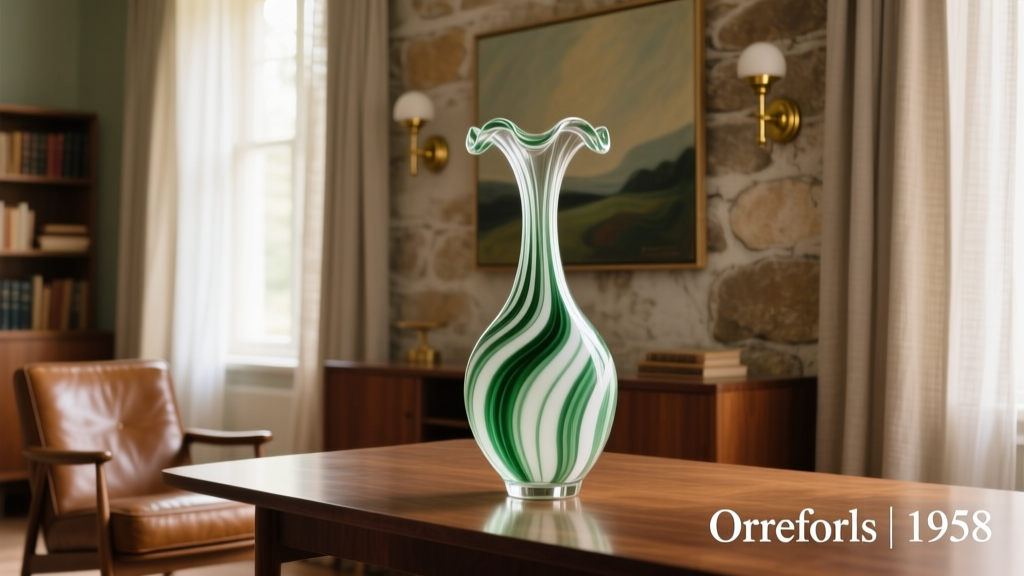
Orrefors Vase Gooseneck 2 Fold Rim: Decoding the Green-White Striated Core Design (11-Inch)
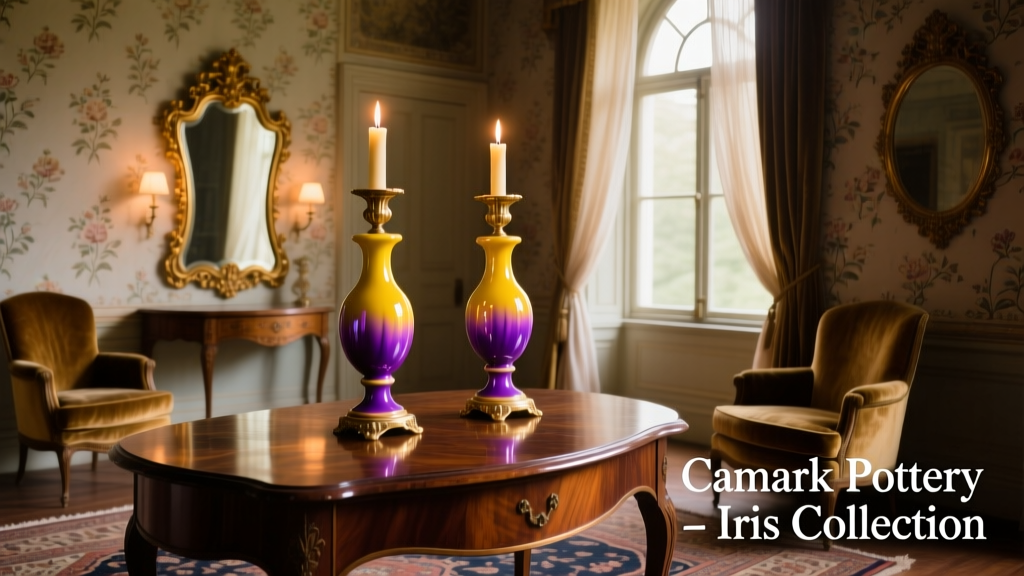
Camark Pottery Candlestick: A Collector’s Guide to the 2-Light Iris High-Gloss Yellow-Purple Pair
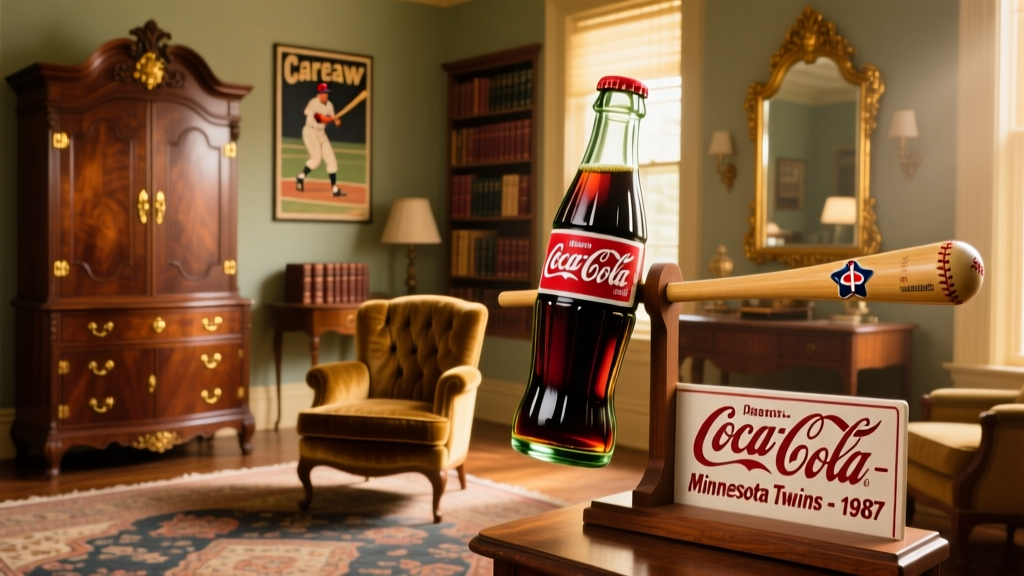
The 1987 Coca-Cola Rod Carew Minnesota Twins Baseball Bottle: A Collector’s Artifact in Context
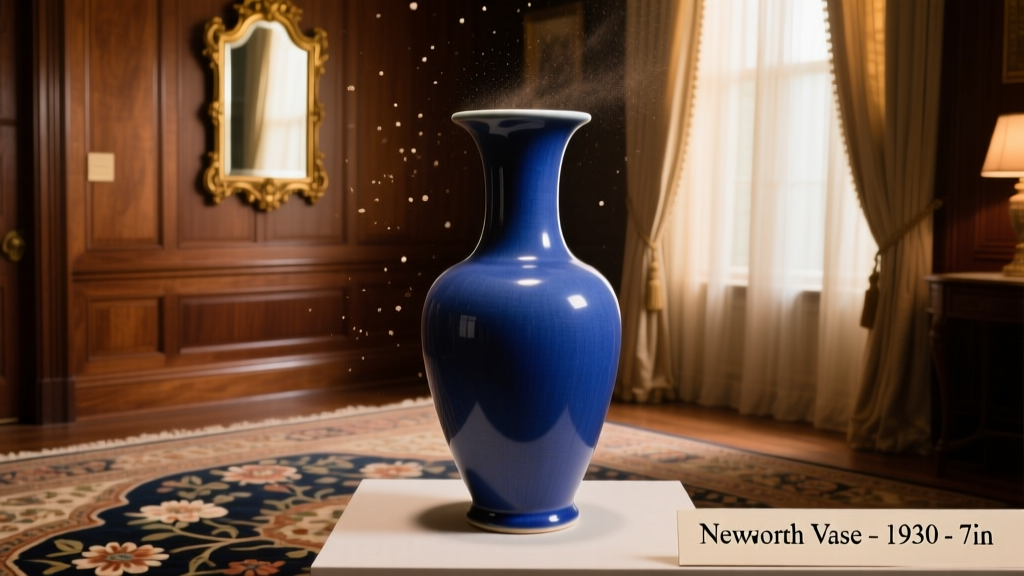
Newcomb College Pottery Vase: Blue Semi-Matte Glaze, Tapered Form with Sloped Shoulders (c. 1930, 7 Inches)
The Gonder Lazy Susan Signed Miniature: Authenticity, Provenance, and Restoration Insights
The Auto Car Jack Pratt Embossed Cast Iron: History, Identification, and Restoration of a Landmark American Tool
Victorian Antler Chair: Authentic Restoration, Structural Integrity, and Period-Accurate Upholstery Techniques