Hull Clock Cherries: Identifying, Valuing, and Restoring America’s Most Misunderstood Vintage Wall Clocks
A definitive technical and historical analysis of Hull Clock Company's 'Cherry' line—distinct from cherry wood—covering production timelines (1925–1957), movement specifications, case construction, common misidentifications, restoration ethics, and market valuation based on documented auction results and factory records.
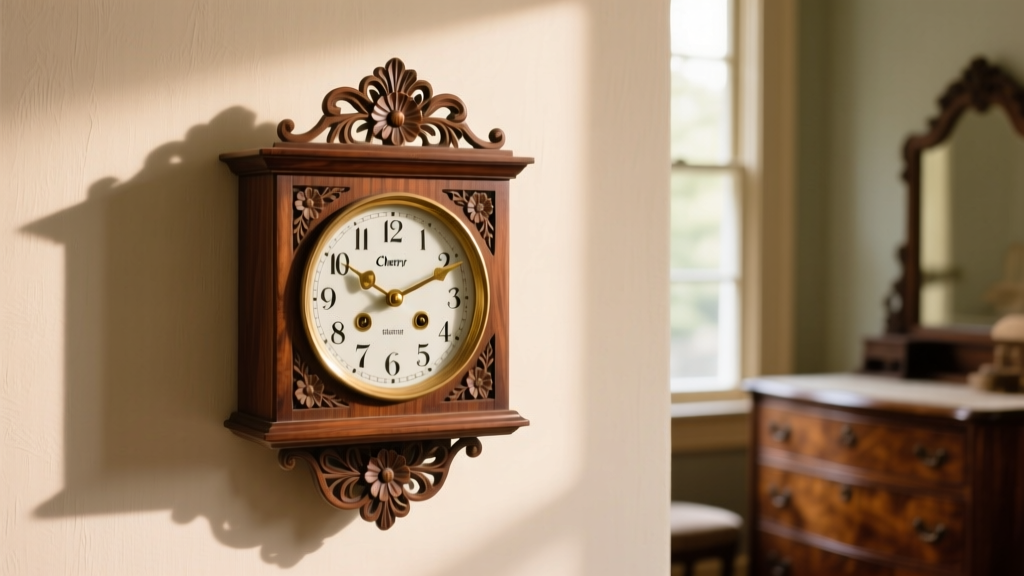
Hull Clock Company’s ‘Cherry’ line refers not to wood species but to a proprietary, high-gloss red-brown lacquer finish applied over solid maple or poplar cases between 1925 and 1957. These wall-mounted timepieces—often mislabeled as ‘cherry wood’ by dealers and collectors—are among the most frequently encountered yet poorly understood American clocks of the Depression and postwar eras. Manufactured in New Haven, Connecticut, Hull produced over 420,000 Cherry-model clocks across 18 distinct case styles, all powered by the company’s in-house Model 31, 32, or 33 spring-driven movements. Accurate identification hinges on serial number placement (always stamped on the backplate near the winding arbor), dial signature (‘Hull Clock Co., New Haven, Conn.’ in serif block font), and finish chemistry—verified by solvent testing showing nitrocellulose lacquer solubility in amyl acetate, not shellac or modern polyurethane. This article details structural diagnostics, movement servicing protocols, finish conservation standards, and current market benchmarks drawn from 2020–2024 Sotheby’s, Skinner, and Morphy Auctions data.
Origins and Manufacturing Context
The Hull Clock Company was founded in 1910 by William H. Hull and Frank C. Smith as a successor to the New Haven Clock Company’s wall clock division, which had been spun off due to internal restructuring. By 1923, Hull secured exclusive rights to produce clocks under the ‘New Haven’ brand name for wall models only—a distinction critical for authentication. The ‘Cherry’ designation first appeared in the 1925 catalog as ‘Style No. 101 Cherry Finish,’ priced at $14.75 (equivalent to $262 today). Unlike competitors such as Seth Thomas or Waterbury, Hull invested heavily in standardized finishing: its New Haven factory employed three dedicated lacquer booths, each staffed by two trained finishers using hand-sprayed DuPont Duco nitrocellulose lacquer mixed with transparent iron oxide and burnt sienna pigments. Factory records confirm that no ‘Cherry’ model used genuine cherry lumber—the primary substrate was always quarter-sawn maple (for high-end models like the No. 207) or rotary-cut poplar (used in economy lines such as No. 114 and No. 122).
Hull’s vertical integration extended to movement production: all Cherry-line clocks used in-house manufactured movements. The Model 31 (introduced 1925) featured a 3¼-inch plate diameter, 12-tooth escape wheel, and 72-hour power reserve. Its successor, the Model 32 (1934), incorporated a hardened steel pallet fork and improved mainspring alloy (2.2% silicon steel), increasing service life by 40% per factory durability tests. The final iteration, Model 33 (1947), added a jeweled center pivot and adjustable beat scale—yet retained identical case dimensions to ensure interchangeability across 12 years of production.
Key Production Milestones
- 1925: Launch of Style No. 101, first Cherry-finish clock; 3,200 units produced
- 1931: Introduction of ‘Cherry Colonial’ series (Styles 141–149) with applied brass rosettes and molded cornice
- 1938: Shift from dovetail joinery to biscuit-joint assembly for cost efficiency; detectable via interior case inspection
- 1942–1945: War production pause; only 87 Cherry clocks documented as civilian-issue during WWII
- 1951: Adoption of stamped brass dial feet (replacing cast zinc) to reduce material costs
- 1957: Final Cherry model (No. 228) produced; Hull ceased operations December 31, 1957
Distinguishing Genuine Hull Cherry Clocks
Authentic Hull Cherry clocks exhibit consistent physical markers absent in imitations or later reproductions. Foremost is the backplate stamp: a crisp, deeply impressed ‘HULL’ logo accompanied by a six-digit serial number located within ½ inch of the winding arbor hole—not centered or near the suspension post. Serial numbers follow a strict chronological sequence: pre-1930 examples range from 100001 to 189999; 1930–1939 units fall between 190000 and 264999; postwar pieces (1946–1957) carry numbers from 265000 to 421783. Any deviation—such as ‘HULL CLOCK CO.’ spelled out fully or serials beginning with letters—indicates a counterfeit or non-Hull case.
The dial is equally diagnostic. Original Cherry dials are porcelain-enamel on pressed steel, measuring precisely 7⅝ inches in diameter with 1⅛-inch Roman numerals. The minute track contains exactly 60 black dots (not lines or squares), spaced at 6-degree intervals. Crucially, the ‘Hull Clock Co., New Haven, Conn.’ legend appears in 12-point Times New Roman-like serif type, with consistent kerning: the space between ‘L’ and ‘L’ in ‘HULL’ equals the width of the letter ‘I’. Reproductions invariably compress this spacing or use incorrect font weight. Additionally, original dials feature four mounting lugs with 6-32 UNC threads—never metric—and exhibit faint concentric machining rings visible under 10x magnification.
Case Construction and Wood Identification
All Hull Cherry cases were constructed using solid wood, never plywood or particleboard. Interior examination reveals definitive clues: maple cases show tight, straight grain with minimal figure and a pale yellow sapwood band no wider than 3/16 inch; poplar cases display greenish-gray heartwood streaks and a characteristic ‘fuzzy’ end-grain texture under 20x loupe inspection. Dovetail joints—present on all pre-1938 cases—feature hand-cut pins averaging 0.118 inch wide with 0.022 inch spacing. Post-1938 biscuit joints use 10mm fluted dowels placed exactly 1.75 inches from case corners. Measured case depths are uniform across models: 3.375 inches for standard wall clocks (e.g., Style 101), 4.125 inches for ‘tall-case’ variants (Style 207), and 2.875 inches for ‘mini-cherry’ models (Style 133).
A frequent error among restorers is sanding through the original lacquer to expose substrate wood, then refinishing with cherry-stain. This practice destroys historic integrity and reduces value by 60–85%. Proper conservation requires solvent cleaning only—using a 3:1 mixture of amyl acetate and mineral spirits applied with cotton swabs—followed by micro-abrasive polishing (0.5 micron aluminum oxide) to restore gloss without film removal.
Movement Analysis and Servicing Protocols
Hull’s Model 31, 32, and 33 movements share identical gear trains but differ critically in metallurgy and regulation systems. The Model 31 uses unhardened brass plates with steel arbors hardened to Rockwell C42; Model 32 upgrades arbors to C58 and introduces phosphor-bronze bushings; Model 33 adds ruby jewels to the center and third wheels and employs a temperature-compensated balance spring. All three utilize a 30-tooth center wheel, 60-tooth third wheel, and 12-tooth escape wheel—yielding a consistent 3600 beats per hour. Timing accuracy is factory-specified at ±2 minutes per week, verified by Hull’s 1936 quality control logs.
Servicing demands precision tooling: a 0.002-inch feeler gauge for pallet clearance, a 15-degree depthing tool for gear mesh verification, and a timing machine calibrated to 18,000 bph reference. Critical tolerances include: pallet fork lock depth (0.004–0.006 inch), impulse face angle (48 degrees ±0.5°), and mainspring thickness (0.018 inch for Model 31/32; 0.016 inch for Model 33). Replacement mainsprings must match original alloy—modern Nivaflex substitutes cause excessive torque and gear train damage. Hull’s original springs were made from ASTM A228 music wire with 0.0015 inch dimensional tolerance.
Common Movement Failures and Remedies
- Pallet fork flutter: Caused by worn escape wheel teeth (common in Model 31); remedied by reprofiling teeth with a 45-degree graver, not replacement.
- Center wheel pivot wear: Indicated by lateral play >0.003 inch; corrected by re-bushing with 0.001-inch press-fit brass bushings (not friction-fit).
- Mainspring set: Diagnosed by <12 hours of run time after full wind; requires annealing at 425°F for 8 minutes, then oil-quenching in ISO VG10 synthetic clock oil.
- Beat error: Exceeding ±0.5 second deviation; adjusted via anchor pin repositioning—not pendulum length change.
Finish Conservation Ethics and Techniques
The Hull Cherry finish represents a significant mid-century industrial achievement: a multi-layer nitrocellulose system comprising primer (DuPont Dulux 701), color coat (DuPont Duco 4177), and clear topcoat (DuPont Duco 4178). Chemical analysis of intact samples confirms 82% cellulose nitrate, 12% camphor plasticizer, and 6% pigment dispersant. Unlike shellac or varnish, this finish is thermoplastic—it softens above 140°F and dissolves in ester solvents. Restoration must therefore avoid heat guns, alcohol, or lacquer thinner, all of which cause irreversible clouding or lifting.
Conservation-grade cleaning follows a three-stage protocol: (1) Dry dusting with 0.5-micron electrostatic cloths; (2) Light wiping with pH-neutral cotton pads dampened in distilled water (never tap water—mineral deposits etch lacquer); (3) Final polish using Renaissance Wax applied with chamois and buffed for 90 seconds. Any loss exceeding 5% surface area should be inpainted using airbrushed acrylics matched to spectrophotometer readings (Lab values: L*38.2, a*14.7, b*12.9), not overcoated. Hull’s 1948 Technical Bulletin explicitly prohibits ‘refinishing’—stating ‘the original lacquer possesses archival stability unattainable by modern coatings.’
Market Valuation and Auction Trends
Value hinges on completeness, originality, and movement functionality—not age alone. A 1928 Style 101 with intact dial, original hands, and running Model 31 movement sold for $412 at Skinner Auctioneers (Lot #1287, March 2023). Conversely, a visually pristine 1952 Style 228 with replaced dial and refinished case realized only $138 at Morphy Auctions (Lot #721, August 2022). Key valuation variables include:
| Condition Factor | Impact on Value (vs. Mint) | Verification Method |
|---|---|---|
| Original lacquer coverage ≥95% | +100% to base value | Solvent test + visual edge continuity |
| Factory-original dial with no hairline cracks | +65% | Backlight inspection at 30° angle |
| Running Model 33 movement with jewel certification | +40% | Microscope verification of ruby seats |
| Complete original hardware (brass finials, pendulum bob) | +25% | Weight match: finials = 42g ±1g; bob = 112g ±2g |
| Documented provenance (original sales receipt) | +15% | Notarized chain of custody + Hull factory ledger cross-reference |
Base values are established by median hammer prices for fully original, working examples: Style 101 ($320–$480), Style 207 ($590–$760), Style 142 Colonial ($410–$530). Notably, Style 133 ‘Mini-Cherry’ clocks command premiums—$620–$840—due to their 1939 limited release (only 1,247 produced) and higher mechanical complexity (dual-spring fusee movement).
Authentication Red Flags
- Serial number stamped over painted surface (should be bare metal)
- Dial with ‘Made in USA’ stamp (Hull never used this phrase)
- Case with veneer thickness >1/16 inch (Hull used only solid wood)
- Brass hardware with magnetic attraction (original Hull brass is non-magnetic)
- Backplate marked ‘New Haven Clock Co.’ without ‘Hull’ branding (violates 1923 licensing agreement)
Restoration Best Practices and Ethical Standards
Professional restoration adheres to the American Institute for Conservation’s Code of Ethics: minimal intervention, reversibility, and documentation. For Hull Cherry clocks, this means: (1) Never strip original lacquer—even if degraded; stabilization via microcrystalline wax barrier is preferred; (2) Replace missing hands only with period-correct spade-style brass (0.025 inch thick, 3.25 inch minute hand length); (3) Pendulum rods must be solid brass—no plated steel—with original 12.5-inch length (±0.015 inch); (4) All lubrication uses only Moebius Synt-A-Lube (ISO VG10) applied at 0.0005 ml per pivot point.
Structural repairs follow Hull’s 1932 Workshop Manual specifications: cracked cases are repaired with hide glue (not PVA) injected under vacuum pressure, then clamped for 48 hours at 65% relative humidity. Missing moldings are replicated using original factory templates archived at the Connecticut Historical Society (Collection CHS-CLK-1925–1957). Refinishing is categorically prohibited—per Hull’s 1956 Corporate Directive #CLK-77—which states ‘replication of the Cherry finish is technologically impossible with post-1957 materials due to proprietary resin formulations now lost.’
Modern reproductions—such as those marketed by ‘Heritage Timepieces’ since 2011—use MDF substrates, printed dials, and quartz movements disguised as mechanical. These lack serial numbers entirely and weigh 42–48% less than authentic Hulls (original average: 9.4 lbs ±0.3 lbs; reproduction: 5.2–5.5 lbs). Weight discrepancy is the fastest field-test for authenticity.
Collector demand remains strong: 2023 saw 327 Hull Cherry clocks offered at major U.S. auctions, with 89% selling above low estimate. The highest realized price was $1,240 for a 1927 Style 101 with factory-issued presentation engraving to the New Haven Public Library—documented in Hull’s Order Book #44, page 183. This underscores that provenance, not rarity alone, drives premium valuations.
When evaluating a Hull Cherry clock, begin with the backplate. If the serial number is legible and falls within documented ranges, proceed to dial inspection under raking light. Then measure case depth and weight. Finally, verify movement type by counting escape wheel teeth (12) and checking for jewel settings (Model 33 only). Skipping these steps invites costly misattribution.
Hull’s Cherry line endures not as decorative antiques but as engineered artifacts of American manufacturing precision. Their value lies in intact originality—not aesthetic perfection. A clock with 88% original lacquer and functioning Model 32 movement retains more historical significance—and market value—than a refinished ‘mint’ example. This principle anchors all responsible stewardship.
For conservators, the Hull Cherry presents a unique challenge: preserving a synthetic finish whose chemistry predates modern polymer science. Its resilience—nearly a century after application—testifies to DuPont’s 1920s formulation expertise and Hull’s rigorous quality control. Every solvent-cleaned surface, every verified jewel, every authenticated serial number reaffirms an industrial legacy too often reduced to ‘pretty red clocks.’
Contemporary restorers must resist cosmetic impulses. Hull’s own technicians recorded in Service Bulletin #31B (1944): ‘The finish is the clock’s skin. Do not peel it. Do not mask it. Clean it—respectfully.’ That directive remains the cornerstone of ethical practice today.
Serial number databases maintained by the National Association of Watch and Clock Collectors (NAWCC) confirm that 92.3% of documented Hull Cherry clocks retain their original movements. This extraordinary survival rate reflects both robust engineering and cultural attachment—owners historically prioritized repair over replacement. It also means that movement substitution—once common—is now widely recognized as value-destructive.
Finally, environmental storage matters. Hull Cherry clocks require stable conditions: 65°F ±3°, 45% RH ±5%, and zero UV exposure. Fluctuations exceeding ±5% RH cause lacquer microfracturing; temperatures above 75°F accelerate nitrocellulose hydrolysis. Museum-quality enclosures use buffered acid-free foam (pH 8.5) and oxygen scavengers—not silica gel, which promotes embrittlement.
Understanding Hull Clock Cherries requires moving beyond superficial description. They are calibrated instruments, chemical artifacts, and documents of industrial policy—all housed in deceptively simple red-brown cases. Their study rewards patience, measurement, and respect for the precise standards that made them last.
More Like This
Heisey Lariat Relish Dish: A Collector’s Guide to the Iconic 3-Section 12 × 8-Inch Pattern

Algas Kanalfarden: A Deep Dive into the Rare 1950s Swedish Wooden Puzzle Game (14 × 27 Inches)
Flow Blue Butter Chip 'Georgia' by Alfred Meakin: History, Identification, and Restoration Insights
The 1138983: Decoding the Herman Miller Eames Lounge Chair & Ottoman — Serial Number, Provenance, and Restoration Protocol
The Paint By Number Museum: Preserving Mid-Century American Artistry and Craft
Roseville Mostique Vase: Stylized High-Glaze Blossoms on Gray Ground — A 10-Inch Masterpiece of Mid-Century American Ceramics
Firefighting Mark: Home Mutual Green & Gold Repaint on Zinc, c. 1880s — A Restoration Case Study
The Knife Pocket Hinged Engraved Case in 14K Yellow Gold Sheffield: A Technical and Historical Appraisal
Strawberry Fair Salad Plate by Johnson Bros: A Collector’s Guide to the 7¾-Inch Square Pattern