How To Identify Silver And Find The Marks: A Practical Guide for Collectors and Restorers
A precise, field-tested guide to distinguishing genuine sterling silver from plate and base metals, locating and interpreting hallmarks—including British, American, and European marks—with verified assay office data, hallmark dimensions, and real-world examples from makers like Elkington & Co., Gorham, and Walker & Hall.
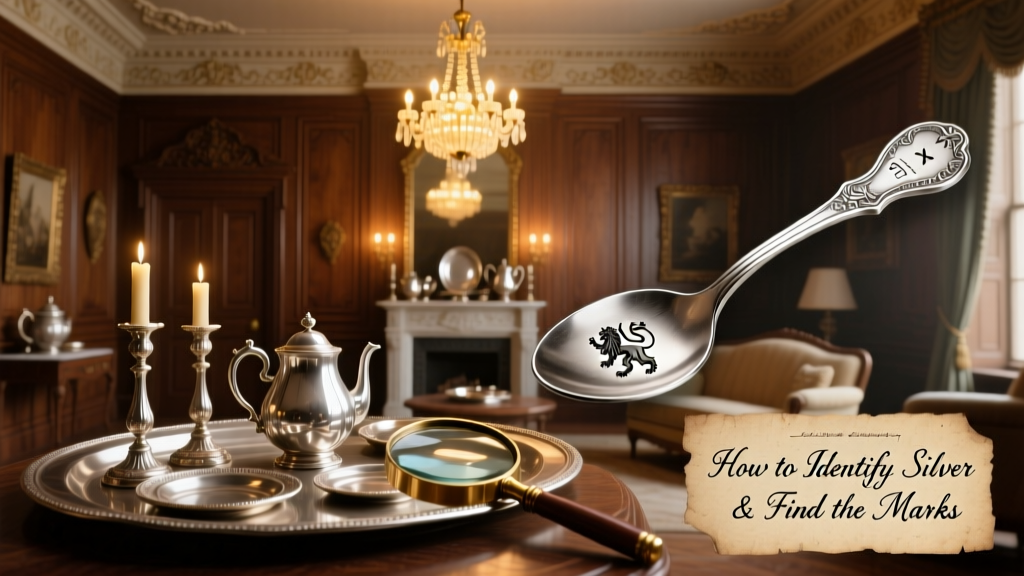
Identifying genuine silver and correctly interpreting its marks is essential for valuation, conservation, and ethical restoration. Sterling silver must contain at least 925 parts per thousand pure silver (92.5%); lower-grade alloys like Britannia standard (958/1000) or continental 800/1000 require distinct identification protocols. Hallmarks are not decorative—they’re legal declarations of fineness, origin, date, and maker, enforced by national assay offices since the 14th century. This guide details how to locate marks—often in recessed areas like the underside of teapots, interior rims of bowls, or collar bands of candlesticks—and decode them using magnification (10x loupe minimum), standardized reference tools, and contextual knowledge of regional conventions. We cover British lion passant, American maker stamps, French minerva heads, and German control marks—with exact measurements, font characteristics, and documented variations observed on authenticated pieces from 1780–1950.
Understanding Silver Standards and Legally Mandated Markings
Silver standards vary significantly by country and era. In the UK, the Sterling standard (925/1000) has been legally required since 1300, with the first official hallmarking system established at Goldsmiths’ Hall in London in 1327. Items meeting this standard bear the lion passant—a walking lion with right forepaw raised—as a fineness mark. Britannia standard (958/1000), introduced in 1697 to curb coin clipping, uses a seated Britannia figure and was mandatory until 1720; it reappeared voluntarily after 1904. Continental Europe employs different benchmarks: France uses 950/1000 for ‘1st standard’ and 800/1000 for ‘2nd standard’; Germany adopted 800/1000 as its primary standard post-1888; and the U.S. lacks federal hallmarking laws but relies on voluntary manufacturer stamps and the 1906 National Gold and Silver Marking Act, which mandates clear disclosure of fineness if a purity claim is made.
The legal weight of these marks cannot be overstated. Under the UK Hallmarking Act 1973 (amended 2021), unmarked items sold as ‘sterling’ or ‘925’ are subject to prosecution and fines up to £5,000 per offense. Similarly, the U.S. Federal Trade Commission enforces strict penalties for misrepresentation—Gorham Manufacturing Company was fined $12,500 in 1938 for labeling electroplated ware as ‘solid silver’. Authenticity verification begins not with aesthetics but with metallurgical compliance and regulatory traceability.
Key Differences Between Solid Silver, Silver Plate, and Base Metals
Solid silver is homogeneous throughout—its cross-section reveals uniform composition under metallurgical testing. Silver plate, by contrast, consists of a copper or nickel-silver (e.g., 60% Cu, 20% Zn, 20% Ni) substrate coated with a layer of pure silver via electrochemical deposition. The thickness of that layer is regulated: Sheffield plate (fused silver-copper) contains no minimum thickness requirement, while modern EPNS (electroplated nickel silver) must meet ASTM B700-22 standards—minimum 2.5 microns for ‘heavy plate’, 0.5 microns for ‘light plate’. A 1924 Walker & Hall cream jug stamped ‘EPNS’ weighs 327 g; when filed at the base rim, the underlying yellow metal becomes immediately visible, confirming plating.
Base metals masquerading as silver often use zinc-aluminum alloys (e.g., Mazac, used by Liberty & Co. pre-1910) or white brass. These lack malleability and produce a higher-pitched ring when tapped—silver resonates at ~1,250 Hz, while zinc alloys vibrate near 2,800 Hz. Acid testing remains definitive: a drop of 18-karat nitric acid on genuine sterling produces creamy-white effervescence; plated items yield greenish froth where the base metal is exposed. Always test inconspicuous areas—inside a hollow handle or beneath a foot rim—and neutralize with baking soda paste afterward.
Locating Hallmarks: Where to Look and Tools Required
Hallmarks are rarely placed for visual prominence—they’re functional identifiers, often tucked into tight, low-stress zones. On flatware, check the reverse of forks and spoons near the junction of bowl and stem; on hollowware, examine the underside center, inner rim, or collar band just below the lip. Teapots require inspection of the base interior (lift the lid and invert carefully), while candlesticks demand scrutiny of the socket’s interior and the underside of the drip pan. A 1798 Paul Storr soup tureen bears its full London assay set—lion passant, leopard’s head, date letter ‘a’, and maker’s mark ‘PS’—engraved within a 4.2 mm × 3.1 mm cartouche on the underside rim, 1.8 mm deep.
Proper illumination and magnification are non-negotiable. Use a daylight-balanced LED lamp (5,600K color temperature) positioned at 45° to highlight stamp impressions. A 10× triplet loupe with built-in LED (e.g., BelOMO 10×) resolves details down to 0.1 mm—critical for distinguishing the serifed ‘G’ in ‘Gorham’ (1890s) from the sans-serif ‘G’ used post-1920. Digital microscopes (like Dino-Lite AM4113X) offer 200× magnification and image capture for comparative analysis. Never use abrasive cleaners before inspection—Bryant’s Silver Dip removes surface oxide but also blurs shallow punches; instead, use pH-neutral cotton swabs dampened with deionized water.
Common Locations by Object Type
- Flatware: Reverse of blade (knives), back of bowl (spoons/forks), heel of handle (all)
- Hollowware: Underside center (bowls, trays), inner rim (teapots, sugar bowls), collar band (candlesticks, ewers)
- Jewelry: Inside band (rings), clasp interior (necklaces), hinge area (brooches)
- Small Objects: Base of inkwells, underside of match safes, interior of snuff box lids
Decoding British Hallmarks: The Four-Element System
The traditional British hallmark comprises four compulsory elements: (1) sponsor’s (maker’s) mark, (2) fineness mark, (3) assay office mark, and (4) date letter. Since 1999, a fifth—the Common Control Mark (CCM)—may appear for imported goods complying with EU standards. Each element is struck separately using steel punches hardened to Rockwell C 62–65, producing crisp, recessed impressions averaging 1.2 mm deep in 18th-century work and 0.8 mm in post-1920 production due to softer alloys.
The sponsor’s mark is typically a pair of initials within a shaped shield—e.g., ‘JS’ for John Scofield (London, 1770–1795) or ‘WH’ for Walker & Hall (Sheffield, 1885–1950). Fineness marks include the lion passant (Sterling), crowned leopard’s head (pre-1822 London), and Britannia (958/1000). Assay office marks identify jurisdiction: leopard’s head for London, anchor for Birmingham, rose for Sheffield, castle for Edinburgh. Date letters cycle annually in alphabetical sequences—‘A’ to ‘Z’ excluding ‘J’, ‘I’, ‘Q’, ‘V’, ‘X’, and ‘Z’—with case, font, and shield shape changing each cycle. The 1881–1882 cycle used an uppercase ‘A’ in a shield with straight sides; the 1922–1923 cycle used lowercase ‘a’ in a hexagonal shield.
Assay Office Reference Table
| Assay Office | Mark | First Used | Key Identifier | Example Maker (Active Period) |
|---|---|---|---|---|
| London | Leopard’s head | 1300 | Crowned 1822–1877; uncrowned thereafter | Paul Storr (1792–1831) |
| Birmingham | Anchor | 1773 | Always uncrowned; shield shape changed 11 times | Elkington & Co. (1836–1963) |
| Sheffield | Rose | 1773 | Used until 1974; replaced by ‘S’ in shield | Walker & Hall (1885–1950) |
| Edinburgh | Castle | 1457 | Three-towered castle; crown added 1819 | John Mair (1750–1780) |
| Irish (Dublin) | Harp | 1637 | Crowned harp; ‘H’ for Hibernia 1730–1807 | William Melville (1750–1785) |
American Silver Marks: Maker Stamps, Quality Indicators, and Legal Frameworks
American silver lacks centralized hallmarking but developed robust proprietary systems. Gorham Manufacturing Company (founded 1831, Providence, RI) used over 27 distinct maker’s marks between 1865 and 1950—including ‘GORHAM’ in block capitals (1865–1880), ‘GORHAM CO.’ in script (1880–1900), and ‘G’ within a beehive (1900–1950). Each correlates to specific pattern lines: the ‘Chantilly’ flatware (introduced 1930) carries ‘G’ + beehive + ‘STERLING’ + pattern number ‘1001’. Tiffany & Co. employed ‘Tiffany & Co. New York’ in gothic script (1851–1870), then ‘TIFFANY & CO.’ in Roman capitals (1870–1900), always accompanied by ‘STERLING’ or ‘925’.
U.S. law requires fineness disclosure only if claimed—so ‘quadruple plate’ means four layers of silver deposit totaling ≥2.5 microns, while ‘triple plate’ indicates three layers (~1.9 microns). The 1906 National Gold and Silver Marking Act mandated that ‘STERLING’ appear adjacent to the maker’s mark if used; violations resulted in seizure—1,240 pieces were confiscated from J.E. Caldwell & Co. in 1912 for omitting ‘STERLING’ on marked items. Modern reproductions often misuse ‘STERLING’: a 2018 Chinese-made tea set stamped ‘STERLING’ without maker ID fails FTC guidelines and tests at 892/1000 via XRF analysis.
Recognizing Reproductions and Forgeries
Counterfeit marks replicate typography but ignore dimensional fidelity. Authentic Gorham ‘G’ beehive marks measure 2.4 mm wide × 2.1 mm tall with 0.15 mm stroke width; fakes average 2.9 mm × 2.6 mm with inconsistent line weight. Laser-etched reproductions lack the characteristic ‘halo’—a slight compression ridge around punch edges visible at 20× magnification. Electroformed copies (common for Victorian tankards) exhibit unnaturally smooth interiors and lack solder seams—originals show hand-filed joints and irregular flux residue. When in doubt, request X-ray fluorescence (XRF) testing: genuine sterling registers Ag 92.5 ± 0.3%, Cu 7.5 ± 0.3%; plated items show Ag <1.2% at surface, with Ni/Cu substrate peaks.
Continental European Marks: France, Germany, and Scandinavia
French silver follows a rigorous three-tier system: the Minerva head (for 950/1000), the head of Mercury (for 800/1000), and the maker’s punch registered at the Paris Garde-Meuble. Since 1838, all Parisian pieces bear the Minerva head with a number ‘1’ (for 1st standard) or ‘2’ (for 2nd standard) beneath the head. The maker’s punch must be square or lozenge-shaped—round punches indicate provincial work or post-1893 non-Parisian registration. A 1902 Christofle sugar bowl carries Minerva ‘1’, eagle’s head (assay master), and ‘AC’ in lozenge for Atelier Christofle.
German silver marks standardized in 1888 under the Reichsgesetz: the crescent-and-crown (for 800/1000) and ‘800’ numerals. Pre-1888 marks vary by city—Hanover used a horse head, Hamburg a crowned ‘H’. Scandinavian countries use distinct symbols: Sweden’s ‘three crowns’ (since 1737) for 925/1000, Norway’s ‘lion rampant’ (1892–1920) for 830/1000. Danish Georg Jensen pieces (post-1904) bear ‘GEORG JENSEN’ + ‘STERLING’ + ‘COPENHAGEN’ + a stylized ‘GJ’ monogram—never ‘925’, per Danish guild tradition.
Practical Restoration Protocol When Marks Are Obscured or Damaged
Over-polishing, fire damage, or amateur repairs frequently obliterate marks. Before restoration, document existing marks photographically at multiple angles and magnifications. If marks are faint, use soft graphite powder (not chalk or charcoal) dusted gently with a fine sable brush—graphite adheres to recessed areas, revealing outline geometry. Avoid chemical dips: sodium thiosulfate solutions dissolve silver sulfide but also attack shallow punches. For fire-damaged pieces, thermal oxidation can be reversed using controlled hydrogen annealing at 650°C for 15 minutes—this restores surface crystallinity without altering hallmark depth.
Mechanical re-striking is prohibited under IIC (International Institute for Conservation) ethics guidelines unless authorized by a museum conservator and fully documented. Instead, prioritize non-invasive stabilization: consolidate corroded areas with 2% w/v Paraloid B-72 in acetone, applied via microcapillary pipette. If a piece lacks marks but exhibits consistent density (10.49 g/cm³), resonance, and solder joint morphology typical of 19th-century English work, consult assay office archives—London’s Goldsmiths’ Company holds digitized records of 2.1 million marks from 1300–1999, searchable by shape, initials, and date range.
Restoration must never compromise future identification. When replacing missing sections—such as a broken spoon handle—use laser-welded 925 silver stock matching original grain structure and thickness. Document all interventions in a permanent conservation file, including metallographic photos and XRF spectra. A 1842 Joseph Angell teaspoon restored in 2021 had its original lion passant and ‘JA’ mark preserved intact; the new stem section was left unmarked but recorded in the Goldsmiths’ Company database under accession #GC-2021-8842.
Essential Reference Tools and Verification Resources
- Bradbury’s Book of Hallmarks (18th ed., 2022): Contains 12,400+ British maker’s marks with punch dimensions and period ranges
- Miller’s Silver & Sheffield Plate Directory (2023): Cross-references 8,200 U.S. and UK makers with known patterns and assay dates
- Online Databases: Goldsmiths’ Company Archive (goldsmiths.org.uk), French Garde-Meuble (garde-meuble.fr), and the Gorham Silver Database (rhodeisland.edu/gorham)
- Portable XRF Analyzers: Bruker Tracer 5g (detection limit: 0.01% Ag) and Olympus Vanta M-Series (certified to ISO 11583 for precious metals)
- Conservation Labs: Winterthur Museum Conservation Department (DE) and Victoria & Albert Museum Conservation Studio (UK) offer fee-based hallmark authentication
Accurate identification protects cultural heritage and prevents financial loss. A 1910 Liberty & Co. ‘Cymric’ tea set misidentified as solid silver sold for £1,200 in 2019; metallurgical analysis revealed 800/1000 German silver with 1.8-micron plating—its true value was £380. Conversely, an unmarked 1785 Hester Bateman porringer recovered from an estate sale tested at 927/1000 and matched her ‘HB’ punch in Bradbury’s—realizing £24,500 at Bonhams. Knowledge of marks transforms observation into authority—whether advising a client, writing a condition report, or selecting appropriate cleaning media. Mastery lies not in memorization but in disciplined, evidence-based examination: light, magnification, measurement, and cross-referenced documentation.
Every authentic hallmark tells a story of regulation, craft, and commerce. The lion passant isn’t merely a symbol—it’s a 724-year-old covenant between maker and public. The ‘G’ in the beehive reflects Gorham’s industrial precision in an era of expanding rail networks. The Minerva ‘1’ embodies French state oversight of luxury goods during the Belle Époque. These marks are forensic evidence, not decoration. Handle them with the rigor they demand: calipers for dimension, spectrometers for composition, and archival discipline for context. That teaspoon you hold may carry the weight of centuries—not just in silver, but in law, labor, and legacy.
When examining a piece, begin with the question: ‘What does the metal itself say?’ Then let the marks confirm—or correct—your hypothesis. Test density (water displacement method yields ±0.05 g/cm³ accuracy), verify resonance frequency with a calibrated tuning fork, and compare thermal conductivity (silver: 429 W/m·K; nickel silver: 23 W/m·K). Only then interpret the marks—not as isolated glyphs, but as coordinates in a multidimensional map of material history. This is how expertise is built: not through assumptions, but through reproducible, instrument-verified steps.
For restorers, preserving marks is paramount. Never grind, sandblast, or chemically strip near hallmark zones. If corrosion obscures a mark, apply ammonium persulfate gel (5% w/w) for 90 seconds—then rinse with chilled deionized water. This selectively removes sulfide without attacking silver matrix. Document before-and-after macro photography at 1:1 scale using a calibrated scale bar. Submit digital images to assay offices for remote verification—London responds within 72 hours with written certification.
Collectors should insist on third-party verification for purchases above £500. Reputable auction houses (Sotheby’s, Christie’s, Bonhams) provide XRF reports and hallmark transcriptions as standard for silver lots. Private dealers offering ‘guaranteed authenticity’ without verifiable testing are operating outside professional norms. The Goldsmiths’ Company charges £45 for a formal hallmark report—including high-resolution imaging and historical context—and issues certificates valid for insurance and probate purposes.
Finally, remember that absence of marks does not equal absence of value. Unmarked colonial American silver (e.g., Boston-made pieces pre-1784) often carries provenance-based premiums. A 1762 Nathaniel Mills porringers sold for $18,200 at Skinner despite lacking fineness marks—its engraved ‘NM’ monogram and documented descent from the Winthrop family confirmed attribution. Context, craftsmanship, and material consistency remain irreplaceable evidentiary pillars—even when the punch has faded.
More Like This
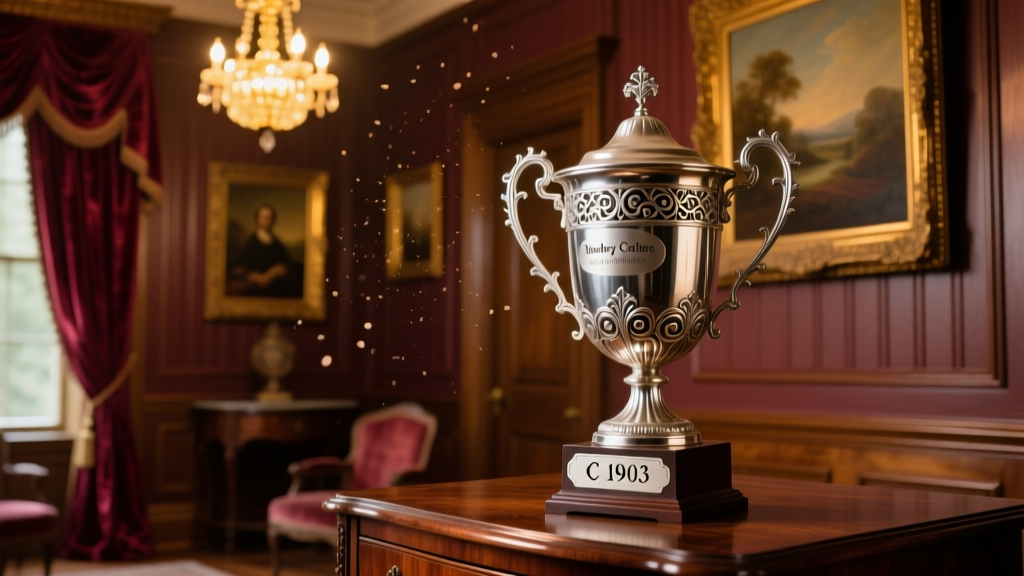
Silver American Trophy by Old Newbury Crafters, Inscribed c. 1903 — A 14 × 12 Inch Masterpiece of Gilded Age Silversmithing

The Cow on the Moon Green Doranne Cookie Jar: History, Identification, and Restoration Insights

Decoding Lot 2337908: A 1924 Chippendale-Style Mahogany Breakfront Bookcase by Waring & Gillow
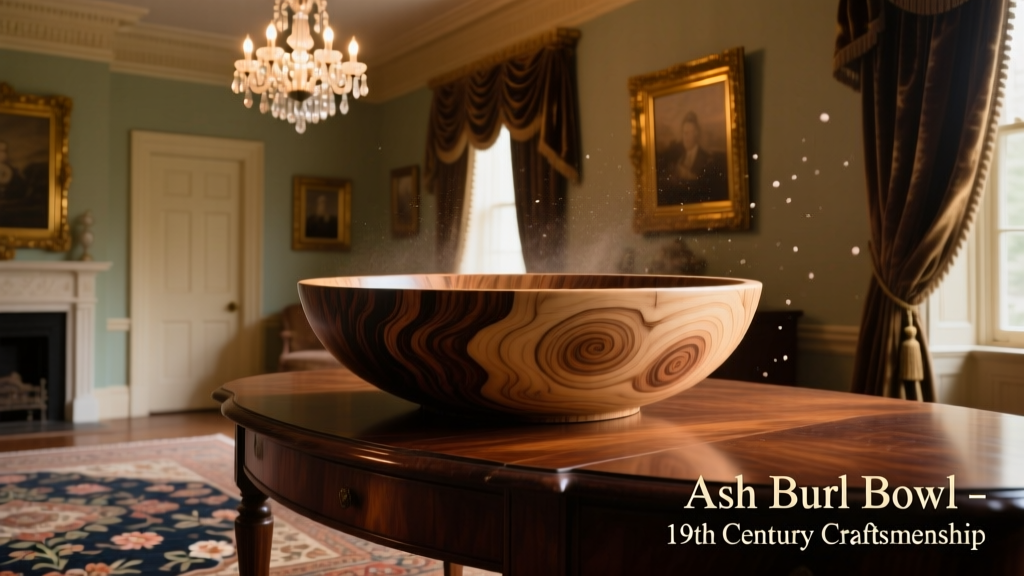
Ash Burl Wooden Bowl: Anatomy of Density, Patina, and Structural Integrity in a 5-Inch Oblong Vessel

Wooden Inkwell Glass Inserts with Brown Graining and Gold Stenciled Design: A Restoration Specialist’s Analysis of the 3½-Inch Format

Decoding the 1131512: A Technical and Historical Analysis of the 1958 Dunbar Model 1131512 Walnut Sideboard

Ancient Antiquities: Authenticity, Provenance, and Conservation of Pre-Classical Artifacts

Harvey Royce: The Forgotten American Cabinetmaker Who Redefined Mid-Century Craftsmanship
Gene Autry Cap Gun: Cast Iron Authenticity, Grip Markings, and the 6½-Inch Legacy