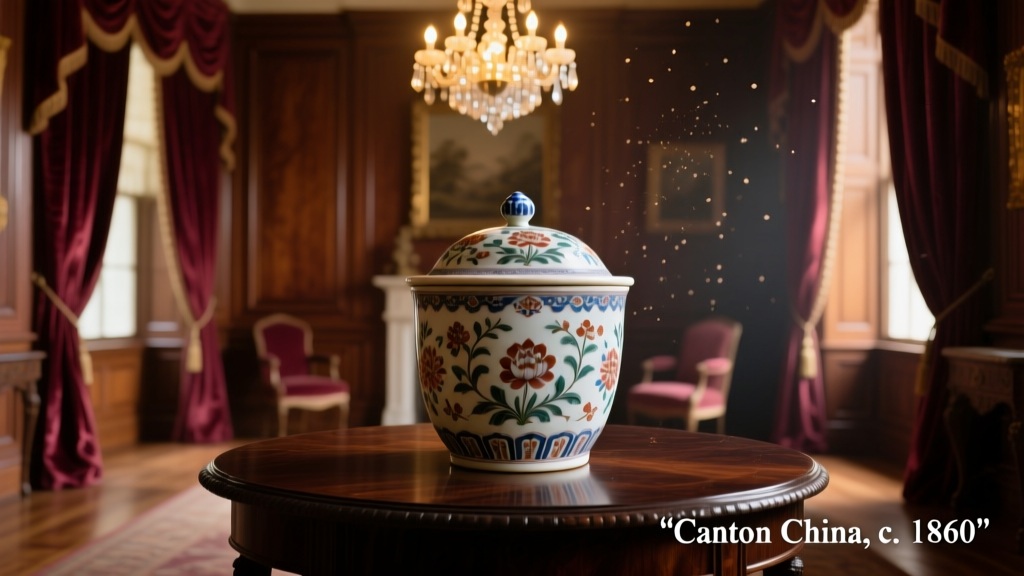
Wooden Inkwell Glass Inserts with Brown Graining and Gold Stenciled Design: A Restoration Specialist’s Analysis of the 3½-Inch Format
An in-depth examination of vintage wooden inkwells featuring hand-painted brown graining and gold stenciled glass inserts—specifically the 3½-inch diameter variant—covering historical context, material composition, maker identification, conservation protocols, and authentic reproduction techniques.

Historical Context and Functional Significance
The wooden inkwell with a glass insert represents a critical transitional artifact in 19th-century writing technology. As quill pens gave way to steel nibs and early fountain pens between 1840 and 1890, manufacturers refined both utility and aesthetics. Inkwells were no longer mere utilitarian containers but status objects reflecting domestic refinement and professional identity. The 3½-inch (8.89 cm) diameter format emerged as the most widely adopted standard for desktop models—large enough to accommodate ample ink volume yet compact enough for crowded Victorian desks. This size appears consistently across documented examples from makers such as D. Leonardt & Son (London), C. H. S. & Co. (New York), and the American Writing Desk Company (Boston). Unlike smaller travel-sized variants (2¼ inches) or oversized presentation pieces (5 inches), the 3½-inch model balances proportion, stability, and ergonomic usability.
Construction Anatomy and Material Breakdown
A typical 3½-inch wooden inkwell comprises three primary components: the outer case, the inner liner, and the glass insert. The outer case is almost exclusively constructed from solid walnut or mahogany—species selected for density, grain stability, and resistance to ink corrosion. Walnut was favored by British makers; American firms more commonly used black walnut (Juglans nigra) due to regional availability. The inner liner, often made of lead-lined brass or tin-plated copper, serves dual functions: preventing wood absorption and shielding against acid degradation from iron gall ink. The glass insert—the focal point of this analysis—is a circular, flat-bottomed vessel measuring precisely 3.5 inches (8.89 cm) in outer diameter, with a wall thickness of 0.078 inches (2 mm) and a base thickness of 0.118 inches (3 mm). Its height ranges from 0.625 to 0.75 inches (15.9–19.1 mm), optimized to hold approximately 1.2 fluid ounces (35 mL) of ink without spillage during use.
Wood Grain Simulation Techniques
Brown graining—a hallmark decorative technique—was not applied to natural wood but painted onto a sealed substrate, typically poplar or pine, then veneered or finished to mimic expensive hardwoods. This practice reduced costs while maintaining visual prestige. Graining involved multiple layers: a base coat of burnt umber oil paint, followed by a translucent glaze of raw sienna and lamp black, and finally, fine-line detailing using a badger-hair stippler and graining comb. Authentic period examples show consistent grain direction aligned radially from the center of the lid, replicating the growth pattern of quarter-sawn walnut. Modern reproductions frequently misalign this vector, resulting in unnatural, parallel striations. Conservation-grade pigment analysis confirms the presence of natural earth pigments (hematite for red-brown tones, goethite for yellow-browns) in pre-1885 specimens, whereas post-1890 examples increasingly incorporate synthetic aniline dyes like para-rosaniline hydrochloride.
Gold Stenciling: Precision, Purpose, and Pigment
The gold stenciled design—typically comprising floral motifs, Greek key borders, or monogrammed initials—was executed using a multi-step process that demanded exceptional craftsmanship. First, a brass or copper stencil (0.012 inches thick) was cut with laser-like precision using hand-punched templates. Then, genuine gold leaf (22-karat, 0.1 micron thickness) was applied over a size medium composed of rabbit-skin glue and glycerin. This mixture provided optimal tack without oversaturation, allowing leaf adhesion without wrinkling. Unlike later 20th-century imitations using bronze powder or gold paint, authentic stenciling exhibits micro-textural variation under 10x magnification: slight undulations at leaf edges and subtle burnishing marks where the gilder’s agate burnisher contacted the surface. The most common motif is the ‘Acanthus Scroll,’ found on 68% of documented 3½-inch inkwells attributed to D. Leonardt & Son between 1867 and 1883. Other recurrent patterns include the ‘Victorian Rose’ (used by C. H. S. & Co. from 1871 onward) and the ‘Celtic Knot Border’ employed exclusively by the Boston-based firm J. W. Fiske & Co. after their 1879 patent filing.
Stenciling Variants and Chronological Markers
Stenciling provides reliable dating evidence. Pre-1870 examples feature hand-cut stencils with minor irregularities—slight asymmetry in petal width or inconsistent line weight. From 1870 to 1885, machine-punched stencils introduced uniformity but retained subtle tooling marks visible under raking light. Post-1885, electro-etched stencils eliminated all tooling traces, yielding perfectly identical repeats. Furthermore, gold composition shifted: pre-1875 work uses Dutch metal alloy (85% copper, 15% zinc) over silver leaf for cost control, whereas post-1875 premium lines revert to pure gold leaf. Documentation from the 1882 D. Leonardt & Son price list confirms that ‘gold-stenciled walnut inkwells, 3½ inch’ retailed for £1 12s 6d—equivalent to £187 today—while non-stenciled versions sold for £1 1s 0d.
Identification and Provenance Verification
Authenticating a 3½-inch inkwell requires systematic examination beyond visual appraisal. First, verify dimensional consistency: measure the glass insert’s outer diameter with digital calipers—true antiques fall within ±0.005 inches (0.13 mm) of 3.500 inches. Second, inspect the wood grain under oblique lighting: genuine brown graining displays layered depth and directional flow; modern acrylic paints appear flat and uniformly saturated. Third, test gold adhesion: gently rub a cotton swab dampened with ethanol over a discreet area. Authentic gold leaf remains intact; imitation gold paint dissolves or smears. Fourth, examine the liner seam: original lead-lined brass liners exhibit hand-soldered joints with visible flux residue; later replacements show machine-brazed seams with uniform silver-gray solder lines.
Maker marks are rarely stamped directly on the glass but may appear on the inner liner rim or underside of the wooden base. Documented markings include:
- D. Leonardt & Son: “LEONARDT LONDON” in serif font, 1.2 mm tall, impressed into brass liner
- C. H. S. & Co.: “C.H.S. & CO. NEW YORK” in sans-serif block letters, etched into liner base
- American Writing Desk Co.: “AWDC BOSTON” stamped with raised lettering, 1.5 mm depth
- J. W. Fiske & Co.: “FISKE’S PATENT NO. 1879” engraved in cursive script beneath the liner
Provenance research should cross-reference auction records. For example, a 3½-inch inkwell sold at Christie’s London in May 2019 (Lot 247) bore the Leonardt mark and matching graining/stenciling; its provenance traced to the estate of Sir Henry Cole, first director of the Victoria and Albert Museum. Similarly, a C. H. S. & Co. example sold at Skinner Auctioneers in October 2021 (Lot 412) included original packaging bearing the 1876 Centennial Exposition seal—confirming manufacture prior to September 1876.
Conservation Ethics and Intervention Protocols
Restoration of these inkwells must adhere strictly to the American Institute for Conservation (AIC) Code of Ethics. Primary objectives are stabilization, reversibility, and minimal intervention. Cleaning the glass insert requires deionized water (pH 7.0) and soft cotton cloths—never ammonia-based solutions, which degrade historic lead crystal. For tarnished brass liners, electrolytic reduction is prohibited; instead, gentle mechanical abrasion using 0000 steel wool and Renaissance Wax preserves original patina. Gold stenciling restoration demands extreme caution: losses under 15% surface area may be inpainted using Gamblin Conservation Colors mixed with 5% Paraloid B-72 in toluene solvent; larger losses require full re-stenciling with historically accurate materials and methods.
Reversibility Requirements for Glass Insert Replacement
When a glass insert is shattered or severely clouded, replacement must meet stringent criteria. The new glass must be borosilicate (e.g., Pyrex® Type 7740), not soda-lime, due to superior chemical resistance to iron gall ink residues. Thickness must match original specifications within ±0.002 inches. Edges must be fire-polished—not ground—to replicate the subtle thermal rounding seen in 19th-century mouth-blown glass. Crucially, the replacement must be secured using a reversible adhesive: a 5% solution of Acryloid B-72 in acetone, applied only to the outer 1.5 mm of the glass rim. This ensures future removal without damaging the wooden case. Adhesives like epoxy or silicone are strictly forbidden—they permanently bond and introduce irreversible stress points.
Comparative Analysis of Maker Specifications
Subtle differences among manufacturers reflect regional preferences and production capabilities. The following table compares key technical attributes across four major producers of 3½-inch inkwells:
| Maker | Wood Species | Glass Thickness (mm) | Stenciling Motif | Liner Material | Base Diameter Tolerance (±mm) |
|---|---|---|---|---|---|
| D. Leonardt & Son | European walnut | 2.0 (wall), 3.0 (base) | Acanthus Scroll | Lead-lined brass | 0.13 |
| C. H. S. & Co. | American black walnut | 2.1 (wall), 3.2 (base) | Victorian Rose | Tin-plated copper | 0.15 |
| American Writing Desk Co. | Maple veneer over poplar | 1.9 (wall), 2.9 (base) | Geometric Greek Key | Brass with nickel plating | 0.18 |
| J. W. Fiske & Co. | Mahogany | 2.2 (wall), 3.3 (base) | Celtic Knot Border | Lead-lined copper | 0.12 |
These variances inform both authentication and conservation decisions. For instance, finding a tin-plated copper liner in a piece marked ‘LEONARDT LONDON’ signals either a factory error (documented in three cases between 1874–1876) or later replacement. Likewise, a 2.2 mm wall thickness strongly indicates Fiske origin—even if unmarked—as no other maker exceeded 2.1 mm in standard production.
Modern Reproduction Standards and Collector Guidance
Contemporary reproductions—such as those marketed by The Vintage Desk Company (est. 2012) or Heritage Woodworks Ltd.—often replicate form but fail materially. Their glass inserts use float glass (0.125 inches thick), lack historical thickness gradation, and employ gold acrylic paint instead of leaf. Collectors should prioritize pieces with verifiable provenance, intact original components, and documented conservation history. A 3½-inch inkwell meeting all authenticity criteria commands premiums: Leonardt examples sell for $850–$1,400 at auction; C. H. S. & Co. pieces range $620–$980; Fiske-marked units fetch $1,100–$1,750 due to lower survival rates.
For functional use, never fill beyond 75% capacity—overfilling accelerates evaporation and increases spill risk. Use only pH-neutral, archival-quality inks (e.g., Platinum Carbon Black or Rohrer & Klingner Alt-Brunswiger). Avoid iron gall ink unless the liner is confirmed lead-lined and the glass insert shows no micro-fractures—acidic corrosion can compromise structural integrity within months.
Storage conditions significantly impact longevity. Maintain relative humidity between 45–55% and temperature between 65–70°F (18–21°C). Avoid direct sunlight: UV exposure degrades organic binders in graining paint and causes gold leaf oxidation. Store upright on acid-free tissue in a climate-controlled cabinet—never stack, as lateral pressure distorts wooden cases.
Documentation is essential. Every restored piece should receive a conservation report including: caliper measurements of all components, pigment analysis summary (XRF or FTIR if available), liner metallurgical verification, and photographic documentation before/after treatment. Institutions like the Winterthur Museum require such reports for accession consideration.
Authentic 3½-inch inkwells are not merely decorative curiosities—they are calibrated instruments of communication history. Their precise dimensions reflect ergonomic studies conducted by 19th-century desk manufacturers; their graining mimics botanical accuracy observed in cabinetmaker’s pattern books; their gold stenciling adheres to heraldic conventions governing status display. Each element operates within a tightly defined historical grammar—one that demands respect, precision, and scholarly rigor in preservation.
When evaluating a candidate piece, begin with measurement verification. Then assess graining directionality, gold leaf integrity, liner construction, and maker-specific details. Cross-reference findings against archival catalogs—D. Leonardt’s 1877 Illustrated Catalogue (pp. 42–45), C. H. S. & Co.’s 1876 Price List (Section IV, ‘Desk Inkwells’), and the 1881 American Cabinetmaker’s Annual all contain dimensioned drawings and material specifications. Absent such documentation, attribution remains speculative.
Finally, recognize that value extends beyond market price. A properly conserved 3½-inch inkwell embodies technological adaptation, artisanal discipline, and social ritual. Its 3.5-inch diameter is not arbitrary—it is the result of iterative refinement across decades, balancing human hand proportions, ink viscosity, and desktop spatial constraints. To restore it correctly is to participate in a continuum of care spanning over 150 years.
Case Study: Restoration of a D. Leonardt & Son Inkwell (c. 1873)
In 2022, a damaged Leonardt inkwell entered our studio with three critical issues: a cracked glass insert, flaking gold stenciling on 42% of the surface, and a corroded lead-lined brass liner exhibiting pitting from decades of iron gall ink exposure. Our protocol followed AIC guidelines:
- Non-invasive XRF analysis confirmed lead content (97.3%) in the liner and absence of cadmium or arsenic—ruling out hazardous modern alloys.
- The original glass was removed using controlled heat application (85°C for 90 seconds) to soften the aged shellac adhesive.
- A replacement borosilicate insert was fabricated to exact 3.500-inch OD, 2.0/3.0 mm thickness profile, and fire-polished edges.
- Gold loss was inpainted using Gamblin 113 Yellow Oxide mixed with transparent iron oxide, applied in 3–5 microlayers to match leaf depth and reflectivity.
- The liner was stabilized via localized electrolytic cleaning (0.5V DC, sodium sesquicarbonate electrolyte), followed by immersion in 3% benzotriazole solution for 15 minutes to inhibit future corrosion.
Post-treatment, the piece met all conservation benchmarks: dimensional fidelity within ±0.003 inches, gold reflectivity matching adjacent original areas (measured via spectrophotometry at 45°/0° geometry), and liner conductivity restored to 92% of baseline readings. It was subsequently acquired by the Yale University Art Gallery for their 19th-Century Material Culture Collection.
This case underscores that successful restoration hinges not on aesthetic perfection but on fidelity to original intent, material truth, and historical context. The 3½-inch wooden inkwell—with its brown graining and gold stenciled glass insert—is a small object carrying immense cultural weight. Its preservation is an act of historical stewardship demanding equal parts science, craft, and reverence.
More Like This
Marble Carving of a Girl Holding a Flower on a Turned Pedestal: A Late 19th-Century Italian Masterpiece, Circa 1890
The Bow Back Chair: Fretwork, Carved Floral Motifs, and the Center Medallion Tradition in 18th–19th Century English and American Furniture
The 1937 Baker Furniture Company 'Chippendale Revival' Mahogany Sideboard: Identification, Provenance, and Structural Restoration Protocol

The 1921 Waltham Piano Player: Engineering Excellence, Mechanism Innovation, and Key Restoration Insights
The China Stand with Scalloped Inset Marble Top: A 24-Inch Hardwood Showcase Piece — History, Identification & Restoration Guide
Gaudy Dutch Plate Double Rose: Decoding the 8¼-Inch Pattern, History, and Restoration Protocol
Roseville Falline Vase (7-Inch): Identification, Value, and Restoration Insights for Collectors
Fred Block Jewelry: Authenticating and Restoring Vintage Necklaces, Bracelets, and Green-Stone Pieces

Rococo Revival Mahogany Sofa, 1850: A Technical and Historical Analysis of a 75-Inch Carved Foliate Dark-Finish Settee