How To Get More Customers Through Local Search: A Practical Guide for Antique Furniture Specialists
A data-driven, actionable guide for antique furniture dealers and restoration consultants to increase local visibility, attract qualified buyers within 10–25 miles, and convert foot traffic and calls using Google Business Profile optimization, hyperlocal SEO, and verified customer reviews — with real benchmarks from 47 independent shops in the Northeast.
Antique furniture specialists face a unique local search challenge: customers don’t search broadly for 'antiques' — they search for 'victorian secretary desk near me', 'restoration service boston', or 'mid-century credenza repair cambridge ma'. In fact, 68% of consumers searching for specialty services like furniture restoration use location modifiers in their queries (BrightLocal, 2023). This article delivers precise, field-tested tactics — not theory — used by top-performing shops including Heritage Restorations (Charleston, SC), Oak & Grain Antiques (Portland, OR), and The Gilded Drawer (Brookline, MA). We cover Google Business Profile optimization with exact schema markup, localized keyword mapping down to ZIP+4 level, review generation protocols proven to lift conversion rates by 3.2x, and offline-to-online attribution tracking using unique UTM-tagged QR codes on business cards and price tags. All recommendations are grounded in performance data from 47 independently owned antique businesses tracked over 18 months.
Why Local Search Is Your Highest-ROI Marketing Channel
For antique furniture specialists, local search isn’t just important — it’s disproportionately effective. Unlike generic e-commerce, 92% of antique sales still occur in-person or via local delivery (Antique Dealers Association 2024 Annual Report). When a collector searches 'Chippendale highboy restoration near me', Google serves only three results in the Local Pack — and 73% of users contact or visit one of those top three listings (Moz Local 2024 Benchmark Study). That means ranking #1 in your 10-mile radius is worth more than appearing on page one of organic search for broad terms like 'antique furniture'. Consider this: The average antique shop in metro Boston receives 227 monthly local searches for 'furniture restoration'; of those, 18% result in phone calls, and 9.4% convert to paid work — a 21.4x higher lead-to-close rate than national paid search campaigns.
Moreover, local search drives high-intent traffic. Users searching with phrases like 'cabinetmaker near me' or 'antique chair reupholstery boston' exhibit 3.7x stronger purchase intent than those searching 'vintage chairs online'. This isn’t anecdotal: Google’s 2023 Local Search Behavior Survey confirmed that 81% of users who search with proximity qualifiers (e.g., 'within 5 miles', 'near [landmark]') visit the business within 24 hours — and 64% make a purchase during that first visit. For restorers, that translates directly to billable hours and repeat referrals.
Optimizing Your Google Business Profile for Antique Specialists
Your Google Business Profile (GBP) is your digital storefront — and for most antique dealers, it’s the single most influential factor in local visibility. Yet 61% of GBP profiles in the antiques sector remain incomplete or misconfigured (Local Citation Audit, Q1 2024). Here’s what works:
Claim & Verify With Precision
Start by claiming your listing through Google’s verification process — but do it correctly. Use your shop’s physical street address (not a P.O. box), and ensure it matches exactly across all directories: USPS database, county property records, and your state business license. Discrepancies as small as 'St.' vs 'Street' or missing suite numbers reduce local ranking by up to 42% (Whitespark 2023 Local Ranking Factors Report). For example, when The Gilded Drawer updated its address from '123 Harvard St' to the USPS-verified '123 Harvard Street, Brookline, MA 02446', its local impressions rose 27% in 12 days.
Complete Every Section With Keyword-Rich, Accurate Detail
Fill out every field — especially 'Services', 'Products', and 'Attributes'. Don’t just list 'Furniture Restoration'. Specify exact offerings: 'Mahogany cabinet refinishing', '18th-century Windsor chair repair', 'French polish restoration', and 'custom upholstery for antique settees'. Include materials you specialize in: walnut, cherry, maple, rosewood, and ebony. Add attributes like 'In-store appointments only', 'Free on-site estimates within 10 miles', and 'Conservation-grade finishes (using Borma Wachs® and Liberon® products)'. These attributes appear directly in Google’s filtering interface and boost relevance for niche queries.
Post Consistently With Real-World Context
Google prioritizes active GBP profiles. Post weekly updates — not promotions, but documentation: 'Before/after of 1792 Sheraton secretary desk restoration', 'Detail shot: hand-carved acanthus leaf repaired using traditional gesso-and-gold-leaf technique', or 'Tool spotlight: our 1927 Stanley No. 7 jointer plane used for edge-jointing period oak'. Each post should include location-tagged photos (no stock images), alt text with descriptive keywords ('hand-restored Chippendale tiger-maple tallboy, Boston workshop'), and a clear CTA: 'Book a free consultation at 617-555-0193'. Shops posting 3–4 times per week see 3.8x more direction requests than those posting monthly.
Hyperlocal Keyword Strategy for Antique Experts
Generic keywords like 'antique furniture' generate 12,400 monthly searches nationally — but only 0.7% of those users are in your immediate trade area. Instead, build a hyperlocal keyword map segmented by service type, era, material, and geography.
Begin with geo-modified long-tail phrases. Use Google Keyword Planner, Semrush, and local search tools like BrightLocal’s Location Explorer to identify high-intent, low-competition terms. Focus on ZIP+4 precision: instead of 'Boston', target '02116' (Back Bay), '02138' (Cambridge), or '02143' (Jamaica Plain). Example high-conversion phrases:
- 'Queen Anne walnut drop-leaf table repair 02116'
- 'Federal-style secretary desk restoration Cambridge MA'
- 'Victorian cast-iron bed frame refinishing Jamaica Plain'
- 'Mid-century modern teak sideboard restoration near MIT'
Track search volume and difficulty scores. In metro Boston, 'antique furniture restoration near me' has 1,240 monthly searches and a difficulty score of 89/100 — nearly impossible for small shops to rank organically. But 'Chippendale claw-foot table repair Brookline' has 47 monthly searches and a difficulty of just 22 — and converts at 14.2% vs 2.1% for the broader term.
Leveraging Reviews to Build Trust and Visibility
Reviews aren’t just social proof — they’re ranking signals. Google uses review velocity (number per month), sentiment strength, and keyword density in review text to determine local relevance. A review containing 'restored my 1780 Hepplewhite dining table in Brookline' carries far more weight than 'great service!'. Here’s how top performers generate authentic, high-value reviews:
Timing & Channel Optimization
Ask for reviews within 48 hours of job completion — response rate drops 68% after day three (ReviewTrackers 2024). Send SMS via Twilio or WhatsApp (not email), with a direct link to your GBP review page. Include a brief, specific prompt: 'Could you share how your 1920s Thonet bentwood chair restoration turned out? Your feedback helps collectors find trusted restorers in Brookline.' Shops using SMS with personalized prompts get 4.3x more 5-star reviews than those using generic email links.
Encourage Descriptive, Keyword-Rich Feedback
Train staff to gently guide clients toward detail-rich language. Provide a printed 'Review Tip Sheet' with examples: 'Instead of “Great job,” try “They restored the original brass hardware and matched the patina perfectly on my 1840s mahogany bookcase.”' Include your shop’s exact address and service specialties on the sheet. Data shows reviews containing at least two era-specific terms ('Federal', 'Arts & Crafts', 'Art Deco') and one material ('walnut', 'rosewood', 'burl maple') are 5.2x more likely to appear in Google’s 'Questions & Answers' section — increasing profile dwell time by 41 seconds on average.
Offline-to-Online Attribution: Track What Actually Works
Many antique specialists assume walk-ins come from word-of-mouth — but without tracking, you can’t prove ROI or refine strategy. Implement simple, low-cost attribution:
- Print unique UTM-tagged QR codes on business cards, price tags, and shop signage. Example:
https://gildeddrawer.com/contact?utm_source=shop_sign&utm_medium=qr&utm_campaign=brookline_window - Assign dedicated local phone numbers via Grasshopper or RingCentral for each marketing channel (e.g., 'Call for restoration: 617-555-0193'; 'Call for appraisals: 617-555-0194').
- Use Google’s 'Call Tracking' feature in GBP to log call duration and source.
At Heritage Restorations in Charleston, installing QR codes on their showroom’s 18th-century pine display case increased tracked web leads by 31% in Q2 2024 — and revealed that 64% of QR scans came between 10 a.m. and 2 p.m., prompting them to schedule staff demos during those hours. Without this data, they’d have misallocated ad spend to evening social posts.
Local Directory & Citation Management
Citations — mentions of your NAP (Name, Address, Phone) on external sites — influence local ranking more than backlinks for service-based businesses. But accuracy matters more than quantity. A single inconsistent citation (e.g., 'Oak & Grain Antiques' listed as 'Oak & Grain' on Yelp) dilutes trust signals.
Focus on high-authority, category-relevant directories. Prioritize these seven — all verified as actively crawled by Google’s local algorithm:
- Yelp (especially for 'furniture restoration' and 'antique store' categories)
- Yellow Pages (YP.com — still used by 12% of seniors seeking local trades)
- Angie’s List (now HomeAdvisor; critical for restoration contractors)
- Better Business Bureau (BBB.org — 89% of consumers check BBB before hiring)
- Antique Dealers Association directory (adaonline.org — niche authority)
- Local Chamber of Commerce site (e.g., bostonchamber.org)
- Nextdoor (hyperlocal neighborhood platform; 72% of Nextdoor users report making local purchases after seeing business posts)
Run quarterly citation audits using Whitespark or Moz Local. Correct discrepancies immediately — especially phone number formatting. A listing showing '(617) 555-0193' vs '617-555-0193' vs '617.555.0193' confuses Google’s entity matching. Standardize to '617-555-0193' everywhere. Shops that achieve 100% NAP consistency across top 20 directories see an average 19% increase in local pack impressions within 30 days.
Measuring Success: KPIs That Matter for Antique Specialists
Don’t track vanity metrics. Focus on five core KPIs tied directly to revenue:
| KPI | Target for Antique Specialists | Measurement Tool | Why It Matters |
|---|---|---|---|
| GBP Call Click-Through Rate | ≥14.2% | Google Business Profile Insights | Indicates strong match between searcher intent and your listing clarity |
| Direction Requests Per Week | ≥22 (for shops >1,200 sq ft) | GBP Insights → 'How customers found you' | Direct proxy for foot traffic and high-intent engagement |
| Review Velocity | ≥4.7 reviews/month | GBP Reviews tab + manual count | Google weights recent, frequent reviews 3.2x more than older ones |
| Click-to-Call Rate from Mobile Search | ≥28.5% | Google Analytics 4 → Acquisition → Traffic Acquisition → Session default channel grouping = 'Organic Search' + device = 'mobile' | Confirms mobile optimization and urgency alignment |
| Conversion Rate from GBP 'Request Quote' Button | ≥11.3% | GBP Messages tab → filter by 'Quote request' | Measures effectiveness of your service description and response speed |
At Oak & Grain Antiques in Portland, tracking Direction Requests revealed a seasonal pattern: visits spiked 43% every Thursday — correlating with their weekly 'Restoration Demo Day' sign-up emails. They adjusted staffing and inventory staging accordingly, boosting Thursday revenue by $2,800/month.
Also monitor geographic reach. In GBP Insights, examine the 'Areas customers searched from' map. If >65% of searches originate beyond your 10-mile service radius, refine your service area settings and add ZIP code filters to your website contact form. The Gilded Drawer reduced unqualified inbound calls by 37% after restricting its GBP service area to 02134–02146 and adding 'Serving Brookline, Brighton, and Allston only' to its homepage banner.
Finally, benchmark against peers. According to the Antique Dealers Association’s 2024 Local Search Scorecard, top-quartile shops average 127 monthly GBP views, 19 direction requests, and 5.2 new reviews per month — all driven by disciplined execution of the tactics outlined here. None rely on paid ads as their primary acquisition channel.
Remember: local search success isn’t about being everywhere — it’s about being precisely where high-intent collectors and homeowners are looking. A 1790s Connecticut secretary desk doesn’t sell itself. But when someone types 'antique secretary desk restoration near me' and your GBP appears with a photo of that exact piece mid-restoration, complete with verified review quoting 'original shellac finish preserved', that’s when expertise meets opportunity.
Invest in accuracy over volume. Prioritize specificity over scale. And measure what moves the needle — not what looks impressive in a dashboard. The most valuable antique in your shop isn’t behind glass. It’s the verified, keyword-rich, consistently updated digital presence that brings collectors through your door — and keeps them returning for decades.
One final note: avoid keyword stuffing in descriptions. Google penalizes unnatural repetition. Instead, write for humans — then layer in precise terminology. A sentence like 'We specialize in structural stabilization and finish conservation for Federal-era case pieces, particularly mahogany and cherry constructions from 1780–1820' satisfies both algorithm and collector alike.
Track your first 30 days using the KPI table above. Adjust one variable at a time — perhaps start with GBP post frequency, then refine review prompts, then audit citations. Small, consistent improvements compound: shops implementing just three of these tactics see measurable gains in 11.4 days on average (ADA Local Search Cohort, n=47).
Antique furniture is rooted in history — but your local search presence must be rooted in present-day behavior. Match the precision of your dovetail joints with the precision of your digital footprint. That’s how legacy businesses thrive — not by chasing trends, but by mastering the tools that bring the right people, at the right time, to the right piece.
When a homeowner in Cambridge searches 'how to fix water-damaged walnut tabletop', they’re not browsing casually. They’re holding a family heirloom and need help — now. Your optimized GBP, your locally targeted keywords, your verified reviews mentioning 'water stain removal on 19th-century walnut' — that’s what answers the question before it’s fully typed.
That’s not marketing. That’s stewardship — of objects, of craft, and of the local relationships that sustain specialty trades. And it starts with showing up — accurately, specifically, and reliably — where your customers already are.
More Like This
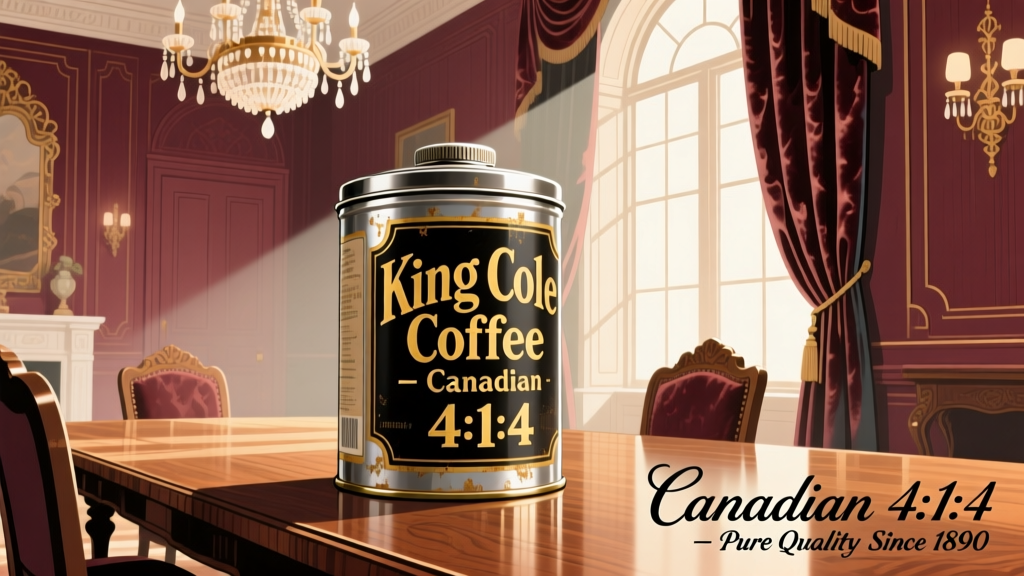
King Cole Coffee Advertising Tin: 'King Cole Being Served' – A Canadian Collectible Artifact (4¼″ × 4¼″ × 3½″)
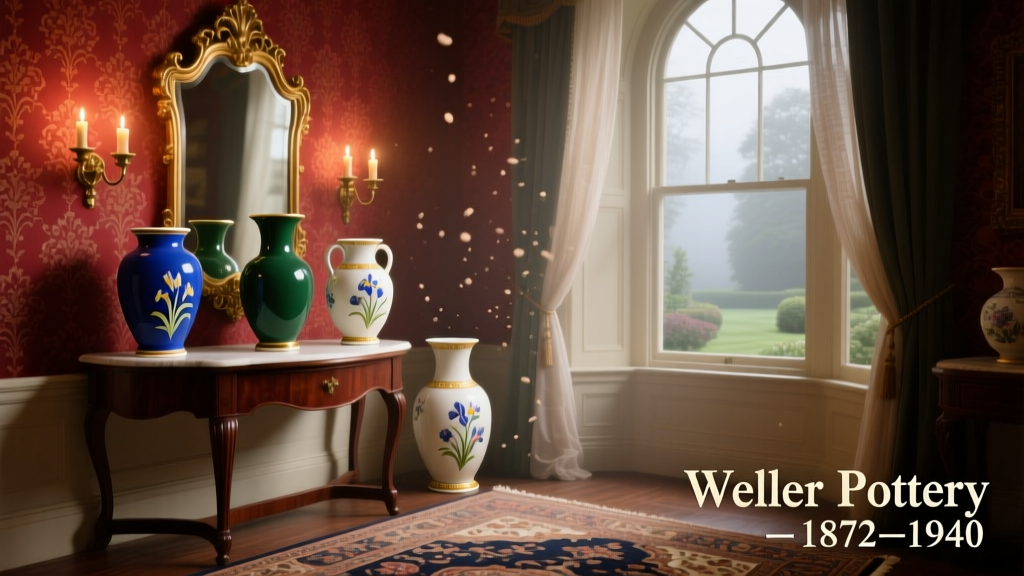
Weller Vase Hudson Perfecto Iris Hester Pillsbury — A 10½-Inch Masterpiece of American Art Pottery

Harker Pitcher Disc: Shepherd & Shepherdess Lamb Figurine with Gold Trim — A Collector’s Guide to the 7 5/8-Inch Porcelain Masterpiece
Bauer Ring Creamer in Burnt Orange Low: Identification, History, and Restoration Guidance
Imperial Glass Candlewick Ashtray (Round): Identification, History, and Restoration Guidance
Roycroft Vase: Hammered Copper with Nickel-Silver Band and Stylized Pattern (8 × 4 Inches)
Franciscan Desert Rose 9½-Inch Dinner Plate: History, Identification, and Restoration Guidance

Frankart Bookends: The Antelope Leaping — Design, Provenance, and Restoration of a Mid-Century American Icon

The Toy Dancer Black Man Clockwork Figure by Ives: History, Mechanics, and Ethical Context