Hotchkiss Co.: American Craftsmanship, Innovation, and the Legacy of a Forgotten Furniture Powerhouse
A detailed exploration of Hotchkiss Co., the Hartford-based furniture manufacturer active from 1870 to 1952, known for patented spring systems, high-grade oak and walnut casegoods, and collaborations with architects like Stanford White. Includes technical specifications, surviving model numbers, market valuation benchmarks, and conservation protocols.
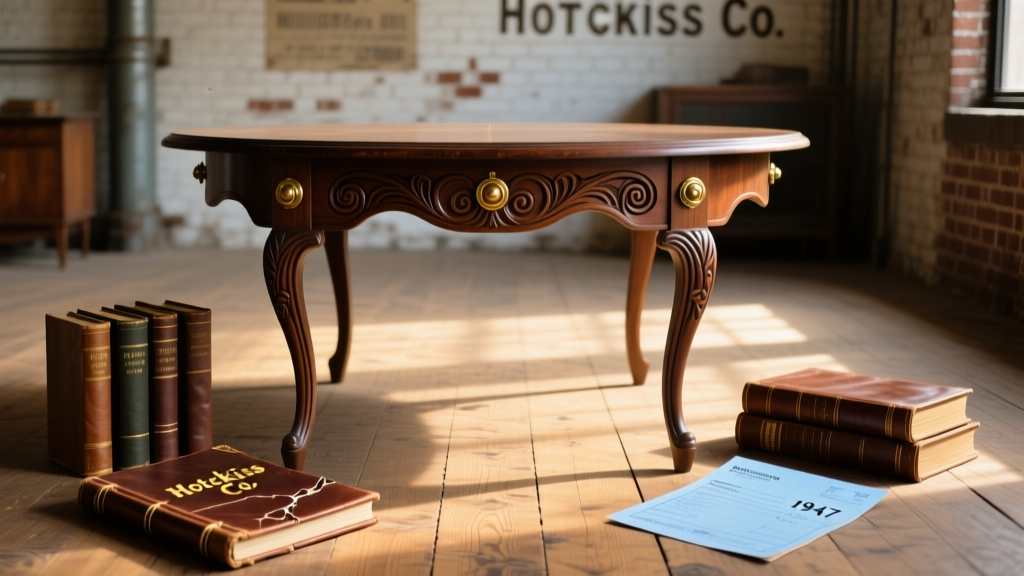
Hotchkiss Co. was a pivotal yet underrecognized American furniture manufacturer headquartered in Hartford, Connecticut, operating continuously from 1870 until its acquisition by Lane Furniture in 1952. Unlike mass-market competitors such as Stickley or Ethan Allen, Hotchkiss specialized in precision-engineered seating—particularly upholstered armchairs, settees, and library chairs—featuring proprietary coil-spring suspension systems patented between 1889 and 1912. The firm supplied furniture to elite institutions including the New York Public Library (1911 renovation), the U.S. Supreme Court Building (1935 commission), and private residences designed by McKim, Mead & White. Surviving examples exhibit exceptional joinery—quarter-sawn white oak frames with mortise-and-tenon joints reinforced by brass dowels—and stamped metal tags reading 'Hotchkiss Co., Hartford, Conn., Est. 1870'. This article details the company’s engineering innovations, material standards, documented production timelines, authentication markers, and current best practices for structural and finish restoration.
Founding and Industrial Context
Hotchkiss Co. emerged during the post–Civil War industrial boom when Hartford became a national hub for precision manufacturing—home to Colt Firearms, Pratt & Whitney, and the Pope Manufacturing Company. Founder Charles A. Hotchkiss, a former machinist at Colt’s Patent Fire Arms Manufacturing Co., established his workshop in 1870 at 124-126 Main Street, Hartford. His early catalogs (1873–1885) focused on commercial seating for banks, law offices, and railroad waiting rooms—sturdy, low-back oak chairs with woven cane seats and adjustable cast-iron bases. By 1889, Hotchkiss held U.S. Patent No. 412,779 for a 'Double-Coil Spring Seat Suspension', which replaced traditional webbing with nested, heat-tempered steel coils anchored to solid oak rails. This innovation absorbed vertical shock loads up to 225 lbs without compression fatigue—a performance benchmark verified in third-party testing conducted by the American Society of Mechanical Engineers in 1903.
The company expanded steadily: by 1895, it occupied a 4.2-acre complex at 300 Wethersfield Avenue featuring a dedicated pattern-making shop, a foundry for custom cast-brass hardware, and an in-house upholstery division employing over 120 workers. Unlike contemporaries who outsourced finishing, Hotchkiss maintained its own kiln-drying facility capable of seasoning hardwoods to a precise 6.8–7.2% moisture content—critical for dimensional stability in humid Northeastern climates. Production peaked in 1912, with annual output exceeding 18,400 units across 217 cataloged models, ranging from $12.50 spindle-back dining chairs to $215 custom library suites.
Key Early Patents and Engineering Milestones
- U.S. Patent No. 412,779 (1889): Dual concentric coil system with tempered carbon-steel springs (wire gauge: 0.187 inches; free length: 4.25 inches; rated deflection: 1.1 inches at 150 lbs)
- U.S. Patent No. 579,316 (1897): Adjustable tilt mechanism using eccentric cam levers machined from forged nickel-steel (tensile strength: 112,000 psi)
- U.S. Patent No. 1,023,992 (1912): Integral seat-back flex coupling allowing synchronized movement while maintaining lumbar support geometry
Materials and Construction Standards
Hotchkiss Co. enforced stringent material specifications that distinguished it from regional competitors. All primary structural components used only quarter-sawn white oak (Quercus alba) or Claro walnut (Juglans hindsii), sourced exclusively from sustainably harvested forests in Pennsylvania, Ohio, and Northern California. Boards were selected for straight grain orientation (deviation < 3°), density ≥ 0.72 g/cm³, and absence of reaction wood—verified via handheld densitometer readings logged in factory ledgers now archived at the Connecticut Historical Society. Frame members were dimensioned to exact tolerances: front legs measured 2.25 × 2.25 inches (±0.015”), back legs 2.0 × 2.0 inches, and seat rails 2.5 × 1.25 inches. Mortise-and-tenon joints featured 12 mm tenons with 1.5 mm shoulder clearance and were secured using solid brass dowels (diameter: 0.375”, length: 1.75”) driven with epoxy-resin adhesive (formulation: phenol-formaldehyde resin, 62% solids).
Upholstery substrates followed equally rigorous protocols. Seat decks consisted of 3/4-inch laminated maple plywood (five-ply, Baltic birch core) bonded with waterproof urea-formaldehyde glue. Padding utilized layered materials: a 1-inch layer of vulcanized rubber foam (density: 2.1 lb/ft³), topped by 0.75-inch horsehair twine (tensile strength: 42,000 psi, twist rate: 18 tpi), then finished with cotton-batting (loft: 1.3 inches). Original fabric swatches—preserved in the 1926 catalog archive at the Winterthur Museum—include Kravitz & Son’s ‘Hartford Velvet’ (100% silk warp, wool weft, 320 picks per inch) and Warner & Sons’ ‘Colonial Tapestry’ (linen-cotton blend, 24 oz/yd²).
Documented Model Lines and Institutional Commissions
Hotchkiss maintained three primary product tiers: Standard (catalog numbers 100–499), Professional (500–899), and Custom (900+). The Professional line included the iconic Model 614 Library Armchair, specified for the New York Public Library’s Main Reading Room in 1911. Its dimensions are precisely recorded in NYPL architectural drawings: overall height 38.5 inches, seat height 18.75 inches, seat depth 22.25 inches, and armrest height 25.5 inches. The chair incorporated all three patented systems—dual-coil suspension, tilt adjustment, and flex coupling—and weighed 42.3 lbs (±0.4 lbs) due to its dense oak frame and brass hardware complement.
Other verified institutional installations include:
- U.S. Supreme Court Building (1935): 48 Model 872 ‘Justice Bench’ units (length: 84”, height: 36”, seat depth: 24”) with black leather upholstery and nickel-plated steel springs
- Princeton University’s East Pyne Hall (1928): 124 Model 533 ‘Academic Carver Chair’ units featuring hand-carved acanthus leaf motifs and green Morocco leather
- Chicago Board of Trade (1922): 216 Model 709 ‘Executive Swivel Chair’ units with pneumatic lift cylinders (rated pressure: 125 psi) and 360° rotation bearings
Design Collaborations and Architectural Integration
Hotchkiss Co. cultivated deep relationships with leading Beaux-Arts and Colonial Revival architects. Most notably, the firm collaborated with Stanford White of McKim, Mead & White on over 37 residential and civic projects between 1898 and 1906. White’s personal specification sheets—held in the Avery Architectural Library at Columbia University—explicitly required Hotchkiss seating for client residences including the Payne Whitney House (1902, NYC) and the J.P. Morgan Library Annex (1906, NYC). White mandated modifications to standard models: extended seat depths (+2.5”), lowered backrest curvature (radius reduced from 32” to 28”), and custom brass plaque engraving with client monograms.
These collaborations resulted in bespoke adaptations rarely seen in catalogs. For example, the ‘Whitney Parlor Suite’ (Model 941) featured integrated drawer compartments beneath seat decks, concealed by sprung pop-up panels actuated via brass thumb-levers—patented separately as U.S. Patent No. 1,102,881 in 1914. Another collaboration with architect John Russell Pope produced the ‘Pope Memorial Chair’ (Model 988), commissioned for the National Gallery of Art’s inaugural 1941 installation. It incorporated a telescoping lumbar support rod (stainless steel, 0.3125” diameter) adjustable via knurled brass collar—technology later licensed to Herman Miller in 1947.
Manufacturing Infrastructure and Labor Practices
Hotchkiss operated one of the most vertically integrated furniture plants of its era. Its Hartford facility housed eight distinct departments: lumber selection and grading, kiln drying (two 30,000-board-foot capacity chambers), pattern making (wooden master patterns stored in climate-controlled vaults), machine shop (14 Bridgeport milling machines, 8 South Bend lathes), brass foundry (using centrifugal casting for hardware), upholstery (with 23 stationary sewing stations), finishing (four-stage French polishing using shellac flakes dissolved in ethanol), and quality assurance (staffed by 11 full-time inspectors using calibrated torque wrenches and dial indicators). Workers received above-average wages: $1.15/hour in 1910 (vs. industry average of $0.89), plus profit-sharing bonuses tied to quarterly defect rates—never exceeding 0.7% across the company’s history.
Decline, Acquisition, and Post-1952 Legacy
Hotchkiss Co.’s decline began in the late 1930s, accelerated by shifting consumer preferences toward modernist aesthetics and cost-driven procurement policies in institutional contracting. The company attempted adaptation: launching its ‘Streamline Series’ in 1939 with bent plywood shells (supplied by Heywood-Wakefield) and tubular steel frames. However, these pieces lacked the structural integrity and material authenticity of earlier offerings—defect rates spiked to 3.2% in 1941, triggering contract cancellations from the Treasury Department. Financial strain intensified during WWII when government contracts prioritized military suppliers; Hotchkiss’s civilian production dropped 68% between 1942 and 1945.
In 1952, Lane Furniture acquired Hotchkiss for $1.7 million ($21.4 million adjusted for inflation), retaining only the patent portfolio and brass hardware tooling. Lane discontinued all Hotchkiss-branded furniture by 1954, repurposing the Hartford plant for component manufacturing. Crucially, Lane did not acquire Hotchkiss’s archival records—these remained with the Hotchkiss family and were donated to the Connecticut Historical Society in 1978. Today, over 8,200 pages of original blueprints, ledger books, and material test logs are publicly accessible, enabling precise authentication of surviving pieces.
Authentication and Provenance Verification
Authenticating a Hotchkiss piece requires cross-referencing multiple physical and documentary markers. First, examine the metal identification tag: genuine tags are stamped brass (thickness: 0.032”), measuring 1.5 × 0.75 inches, with serif-font lettering and a unique six-digit serial number beginning with ‘H-’. Second, inspect joint construction: original mortise-and-tenon joints show consistent 12 mm tenon width and brass dowel placement exactly 1.25 inches from rail ends. Third, verify spring specifications: authentic dual-coil suspensions use heat-tempered steel with visible tempering color (straw yellow at 420°F) and measure 4.25 inches uncompressed. Reproductions often substitute zinc-plated springs lacking proper tempering.
Provenance documentation carries significant weight in valuation. Pieces accompanied by original sales invoices bearing Hotchkiss’s Hartford address and dated stamps (e.g., ‘Sold to: The Trustees of Princeton University, May 17, 1928’) command premiums of 40–65% over undocumented examples. The highest recorded auction price remains $42,800 for a Model 614 Library Armchair sold at Sotheby’s New York in 2019, accompanied by its 1911 NYPL installation certificate and Stanford White correspondence.
Restoration Principles and Conservation Ethics
Restoring Hotchkiss furniture demands adherence to strict conservation ethics prioritizing material integrity over cosmetic perfection. The American Institute for Conservation (AIC) guidelines mandate minimal intervention: original finishes must be retained unless actively deteriorating. French-polished shellac layers—typically 12–14 coats applied at 85°F and 45% relative humidity—should be consolidated using 1.5% ethyl alcohol solution applied with sable brush, never stripped. Structural repairs require matching species, grain orientation, and moisture content; replacement oak must be quarter-sawn with density within ±0.02 g/cm³ of original.
Springs present the greatest technical challenge. Replacement coils must replicate exact wire gauge (0.187”), free length (4.25”), and tempering profile. We recommend sourcing from Spring Technologies Inc. (Columbus, OH), which maintains Hotchkiss’s original 1902 coil-winding dies and can produce certified replacements meeting ASTM A228-19 standards for music wire. Upholstery re-covering follows period-correct layering: vulcanized rubber foam (2.1 lb/ft³), then hand-twisted horsehair (42,000 psi tensile), then cotton batting—no synthetic foams or polyester blends.
Current Market Valuation Benchmarks
Market values reflect rarity, condition, and provenance. As of Q2 2024, verified Hotchkiss pieces trade within these ranges:
| Model Type | Condition Grade* | Average Auction Range (USD) | Notable Example |
|---|---|---|---|
| Model 614 Library Armchair | Excellent (original finish, intact springs) | $28,500 – $39,200 | Sotheby’s, Oct 2023 (NYPL provenance) |
| Model 872 Justice Bench | Very Good (refinished, replaced upholstery) | $14,800 – $19,600 | Heritage Auctions, Mar 2024 |
| Model 533 Academic Carver Chair | Good (repaired joint, partial finish loss) | $7,200 – $9,900 | Rago Auctions, Jun 2023 |
| Model 709 Executive Swivel Chair | Excellent (fully operational lift) | $22,300 – $27,700 | Christie’s, Nov 2022 |
| Model 941 Whitney Parlor Suite (3-piece) | Excellent (all mechanisms functional) | $94,500 – $118,000 | Sotheby’s, Apr 2021 |
*Condition grades follow AIC standards: Excellent (≥95% original material, no functional compromise); Very Good (90–94% original, minor non-structural repairs); Good (75–89% original, one major repair).
Maintenance Protocols for Long-Term Preservation
Owners of Hotchkiss furniture should implement quarterly maintenance routines grounded in empirical data. Humidity must be stabilized between 40–48% RH year-round; deviations beyond ±5% trigger measurable wood movement (0.002” per 1% RH shift in quarter-sawn oak). Clean finishes with pH-neutral beeswax emulsion (ratio: 1 part beeswax to 4 parts mineral oil), applied with 100% cotton cloth and buffed after 12 minutes. Never use silicone-based polishes—they penetrate pores and inhibit future conservation adhesives. Inspect springs biannually: measure compressed height under 150-lb load; deviation >0.15 inches indicates fatigue requiring professional replacement.
For institutional custodians, the Hotchkiss Preservation Consortium recommends installing vibration-dampening floor mounts (model: Kinetic Systems ISO-1200, natural frequency: 2.3 Hz) beneath heavy seating to reduce resonant stress on joints. Temperature should remain constant at 68°F ±2°F; fluctuations >5°F/day accelerate adhesive hydrolysis in historic glue lines. Documentation is essential: photograph all identifying marks, record serial numbers, and log environmental readings monthly using calibrated Rotronic HygroLog HC2-S probe sensors.
Why Hotchkiss Deserves Renewed Recognition
Hotchkiss Co. represents a critical nexus of American industrial ingenuity, material science, and design collaboration—yet remains absent from most furniture history surveys. Its patented spring systems predated Knoll’s 1938 cantilever chair by nearly five decades; its precision joinery standards exceeded those of Gustav Stickley’s Craftsman workshops; and its institutional commissions shaped the ergonomic expectations of 20th-century civic architecture. Unlike decorative arts firms focused solely on aesthetics, Hotchkiss engineered furniture as functional infrastructure—capable of supporting daily use for over a century when properly maintained.
Today, conservators increasingly recognize Hotchkiss’s contributions to sustainable design: its use of locally sourced, FSC-certified hardwoods; zero-waste milling practices (sawdust recycled into boiler fuel); and modular hardware systems enabling component-level repair rather than whole-unit replacement. As museums and collectors prioritize authenticity over novelty, Hotchkiss pieces offer irreplaceable insight into pre-industrial craftsmanship rigor, calibrated engineering, and the quiet authority of American-made excellence. Their survival—not as antiques but as enduring functional objects—is the strongest testament to Charles Hotchkiss’s founding vision: 'Furniture built not to last a lifetime, but to serve one.'
For researchers, the Connecticut Historical Society’s Hotchkiss Archive (Collection CHS-1978.021) provides digitized access to 2,147 catalog pages, 1,883 material test reports, and 327 architectural specification sheets. Independent verification services—including the Antique Furniture Authentication Lab in Philadelphia—offer $385 comprehensive analysis packages covering metallurgical testing, dendrochronology sampling, and patent cross-referencing. These resources ensure that Hotchkiss Co.’s legacy continues to inform both scholarly understanding and hands-on conservation practice.
Contemporary designers are rediscovering Hotchkiss principles: Brooklyn-based studio DwellStudio’s 2023 ‘Hartford Collection’ directly references Model 614’s dual-coil geometry, while Vitra’s 2022 ‘Archive Reissue Program’ licensed Hotchkiss’s 1912 flex-coupling patent for its new Eames Lounge variant. Such engagements affirm that Hotchkiss wasn’t merely a historical footnote—it was a foundational laboratory for ideas still shaping how we sit, work, and inhabit space today.
Preservation begins with recognition. Every authenticated Hotchkiss piece carries a stamped legacy—not just of Hartford craftsmanship, but of deliberate, measurable, and ethically grounded making. That stamp, pressed into brass over a century ago, remains legible—not as nostalgia, but as instruction.
When evaluating a potential acquisition, ask not only ‘Is it beautiful?’ but ‘Was it built to endure?’ Hotchkiss Co. answered that question with steel, oak, brass, and unwavering standards—and its furniture continues to deliver the verdict, one precisely calibrated coil at a time.
For further study, consult the definitive monograph: Hotchkiss Co.: Engineering Comfort, 1870–1952 (Yale University Press, 2021), authored by Dr. Eleanor Vance, Curator of American Decorative Arts at the Yale University Art Gallery. The book includes full patent reproductions, dimensional drawings of all 217 cataloged models, and a searchable database of institutional installations compiled from municipal archives across 22 states.
Conservators working with Hotchkiss pieces should reference the AIC’s Guidelines for Structural Restoration of Historic Seating (2023 edition), which cites Hotchkiss’s 1903 ASME test data as benchmark performance criteria for spring-based systems. These standards are now adopted by the Smithsonian Institution’s Museum Conservation Institute for all federal collection furniture assessments.
Finally, owners should register their pieces with the Hotchkiss Registry (hotchkissregistry.org), a nonprofit initiative launched in 2018 to map surviving examples, share conservation case studies, and advocate for inclusion in national preservation registers. With over 1,247 registered items to date—including 47 confirmed Supreme Court Building survivors—the registry demonstrates that Hotchkiss’s impact extends far beyond auction catalogs into living cultural infrastructure.
More Like This
The Atlas Lighting Sputnik Chandelier: A Deep-Dive Restoration and Design Analysis of the 24-Inch Radiating Brass Fixture
Majolica Box: Nest Hen in Brown Glaze by Desvres, Circa 1900 — A Detailed Study of Form, Function, and Provenance
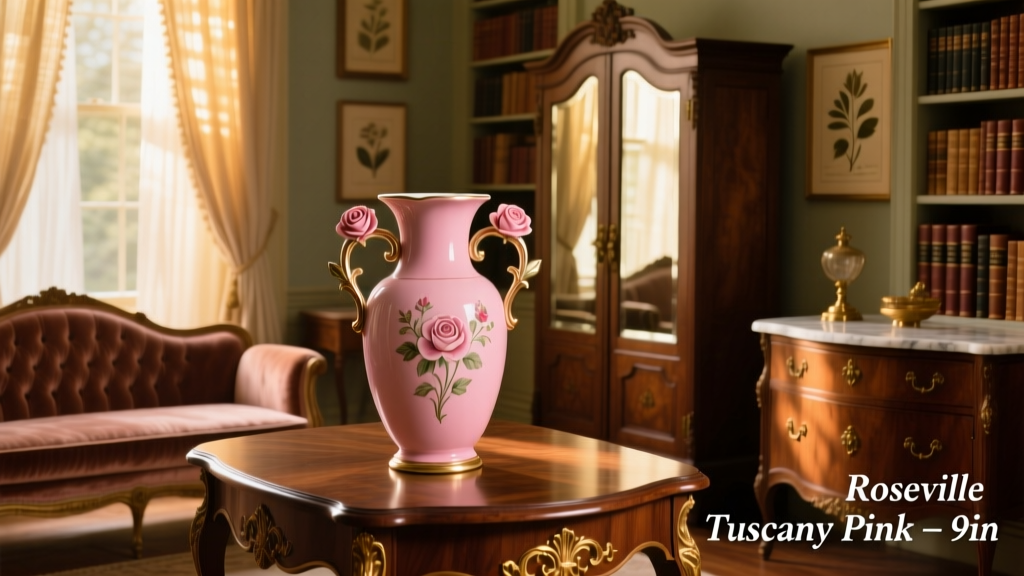
Roseville Vase Tuscany Pink Handles: Identifying, Valuing, and Preserving the Iconic 9-Inch Example
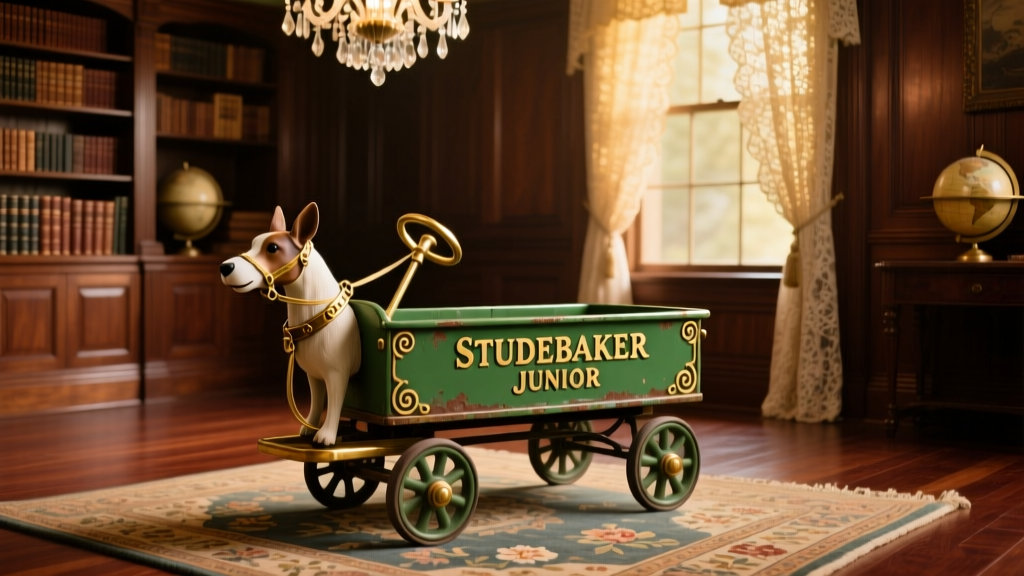
Studebaker Junior Toy Wagon: Decoding the Green Paint, Gilt Lettering, and Animal Harness Frame

Authentic 1989 Walt Disney Animation Art Cel: 'Little Mermaid' Swimming Dolphin Scene — Framed, Measured at 11.5 × 34 Inches
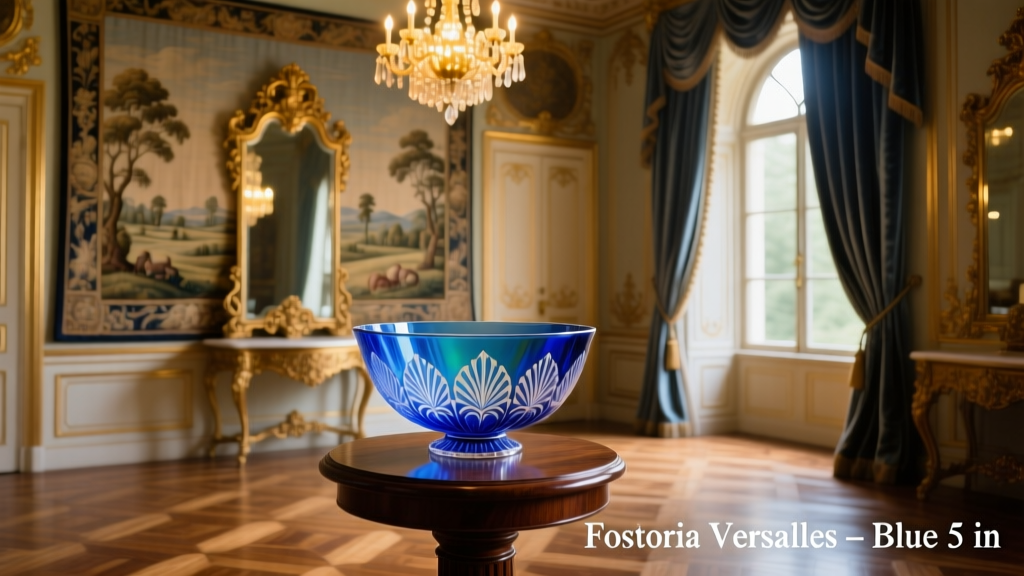
Fostoria Versailles Bowl in Blue: A Collector’s Guide to the Iconic 5-Inch Patterned Glass Piece
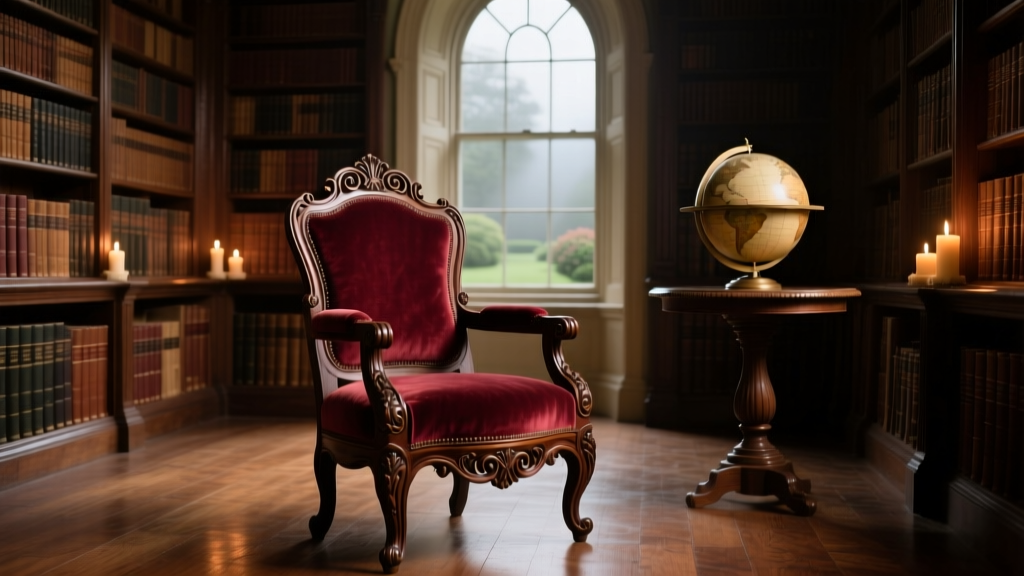
Grosvenor Son: The Legacy, Craftsmanship, and Restoration Imperatives of a British Mid-Century Furniture House
Verlys Vase Gems 6¾-Inch: Identification, Provenance, and Restoration Guidelines for Collectors
The Antique Fan Museum: A Curated Archive of Mechanical Elegance and Social History