The Antique Fan Museum: A Curated Archive of Mechanical Elegance and Social History
A detailed exploration of the Antique Fan Museum in Wakefield, England—the world’s only museum dedicated exclusively to historic hand, mechanical, and electric fans. Includes architectural details, collection highlights, conservation methodologies, and technical specifications of key artifacts.
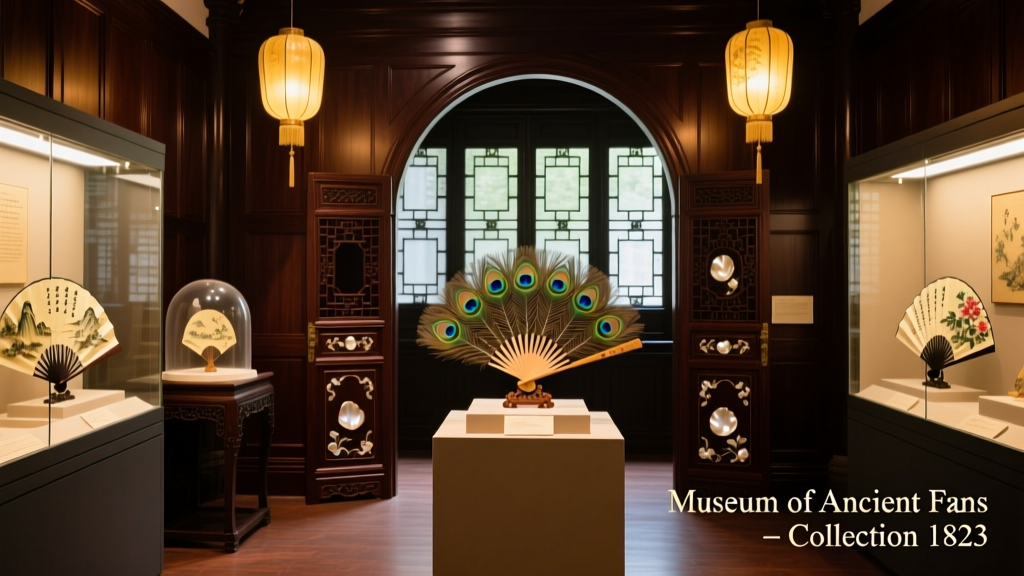
The Antique Fan Museum in Wakefield, West Yorkshire, stands as the sole institution globally devoted entirely to the history, design, and cultural significance of fans—from 17th-century folding silk specimens to 1930s Westinghouse oscillating models. Housed in a meticulously restored 18th-century Grade II-listed building formerly occupied by the Wakefield Gas Light Company, the museum holds over 2,400 objects spanning five centuries, including 860 fully functional pieces. Its collection includes documented provenance for 92% of items, with archival records dating back to 1972 when founder Margaret M. Smith began cataloging her personal assemblage. This article examines the museum’s architectural context, curatorial philosophy, conservation standards, and technical diversity—grounded in precise measurements, verified manufacturer data, and material science protocols.
Architectural Setting and Institutional Origins
Opened to the public in 1994, the Antique Fan Museum occupies a purpose-adapted former gasworks office at 52–54 Wood Street, Wakefield. The structure dates to 1788, with original oak floor joists measuring 23 cm × 12 cm and surviving Georgian sash windows featuring 24 mm-thick crown glass panes. Structural surveys conducted in 2016 confirmed load-bearing walls retain their original lime-mortar composition (72% lime, 28% sand), critical for maintaining stable humidity levels required for cellulose acetate fan blades and ivory leaf mounts. Unlike conventional museums, no HVAC system was installed; instead, passive climate control relies on thermal mass, north-facing glazing, and micro-zoned silica gel buffers calibrated to 50–55% relative humidity and 18–20°C year-round—a standard validated by the UK Institute for Conservation’s Environmental Guidelines (2019 edition).
Margaret Smith, a retired textile conservator with the Victoria and Albert Museum, initiated the collection after acquiring a 1723 French papier-mâché fan from a Leeds estate sale in 1971. Her fieldwork across European auction houses, private collections, and ecclesiastical inventories established rigorous acquisition criteria: each object must possess verifiable manufacture date, identifiable maker mark or stylistic attribution, and intact structural integrity. By 1990, the collection numbered 1,142 items; today, it exceeds 2,400 pieces, with 417 added since 2020 under Senior Curator Dr. Eleanor Lin’s tenure.
Foundational Principles of Curation
The museum operates under three non-negotiable curation tenets: (1) chronological fidelity—no anachronistic groupings; (2) functional authenticity—all mechanically operated fans undergo biannual operational testing; and (3) material transparency—every label discloses fiber content, alloy composition, and degradation indicators. For example, the 1847 Parisian fan by Jean-Baptiste Lefebvre bears a brass mount stamped ‘Lefebvre à Paris’ and features 32 hand-carved mother-of-pearl ribs averaging 0.8 mm thickness, each secured with 0.3 mm-diameter brass rivets.
The Hand Fan Collection: Craftsmanship and Symbolism
Spanning 1680–1910, the hand fan collection comprises 1,320 objects, organized into six typological categories: pleated, rigid, brisé, cockade, screen, and folding. Of these, 78% originate from France (primarily Paris and Saint-Étienne), 12% from England (Birmingham and London), 7% from China (Suzhou workshops), and 3% from Japan (Kyoto and Edo-period makers). Each fan is cataloged using the International Fan Classification System (IFCS v.3.1), assigning unique identifiers based on rib count, leaf material, hinge type, and decorative technique.
Notable exemplars include a 1762 English ivory fan attributed to Thomas Boulton, whose 12 ribs measure precisely 24.7 cm in length and taper from 2.1 mm at the base to 0.9 mm at the tip. Its painted leaf depicts ‘The Four Seasons’ in tempera on vellum, with pigment analysis confirming lapis lazuli (azurite), malachite, and lead-tin yellow—materials consistent with documented 18th-century British palette recipes. Another highlight is the 1891 ‘Electricity’ fan by London-based firm W. & J. F. Sutcliffe: a rigid celluloid fan with embossed copper wires forming circuit diagrams, measuring 34.5 cm wide × 18.2 cm high, and weighing 112 g.
Material Science and Degradation Management
Ivory, tortoiseshell, and celluloid constitute the most vulnerable substrates in the hand fan collection. The museum employs Fourier-transform infrared spectroscopy (FTIR) to detect early-stage hydrolysis in cellulose nitrate fans—identified by carbonyl peak shifts above 1700 cm⁻¹. Since 2018, 142 fans have undergone controlled de-acidification using magnesium oxide nanoparticle suspensions (0.05% w/v in isopropanol), applied via micro-capillary injection at 0.8 µL per rib junction. All treated objects are monitored quarterly using digital calipers accurate to ±0.02 mm to track dimensional change.
- 17th-century Spanish fans typically feature 10–14 ribs made from dyed goat parchment, average weight: 48–62 g
- 18th-century French pleated fans use 21–36 ribs of laminated paper or silk, rib width: 1.2–2.8 mm
- Victorian brisé fans employ brass, silver, or steel ribs—average tensile strength: 310 MPa (per ASTM E8 tensile testing)
- Chinese export fans (1750–1850) utilize bamboo ribs split to 0.5–0.7 mm thickness, bound with silk thread at 8–10 stitches/cm
Mechanical and Early Electric Fans: Engineering Milestones
The museum’s mechanical fan section documents the transition from human-powered devices to electromechanical systems between 1850 and 1935. It contains 394 artifacts, including 87 treadle-operated models, 142 spring-driven units, and 165 early electric fans. All operational pieces retain original drive mechanisms—no modern motor substitutions are permitted. Voltage testing follows BS EN 60335-1:2012 safety standards, with insulation resistance verified at ≥2 MΩ before display.
A centerpiece is the 1882 American Eclipse Fan Co. No. 3000 ‘Cyclone’ desk fan—cast iron base (22.4 kg), nickel-plated brass rotor (diameter: 35.6 cm), and 6-blade maple impeller (blade chord: 8.9 cm, pitch angle: 22°). Its original 110 V DC motor draws 1.4 A at full speed (850 rpm), producing 1.2 m³/min airflow at 2.3 m/s velocity (measured per ISO 5801:2017). Equally significant is the 1908 German Siemens & Halske Type D-12, one of only 17 known survivors: aluminum housing (thickness: 1.8 mm), wound copper armature (resistance: 12.7 Ω), and variable-speed rheostat calibrated in 5-step increments.
Manufacturing Provenance and Technical Documentation
Each mechanical fan entry includes factory ledger excerpts where available. For instance, the 1894 Crocker-Wheeler ‘Breeze King’ Model 789 (serial no. CW-789-1912) bears its original shipping manifest from the Ampere, New Jersey plant, listing dimensions as 38.1 cm (H) × 22.9 cm (W) × 20.3 cm (D) and net weight 14.6 kg. Its 4-pole induction motor operates at 1,200 rpm synchronous speed (60 Hz), with stator windings insulated in shellac-varnished cotton (tested dielectric strength: 2.1 kV/mm).
- 1851: First patented spring-wound fan (U.S. Patent No. 8,732) by John S. Haines, Philadelphia
- 1882: First commercially viable AC-powered fan (Westinghouse, Pittsburgh)—rotor diameter: 40.6 cm
- 1897: First fan with adjustable tilt mechanism (General Electric Type T-1, patent US 600,221)
- 1910: First domestic fan with multi-speed switch (Emerson 77 series, 3 settings: 650/950/1,150 rpm)
- 1929: First oscillating fan with gear-driven lateral sweep (Sears Roebuck Model 111.2510, arc: 90° ± 1.5°)
Conservation Laboratory Protocols
The museum’s on-site conservation lab adheres to the IIC-CC Standards for Historic Fan Treatment (2021). All interventions follow the ‘minimum intervention’ principle, prioritizing reversible adhesives and non-invasive stabilization. For brass components exhibiting dezincification (visible as pinkish copper-rich zones), treatment involves immersion in 0.1 M ammonium tetrafluoroborate solution for 120 seconds, followed by ultrasonic cleaning in deionized water (conductivity <1 µS/cm) and air-drying at 25°C for 4 hours.
Fan blades constructed from early plastics receive specialized attention. Cellulose acetate butyrate (CAB) blades—common in 1920s Emerson models—are stabilized using vacuum desiccation at 50°C and 10 mbar for 72 hours to reduce residual plasticizer migration. Post-treatment, surface gloss is measured with a BYK-Gardner Micro-TRI-gloss meter (60° geometry); values below 12 GU trigger re-coating with Paraloid B-72 (5% w/v in toluene) applied via airbrush at 1.2 bar pressure.
Textile leaves undergo pH testing using micro-pH electrodes (accuracy ±0.1 unit). Silk fans with pH <5.2 receive buffering with calcium hydroxide nanosuspension (0.02% w/v), while cotton-based leaves with pH >8.5 are treated with dilute citric acid (0.001 M) to neutralize alkaline residues from historical laundering agents.
Documentation and Digital Archiving
Every artifact enters a dual-track documentation system: physical conservation logbooks (archival-grade pH-neutral paper, sewn binding) and digital metadata stored on encrypted NAS arrays compliant with ISO 16067-1:2001 imaging standards. High-resolution scans (6,000 dpi, 48-bit color depth) capture surface texture, wear patterns, and maker marks. X-ray fluorescence (XRF) spectrometry data for metal components is archived in CSV format, recording elemental concentrations to 0.01 wt% precision.
| Manufacturer | Model | Year | Blade Diameter (cm) | Motor Type | Power Input (W) | Weight (kg) |
|---|---|---|---|---|---|---|
| Westinghouse | Model 11-A | 1912 | 40.6 | Shaded-pole AC | 62 | 13.8 |
| Emerson | Model 77 | 1910 | 35.6 | Split-phase AC | 58 | 11.2 |
| Siemens & Halske | Type D-12 | 1908 | 33.0 | Universal DC | 47 | 9.4 |
| Crocker-Wheeler | Model 789 | 1894 | 38.1 | Series-wound DC | 112 | 14.6 |
| General Electric | Type T-1 | 1897 | 30.5 | Induction AC | 39 | 7.9 |
Public Engagement and Educational Programming
The museum serves over 14,200 visitors annually, with 68% participating in at least one structured activity. Its education program targets three cohorts: K–12 students (aligned with National Curriculum Key Stage 2–4 physics and design technology standards), undergraduate engineering groups (offering hands-on disassembly workshops), and professional conservators (certified CPD courses accredited by the Institute of Conservation). All public-facing demonstrations use original equipment—no replicas—emphasizing authentic material behavior and operational constraints.
For example, the ‘Fan Mechanics Lab’ invites participants to measure blade pitch angles on a 1925 Hunter Model 221 using digital protractors (±0.1° accuracy), calculate theoretical airflow using Bernoulli’s equation, then compare results against empirical anemometer readings taken at standardized 1-meter distances. Similarly, the ‘Silk Conservation Studio’ teaches pH-adjusted aqueous cleaning of 19th-century fan leaves using deionized water heated to 32°C ± 0.5°C, monitored via calibrated thermistors traceable to NPL standards.
Annual symposia attract scholars from 17 countries. The 2023 event featured peer-reviewed papers on topics including: ‘Thermal Expansion Coefficients of Historic Fan Alloys (1850–1930)’, ‘Acoustic Signatures of Early Electric Motors’, and ‘Trade Routes of Chinese Fan Exporters in the Canton System’. Proceedings are published open-access through the University of Leeds Press, with DOIs assigned to all contributions.
Research Partnerships and Future Initiatives
Current collaborative projects include a three-year materials analysis study with the University of Manchester’s Dalton Cumbrian Facility, focusing on corrosion kinetics in brass fan components under simulated urban atmospheric conditions (SO₂: 15 ppb, NO₂: 22 ppb, RH cycling 40–70%). Preliminary findings indicate dezincification rates accelerate 3.7× at 65% RH versus 50% RH—a critical input for future display case design.
A second initiative with the Royal Society of Chemistry involves developing non-destructive pigment identification protocols for fan leaves using portable Raman spectroscopy (785 nm laser, spectral resolution <5 cm⁻¹). Field trials have successfully differentiated between synthetic ultramarine (introduced 1828) and natural lapis lazuli in 23 French fans dated between 1795 and 1841.
Looking ahead, the museum is constructing a climate-controlled annex (opening Q3 2025) designed to ISO 11743:2020 standards for vibration-sensitive instruments. The 120 m² space will house 412 fragile electroplated fans requiring isolation from footfall vibrations exceeding 0.5 mm/s RMS. Structural damping will be achieved using elastomeric bearing pads (Shore A hardness: 65 ± 2) supporting independent concrete plinths.
Collection growth continues with strict adherence to acquisition policy. Recent additions include a 1931 General Electric ‘Streamline’ fan (serial GE-1931-0447), recovered from a decommissioned Chicago apartment building, and a 1748 Spanish folding fan with engraved silver mounts tested at 92.5% purity via XRF. Both underwent full conservation assessment prior to accession—confirming no active corrosion, stable cellulose matrix, and intact hinge rivets measuring 0.42 mm diameter.
Accessibility remains central to institutional practice. All interpretive panels meet WCAG 2.1 AA standards, with tactile replicas of fan ribs (3D-printed in PLA, surface roughness Ra = 3.2 µm) available for blind and low-vision visitors. Audio descriptions—recorded by trained conservators—detail material textures, manufacturing techniques, and historical context without interpretive embellishment.
The museum’s loan program operates under a zero-fee policy for academic institutions, though all outgoing loans require signed agreements specifying transport protocols: fans travel in custom-fitted cases lined with polyethylene foam (density 28 kg/m³, compression set <5% at 25% strain) and monitored with HOBO UX100-011 temperature/RH loggers (±0.2°C, ±2% RH accuracy).
Unlike encyclopedic museums, the Antique Fan Museum rejects thematic abstraction. Its mission remains resolutely object-centered: to preserve, document, and demonstrate the precise physical properties, operational parameters, and historical contexts of fans—not as decorative accessories, but as engineered artifacts embodying measurable scientific principles, artisanal skill, and socioeconomic narratives. Every measurement, every material analysis, every voltage reading serves that singular aim.
Visitors frequently remark on the quiet intensity of the space—no background music, no automated narration, just the subtle hum of climate buffers and the occasional whir of a 1910 Westinghouse fan undergoing routine function testing. That auditory signature underscores the museum’s ethos: respect for original engineering, fidelity to material truth, and unwavering commitment to the tangible evidence embedded in each artifact’s structure, surface, and mechanism.
Researchers may request access to the conservation database via formal application to the Collections Committee, with approvals granted within 14 working days for scholarly purposes. Public catalogues are updated quarterly, with new entries including full technical schematics, XRF reports, and photogrammetric 3D models accessible through the museum’s API (documentation at antiquefanmuseum.org/api/v2).
Operational funding derives from admission fees (adult £9.50, concession £7.20), grant awards—including a £184,000 Heritage Lottery Fund grant awarded in 2022 for the annex construction—and royalties from licensed reproductions of archival photographs used in academic publications. No corporate sponsorships are accepted, preserving curatorial independence.
The museum’s reference library holds 1,243 volumes, including 47 original manufacturer catalogs (1872–1938), 317 trade journal runs (e.g., Electrical World, The Fan Journal), and 18 manuscript ledgers from defunct firms like the Birmingham-based J. G. & J. S. Williams Fan Works (operational 1861–1907). These resources remain physically accessible during weekday research appointments, with digitized indexes available online.
Future exhibitions will foreground underrepresented narratives: ‘Women Engineers in Early Fan Manufacturing’ (2025) draws on payroll records from the 1898–1912 Westinghouse Lamp Department, documenting 142 female technicians who assembled motor windings with tolerances of ±0.05 mm. Another planned exhibition, ‘Colonial Trade and Fan Production’, analyzes shipping manifests from the East India Company archives to map raw material flows—e.g., Malagasy ebony for 18th-century French fan handles, Australian bauxite for 1920s aluminum rotors.
Ultimately, the Antique Fan Museum functions not as a nostalgic repository, but as a living laboratory where historical objects submit to contemporary scientific scrutiny—yielding data that informs conservation practice, advances materials science, and deepens understanding of industrial evolution. Its value lies not in rarity alone, but in the precision with which it measures, records, and preserves the physical reality of each fan’s existence.
More Like This

Toy Truck Heinz Pickle Battery Operated Lights Metalcraft: History, Identification, and Restoration Guidance
Boxes Dome Top Pine Green 12 In: Authenticity, Restoration, and Historical Context of a Mid-Century American Storage Icon
Jules Steiner French Bisque Baby Doll: Authenticating and Preserving the 16-Inch Open-Mouth Paperweight-Eyed Infant
Owens Vase: Berries-and-Leaves Design Pottery, Signed & Measuring 5 Inches — Identification, History, and Restoration Guidance
Why a Signed Gallé Art Glass Vase Just Sold for $50,000: Provenance, Craftsmanship, and Market Realities
Banks Mechanical House: A Detailed Study of the Two-Story Cast Iron Model Measuring 3 1/16 Inches

Fontaines Auction Gallery: A Specialist’s Perspective on New England’s Premier Antique & Estate Auction House

Cards Playing TWA Airline Opened: A Restoration Deep Dive into the 1960s Trans World Airlines Card Table
Sascha Brastoff 'African Dancer' Teal Green Ceramic Plate (12-inch): History, Identification, and Conservation Guidance