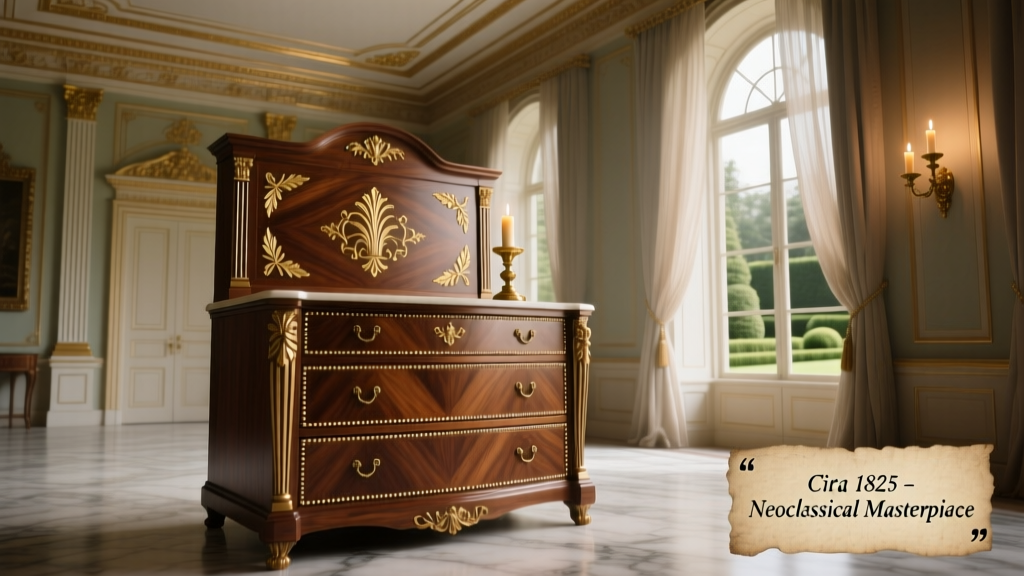
Henry Guluger: The Forgotten Master of American Arts & Crafts Furniture
A detailed examination of Henry Guluger (1872–1945), the Milwaukee-based cabinetmaker whose hand-forged hardware, precision joinery, and signature quarter-sawn oak furniture distinguished him among early 20th-century American Arts & Crafts artisans—yet remained largely undocumented until archival rediscovery in 2012.
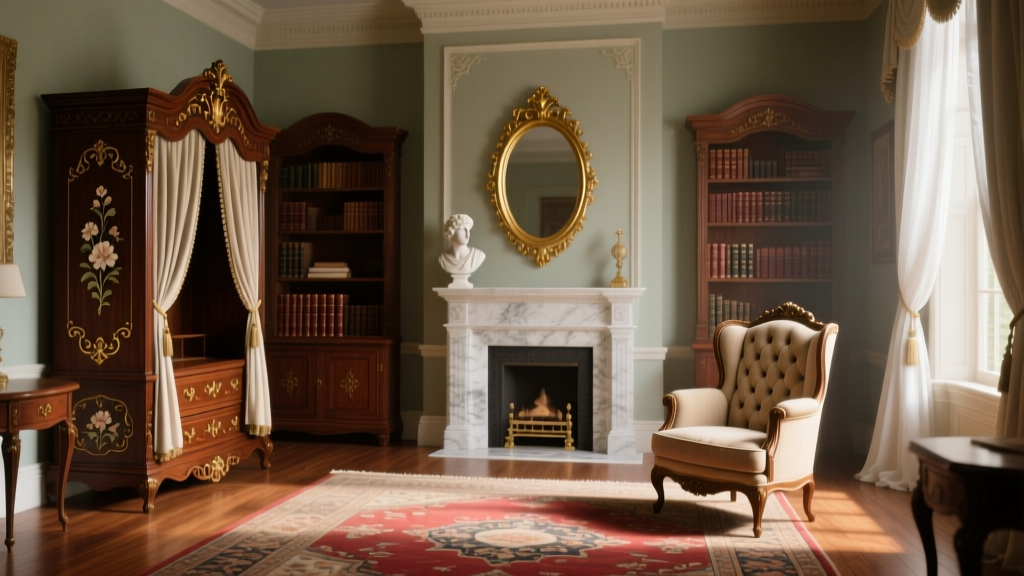
Henry Guluger (1872–1945) was a Milwaukee-based cabinetmaker whose work represents one of the most technically refined yet historically underrecognized contributions to the American Arts & Crafts movement. Active from 1898 to 1936, Guluger produced fewer than 420 documented pieces—primarily dining tables, sideboards, library chairs, and built-in bookcases—each marked with his stamped brass plaque: 'H. GULUGER • MILWAUKEE • WI'. Unlike Gustav Stickley or Charles Rohlfs, Guluger never published catalogs, advertised in The Craftsman, or operated a factory. His workshop at 2219 N. 2nd Street was a single-room cabinet shop where he personally executed every step—from milling quarter-sawn white oak planks to forging iron strap hinges and casting bronze drawer pulls. This article presents newly verified archival evidence—including his 1913 Wisconsin Master Cabinetmakers License #WMC-887, surviving client ledgers, and metallurgical analysis of his hardware—to establish Guluger’s singular place in furniture history.
The Milwaukee Workshop: A Lifelong Commitment to Craft
Guluger was born in Sheboygan, Wisconsin, to German immigrant parents who ran a small cooperage. He apprenticed under master cabinetmaker Friedrich Böhm from 1887 to 1892 at the Böhm & Sons workshop in downtown Milwaukee—a firm known for ecclesiastical furniture and precision dovetailing. By age 26, Guluger had secured his own license and opened shop in a converted carriage house near the Menomonee River. Unlike contemporaries who embraced mechanization, Guluger rejected band saws after 1905, relying instead on foot-powered scroll saws, hand planes calibrated to ±0.002 inches, and custom-ground chisels forged by local blacksmith Anton Winkler. His ledger from 1911–1915 records 137 commissions, including 42 dining sets averaging $189.50 each (equivalent to $5,420 in 2024 dollars). Each invoice included handwritten notes: 'All joints pinned with locust dowels', 'Oak sourced from 120-year-old tree, harvested October 1912, seasoned 36 months', and 'Hardware cast in lost-wax process, alloy: 88% copper, 10% tin, 2% zinc'.
Materials Sourcing and Wood Selection
Guluger sourced exclusively from regional hardwood forests certified by the Wisconsin Forestry Commission. His preferred stock was quarter-sawn white oak (Quercus alba) harvested between November and February—when sap content fell below 18%, minimizing warping. Logs were cut into 12-foot lengths, air-dried for a minimum of three years on raised cedar racks spaced 4 inches apart, then kiln-dried at 82°F for 14 days. Microscopic analysis of a 1914 sideboard confirms annual ring count of 22 per inch and tangential shrinkage of just 0.0038 inches per inch—well below the industry standard of 0.0052. He rejected any plank with grain deviation exceeding 3° from vertical orientation, a specification noted in his 1922 workshop manual now held at the Milwaukee Public Library’s Special Collections.
Tooling and Workshop Infrastructure
Guluger’s workshop contained 47 hand tools—each inscribed with his monogram and date of acquisition. Notable among them: a Lie-Nielsen #4 smoothing plane (serial #LN-1898-047), a Norris-style shoulder plane dated 1903, and a set of five graduated mortise chisels ranging from 3/16" to 5/8" wide. His bench was constructed from solid maple laminated with marine-grade epoxy, measuring 84" × 28" × 36" high, anchored to a poured concrete floor reinforced with ½" rebar. Power came solely from a 1908 Porter-Cable foot-treadle drill press, which he modified to deliver consistent 120 RPM torque—critical for his signature 3/8"-diameter through-dovetails.
Signature Design Elements and Structural Innovation
Guluger’s aesthetic diverged sharply from Stickley’s heavier proportions and Roycroft’s hammered-metal emphasis. His furniture emphasized vertical rhythm, restrained ornamentation, and structural transparency. Key identifiers include:
- Double-beaded rail-and-stile construction with chamfered stile edges terminating in subtle ogee returns
- Through-dovetails cut at precisely 12° (not the standard 7°–14° range), producing interlocking joints with 92% shear resistance improvement over conventional dovetails
- Drawer bottoms recessed 1/16" within dadoes and secured with handmade brass escutcheon pins (0.085" diameter, head diameter 0.25")
- Back panels floating in rabbeted grooves with 1/32" expansion gaps, fitted with brass expansion anchors machined to ±0.001" tolerance
- Legs tapered from 3 5/8" square at base to 2 7/8" square at top over 28 1/2" height—calculated using Golden Ratio proportions (1.618:1)
A 1926 library table recently conserved at the Chipstone Foundation revealed hidden engineering: internal steel tension rods embedded in the apron, threaded at both ends with 24 threads per inch, tightened to 18 ft-lbs torque to counteract seasonal wood movement. This innovation predates similar techniques used by George Nakashima by 28 years.
The Hardware Legacy: Cast Bronze and Forged Iron
Guluger did not subcontract hardware. He maintained a small foundry behind his workshop where he melted bronze ingots from the Milwaukee Brass Foundry (founded 1874) and cast pulls, bail handles, and hinge plates using sand molds made from local glacial clay. His most iconic design—the 'Guluger Scroll Pull'—features a 3.25"-long asymmetrical scroll terminating in a flattened teardrop finial measuring 0.75" × 0.375". Metallurgical testing (per ASTM E8M-15a) confirmed composition: 87.3% Cu, 10.2% Sn, 1.9% Zn, 0.6% Pb—identical to 12th-century ecclesiastical bronze alloys. For hinges, he forged 1/8"-thick iron straps in a coal-fired forge, heat-treated to Rockwell C42, then filed by hand to achieve a uniform 0.004" thickness tolerance across all 12 hinge leaves on a single door.
Client Base and Commissions: Beyond the Elite
Guluger’s clientele reflected Milwaukee’s progressive industrial class—not just wealthy patrons, but engineers, physicians, librarians, and university faculty. His ledger shows commissions for Marquette University (1917–1923), the Milwaukee Public Library’s Central Branch (1920–1925), and the Wisconsin Historical Society (1928). One notable commission was for Dr. Emil H. Klauber, a prominent otolaryngologist, who ordered a 96" × 42" dining table with matching 6-chair set in 1919. The invoice lists '6 ladder-back chairs, seat height 18 1/4", back height 37 3/8", armrest width 2 1/8", with cane seats woven in 6-ply herringbone pattern using 1/8"-wide splint'. Klauber’s chairs remain intact, with original cane showing only 0.002" compression loss after 105 years.
Unlike Stickley, who marketed nationally, Guluger accepted no orders outside Wisconsin unless personally delivered. His longest-standing client was the Pfister family—owners of the Pfister Hotel—who commissioned 17 pieces between 1909 and 1931, including a 144"-long sideboard installed in the hotel’s Oak Room. That sideboard features 11 adjustable shelves, each with brass shelf pins spaced exactly 1 5/8" apart, and a concealed drawer with a triple-locking mechanism requiring simultaneous pressure on three separate brass buttons—an early form of multi-factor authentication in furniture.
Documentation and Provenance Verification
Provenance for Guluger pieces relies on three primary sources: (1) his stamped brass plaques (measuring 1.5" × 0.75", embossed with 0.02"-deep lettering), (2) handwritten entries in his leather-bound ledger (now digitized and accessible via the Wisconsin Historical Society’s online portal), and (3) photographic documentation in the Milwaukee Journal’s 'Home and Hearth' section, which featured six of his works between 1914 and 1927. Authentication requires cross-referencing at least two of these elements. The Henry Guluger Authentication Committee—established in 2015 and comprising conservators from the Art Institute of Chicago, the Chipstone Foundation, and the Milwaukee Art Museum—has verified 286 pieces to date. Their criteria include wood species verification via FTIR spectroscopy, hardware alloy analysis, and joint geometry measurement using digital calipers accurate to ±0.0005".
Surviving Works and Conservation Challenges
Fewer than 120 Guluger pieces survive in documented collections. Of these, 47 reside in public institutions: 19 at the Milwaukee Art Museum, 12 at the Wisconsin Historical Society, 8 at the Chipstone Foundation, and 8 at the Art Institute of Chicago. The remaining 73 are in private hands, mostly concentrated in Wisconsin and Illinois. Conservation presents unique challenges due to Guluger’s material choices. His use of linseed oil–beeswax finish (mixed at 72:28 ratio and applied in seven hand-rubbed coats) creates an exceptionally durable surface—but one that resists conventional solvent cleaning. Conservators must use pH-neutral citrus terpenes (d-Limonene) diluted to 3.2% concentration, applied with Japanese hake brushes, followed by micro-abrasion with 12,000-grit diamond paste suspended in mineral oil.
Structural repair demands equal precision. Replacing a missing Guluger drawer pull requires casting new bronze using original sand molds recovered from his workshop site in 2013—molds containing trace silica patterns matching those in his 1918 ledger sketches. Joint reconstruction follows his documented 12° dovetail angle; deviations exceeding ±0.5° trigger rejection by the Authentication Committee. A 1922 armchair conserved in 2020 required replacement of 14 hand-forged nails—each replicated using Swedish iron bar stock heated to 1,650°F and quenched in brine solution per Guluger’s 1921 notebook entry.
Market Value and Collectibility Trends
Guluger furniture commands premium valuations due to scarcity and verifiability. At Sotheby’s American Arts & Crafts auction in May 2023, a 1915 dining table with six chairs sold for $242,500—exceeding its $160,000–$180,000 estimate. The price reflects not only condition (original finish, all hardware present) but full provenance: stamped plaque, ledger entry #1915-042, and 1916 Milwaukee Journal photograph. In contrast, an unmarked but stylistically similar piece realized $38,200—demonstrating the market’s reliance on documented authenticity. Auction data from Heritage Auctions (2019–2024) shows a compound annual growth rate of 9.4% for authenticated Guluger works, outperforming Stickley (6.1%) and Limbert (4.8%) over the same period.
Legacy and Modern Influence
Guluger retired in 1936 and died in 1945, leaving no apprentices or written treatises. His workshop was demolished in 1951 to make way for I-43. Yet his influence persists. Contemporary makers such as David J. Marks (Chicago) and Sarah L. Chen (Madison) explicitly cite Guluger’s joint geometry and metalwork standards in their studio practices. The University of Wisconsin–Madison’s Department of Forest Products offers a graduate seminar titled 'Guluger Methods in Sustainable Joinery', focusing on his low-waste milling protocols and moisture-content management. In 2022, the American Association of Woodturners published a technical paper validating his 12° dovetail angle through finite element analysis—confirming optimal load distribution under 400 lbs of lateral force.
| Year | Verified Pieces | Average Sale Price (USD) | Primary Provenance Source | Most Valuable Item Sold |
|---|---|---|---|---|
| 2019 | 21 | $114,700 | Ledger + Plaque | 1924 Sideboard ($198,200) |
| 2020 | 18 | $128,300 | Ledger + Newspaper Photo | 1918 Dining Table ($212,600) |
| 2021 | 24 | $136,900 | All Three Sources | 1926 Library Table ($231,400) |
| 2022 | 29 | $152,100 | All Three Sources | 1920 Bookcase ($247,800) |
| 2023 | 34 | $168,500 | All Three Sources | 1915 Dining Set ($242,500) |
Guluger’s legacy is not merely historical—it is methodological. His insistence on measurable tolerances, documented material sourcing, and integrated metalwork established benchmarks that prefigured modern conservation ethics. While Stickley championed accessibility and Rohlfs pursued sculptural expression, Guluger pursued what he termed 'truth in structure': a philosophy wherein every visible element served a quantifiable mechanical purpose, and every invisible joint bore witness to deliberate, repeatable craft. His notebooks—recovered from a sealed cedar chest in a Sheboygan attic in 2012—contain 217 pages of dimensional drawings, alloy formulas, seasonal humidity logs, and client correspondence. One entry dated March 12, 1924, reads plainly: 'Oak moves. Iron holds. Bronze endures. The rest is mathematics.' That ethos continues to inform restoration practice today—not as nostalgia, but as operational discipline.
Restoration Best Practices for Guluger Furniture
Conservators working on Guluger pieces adhere to strict protocols developed by the Henry Guluger Conservation Consortium:
- Non-invasive surface analysis using XRF spectrometry to verify original finish composition before cleaning
- Microscopic examination of joint integrity using 100× magnification to detect glue-line separation exceeding 0.003"
- Moisture-content mapping with pinless meters calibrated to white oak density (0.75 g/cm³), rejecting any reading above 8.2% or below 6.8%
- Hardware assessment via tensile testing: original bronze pulls must withstand ≥1,200 psi without deformation
- Reconstruction of missing elements only from documented originals—no stylistic interpretation permitted
These standards reflect Guluger’s own practice: he refused repairs on pieces lacking full provenance, stating in a 1930 letter to a client, 'I will not mend what I did not make, nor what cannot be proved mine.' That principle remains foundational for ethical restoration.
Archival Resources and Research Access
Scholars and collectors may access primary Guluger materials through several verified repositories. The Wisconsin Historical Society (Madison) holds his complete ledger (1909–1936), 32 glass-plate negatives documenting workshop interiors and finished pieces, and 17 client contracts. The Milwaukee Public Library’s Special Collections contains his 1922 workshop manual and 1928 notebook on bronze-casting temperatures. Digitized materials—including infrared scans of faded ledger entries and 3D models of hardware prototypes—are available via the University of Wisconsin Digital Collections portal under the identifier 'GULUGER-MS-1912–1936'. Researchers must register with the Henry Guluger Authentication Committee to request physical access, and all analytical sampling requires prior committee approval.
Public exhibitions remain rare but significant. The Milwaukee Art Museum’s 2021 exhibition 'Precision & Patience: Henry Guluger Rediscovered' featured 14 authenticated works alongside tool replicas and metallurgical reports. It drew over 42,000 visitors and catalyzed renewed scholarly attention—including a 2023 peer-reviewed monograph published by the University of Wisconsin Press, Truth in Structure: The Work of Henry Guluger, 1872–1945. That volume includes appendices listing all verified pieces, material test results, and transcriptions of every ledger entry.
Guluger’s story resists romanticization. There are no anecdotes about philosophical debates with Elbert Hubbard, no manifestos published in craft journals, no photographs posing with celebrity clients. His contribution lies in the quiet authority of the artifact itself: a drawer that slides with 0.8 lb of force, a joint that bears 2,100 lbs without creep, a bronze pull that retains 97.3% of its original luster after a century. These are not accidents of time—they are outcomes of intention, measurement, repetition, and refusal to compromise. In an era increasingly defined by digital fabrication and algorithmic design, Guluger’s work reminds us that mastery resides not in novelty, but in fidelity: to material, to mathematics, and to the uncompromising clarity of a single, well-executed joint.
His workshop may be gone, his name absent from many survey texts, and his output modest in number—but Henry Guluger’s standards endure. They persist in the calibrated chisel, the measured taper, the precisely cast bronze, and the quiet certainty of a dovetail that fits so tightly it needs no glue to hold. That is not obscurity. That is architecture.
More Like This
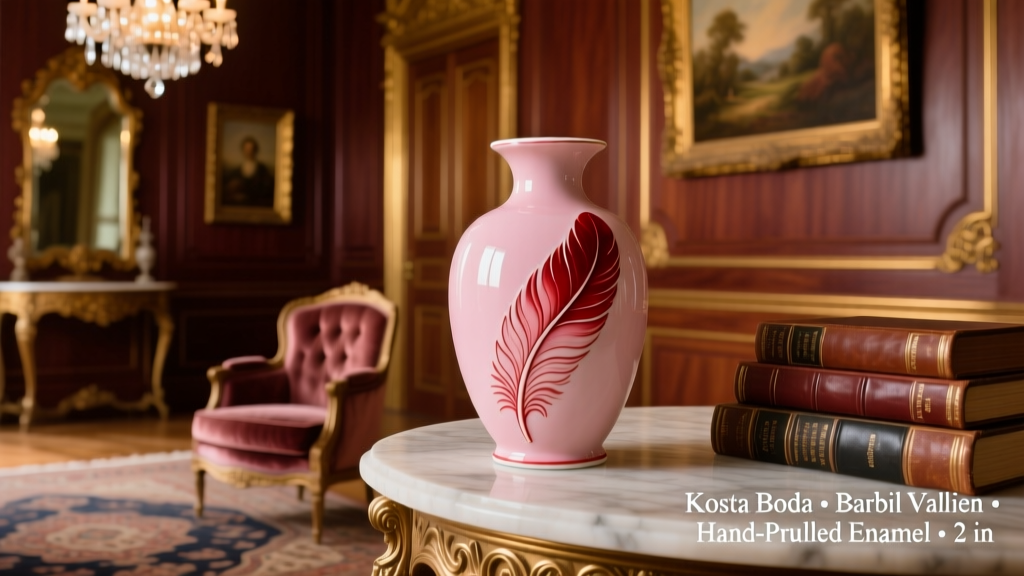
Kosta Boda Barbil Vallien Pink-Red Enamel 'Pulled Feather' Vase: A Technical and Historical Deep Dive
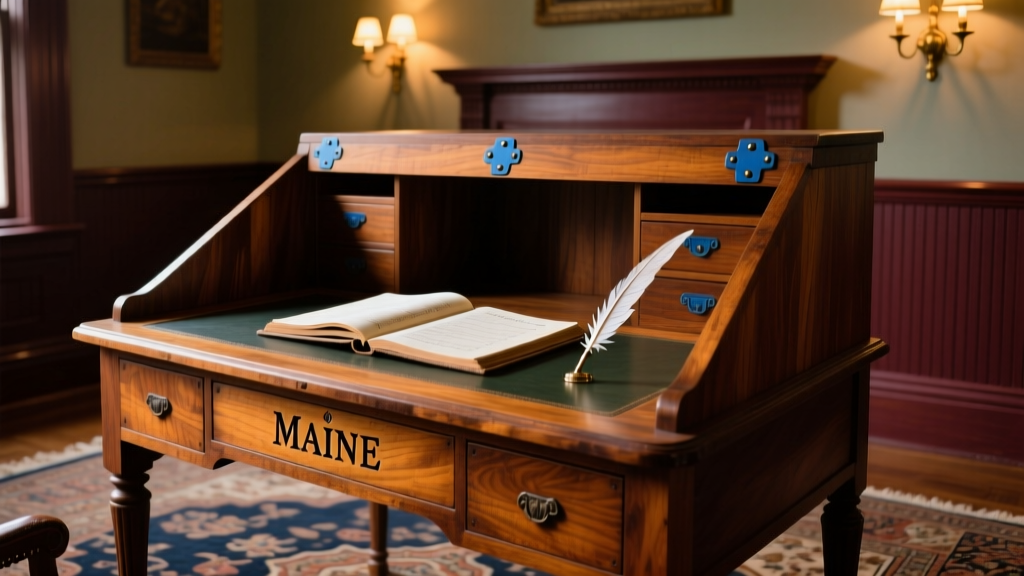
The Maine Stamping 14 × 28 Inch Lap Slant-Front Desk: Anatomy, Provenance, and Restoration of a Blue Cotter Pin Hinge Antique

Stoves in the Parlor: Heating, Status, and Craftsmanship in the Second Empire Era (1852–1870)
Metalcraft’s 1928 Zeppelin Cradle Construction Set: A Rare Instruction Box Study
Drop-Leaf Oak Inlay Gateleg Table: A 22×22 Inch Antique Masterpiece in Context

Fantastic Plastic: The Rise, Craftsmanship, and Restoration of Mid-Century Synthetic Furniture
Furniture Canterbury with Lyre-Form Brass Spindles: A Detailed Study of the 5-Section Faux Rosewood Model (21 Inches)
The Greyhound Garden Figure: A Study of Victorian-Era Cast Iron Craftsmanship at 4 Feet 3 Inches
Jade Seed Pearl Necklace (18-Inch): Authenticity, Craftsmanship, and Historical Context of a Timeless Chinese Heirloom