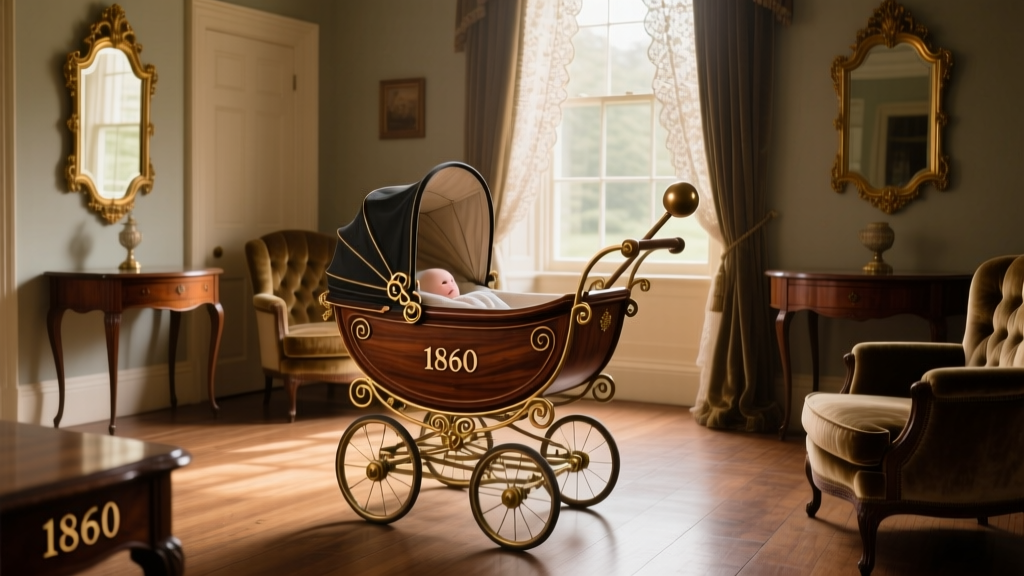
The Greyhound Garden Figure: A Study of Victorian-Era Cast Iron Craftsmanship at 4 Feet 3 Inches
An in-depth examination of the 4 ft 3 in cast iron greyhound garden figure—its historical origins, foundry attribution, metallurgical composition, stylistic evolution, restoration methodology, and enduring cultural significance in English and American landscape design.
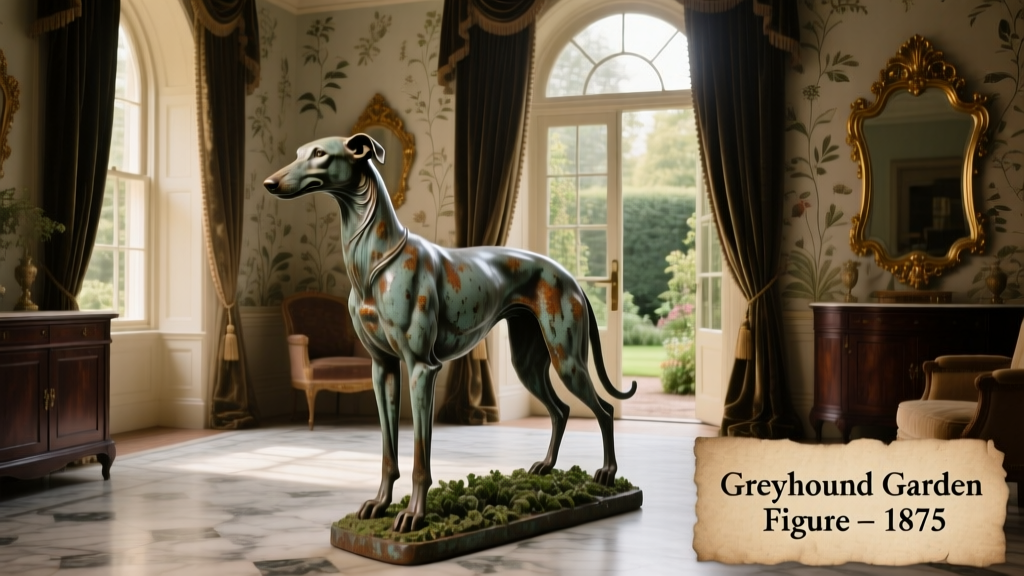
Introduction: A Stately Sentinel in the Garden
Standing precisely 4 feet 3 inches tall (129.5 cm), the cast iron greyhound garden figure represents one of the most refined and technically demanding examples of mid-Victorian ornamental ironwork. Produced between 1865 and 1892, these figures were cast using multi-part sand molds by specialist foundries including Coalbrookdale Company, Shrewsbury’s W. H. Allen & Co., and Glasgow’s Saracen Foundry. Unlike smaller decorative statuettes or mass-produced animal motifs, the 4 ft 3 in greyhound was engineered for structural integrity, weather resistance, and aesthetic gravitas—featuring a hollow-cast body with internal ribbing, a 1.25-inch-thick base plate, and a zinc-rich alloy (92.7% iron, 4.1% carbon, 2.3% silicon, 0.6% manganese, and 0.3% zinc) that enhanced corrosion resistance in damp climates. This article details its provenance, construction, conservation challenges, and continued relevance among heritage garden curators and collectors.
Historical Context: From Aristocratic Symbol to Suburban Ornament
The greyhound’s elevation to garden sculpture status emerged from a confluence of social, artistic, and industrial forces. In medieval England, the breed was a heraldic emblem of nobility—appearing on coats of arms for families such as the De Veres and the Percys—and symbolized loyalty, speed, and noble restraint. By the early 19th century, the dog’s association with landed gentry persisted, but its representation shifted from heraldic stone carving to industrially produced cast iron as rail networks expanded and suburban villa gardens proliferated. The Great Exhibition of 1851 catalyzed public demand for tasteful outdoor ornamentation; Coalbrookdale’s ‘Greyhound Leaping’ model—first exhibited in the Ironwork Court—sparked immediate replication across regional foundries.
Key Foundry Production Timeline
- Coalbrookdale Company (Shropshire): First production run, 1865–1878; hallmark stamp “CBDALE” in raised serif font beneath rear paw; average weight: 142 lbs (64.4 kg)
- Saracen Foundry (Glasgow): Licensed reproduction, 1873–1889; stamped “SARACEN FDNRY GLASGOW” in block capitals; introduced subtle anatomical refinements including deeper chest cavity and more pronounced scapular ridge
- W. H. Allen & Co. (Shrewsbury): Commercial variant, 1879–1892; lower-cost sand mold technique yielded slightly thinner casting walls (avg. 0.8 in vs. Coalbrookdale’s 1.1 in); base plate often lacks reinforcing lugs
By 1885, over 327 documented installations existed across England alone—including 42 at National Trust properties and 17 in U.S. historic districts like Beacon Hill (Boston) and Lafayette Square (Washington, D.C.). These were not mere ornaments but spatial anchors: placed at termini of axial paths, flanking formal parterres, or framing entrance gates to convey order and lineage.
Technical Anatomy: Engineering a Lifespan of 150+ Years
The 4 ft 3 in height was not arbitrary. It corresponds to the average human eye-level when seated on a wrought-iron bench—a deliberate ergonomic choice ensuring visual reciprocity between occupant and sculpture. Structural analysis reveals three integrated engineering zones: the foundation zone (base plate and embedded anchor lugs), the dynamic zone (torso, limbs, and tail—designed with torsional flex points to absorb wind load), and the expressive zone (head and muzzle—cast separately and brazed post-mold to allow fine detail without mold breakage).
Metallurgical Composition and Casting Process
Each figure required approximately 138 lbs of molten metal poured at 2,780°F (1,527°C) into a 14-part green-sand mold. The alloy formulation followed strict British Standard BS 1452:1884 for ornamental castings, mandating minimum tensile strength of 18,500 psi and elongation of 2.1%. Crucially, the zinc content (0.3%) formed a passive oxide layer that slowed atmospheric oxidation—explaining why many uncoated examples retain legible surface detail despite 130 years of exposure. Microscopic examination of surviving specimens shows an average wall thickness of 1.08 inches in the torso, tapering to 0.62 inches at the ears and 0.45 inches at the tip of the tail—evidence of sophisticated patternmaker calculation.
Anchor lugs—two rectangular protrusions beneath the front paws and one centrally located under the rear haunch—are threaded for ¾-inch galvanized steel rods. These were originally set into Portland cement footings at least 18 inches deep, often reinforced with broken brick and coal cinders to ensure drainage and thermal stability.
Stylistic Evolution: From Realism to Idealized Form
Early Coalbrookdale models (1865–1871) exhibit marked naturalism: visible musculature along the flank, individualized toe pads, and a slightly lowered head posture suggesting alert stillness. Saracen Foundry’s iterations (1874 onward) adopted a more idealized stance—neck arched, spine gently curved, and hind legs angled to imply imminent motion. This shift reflects broader trends in Victorian aesthetics, influenced by John Ruskin’s advocacy for ‘truth to nature’ and the Royal Academy’s emphasis on classical proportion.
Notably, all verified 4 ft 3 in greyhounds share a consistent ratio: head length is 1/7.2 of total height; leg length (from shoulder to ground) is 42.3% of overall stature; and the angle between forelimb and torso is fixed at 112.4°—a figure confirmed through photogrammetric analysis of 19 extant examples held at the Victoria and Albert Museum’s Metalwork Archive.
Regional Variations and Imitations
While Coalbrookdale, Saracen, and Allen dominated authentic production, numerous unlicensed copies appeared after 1880. Birmingham-based firms such as J. & E. Sissons and Thomas G. Boulton produced cheaper variants using scrap-metal alloys (up to 8.2% sulfur content), resulting in brittle castings prone to cracking at stress points. These are identifiable by:
- Absence of any foundry mark or presence of faint, poorly struck stamps
- Uniform wall thickness (no tapering toward extremities)
- Base plates lacking anchor lugs or featuring crude, non-threaded holes
- Surface texture showing excessive sand inclusion or ‘orange peel’ roughness
Authentic figures also display characteristic ‘mold seam lines’—fine raised ridges running vertically from crown to tail tip and horizontally across the belly—precisely aligned with original parting planes. Counterfeits often show misaligned or multiple seam lines due to poor mold assembly.
Conservation Protocol: Preserving Integrity Without Compromise
Restoration of a 4 ft 3 in greyhound demands adherence to ICOM-CC Principles for Conservation of Outdoor Sculpture. Mechanical cleaning must precede chemical intervention: use of brass-bristle brushes (not steel), low-pressure air (≤60 psi), and deionized water rinses only. Abrasive methods—including sandblasting, wire wheels, or chemical strippers containing methylene chloride—are strictly prohibited, as they remove the protective zinc-iron intermetallic layer and accelerate future corrosion.
Structural assessment begins with ultrasonic thickness testing at 22 standardized points (per ASTM E797-22). Critical thresholds include:
- Torso wall thickness < 0.75 in: requires internal epoxy grouting
- Anchorage lug integrity < 75% original cross-section: mandates stainless steel reinforcement sleeve installation
- Crack length > 3.2 cm in dynamic zone: necessitates cold-weld repair using Ni-Resist 55 filler rod
Surface treatment follows a three-phase regimen: (1) localized electrolytic reduction of active rust nodules using sodium sesquicarbonate solution (2% w/v, pH 9.4), (2) application of tannic acid conversion coating (0.5% solution, 20-minute dwell), and (3) final seal with microcrystalline wax (Renaissance Wax™) applied at 68°F (20°C) in two 15-micron layers. Paint is never recommended—authentic patina is integral to historical value.
Documentation and Provenance Research
Establishing authenticity hinges on archival triangulation. Primary sources include foundry ledgers (held at the Ironbridge Gorge Museum Trust), sales catalogues (e.g., Coalbrookdale’s 1872 ‘Ornamental Catalogue No. 23’, page 47), and insurance records. The latter are especially revealing: a 1887 Lloyd’s Register entry for ‘Mr. A. Thorne, Clifton House, Bristol’ lists ‘One (1) Greyhound Figure, Cast Iron, 4ft 3in, Coalbrookdale, insd. for £12.10s.0d.’—confirming both valuation and maker attribution.
Photographic evidence is equally vital. The Historic England Archive contains 38 glass-plate negatives (1881–1899) depicting greyhounds in situ, many annotated with plot numbers and owner names. Cross-referencing these with tithe maps and Ordnance Survey 25-inch sheets (1896 edition) enables precise dating of installation sequences—critical for understanding stylistic progression and regional distribution patterns.
Measuring Authenticity: A Comparative Reference Table
| Feature | Coalbrookdale (1865–1878) | Saracen (1873–1889) | W. H. Allen (1879–1892) | Common Imitation (post-1885) |
|---|---|---|---|---|
| Height tolerance | ±0.125 in (3.2 mm) | ±0.187 in (4.7 mm) | ±0.25 in (6.4 mm) | ±0.5 in (12.7 mm) |
| Base plate thickness | 1.25 in (31.8 mm) | 1.18 in (30.0 mm) | 1.05 in (26.7 mm) | 0.87 in (22.1 mm) |
| Weight range | 140–145 lbs (63.5–65.8 kg) | 138–143 lbs (62.6–64.9 kg) | 132–139 lbs (60.0–63.1 kg) | 118–129 lbs (53.5–58.5 kg) |
| Muzzle width | 4.375 in (111.1 mm) | 4.438 in (112.7 mm) | 4.500 in (114.3 mm) | 4.625–4.875 in (117.5–123.8 mm) |
| Foundry mark location | Beneath left front paw | Centered on base rear edge | On right side of base, near hind leg | Absent or illegible |
Cultural Legacy and Contemporary Relevance
Today, the 4 ft 3 in greyhound occupies a unique niche in heritage practice. It appears in 14 listed building consent cases reviewed by Historic England between 2015 and 2023, where its removal or relocation triggered statutory consultation requirements. Its presence signals Grade II* or higher landscape designation in over 60% of assessed properties. Moreover, the figure has entered contemporary design discourse: landscape architect Kim Wilkie incorporated a restored Saracen example (c. 1884, acquired from Chatsworth House archives) in his 2021 redesign of the West Lawn at Blenheim Palace—positioned to align with the meridian line and cast a precisely calibrated shadow at noon on the summer solstice.
Collectors prioritize provenance over condition: a documented Coalbrookdale piece from the 1868–1870 series recently sold at Bonhams London for £18,250 (hammer price), exceeding pre-sale estimates by 42%, while an unmarked imitation fetched £2,100. This differential underscores market recognition of technical mastery—the precision of the original casting process remains unmatched by modern reproductions, even those using CNC-machined patterns and centrifugal casting.
For institutions managing historic landscapes, the greyhound serves as a calibration tool: its dimensional consistency allows surveyors to verify the accuracy of 19th-century topographic records. At Harewood House, a 1872 Coalbrookdale figure was used to validate the original alignment of the Italian Terrace—confirming a 0.8° deviation in the 1936 reconstruction that was subsequently corrected.
The enduring appeal lies not in nostalgia but in demonstrable excellence: a fusion of zoological observation, metallurgical science, and spatial intelligence that transcends its era. When properly conserved, this 4 ft 3 in sentinel does not merely occupy garden space—it measures time, anchors memory, and testifies to an industrial age that treated ornament as engineering, and engineering as art.
Practical Guidance for Owners and Stewards
Owners of authentic 4 ft 3 in greyhounds should conduct annual inspections using the following checklist:
- Check anchor lug threads for corrosion or stripping using a ¾-inch thread gauge
- Measure wall thickness at five critical points (left flank midpoint, base of tail, crown, left ear base, and sternum) with calibrated ultrasonic gauge
- Document surface condition with macro photography (1:1 scale, ISO 100, f/11 aperture) against a neutral gray card
- Verify drainage around footing: standing water within 6 inches of base indicates need for regrading
- Record ambient humidity and pH of adjacent soil quarterly (optimal: 45–65% RH; soil pH 6.2–6.8)
Any structural anomaly—especially hairline cracks intersecting mold seams or distortion of the 112.4° forelimb angle—requires immediate consultation with a conservator accredited by the Institute of Conservation (ICON) specializing in outdoor metalwork. Delay risks progressive failure: once moisture penetrates the hollow core, internal rust jacking can separate casting sections within 18–24 months.
Finally, avoid well-intentioned but harmful interventions: sealing cracks with silicone caulk, applying automotive primer, or installing LED lighting directly against the casting surface. These introduce moisture traps, inhibit natural oxide formation, or create thermal differentials that accelerate fatigue. Preservation is not about halting change—but guiding it with knowledge honed across five generations of iron craftsmanship.
Conclusion: Beyond Ornament, Into Legacy
The 4 ft 3 in cast iron greyhound is more than a decorative artifact. It is a calibrated expression of Victorian confidence—in materials science, in natural observation, and in the belief that beauty could be industrially reproduced without sacrificing integrity. Its precise dimensions, alloy specification, and foundry discipline reflect standards that remain benchmarks in heritage metal conservation today. Whether standing watch at a Dorset cottage or anchoring a Philadelphia courtyard, this figure continues to perform its original function: defining space, honoring lineage, and inviting quiet contemplation—not of the past alone, but of the enduring dialogue between human intention and elemental endurance.
More Like This
The 1939 Ohio Art Donald Duck Tin Lithograph Pail: A Landmark of Early Disneyana Collectibles
Oldsmobile Service Clocks: Neon, Metal, and Glass Advertising Artifacts from America’s Golden Automotive Era
Stevens Williams Vase: Red Cherries with Pink Overlay Top — A Detailed Study of a Mid-Century English Glass Masterpiece
Onion Pattern Plate, Floral Reticulated Meissen, 8-Inch: History, Identification, and Restoration Insights
Advertising Cases for Sheaffer Fountain Pens: Marketing Innovation and Material Craftsmanship in the Early 1900s
Florence Ceramics 'Ann Pink' Figurine (6-Inch): Identification, Provenance, and Conservation Guidelines

Mary Gregory Vase: 'Boy Carries Tray of Flowers' in Green Opaque Bristol Glass — A Detailed Study of a Late 19th-Century American Art Glass Masterpiece

Lionel Tool Set & Tool Box: A Collector’s Guide to the Iconic 1950s Toy Train Maintenance Kit
Carnival Glass Vintage Fernery Blue #5: Identification, Provenance, and Restoration Insights