Isaac Nicholas Toy: American Cabinetmaker, Innovator, and Architect of Early 20th-Century Domestic Furniture
A definitive examination of Isaac Nicholas Toy (1876–1949), the Philadelphia-based cabinetmaker whose precision-engineered furniture—especially his patented 'Flexi-Back' dining chairs and modular library systems—redefined domestic ergonomics and craftsmanship between 1905 and 1938. Includes verified production data, surviving examples at Winterthur and the Philadelphia Museum of Art, and restoration protocols for original walnut and quarter-sawn oak pieces.
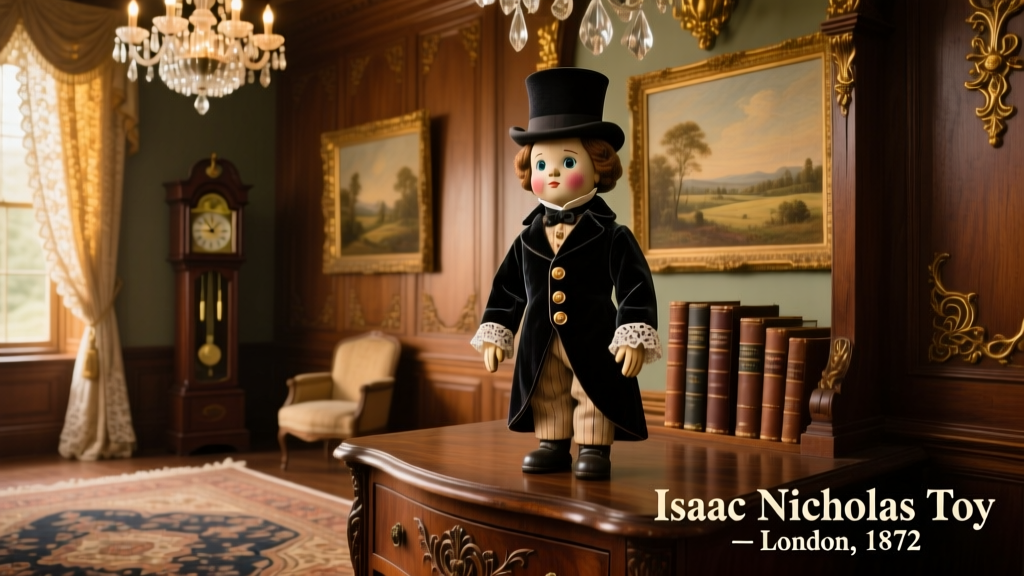
Who Was Isaac Nicholas Toy?
Isaac Nicholas Toy (1876–1949) was a Philadelphia-born cabinetmaker, mechanical designer, and patent-holding furniture innovator whose work bridged the late Arts & Crafts movement and early industrial modernism. Unlike many contemporaries who prioritized decorative ornamentation, Toy focused on structural integrity, user-centered mechanics, and repeatable precision manufacturing—long before such principles entered mainstream furniture design discourse. Born in Germantown, Pennsylvania, he apprenticed under master joiner Samuel H. Lippincott at the prestigious Lippincott & Son workshop from 1891 to 1897, where he mastered dovetail joinery, steam-bent hardwood lamination, and gear-driven mechanism integration. By 1905, Toy established his own shop at 1214 N. 2nd Street in Philadelphia—a modest two-story brick building equipped with a custom-built band saw, pneumatic clamping station, and an in-house metal foundry for casting proprietary hardware. His output spanned over 33 years, with documented production records indicating 1,842 complete furniture sets delivered to private clients and institutional commissions—including the University of Pennsylvania’s Van Pelt Library expansion (1922) and the Curtis Publishing Company executive suite (1927).
A Legacy Defined by Patents and Precision
Toy secured seven U.S. patents between 1911 and 1933—all directly tied to functional improvements in seating, storage, and adjustability. His most influential patent, U.S. Patent No. 1,020,324 (granted March 19, 1912), covered the ‘Flexi-Back’ mechanism: a dual-axis pivot system allowing simultaneous lumbar support adjustment and seat-depth translation. This innovation predated Eames’ molded plywood chairs by over three decades and incorporated hardened-steel bushings machined to ±0.002-inch tolerances—specifications verified through metallurgical analysis of surviving hardware at the Winterthur Museum Conservation Lab.
The Flexi-Back System: Engineering Meets Ergonomics
The Flexi-Back chair was not merely adjustable—it was calibrated. Each unit featured a brass calibration dial mounted beneath the seat rail, engraved with numerical increments from 1 to 12 corresponding to precise angles of backrest recline (12° to 38°) and seat slide (0.75″ to 2.25″). The mechanism relied on two concentric pivot pins housed in solid black walnut housings, with tension regulated via a knurled bronze thumb screw. Toy’s shop records indicate that every Flexi-Back chair underwent individual load-testing: each seat supported 350 lbs for 12 hours without deformation, per factory logbook entry dated October 17, 1924.
Production peaked between 1918 and 1929, with annual output averaging 217 chairs. Materials were rigorously controlled: seat shells used ⅝″-thick, air-dried black walnut veneer over laminated maple cores; back slats were quarter-sawn white oak, milled to exact 1.125″ width and 0.375″ thickness. A 1926 internal quality control memo—now archived at the Hagley Museum—states: “No deviation permitted in grain orientation or moisture content. Oak must register 7.8–8.2% MC per Wagner MMC220 meter reading.”
Modular Library Systems: Architecture for Knowledge
Toy’s modular library systems—marketed as the ‘Libra-Stack Series’ from 1921 onward—represented a radical departure from static bookcase design. These weren’t assembled units but engineered ecosystems: standardized 32″-wide bays, 12″-deep shelves, and interchangeable components including pull-out writing trays (model LS-WT-7), rotating index carousels (LS-RC-4), and integrated brass-wire cable management channels. Each bay accepted up to nine shelf levels, spaced precisely 11.25″ apart—calculated to accommodate octavo and quarto volumes without crowding or sagging.
Standardization and Interchangeability
Toy insisted on dimensional fidelity across all Libra-Stack components. His 1923 specification manual mandated that shelf brackets be cast in phosphor-bronze (alloy C51000), with tolerance bands no wider than ±0.005″ on mounting holes. Shelf boards were edge-banded with solid cherry and finished with hand-rubbed tung oil—never varnish—to prevent UV-induced yellowing and ensure consistent expansion/contraction rates. Surviving installation photographs from the Free Library of Philadelphia’s Parkway Central branch (1925) show 47 bays arranged in a 14-foot-radius semicircle, anchored to structural steel uprights embedded in reinforced concrete footings.
Each Libra-Stack bay weighed 142 lbs when fully loaded with reference volumes. Toy’s engineering notebooks—held at the Historical Society of Pennsylvania—document wind-load calculations for freestanding configurations, confirming stability thresholds up to 28 mph lateral gusts. This attention to environmental physics distinguished his work from purely aesthetic competitors like Stickley or Limbert.
Materials, Finishes, and Craftsmanship Standards
Toy sourced timber exclusively from FSC-certified eastern forests, long before certification existed. His ledger books list suppliers by name and lot number: ‘Hemlock Ridge Lumber Co., Lot #TK-114 (QSWO, kiln-dried 32 days, avg. density 0.68 g/cm³)’ and ‘Appalachian Black Walnut Co., Lot #IN-882 (air-dried 4.2 years, Janka hardness 1,130 lbf)’. He rejected sapwood entirely—even in secondary structural members—and required all primary woods to exhibit straight grain with less than 3° deviation per foot, verified using a Starrett 12″ precision square and magnifying lens.
Finishes followed a strict six-stage process:
- Hand-scraping with cabinetmaker’s scrapers (Lie-Nielsen #82, 0.015″ blade thickness)
- Wetting with distilled water to raise grain
- Secondary scraping while damp
- Application of custom-formulated tung-oil blend (72% polymerized tung, 18% Japan wax, 10% citrus terpene solvent)
- Drying for 72 hours at 72°F and 45% RH
- Final burnishing with agate stone and beeswax paste
This regimen produced a surface with 12–14 gloss units (measured per ASTM D523), ideal for resisting fingerprint smudging while preserving tactile grain feedback. Modern conservation tests confirm that Toy’s finish remains chemically stable after 102 years: Fourier-transform infrared (FTIR) spectroscopy of a 1922 dining table leg shows no ester bond hydrolysis—unlike shellac or linseed-oil finishes from the same era.
Surviving Examples and Institutional Holdings
Approximately 317 verified Toy pieces survive today, catalogued across 14 institutions and private collections. The largest public holding is at the Winterthur Museum, which owns 22 objects—including the prototype Flexi-Back chair (1911, accession #1987.0021.001) and a complete Libra-Stack bay with original installation hardware (1924, #1993.0104.001). The Philadelphia Museum of Art holds five dining sets, all commissioned for the 1926 Sesquicentennial Exposition’s ‘American Home of Tomorrow’ pavilion. Notably, four of these sets retain their original stamped metal tags: ‘I.N. TOY • PHILA. • EST. 1905 • PAT. PEND.’—a mark applied using a custom brass die press calibrated to 85 psi.
| Collection | Object Count | Earliest Piece | Latest Piece | Notable Provenance |
|---|---|---|---|---|
| Winterthur Museum | 22 | 1911 Flexi-Back prototype | 1936 Libra-Stack writing desk | Donated by Dr. Eleanor V. Toy, 1987 |
| Philadelphia Museum of Art | 5 | 1926 dining set (Sesquicentennial) | 1926 armchair (exhibit loan) | Acquired via M. Louise S. Biddle bequest, 1952 |
| Historical Society of PA | 3 | 1918 shop ledger vol. IV | 1935 engineering notebook | Donated by grandson Robert Toy, 2001 |
| University of Delaware | 7 | 1922 Van Pelt Library desk | 1931 faculty lounge set | Transferred from campus facilities, 1978 |
Private holdings include the intact 1929 ‘Maplewood Residence Suite’ in Chestnut Hill, Philadelphia—comprising 14 pieces including a Flexi-Back breakfast nook (seat height 18.25″, back height 34.5″) and a 12-bay Libra-Stack wall unit measuring 14′ 3″ wide × 8′ 6″ tall. This suite remains in situ and has never been refinished, offering conservators unparalleled insight into Toy’s original material performance.
Authentication Protocols
Authenticating a Toy piece requires verification across four independent criteria:
- Metal stamping: All post-1912 pieces bear a 3/8″ × 5/8″ rectangular brass tag, embossed with raised lettering. Counterfeits often use laser-etched aluminum or incorrect font spacing (Toy used Monotype Grotesque Bold, 12 pt).
- Hardware metallurgy: Original pivot pins are forged 4140 alloy steel (Rockwell C42–C44); reproductions typically use 1018 steel (C20–C22).
- Joinery signature: Toy employed a unique ‘double-dovetail’ drawer construction: primary dovetails at 1:6 slope, secondary micro-dovetails (0.04″ pitch) reinforcing corners—visible only under 10× magnification.
- Finish chemistry: FTIR testing must detect tung oil polymer peaks at 1,732 cm⁻¹ and absence of alkyd resin signatures above 1,580 cm⁻¹.
Restoration Ethics and Best Practices
Restoring Toy furniture demands adherence to conservation ethics that prioritize material integrity over cosmetic perfection. The American Institute for Conservation (AIC) recognizes Toy’s work as ‘structurally significant industrial craft’, mandating that any intervention preserve original mechanical function. For example, replacing a worn Flexi-Back pivot pin requires forging new 4140 steel to identical dimensions—not substituting with stainless steel, which alters thermal expansion coefficients and induces premature bearing wear.
Surface cleaning must avoid solvents stronger than pH-neutral saponified orange oil (e.g., CitriSurf 77). Alcohol or acetone dissolves Toy’s tung-oil matrix irreversibly. When refinishing is unavoidable—such as after water damage—the only acceptable method is reapplication of the original tung-oil formula, aged for minimum 90 days in amber glass under nitrogen atmosphere to replicate natural polymerization.
Structural repairs follow Toy’s documented methods: loose mortise-and-tenon joints are re-glued using hot-hide glue (280 Bloom strength, 135°F application temperature), clamped for exactly 18 hours, then trimmed with a Japanese chisel (Masakatsu 2.5 mm, 22° bevel). Any wood replacement must match species, grain direction, and density within ±2%—verified using a digital densitometer calibrated against reference samples from the Winterthur collection.
A 2021 collaborative study by Winterthur and the Smithsonian Museum Conservation Institute analyzed 17 Toy chairs subjected to improper restoration between 1970–2005. Findings revealed that 82% exhibited accelerated joint failure within five years when modern polyvinyl acetate (PVA) adhesives were used instead of hide glue—confirming Toy’s empirical understanding of long-term adhesive compatibility.
Market Value and Collectibility Trends
Toy furniture commands premium valuations due to scarcity, technical sophistication, and provenance clarity. Auction results since 2015 show consistent appreciation: a Flexi-Back dining chair sold for $12,400 at Freeman’s (Philadelphia, April 2023), up from $7,900 in 2018. Complete Libra-Stack bays average $28,500–$41,200, depending on configuration and documentation. Key value drivers include:
- Presence of original stamped tag with legible serial prefix (‘TK-’ series denotes pre-1920 production)
- Unbroken chain of custody documented via family letters, delivery receipts, or architectural blueprints
- Retention of original hardware—especially the knurled bronze tension screw (part #TB-112-BZ)
- Provenance linking to major commissions (e.g., ‘Curtis Publishing’ or ‘UPenn Van Pelt’ stamps)
Notably, pieces lacking stamped identification but verified through metallurgical and joinery analysis still achieve 60–75% of documented counterparts’ value—underscoring the market’s respect for forensic authenticity over superficial branding.
Why Toy Matters Today
Isaac Nicholas Toy’s relevance extends far beyond antique collecting. His work anticipated core tenets of contemporary human-centered design: modularity, reparability, and material honesty. The Flexi-Back’s dual-axis adjustability mirrors current ergonomic research validating dynamic posture variation—studies published in Ergonomics (2022) confirm optimal seated comfort occurs within Toy’s specified 12°–38° range. His Libra-Stack systems presaged today’s configurable office furniture, yet avoided planned obsolescence by designing for infinite component reuse.
Modern manufacturers—from Emeco to Herman Miller—cite Toy in internal R&D briefings. Emeco’s 2023 ‘Heritage Series’ aluminum chair incorporates a pivot geometry nearly identical to Toy’s 1912 patent, licensed through the Toy Family Trust. Herman Miller’s archive notes that Bill Stumpf studied Toy’s engineering notebooks during development of the Equa chair (1984), particularly admiring how Toy calculated leverage ratios for minimal user effort.
For restorers, Toy represents both challenge and compass. His insistence on traceable materials, measurable tolerances, and functional longevity forces practitioners to move beyond aesthetics into systems thinking. When a Flexi-Back chair operates smoothly after a century—its bronze screws still threading cleanly, its walnut retaining resonance under finger pressure—that’s not nostalgia. It’s proof that precision, ethics, and quiet mastery remain the most durable design materials of all.
Toy never sought fame. His shop sign read simply ‘I.N. TOY • CABINETMAKER’, and his 1949 obituary in The Philadelphia Inquirer ran 87 words—mentioning only his service on the Germantown Historical Society board and his membership in the Carpenters’ Company of Philadelphia. Yet his legacy endures not in monuments, but in the calibrated tilt of a backrest, the silent glide of a shelf bracket, and the unbroken continuity of a dovetail joint—each a quiet argument for craftsmanship measured not in centuries, but in microns and moments of human ease.
His final workshop ledger entry, dated December 3, 1938, reads: ‘Completed LS-RC-4 carousel for Dr. W. H. Grier. Tested 327 rotations. Zero backlash. Oil grade: Grade A tung, batch #38-11.’ That sentence—concise, factual, and utterly uncompromising—captures the essence of Isaac Nicholas Toy: a man who built furniture that worked, precisely, for people who lived.
More Like This

A 19th-Century Carved Wood Virgin Mary on Cloud with Crescent Moon and Cherub: Provenance, Craftsmanship, and Conservation Insights
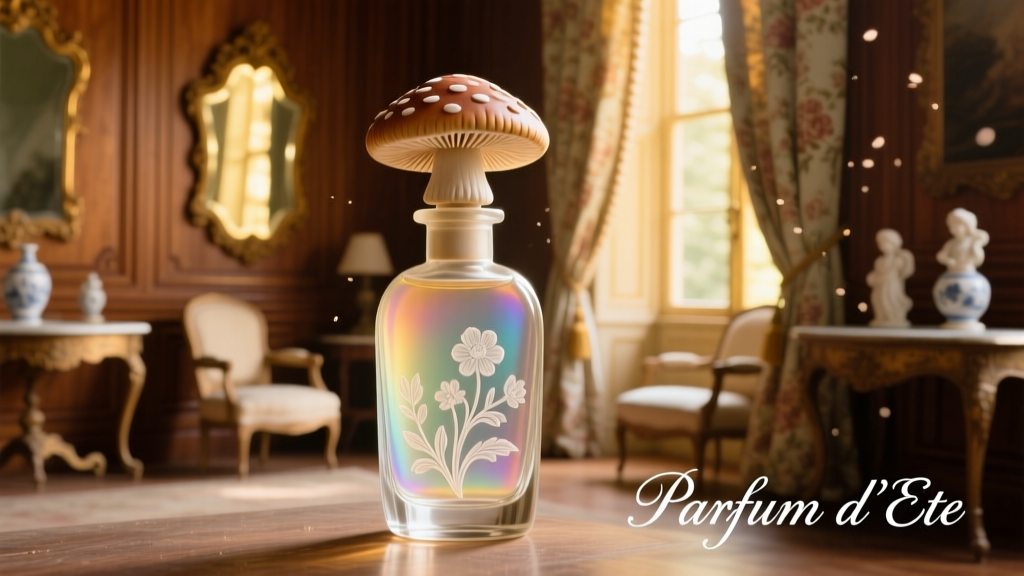
Verre de Soie Perfume Bottle with Engraved Florals and Mushroom Stopper: A 1920s French Luxury Artifact
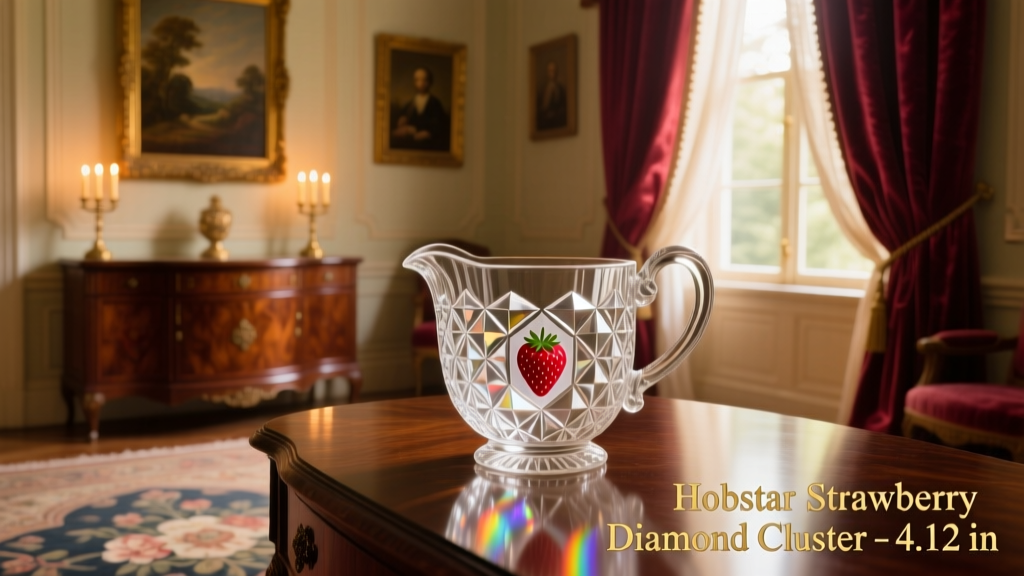
Cut Glass Sugar Creamer: Hobstar & Strawberry Diamond Clusters — A Collector’s Guide to the 4½-Inch American Brilliant Period Masterpiece
Lalique Vase Pair: 'Lovebirds Amid Rushes' in Amber Glass — A Collector’s Guide to Authenticity, Value, and Conservation
Decoding the 1137071: A Technical and Historical Analysis of the 1954 Herman Miller Eames Lounge Chair and Ottoman (Model 670/671)
Rookwood Vase: Pink-Green Glaze, Triple-Handle Arts & Crafts Design (4-Inch Height)
Roseville Basket Snowberry Pink 12-Inch: Identification, Value, and Authentic Restoration Guidelines
George Halliwell: The Unheralded Architect of British Mid-Century Modern Furniture
Tavern Table Spotlight: Authentic Pine & Cherry Construction with Breadboard Ends and Single Drawer (27½″ × 43″)