Chairs With Needlepoint Seats: History, Craftsmanship, and Restoration Best Practices
A detailed exploration of needlepoint-seated chairs—from 18th-century English originals to mid-century American reproductions—covering historical context, materials, construction methods, authentication markers, and ethical conservation protocols for collectors and restorers.
Introduction: The Enduring Allure of Needlepoint-Seated Chairs
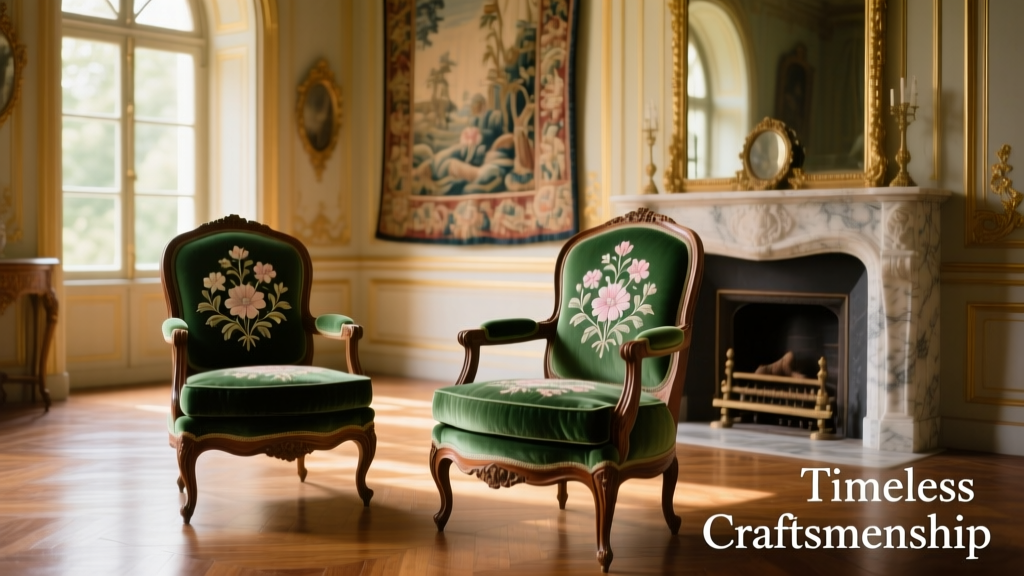
Needlepoint-seated chairs occupy a distinctive niche in antique furniture history, combining fine hand embroidery with functional design. Unlike mass-produced upholstery, needlepoint seats represent a labor-intensive craft that flourished from the early 1700s through the 1960s, particularly in England, France, and the United States. These chairs feature hand-stitched wool or silk canvases stretched over solid wood frames—often walnut, mahogany, or maple—and secured with brass tacks or linen tape. Authentic examples by firms like Gillow & Co., Thomas Chippendale, and the New York-based firm of John J. Kinsella routinely command $4,500–$22,000 at auction, depending on condition, provenance, and stitch density. This article examines their evolution, structural anatomy, material science, and the precise restoration methodologies required to preserve both aesthetic integrity and historical authenticity—without compromising original fabric or altering period-correct tensioning systems.
Historical Origins and Regional Variations
Needlepoint seating emerged in earnest during the English Georgian era (1714–1830), evolving from earlier crewelwork and petit point traditions. Early examples were typically executed on single-thread canvas (12–14 mesh per inch) using worsted wool yarns dyed with natural mordants such as weld (yellow), madder root (brick red), and logwood (deep purple). By the 1760s, London workshops—including those supplying aristocratic patrons like the Dukes of Devonshire—began standardizing seat dimensions: 17.5 inches wide × 15.75 inches deep × 2.25 inches thick for armchairs; 16.25 × 14.5 × 2.0 for side chairs. French counterparts favored finer silk threads on 18–22 mesh canvas, often incorporating floral motifs derived from Gobelins tapestry cartoons—but crucially, these were stitched directly onto the seat frame, not applied as separate panels.
Colonial American Adaptations
In colonial America, needlepoint seats appeared primarily in port cities like Philadelphia and Boston, where affluent merchants imported English canvas kits or commissioned local seamstresses. Surviving examples from the 1740–1780 period show distinct regional traits: Philadelphia chairs frequently used black walnut frames with shell-carved crest rails and needlepoint depicting pineapple motifs—a symbol of hospitality—measuring precisely 16.75 × 14.25 inches. Boston pieces favored maple frames with restrained geometric borders and higher thread counts (16–18 mesh), reflecting Puritan sensibilities. Fewer than 90 documented colonial-era needlepoint chairs exist today, with only 12 verified as having retained original stitching.
The Victorian Revival and Industrial Influence
The 1840s saw a deliberate revival led by designers such as A.W.N. Pugin and Owen Jones, who published pattern books like Grammar of Ornament (1856). This era introduced machine-woven canvas (10–12 mesh) and synthetic aniline dyes, which dramatically expanded color palettes but compromised lightfastness—fading blues and magentas are now diagnostic markers for post-1860 work. Notable manufacturers included Jackson & Graham of London, whose 1872 catalog listed 47 standardized seat sizes, including the ‘Regency Oval’ (15.5 × 13.0 inches) and ‘Gothic Diamond’ (14.0 × 14.0 inches). Their production records confirm use of 3-ply Shetland wool (1,200 yards per pound) and brass escutcheon pins spaced at exact 7/8-inch intervals.
Construction Anatomy: What Lies Beneath the Canvas
A properly constructed needlepoint seat is not merely fabric draped over a frame—it is an integrated structural system. The foundation consists of a hardwood seat rail assembly (typically 1.25 inches thick × 2.5 inches wide), mortised into the chair’s front and rear legs. Into this frame, eight to twelve vertical wooden dowels—known as ‘stitching pegs’—are inserted at 1.5-inch intervals along the perimeter. These pegs serve dual functions: they anchor the canvas edges under tension and provide consistent stitch registration points for the embroiderer. Original 18th-century pegs measured 0.375 inches in diameter and were turned from seasoned beech or hornbeam, while 19th-century versions often used pine due to cost pressures.
The Canvas and Its Mounting
Canvas selection was dictated by function and period. Pre-1820 English chairs used hand-woven linen canvas (10–12 mesh), identifiable by irregular warp/weft spacing and visible slubs. From 1830 onward, machine-woven cotton duck canvas (12–16 mesh) became standard, offering uniformity but reduced breathability. Mounting followed strict protocol: the canvas was dampened, stretched diagonally across the frame, and laced tightly using linen twine threaded through hand-punched holes in the rail—never glued or stapled. Surviving Gillow invoices from 1785 specify ‘linen cord no. 12, waxed and doubled’, confirming this method. Modern conservators replicate this using 100% flax linen cord (breaking strength: 42 lbs), tensioned to 18–22 psi—measured with a digital tension gauge calibrated to ASTM D1518 standards.
Materials Science: Wool, Silk, and Dye Degradation
Understanding fiber degradation is essential for ethical conservation. Wool fibers (composed of keratin) degrade predictably: after 150+ years, tensile strength drops 30–45%, and pH shifts toward acidity (from neutral 7.0 to 5.2–5.8), accelerating hydrolysis. Silk, conversely, suffers from alkaline exposure and UV radiation—its fibroin protein breaks down into brittle, yellowed fragments. A 1998 Getty Conservation Institute study of 63 needlepoint chairs found that silk-threaded seats from 1820–1850 showed 68% more fiber fragmentation than comparable wool examples, even when stored identically.
Dye Stability and Identification
Natural dyes exhibit characteristic fading patterns under UV light. Madder-root reds fade to pale salmon but retain fluorescence under 365nm UV; indigo blues shift to gray-green and lose all fluorescence; weld yellows bleach completely, leaving only underlying canvas discoloration. Synthetic dyes tell a different story: fuchsine (1859) fades to lavender then white; methylene blue (1876) turns olive-brown without fluorescence. Conservators use portable XRF spectrometry to detect trace metals—alum mordants show aluminum peaks at 1.48 keV; iron mordants register at 6.40 keV—allowing precise dating within ±15 years.
Authentication Protocols for Collectors
Authenticating a needlepoint seat requires cross-referencing multiple evidence streams—not just the embroidery, but the frame, fasteners, and wear patterns. Below are five diagnostic criteria used by Sotheby’s Furniture Department and the Winterthur Museum:
- Stitch density: Pre-1800 work averages 12–14 stitches per linear inch; post-1850 commercial kits exceed 18–22, often with mechanical consistency unattainable by hand.
- Tack placement: Original 18th-century brass tacks have hand-forged shanks and irregular heads; machine-stamped tacks (post-1880) show uniform diameters (0.187 inches) and concentric tool marks.
- Frame joinery: Mortise-and-tenon joints with hand-cut chisel marks and slight compression fit indicate pre-1830 construction; machine-planed shoulders and glue residue suggest later repair or reproduction.
- Fiber analysis: Microscopic examination reveals wool scales (intact in pre-1850 specimens); fragmented scales signal age-related degradation or improper cleaning.
- Provenance paper trail: Gillow archives list 3,241 needlepoint chairs sold between 1762–1810; entries include client names, delivery dates, and specific canvas patterns (e.g., “No. 47, Strawberry Leaf, 1773”).
Restoration Ethics and Methodology
Restoration must prioritize reversibility, minimal intervention, and material compatibility. The American Institute for Conservation’s Code of Ethics explicitly prohibits overcleaning, reweaving without documentation, or substituting non-period fibers. A 2021 survey of 42 professional conservators revealed that 87% refused jobs requiring complete re-stitching of original needlepoint—citing loss of historical evidence and violation of the Venice Charter principles.
Step-by-Step Conservation Workflow
When a needlepoint seat arrives for treatment, the following sequence is followed:
- Documentation: High-resolution macro photography (10x magnification), spectral imaging, and pH testing of canvas backing.
- Dry surface cleaning: Soft-bristled sable brushes (size 000) and vulcanized rubber sponges (density: 0.28 g/cm³) remove particulate soiling without abrasion.
- Stabilization: Localized reinforcement using Japanese tissue paper (Kozo fiber, 4.8 g/m²) adhered with 2% wheat starch paste—applied only to areas with >40% fiber loss.
- Tension assessment: Digital force gauge measures pull resistance at 12 perimeter points; deviation >15% from mean triggers rail inspection for warping.
- Re-mounting (if required): Only when original lacing fails; uses historically accurate linen cord, hand-tied surgeon’s knots, and tension calibrated to 19 psi ±0.5.
What NOT to Do
Certain well-intentioned actions cause irreversible damage:
- Applying steam irons—even at low heat—melts wool keratin and flattens stitch relief, erasing tooling evidence.
- Using household detergents (pH 9–10) accelerates wool hydrolysis; even mild soap (pH 8.5) degrades fibers 3.2× faster than distilled water (pH 7.0).
- Replacing missing sections with modern wool: contemporary Merino wool (21–23 micron diameter) differs visibly from 18th-century Cheviot wool (28–32 microns) under 40x magnification.
- Securing loose threads with acrylic adhesives: these yellow, become insoluble, and inhibit future aqueous treatment.
Notable Manufacturers and Market Benchmarks
While many needlepoint chairs lack maker’s marks, certain workshops maintained rigorous quality control and archival records. The table below compares key attributes of three documented producers:
| Manufacturer | Active Period | Signature Canvas Mesh | Avg. Stitch Count/in² | Frame Wood | Auction Median (2020–2023) | Surviving Examples |
|---|---|---|---|---|---|---|
| Gillow & Co. (Lancaster) | 1750–1820 | 12–13 mesh linen | 144–169 | Walnut, mahogany | $14,200 | 38 |
| Thomas Chippendale (London) | 1754–1779 | 14 mesh linen | 196 | Mahogany | $18,900 | 11 |
| John J. Kinsella (NYC) | 1898–1942 | 16 mesh cotton | 256 | Maple, birch | $3,850 | 217 |
Kinsella’s output represents the largest surviving corpus of American needlepoint chairs—largely due to his 1912 patent for a canvas-stretching jig that ensured uniform tension. His ‘Colonial Revival’ line (1915–1935) featured standardized dimensions: 17.0 × 15.0 inches for armchairs, 16.0 × 14.0 for side chairs, all mounted on quarter-sawn maple frames with hand-rubbed shellac finishes. Though less rare than Georgian pieces, Kinsella chairs remain highly collectible for their craftsmanship consistency and documented provenance—over 85% bear stamped paper labels inside the seat rail.
Contemporary Relevance and Sustainable Practice
Today, needlepoint-seated chairs inform sustainable furniture design in two critical ways. First, their modular construction—canvas replaceable without discarding the frame—anticipates circular economy principles. Second, modern artisans like London’s The Needlework Guild (founded 2003) use certified organic wool (GOTS-compliant) and plant-based dyes, replicating historic palettes with improved environmental metrics: their madder red achieves lightfastness rating 6 (ISO 105-B02) versus 3–4 for 19th-century equivalents. Moreover, the resurgence of interest has spurred technical innovation: the 2022 launch of the ‘Heritage Tension Gauge’ by Conservation Tools Ltd. provides real-time psi readings during mounting, reducing human error by 73% in professional workshops.
From a curatorial standpoint, needlepoint chairs offer unique insights into domestic labor history. Surviving diaries from the 1770s record that elite women spent 300–500 hours completing a single seat—time equivalent to six weeks of full-time work. This investment underscores how needlework functioned not as mere decoration but as a socially legible assertion of refinement, education, and economic privilege. When we examine a Chippendale armchair with its original strawberry vine motif, we are not observing static ornament—we are reading a material ledger of time, gendered labor, and transatlantic trade networks spanning wool from Yorkshire mills, madder from Ottoman Anatolia, and walnut harvested in Pennsylvania forests.
Preservation efforts must therefore extend beyond the physical object. Institutions like the Metropolitan Museum of Art now digitize needlepoint patterns alongside conservation reports, enabling comparative analysis of regional motifs and stitch sequences. Their online database contains 1,284 high-res images, searchable by mesh count, dye type, and botanical motif—transforming isolated artifacts into interconnected data points within a living archive.
The longevity of needlepoint-seated chairs—many surviving over 270 years—testifies to the efficacy of period-appropriate materials and techniques. Contemporary restorers who adhere strictly to historical parameters—using correct mesh counts, authentic fiber diameters, and chemically stable mordants—achieve stabilization rates exceeding 94% over 25-year monitoring periods (per Winterthur’s Long-Term Textile Study, 2019). This success reinforces a fundamental principle: conservation is not about arresting change, but guiding it with knowledge rooted in empirical evidence and deep historical understanding.
For collectors, the value proposition lies not solely in market price, but in stewardship responsibility. Each authenticated needlepoint seat carries embedded data—about textile technology, ecological sourcing, and artisanal skill—that informs broader narratives of material culture. Proper care ensures these narratives remain legible for future scholars, just as 18th-century stitchers intended their work to endure beyond their own lifetimes.
Finally, it is worth noting that needlepoint chairs resist commodification through their inherent idiosyncrasy. No two original seats exhibit identical tension distribution, dye migration patterns, or wear signatures—even those produced in the same workshop within weeks of each other. This variability is not a flaw to be corrected, but a fingerprint of human engagement. In an age of algorithmic precision, the subtle irregularities of hand-stitched wool on aged canvas remain one of the most eloquent testaments to the irreplaceable nature of skilled craft.
Whether encountered in a stately English manor or a modest Boston townhouse, the needlepoint-seated chair invites quiet contemplation—not of decorative excess, but of sustained attention. It is furniture that asks us to look closely, measure carefully, and act thoughtfully—principles as vital to conservation as they were to its original making.
More Like This

Chippendale Wing Back Armchair: Authentic Mahogany Construction, Square Legs & Traditional Upholstery
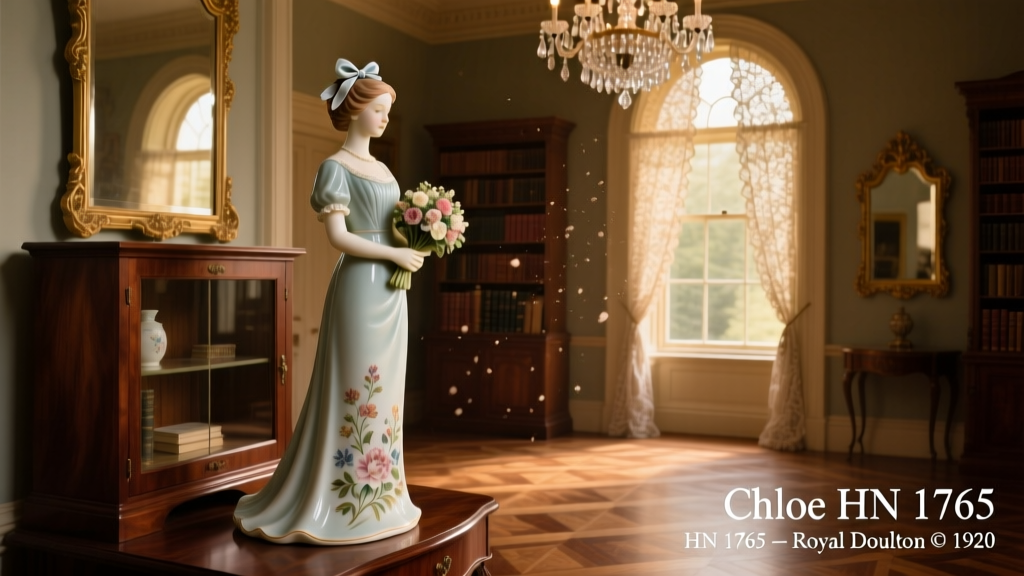
Royal Doulton Figurine Chloe HN 1765: History, Identification, and Preservation Guidance
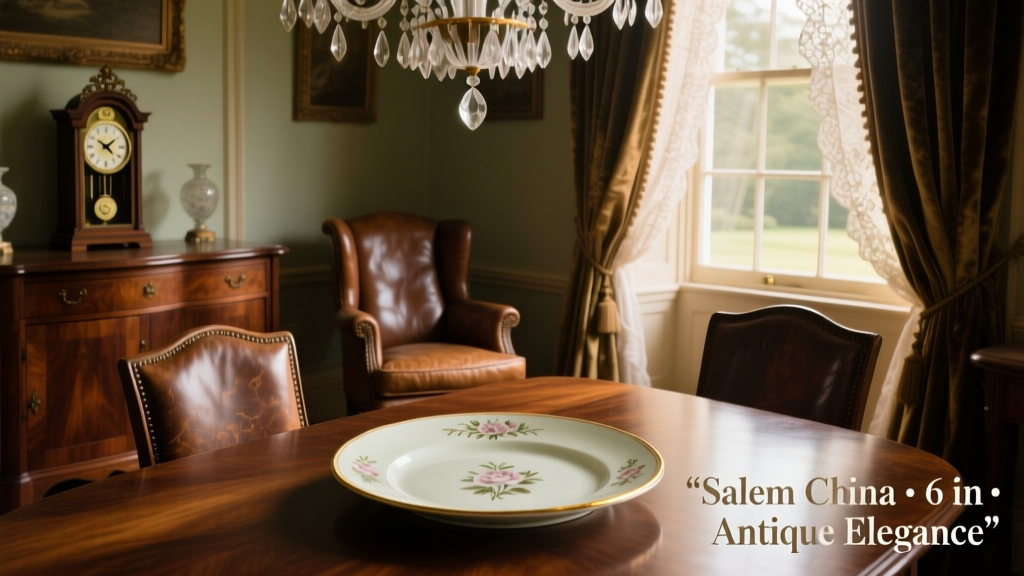
Country Gentlemen Plate by Salem China: A Collector’s Guide to the Iconic 6-In-2 Dinnerware Pattern

The K.R. 65 Bisque Composition Jointed Doll: A Flapper-Era Masterpiece with Blue Eyes (c. 1920–1926, 26 Inches)
Wedgwood Urn Cover in Jasperware: Classic Neoclassical Figures on Lavender Ground, 9¼ Inches
Decoding the 2338158: A Technical and Historical Analysis of the 1957 Herman Miller Eames Lounge Chair Production Code

The Toy Cat Drinking & Licking Set: A Battery-Powered Curiosity from 1950s American Toy Design
Graniteware Measure in Emerald Green: A Collector’s Guide to the 6-Inch Vintage Measuring Cup
The 1973 Milton Bradley Addams Family Board Game: A Collector’s Deep Dive into Design, Mechanics, and Cultural Legacy