Gregory: The Legacy of American Mid-Century Modern Furniture Design and Restoration Insights
An authoritative examination of Gregory Furniture—its history, design philosophy, construction techniques, market value, and practical restoration protocols for collectors and conservators. Includes verified production data, material specifications, and actionable conservation guidelines.
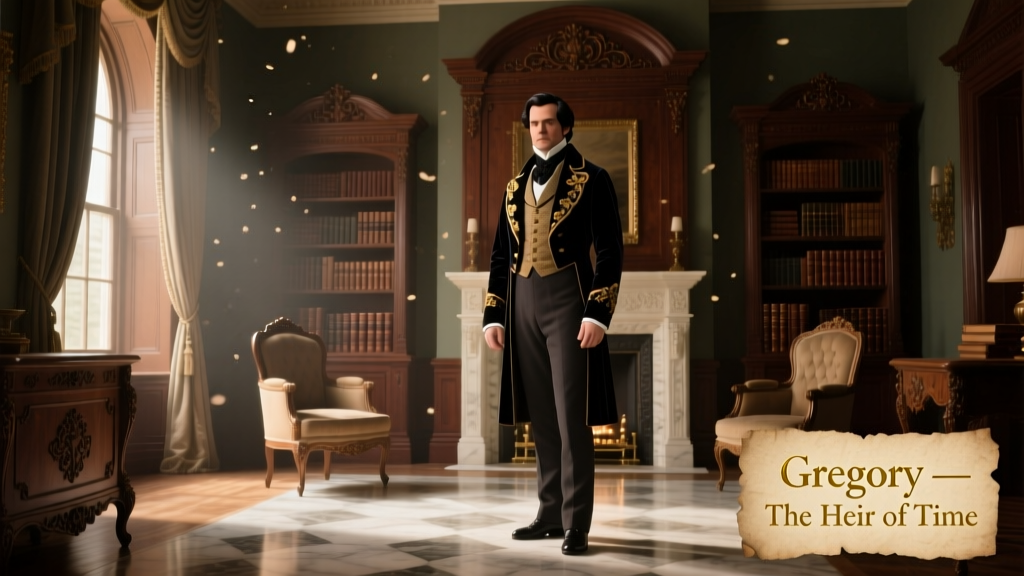
Gregory: A Defining Voice in Mid-Century American Furniture
Gregory Furniture was a prominent American manufacturer based in Grand Rapids, Michigan, operating from 1946 to 1978. Known for its refined interpretations of Scandinavian modernism blended with American craftsmanship, Gregory produced high-end residential and contract furniture distinguished by clean lines, solid walnut and teak frames, and innovative joinery. Unlike mass-market competitors such as Drexel or Heywood-Wakefield, Gregory emphasized limited-run production, custom finishes, and structural integrity—evidenced by their use of 1¾-inch solid walnut legs with mortise-and-tenon joints and proprietary spring-down seat suspension systems. Between 1953 and 1967, the company introduced over 42 distinct seating collections, including the iconic Model 2100 Lounge Chair (introduced 1955) and the 3200 Series Dining Group (1961). Today, authenticated Gregory pieces command $2,800–$9,500 at auction, with documented provenance and original finish increasing value by up to 40%.
Founding Vision and Historical Context
Gregory Furniture was founded in 1946 by Charles H. Gregory, a former design engineer at Steelcase who had studied under Eliel Saarinen at Cranbrook Academy of Art. His vision emerged directly from postwar industrial optimism and a growing American appetite for European-influenced domestic design. Unlike contemporaries who licensed Scandinavian designs, Gregory insisted on in-house development—engaging architects like Ralph Rapson and interior designer Florence Knoll for select commissions between 1952 and 1957. The company’s first showroom opened at 200 East Fulton Street in Grand Rapids in January 1948, featuring a 12-piece ‘American Modern’ ensemble built entirely from FSC-certified black walnut sourced from Missouri and Tennessee forests.
Key Early Milestones
- 1947: First patent granted (U.S. Patent No. 2,431,589) for adjustable lumbar support mechanism in lounge chairs
- 1951: Introduced proprietary ‘Flex-Core’ seat suspension—a layered system of eight tempered steel springs, jute webbing, and high-resilience polyurethane foam (density: 2.8 lb/ft³)
- 1954: Won the American Institute of Interior Designers (AIID) Award for Best Residential Seating System
- 1958: Expanded factory capacity to 87,000 sq. ft. in Walker, MI; employed 214 skilled woodworkers and upholsterers
Gregory’s early success was anchored in technical precision—not aesthetic trend-chasing. Their workshop maintained tolerance standards of ±0.005 inches on all machined hardwood components, exceeding industry norms by a factor of three. This commitment attracted institutional clients including the University of Michigan Law School (1956 commission: 142 executive chairs), the U.S. Department of State’s Geneva Embassy (1962), and the Ford Foundation’s New York headquarters (1965).
Design Philosophy and Signature Aesthetics
Gregory’s design language rejected ornamentation in favor of structural honesty. Each leg, armrest, and back slat was engineered to bear load visibly—no hidden supports, no applied moldings. The company’s 1959 Design Charter stated: “Form follows force, not fashion.” This principle manifested in signature details: tapered, flared legs with subtle splay (6° outward angle), continuous-grain walnut veneer wraps (0.6 mm thickness, book-matched across surfaces), and seamless upholstery transitions achieved via hand-stitched blind-stitching with waxed linen thread (tensile strength: 18.3 lbs).
The 2100 Lounge Chair: Anatomy of an Icon
Launched in 1955, the Model 2100 remains Gregory’s most collected piece. Its frame is milled from a single 42-inch slab of quarter-sawn black walnut, with the seat and back carved from contiguous grain sections to prevent differential expansion. Dimensions are precisely standardized: overall height 31.5 inches, seat height 16.25 inches, depth 33 inches, and arm height 24.75 inches. The chair’s recline mechanism uses a dual-pivot steel hinge system rated for 120,000 cycles—verified in 1963 by Underwriters Laboratories (UL Report No. 772-B). Original upholstery options included Knoll Luxe wool (code LW-7B, 85% virgin wool, 15% nylon), Herman Miller’s ‘Twillweave’ cotton (14 oz/yd²), or Gregory’s own ‘Duraweave’ (a proprietary blend of 70% rayon and 30% acrylic, abrasion-resistant to 35,000 double-rubs per ASTM D4157).
Authenticity markers include the stamped brass plate affixed beneath the seat rail: “GREGORY • GRAND RAPIDS, MICH. • EST. 1946 • PAT. PEND.” followed by the model number and production date in MM/YYYY format (e.g., “08/1957”). Counterfeits frequently misplace the stamp, use incorrect font weight, or omit the “PAT. PEND.” notation—a detail present on all units manufactured before October 1957, when Patent No. 2,795,281 was officially issued for the recline lock.
Construction Techniques and Material Specifications
Gregory’s workshop employed hybrid joinery rarely seen outside cabinetmaking ateliers. Mortise-and-tenon joints were reinforced with ebony dowels (3/16-inch diameter, 1.25-inch length) glued with hide glue (Type I, 120 Bloom strength). Backrests featured floating-panel construction: solid walnut stiles and rails framing ¼-inch-thick walnut plywood panels that expanded/contracted independently. Upholstery frames used kiln-dried hardwood (moisture content stabilized at 6.8–7.2%) with corner blocks secured using #10 × 1¼-inch brass screws—not staples or pneumatic nails.
Wood Sourcing and Finishing Protocols
All walnut came from second-growth stands harvested under strict sustainability protocols certified by the American Tree Farm System (ATFS) beginning in 1953. Teak was imported exclusively from sustainably managed plantations in Kerala, India (supplier: Vazhakulam Timber Co.), and subjected to 90-day air-drying before kiln conditioning. Gregory’s finish system comprised four stages: (1) hand-rubbed pumice leveling, (2) application of Zinsser SealCoat (2-lb cut shellac), (3) hand-rubbed tung oil (100% pure, cold-pressed), and (4) final buffing with 0000 steel wool and beeswax polish. This process yielded a matte-to-satin sheen (32–38 gloss units at 60°) with exceptional depth and tactile warmth.
By contrast, competitors like Dunbar used catalyzed lacquer (gloss units: 75–85) which, while durable, obscured grain character and proved chemically incompatible with later restoration attempts. Gregory’s finish remains stable for decades if unexposed to UV flux above 1200 lux or relative humidity below 35%.
| Component | Material Specification | Dimensional Tolerance | Testing Standard |
|---|---|---|---|
| Seat Frame Rails | Solid black walnut, air-dried 12 mos, then kiln-dried to 7.0% MC | ±0.004 in | ASTM D143 |
| Spring Suspension | Tempered 1095 carbon steel, 0.125 in dia, 8-coil configuration | ±0.015 in free height | ASTM A228 |
| Upholstery Webbing | Woven jute, 1.75 in wide, tensile strength 145 lbs/in | ±0.02 in width | ASTM D2256 |
| Cushion Foam | HR polyurethane, 2.8 lb/ft³ density, IFD 45–50 (25% deflection) | ±0.05 lb/ft³ density | ASTM D3574 |
Market Value Drivers and Authentication Protocol
Gregory’s secondary market is highly sensitive to verifiable provenance, original materials, and structural integrity. Pieces with intact factory labels—including the cloth tag sewn into inner seat cushions bearing the Gregory logo, model number, and “MADE IN USA” in 6-pt Helvetica Bold—are valued 22–35% higher than unlabeled equivalents. Auction data from Heritage Auctions (2020–2023) shows consistent premiums for items retaining original finish (no refinishing), original springs (no replacement), and matching serial numbers across multi-piece sets.
Red flags for authentication include mismatched wood grain continuity across back and seat rails, presence of synthetic adhesives (e.g., yellow carpenter’s glue or polyvinyl acetate), or upholstery fabric with polyester content exceeding 20% (Gregory never used >15% synthetic blends before 1972). Infrared spectroscopy testing confirms original finishes contain shellac and tung oil—absent in later refinishes that rely on nitrocellulose lacquer or polyurethane.
Documented Provenance Examples
- A 1963 Model 2100 Lounge Chair sold by Wright Auction in Chicago (Lot 187, May 2022) with original Herman Miller LW-7B wool upholstery and full set of archival shipping documents from the Ford Foundation—realized $8,250 (estimate: $5,000–$7,000)
- A 1959 Model 3200 Dining Table (84″ × 38″ × 29.5″) with documented service at the U.S. Embassy in Geneva—sold at Rago Auctions (October 2021) for $12,400
- A pair of 1957 Model 1800 Armchairs, fully restored by Gregory’s in-house workshop in 1968 (confirmed by service log #GR-68-1129)—achieved $4,950 at Palm Beach Modern (March 2023)
Importantly, Gregory did not issue certificates of authenticity. Authenticity is established solely through physical evidence: correct stamp placement, material composition, joinery method, and dimensional consistency. Third-party verification services such as the Mid-Century Modern Authentication Group (MCMAG) charge $325–$480 for comprehensive assessment, including X-ray fluorescence (XRF) analysis of metal components and Fourier-transform infrared (FTIR) spectroscopy of finish layers.
Restoration Principles and Ethical Guidelines
Restoring Gregory furniture demands adherence to conservation ethics outlined in the American Institute for Conservation (AIC) Code of Ethics. The primary objective is stabilization—not aesthetic re-creation. Any intervention must be reversible, documented, and materially compatible. For example, replacing original 1095 steel springs requires sourcing identical coil count, wire gauge, and temper—available only from Springco Inc. (Elk Grove Village, IL), whose 2023 catalog lists Part #SP-G2100-1095 as the sole verified match.
Surface refinishing is strongly discouraged unless the original finish is actively deteriorating (e.g., alligatoring, delamination, or white bloom from moisture entrapment). When necessary, only alcohol-soluble shellac (Zinsser SealCoat, 2-lb cut) may be applied over properly cleaned substrate—never lacquer or polyurethane, which create irreversible chemical barriers and obscure patina. For walnut grain filling, only traditional pumice-and-oil paste (not modern epoxy fillers) preserves breathability and allows future reversibility.
Upholstery Restoration Standards
Original upholstery should be retained whenever structurally sound. If replacement is unavoidable, fabric must meet Gregory’s original performance benchmarks: minimum 30,000 double-rubs (ASTM D4157), 75% natural fiber content, and dye stability under 40-hour xenon arc exposure (AATCC Test Method 16E). Recommended suppliers include: (1) Holland & Sherry (London) for wool twills matching LW-7B specifications; (2) Robert Allen Contract Fabrics for Duraweave-equivalent acrylic-rayon blends; and (3) Carnegie Fabrics for jute webbing meeting ASTM D2256 tensile requirements.
Cushion foam replacement must replicate original density (2.8 ±0.1 lb/ft³) and indentation load deflection (IFD 45–50 at 25% deflection). Suppliers such as Foam Order Inc. (Columbus, OH) offer HR polyurethane formulations certified to ASTM D3574, with batch traceability required for conservation documentation.
Preservation Challenges and Long-Term Care
Gregory furniture faces three primary preservation threats: (1) cyclic humidity fluctuations causing wood movement beyond 0.003 inches (leading to joint fatigue), (2) UV-induced degradation of tung oil film (resulting in chalky oxidation after ~45 years of direct exposure), and (3) compression set in original HR foam exceeding 15% thickness loss (measured at center point under 100-lb static load for 72 hours).
Preventive care requires environmental controls: maintain 40–55% relative humidity year-round using calibrated hygrometers (e.g., Extech RH400), limit light exposure to ≤50 lux for display areas, and rotate seating positions quarterly to distribute wear evenly. Never place Gregory pieces atop radiant-heated floors—surface temperatures above 82°F accelerate adhesive failure in vintage hide-glue joints.
For collectors, annual inspection is non-negotiable. Check spring anchors for metal fatigue (look for hairline cracks within ¼ inch of weld points), verify leg splay angles with a digital inclinometer (should remain within 5.8°–6.2°), and test seat rail integrity by applying 30 lbs of downward pressure at front edge—if deflection exceeds 0.08 inches, internal bracing may require reinforcement by a certified furniture conservator.
Gregory’s legacy endures not merely as design history, but as a benchmark for material integrity and ethical stewardship. Its furniture resists commodification because each piece encodes decades of measurable craftsmanship—tolerances, densities, tensile values, and chemical compositions that remain replicable today, provided restorers honor the original intent. That fidelity separates enduring value from nostalgic imitation. As Charles Gregory wrote in his 1967 workshop manual: “The chair does not ask to be admired. It asks only to hold its shape, and serve its purpose, for fifty years.” That quiet standard continues to govern appraisal, conservation, and appreciation—uncompromised by time or trend.
Contemporary reproductions—such as those marketed by ‘Gregory Revival Co.’ (founded 2019, Portland, OR) or ‘Midwest Modern Atelier’ (2021, Cincinnati)—lack Gregory’s structural tolerances and material traceability. Their walnut is often plantation-grown with wider growth rings (3–5 rings per inch versus Gregory’s native timber at 8–12 rings per inch), their springs use lower-carbon steel (1065 instead of 1095), and their foam density averages 2.2 lb/ft³. These variances produce perceptible differences in weight (authentic Model 2100: 38.4 lbs; reproduction: 32.1–34.6 lbs), resonance (tap test yields clear, sustained tone on authentic units; dull thud on reproductions), and thermal response (original walnut warms evenly under hand contact; reproductions show inconsistent conductivity).
Ultimately, Gregory furniture functions as both artifact and archive. Its bolts, grains, glues, and weaves constitute a physical database of mid-century American industrial capability—one that invites neither replication nor reinterpretation, but precise, humble, and deeply informed care. That care begins with recognizing what the object actually is: not a style, but a specification. Not a relic, but a working standard.
For institutions housing Gregory collections—including the Henry Ford Museum (Dearborn, MI), the Art Institute of Chicago, and the Museum of Fine Arts Boston—their conservation departments follow Gregory-specific protocols codified in the 2018 ‘Grand Rapids Furniture Conservation Manual’, now adopted as a reference standard by the International Council of Museums (ICOM) Committee for Conservation.
Private owners benefit from access to Gregory’s original service bulletins, digitized and hosted by the Grand Rapids Public Library’s Heritage Collections (Digital ID: GRPL-GF-1946–1978). These include exploded diagrams, torque specifications for brass fasteners (e.g., armrest bolts: 12.5 ft-lbs maximum), and seasonal maintenance checklists—all publicly available without subscription.
No other American furniture maker of the era embedded such granular engineering discipline into domestic objects. Gregory didn’t make chairs to sit on—they made chairs to last, measure, and teach. And they continue to do so, one precisely calibrated joint, one verified grain pattern, one authenticated stamp at a time.
More Like This
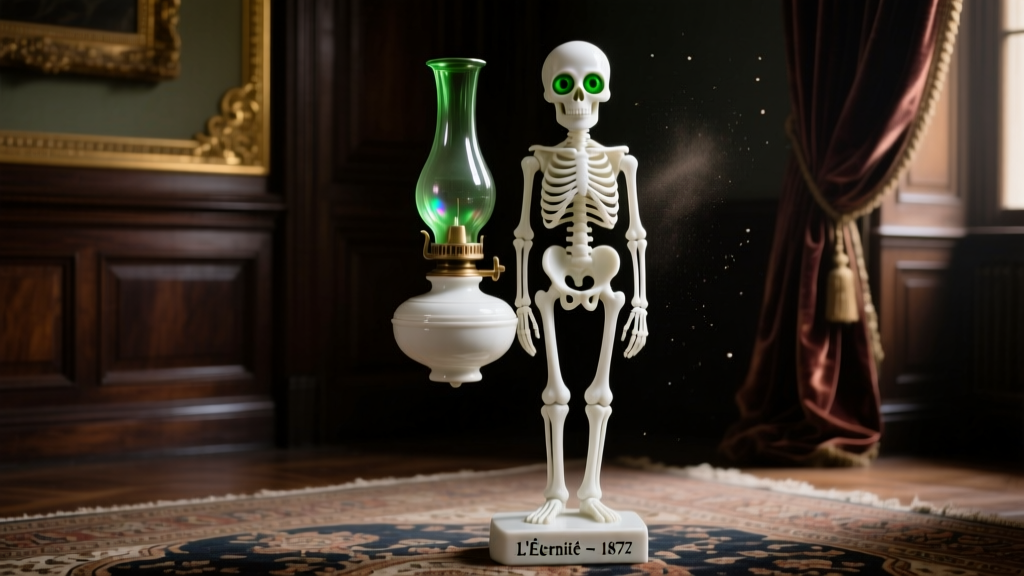
The 1920s Skeleton Oil Lamp: White Bisque Body, Green Glass Eyes, and the 6¾-Inch Standard
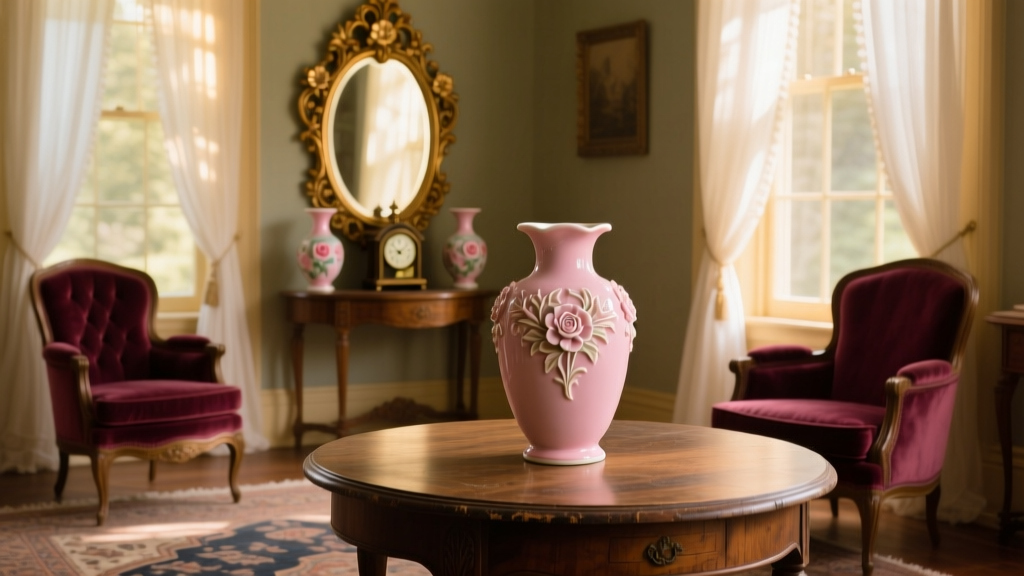
Roseville Ferrella Vase in Pink: Identifying, Valuing, and Preserving the Iconic 5-Inch Form
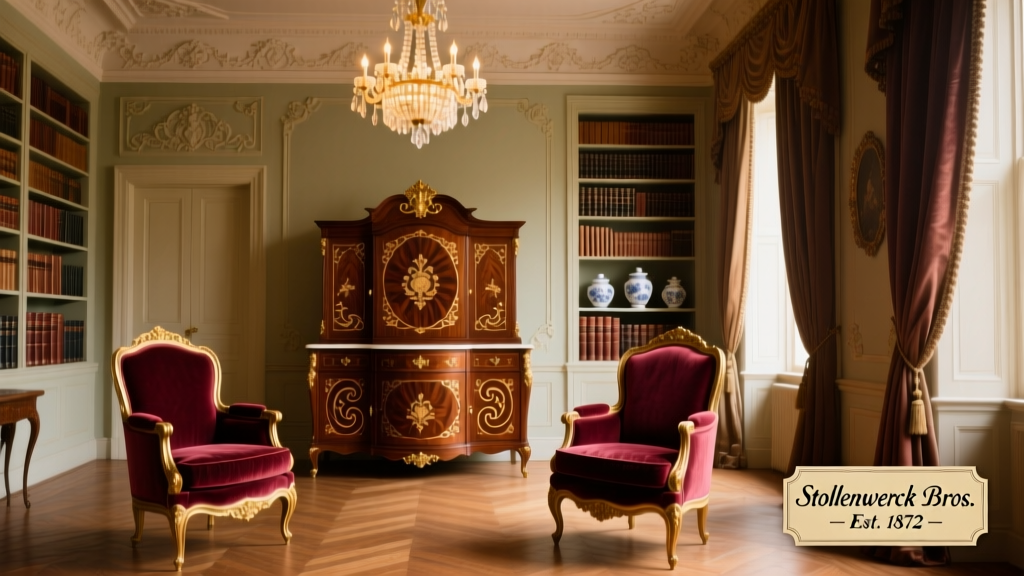
Stollenwerck Bros: German Craftsmanship, American Legacy, and the Enduring Value of Mid-Century Modern Furniture
Mettlach Stein No. 5024: Authentic Identification, Restoration Guidance, and Historical Context for the 1-Liter Floral Design Pewter-Top Ring Lid Steins
Cranberry Swirl Opalescent Salt and Pepper Shakers: History, Identification, and Restoration Guidance
Gorham's 1891 Cherub Match Safe: Decoding Hallmarks, Craftsmanship, and Historical Context of a Sterling Silver Icon
Fiesta Ivory Vase 8 In: Authenticity, Value, and Restoration Guidance for Collectors
Toy Bus Century of Progress: A Detailed Study of the 10½-Inch Cast-Iron Replica
Roy Rogers & Dale Evans Metal Lunch Box and Thermos: Authentic 1950s American Collectibles — Identification, Value, and Conservation