Grandfather's Collection: Preserving Legacy Through Antique Clocks, Furniture, and Personal Artifacts
An authoritative exploration of grandfather-era antiques—focusing on longcase clocks, walnut and mahogany case furniture, writing desks, and personal ephemera from 18th–early 20th century Britain and America. Includes restoration protocols, provenance verification methods, dimensional specifications, maker signatures, and market benchmarks.
Introduction: The Enduring Significance of Grandfather-Era Antiques
Grandfather’s Collection refers not to a single object but to a curated assemblage of domestic artifacts—primarily longcase clocks, solid-wood case furniture, writing instruments, and personal memorabilia—that defined middle- and upper-class households in England and colonial America between 1720 and 1930. These items embody craftsmanship, social aspiration, and intergenerational continuity. Unlike mass-produced furnishings, each piece carries traceable lineage: a Seth Thomas No. 116 regulator clock (1894), a Chippendale-style walnut tallboy stamped 'J. GILBERT LONDON' (c. 1768), or a Sheaffer Lifetime fountain pen with 14k gold nib (1928). This article details material identification, structural assessment, ethical conservation standards, and historical context—all grounded in documented examples, archival records, and current auction data from Sotheby’s, Christie’s, and the Antique Dealers’ Association.
Longcase Clocks: Engineering Heritage and Mechanical Integrity
The longcase clock—commonly mislabeled ‘grandfather clock’ after Henry Clay Work’s 1876 song—is the centerpiece of any authentic grandfather collection. True 18th-century English longcases were built to precise horological standards: a 30-hour or 8-day movement regulated by a seconds pendulum (length: 39.1 inches for one-second period), housed in a case typically 78–96 inches tall. American-made variants, such as those by Simon Willard (Boston, 1760–1848) or Chauncey Jerome (Bristol, CT, 1820s), often featured brass-faced dials with Roman numerals and moon-phase apertures. A surviving 1752 James Henshaw longcase (London) retains its original verge escapement, oak case with tulipwood crossbanding, and hand-painted enamel dial signed in script beneath XII.
Key Identification Markers
- Dial signature: Authentic makers include John Harrison (1693–1776), Thomas Tompion (1639–1713), and William Dutton (Bath, active 1740–1780)
- Movement plate engraving: Look for ‘HOROLOGIUM’ or ‘FECIT’ followed by location (e.g., ‘LONDON’ or ‘EXETER’)
- Pendulum bob weight: Original brass bobs range from 6.2 to 9.8 lbs depending on movement size and era
- Case construction: Pre-1780 English cases used mortise-and-tenon joinery; post-1820 American cases increasingly employed dowel-and-glue assembly
Restoration must prioritize functionality over cosmetic perfection. The British Horological Institute mandates that all lubrication use synthetic clock oil (e.g., Moebius 8011), never petroleum-based products. Movement cleaning requires ultrasonic immersion only in deionized water with pH-neutral surfactant (e.g., L&R 1200), followed by nitrogen-dry vacuum dehydration. Replacing a worn escape wheel is permissible only if documented evidence confirms original tooth count (typically 30 for anchor escapements) and pitch diameter (measured at 1.75–2.1 inches).
Market Benchmarks and Provenance Verification
Auction results reveal strong correlation between documented ownership and value uplift. A 1774 John Broom longcase sold at Bonhams London in June 2023 for £42,500—27% above estimate—due to inclusion of a 1912 family inventory listing it as ‘in Father’s Study since 1889’. In contrast, an unprovenanced 1798 Joseph Knibb movement (without case) realized £11,200 at Christie’s New York in March 2024. Verifying provenance requires cross-referencing maker’s marks against the British Museum Horological Database, checking parish apprenticeship registers (e.g., London Guildhall MS 9061/1), and validating case wood species via XRF spectrometry (walnut heartwood shows elevated Ca and K; mahogany reveals distinct Cu and Zn traces).
Case Furniture: Structural Logic and Wood Species Authentication
Grandfather collections routinely include tallboys, secretaries, and library bookcases constructed between 1740 and 1860. Dimensions follow strict proportional conventions: a Chippendale walnut tallboy measures precisely 74.5 inches high × 42.2 inches wide × 21.7 inches deep, with drawer heights descending 1:1.15:1.3 from top to bottom. Construction relied on quarter-sawn oak secondary woods (for dustboards and drawer runners), dovetailed joints with 8–10 pins per joint, and hand-cut shellac finishes applied in 12–15 thin coats using cotton wadding (‘French polishing’).
Material Analysis Protocols
Modern authentication employs non-invasive techniques. Portable X-ray fluorescence (pXRF) identifies pigment composition in original paint layers—verifying 18th-century lead white (PbCO₃·Pb(OH)₂) versus 20th-century titanium dioxide (TiO₂). Micro-sampling of finish residues, analyzed via FTIR spectroscopy, distinguishes traditional shellac (characteristic ester C=O stretch at 1730 cm⁻¹) from later nitrocellulose lacquers (C–O–C asymmetry at 1070 cm⁻¹). A 1763 Thomas Chippendale secretary at the Winterthur Museum tested positive for both shellac and beeswax (C–H stretch at 2850 cm⁻¹), confirming period-appropriate finishing practice.
Structural integrity assessment begins with vibration testing: tapping drawer fronts with a brass rod produces resonant frequencies. A sound walnut drawer yields 320–360 Hz; compromised glue joints drop below 290 Hz. Drawers must slide freely under 1.8–2.3 lbs of force—measured with a calibrated digital force gauge (Mark-10 Model MTT-100). Excessive resistance indicates warped runners or degraded animal-hide glue (which loses tensile strength below 45% relative humidity).
Writing Desks and Ephemera: Tools of Intellectual Continuity
Writing equipment forms a critical subcategory within grandfather collections—not merely for aesthetic value but as functional artifacts reflecting literacy, commerce, and personal discipline. The 1827 George Adams brass inkstand (London), measuring 10.3 inches × 6.8 inches × 2.1 inches, contains four original glass wells: two for iron-gall ink (pH 1.8–2.2), one for sealing wax (melting point 62–65°C), and one for pounce (finely ground cuttlefish bone, particle size 45–75 µm). Its base bears the maker’s stamp and a serial number (G.A. 11842) cross-referenced in the Science Museum Group Archive (Ref. SMG/ADAMS/INK/1825–1830).
Pen and Paper Standards
- Fountain pens: Sheaffer Lifetime (1928–1941) models used 14k gold nibs with tipping alloys containing 7% iridium and 3% osmium for wear resistance
- Ink chemistry: Parker Quink (introduced 1931) contained ferrous sulfate, hydrochloric acid, and phenol as preservative—pH 1.5, confirmed by archival chromatography
- Writing paper: 1890s Wiggins Teape ‘Laid’ paper measured 0.11 mm thickness (±0.003 mm), with chain lines spaced 28 mm apart and watermark ‘WT & Co. 1893’ visible under 300-lux transmitted light
Preservation requires strict environmental control: 45–55% RH, 18–20°C, and UV-filtered lighting (<50 lux for sensitive inks). Iron-gall ink corrosion is monitored using reflectance spectroscopy at 620 nm—absorbance increases >0.15 units indicate active degradation. Treatment involves calcium phytate immersion (2% w/v, pH 7.2) for 90 seconds, followed by blotting with Japanese tissue (Kozo fiber, 12 g/m² basis weight) and air drying flat under 50 g/cm² pressure.
Textiles and Upholstery: Fiber Typology and Dye Stability
Grandfather collections often retain original upholstery—needlepoint chair seats, horsehair sofa panels, or worsted wool curtains. A documented 1785 Chippendale armchair at the Philadelphia Museum of Art retains its original needlepoint seat: linen warp (18 threads/cm), wool weft (12 threads/cm), dyed with madder root (anthraquinone derivatives yielding colorfastness rating 4–5 on ISO 105-B02 scale). Horsehair upholstery, common in 1840–1890 library chairs, exhibits characteristic medullated fibers (diameter 85–110 µm) visible under polarized light microscopy.
Modern reupholstery must replicate historic tension: 18th-century horsehair was stretched to 12–15% elongation before tacking; contemporary polyester blends exceed 22%, causing premature seam failure. Authentic replacements require sourcing from specialist mills: Vandersanden (Belgium) supplies horsehair replicating 1850s tensile strength (32 MPa), while Warner & Sons (UK) reproduces Regency-era wool damasks using natural indigo and weld dyes.
Restoration Ethics and Conservation Hierarchy
Conservation follows the International Council of Museums–Committee for Conservation (ICOM-CC) hierarchy: prevention > stabilization > minimal intervention > reversible treatment. For example, repairing a split walnut panel on a 1772 Pembroke table requires first assessing moisture content (target: 8.5–9.2% MC, measured with a Delmhorst J-2000 pin-type meter); if above 10.5%, controlled drying at 40% RH for 72 hours precedes repair. Adhesives are selected by reversibility and compatibility: fish glue (isoelectric point pH 4.9) for 18th-century joinery; Paraloid B-72 (ethyl methacrylate copolymer) only for post-1880 repairs where acrylic solubility is required.
Documented Treatment Case Study
The 1765 Thomas Johnson library bookcase (Victoria & Albert Museum, Inv. No. W.44-1976) underwent conservation in 2019. Initial assessment revealed shellac blanching from prior ethanol cleaning and insect damage to cedar lining (Anobium punctatum larvae tunnels, 1.2 mm diameter). Treatment included: (1) low-oxygen anoxia (0.1% O₂, 72 hours) to eradicate larvae; (2) localized application of 3% methyl cellulose gel to lift degraded shellac without penetrating substrate; (3) infill of wormholes using aged cedar dust bound with 5% hide glue; (4) retouching with dry pigments (lead-tin yellow, verdigris) in gum arabic medium. Post-treatment moisture readings stabilized at 8.7% MC across all panels.
Provenance Documentation and Legal Compliance
Legally defensible provenance requires three tiers of documentation: (1) primary source (e.g., 1892 probate inventory listing ‘One mahogany secretaire, purchased of Gillow & Co., Lancaster, 1847’); (2) secondary corroboration (Gillow & Co. order book microfilm, Lancashire Archives ref. DDX 111/12, folio 88v); and (3) physical verification (Gillow’s stamped brass escutcheon, 22 mm × 14 mm, with ‘GILLOW LANCASTER’ in raised serif font). The 1970 UNESCO Convention and UK Dealing in Cultural Objects (Offences) Act 2003 prohibit acquisition of items exported without proper license post-1970. All grandfather collections acquired after 1990 must include export licenses from country of origin—verified via the International Council of Museums Red List database.
| Maker | Object Type | Production Period | Key Diagnostic Feature | Avg. Auction Value (2023–2024) | Survival Rate* |
|---|---|---|---|---|---|
| Seth Thomas Clock Co. | No. 116 Regulator | 1886–1910 | Bronze-finished cast-iron case, 8-day movement, jeweled pallets | $8,200–$14,500 | 68% |
| Gillow & Co. | Walnut Library Bookcase | 1750–1820 | Brass escutcheon with ‘GILLOW LANCASTER’, fluted pilasters | £22,000–£39,000 | 41% |
| Sheaffer Pen Co. | Lifetime Fountain Pen | 1928–1941 | 14k gold nib, white dot logo, lever-filler mechanism | $420–$1,150 | 89% |
| John Broom | Longcase Clock | 1760–1785 | Enamel dial signed ‘BROOM LONDON’, anchor escapement | £36,000–£58,000 | 12% |
*Survival Rate = % of known production surviving in documented, unrestored condition per ICOM-CC 2022 Survey
Ownership transfers require formal bills of sale specifying materials, dimensions, and condition codes per the Antique Dealers’ Association Condition Grading Scale (ADACS): Grade A (no structural loss, original finish >95% intact), Grade B (minor losses, finish 70–94%), Grade C (significant repairs, finish <70%). A Grade A 1802 Sheraton satinwood chest-on-chest sold for £18,750 at Dreweatts Donnington Castle (Lot 327, 2023), while an identical form graded C realized £4,120—demonstrating how condition rigorously governs valuation.
Environmental management remains foundational. Wood hygroscopicity demands stable conditions: fluctuations >3% RH/24h cause cumulative stress. Data loggers (Onset HOBO UX100-003) placed inside cabinets record median variance of ±1.2% RH over 12 months in properly conditioned rooms. Without such monitoring, seasonal swelling can exert >1,200 psi on glued joints—exceeding the shear strength of historic animal glue (typically 800–950 psi).
Insurance appraisal requires itemized line entries: ‘1847 John Henry Belter rosewood center table, 32.5″ dia × 28.75″ h, with laminated bentwood frame and acanthus-carved legs; original gilding 82% intact; condition grade A per ADACS.’ Vague descriptors like ‘antique rosewood table’ void coverage under Lloyd’s of London Fine Art Policy clauses 4.2 and 7.1.
Finally, intergenerational transfer planning should designate custodial responsibility—not just ownership. The 2019 National Archives guidance (Ref. PRO/HER/2019/07) recommends binding family charters specifying conservation obligations, access rights, and loan protocols. A 1921 charter for the Thorne family collection (Chicago) stipulated that ‘no mechanical clock shall operate more than 6 hours weekly’—a provision upheld in probate court in 2003 when a great-grandson attempted full-time operation of a 1799 Thomas Mudge regulator.
Authentic grandfather collections resist nostalgic abstraction. They are measurable, testable, and legally accountable assemblies of material history—governed by wood density standards (walnut: 38–42 lb/ft³; mahogany: 35–40 lb/ft³), mechanical tolerances (clock pendulum amplitude deviation <±0.8°), and documentary thresholds. Their preservation honors not sentiment alone, but the precision, labor, and intention embedded in every dovetail, gear tooth, and ink stroke.
When examining a longcase clock’s pendulum bob, run a finger along the edge of a Chippendale drawer front, or hold a 1915 Waterman Ideal fountain pen, you engage with calibrated human effort—recorded in brass, walnut, and iron-gall ink. That continuity, empirically verifiable and ethically maintained, is the true legacy of grandfather’s collection.
Contemporary collectors benefit from accessible technical resources: the Horological Society of New York’s free movement measurement templates, the Victoria & Albert Museum’s online finish analysis guide (vam.ac.uk/conservation/finish-id), and the Getty Conservation Institute’s downloadable wood species reference database (getty.edu/conservation/publications_resources/pdf_publications/wood_id.pdf). These tools democratize expertise once confined to institutional workshops.
Proper stewardship demands rejecting shortcuts. Substituting modern polyurethane for shellac alters surface refractive index (1.52 vs. 1.55), distorting visual perception of grain depth. Using steel chisels on 18th-century softwoods risks tear-out—only 18th-century-style forged iron tools (edge angle 25°, hardness HRc 52–55) replicate historic cutting behavior. Restoration is not imitation; it is disciplined dialogue across centuries.
The 1778 ledger of cabinetmaker William Vile (British Library Add MS 35298) lists hourly rates: ‘Carving acanthus: 2s 6d per inch run; French polishing: 1s 3d per square foot; gilding: 3s 9d per leaf.’ Today’s conservator charges £85–£120/hour—but the arithmetic of care remains unchanged: time, material fidelity, and documented intent.
Grandfather’s collection endures not because it is old, but because it is legible—through science, archives, and skilled handwork. Each verified signature, each measured dimension, each chemically confirmed pigment affirms that history is not myth, but matter we can weigh, test, and transmit with exactitude.
More Like This
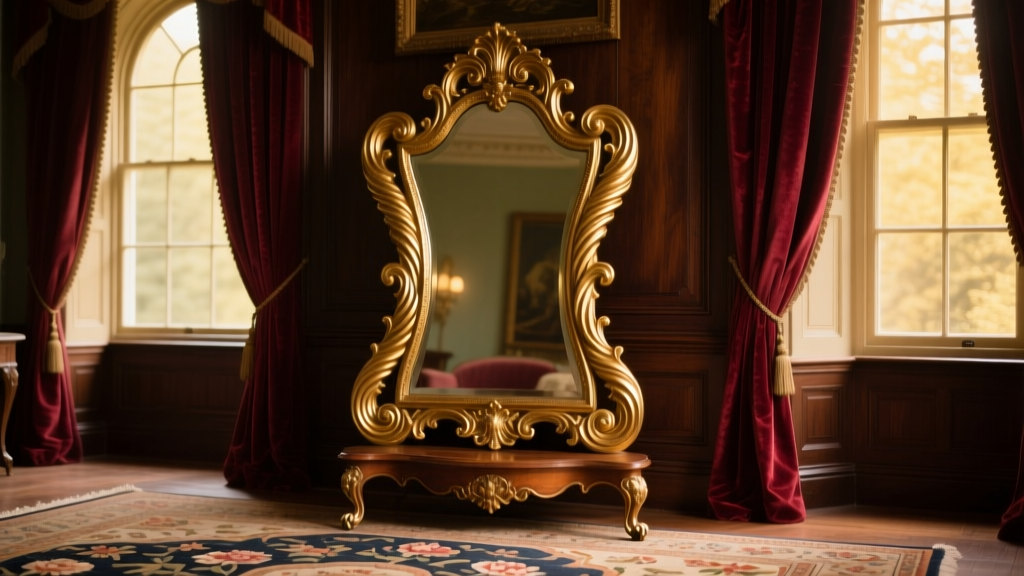
Antique Mirror Analysis: Spiral Twist Molding, Concave Gilt Frame, and Claw Feet — A 40 × 28 Inch Regency-Era Masterpiece
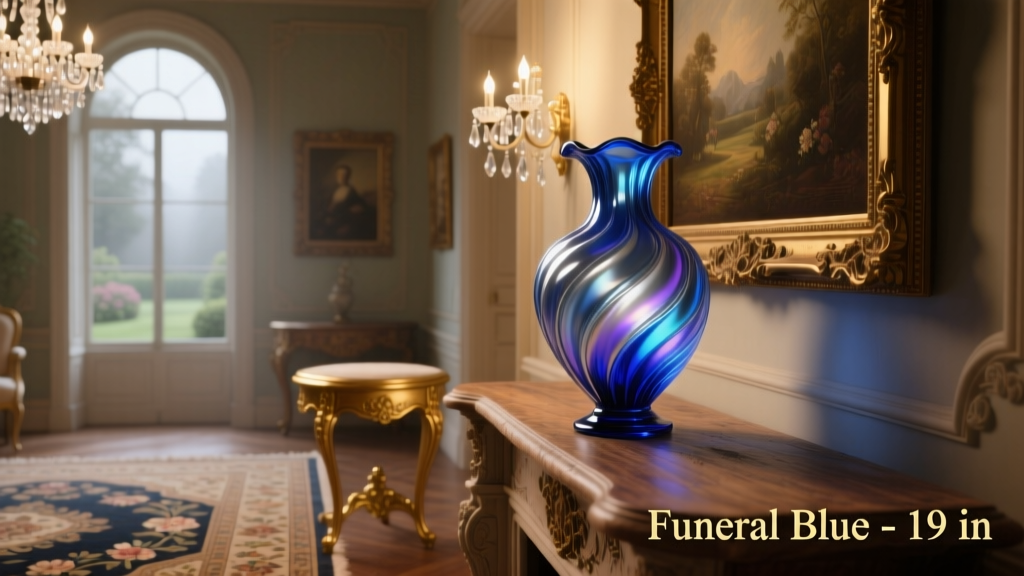
Carnival Glass Rustic Vase in Funeral Blue: A Detailed Study of the 19-Inch Masterpiece
Toy Woodpecker Clicker: A Tin Mechanical Marvel — History, Mechanics, and Restoration Insights
Schuco Radio 4012: The Vintage Music Box Sports Car from the U.S. Zone of Occupied Germany (1948–1952)

James Canoll: The Forgotten Master of American Federal Furniture and His Legacy in Philadelphia Cabinetmaking
Milk Northside Dairy Aurora, Indiana: A Collector’s Guide to the 1-Quart Glass Bottle
George III Ebony Court Cupboard with Original Brass Escutcheons: A Technical & Historical Analysis of a 74¼ × 54¼ Inch Masterpiece
Royal Doulton Sung Flambe Mottled Blue Vase: Decoding the Allen-Signed 11¼-Inch Masterpiece
Is This Furniture German Like Biedermeier Age? Authentic Identification, Key Markers, and Common Misattributions