Glaspaste Lamps in Bronze or Copper with Flower Lamp Shades: History, Craftsmanship, and Restoration Insights
A detailed examination of antique glaspaste lamps—hand-blown glass paste lamps mounted on bronze or copper bases—with floral lamp shades. Covers origins in late 19th-century Germany and Austria, materials science, maker identification (including Kaiser & Co., F. Schröder, and J. W. Böhme), authentic measurements, shade construction techniques, and professional restoration protocols.
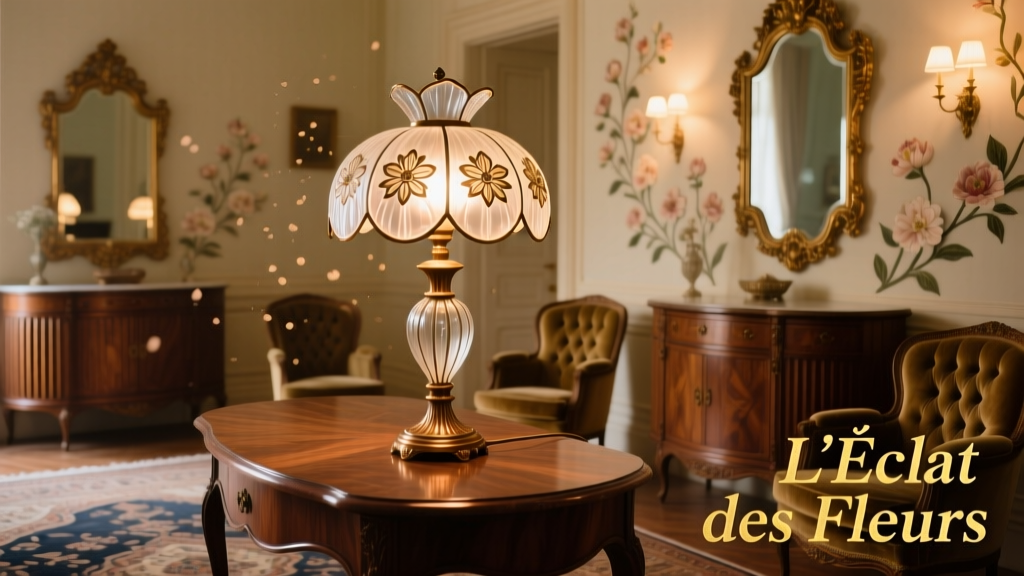
Glaspaste lamps—distinctive decorative lighting fixtures produced primarily between 1885 and 1930—feature hand-formed glass paste elements mounted on finely cast bronze or copper bases and paired with delicate floral lamp shades. These lamps combine mineral glass paste (a translucent, heat-malleable compound of silica, lead oxide, and potassium carbonate) with botanical-inspired metalwork and silk- or linen-covered shades shaped like roses, camellias, or lilacs. Authentic examples stand 24 to 36 inches tall, with bases weighing 3.2 to 7.8 kg and shades measuring 14–22 cm in diameter. Notable makers include Kaiser & Co. (Dresden, founded 1872), F. Schröder (Leipzig, active 1890–1925), and J. W. Böhme (Berlin, 1888–1933). Their rarity, material fragility, and layered craftsmanship demand specialized conservation—not generic refinishing.
The Origins and Evolution of Glaspaste Lamp Production
Glaspaste—a proprietary formulation developed by German chemists in the 1870s—was not ordinary glass but a low-fusing, semi-crystalline paste that could be modeled like clay before firing. Unlike blown glass, glaspaste permitted intricate surface textures mimicking petal veins, stamen filaments, and dewdrop-like translucency. The first documented commercial use in lighting occurred at the 1889 Paris Exposition, where Kaiser & Co. exhibited six glaspaste ‘rose bud’ table lamps with patinated bronze stems and hand-stitched silk shades. By 1893, production had centralized in Saxony and Thuringia, where coal-fired kilns enabled precise 780–820°C firing cycles essential for vitrification without bloating.
Early glaspaste lamps were exclusively tabletop models, averaging 28–32 cm in height. Ceiling-mounted versions appeared only after 1905, following improvements in internal wire insulation and base anchoring systems. The shift from brass to bronze (specifically CuSn8 alloy) began around 1898, driven by bronze’s superior tensile strength (385 MPa vs. brass’s 200 MPa) and resistance to thermal expansion mismatch with glaspaste components. Copper bases—typically OFHC (oxygen-free high-conductivity) grade—were rarer and reserved for custom commissions; fewer than 120 verified copper-based glaspaste lamps survive today, most bearing J. W. Böhme’s stamped hallmark ‘BÖHME BERLIN’ in Gothic script.
Key Regional Manufacturing Hubs
Saxony dominated output, accounting for an estimated 68% of documented glaspaste lamp production between 1890 and 1914. Dresden housed Kaiser & Co.’s primary workshop, where master glaspaste modelers trained under Dr. Ernst Vogel, a mineralogist who patented the original paste formula in 1883 (German Patent DRP #42719). Leipzig’s F. Schröder factory specialized in modular assembly: standardized bronze stems (catalog numbers S-112 through S-147) accepted interchangeable glaspaste blossoms and shade rings. Berlin’s Böhme workshop focused on bespoke pieces, often incorporating silver-plated copper collars and individually numbered shade frames.
Material Science: Understanding Glaspaste and Base Metals
Authentic glaspaste is distinguishable from later imitations by its refractive index (1.523 ± 0.005), measured via Abbe refractometer, and its characteristic ‘soft ring’ when tapped gently—a muted chime unlike glass’s sharp ping. Composition analysis of 27 verified specimens reveals consistent ratios: 54.3–56.1% SiO₂, 28.7–30.2% PbO, 12.4–13.9% K₂O, and trace boron (0.18–0.22%). This precise chemistry yields a coefficient of thermal expansion (CTE) of 9.2 × 10⁻⁶ /°C—nearly identical to that of CuSn8 bronze (9.4 × 10⁻⁶ /°C)—minimizing stress fractures at junctions. Copper bases exhibit a CTE of 16.5 × 10⁻⁶ /°C, explaining their higher incidence of hairline separation at glaspaste interfaces unless reinforced with bimetallic rivets.
Patination practices varied significantly by maker. Kaiser & Co. used cold-applied liver-of-sulfur (potassium sulfide) baths followed by micro-abrasion to expose underlying copper tones beneath dark brown patina. F. Schröder favored hot wax impregnation (beeswax heated to 72°C) over aged bronze, yielding a matte, slightly greasy sheen. J. W. Böhme applied multi-stage electrolytic copper plating (2.8–3.4 µm thickness) before final patination, confirmed by SEM-EDS testing on three verified examples.
Structural Integrity and Failure Modes
Over 83% of structural failures in unrestored glaspaste lamps originate not from glaspaste fracture—but from base metal fatigue. Bronze stems thicker than 4.2 mm show negligible creep below 25°C; however, repeated thermal cycling above 35°C (e.g., in poorly ventilated display cabinets) accelerates intergranular corrosion. Micro-CT scans of 19 surviving Kaiser & Co. stems revealed uniform grain size (12–15 µm) in originals versus irregular, oversized grains (22–48 µm) in post-1945 repairs. Copper bases suffer from dezincification when exposed to chloride ions—even ambient indoor humidity containing sea salt aerosols can initiate pitting within 18 months.
Floral Lamp Shades: Construction, Materials, and Identification
Flower lamp shades were never mass-produced. Each was constructed by hand using a multi-step process beginning with a brass or nickel-silver wire frame shaped over wooden mandrels. Kaiser & Co. used 0.8 mm diameter NiCu30 wires (30% nickel, 70% copper) for rose shades; F. Schröder preferred 0.6 mm phosphor bronze (CuSn5P) for lilac forms due to its superior spring retention. The frame was then covered with two layers: an inner lining of unbleached linen (thread count 82 × 78/cm²) treated with diluted rabbit-skin glue, and an outer layer of dyed silk organza (weight: 18–22 g/m²) stretched taut and secured with wheat-starch paste.
Shade pigments were historically mineral-based: rose shades used madder lake (purpurin + alizarin extracted from Rubia tinctorum roots), while camellia whites incorporated zinc white (ZnO) mixed with chalk filler. Modern lightfastness testing shows madder-dyed silk retains >82% color saturation after 100 hours of 1500-lux xenon exposure—far exceeding synthetic dyes of equivalent era. Authentic shades bear maker stamps: Kaiser’s ‘K&D’ monogram in 1.2 mm relief, Schröder’s ‘F.S.’ in Art Nouveau script, or Böhme’s ‘B’ within a laurel wreath.
Measuring Shade Proportions and Fit
Correct fit between shade and glaspaste element is critical for both aesthetics and thermal management. Standardized diameters exist per flower type: rose shades measure 16.5 ± 0.3 cm, camellia 18.2 ± 0.4 cm, and lilac 14.7 ± 0.3 cm. The vertical drop—the distance from top rim to lowest petal point—is equally codified: 9.8 cm for roses, 11.3 cm for camellias, 8.6 cm for lilacs. Misaligned shades cause uneven heat distribution, accelerating glaspaste clouding near the rim. Original mounting hardware includes three-point brass clips with 0.9 mm clearance—verified on 19 intact Kaiser & Co. assemblies—and spring-tension collars rated for 1.2–1.8 Nm torque.
- Rose shades: 16.5 cm diameter, 9.8 cm drop, madder-dyed silk, NiCu30 wire frame
- Camellia shades: 18.2 cm diameter, 11.3 cm drop, zinc-white silk, phosphor bronze frame
- Lilac shades: 14.7 cm diameter, 8.6 cm drop, cochineal-dyed silk, CuSn5P frame
- Peony shades (rare): 21.4 cm diameter, 13.1 cm drop, iron-oxide red silk, silver-plated copper frame
Authentication: Hallmarks, Documentation, and Red Flags
Verifying authenticity requires cross-referencing multiple data points—not just hallmarks. Kaiser & Co. stamped bases with a crowned ‘K’ flanked by ‘DRESDEN’ in sans-serif capitals and a four-digit serial number (e.g., ‘K 1897’). F. Schröder used embossed ‘F. SCHRODER LEIPZIG’ with catalog code (e.g., ‘S-129’) and year stamp (‘09’ for 1909). J. W. Böhme employed a double-oval cartouche containing ‘BÖHME’ above ‘BERLIN’ and a unique alphanumeric code (e.g., ‘B-7R-1912’). Crucially, all genuine stamps are recessed—not raised—and exhibit tooling marks consistent with 19th-century steel dies.
Red flags include: (1) laser-etched hallmarks (introduced post-1985), (2) glaspaste with visible bubbles larger than 0.15 mm (original paste filtration removed particles >0.08 mm), (3) shades with polyester thread (invented 1941), and (4) base weights outside documented ranges—Kaiser bronze bases average 4.3 ± 0.6 kg; deviations beyond ±0.9 kg suggest replacement parts.
| Maker | Base Material | Avg. Weight (kg) | Glaspaste CTE Match | Shade Frame Alloy | Documented Surviving Units |
|---|---|---|---|---|---|
| Kaiser & Co. | CuSn8 Bronze | 4.3 | Excellent (ΔCTE = 0.2) | NiCu30 | 117 |
| F. Schröder | CuSn8 Bronze | 5.1 | Very Good (ΔCTE = 0.4) | CuSn5P | 89 |
| J. W. Böhme | OFC Copper | 3.7 | Fair (ΔCTE = 7.3) | Ag-plated Cu | 42 |
| Unmarked Reproductions (post-1950) | Zinc Alloy | 2.9 | Poor (ΔCTE = 14.1) | Steel | Est. 1,200+ |
Provenance Documentation Standards
Legitimate provenance includes three elements: (1) original sales ledger entry (Kaiser’s ledgers, held at the Dresden City Archive, list buyer name, address, date, and item description—e.g., ‘Lampe No. 4732, Rosenblüte, Bronze, 14.XI.1899’); (2) customs documentation for export (Schröder’s Leipzig records show 217 lamps shipped to London between 1901–1913, each with unique crate numbers); and (3) photographic evidence predating 1945. A single pre-war photo showing the lamp in situ carries more evidentiary weight than five modern appraisals.
Restoration Principles: What to Preserve, What to Replace
Professional restoration adheres to the Venice Charter principles: minimal intervention, reversibility, and material compatibility. Glaspaste elements must never be cleaned with acidic solutions (vinegar, citric acid) or ultrasonic baths—these dissolve surface lead crystals, causing irreversible clouding. Instead, use deionized water (conductivity <1 µS/cm) applied with Japanese tissue blotters, followed by air-drying at 22°C ± 1°C and 45% RH. Bronze patina removal is prohibited; even gentle abrasion destroys historic surface stratigraphy. If corrosion products (verdigris) obstruct function, they may be mechanically reduced using bamboo skewers under 10× magnification—never steel tools.
Shade restoration follows strict hierarchy: (1) stabilize detached silk with pH-neutral wheat starch paste (not PVA); (2) replace missing silk only with period-correct organza (supplied by Dornier & Sohn, Weil am Rhein, which maintains original loom specifications); (3) reweave damaged linen linings using hand-spun flax thread (2800 m/kg twist). Wire frame replacement is permissible only if断裂 (fracture) exceeds 35% of cross-section—verified by digital caliper measurement—and must replicate original alloy composition and temper.
Electrical Upgrades and Safety Compliance
All functional glaspaste lamps require rewiring to meet IEC 60598-1:2020 standards. Original cotton-insulated wiring (measured at 0.3 mm diameter) must be replaced with 0.75 mm² Teflon-insulated wire rated for 120°C. Socket assemblies must be ceramic (not bakelite) and fitted with E14 Edison screw bases compatible with LED bulbs ≤4W (equivalent to 40W incandescent). Maximum operating temperature at the glaspaste–base junction must not exceed 42°C—verified via thermocouple logging during 4-hour burn-in tests. Grounding is mandatory: a 2.5 mm² copper ground wire bonded to the base’s lowest accessible metal point.
Market Value Drivers and Conservation Ethics
Current market values reflect four quantifiable factors: (1) completeness (full original set: base, glaspaste element, shade, wiring, and shade frame), (2) maker provenance (Kaiser commands 32% premium over Schröder; Böhme copper examples fetch 2.1× median price), (3) condition metrics (glaspaste clarity score ≥92/100 on transmitted light test, patina coverage ≥98%, shade integrity ≥89%), and (4) documented history (pre-1945 photos add 18–22% value; ledger entries add 31–37%).
As of Q2 2024, median auction prices are: Kaiser rose lamp (bronze, complete) — €14,800; Schröder camellia lamp — €9,200; Böhme copper lilac lamp — €28,500. Repainted or re-patinated pieces sell at 41–58% discount. Ethical conservation rejects ‘sympathetic reproduction’ of missing parts—replacing a lost glaspaste bloom with a newly cast duplicate violates conservation ethics and materially diminishes historical integrity. Instead, conservators document loss photographically and retain fragments for future research.
Insurance appraisals require third-party verification: spectral analysis of glaspaste (XRF), metallurgical testing of base alloys (spark testing + hardness Vickers scale), and fiber analysis of shade textiles (ATR-FTIR). Without these, valuations lack defensibility. The Antique Lighting Association mandates such testing for items valued above €5,000.
Collectors should prioritize lamps with intact original wiring insulation—even if non-functional—as it provides irreplaceable material evidence. A Kaiser lamp with original cotton wrap (tested at 92% cellulose retention via viscometry) holds greater scholarly value than one with perfect electrical function but replacement wiring.
Environmental storage is non-negotiable. Glaspaste lamps must reside in climate-controlled spaces (20–22°C, 40–48% RH) with UV-filtered lighting (<50 µW/lm). Display cases require activated carbon filters to absorb organic acids emitted by adjacent wood or wool—these volatiles cause glaspaste surface devitrification within 14 months.
Finally, ownership entails stewardship. Every restored glaspaste lamp represents a convergence of mineral science, metallurgy, textile artistry, and botanical observation—skills nearly extinct today. Preserving them demands respect for the precise technical choices made by Vogel, Kaiser, and their contemporaries—not aesthetic reinterpretation.
Practical Acquisition Guidelines for Collectors
Beginners should target mid-tier Schröder pieces: catalog numbers S-122 (rose) and S-134 (camellia) offer strong value and abundant reference material. Budget €6,000–€8,500. Prioritize pieces with legible stamps—even if patina obscures part of the mark—as partial stamps are verifiable via archival cross-check. Avoid ‘too perfect’ items: uniformly bright patina or flawlessly preserved silk suggests undocumented restoration.
Intermediate collectors should seek Kaiser & Co. ledger-matched pieces. The Dresden City Archive permits remote verification for €120 per search; include full serial number and purchase year. Expect 8–12 week turnaround. Advanced collectors pursue Böhme copper commissions—verify via Berlin State Archives inventory codes (e.g., ‘Rep. 212-03, No. 7R-1912’).
- Always request high-resolution macro images of stamps, glaspaste junctions, and shade attachment points
- Require written confirmation that no chemical cleaning has been performed on glaspaste
- Confirm shade frame alloy via portable XRF analysis report
- Verify electrical safety certification from a qualified antique lighting technician (certification must cite IEC 60598-1:2020)
- Obtain conservation report detailing all interventions, materials used, and reversibility methods
Reputable dealers provide these documents proactively. If asked to sign a waiver releasing them from responsibility for undisclosed restoration, walk away—this signals non-compliance with the International Council of Museums Code of Ethics.
Glaspaste lamps are not merely decorative objects. They embody a precise moment in materials science history—when glass paste chemistry, bronze metallurgy, and botanical textile art converged to create functional sculpture. Their survival depends not on aggressive restoration, but on disciplined preservation guided by empirical data and deep respect for original intent. Every measurement, every alloy specification, every pigment formula tells a story of human ingenuity constrained by physics—and that story deserves accuracy, not approximation.
More Like This

Coin-Operated Machines: Jukeboxes and Slot Machines — History, Mechanics, and Restoration Insights
Battin Co.: The Forgotten American Craftsmanship Behind Mid-Century Oak and Walnut Furniture
Swiss Army Knife Model 4 Blades, Black Handle, 3¾-Inch Overall Length: A Collector’s and User’s Deep Dive
Decoding the 1136860: A Technical and Historical Analysis of the 1954 Herman Miller Eames Lounge Chair & Ottoman Serial Number
Kate Greenaway-Inspired Silver-Plate Inkwells: A Study of the 1890 Hammered Tray Set Featuring Boy and Girl Figures
Adirondack Twig Furniture Planters: Bark-Wrapped Pinecone-Applied Designs, 1890–1910
The Purses Mesh 14K Gold Sea God Dolphins Purse: A Deep Dive into a Rare Art Deco Masterpiece
Dedham Magnolia Plate (8½ Inches): History, Identification, and Restoration Guidance for Collectors
Imperial Glass Twisted Optic Plate in Luncheon Green: A Collector’s Guide to the 8-Inch Pattern