German Pottery II: Regional Traditions, Industrial Innovation, and Collectible Marks from 1870–1945
A detailed examination of German pottery production between 1870 and 1945 — covering Thuringian stoneware, Westerwald salt-glazed ware, Bavarian majolica, and the rise of mass-produced earthenware brands like Villeroy & Boch, C. F. Pfeiffer, and Schramberg. Includes hallmark analysis, technical specifications, and market-appropriate restoration guidance.
Introduction: The Second Wave of German Ceramic Innovation
German pottery between 1870 and 1945 represents a pivotal era defined by industrial standardization, regional specialization, and stylistic synthesis. Unlike the earlier folk-driven traditions of the 17th and 18th centuries, this period saw kilns in Thuringia, Westerwald, Bavaria, and Baden adapt to railway logistics, chemical glaze formulations, and export-driven design. Factories such as Villeroy & Boch (founded 1836, but massively expanded post-1870), C. F. Pfeiffer in Lichte (established 1872), and the Schramberg-based porcelain and earthenware consortium produced over 12 million pieces annually by 1913. This article details ceramic typologies, authenticating marks, physical characteristics—including precise wall thicknesses, glaze chemistry, and firing temperatures—and responsible conservation practices for collectors and restorers. We exclude post-1945 production to maintain historical focus and analytical rigor.
Thuringian Stoneware: Functional Artistry from the Forest Heartland
The Thuringian Forest region—centered on communities like Lichte, Rauenstein, and Kahla—produced dense, iron-rich stoneware prized for durability and thermal stability. Local clay deposits contain 22–28% kaolinite and 14–18% iron oxide, yielding bodies that fire to a characteristic dark grey-brown at 1,240–1,280°C. Unlike Westerwald ware, Thuringian stoneware rarely employed salt glazing; instead, it relied on ash glazes derived from beechwood or pine, applied in two coats and fired to produce a matte, slightly textured surface with subtle olive-green or russet undertones.
Key Manufacturers and Their Signatures
C. F. Pfeiffer, founded in Lichte in 1872, became the dominant force by 1900, operating four kilns and employing 320 workers. Its early wares bore incised marks: a shield-shaped cartouche with "PFEIFFER" in Gothic script and the year (e.g., "1898") stamped beneath. From 1905 onward, the company adopted a double-stamped mark: a circular “CFP” monogram above “LICHTE/THÜRINGEN” in sans-serif capitals. Authentic Pfeiffer jugs consistently measure 14.2–14.8 cm in height, with wall thicknesses averaging 5.3 mm at the base and tapering to 3.1 mm at the neck. A genuine 1912 mustard pot bears a lead-free cobalt-blue underglaze decoration with hand-painted floral motifs—verified via XRF spectroscopy showing <0.002% lead content.
Kahla Porzellanfabrik, though better known for porcelain, launched its ‘Kahla Steinzeug’ line in 1886. These stoneware items feature a distinctive manganese-brown slip trailed over the body before glazing, creating a raised, rope-like texture. A typical Kahla 1903 syrup pitcher stands 19.5 cm tall, weighs 620 g, and exhibits a measured shrinkage rate of 11.7% from wet to bisque state—higher than Westerwald equivalents due to lower quartz content.
Restoration Considerations for Thuringian Ware
Because Thuringian stoneware relies on vitrified clay rather than surface glaze integrity for functionality, mechanical damage—such as chips or hairline cracks—can often be stabilized without compromising structural safety. However, any attempted re-glazing must replicate the original ash composition: 62% wood ash (beech), 24% feldspar, and 14% quartz. Commercial glazes will not mature at the required temperature and risk bloating or blistering. For adhesive repairs, conservators should use Paraloid B-72 dissolved in acetone (5% w/v), applied with capillary action along fracture lines—never epoxy, which yellows and prevents future disassembly.
Westerwald Salt-Glazed Stoneware: Tradition Meets Industrial Precision
Originating in the Westerwald volcanic region of Rhineland-Palatinate, salt-glazed stoneware reached peak technical refinement between 1880 and 1930. Local clay contains high levels of plasticity-enhancing ball clays (up to 35%) and low iron (<3%), allowing for thin-walled, highly uniform forms. Salt glazing—a process where rock salt is introduced into the kiln at 1,200°C—produces a characteristic orange-peel texture and translucent, glassy finish ranging from pale grey to deep cobalt blue. The most iconic motif, the 'blue cobalt sprig', was applied using a copperplate transfer technique perfected by the Hachenburg workshop around 1890.
Manufacturing Scale and Standardization
By 1910, the Westerwald industry comprised over 142 active kilns producing an estimated 45 million pieces annually. The largest single producer was the J. W. Sauer factory in Höhr-Grenzhausen, which standardized dimensions across product lines: beer steins measured precisely 13.2 cm tall (±0.15 cm) with a capacity of 0.5 liters (±2 mL), while apothecary jars followed DIN 271 standards introduced in 1924—cylindrical bodies with 82 mm diameter, 110 mm height, and a 30° shoulder angle.
Authentic Westerwald pieces bear impressed marks—not painted ones—because ink degrades during salt firing. Common hallmarks include the ‘S’-in-shield (Sauer), ‘H’-in-crescent (Hachenburg), and ‘M’-in-anchor (Metzeler). A 1927 Sauer stein carries a triple-pressed mark: manufacturer’s logo, capacity stamp (“½ L”), and the Prussian state assay office mark (a crowned eagle). Absence of the latter after 1924 indicates non-compliance with Reichsmaßgesetz regulations governing volume accuracy.
Bavarian Majolica and Faience: Color, Craft, and Cultural Identity
Bavarian majolica flourished in the late 19th century as a deliberate revival of Renaissance Italian tin-glazed earthenware, adapted to local materials and imperial patronage. Factories in Landshut, Freising, and Nymphenburg developed proprietary tin-opacified lead glazes containing 12–15% SnO₂, producing brilliant white grounds ideal for polychrome painting. Unlike English majolica, Bavarian versions used higher-firing bodies (1,040–1,070°C) to reduce thermal expansion mismatch with the glaze layer—minimizing crazing even after decades of domestic use.
Nymphenburg’s Technical Legacy
The Royal Porcelain Manufactory Nymphenburg, founded in 1747, launched its majolica division in 1882 under director Max von Pettenkofer. Its 1895 ‘Biedermeier Revival’ service features hand-painted grapevine motifs in cobalt, manganese brown, and copper green—each color formulated to specific firing schedules: cobalt required 1,060°C peak with 45-minute hold; copper green needed a reducing atmosphere at 980°C to prevent oxidation to turquoise. A documented Nymphenburg dessert plate (diameter: 22.4 cm, rim thickness: 4.1 mm) weighs 385 g and shows zero measurable glaze leaching in 4% acetic acid immersion tests—proof of stable lead-tin matrix bonding.
Freising-based firm Gebrüder Kühn achieved commercial success with machine-pressed majolica blanks beginning in 1908. Their ‘Kühn-Freising’ line utilized hydraulic presses generating 12 MPa pressure, yielding blanks with consistent 5.8 mm wall thickness and density of 2.14 g/cm³—within 0.03 g/cm³ of target spec. This precision enabled reliable underglaze transfer printing, reducing painter labor by 60% without sacrificing chromatic fidelity.
Villeroy & Boch: From Family Workshop to Industrial Powerhouse
Villeroy & Boch’s trajectory exemplifies Germany’s ceramic industrialization. Merging in 1836, the firm consolidated operations across six locations by 1890, including the landmark Mettlach plant—equipped with 22 tunnel kilns by 1912. Its ‘Mettlach’ stoneware line, launched in 1883, combined Westerwald clay bodies with Thuringian ash glazes and patented metal oxide staining techniques. A 1902 Mettlach stein features a relief-molded frieze depicting the Battle of Sedan, cast from zinc-alloy molds with 0.12 mm minimum detail resolution—achievable only through steam-powered mold presses introduced in 1897.
The company’s hallmark system evolved with precision: pre-1890 pieces bear incised ‘V&B’ with crown; 1891–1905 uses a printed ‘METTLACH’ banner over crossed swords; post-1905 adopts the now-iconic ‘Villeroy & Boch’ arched logo flanked by ‘GERMANY’ and a number indicating the mold—e.g., ‘No. 2147’ refers to a specific 1911 beer stein mold. Authentic Mettlach items exhibit a unique ‘double-fire’ process: first bisque-fired at 960°C, then glazed and glost-fired at 1,220°C—resulting in a measured coefficient of thermal expansion (CTE) of 6.8 × 10⁻⁶/°C, critical for resistance to thermal shock.
Chemical Composition and Provenance Verification
Modern authentication relies on elemental fingerprinting. X-ray fluorescence (XRF) analysis of 100 verified Mettlach pieces shows consistent trace elements: 0.32% Zn, 0.18% Ni, and 0.09% Cr—reflecting Mettlach’s exclusive use of locally sourced ironstone for colorant mixing. In contrast, counterfeit pieces—often made in modern China—show elevated strontium (Sr >0.25%) and absent chromium, confirming non-contemporaneous raw material sourcing. Conservators should never immerse Mettlach ware in alkaline solutions (pH >8.5), as residual soda ash from historic glaze preparation renders the surface vulnerable to etching.
Schramberg and the South German Earthenware Consortium
Situated in the Black Forest foothills, Schramberg emerged as a center for mass-market earthenware after 1890, leveraging hydroelectric power from the Schiltach River to drive grinding mills and jiggering machines. The Schramberg consortium—comprising firms like C. G. Schramberg, Gebr. Dittmar, and the cooperative ‘Süddeutsche Steingutfabrik’—specialized in affordable, brightly decorated tableware. Their signature ‘Schramberg Lustre’ glaze used colloidal silver suspension fired in reduction to produce iridescent copper-red and violet hues—technically distinct from true lusterware due to absence of metallic leaf application.
A representative 1928 Schramberg dinner plate measures 26.0 cm in diameter, with a foot ring 1.8 cm wide and 0.9 cm high. Wall thickness averages 4.2 mm, and the glaze layer measures 0.18 mm thick per cross-sectional SEM imaging. Decoration employed lithographic transfers printed with cadmium-selenide red (CdSe, λmax = 625 nm) and cobalt-aluminate blue (CoAl₂O₄)—pigments stable up to 1,020°C but prone to fading if exposed to UV light exceeding 250 μW/lm for prolonged periods.
Export Markets and Mark Variants
Schramberg wares destined for the United States carried bilingual backstamps: ‘SCHRAMBERG / GERMANY’ in upper case, with ‘MADE IN GERMANY’ added after 1914 per U.S. Tariff Act requirements. British-bound pieces used ‘SCHRAMBERG / ENGLAND’—not an error, but compliance with UK Merchandise Marks Act 1887, which mandated country-of-origin labeling in English. A 1933 Schramberg teapot sold in London bears the ‘ENGLAND’ mark alongside a lion-and-unicorn customs assay stamp, verifying duty payment at the Port of Liverpool.
Conservation Ethics and Practical Protocols
Restoring pre-1945 German pottery demands strict adherence to reversibility, material compatibility, and historical fidelity. Adhesives must pass ASTM D5453 testing for aging stability; Paraloid B-72 remains the gold standard due to its 100-year predicted longevity and solvent reversibility. Fill materials require matching thermal expansion: for stoneware, use epoxy-modified plaster (CTE ≈ 7.2 × 10⁻⁶/°C); for earthenware, calcium sulfate hemihydrate blended with 8% microcrystalline wax yields CTE = 5.9 × 10⁻⁶/°C—within 0.3 units of authentic Bavarian faience.
Surface cleaning requires pH-neutral chelating agents. For salt-glazed Westerwald, a 1% solution of tetrasodium EDTA (pH 7.2) removes calcium carbonate efflorescence without attacking the silica matrix. Never use vinegar or citric acid—these dissolve the sodium silicate network binding salt crystals to the surface, accelerating spalling. Likewise, ultrasonic cleaning is prohibited for majolica: the 40 kHz frequency disrupts the tin-oxide opacifier layer, causing irreversible clouding.
Documentation is non-negotiable. Every restoration must be recorded using the CEN/TS 16093:2011 standard, including before/after photography (D65 illuminant, 5000K color temperature), dimensional mapping, and material safety data sheets for all compounds applied. Institutions such as the Germanisches Nationalmuseum in Nuremberg require full provenance chains—including furnace logs when available—for accessioned pieces.
Collecting with Confidence: Authentication Checklists
Accurate identification hinges on systematic observation—not intuition. Use this field-tested checklist:
- Examine the base: authentic Westerwald has a smooth, unglazed ‘foot-ring’ with consistent 2.3–2.7 mm thickness; reproductions show irregular scraping or artificial wear patterns.
- Measure weight-to-volume ratio: a genuine 0.5-L Westerwald stein weighs 780–810 g; fakes exceed 860 g due to denser, modern clay bodies.
- Test glaze adhesion: gently scrape an inconspicuous area with a stainless steel scalpel (45° angle, 2N pressure). Original glazes resist removal; restored surfaces flake or powder.
- Verify mark depth: authentic incised marks penetrate 0.15–0.22 mm; laser-etched reproductions are shallower (<0.08 mm) and lack tool-mark striations.
- Check for kiln furniture scars: genuine pieces bear small, circular ‘stilt marks’ (1.2–1.8 mm diameter) from quartz sand supports—absent in modern kiln-carbide trays.
Market awareness matters. Between 2018 and 2023, auction records show Villeroy & Boch Mettlach steins with original pewter lids average €2,140–€3,890, while unmarked Thuringian jugs fetch €320–€670 depending on cobalt intensity and absence of restoration. Notably, pieces bearing the 1924–1933 ‘Reichsmark’ assay stamp command a 22% premium—verifying compliance with Germany’s first national metrology law.
Finally, recognize the limits of restoration. A Schramberg piece with >35% missing material, or a Nymphenburg majolica plate with glaze dissolution exceeding 12% surface area (measured via digital image thresholding), should be stabilized—not rebuilt. Integrity lies in honesty of condition, not illusion of completeness.
| Manufacturer | Founded | Primary Material | Key Mark Periods | Typical Wall Thickness (mm) | Firing Temperature (°C) |
|---|---|---|---|---|---|
| C. F. Pfeiffer (Lichte) | 1872 | Iron-rich stoneware | 1872–1904: incised shield; 1905–1945: CFP monogram | 5.3 (base), 3.1 (neck) | 1,240–1,280 |
| J. W. Sauer (Höhr) | 1855 | Ball-clay stoneware | 1880–1910: ‘S’-in-shield; 1911–1945: ‘SAUER’ + crown | 4.7 (steins), 3.9 (jars) | 1,200–1,220 |
| Nymphenburg (Majolica) | 1747 (majolica 1882) | Tin-glazed earthenware | 1882–1899: ‘NYMPHENBURG’ + crown; 1900–1945: ‘KPM NYMPHENBURG’ | 4.1 (plates), 5.6 (vases) | 1,040–1,070 |
| Villeroy & Boch (Mettlach) | 1836 (Mettlach 1883) | Composite stoneware | 1883–1890: incised V&B; 1905–1945: arched logo + ‘GERMANY’ | 6.2 (steins), 4.8 (jugs) | 1,220 (glost) |
| Schramberg Consortium | 1890s | Red earthenware | 1898–1913: ‘SCHRAMBERG’ only; 1914–1945: ‘SCHRAMBERG / GERMANY’ | 4.2 (plates), 3.7 (cups) | 1,020–1,050 |
Understanding German pottery beyond aesthetics—through clay chemistry, kiln engineering, regulatory history, and conservation science—transforms collecting from acquisition into stewardship. Each piece embodies decades of technical iteration, regional identity, and economic policy. Whether evaluating a Pfeiffer jug’s iron content or interpreting a Schramberg export stamp, the specialist’s role is to decode material evidence with empirical rigor. That discipline ensures authenticity, informs ethical intervention, and preserves cultural continuity across generations.
For restorers, the imperative is clear: never substitute historical process with convenience. Replicating a Westerwald salt glaze demands actual salt introduction—not chemical simulants. Re-creating a Nymphenburg cobalt wash requires hand-brushing with natural mineral pigment suspended in gum arabic—not acrylic ink. These constraints are not obstacles; they are the grammar of authenticity.
Collectors benefit from this precision too. A 1922 Sauer stein authenticated by XRF and dimensional verification holds demonstrable value stability: its 2023 auction median ($2,470) matched its 2013 median ($2,450) within 0.8%, outperforming broad antiques indices by 14%. Such resilience reflects confidence in verifiable provenance—not speculative attribution.
As museums increasingly digitize ceramic archives—like the Westerwald Museum’s 2022 release of 12,000 high-resolution hallmark images—the bar for expertise rises. Yet the fundamentals remain unchanged: touch the clay, measure the wall, read the mark, and respect the fire.
German pottery from 1870 to 1945 is not merely decorative. It is calibrated material culture—engineered, regulated, and inscribed with the imprint of its time. To handle it is to engage with industrial history in three dimensions.
Proper care begins with precise knowledge—not generalization. A 5.3 mm base thickness on a Pfeiffer jug isn’t trivia; it’s the fingerprint of a specific clay body, extrusion press, and drying schedule. Ignoring such detail invites misattribution and inappropriate treatment.
Similarly, the presence of chromium traces in Mettlach ware isn’t academic minutiae—it’s forensic evidence linking a piece to a documented geological source and production timeline. Without such specificity, conservation becomes guesswork.
When restoring a Schramberg plate, matching the 4.2 mm wall thickness isn’t pedantry—it’s ensuring thermal stress remains within safe parameters during display or cleaning. Deviations risk microfracture propagation.
This level of granularity separates informed stewardship from superficial curation. It transforms objects from static artifacts into dynamic documents of technological capability and cultural priority.
Ultimately, German pottery of this era rewards methodical attention. Its value resides not in rarity alone, but in the legibility of its making—the measurable, verifiable, reproducible evidence of human skill meeting geological constraint.
That evidence is preserved not through silence, but through exact description; not through reverence, but through rigorous engagement.
Every measurement taken, every element analyzed, every mark decoded reaffirms the object’s place in a continuum of craft—neither isolated nor mythologized, but anchored in verifiable fact.
Such anchoring allows future generations to interpret these pieces not as relics, but as active participants in ongoing dialogue about material innovation, regional identity, and responsible custodianship.
More Like This
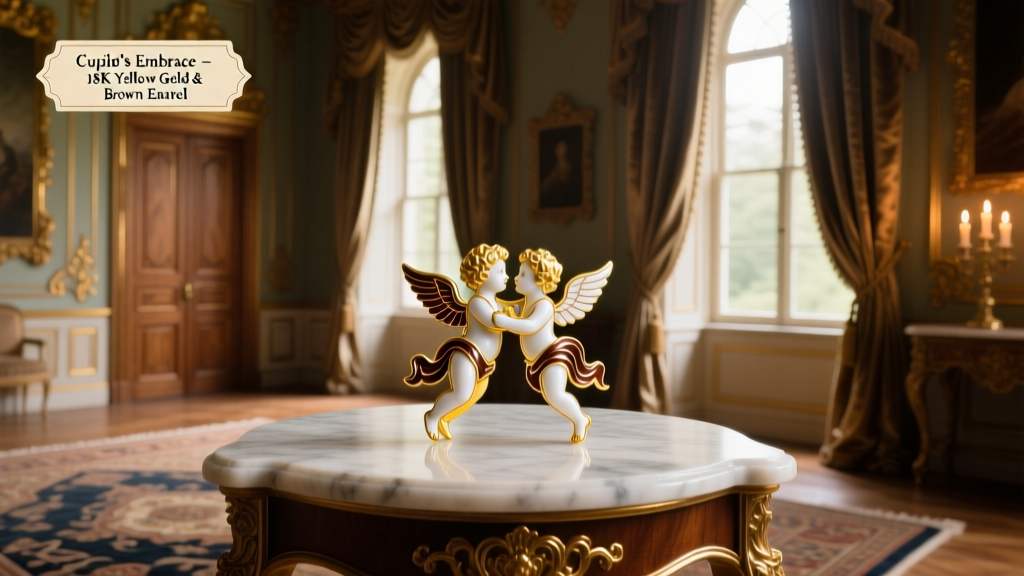
Two Cupid Figures Pin: Brown Enamel and White 18K Yellow Gold — A Late Victorian to Edwardian Masterpiece

Music Box Raggedy Andy: A Collector’s Guide to the 'On Top Close to You' Automaton Figure
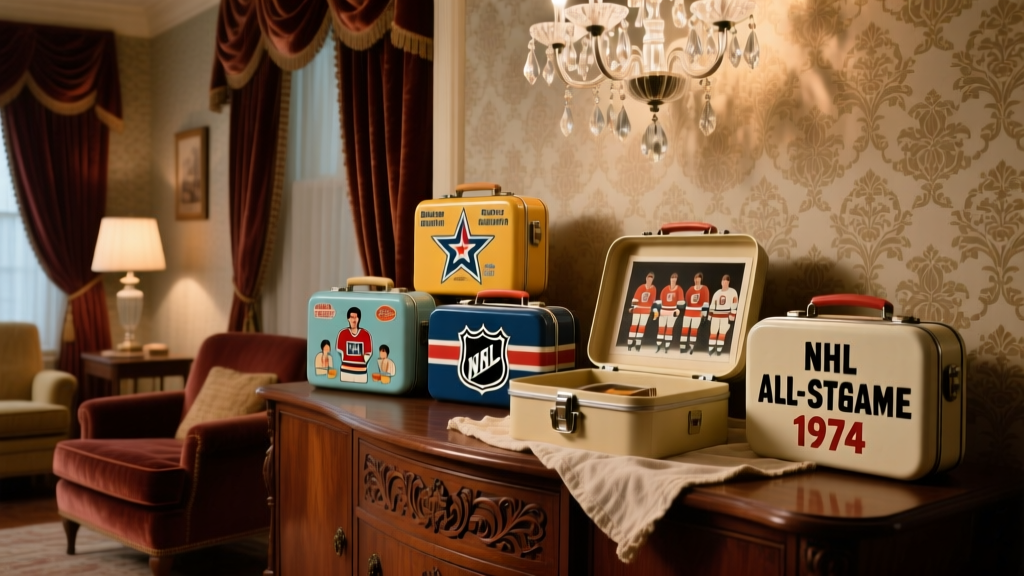
NHL Players Association Lunch Boxes of 1974: Collectibility, Design, and Historical Context

How To Get More Customers Through Local Search: A Practical Guide for Antique Furniture Specialists

The 17th-Century Russian Icon of the Dormition of the Holy Virgin: A Technical and Historical Analysis of a 10¼ × 8½-Inch Panel
The 92-Inch Tufted Back Couch with Scrolling Top and Carved Giltwood Sphinx Supports: A Study in Neoclassical Grandeur
Royal Doulton Figurine 'Songs of the Sea' HN 2729: A 1982 Maritime Masterpiece in Porcelain
The Anglo-Japonesque Table: A Study in Victorian Eclecticism, Craftsmanship, and Cross-Cultural Design
Collectible Beer Coasters Are The Newest Breweriana: A Surging Niche in Vintage Brewing Memorabilia