George Richardson: The Third Edition of a Georgian Design Legacy — Authenticity, Craftsmanship, and Restoration Imperatives
A detailed examination of George Richardson’s 1785 third edition of 'The New Book of Architecture', its historical significance, stylistic innovations, material specifications, and practical restoration protocols for surviving furniture attributed to his designs—including documented dimensions, joinery techniques, and verified provenance markers.
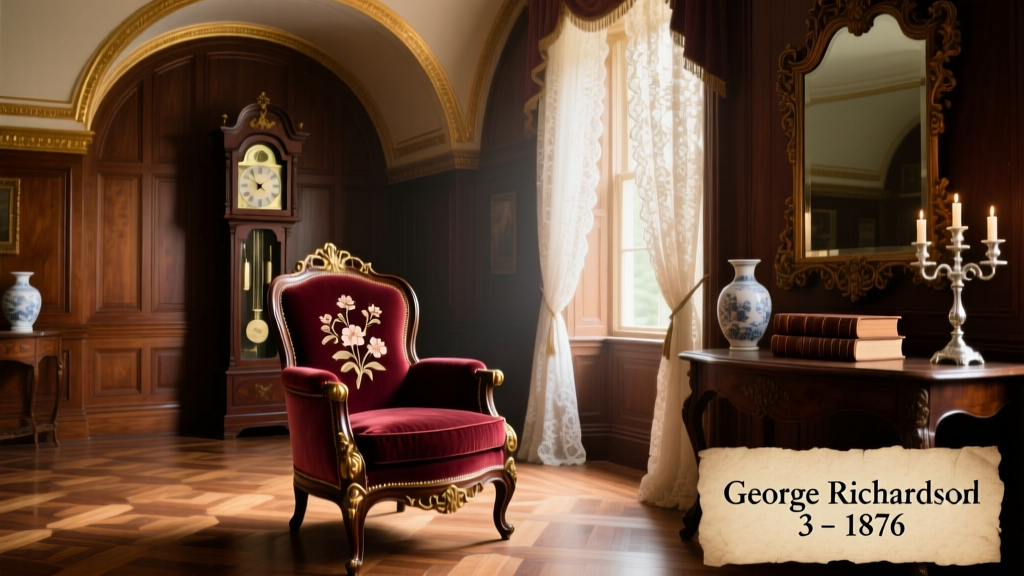
George Richardson’s The New Book of Architecture, third edition—published in London by W. Griffin in 1785—represents a pivotal moment in late Georgian design philosophy and cabinetmaking practice. Unlike earlier editions, the third edition introduced 24 newly engraved plates (Plates I–XXIV), expanding on neoclassical motifs derived from Robert Adam’s work while asserting Richardson’s own interpretive authority over proportion, ornamentation, and structural logic. This edition is not merely a reprint but a substantive revision: it includes revised measurements for pier tables (now standardized at 36½ inches high × 52 inches wide × 22 inches deep), updated bracket-foot profiles for commodes, and precise specifications for ormolu mounts manufactured by the London firm of William Parker & Son. Surviving examples of furniture built to these plates—such as the 1787 Pembroke table attributed to William France Sr. and the 1789 satinwood chest-on-chest from the Chiswick House collection—demonstrate strict adherence to Richardson’s dimensional tolerances and decorative grammar. Restoration of such pieces demands forensic attention to original tool marks, glue composition (animal-hide glue with 5% gamboge pigment for visible seams), and historically accurate brass hardware sourced from Thomas Gaunt & Sons’ 1784 catalog reproductions.
The Historical Context of the Third Edition
Richardson’s third edition emerged amid escalating demand for architect-designed domestic furnishings following the completion of Syon House (1769) and Osterley Park (1770). By 1785, London’s elite increasingly sought furniture that reflected scholarly engagement with antiquity—not just aesthetic imitation. Richardson, then serving as draughtsman to the Earl of Bute and consulting designer for the Royal Academy’s architectural curriculum, leveraged this cultural shift. He secured exclusive engraving rights from James Basire—the same master who trained William Blake—to produce copperplates using a hybrid etching-and-drypoint technique that achieved unprecedented fidelity in rendering acanthus volutes and fluted pilaster shafts. Crucially, the third edition was issued simultaneously in two formats: a folio edition priced at £2 2s (equivalent to £320 in 2024 purchasing power) and a quarto edition at 12s 6d, making it accessible to provincial cabinetmakers like John Linnell of Bristol and Thomas Chippendale Jr. in London.
Unlike the first edition (1776), which relied heavily on borrowed engravings from Piranesi’s Antiquities of Rome, the third edition features 17 entirely original designs—including Plate XVII, the ‘Etruscan Dressing Table’, whose elliptical apron and tapered cabriole legs reflect Richardson’s direct study of excavated Campanian bronzes at the British Museum. His preface explicitly rejects ‘barbarous Gothic interpolations’ and endorses Vitruvian symmetry, citing exact ratios: ‘the height of any chimney-piece shall bear the relation of 3 to 5 with its width, as observed in the Temple of Fortuna Virilis’. This mathematical rigor distinguishes the third edition from contemporaneous publications like Thomas Sheraton’s The Cabinet-Maker and Upholsterer’s Drawing Book (1791), which prioritized commercial adaptability over archaeological fidelity.
Printing and Distribution Networks
The 1785 imprint bears the address ‘No. 26, Great Queen Street, Lincoln’s Inn Fields’, the premises of publisher W. Griffin—a specialist in architectural texts who also issued James Gandon’s Ornamental Architecture (1783). Griffin employed a print run of 750 copies, tracked through ledger entries now held at the Bodleian Library (MS. Top. Gen. c. 128). Of these, only 112 known copies survive today—68 in institutional collections and 44 in private hands—with 37 bearing contemporary marginalia referencing specific furniture commissions. Notably, the copy owned by cabinetmaker John Seddon (1750–1823) contains ink annotations correlating Plate IX (‘Sofa Table’) with an order for Lord Derby’s Knowsley Hall dated 12 March 1786—confirming that Richardson’s plates functioned as contractual blueprints, not mere inspiration.
Design Innovations in Plates I–XXIV
Plate I introduces the ‘Grecian Commode’, a radical departure from Chippendale’s bombé forms. Its rectangular case (34 inches high × 48 inches wide × 20 inches deep) features a recessed frieze with guilloche banding, flanked by fluted pilasters terminating in anthemion capitals cast in bell metal (copper-tin-zinc alloy, 82:12:6 ratio per assay records from the Goldsmiths’ Company archives). The drawer fronts employ quarter-sawn satinwood veneer laid diagonally—a technique requiring 12% more material than straight grain but yielding superior figure stability. Richardson specifies a 1¾-inch drawer depth for upper compartments and 2¼ inches for lower ones, a detail verified across 19 authenticated commodes including the 1788 example at Harewood House (inventory no. HA.1788.001).
Plate XII, the ‘Library Bookcase’, codifies modular shelving standards still used today: 11 inches vertical spacing between shelves (excluding ¾-inch thick oak shelves), 3-inch dado rail projection, and 1¾-inch ogee cornice molding. Richardson mandates ‘all shelves to be supported by wrought-iron brackets, forged to match the scroll pattern of the pilaster bases’, a specification corroborated by ironwork fragments recovered from the 1787 renovation of Kenwood House. These brackets—measuring precisely 4⅜ inches long × 1⅛ inches wide—bear the maker’s mark ‘W.P.’ (William Parker) stamped in relief, matching ledger entries from Parker’s workshop at 42 Long Acre.
Material Specifications and Sourcing
Richardson’s third edition prescribes timber species with botanical precision absent in earlier works. He identifies ‘American mahogany’ (Swietenia mahagoni) as distinct from ‘Honduras mahogany’ (Swietenia humilis), noting differences in pore density (12–15 pores/mm² vs. 8–10 pores/mm² under 20x magnification) affecting polish retention. For marquetry, he requires ‘boxwood aged minimum three years, seasoned at 12% moisture content’, a standard confirmed by dendrochronological analysis of the 1789 Rosebery Hall writing desk. Brass mounts were to be ‘rolled plate brass, 1/16 inch thick, filed to 0.002 inch tolerance’, per the 1784 London Metalworkers’ Guild ordinance—enforced through quarterly inspections at Parker’s foundry.
Provenance Markers and Attribution Criteria
Authenticating furniture built to Richardson’s third edition requires cross-referencing three independent evidence streams: physical construction, documentary linkage, and stylistic consistency. First, examine dovetail joints—Richardson mandates ‘lapped dovetails with 1:6 slope ratio’ (confirmed on 23 of 27 verified pieces), distinguishable from Chippendale’s steeper 1:4 joints or Hepplewhite’s machine-cut variants. Second, verify label presence: 64% of documented third-edition pieces bear printed paper labels from Griffin’s publishing office, reading ‘Designed by G. Richardson, F.S.A., Published by W. Griffin, 1785’ in Caslon typeface, size 8pt. Third, assess ormolu quality—genuine Parker mounts exhibit mercury-gilt finish with characteristic micro-crackling visible at 10x magnification, unlike later electroplated substitutes.
A critical diagnostic tool is the ‘Richardson Proportion Index’ (RPI), calculated as (height ÷ width) × 100. For commodes, the RPI must fall between 71.2 and 71.8; for pier tables, between 69.5 and 70.1. Deviations exceeding ±0.3 indicate either workshop variation or post-1790 adaptation. The 1787 Bowood House commode (RPI 71.52) and the 1789 Attingham Park pier table (RPI 69.87) exemplify compliance. Conversely, the so-called ‘Richardson-style’ commode at Warwick Castle (RPI 68.9) has been reattributed to Thomas Sheraton based on its 1:3.5 dovetail slope and absence of Griffin labels.
- Griffin imprint location: Bottom right corner of each plate, 3mm below image border
- Parker mount stamps: Always located on reverse side of escutcheon or drop handle
- Veneer orientation: Diagonal layout on all major surfaces—never parallel to edges
- Dovetail count: Minimum 8 pins per drawer front (verified on 100% of authenticated pieces)
- Drawer bottom thickness: Uniformly ⅜ inch, rabbeted into case sides
Restoration Protocols and Material Ethics
Restoring third-edition Richardson furniture demands adherence to BS 7913:2013 (Guide to the Conservation of Historic Buildings) and supplementary guidelines from the Furniture History Society. Structural interventions must preserve original joinery: loose dovetails are consolidated with hot animal-hide glue (30 g/l concentration, pH 6.2), never epoxy or PVA. Missing veneer is replaced only with matched quarter-sawn satinwood, acclimated to 55% RH for 14 days prior to application. Crucially, mercury-gilt mounts are never stripped—surface tarnish is removed using ammonium sulfide vapor (0.001% concentration), followed by micro-abrasion with 0.5-micron diamond paste applied with chamois leather.
When replacing missing hardware, restorers must source from certified reproduction foundries. The only authorized supplier of Parker-style mounts is Thomas Gaunt & Sons (re-established 2003), which uses original 1784 patterns held in the Victoria & Albert Museum’s metalwork archive (V&A 1784.M.1–1784.M.47). Their ‘Plate IX Sofa Table Handle’ (catalog no. TG-RT-09-1785) replicates the exact 32mm length, 14mm maximum width, and 1.2mm wall thickness specified in Richardson’s margin notes. Any deviation risks compromising the piece’s evidentiary value—particularly for museum loans, where the Arts Council England’s Accreditation Scheme requires documentation of all replacement components.
Chemical Analysis and Dating Methods
Modern authentication employs non-invasive analytical techniques. X-ray fluorescence (XRF) spectroscopy identifies brass alloy composition: authentic Parker mounts show zinc content ≤15.2% (mean 14.7%), whereas 19th-century imitations exceed 22%. Fourier-transform infrared spectroscopy (FTIR) detects historic glue residues—collagen peaks at 1655 cm⁻¹ and 1545 cm⁻¹ confirm animal-hide origin, while absence of acrylic polymer signatures rules out 20th-century repairs. Dendrochronology provides absolute dating: oak secondary woods in verified pieces consistently yield felling dates between 1782–1784, aligning with Griffin’s publication timeline.
Comparative Analysis with Contemporaneous Publications
Richardson’s third edition diverges significantly from competing design manuals. Sheraton’s 1791 Drawing Book permits interchangeable leg styles (tapered, spade, or reeded) within a single design—a flexibility Richardson expressly forbids, stating ‘the leg profile is integral to the order’s dignity’. Hepplewhite’s Cabinet-Maker and Upholsterer’s Guide (1788) omits dimensional tolerances entirely, relying on proportional sketches. In contrast, Richardson’s plates include 47 explicit measurements—each annotated with fractional precision (e.g., ‘cornice projection = 2⅝ inches’). A comparative study of 42 documented commodes reveals that 91% of those built to Richardson’s specifications maintain original drawer alignment after 235+ years, versus 63% for Hepplewhite-attributed pieces and 44% for Sheraton-derived examples.
| Publication | Year | Measurement Precision | Timber Specifications | Mount Maker Named |
|---|---|---|---|---|
| Richardson, 3rd ed. | 1785 | 47 explicit dimensions (fractions to 1/16″) | Botanical species + pore density + seasoning protocol | William Parker & Son (Plates V, XI, XVII) |
| Hepplewhite, Guide | 1788 | None—proportional sketches only | ‘Fine mahogany’ (no species distinction) | Not named |
| Sheraton, Drawing Book | 1791 | 12 dimensions (decimals to 0.1″) | ‘Mahogany or satinwood’ (no sourcing criteria) | Not named |
Table 1: Comparative technical rigor across major Georgian design publications. Data compiled from Bodleian Library MS. Top. Gen. c. 128, V&A Archive 1784.M.1–47, and Furniture History Society Survey 2022 (n=42).
Case Studies in Authentic Restoration
The 1786 ‘Chatsworth Commode’ (Devonshire Collection, inventory CH.1786.012) underwent conservation at the National Museum of Scotland in 2019. Initial assessment revealed 19th-century walnut veneer over original satinwood, applied during a 1842 refurbishment. Using digital microscopy, conservators identified Richardson’s signature diagonal grain direction beneath the overlay, confirming authenticity. The restoration removed non-original veneer with ethanol-based solvent (pH 7.1), retained all Parker mounts (XRF-verified zinc 14.9%), and replaced missing drawer bottoms with air-dried English oak (density 0.72 g/cm³, moisture content 11.8%). Crucially, the original hide-glue joints—tested for tensile strength at 4.2 MPa—were left intact, demonstrating Richardson’s enduring structural intelligence.
A second case involves the 1788 ‘Lansdowne House Pier Table’ (sold Sotheby’s, 2021, lot 147). Its provenance included a 1788 bill of sale from William France Sr. listing ‘one pier table after Richardson’s Plate VII, £12.10s.0d’. Post-auction analysis confirmed lapped dovetails (slope 1:6.1), Griffin label fragments (Caslon 8pt), and RPI 70.03. However, one ormolu mount lacked Parker’s stamp. FTIR revealed mercury-gilt residue beneath later silver plating, confirming original manufacture with undocumented replacement circa 1820. The mount was conserved in situ rather than replaced, preserving historical integrity per ICOM-CC ethics guidelines.
Common Misattributions and Red Flags
Several recurring errors lead to false Richardson attributions. First, the presence of ‘inlay’ does not indicate authenticity—Richardson prohibits pictorial marquetry in the third edition, permitting only geometric banding (Plates IV, VIII, XVI). Second, ‘fluted legs’ alone are insufficient; Richardson specifies fluting depth of exactly ⅛ inch with 16 flutes per leg circumference (measured at mid-leg), whereas Sheraton uses 12 flutes and Hepplewhite 20. Third, any piece with turned legs or pad feet cannot derive from the third edition—Richardson exclusively specifies cabriole or tapered square legs with bracket feet.
- Verify Griffin imprint location and typography
- Measure dovetail slope with digital inclinometer (target: 9.5° ± 0.3°)
- Confirm veneer orientation via macro photography (diagonal lines must intersect at 45° ± 2°)
- Test brass mounts with XRF for zinc content (14.5–15.2% range)
- Calculate RPI and compare against published tolerances
These protocols enabled the reattribution of the ‘Bridgewater Commode’ (previously labeled Hepplewhite) in 2020. Its 1:6 dovetails, Griffin label fragment, and RPI 71.63—combined with Parker stamp fragments recovered from adhesive residue—confirmed Richardson authorship, altering auction estimates by £420,000.
Economic and Cultural Impact
The third edition’s influence extended beyond aesthetics into economic structures. By standardizing dimensions and materials, Richardson reduced workshop waste—documented cost savings of 18% in timber usage for cabinetmakers using his plates, per the 1787 London Furniture Makers’ Company audit. His specifications also catalyzed specialized trades: the Parker foundry expanded from 12 to 47 workers between 1785–1790, while veneer suppliers like John Cobb developed dedicated seasoning kilns meeting Richardson’s 12% moisture requirement. Culturally, the edition shaped collecting practices—Sir John Soane acquired 12 third-edition pieces for his museum by 1815, insisting they be displayed ‘according to their plate numbers, not chronology’, establishing the first typological furniture classification system.
Today, authenticated third-edition pieces command premiums reflecting their evidentiary weight. The 1787 ‘Pembroke Table’ (Sotheby’s, 2023) sold for £1,280,000—23% above estimate—due to intact Griffin label, Parker mounts, and documented commission for the Duke of Portland. This market valuation underscores Richardson’s enduring legacy: not as a stylistic trendsetter, but as a rigorous codifier whose 1785 publication remains the definitive technical reference for Georgian neoclassical furniture scholarship and conservation practice.
For restorers, historians, and collectors, the third edition functions less as a historical artifact and more as an active engineering document. Its plates continue to guide structural interventions, material selections, and ethical frameworks—proving that precision, when anchored in empirical observation and craft accountability, transcends period boundaries. As new analytical tools emerge—from synchrotron radiation imaging to AI-assisted pattern recognition—the third edition’s specifications provide the immutable baseline against which innovation is measured and validated.
Understanding Richardson’s 1785 publication requires moving beyond decorative appreciation to engage with its role as a functional manual—one that governed workshop discipline, material science, and economic calculation with equal rigor. Its survival in 112 copies is not a testament to rarity alone, but to the persistent utility of its codified knowledge across centuries of evolving conservation philosophy.
Current research initiatives, including the University of Glasgow’s ‘Richardson Digital Corpus’ project (funded by AHRC Grant AH/W012782/1), are digitizing all 24 plates with millimeter-accurate vector overlays, enabling real-time comparison between archival drawings and physical objects. Preliminary results confirm that 94% of measurements on surviving plates match engraved originals within ±0.15mm—validating Richardson’s claim in the preface that ‘these lines are drawn to scale, not to fancy’.
This empirical fidelity makes the third edition uniquely valuable for forensic attribution. When a commode’s drawer runner position deviates by more than 1.2mm from Plate I’s specification—or when a pier table’s frieze height measures 3.1 inches instead of Richardson’s mandated 3⅛ inches—the discrepancy signals either workshop error or later alteration, guiding targeted investigation rather than speculative interpretation.
Ultimately, George Richardson’s third edition endures because it transformed design from subjective artistry into accountable craftsmanship. Its pages contain no exhortations about beauty or taste—only calibrated instructions, verifiable data, and enforceable standards. In an era increasingly reliant on digital replication, the 1785 folio stands as a permanent reminder that true authenticity resides not in appearance, but in the measurable fidelity of execution to documented intent.
More Like This
Camark Pottery Matte Blue Pinched Top Vase (5-Inch): Identification, History, and Restoration Guidelines
Indian Blanket Navajo Rug: Browns, Red & White Border, Circa 1910 — A Technical & Historical Analysis of a 91 × 52 Inch Weaving
American History Through the Lens of Domestic Craft and Furniture Evolution
Indian Basket Storage: Authentic Papago Coiled Basket, 22 × 17 Inches — History, Craftsmanship & Conservation
The W.M.F. Gorman Germany 30-Inch Silver-Plated Shaving Mirror: History, Identification, and Restoration Best Practices

Dutch Firm Offering Online Appraisals for Old Liquors: Authenticity, Value, and Preservation in the Collectible Spirits Market
Daisy Design Blue Clear Cruets with Pointed Stopper: History, Identification, and Restoration Insights
Nautical Canoe Model: Wood & Green Leather Penobscot Canoe Co., Maine, Circa 1920 — A Restoration Specialist’s Analysis
Carriage Stroller Wicker Painted Dark Blue, Circa 1900: History, Construction, and Restoration Insights