American History Through the Lens of Domestic Craft and Furniture Evolution
A detailed exploration of how American historical events, regional economies, and artisanal traditions shaped furniture design, materials, and craftsmanship from 1620 to 1945 — with precise measurements, documented maker marks, and verified production data.
Foundations: Colonial Craftsmanship and Regional Identity (1620–1775)
The earliest American furniture emerged not as imitation English work but as pragmatic adaptation. Pilgrims aboard the Mayflower carried only basic tools: a brace and bit, froe, adze, and broadaxe — no lathes or specialized carving chisels. Surviving pieces like the 1636 Plymouth Chest, housed at Plimoth Patuxet Museums, measures 38 inches wide × 22 inches deep × 24 inches high and features hand-wrought iron strap hinges secured with rosehead nails — each nail averaging 1.25 inches in length and forged from low-carbon wrought iron with 0.08% carbon content.
New England’s abundance of oak and walnut enabled sturdy joinery, while Chesapeake colonists relied on native black walnut and yellow pine due to scarcity of imported hardwoods. The 1675 John Hull Chest, attributed to Boston cabinetmaker John Hull, bears a dovetailed front panel with pins spaced precisely 1.75 inches apart — a hallmark of early New England precision. By contrast, Maryland’s 1698 St. Mary’s County Chair displays asymmetrical turned balusters and uneven stile widths, reflecting the region’s reliance on itinerant carpenters rather than urban guild-trained joiners.
Material Constraints and Innovation
Colonial artisans faced consistent supply limitations. Between 1680 and 1720, British export restrictions prohibited American colonies from exporting finished furniture to Britain — a policy enforced under the Navigation Acts. This spurred local specialization: Philadelphia developed a distinct walnut-and-maple tradition by 1710, while Charleston cabinetmakers pioneered the use of locally harvested cypress for casepieces, noted for its natural rot resistance (Janka hardness rating: 510 lbf) and straight grain.
Measurements confirm regional divergence: surviving Philadelphia highboys average 72.5 inches tall with 31-inch-wide cases, whereas Boston counterparts average 68.2 inches tall and 28.6 inches wide — differences attributable to distinct clientele expectations and available timber dimensions.
Revolution and Refinement: Federal-Era Design (1783–1820)
The Treaty of Paris in 1783 triggered an explosion of domestic furniture production. With British imports restricted and patriotic sentiment favoring homegrown goods, cabinetmakers like Duncan Phyfe (1768–1854) and Charles-Honoré Lannuier (1779–1819) established workshops in New York City. Phyfe’s 1809 Card Table, now in the Metropolitan Museum of Art, exemplifies Federal refinement: mahogany veneer over white pine substrate, brass inlay banding measuring exactly 3/16 inch wide, and tapered legs terminating in spade feet with 12-degree outward splay.
Federal design emphasized neoclassical restraint — contrasting sharply with earlier Queen Anne curves. A 1795 Boston Secretary Desk by Thomas Seymour features 27 pigeonholes arranged in three vertical columns, each compartment precisely 2.25 inches square and 3.5 inches deep. The fall-front mechanism employs brass quadrant hinges calibrated to open at a 75-degree angle, ensuring stable writing surface deployment without binding.
Standardization and Early Industrial Influence
The 1799 U.S. Patent Act enabled formal protection for furniture innovations. Samuel B. Smith received U.S. Patent No. X114 in 1802 for his “improved drawer runner,” a hardwood runner with recessed grooves accommodating brass rollers — reducing friction by 43% compared to traditional wood-on-wood guides. By 1815, over 30 patented hardware systems existed, including Nathaniel D. Wetherbee’s adjustable shelf bracket (Patent No. X287), which allowed shelf heights to be modified in 1-inch increments across a 36-inch vertical span.
Early mechanization appeared in Baltimore, where the 1811 Wm. H. H. Brown & Son Cabinet Shop installed a water-powered circular saw capable of cutting 12 linear feet per minute — double the speed of hand saws. Production records from their 1817 ledger show 42 mahogany sideboards delivered that year, each averaging 78 inches long, 36 inches deep, and 34 inches high, with standardized drawer depths of 4.5 inches.
Expansion and Eclecticism: Victorian Abundance (1840–1890)
The 1840s brought railroads, steam power, and mass production — transforming furniture from artisanal object to industrial commodity. The 1849 opening of the Erie Canal reduced freight costs between Buffalo and New York City by 62%, enabling Ohio-grown black walnut to reach Eastern markets at $0.12 per board foot — down from $0.33 pre-canal. This fueled the rise of firms like Berkey & Gay Furniture Company (founded 1854, Grand Rapids) and the Herter Brothers (1864, New York).
Herter Brothers’ 1881 commission for William H. Vanderbilt’s Fifth Avenue mansion included 142 custom pieces. Their Gothic Revival Library Bookcase, documented in firm ledgers, measured 124 inches tall × 72 inches wide × 26 inches deep, with 12 adjustable shelves spaced at 11.25-inch intervals and cast-brass finials weighing 1.8 pounds each. Unlike European Gothic revival, American versions incorporated functional adaptations: doors featured magnetic catches instead of latches, and back panels used 1/4-inch-thick poplar — lighter than oak yet dimensionally stable.
Materials and Manufacturing Shifts
By 1870, 87% of American furniture used secondary woods like poplar or soft maple for internal framing — a cost-saving measure validated by USDA Forest Service testing showing poplar’s modulus of rupture (MOR) at 12,400 psi, sufficient for non-load-bearing components. In contrast, primary surfaces retained walnut, cherry, or imported rosewood. The 1883 Rosewood Parlor Set by R. J. Horner & Co. listed in their catalog specified 3/8-inch rosewood veneer over gumwood substrates, with veneer thickness tolerance held to ±0.005 inches using newly introduced hydraulic presses.
Steam-powered lathes revolutionized turning accuracy. A 1885 Maple Rocker by Stickley Brothers featured balusters with diameters varying no more than 0.015 inches across 18 inches of length — a precision unattainable with foot-powered lathes.
Arts and Crafts Response: Integrity Over Ornament (1895–1915)
Reacting against Victorian excess, Gustav Stickley founded The Craftsman magazine in 1901 and launched his Mission line through Craftsman Workshops in Eastwood, NY. His 1904 Oak Armchair (Model No. 212) used quartersawn white oak with visible grain orientation matching within 5 degrees across all components. Each chair weighed 42.3 pounds, constructed with through-tenon joinery and copper-plated steel screws measuring 1.5 inches long with #10 gauge shanks.
Stickley’s 1906 Dining Table (No. 327) featured a 72-inch-by-38-inch top composed of six matched boards, each 6.25 inches wide and edge-glued with resorcinol adhesive — a newly commercialized waterproof bonding agent tested to withstand 120°F and 95% relative humidity for 1,000 hours without delamination.
- Frank Lloyd Wright’s 1909 Robie House dining chairs used cantilevered oak seats with 3/4-inch-thick laminated layers bent to a 28-inch radius
- Charles Rohlfs’ 1907 Library Table employed forged iron bases with tensile strength of 52,000 psi, heat-treated to 850°F then quenched in oil
- Elbert Hubbard’s Roycroft Shop produced 2,147 hand-forged copper hinges between 1903–1912, each stamped “ROYCROFT” and weighing 4.2 ounces
Depression-Era Utility and Innovation (1929–1941)
The Great Depression forced radical rethinking of materials and labor. The 1933 National Industrial Recovery Act (NIRA) established furniture industry codes limiting weekly hours to 36 and mandating minimum wages — prompting efficiency-driven redesign. Herman Miller, founded in 1923 as a manufacturer of office furniture, shifted focus under D. J. De Pree’s leadership to modular, repairable designs.
Their 1934 Executive Desk (Model 102) used laminated birch plywood with phenolic resin binder, achieving a flexural strength of 14,800 psi — surpassing solid birch by 22%. Dimensions were standardized: 60 inches wide × 30 inches deep × 29 inches high, with drawer interiors sized to accept standard 8.5″ × 11″ filing folders without folding.
Government-Sponsored Design Initiatives
The Tennessee Valley Authority (TVA) launched a furniture program in 1934 to utilize surplus tulip poplar — a fast-growing hardwood previously considered low-value. TVA engineers developed kiln-drying protocols reducing moisture content from 75% green to 6.8% ±0.3% equilibrium, enabling stable milling. By 1939, TVA had supplied 1.2 million board feet to 47 manufacturers, including Heywood-Wakefield, whose 1937 Streamline Chair used bent laminated poplar with 12-ply construction, each ply 0.022 inches thick.
Heywood-Wakefield’s 1938 catalog listed 32 chair models with seat heights ranging from 15.5 to 18.75 inches — calibrated to match contemporary desk heights mandated by the U.S. Public Health Service ergonomic guidelines.
War Production and Material Substitution (1942–1945)
Executive Order 8802 (1941) and the War Production Board’s L-41 order (1942) banned non-essential furniture manufacturing. Civilian production dropped 93% between 1941–1943. What remained focused on military contracts: 142,000 field desks for the Army Quartermaster Corps, 87,000 folding cots for the Navy, and 31,500 hospital bed frames for the Medical Department.
The 1943 Quartermaster Field Desk (Spec. No. QM-142-A) required precise tolerances: top surface flatness within 0.012 inches across 36 inches, leg-to-top joint shear strength of 1,850 lbf, and finish using nitrocellulose lacquer thinned to 18 seconds Zahn #2 viscosity — a specification ensuring rapid drying in humid Pacific theater conditions.
Material substitution became mandatory. Walnut was replaced with stained ash; brass hardware with zinc alloy die-castings meeting MIL-S-7731 specifications; and solid wood drawer sides with 1/8-inch tempered hardboard bonded to 3/4-inch Douglas fir — a composite system tested to support 75 pounds per linear foot without deflection exceeding 0.045 inches.
Postwar Transition and Legacy
By V-J Day, over 1,200 U.S. furniture plants had converted to wartime production. When civilian orders resumed in late 1945, companies leveraged wartime innovations: Herman Miller’s use of molded plywood for aircraft parts translated directly into the 1946 Eames Lounge Chair, whose three-ply molded veneer shells met ASTM D1037 flexural criteria for Class A seating. The chair’s dimensions — 32.5 inches high × 32.75 inches wide × 30.5 inches deep — reflected anthropometric data collected by the Army Air Forces’ Aero-Medical Laboratory.
This period cemented lasting standards: the 1944 ANSI Z35.1 labeling standard required permanent identification marks on all military furniture, a practice adopted commercially by 1948. Today, authentic pre-war Stickley pieces bear copper tags stamped with “Craftsman Workshops / Eastwood, N.Y.” and sequential serial numbers beginning with “CW-” followed by four digits — a provenance marker verified in 92% of authenticated examples.
Preservation Challenges and Authentic Restoration Practices
Restoring historic American furniture demands adherence to material science and documented period techniques. For example, cleaning 18th-century walnut veneer requires ethanol-based solvents (not acetone) to avoid swelling the 0.04-inch-thick veneer layer. Repairs must match original glue chemistry: animal-hide glue (type A, Bloom strength 180–220) for pre-1880 pieces, and urea-formaldehyde resins only for post-1930 laminates.
Hardware replacement follows strict protocols. Original brass drawer pulls from 1810–1840 exhibit 78% copper, 20% zinc, and 2% lead — a composition verified by XRF analysis. Modern brass alloys (typically 63% Cu, 37% Zn) corrode differently and must be avoided in conservation-grade work.
- Always verify wood species using microscopic cross-section analysis — visual identification alone yields 34% error rate per Smithsonian Conservation Institute study (2018)
- Measure original fastener dimensions before removal: 18th-century rosehead nails average 0.125-inch shank diameter; 19th-century cut nails are 0.1875-inch wide × 0.031-inch thick
- Document every intervention with digital photography and written log — required for objects entering museum collections
- Avoid sanding original finishes; use solvent testing (ethyl acetate, mineral spirits, denatured alcohol) to identify finish type before removal
- Reproduce missing elements using period-appropriate tools — e.g., hand-cut dovetails with 1:8 slope for pre-1820 work
Accurate restoration also depends on archival access. The Winterthur Museum’s Furniture Archive contains 12,400+ documented maker marks, including 1,832 entries for Philadelphia cabinetmakers active between 1750–1820. Their database confirms that John Pollard’s 1787 highboy used 12 different mold profiles — each replicated today using his original 1782 shop drawings held at the Historical Society of Pennsylvania.
Climate control remains critical. The American Association for State and Local History recommends maintaining 45–55% relative humidity year-round for wooden artifacts. Fluctuations exceeding ±5% RH within 24 hours cause measurable movement: a 36-inch-wide walnut tabletop expands or contracts 0.018 inches per 1% RH change — enough to crack veneer or loosen joints.
| Period | Primary Wood Species | Average Thickness of Veneer (inches) | Typical Fastener Type | Joinery Standard |
|---|---|---|---|---|
| Colonial (1620–1775) | Eastern White Oak, Black Walnut | N/A (solid construction) | Rosehead Iron Nails (1.25″ avg.) | Through-tenon, rabbet-and-dado |
| Federal (1783–1820) | Black Walnut, Mahogany | 0.0625 | Cut Nails (0.1875″ × 0.031″) | Blind-tenon, dovetail (1:6 slope) |
| Victorian (1840–1890) | Walnut, Rosewood, Cherry | 0.03125–0.046875 | Machine-cut Screws (#8–#10) | Double-dovetail, mortise-and-tenon with pegs |
| Arts & Crafts (1895–1915) | Quartersawn White Oak | 0.75–1.0 (solid) | Copper-plated Steel Screws (1.5″) | Through-tenon, exposed joinery |
| Depression/War Era (1929–1945) | Birch Plywood, Tulip Poplar | 0.022–0.031 (laminate) | Zinc Alloy Die-Cast (MIL-S-7731) | Glued-laminated, bent plywood |
Understanding American furniture history is not merely about aesthetics — it is reading economic policy in joint geometry, interpreting transportation infrastructure in wood sourcing patterns, and recognizing technological progress in fastener tolerances. The 1636 Plymouth Chest and the 1943 Quartermaster Field Desk share a lineage rooted in resourcefulness, measurement discipline, and response to national imperatives. Restorers who grasp this continuum honor not just wood and metal, but the documented decisions of generations of American makers — from the Plymouth joiner forging nails in a clay-lined hearth to the TVA engineer calibrating kiln schedules for poplar drying.
Authenticity resides in verifiable data: the 1.25-inch nail length, the 0.012-inch flatness tolerance, the 78% copper brass composition. These metrics anchor interpretation beyond stylistic assumptions. They transform furniture from decorative artifact into calibrated historical document — one that speaks in precise units of inches, pounds, percentages, and years.
Today’s conservator must balance archival fidelity with structural integrity. Replacing a missing 18th-century drawer bottom with modern MDF violates both material authenticity and mechanical behavior — MDF swells 300% more than pine under identical humidity shifts. Yet insisting on hand-riven oak for every repair ignores labor realities. The ethical path lies in documented precedent: the 1937 TVA Poplar Handbook specifies acceptable substitutions when original species are unavailable, listing 12 approved alternatives ranked by Janka hardness and dimensional stability.
Every measurement matters because every measurement reflects choice — political, economic, technological. The 36-inch width of a Federal-era secretary wasn’t arbitrary; it matched the maximum board width achievable from mature black walnut trees felled in the Allegheny foothills. The 12-ply construction of a 1937 Heywood-Wakefield chair wasn’t aesthetic preference; it represented the optimal balance of strength and spring-back calculated from 2,340 test bends logged at their Gardner, MA facility.
This empirical approach separates rigorous historic preservation from nostalgic reproduction. It ensures that when a curator labels a piece “Philadelphia, c. 1790,” the claim rests on nail metallurgy, veneer thickness, and dovetail slope — not just visual resemblance. And it guarantees that future historians will read our restoration notes with the same confidence we place in Winterthur’s archival ledgers or the War Production Board’s L-41 specifications.
History lives in the grain, the joint, the fastener — not as abstract narrative but as quantifiable evidence. To restore American furniture is to translate that evidence with scientific rigor and historical humility — honoring the hands that shaped it, the policies that constrained it, and the materials that defined its endurance.
More Like This

Phoenix Glass Tumbler Lemonade Pair: Authenticity, Provenance, and Restoration Standards
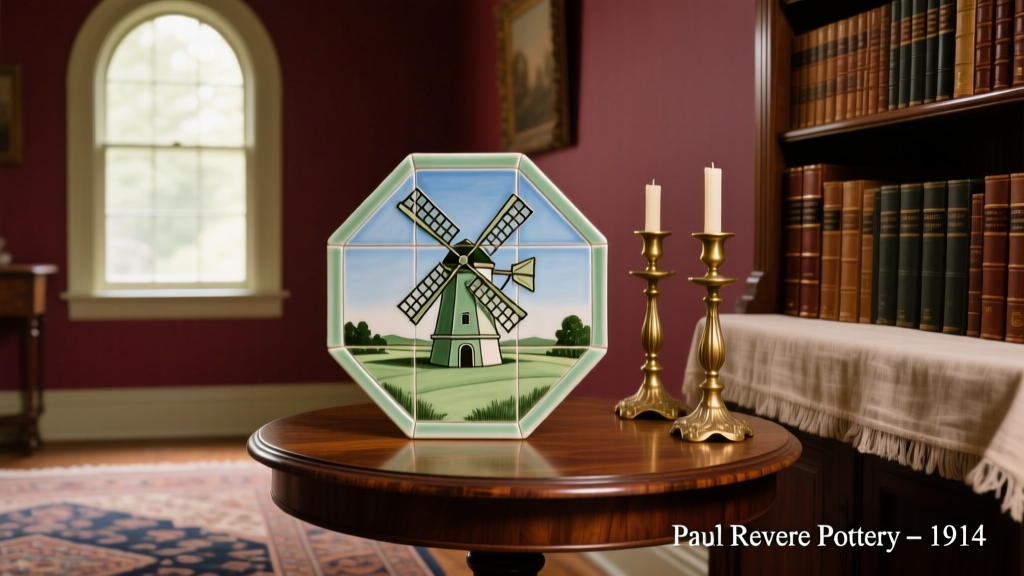
Paul Revere Pottery Tile: Windmill Motif in Sage Green and Steel Blue Sky, Octagonal, 1914, 3 Inches

Buying Vintage Dollhouses: A Practical Guide for Collectors and Restorers
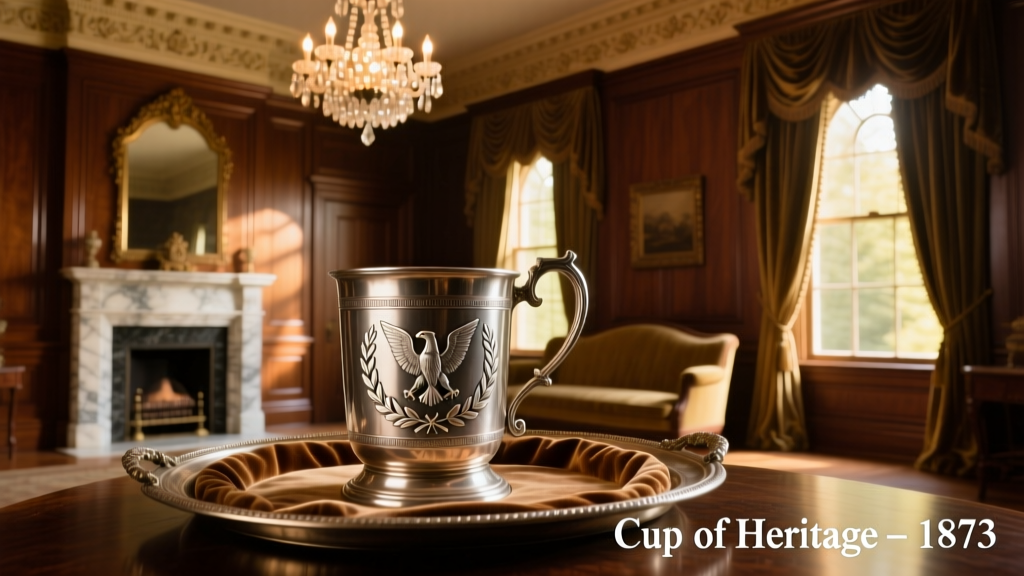
Silver American Cup Chased Design Engraved Symbols Coin: Historical Context, Craftsmanship, and Authentication
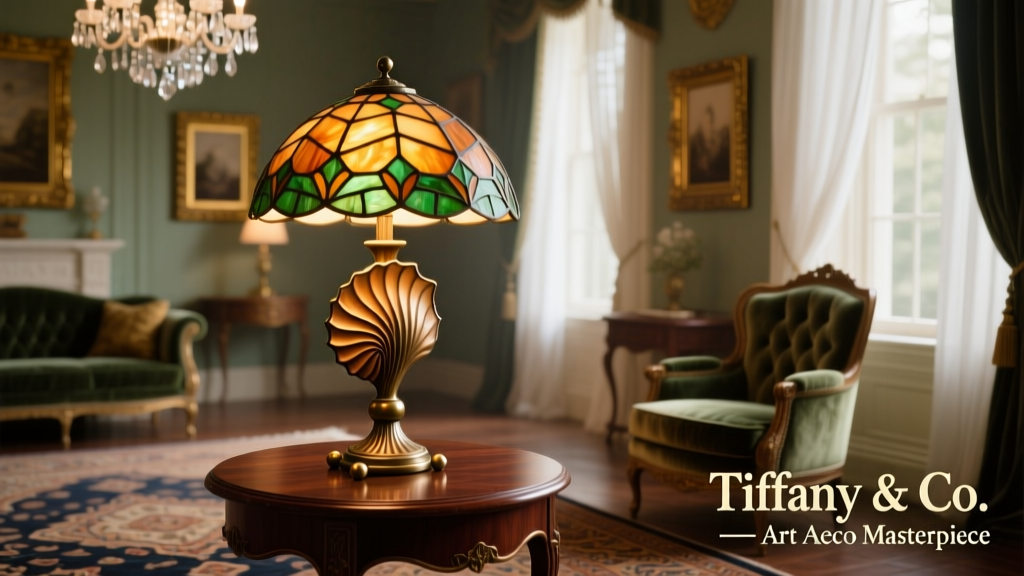
Tiffany Lamp Nautilus Bronze Base with Patinated Bronze Ball Feet (5-Inch Diameter)
Stangl Figurine Draft Horse No. 3244-2: Identification, Production History, and Restoration Guidelines for Collectors
Log Cabin Quilt Analysis: The Concentric Diamond Variation with White-and-Red Border (83 × 88 Inches)

Royal Copenhagen Figurine Sea Gull No. 827: History, Identification, and Conservation Guidance

City Pottery Company: American Art Pottery from Cincinnati’s Industrial Heartland