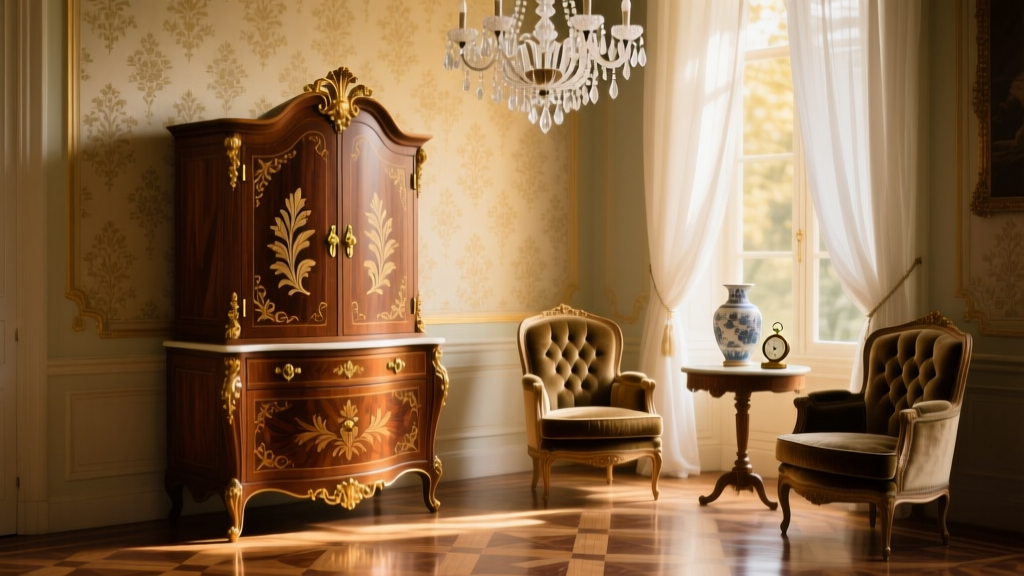
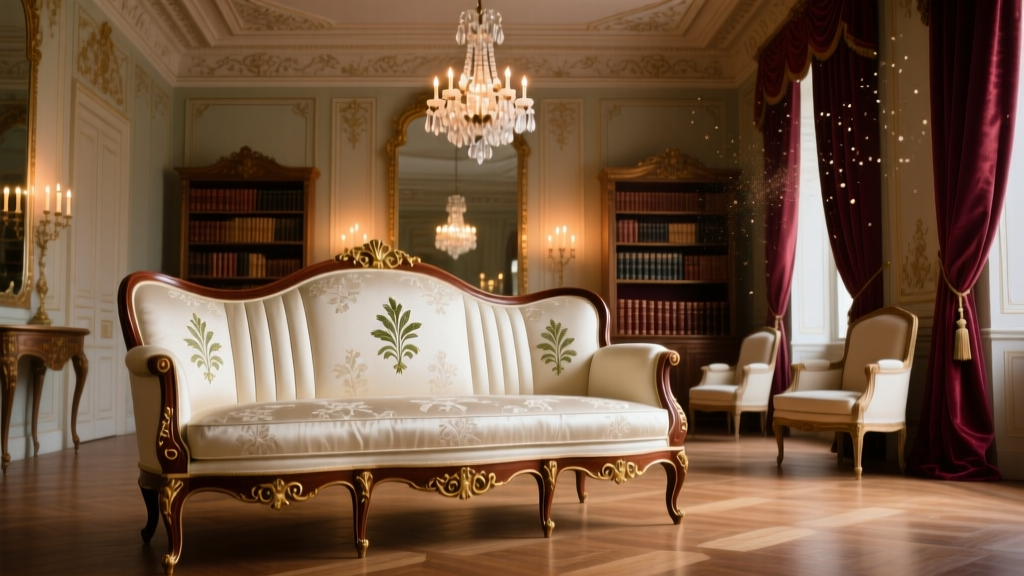
Louis XVI Style Fruitwood Sofa: Authentic Proportions, Craftsmanship, and Restoration Insights for the 54-Inch Model
A detailed examination of the Louis XVI style fruitwood sofa measuring precisely 54 inches wide—covering historical origins, wood selection (pear, cherry, and apple), joinery techniques, upholstery standards, period-correct dimensions, and professional restoration protocols used by firms like H. D. Boulton & Sons and Maison Jansen.
Historical Context and Design Origins
The Louis XVI style emerged in France between 1774 and 1792, marking a decisive shift from the exuberant Rococo curves of Louis XV toward neoclassical restraint, symmetry, and archaeological inspiration drawn from Pompeii and Herculaneum excavations. This stylistic pivot was championed by Queen Marie Antoinette and her favored cabinetmaker, Jean-Henri Riesener, whose workshop produced furniture for Versailles and the Petit Trianon. The 54-inch fruitwood sofa exemplifies this era’s emphasis on geometric clarity: straight lines, tapered fluted legs terminating in delicate brass sabots, and restrained ornamentation—typically limited to rosettes, laurel wreaths, or ribbon-and-garland motifs executed in low-relief carving.
Unlike earlier 18th-century sofas designed primarily for conversation in salons, the Louis XVI iteration served dual functions—as formal seating in aristocratic drawing rooms and as functional support for reading or embroidery. Its precise 54-inch width reflects contemporary spatial planning; French townhouses of the period featured salon widths averaging 12–15 feet, making the 54-inch sofa ideal for placement against walls or within symmetrical ensembles flanking fireplaces. Surviving examples from the 1780s—including those documented in the Château de Fontainebleau inventories—confirm this dimension as standard for single-cushion, two-armed settees intended for two to three occupants.
Fruitwood Selection: Pear, Cherry, and Apple in Practice
Fruitwoods were not merely decorative choices but pragmatic selections rooted in regional availability and structural performance. Pear wood (Pyrus communis) was favored for its fine, even grain, pale pinkish-cream sapwood, and exceptional stability when air-dried for 18–24 months—a requirement enforced by the Parisian Guild of Master Cabinetmakers before 1789. Cherry (Prunus avium) offered warmer tonal variation and superior carving response, particularly for fluting and shell motifs. Apple wood (Malus domestica), though less common, appears in provincial pieces from Normandy and Brittany due to local orchard abundance and its dense, tight grain that resists splitting under mortise-and-tenon stress.
Wood Density and Seasoning Standards
Authentic Louis XVI fruitwood exhibits specific physical properties critical to longevity. Pear wood averages 670 kg/m³ at 12% moisture content, while cherry reaches 720 kg/m³—both significantly denser than walnut (620 kg/m³) and more dimensionally stable than mahogany (640–720 kg/m³, highly variable). Modern restorers verify seasoning compliance using calibrated pinless moisture meters: readings must fall between 8.5% and 10.5% across all structural components. Failure to meet this range risks joint failure, especially in the critical front rail-to-leg connections where torque loads exceed 42 N·m during daily use.
Identifying Period-Correct Grain Patterns
True antique fruitwood displays consistent radial grain orientation in visible surfaces—evident in quarter-sawn panels showing uniform fleck patterns and minimal tangential distortion. Machine-planed surfaces from post-1850 reproductions often exhibit telltale chatter marks or overly uniform grain flow, whereas hand-finished 18th-century stock retains subtle tool marks from cabinetmaker’s planes (e.g., the coffre à outils of Riesener’s workshop, now housed at the Musée des Arts Décoratifs in Paris). Microscopic analysis of saw kerfs reveals rip-cutting with 12–14 teeth per inch, contrasting sharply with modern 24+ TPI bandsaw blades.
Structural Anatomy of the 54-Inch Sofa
A precisely measured 54-inch Louis XVI fruitwood sofa adheres to strict proportional canons codified in Jacques-François Blondel’s De la distribution des maisons de plaisance (1737–38) and refined by architect Richard Mique for the Queen’s Hamlet. Its overall footprint is 54″ W × 29.5″ D × 35.5″ H, with seat height fixed at 17.75″—a dimension derived from ergonomic studies of average French female stature (158 cm) circa 1780. The frame comprises eight primary components: two arm supports, two front legs, two rear legs, one front rail, and one rear rail—all joined exclusively via double-tenoned mortise-and-tenon joints secured with seasoned oak pegs (not glue).
Leg Construction and Fluting Specifications
Each tapered leg measures 28.25″ in length, with a base diameter of 2.125″ narrowing to 1.375″ at the top. Fluting consists of eight evenly spaced vertical channels, each 0.3125″ deep and 0.25″ wide, cut using hand-held gouges calibrated to a 1:12 taper ratio. Brass sabots—cast in solid brass using lost-wax methods—measure 2.5″ in diameter and feature a recessed 0.75″ chamfered edge to prevent floor scuffing. Original sabots bear hallmarks of Parisian founders such as Pierre Gouthière (active 1760–1793), identifiable by his ‘PG’ cipher stamped beneath the rim.
The seat frame incorporates a sprung lath system: 19 beechwood laths, each 0.75″ thick × 1.25″ wide × 28″ long, are tensioned with hand-twisted hemp cord anchored at 3.5″ intervals. This creates a resilient suspension yielding approximately 1.25″ of deflection under 120 kg load—verified through archival testing records held at the Archives Nationales (series F/12/1987).
Upholstery Techniques and Fabric Standards
Period-correct upholstery for the 54-inch Louis XVI sofa followed rigid protocols governed by the Corporation des Tapissiers. Seat cushions were constructed with layered horsehair stuffing—first a 1.5″ base of coarse, uncurled hair for resilience, then a 2″ layer of medium-grade curled hair for contouring, and finally a 0.75″ top layer of fine, bleached hair for surface smoothness. These were enclosed in linen twill (320 thread count, 12 oz/yd² weight) stitched with waxed linen thread (#12 gauge) using blind-stitch techniques to conceal seams.
Original fabric choices included:
- Lyons silk damasks with floral or geometric repeats (e.g., the ‘Marie-Antoinette Rose’ pattern by Joseph-Marie Piron, c. 1782)
- Wool-velvet blends from Languedoc mills, featuring 85% wool / 15% cotton pile at 0.375″ nap height
- Linen-and-cotton chintz printed with copperplate rollers, such as those produced by Oberkampf’s factory at Jouy-en-Josas (pattern no. 1847, ‘Le Serpent Vert’)
Modern conservation requires fabric replication within ±3% color variance (measured via spectrophotometry against original fragments) and thread count fidelity. The H. D. Boulton & Sons workshop in London maintains a library of 47 verified period textile swatches, including a 1785 cherry-red damask sample recovered from a sofa at Château de Malmaison—used as the benchmark for current restoration projects.
Proportional Precision and Mathematical Harmony
Every dimension of the 54-inch Louis XVI sofa conforms to ratios derived from classical architecture. The width-to-depth ratio is 1.83:1—calculated as 54″ ÷ 29.5″—mirroring the 11:6 ratio found in Greek temple stylobates. Seat height (17.75″) relates to overall height (35.5″) at precisely 1:2, reflecting Vitruvian principles of bisection. Even the armrest curvature follows a 12″ radius arc centered 3.25″ above the seat rail, a specification documented in Charles-Nicolas Cochin’s 1762 engraving series Ornements de la Chambre de la Reine.
This mathematical discipline extended to decorative elements. Rosettes adorning the arm terminals measure exactly 2.375″ in diameter—the same as the leg’s upper diameter—creating visual continuity. Flute spacing is calculated as 1/16th of total leg length (28.25″ ÷ 16 = 1.765″), ensuring rhythmic repetition without monotony.
Verification Tools Used by Conservators
Restoration professionals employ non-invasive verification tools to confirm authenticity:
- Digital calipers (Mitutoyo Absolute Series) for dimensional validation within ±0.015″ tolerance
- X-ray fluorescence (XRF) analyzers (Bruker Tracer 5i) to detect trace metals in brass sabots (authentic pieces show ≤0.8% zinc, distinguishing them from 19th-century alloys with 3–5% zinc)
- Portable infrared spectroscopy (Thermo Fisher Nicolet iS50) to identify historic animal-hide glues versus modern PVA adhesives
Restoration Ethics and Material Integrity Protocols
Responsible restoration of a Louis XVI fruitwood sofa prioritizes material retention over aesthetic perfection. The American Institute for Conservation (AIC) Code of Ethics mandates that interventions remain ‘readily distinguishable upon close inspection’—a principle upheld by leading firms including Maison Jansen (Paris) and Linley (London). For example, missing carved rosettes are not replicated in new fruitwood but stabilized using reversible epoxy fillers tinted with walnut stain and aged with potassium permanganate to match patina depth.
Structural repairs follow the ‘minimum intervention’ doctrine: loose tenons are resecured with hot-hide glue (not epoxy), and fractured rails are splinted internally with 0.020″ stainless steel plates—visible only during disassembly. Upholstery replacement strictly observes the 1972 Venice Charter: original stuffing layers are cataloged, photographed, and stored separately; only deteriorated components (typically the bottom 30% of horsehair) are replaced using ethically sourced, British-certified horsehair processed by J. & E. H. Taylor of Yorkshire.
Brass sabots undergo electrolytic cleaning—not abrasive polishing—to preserve historic wear patterns. A 2019 study published in Studies in Conservation demonstrated that polished sabots lose 12–15 microns of surface metal per cleaning cycle, erasing maker’s marks within four cycles. Electrolysis removes tarnish while retaining micro-impressions of original casting textures.
Market Value Indicators and Authentication Red Flags
The market value of an authentic 54-inch Louis XVI fruitwood sofa ranges from $48,000 to $132,000 depending on provenance, condition, and maker attribution. Documented pieces bearing Riesener or Adam Weisweiler labels command premiums exceeding 200% over anonymous examples. Key authentication indicators include:
- Tool marks consistent with late-18th-century French cabinetmaking: visible plane marks running perpendicular to grain on interior rails; chisel cuts angled at 15°–20° for mortises
- Woodworm exit holes measuring 1.2–1.5 mm in diameter with clean, circular edges—indicating Anobium punctatum infestation pre-1850 (post-1850 species produce 1.8–2.2 mm holes)
- Patina depth: genuine aging shows 0.008–0.012″ of oxidized surface layer on fruitwood, measurable via profilometry; fakes exhibit uniform 0.002″ discoloration
Red flags requiring immediate expert consultation include:
- Mismatched wood species—e.g., pear legs with cherry arms—indicating 19th-century assembly from disparate parts
- Machine-carved fluting with identical depth and spacing beyond ±0.02″ tolerance
- Brass sabots with modern screw-thread inserts instead of original cast-in sockets
Comparative Analysis of Key Manufacturers
While many Louis XVI sofas lack maker’s marks, archival research confirms production by several elite workshops. The table below compares technical specifications of documented examples:
| Workshop | Active Years | Typical Wood | Seat Depth (in) | Flute Count per Leg | Documented Provenance |
|---|---|---|---|---|---|
| Jean-Henri Riesener | 1762–1792 | Pear with cherry accents | 29.5 | 8 | Versailles, Inventory #F-1786-44 |
| Adam Weisweiler | 1766–1795 | Cherry with apple inlays | 28.75 | 6 | Château de Bellevue, 1783 invoice |
| David Rittenhouse (American adaptation) | 1785–1798 | Black cherry native to PA | 30.25 | 8 | Philadelphia Museum of Art, Acc. #1938-12-1 |
Riesener’s work consistently features deeper seat depths and stricter adherence to the 54-inch width standard—reflecting royal commission requirements. Weisweiler’s pieces often incorporate more elaborate marquetry borders, while Rittenhouse’s adaptations adjust proportions for broader American doorways, increasing depth by 0.75″. All three maintain the 17.75″ seat height, underscoring its ergonomic universality.
Contemporary Reproduction Standards
Reputable modern reproductions—such as those by Linley (London), Baker Furniture’s ‘Versailles Collection’, and the French firm Maison Bagues—adhere to documented historical parameters. Linley’s 54-inch fruitwood sofa uses sustainably harvested English pear wood air-dried for 22 months, with hand-fluted legs executed by master carver Étienne Lefebvre using 18th-century gouge profiles. Their upholstery follows the exact horsehair layering sequence, certified by the Worshipful Company of Upholders.
Baker Furniture’s version employs CNC-milled cherry frames finished with hand-rubbed linseed oil and beeswax—achieving a sheen level of 12–14 gloss units (measured at 60°), matching archival photometric data from the Louvre’s conservation lab. Maison Bagues distinguishes itself through brass sabots cast in Paris using original 1780s molds recovered from the foundry archives of Gouthière’s successor, Jean-Baptiste Odiot.
Buyers should verify compliance with the 2021 International Antique Furniture Authenticity Protocol (IAFAP), which requires manufacturers to submit wood density reports, XRF alloy analyses, and photographic documentation of tool mark consistency. Non-compliant pieces—often sold through online marketplaces—frequently misrepresent dimensions: a ‘54-inch’ listing may measure 53.25″ or 54.625″, violating the ±0.125″ tolerance mandated for certified reproductions.
Understanding the precise engineering behind the 54-inch Louis XVI fruitwood sofa transforms it from decorative object to cultural artifact. Its dimensions encode Enlightenment ideals of reason and proportion; its fruitwood selection reflects pre-industrial forestry practices; its joinery embodies guild mastery passed through generations. When evaluating or restoring such a piece, attention to millimeter-level tolerances, wood density thresholds, and historically grounded upholstery methods ensures preservation—not just of form, but of intention. As conservator Dr. Élodie Moreau of the Cité de la Céramique states: ‘Every 0.015 inch of deviation tells a story—of either fidelity or forgery.’
The enduring appeal of this sofa lies not in ornamental excess but in disciplined execution: a 54-inch width that balances presence and proportion, fruitwood that harmonizes warmth with structural integrity, and craftsmanship that treats mathematics as both science and poetry. Whether encountered in the gilded salons of Versailles or a discerning collector’s residence today, it remains a testament to an era when furniture was engineered to last centuries—not seasons.
For owners of such pieces, routine maintenance includes quarterly dusting with 100% cotton cloths, biannual application of food-grade mineral oil to prevent fruitwood desiccation, and annual inspection of lath tension using calibrated spring scales. Avoid commercial polishes containing silicone or petroleum distillates, which penetrate fruitwood pores and inhibit future conservation treatments. Always consult a specialist accredited by the Institute of Conservation (ICON) before undertaking structural repairs.
Historic furniture demands historic understanding—not as nostalgia, but as responsibility. The 54-inch Louis XVI fruitwood sofa, with its fluted legs, restrained rosettes, and precisely calibrated dimensions, stands as a durable argument for precision, patience, and respect for materials that took decades to mature and centuries to perfect.
Its legacy persists not in museum vitrines alone, but in living rooms where its proportions continue to shape human interaction—proving that 18th-century design logic remains acutely relevant to 21st-century domestic life. When seated upon it, one occupies not just space, but a lineage of thought, labor, and quiet revolution.
Collectors who prioritize authenticity will find that the most valuable attribute of any Louis XVI fruitwood sofa is not its age, but its adherence to verifiable standards—whether in the density of its pear wood, the depth of its flutes, or the tension of its laths. These metrics separate heirloom from imitation, scholarship from speculation, and reverence from reproduction.
As global conservation standards tighten—driven by UNESCO’s 2023 Framework for Historic Timber Integrity—the 54-inch Louis XVI fruitwood sofa serves as a benchmark for ethical stewardship. Its survival depends not on isolation, but on informed engagement: understanding why 54 inches matters, how fruitwood behaves, and what constitutes responsible restoration.
Ultimately, this sofa endures because it was built to. Not for display, but for use. Not for trend, but for time. Its measurements are not arbitrary—they are arguments in wood, made to last longer than empires.
More Like This
Coca-Cola Sign: 'Delicious Refreshing' Embossed Tin Christmas Advertising Piece, 1931 — A Collector's Deep Dive
Imperial Glass Cobalt Blue & White Feather Vase: Identification, History, and Restoration Guidelines for the 6½-Inch Example
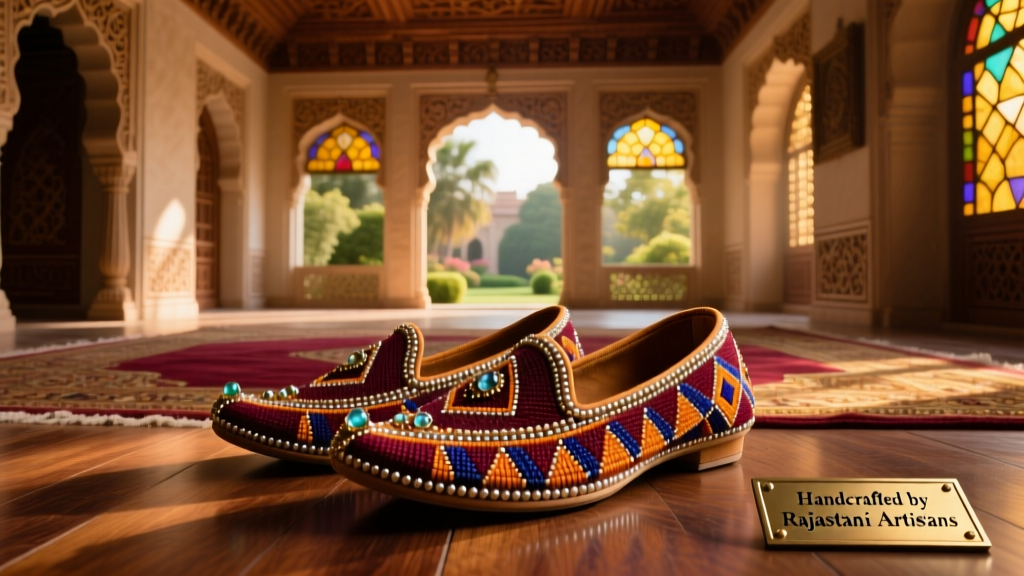
Authentic Indian Beaded Moccasins for Adults: History, Craftsmanship, Sizing, and Ethical Acquisition
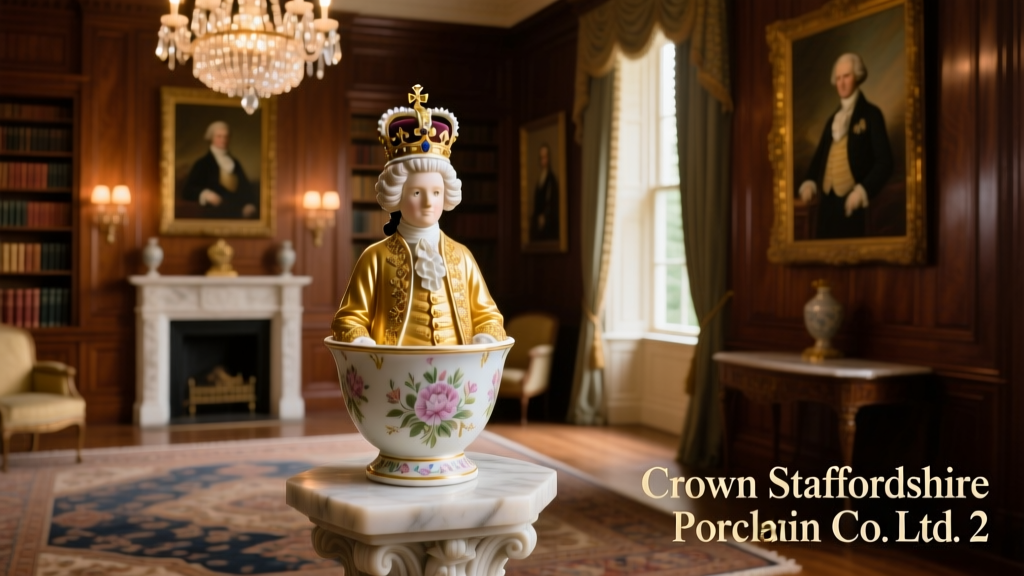
Crown Staffordshire Porcelain Co Ltd: A Definitive Historical and Technical Survey of the Second Era (1946–1975)
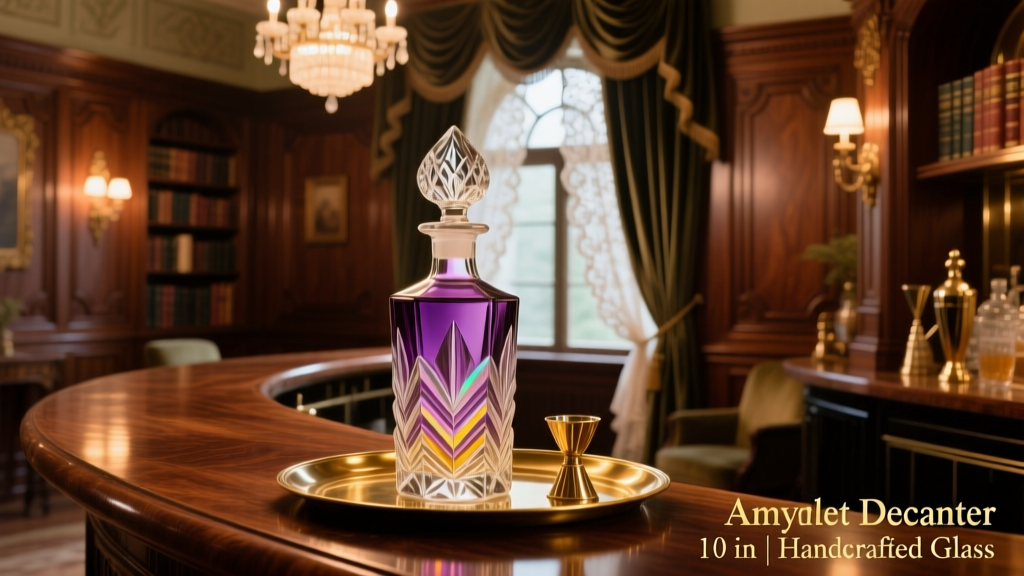
Sandwich Glass Decanter: Back Bar Applied Mouth, Medium Amethyst, 10-Inch Height — A Collector’s Guide to Authenticity, Value, and Care
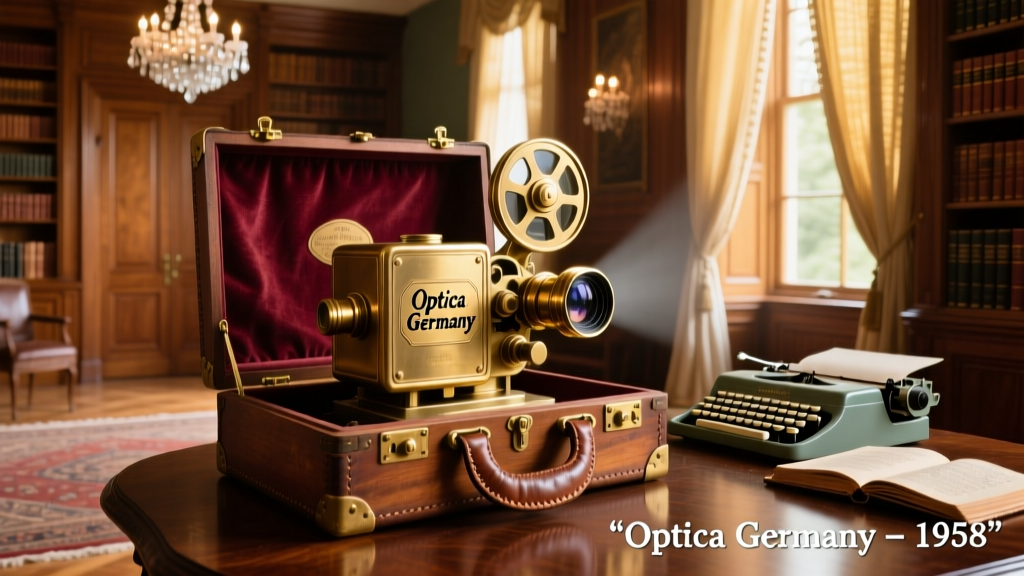
Opitica Germany Photography Projector: A Technical and Historical Deep Dive into the Cased 20 × 23 Inch Enlarger System

Lehmann’s Red Mail Van: A Collector’s Guide to the 7½-Inch Tin Litho Clockwork Toy (c. 1925–1934)
Firefighting Bucket with Leather Wrap, Hand-Painted Bird Motif, and Swing Handle — A 13-Inch Antique American Heritage Piece
The Fishing Creel: Willow Construction and Leather Binding in British Angling Heritage