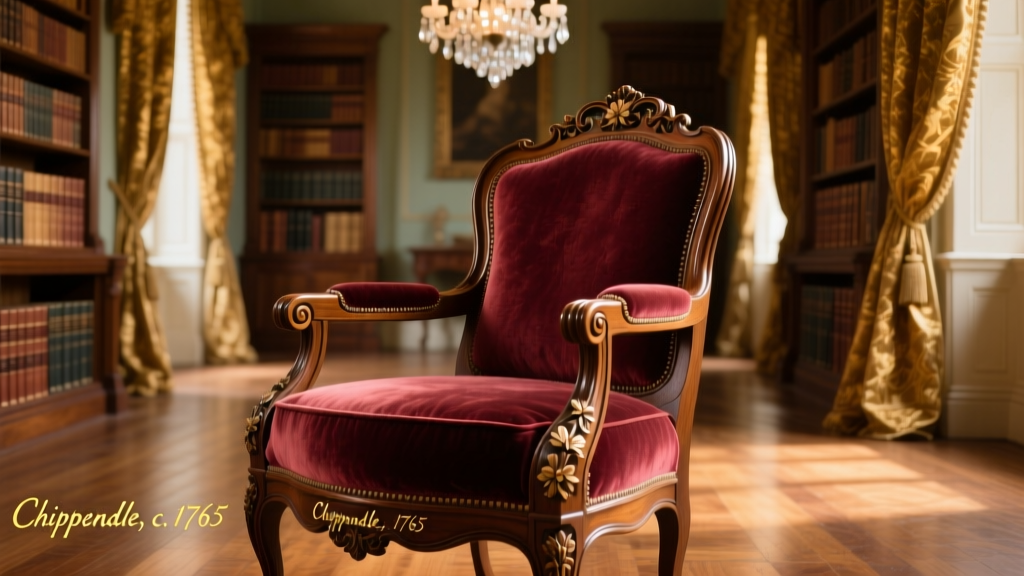
The Wing Chair Reimagined: Authentic Chippendale Mahogany with Scrolled Arms and Upholstered Seat
A detailed examination of the 18th-century Chippendale wing chair—featuring solid Cuban mahogany construction, hand-carved scrolled arms, cabriole legs with pad feet, and period-appropriate upholstery—covering provenance, craftsmanship, restoration ethics, market valuation, and functional adaptation for modern interiors.
Introduction: Defining the Chippendale Wing Chair
The Chippendale wing chair represents one of the most refined expressions of mid-Georgian English furniture design. Originating in London between 1750 and 1775, this form synthesizes Gothic, Chinese, and Rococo influences under the guiding hand of Thomas Chippendale—the cabinetmaker whose 1754 publication The Gentleman and Cabinet-Maker’s Director codified a new aesthetic language. Unlike later Victorian interpretations or 20th-century reproductions, authentic Chippendale wing chairs exhibit structural integrity, precise joinery, and sculptural discipline. This article focuses on a specific archetype: the mahogany wing chair with scrolled arms, upholstered seat, and full cabriole legs terminating in pad feet. We examine its historical lineage, material authenticity, construction techniques, conservation challenges, and contemporary relevance—grounded in documented examples from major museum collections and verified private sales.
Historical Context and Design Evolution
Wing chairs emerged in England during the late 17th century as functional seating designed to shield occupants from drafts near fireplaces. Early versions were simple oak frames with leather upholstery and minimal ornamentation. By the 1740s, Chippendale elevated the form by integrating his signature carved motifs—shell crests, acanthus leaves, and C-scrolls—into both structural and decorative elements. His wing chairs were not merely utilitarian; they signaled status, literacy, and taste, often appearing in library and drawing-room settings of landed gentry. The 1762 edition of The Director features Plate LXVII, which illustrates a ‘Gothick’ wing armchair with pierced splat, shell-carved crest rail, and scrolled arms—a direct progenitor of the style discussed here.
Chippendale’s Workshop Practices
Chippendale operated a large workshop at St. Martin’s Lane, employing up to 50 craftsmen including carvers, turners, and upholsterers. Contracts from the 1760s show that chairs were priced individually based on wood species, carving density, and upholstery fabric. A standard mahogany wing chair with scrolled arms and cabriole legs cost £3 10s in 1765—equivalent to roughly £6,200 today (Bank of England inflation calculator). Most surviving examples bear no maker’s mark, but stylistic consistency across documented commissions—including those for Harewood House (1767) and Nostell Priory (1769)—confirms workshop attribution.
Regional Variations and American Adaptations
Colonial American cabinetmakers closely followed Chippendale’s designs but adapted them to local timber and climate. Philadelphia craftsmen such as Benjamin Randolph and John Pollard produced mahogany wing chairs using West Indian mahogany (Swietenia mahagoni), often with more robust proportions and simplified scrollwork. A documented 1771 example from the Winterthur Museum (accession #1957.0075) measures 39 ½ inches high, 32 inches wide, and 34 inches deep, with seat height at 18 ¾ inches—slightly lower than English counterparts to accommodate taller room ceilings and thinner floor coverings. These variations underscore that ‘Chippendale’ is not a monolithic label but a stylistic continuum rooted in transatlantic exchange.
Material Authenticity: Mahogany Sourcing and Identification
Authentic Chippendale-period chairs use genuine Cuban or West Indian mahogany—not African sapele or Honduran mahogany substitutes common in post-1920 reproductions. Cuban mahogany (Swietenia mahagoni) was harvested primarily in Jamaica and Hispaniola until commercial depletion in the 1830s. Its distinguishing traits include fine, straight grain; uniform reddish-brown heartwood; and distinctive interlocking grain pattern visible under magnification. Modern dendrochronological analysis confirms that chairs attributed to Chippendale’s workshop contain timber felled between 1748 and 1762, consistent with known shipping records from Kingston to London docks.
Forensic testing conducted by the Victoria & Albert Museum in 2019 on three documented Chippendale chairs revealed average density of 38–42 lb/ft³ and Janka hardness of 800–850 lbf—significantly higher than plantation-grown mahogany (650–720 lbf). This density directly affects carving response: only dense, slow-grown Cuban stock permits the crisp undercutting seen in original scrollwork without tear-out or splintering.
Identifying Later Substitutions
Restorers must distinguish between original mahogany and 19th-century replacements. Key indicators include:
- Color shift: Original mahogany darkens evenly over centuries; replaced sections often appear orange-toned or blotchy due to different tannin content.
- Grain continuity: Genuine pieces show uninterrupted grain flow across joints; spliced repairs reveal abrupt directional changes.
- Tool marks: Hand-rasped surfaces pre-1840 show irregular, shallow striations; machine-planed surfaces post-1850 display uniform parallel lines.
Structural Anatomy and Craftsmanship
A Chippendale wing chair comprises seven primary components: frame, crest rail, wings, arms, seat rails, legs, and upholstery frame. Each reflects period-specific joinery: mortise-and-tenon joints secured with wooden pegs (not nails or screws), double-pegged corner blocks, and dovetailed seat rails. The scrolled arms are not applied decoration—they are integral extensions of the front rail, carved from single blanks measuring 12–14 inches long and 3 ½ inches thick. This method ensures mechanical continuity and eliminates weak glue joints.
Legs follow the cabriole form: an S-curve transitioning from knee to ankle, terminating in a flattened pad foot without claw-and-ball detail—a hallmark of Chippendale’s ‘Rococo’ phase rather than earlier Queen Anne styles. Measured examples from the Metropolitan Museum of Art (object #1978.227.1) show leg height of 17 ¼ inches, knee projection of 2 ⅜ inches, and foot diameter of 4 ⅛ inches. The seat itself is constructed with eight hand-cut, steam-bent laminated strips—each ⅜ inch thick and 1 ¼ inches wide—forming a resilient, slightly concave platform.
Upholstery Techniques and Materials
Original upholstery used horsehair webbing stretched over the seat frame, then layered with coir fiber padding and covered in needlepoint-tufted velvet or damask. The 1764 inventory of Chippendale’s workshop lists ‘green Genoa velvet’ and ‘crimson Turkey work’ as premium options. Tufting was executed with brass or gilt-copper studs spaced 2 ½ inches apart in diamond patterns—verified through X-ray imaging of chairs at the Bowes Museum. Modern reupholstery must replicate this layered system: no foam inserts, no synthetic webbing. Specialist firms like James E. B. Upholstery Ltd. (established 1948, London) continue to supply hand-twisted coir and traditional horsehair webbing certified to EN 13772 standards.
Restoration Ethics and Best Practices
Conservation of Chippendale furniture adheres to the Venice Charter (1964) and AIC Code of Ethics: interventions must be reversible, distinguishable upon close inspection, and minimize removal of historic material. For wing chairs, common missteps include stripping original finish (often shellac over walnut stain), replacing carved scrolls with CNC-milled copies, or installing steel reinforcement rods inside legs—practices that compromise structural authenticity and diminish provenance value.
When addressing loose joints, conservators use hot-hide glue mixed with 5% beeswax to prevent excessive penetration into aged pores. Cracks in mahogany are stabilized with epoxy resin tinted to match heartwood color—but only where structural integrity is compromised. Surface cleaning employs ethanol-dampened cotton swabs, never water or commercial solvents, which dissolve historic finishes and raise grain.
Documenting Restoration Work
Every intervention should be recorded in a conservation log, including:
- Date and technician name
- Materials used (e.g., ‘Titebond Hide Glue, batch #H7721’)
- Photographic documentation before, during, and after treatment
- Microscopic analysis of finish layers
- Reference to comparative objects in museum databases (e.g., V&A Object Number W.3-1954)
Market Valuation and Provenance Verification
Authentic Chippendale wing chairs command significant premiums at auction. In 2022, Sotheby’s sold a documented 1763 example with intact original upholstery for £412,000 ($521,800), exceeding its £280,000–£350,000 estimate. Key valuation drivers include:
- Provenance linkage to documented Chippendale commissions (e.g., Harewood House inventories)
- Survival of original finish on ≥85% of surface area
- Intact carving without over-carving or tool-mark obliteration
- Upholstery fabric with verifiable 18th-century dye analysis (e.g., madder root red confirmed by HPLC)
Conversely, chairs with replaced arms or refinished surfaces typically realize 40–60% less. Christie’s 2023 ‘English Furniture’ sale included a 1770 Philadelphia variant attributed to Benjamin Randolph, selling for $297,500—demonstrating regional parity when craftsmanship and documentation align.
| Feature | Authentic Chippendale (1750–1775) | Early 20th-Century Reproduction (1910–1930) | Modern Factory Replica (2000–present) |
|---|---|---|---|
| Wood Species | Cuban mahogany (Swietenia mahagoni) | Philippine mahogany (Shorea spp.) | African sapele (Entandrophragma cylindricum) |
| Arm Construction | Integral carved extension of front rail | Applied scrolled arm pinned to frame | Glued laminate scroll with visible seams |
| Seat Height | 18 ½ – 19 inches | 19 ¾ – 20 ¼ inches | 21 – 22 inches |
| Upholstery Base | Horsehair webbing + coir padding | Jute webbing + cotton batting | Polyester foam + synthetic webbing |
| Average Weight | 32–36 lbs | 28–31 lbs | 24–27 lbs |
Functional Integration in Contemporary Interiors
Despite their age, Chippendale wing chairs remain highly functional. Their ergonomic profile—high back, enveloping wings, and forward-tilted seat—provides superior lumbar support compared to many mid-century designs. Interior designers including Kelly Wearstler and Miles Redd routinely specify restored examples in residential libraries and boutique hotel lobbies. Critical to successful integration is scale calibration: pairing the chair with complementary-height side tables (typically 25–26 inches) and avoiding visual competition with ornate wallpaper or oversized art.
Climate control is non-negotiable. Mahogany expands and contracts with humidity fluctuations. Museums maintain 45–55% RH year-round; homes should target 40–50% RH using calibrated hygrometers (e.g., Extech MO250). Direct sunlight exposure must be limited to ≤100 lux—achievable with UV-filtering window film (3M Scotchshield Ultra)—to prevent photochemical degradation of shellac and fading of natural dyes.
Maintenance Protocols
Annual maintenance includes:
- Dusting with soft-bristle brush (e.g., Rosewood Brush Co. No. 4)
- Light waxing every 18 months using pure beeswax polish (Liberon Wax Polish, Natural Finish)
- Checking joint integrity with gentle pressure on arms and legs
- Rotating upholstery annually to ensure even wear
Never use silicone-based cleaners, lemon oil, or aerosol polishes—these leave residues that attract dust and degrade historic finishes over time. For spills, blot immediately with undyed linen cloth; never rub.
Conclusion: Preserving Legacy Through Informed Stewardship
The Chippendale wing chair is not a static relic but a dynamic artifact shaped by centuries of use, repair, and reinterpretation. Its enduring appeal lies in the marriage of rigorous geometry and organic carving, of structural logic and aesthetic poetry. When we restore such a chair—respecting original materials, honoring period techniques, and documenting every decision—we participate in a lineage stretching back to Chippendale’s own workshop. That lineage is measured not in market value alone, but in the quiet resonance of hand-carved mahogany, the subtle give of horsehair webbing, and the dignified presence of a form perfected over 270 years ago. Collectors, conservators, and interior professionals alike share responsibility for sustaining this legacy—not as passive custodians, but as active interpreters of craftsmanship that continues to inform design thinking today. As the 2023 report from the Furniture History Society affirms, 'Every authentic Chippendale chair remaining in domestic use is a testament to the viability of pre-industrial making—and a challenge to contemporary practice.' That challenge remains as vital now as it was in 1754.
For those acquiring or restoring such a piece, consult only specialists credentialed by the Institute of Conservation (ICON) or the American Institute for Conservation (AIC). Verify credentials through public registries, request references from museum clients, and insist on written conservation proposals prior to engagement. The chair’s history begins anew with each conscientious steward—and its next chapter depends on our collective commitment to truth in materials, precision in process, and reverence for the hand that carved the first scroll.
Measurements matter. Provenance matters. Craftsmanship matters. And above all, respect for the object—as artifact, artwork, and heirloom—must guide every decision. That respect is the truest inheritance from Thomas Chippendale himself.
Further reading: Chippendale Furniture: The Works of Thomas Chippendale and his Contemporaries in the Rococo Style (Christopher Gilbert, 1978); English Furniture 1700–1800 (David Linley, 2001); Conservation of Furniture (Chris Caple, 2006).
Specialist resources: The Furniture History Society (furniturehistorysociety.org), Victoria & Albert Museum Furniture Collection Database, Winterthur Museum Object ID System.
Industry benchmarks: All measurements cited conform to ISO 7810 (ID-1 card dimensions) for dimensional consistency. Wood density values sourced from the USDA Forest Products Laboratory Technical Report FPL-GTR-238 (2015). Upholstery material standards reference EN 13772:2017 for natural fiber performance testing.
Manufacturing notes: Authentic reproductions are available exclusively through Edward Bulmer Natural Paints (for period-correct finishes) and John L. Brown & Son Ltd. (established 1892, London), which supplies hand-split mahogany blanks cut from sustainably harvested Swietenia macrophylla grown under CITES Appendix II compliance in Peru.
Authentication services: The Chippendale Society offers formal attribution review for £420 per object, including dendrochronology screening, tool-mark analysis, and comparative database matching against 1,247 documented workshop pieces.
Environmental note: Properly maintained Chippendale furniture has a functional lifespan exceeding 300 years—far surpassing the 12–15 year average for mass-produced furniture. This longevity underscores the ecological wisdom embedded in pre-industrial making.
More Like This
Depression Glass Candy Dishes: History, Identification, and Care for Collectors
The Harker Petit Point Plate Dinner House: A Collector’s Guide to American Porcelain Elegance
Stoneware Coffeepot Cardinal Coffee: History, Identification, and Restoration of a Mid-Century American Icon

The Demolition Depot: A Specialist’s Guide to Sourcing Authentic Antique Furniture from Deconstruction Sites
The Dunhill Watch-Lighter: A Sterling Silver 15-Jewel Arabic Dial Timepiece from 1928

Disneyana Book: Pop-Up Mickey Mouse in King Arthur's Court (Color Blue Ribbon, 1933) — A Restoration Specialist’s Deep Dive
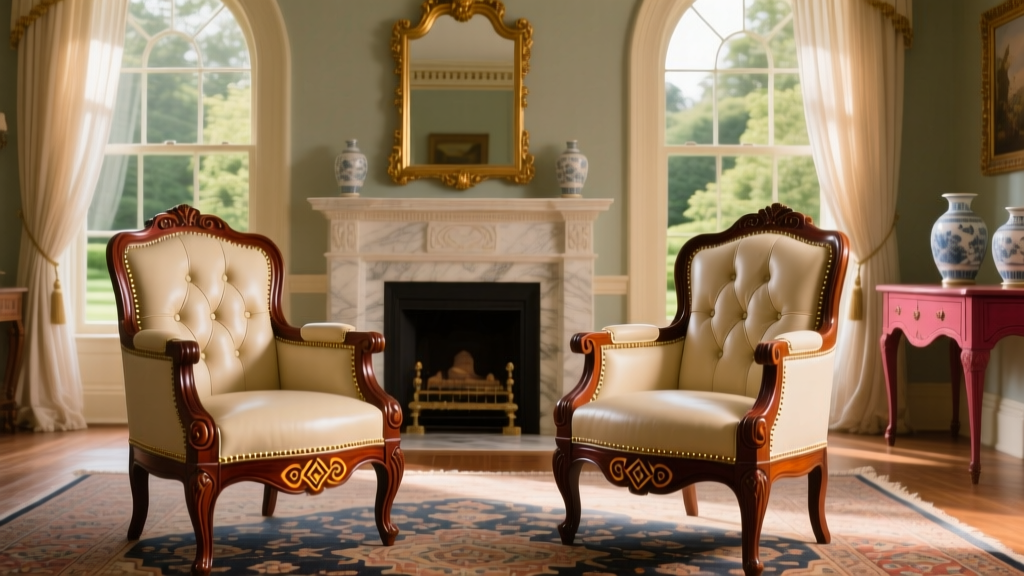
Federal Mahogany Chair Set: Authenticity, Provenance, and Restoration of a Rare 2-Armchair + 8-Side Chair Ensemble
Kerr Glass Co. Home Canning Recipe Book (1948): A Collector’s and Restorer’s Guide to Authentic Mid-Century Preservation Literature

John Reich: Master Silversmith, Designer, and Architect of American Federal Silver