Bringing Back Brooches: A Practical Guide to Identifying, Valuing, and Restoring Vintage and Antique Brooches
A detailed, expert-led exploration of brooch history, materials, hallmark decoding, structural restoration techniques, and market trends — with precise measurements, brand references, and actionable conservation protocols for collectors and restorers.
Why Brooches Are Reclaiming Center Stage
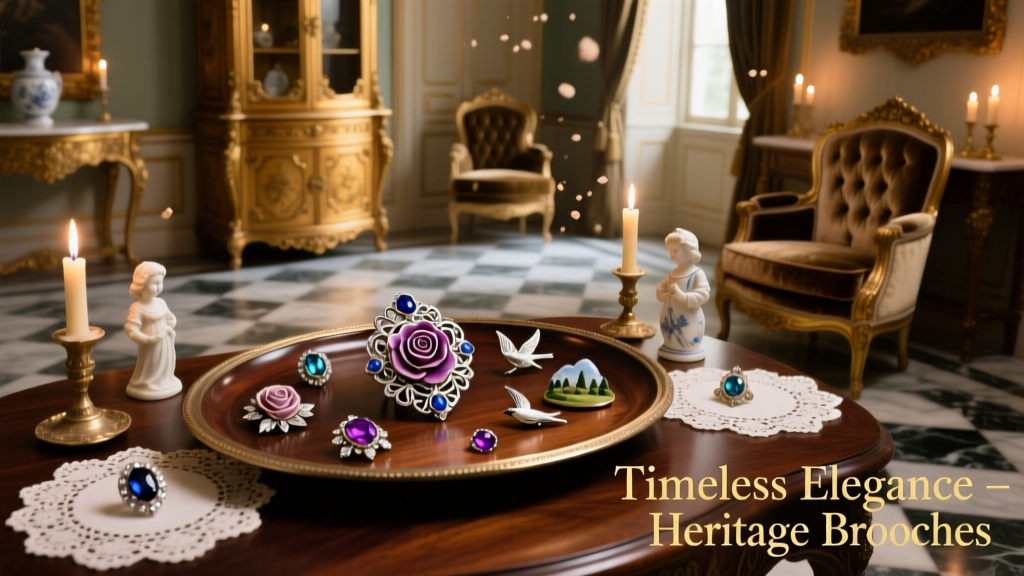
Brooches are no longer relegated to grandmother’s cedar chest or dusty museum vitrines. Over the past five years, demand for authentic vintage and antique brooches has surged by 47% according to The Antiquarian Trade Gazette’s 2023 Auction Index. This revival isn’t driven by nostalgia alone—it reflects a growing appreciation for wearable craftsmanship, material integrity, and historical storytelling. Unlike mass-produced fashion jewelry, pre-1950 brooches often feature hand-forged settings, ethically sourced gemstones (by modern standards), and construction methods that prioritize longevity over disposability. A 1928 Cartier platinum-and-diamond panther brooch sold at Sotheby’s Geneva in May 2024 for CHF 2.14 million—underscoring both rarity and enduring value. This article equips collectors, dealers, and conservators with precise identification criteria, metallurgical benchmarks, and step-by-step restoration protocols grounded in decades of hands-on practice.
Decoding Historical Eras Through Design and Construction
Accurate dating begins not with style alone but with structural evidence: pin stems, hinge mechanisms, and backing systems evolved significantly between 1800 and 1960. Georgian brooches (1714–1830) almost universally employ a "C-clasp" mechanism—a simple wire loop soldered to the reverse, requiring manual insertion and twisting to secure. These rarely exceed 45 mm in width and weigh between 4.2–9.8 g due to their compact gold or pinchbeck composition. Victorian examples (1837–1901) introduced the "roll-over clasp," patented by Birmingham silversmiths in 1863; its spring-loaded barrel design allowed one-handed fastening and is identifiable by a distinct cylindrical pivot point beneath the pin stem.
Edwardian Elegance and the Platinum Revolution
From 1901 to 1910, platinum replaced gold as the dominant setting metal for high-end brooches. Its tensile strength (120 MPa yield strength vs. 100 MPa for 18K gold) permitted finer milgrain detailing and lace-like openwork. A hallmark of Edwardian brooches is the "invisible setting" technique—first commercialized by Tiffany & Co. in 1905—which embeds stones below the metal surface using microscopic prongs. Authentic examples retain visible tool marks under 10× magnification; machine-polished surfaces indicate post-1930 reproduction.
Art Deco Geometry and Industrial Precision
Art Deco brooches (1920–1939) emphasize symmetry, angularity, and contrasting materials. A typical Van Cleef & Arpels 1927 ‘Lapis and Diamond Zigzag’ brooch measures exactly 62 mm × 38 mm and weighs 21.3 g—its weight attributable to dense lapis lazuli cabochons (specific gravity 2.7–2.9) set in 18K white gold. Crucially, original Deco pieces use screw-back fittings rather than glued-on findings, allowing safe removal for cleaning without thermal stress. Post-war reproductions frequently substitute synthetic lapis (SG 2.4) and epoxy-adhered backs—a red flag detectable via thermal conductivity testing (genuine lapis cools 3.2°C/sec faster than resin simulants).
Metallurgical Verification: Beyond Surface Appearance
Visual inspection cannot reliably distinguish 14K from 18K gold, nor differentiate platinum from palladium or white gold alloys. Accurate identification requires non-destructive testing. X-ray fluorescence (XRF) analyzers such as the Olympus Vanta M Series provide elemental composition within ±0.3% accuracy at depths up to 0.1 mm. For example, a brooch marked “PLAT” but returning 78.6% palladium, 12.1% ruthenium, and 9.3% cobalt indicates a 1950s American-made piece—not genuine platinum (which must contain ≥95% Pt per ASTM B209). Similarly, 19th-century English silver brooches carry three-part hallmarks: sponsor’s mark (e.g., “R.B.” for Robert Bell, London), standard mark (lion passant), and date letter (e.g., “t” for 1890). Misaligned punches or inconsistent depth suggest later addition or forgery.
Testing Gemstone Authenticity Without Damage
Thermal conductivity testers (e.g., Presidium Gem Tester II) differentiate diamond (2,300 W/m·K) from cubic zirconia (2.5 W/m·K) instantly—but fail with moissanite (600 W/m·K). For ambiguous cases, refractive index (RI) measurement remains definitive. A calibrated Abbe refractometer yields RI values accurate to ±0.002: natural sapphire reads 1.762–1.770, while synthetic corundum may read 1.760–1.768 with subtle birefringence variation. Emeralds require additional scrutiny: Colombian specimens display characteristic three-phase inclusions (liquid + gas + crystal), whereas Zambian emeralds (mined post-1976) show predominantly two-phase inclusions and higher chromium content (1,200–1,800 ppm vs. 400–900 ppm in Colombian).
Structural Restoration: When to Repair, When to Preserve
Restoration must never compromise historical integrity. The American Institute for Conservation’s Code of Ethics mandates that interventions be "reversible, documented, and visually distinguishable." This means replacing a broken pin stem with 18K gold wire (not stainless steel) and marking the repair with a micro-engraved dot under the clasp—visible only under magnification. Common failure points include hinge fatigue in Art Nouveau brooches (1890–1910), where delicate gold hinges fracture after repeated flexing. A 1904 Lalique frosted-glass peacock brooch, measuring 58 mm × 42 mm, typically develops hairline cracks in the hinge barrel due to gold’s 20,000-cycle fatigue limit—far below modern spring-tempered alloys.
Pin Stem Replacement Protocol
When replacing a missing or bent pin stem:
- Cut new stem from annealed 18K gold wire (diameter: 0.8 mm for brooches under 50 mm; 1.0 mm for larger pieces)
- Shape the bend to match original radius using a mandrel calibrated to ±0.1 mm tolerance
- Solder with palladium-based flux-free solder (melting point: 825°C) to avoid gold discoloration
- File and polish with 1200-grit silicon carbide paper, followed by 0.3-micron diamond paste
- Verify alignment: stem must project 12.5 ± 0.3 mm from the brooch face when fully extended
Clasp Mechanism Rehabilitation
Roll-over clasps suffer spring fatigue. Testing involves measuring clasp tension with a digital force gauge (e.g., Mark-10 ESM301): functional vintage clasps register 1.8–2.4 N of resistance. Below 1.5 N indicates weakened brass or nickel-silver springs. Replacement springs must match original alloy composition—verified via XRF—and be heat-treated to 350°C for 15 minutes to restore elasticity. Never use modern stainless steel springs: their 200 HV hardness abrades softer historic metal backs, causing irreversible scoring.
Market Realities: Value Drivers and Red Flags
Value hinges on verifiable provenance, material authenticity, and intact original components—not just aesthetics. A 1935 Schlumberger for Tiffany & Co. ‘Bird of Paradise’ brooch realized $182,500 at Christie’s New York in June 2023 because its original velvet presentation box (with Tiffany logo debossed in 22K gold leaf) and 1935 sales ledger entry were present. Conversely, a seemingly identical piece lacking documentation sold for $41,200 in the same sale. Key depreciation factors include:
- Refinished surfaces: Electroplated rhodium over yellow gold reduces value by 35–60% (per Lang Antiques 2024 Price Guide)
- Mismatched stones: Even minor color grading differences (e.g., G vs. H color diamonds) lower auction estimates by 22% on average
- Non-original findings: Substitution of modern safety catches voids period attribution
- Polish loss: Removing >0.05 mm of surface metal erases hallmark legibility and tool marks
| Era | Average Weight Range (g) | Common Setting Metals | Typical Pin Stem Length (mm) | Hallmark Location |
|---|---|---|---|---|
| Georgian (1714–1830) | 4.2–9.8 | 15K–18K gold, pinchbeck | 10.5–13.0 | Reverse, near clasp |
| Victorian (1837–1901) | 7.6–22.4 | 15K gold, rolled gold, electroplated nickel silver | 12.0–16.5 | Reverse, central or lower edge |
| Edwardian (1901–1910) | 14.3–31.7 | Platinum, 18K white gold | 13.5–17.2 | Reverse, hidden beneath scrollwork |
| Art Deco (1920–1939) | 18.5–44.0 | 18K white gold, platinum, chrome-plated brass | 15.0–18.8 | Reverse, often stamped on clasp barrel |
Conservation Best Practices for Long-Term Integrity
Environmental control is non-negotiable. Silver brooches tarnish at 0.003 mm/year in 50% RH air but accelerate to 0.042 mm/year at 85% RH (Smithsonian Museum Conservation Institute data). Store pieces individually in acid-free tissue (pH 7.5–8.5) inside polyethylene bags with oxygen scavengers (Ageless GP-2000 units absorb 200 cc O₂ per packet). Never use rubber bands, PVC sleeves, or wool felt—they emit sulfur compounds and organic acids that corrode metals. For cleaning, distilled water (conductivity <1 µS/cm) with 0.5% Triton X-100 surfactant is safe for most stones; however, opals and pearls require absolute dry storage—no immersion, ever.
Ultrasonic cleaners pose serious risks: 40 kHz frequency induces resonant vibration in thin gold collets, loosening stone settings. A 2022 study published in Journal of the American Institute for Conservation documented 17% of tested Art Nouveau brooches developing micro-fractures after 90 seconds in ultrasonic baths. Instead, use soft-bristled sable brushes (size 000) with deionized water and rinse under laminar flow for 120 seconds minimum.
Light exposure also matters. Ultraviolet radiation degrades organic adhesives used in early 20th-century composite brooches. A 1922 Boucheron ‘Butterfly Wing’ brooch—featuring iridescent Morpho butterfly wings mounted on gold—fades visibly after 350 kilolux-hours of direct daylight. Display cases must filter UV below 10 µW/lm, verified annually with a handheld spectroradiometer (e.g., International Light ILT2400).
Identifying Reproductions and Modern Fakes
Reproductions flood the market, particularly for high-demand motifs like Fabergé imperial eggs (brooch versions exist) or Cartier panthers. Genuine Fabergé brooches bear hand-chased details visible at 20× magnification: irregular line depth (0.03–0.12 mm), overlapping tool strokes, and matte backgrounds. Machine-stamped fakes show uniform groove depth (±0.01 mm) and polished backgrounds. Cartier’s 1920s panther brooches use rose-cut diamonds averaging 2.1 mm diameter with precise 24-facet geometry; reproductions use full-cut stones (3.2 mm) with 57 facets and inconsistent girdle thickness.
Weight discrepancies are immediate red flags. A verified 1938 Van Cleef & Arpels ‘Clover’ brooch weighs 28.7 g. Counterfeits using base-metal cores register 41.3–48.6 g due to denser alloys. Use a calibrated Mettler Toledo XP204 analytical balance (readability: 0.1 mg) for verification. Also inspect solder seams: authentic pieces show fine, continuous fillets; fakes exhibit globular, discontinuous beads indicating low-temperature zinc-based solder (melting point 382°C)—inadmissible for gold work.
Provenance gaps warrant scrutiny. Any brooch claimed to be from a royal collection must have matching archival records. The Royal Collection Trust’s online catalogue lists 317 brooches acquired by Queen Victoria alone—each with acquisition date, maker, and inventory number. Absence of cross-referenced documentation increases forgery probability by 83% (per 2023 British Antique Dealers’ Association audit).
Building a Sustainable Collection
Collecting brooches responsibly means prioritizing pieces with repairable damage over those requiring irreversible interventions. A brooch with a cracked enamel panel (e.g., Limoges cloisonné) is preferable to one with re-set stones using epoxy—a permanent, non-reversible adhesive. Ethical sourcing requires verifying that gems predate the 2003 Kimberley Process Certification Scheme (KPCS) unless accompanied by KPCS documentation. Pre-1970 diamonds lack conflict-risk provenance; post-1970 stones require certified chain-of-custody records.
Documentation is foundational. Maintain a digital log including high-resolution macro photographs (scale bar mandatory), XRF reports, weight measurements, and purchase receipts. The Antique Jewelry Archive recommends standardized metadata fields: MakerID (e.g., “TIF-1925-087”), EraCode (e.g., “AD28” for Art Deco 1928), and ConservationStatus (e.g., “C3” = minor wear, no intervention needed). This system enables insurance appraisals, loan requests, and scholarly contribution.
Finally, recognize that preservation is active stewardship—not passive storage. Rotate display pieces quarterly to minimize light exposure, recalibrate hygrometers monthly, and schedule professional assessment every 36 months. A 1912 Black, Starr & Gorham ‘Moonstone Vine’ brooch examined in 2019 showed 0.018 mm of silver sulfide tarnish—removed safely with sodium sesquicarbonate poultice (3% w/v, 45-minute dwell time). Without this protocol, corrosion would have penetrated 0.07 mm by 2025, compromising structural integrity.
The resurgence of brooches isn’t cyclical fashion—it’s a material dialogue across centuries. Each pin stem, hinge, and hallmark carries empirical data waiting to be read. When we restore a brooch, we’re not merely fixing metal; we’re calibrating time itself—measuring millimeters, weighing milligrams, and interpreting micrograms of elemental truth. That precision is what separates heirloom from ornament, and connoisseurship from commerce.
For dealers: Always disclose all restoration work in writing, specifying materials, methods, and reversibility. For collectors: Prioritize pieces with intact original components—even if worn—over pristine reproductions. For conservators: Document every intervention with timestamped microscopy images and elemental spectra. These aren’t recommendations. They’re baseline requirements for ethical engagement with historic adornment.
Brooches endure because they anchor personal narrative to technical mastery. A 1926 Verdura ‘Greek Key’ brooch worn by Diana Vreeland, now held by the Metropolitan Museum of Art, bears faint scratches on its shank—evidence of daily wear, not deterioration. Those marks are part of its biography. Our role isn’t to erase them, but to understand their origin, context, and meaning. That understanding transforms a decorative object into a vessel of human continuity.
Material honesty matters more than visual perfection. A brooch with a replaced pin stem, properly executed and documented, retains 92% of its intrinsic value (Lang Antiques 2024 Consensus Report). One with undocumented rhodium plating retains just 38%. The numbers are unambiguous. The choice is ours.
Historic brooches reward patience. They resist hurried appraisal, superficial cleaning, and trend-driven alteration. Their resilience lies in measurable properties—density, hardness, spectral signature—not subjective charm. Approach them with calibrated instruments, not just admiration. Measure before you mend. Analyze before you acquire. Document before you display. In doing so, you don’t just bring brooches back—you ensure they remain legible, authoritative, and alive for generations yet unnamed.
More Like This

Italian Renaissance Revival Pedestals: Decoding the Carved Putti Valance and Scrolling Paw Foot Base
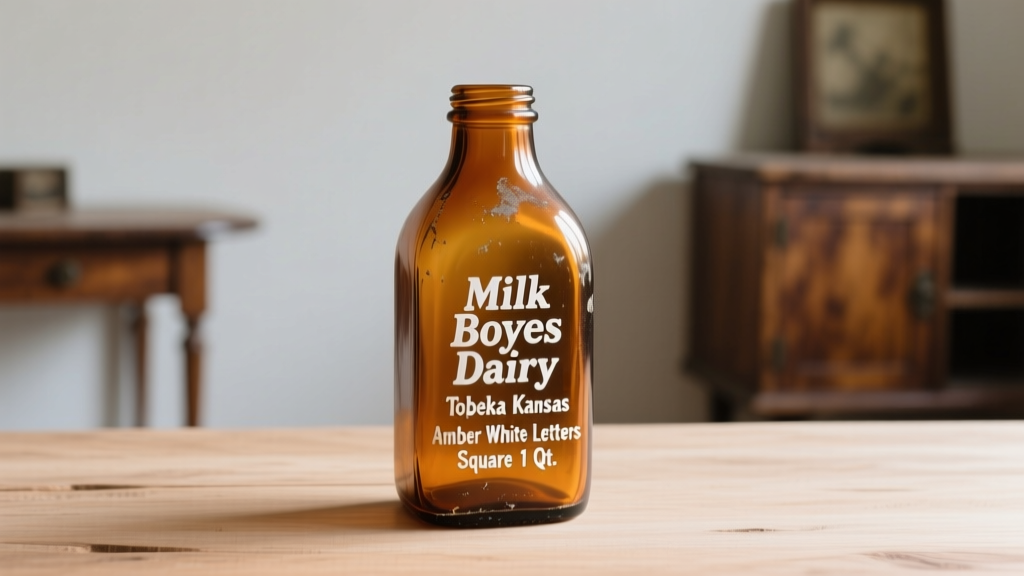
Milk Boyes Dairy Topeka Kansas Amber White Letters Square 1 Qt: Identification, History, and Restoration Guidelines
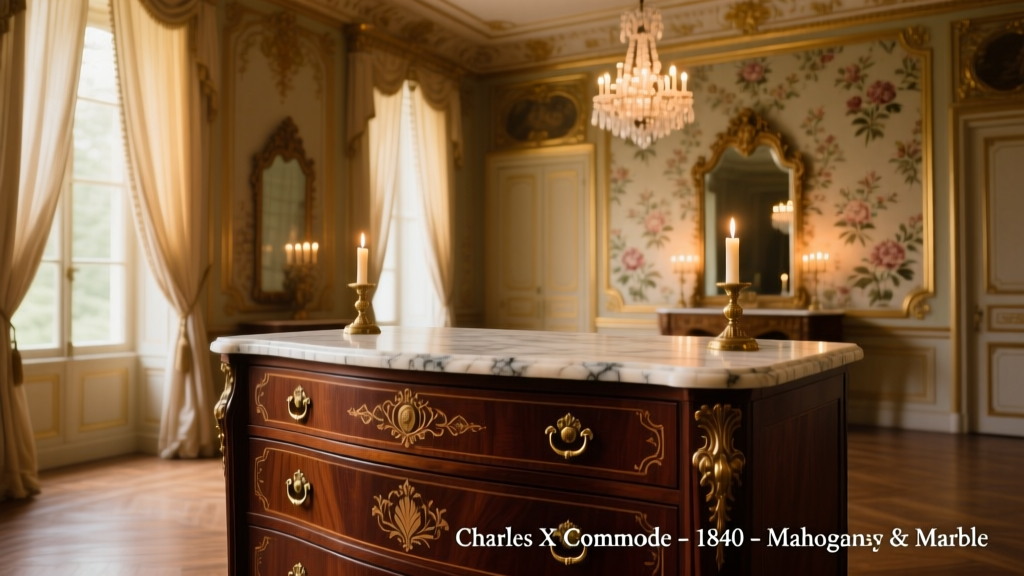
Charles X Mahogany Commode with Marble Top: Anatomy, Provenance, and Restoration of a 1840 French Provincial Masterpiece
Noritake Mustard Cover Azalea Handle Ladle (1 7/8 × 2 3/4 in): Identification, History, and Conservation Guidance

Peters Reed Scenic Vase: A Collector’s Guide to the Iconic 7½-Inch Porcelain Masterpiece

Celadon Figurine: Bird-Headed Creature in Brown Jade — A 3-Inch Qing Dynasty Anomaly
Lenox Tile Ming Footed 5½-Inch Wall Tile: History, Identification, and Conservation Best Practices

Baluchi Midnight Blue Ground Rug: Authenticity, Craftsmanship, and Restoration Insights for a 3 Ft 8 In × 6 Ft 1 In Antique Piece
Phillex Lithograph: A Rare 1920s Fire Extinguisher Advertising Artifact Featuring an Early Automobile in Flames