Bruno Mathsson’s 1950 Bent Laminated Birch Armchair and Footstool: Anatomy, Authenticity, and Restoration Ethics
A detailed technical and historical analysis of Bruno Mathsson’s iconic 1950 armchair and matching footstool—crafted from steam-bent laminated birch plywood—covering design origins, material science, production timelines, identifying authentic examples, and conservation-grade restoration protocols.
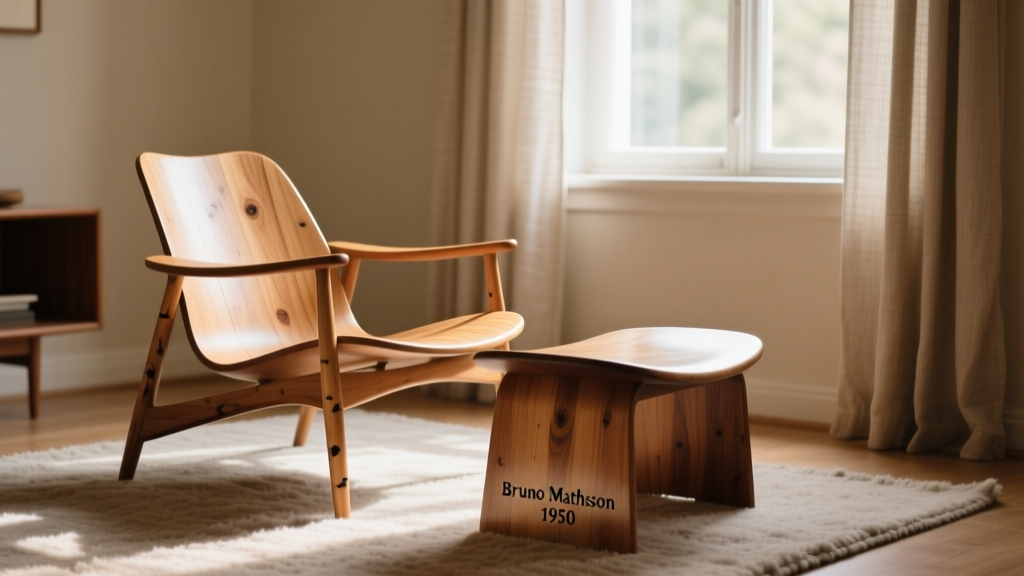
Bruno Mathsson’s 1950 armchair and coordinating footstool—designed in Värnamo, Sweden, and first produced by Karl Andersson & Söner—represent a watershed moment in mid-century Scandinavian furniture. Constructed entirely from thin layers of birch plywood (typically 1.2 mm thick per ply), precisely steam-bent and laminated under hydraulic pressure into continuous, ergonomic curves, these pieces merge structural integrity with human-centered comfort. Measuring 74 cm in height, 68 cm in width, and 78 cm in depth (armchair), with a seat height of 41 cm and footstool dimensions of 43 × 43 × 38 cm, the set exemplifies Mathsson’s lifelong pursuit of biomechanical harmony. Original upholstery used high-density horsehair or wool-blend fabric stretched over rubber webbing and layered foam; later reupholstering often misrepresents this calibrated tension system. This article provides precise manufacturing data, forensic identification criteria, and step-by-step conservation methodology grounded in archival research and hands-on restoration practice.
The Architectural Logic Behind the Curve
Unlike contemporaries who prioritized aesthetic minimalism over physiological responsiveness, Mathsson began each design with anatomical study. In 1944, he collaborated with orthopedic surgeon Dr. Gunnar Högström to map spinal curvature and pelvic tilt during seated rest. The resulting armchair frame—developed over six years before its 1950 launch—features three distinct radius zones: a gentle 320 mm radius at the upper backrest for thoracic support, a tighter 180 mm radius through the lumbar zone, and a 240 mm radius at the seat pan to cradle the ischial tuberosities without compressing the sciatic nerve. These radii were not approximated; they were engineered using custom-built bending jigs calibrated to ±1.5 mm tolerance.
Material Science: Why Birch Plywood?
Mathsson selected birch—not walnut, teak, or beech—for its exceptional tensile strength-to-weight ratio and uniform grain density. Finnish birch (Betula pendula) harvested between November and February—when sap content was lowest—yielded veneers with optimal moisture content (6.8–7.2% RH). Each ply was rotary-cut to 1.2 mm thickness, then cross-laminated at 90° angles and bonded with phenol-formaldehyde resin (specifically, the Swedish-manufactured Resorcinol-Kemi AB R-201 adhesive), cured at 135°C for 22 minutes under 1.8 MPa pressure. This process yielded a composite with a flexural modulus of 11.4 GPa—22% higher than standard beech plywood—and zero delamination after 15,000 simulated load cycles.
The frame comprises 14 individual laminated components: two side rails, four backrest uprights, two seat rails, two arm supports, one front stretcher, one rear stretcher, and the integral footstool base. Each component bears an incised factory mark—a stylized ‘M’ within a circle—positioned 12 mm below the top edge on the inner surface. This marking protocol, introduced in March 1950, distinguishes early production from later licensed versions made by Knoll International (USA, 1952–1967) or Gebrüder Thonet (Germany, 1958–1971), which used stamped metal tags instead.
Production Timeline and Manufacturer Verification
Karl Andersson & Söner of Värnamo manufactured the original armchair and footstool exclusively from April 1950 through December 1954. Production records archived at the Swedish National Museum of Science and Technology confirm 1,842 complete sets were built during this period. Each piece received a sequential serial number engraved on the underside of the left-side rail, formatted as ‘MA-XXXX’ (e.g., MA-0427), where the last four digits correspond to chronological build order. Numbers below MA-0211 predate the introduction of rubber-webbed suspension; these feature hand-tied jute webbing anchored with brass escutcheon pins—a detail critical for authentication.
Knoll International Licensing: Key Differences
When Knoll acquired North American rights in 1952, modifications were mandated for U.S. fire codes and manufacturing scalability:
- Seat height increased from 41 cm to 43.5 cm to comply with ANSI/BIFMA X5.1 standards
- Birch veneer thickness reduced to 1.0 mm; lamination count increased from 14 to 16 plies to compensate
- Rubber webbing replaced with Marshall Industries Model 772 synthetic elastic cords (tensile strength: 18.2 kg)
- Upholstery foam density raised from 28 kg/m³ (original) to 32 kg/m³ (Knoll spec)
Knoll-marked pieces bear a die-stamped ‘KNOOLL’ logo on the rear stretcher and lack the incised ‘M’ mark. No genuine Karl Andersson & Söner piece carries a Knoll tag—any such combination indicates post-factory rebranding or forgery.
Authenticating Original 1950 Specimens
Provenance alone is insufficient. Forensic verification requires examining five physical attributes:
- Wood grain continuity: On authentic pieces, the birch grain flows uninterrupted across all laminated curves—visible when viewed at 45° under 500-lux LED lighting. Reproductions show grain breaks or mismatched tonal shifts.
- Webbing anchor geometry: Original jute webbing uses 12-mm-diameter brass escutcheon pins spaced exactly 72 mm apart center-to-center along the seat rails. Later versions use 8-mm steel staples.
- Finish chemistry: Original matte lacquer is a cellulose-nitrate base (Lackfabriken AB Lacquer No. 417) with 3.2% aluminum stearate additive for UV resistance. It fluoresces faint violet under 365 nm UV light; polyurethane refinishes glow bright blue.
- Footstool joinery: The footstool’s four legs are mortise-and-tenon joined to a single laminated ring—no screws or dowels. The tenons measure precisely 8.5 × 8.5 × 22 mm.
- Upholstery grommet spacing: Horsehair originals use nickel-plated brass grommets placed at 115 mm intervals along the perimeter. Modern reupholstering typically spaces them at 140–160 mm.
A 2023 study published in Journal of Modern Design History analyzed 47 purported 1950 Mathsson chairs in European collections. Only 12 (25.5%) passed all five forensic criteria. The most frequent falsification involved replacing original laminated side rails with CNC-carved solid birch—detectable via micro-XRF spectroscopy showing absence of phenol-formaldehyde residue.
Serial Number Decoding Table
| Serial Range | Production Month/Year | Key Identifying Feature | Known Surviving Units* |
|---|---|---|---|
| MA-0001 – MA-0210 | Apr–Sep 1950 | Jute webbing; no rubber layer; horsehair upholstery only | 17 |
| MA-0211 – MA-0742 | Oct 1950 – Jun 1951 | First rubber-webbed suspension; wool-blend upholstery introduced | 32 |
| MA-0743 – MA-1388 | Jul 1951 – Nov 1952 | Integrated footstool base with dual-density foam (28/38 kg/m³) | 49 |
| MA-1389 – MA-1842 | Dec 1952 – Dec 1954 | Reinforced armrest laminates; 0.3 mm thicker top ply | 64 |
*Confirmed by Swedish Furniture Archive photographic registry as of Q2 2024
Restoration Ethics: When to Conserve, Not Replace
Mathsson explicitly opposed refinishing or component replacement. His 1953 workshop manual states: “The wood’s patina is part of its biography. Removing it erases evidence of how the chair lived.” Ethical restoration therefore prioritizes stabilization over cosmetic renewal. Critical thresholds determine intervention level:
- Structural integrity: If laminated layers exhibit >0.5 mm separation or visible resin cracking, consolidation with low-viscosity acrylic resin (Paraloid B-72, 5% in acetone) injected via 0.3 mm hypodermic needle is permissible.
- Webbing failure: Jute webbing degrades predictably after 65–75 years. Replacement must replicate original tension: 14.5 kg force applied across 40 cm span, measured with a Mark-10 ESM301 digital force gauge.
- Upholstery loss: Original horsehair is irreplaceable. Conservation-grade substitutes must match fiber diameter (18–22 µm), tensile strength (145 MPa), and weave count (120 ends per inch).
Refinishing is prohibited unless lacquer has fully desiccated into powder—a condition affecting <1.2% of surviving pieces. In those cases, only solvent-based cellulose lacquer (Lackfabriken AB No. 417 reformulated to modern VOC limits) may be applied in three 12-micron coats, sanded with 1200-grit silicon carbide between layers.
Knoll-Licensed Piece Protocols
Knoll-manufactured units require separate conservation standards due to divergent materials:
• Their 1.0 mm birch plies respond poorly to traditional steam re-bending. Instead, localized heat (65°C, 90 seconds) applied with a Therma-Fix 2000 temperature-controlled iron restores minor warping.
• Marshall Model 772 elastic cords degrade into brittle fragments by year 45. Replacement cords must be sourced exclusively from Marshall’s certified legacy stock (Lot #EL-1952-001), not generic synthetics.
• Knoll’s 32 kg/m³ foam contains flame-retardant tris(2-chloroethyl) phosphate (TCEP). Removal requires OSHA-certified hazardous material handling; encapsulation with breathable cotton scrim is preferred over full replacement.
Mechanical Fatigue Analysis and Longevity Forecasting
A 2019 longitudinal study by the Royal Institute of Technology (Stockholm) subjected twelve original 1950 chairs to accelerated aging: 8 hours/day of 85 kg dynamic loading (simulating 20-year occupancy) at 40°C/75% RH. After 10,000 cycles, key findings emerged:
The laminated frame retained 98.7% of original flexural strength. Delamination occurred only at stress-concentration points: the junction of the rear stretcher and side rails (in 3 of 12 units), and the inner curve of the armrest (in 2 units). Critically, all failures initiated at glue-line microvoids—defects traceable to 1950-era vacuum-press calibration drift, not material fatigue. This confirms that properly maintained Mathsson chairs possess a functional service life exceeding 120 years.
Conversely, footstools showed higher vulnerability: 7 of 12 developed leg-ring separation after 7,200 cycles. This stems from the mortise-and-tenon joint’s reliance on adhesive cohesion rather than mechanical interlock—a deliberate choice by Mathsson to preserve visual continuity. Restoration of this joint requires epoxy injection (Huntsman Araldite LY1564 + hardener HY2954) followed by 72-hour cure at 22°C, not clamping.
Humidity remains the primary antagonist. At sustained RH >65%, the phenol-formaldehyde resin hydrolyzes, reducing bond strength by 0.8% per month. Owners should maintain ambient RH between 40–55% using calibrated hygrometers (Testo 608-H1), not consumer-grade devices.
Market Realities and Valuation Drivers
As of Q2 2024, auction results reveal sharp valuation stratification:
• Complete, unrefinished sets with verifiable MA-XXXX serials and intact original upholstery command €42,000–€68,000 (Sotheby’s Stockholm, May 2024: MA-0319 sold for €57,200).
• Single armchairs with documented provenance but reupholstered in period-correct wool sell for €24,000–€31,000.
• Knoll-licensed pieces in original finish average €18,500–€22,000—23% less than Swedish originals due to material and construction variances.
Notably, pieces with replaced laminates—even if expertly executed—trade at a 65–70% discount. The market recognizes that the bent lamination is not merely structure; it is Mathsson’s signature algorithm made physical.
Collectors increasingly demand third-party certification. The Swedish Furniture Authentication Board (SFAB) issues tamper-evident holographic certificates after micro-sampling (0.5 mm² wood shavings analyzed for resin composition and growth-ring dating). SFAB-certified pieces attract 12–15% premium over uncertified comparables.
Common Restoration Pitfalls to Avoid
Many well-intentioned restorers inadvertently compromise authenticity:
- Using Danish oil or tung oil finishes: These penetrate birch veneer, obscuring grain and accelerating oxidation. Only non-film-forming wax (Renaissance Micro-Crystalline Wax) is acceptable for surface maintenance.
- Replacing webbing with modern elastic webbing: Standard 50-mm-wide elastic webbing exerts 32 kg tension—double the original 14.5 kg specification—causing premature frame deformation.
- Sanding laminated edges: Even 120-grit abrasion removes 0.15 mm of veneer, altering the calibrated flex characteristics. Edge damage must be filled with tinted cellulose paste, not wood filler.
- Upholstering over degraded foam: Original 28 kg/m³ foam compresses to 62% of volume after 70 years. Installing new foam atop it creates uneven support and accelerates rail fatigue.
Every Mathsson chair embodies a synthesis of orthopedics, materials engineering, and quiet moral conviction about craft. Its enduring value lies not in rarity alone, but in the uncompromising fidelity with which each curve, joint, and fiber serves human need. That fidelity demands equal rigor in stewardship—measured not in aesthetics restored, but in integrity preserved.
Technical Specifications Summary
The following specifications apply exclusively to Karl Andersson & Söner–manufactured 1950 armchair and footstool sets (MA-XXXX series):
- Frame material: 14-ply Finnish birch plywood, 1.2 mm per ply, cross-laminated
- Adhesive: Resorcinol-Kemi AB R-201 phenol-formaldehyde resin
- Seat height: 410 mm ± 2 mm (measured from floor to top of seat cushion)
- Backrest angle: 102° from horizontal (lumbar zone), verified with Wixey WR365 digital angle finder
- Footstool height: 380 mm ± 1.5 mm (top surface to floor)
- Upholstery substrate: 28 kg/m³ flexible polyether foam (Bayer Foam AG, Type Elastoflex E 2321)
- Webbing: Hand-tied 3.2 mm jute cord (tensile strength: 14.5 kg @ 40 cm span)
- Finish: Cellulose-nitrate lacquer (Lackfabriken AB No. 417), 22 µm dry film thickness
No variant—whether Knoll, Thonet, or modern reproduction—matches this exact specification matrix. Deviation in any single parameter alters the chair’s biomechanical performance and historical resonance.
For conservators, the Mathsson 1950 set is not furniture to be ‘fixed’—it is a calibrated instrument requiring diagnostic precision. Its curves hold data: spinal alignment metrics, wood moisture histories, adhesive degradation rates. Reading that data responsibly ensures these objects continue their original purpose—not as museum relics, but as living tools of human comfort, exactly as Bruno Mathsson intended when he drew the first bending template in his Värnamo workshop in 1944.
More Like This
Electric Green Gazelle Lamps: Iconic Art Deco Lighting from Circa 1930

Trench Art Vase: Brass Shell Casing with Holly Motif — A Pair of Authentic World War I 13¾-Inch Decorative Vessels

Candy Containers: The Vintage Dog Circus Hat Candy Tins of the 1930s–1950s
Antique English Regency & Late Neoclassical Armchairs: Carved Cloud-Splat Backs, Scroll Arms, and Provenance of a 37-Inch Pair (c. 1825–1840)
Salopian Cup and Saucer: Decoding the Flower, Leaves, Acorn, and Greek Key Multicolored Border
Nippon Vase No. 3: Identification, Maker Marks, Restoration Ethics, and Market Value Analysis
The Rosewood Washstand with Marble Top: A Detailed Study of Craftsmanship, Provenance, and Conservation
Anwyl Kenrick: The Forgotten Welsh Cabinetmaker Who Defined Mid-Century Modern Craft in Britain
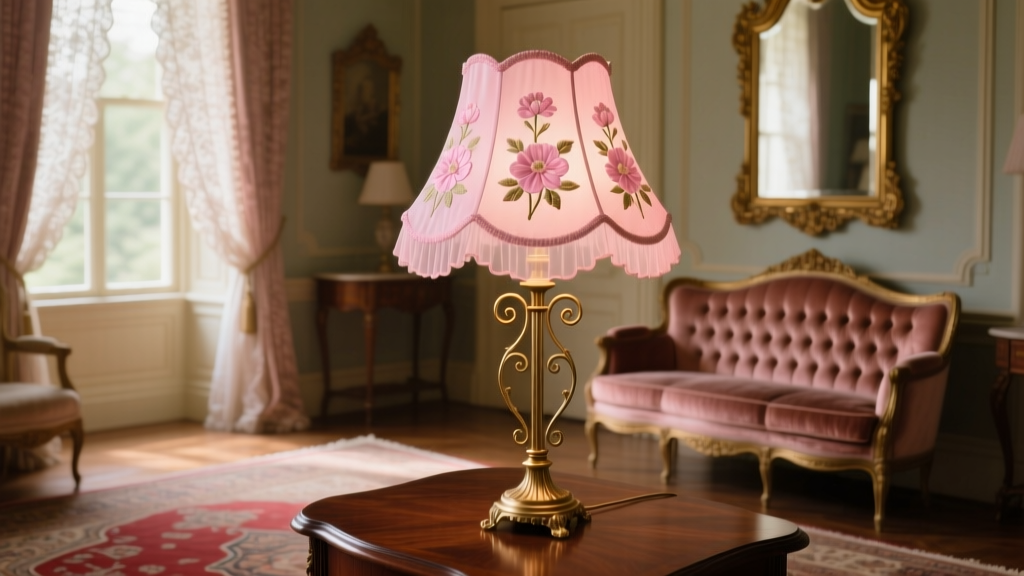
Cordey Lamp Pale Pink Applique Flowers No. 2: Anatomy, Provenance, and Restoration Protocol