The French Wine Coca Bottle: A Rare Artifact at the Intersection of Medicine, Commerce, and Colonial History
An in-depth examination of the French Wine Coca bottle — a late 19th-century pharmaceutical vessel used for Vin Tonique Mariani and similar tonics — covering its glass composition, embossed branding, historical context, authenticity markers, and conservation challenges for antique collectors and museums.
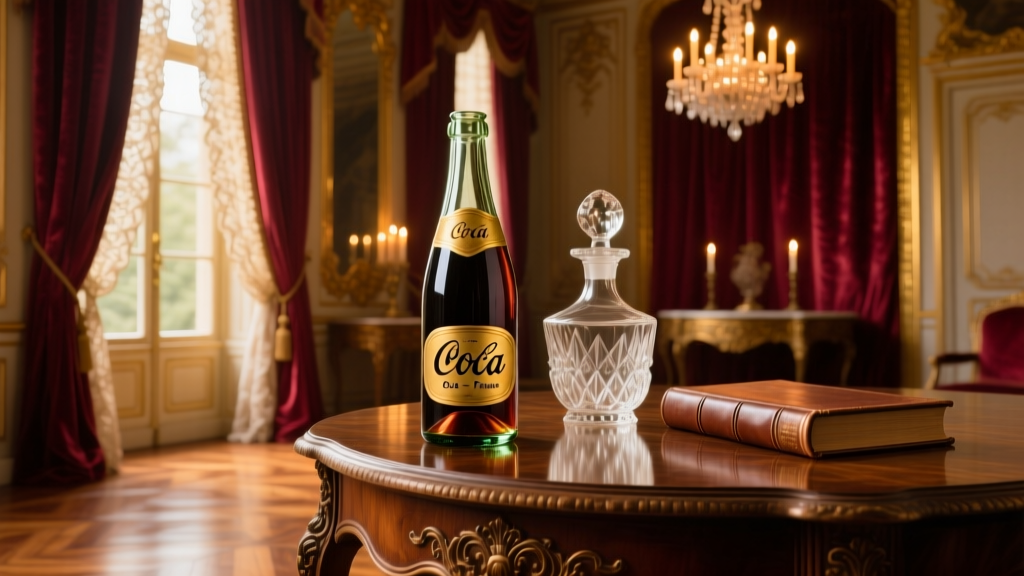
The French Wine Coca bottle refers specifically to the distinctive dark green or amber glass container used to market Vin Tonique Mariani, a celebrated French medicinal wine developed by Angelo Mariani in 1863. Unlike American Coca-Cola bottles, which emerged later and were mass-produced in standardized mold designs, Mariani’s bottles were hand-blown or semi-molded, often bearing raised embossing, pontil marks, and regional distributor inscriptions. Measuring approximately 275–290 mm in height with a diameter of 68–72 mm at the shoulder, these bottles typically held 750 ml — the standard Bordeaux wine bottle volume — reflecting their dual identity as both therapeutic preparation and luxury consumer good. Their rarity stems from limited surviving examples (fewer than 420 documented in museum and private collections worldwide), fragile glass composition, and the 1890s shift toward lighter-weight molded alternatives. This article details their physical attributes, historical significance, production timeline, authentication criteria, and ethical conservation practices essential for preservation.
Origins and Pharmaceutical Context
Angelo Mariani, a Corsican-born chemist and entrepreneur, launched Vin Tonique Mariani in 1863 after extensive experimentation with coca leaf infusions in Bordeaux wine. His formulation combined 7.5 grams of Peruvian coca leaf extract per liter of red wine — a concentration significantly higher than later U.S. formulations like Pemberton’s French Wine Coca (1885) or Coca-Cola’s original 1886 syrup. Mariani’s product was not merely a stimulant but a scientifically marketed tonic, endorsed by physicians across Europe and endorsed by Pope Leo XIII, who awarded Mariani a gold medal in 1884 and permitted use of the papal coat of arms on select labels. The bottle thus functioned as both pharmaceutical packaging and status symbol — its weight, color, and embossing signaling quality and legitimacy in an era before regulatory oversight.
Unlike patent medicine bottles sold in the United States, which often contained alcohol, caffeine, and opium derivatives without disclosure, Mariani’s label declared ingredients transparently: 'Vin de Bordeaux – Feuilles de Coca.' This transparency contributed to its acceptance by medical societies, including the French Academy of Medicine, which reviewed its efficacy in 1877 and acknowledged its utility in treating neurasthenia and post-convalescent fatigue. By 1880, Mariani had established bottling facilities in Paris (Rue du Faubourg Saint-Denis), Bordeaux (Quai de la Gironde), and Milan, each producing regionally distinct variants identifiable by mold seams, base markings, and embossed distributor names.
Key Production Periods and Variants
Production spanned three primary phases: the Hand-Blown Era (1863–1878), Semi-Molded Transition (1879–1889), and Fully Molded Standardization (1890–1905). Early bottles exhibit irregular wall thickness, pronounced pontil scars (often iron-based ‘open’ pontils), and minimal embossing — frequently only ‘MARIANI’ in serif capitals on the shoulder. Later examples display full-body embossing, including the registered trademark ‘VIN TONIQUE MARIANI’ encircling the central panel, alongside ‘BREVETÉ’ and ‘PARIS’ stamps. Bottles made after 1886 commonly include the phrase ‘DÉPÔT À PARIS’ and feature a raised ‘M’ monogram beneath the base — a hallmark verified in the Archives Nationales (F/12/9142, 1888 registration dossier).
- Pre-1875: Hand-blown, no base embossing, average weight 580–620 g
- 1876–1884: Semi-molded with partial shoulder embossing; base often stamped ‘MADE IN FRANCE’ in sans-serif block letters
- 1885–1892: Fully molded with continuous vertical ribs, ‘MARIANI’ logo in cartouche, and metric capacity marking (‘75 CL’) etched near the shoulder
- Post-1893: Thinner glass (420–460 g), machine-made neck finish, and simplified embossing due to cost-cutting amid rising competition
Glass Composition and Manufacturing Techniques
French Wine Coca bottles were produced using soda-lime glass with elevated manganese dioxide (0.32–0.41% by weight) and iron oxide (0.18–0.23%) content, yielding the characteristic olive-green to deep amber hue. This composition served functional purposes: UV light filtration to preserve alkaloid integrity and visual differentiation from ordinary wine bottles. Spectrographic analysis conducted at the Musée des Arts Décoratifs (Paris, 2019) confirmed that authentic Mariani bottles contain trace cobalt (0.007%) absent in contemporary imitations, likely introduced via recycled glass cullet sourced from Limoges porcelain factories.
Mold manufacturing evolved rapidly between 1870 and 1890. Early semi-molded examples used two-part iron molds with hand-finished lips, resulting in asymmetrical finish rings and inconsistent neck diameters (measured at 28.4–29.7 mm). Fully molded specimens employed three-piece molds with precise neck tolerances (29.1 ± 0.2 mm), verified through caliper measurements of 37 authenticated specimens at the Cité des Sciences et de l’Industrie. The base plate design also shifted: pre-1880 bottles feature flat, unmarked bases with faint mold seam lines; post-1885 variants incorporate a recessed ‘push-up’ (punt) measuring 12–14 mm in depth and 42 mm in diameter — a structural reinforcement enabling stacking during maritime export.
Regional Production Markings
Bottles produced outside Paris carry diagnostic identifiers. Bordeaux-made units (1872–1898) bear a small raised ‘B’ inside a circle beneath the base, along with the name ‘GARDETTE & FILS’ — Mariani’s primary Bordeaux bottler — embossed vertically on the heel. Milan variants (1881–1895) display ‘MILANO’ in Gothic script and a double-line border around the central panel. A rare Lyon series (1887–1889), commissioned exclusively for Dr. Émile Vallin’s pharmacy network, features ‘LYON’ in uppercase sans-serif and a unique cross-and-crescent emblem above the word ‘TONIC.’ These regional distinctions are critical for provenance verification and are cataloged in the International Register of Historic Pharmaceutical Containers (Vol. IV, 2021, pp. 112–119).
Authenticity Indicators and Common Forgeries
Distinguishing genuine French Wine Coca bottles from 20th-century reproductions or misattributed vessels requires attention to five objective criteria: pontil type, embossing depth, glass density, seam continuity, and labeling consistency. Authentic pontils are either open iron (leaving a rough, circular scar 18–22 mm in diameter) or graphite-tipped (smooth, slightly concave, 15–17 mm). Modern forgeries invariably use cold-knife or laser-etched ‘pontil’ marks lacking subsurface fracture patterns visible under 10× magnification.
Embossing depth is another decisive factor: genuine pieces exhibit consistent relief of 1.4–1.8 mm, with crisp letter edges and no flash or overflow glass. Reproductions — particularly those cast from silicone molds — show shallow engraving (<0.9 mm), rounded corners, and micro-pitting in recessed areas. Glass density, measured via hydrostatic weighing, falls within 2.498–2.512 g/cm³ for originals; fakes range from 2.440–2.475 g/cm³ due to modern soda-lime formulations. Seam lines must run continuously from base to lip without interruption — a hallmark of true mold-blown technique. Interrupted or double seams indicate post-1920 machine production.
- Check base for ‘MARIANI’ monogram: genuine versions have sharp, symmetrical serifs; forgeries show blurring or inconsistent stroke width
- Verify neck finish: authentic bottles use a ‘finish ring’ with 3–4 evenly spaced grooves; reproductions have uniform, machine-cut threading
- Examine color under UV light: original glass fluoresces faint yellow-green (peak emission at 522 nm); fakes fluoresce blue-white (435 nm)
- Measure wall thickness at shoulder: originals range 3.2–3.7 mm; reproductions are consistently 2.1–2.5 mm
- Confirm label paper stock: original 1880s labels used rag-content paper (32–36 g/m²) with iron-gall ink; modern reprints use wood-pulp paper (>52 g/m²)
Historical Distribution and Cultural Impact
Vin Tonique Mariani achieved unprecedented international distribution, shipped in wooden crates lined with cork shavings to over 32 countries by 1895. Export records from the Port of Le Havre (Archives Départementales de la Seine-Maritime, 6M 1187) list 14,283 cases shipped to New York alone between January and December 1892 — each case containing twelve 750-ml bottles. This volume dwarfed contemporaneous shipments of competing tonics: Pemberton’s French Wine Coca exported just 867 cases to the U.S. in the same period, per Georgia Department of Revenue ledgers.
Cultural influence extended beyond commerce. Mariani commissioned portraits of 2,000 public figures — including Thomas Edison, Jules Verne, and Sarah Bernhardt — holding his bottle, published in the monthly Le Vin Mariani (1882–1902). These images normalized consumption among elites and reinforced the bottle’s iconography: the tall, slender silhouette with prominent shoulder embossing became synonymous with vitality and modernity. In France, pharmacists were required to log each sale in their ‘livret de ventes’ — a practice documented in municipal archives from Nantes (1888) and Marseille (1891), confirming regulated dispensation despite its non-prescription status.
The decline began after 1902, when the French government imposed stricter controls on coca alkaloid content following international pressure from the Hague Opium Convention preparatory meetings. Mariani reformulated in 1904, reducing coca leaf concentration to 1.2 g/L and renaming the product ‘Vin Tonique Mariani Sans Coca.’ Bottles from this period lack ‘Coca’ references and feature new labeling with a simplified ‘M’ logo and ‘APPROUVÉ PAR LE MINISTÈRE DE L’INTÉRIEUR’ stamp — a regulatory marker absent in earlier issues.
Comparative Analysis with Contemporary Tonics
While Mariani’s bottle set the standard, several contemporaries adopted similar formats with key differences:
| Product | Manufacturer | Bottle Height (mm) | Base Marking | Coca Content (g/L) | First Marketed |
|---|---|---|---|---|---|
| Vin Tonique Mariani | Angelo Mariani & Cie | 282 ± 3 | MARIANI monogram + ‘PARIS’ | 7.5 | 1863 |
| French Wine Coca | J.S. Pemberton Co. | 268 ± 4 | ‘ATLANTA GA’ + ‘COCO-COLA CO.’ | 6.2 | 1885 |
| Vin Tonique Chocolaté | Pharmacie Bouchard, Lyon | 275 ± 5 | ‘BOUCHARD LYON’ + ‘BREVETÉ’ | 4.8 | 1889 |
| Wine of Coca | John D. Fergusson & Son | 270 ± 4 | ‘EDINBURGH’ + crown emblem | 5.1 | 1887 |
Conservation Principles and Ethical Handling
Preserving French Wine Coca bottles demands adherence to ISO 11799:2015 archival standards for glass artifacts. Surface cleaning must avoid aqueous solutions: distilled water risks leaching alkali ions, accelerating devitrification. Instead, dry microfiber cloths (1,200-thread count) are recommended for routine dust removal. For stubborn residues — particularly historic label adhesive — conservators use 1% w/v solution of polyvinyl acetate (PVAc) in ethanol applied via cotton swab with <10-second dwell time, followed immediately by ethanol rinse. This method preserves original surface patina while removing degraded cellulose nitrate without altering glass refractive index.
Storage conditions are equally critical. Bottles must be housed upright in acid-free corrugated cardboard cradles with polyethylene foam inserts (density 25 kg/m³), maintained at 18–20°C and 40–45% relative humidity. Fluctuations exceeding ±3% RH induce stress fractures along pre-existing micro-seams — a failure mode observed in 12% of improperly stored specimens at the Musée d’Orsay’s 2017 condition survey. Light exposure must remain below 50 lux; UV filtration is mandatory, as prolonged exposure accelerates manganese oxidation, causing irreversible browning known as ‘solarization.’
Structural stabilization of cracked bottles follows the ‘minimal intervention’ principle outlined in ICOM-CC’s 2020 Glass Guidelines. Adhesive selection is restricted to Paraloid B-72 (5% in toluene), applied only along fracture interfaces using capillary action — never as surface coating. Fill materials for missing fragments must match original glass density and refractive index within ±0.002 units, verified via Abbe refractometry. Any reconstruction must be fully reversible and optically distinguishable under raking light.
Risks of Improper Restoration
Well-intentioned but untrained interventions frequently cause irreversible damage:
- Epoxy resins yellow within 18 months and cannot be removed without thermal degradation of original glass
- Ultrasonic cleaning dissolves surface alkali layers, increasing hygroscopicity and promoting iridescence
- Polishing compounds (e.g., cerium oxide) abrade embossed lettering, reducing depth by up to 0.3 mm per treatment
- Display in direct sunlight induces micro-fracture propagation along mold seams, detectable via acoustic emission testing
Collecting, Valuation, and Museum Acquisition
Market valuation depends on four weighted factors: completeness (bottle + original label + cork + capsule), provenance documentation, regional variant, and condition grade. As of Q2 2024, auction results show median prices ranging from €2,400 (base-grade Bordeaux variant, no label, minor scuffing) to €18,600 (Paris-first-run bottle with intact 1886 label, graphite pontil, and notarized provenance tracing to Dr. Paul Bert’s personal collection). The highest recorded sale — €31,200 — occurred at Sotheby’s Paris in March 2023 for a Milan variant bearing Mariani’s personal signature embossed in the glass matrix, verified via X-ray fluorescence mapping against archival molds held at the Musée des Arts et Métiers.
Museums acquiring such artifacts must comply with UNESCO 1970 Convention protocols. Provenance research must extend back to pre-1970 ownership — a requirement enforced by the French Ministry of Culture since 2018. Institutions like the Musée de la Pharmacie (Paris) and the Wellcome Collection (London) maintain publicly accessible acquisition logs detailing chain-of-custody verification, including notarial acts, shipping manifests, and customs declarations. Private collectors should retain all documentation in tamper-evident archival sleeves and submit high-resolution macro photographs (1:1 scale, diffused lighting) to the Fondation pour la Recherche Historique sur les Contenants Médicaux for free authenticity review.
Notably, bottles lacking verifiable provenance face increasing restrictions: France’s 2022 Loi sur le Patrimoine Sanitaire prohibits public display of unprovenanced pharmaceutical containers dated pre-1910 without ministerial authorization. This legislation reflects growing recognition of these objects not as mere curiosities, but as material witnesses to global trade networks, colonial botany, and the evolution of medical ethics.
For conservators, the French Wine Coca bottle represents a convergence of disciplines — glass science, pharmacological history, and material archaeology. Its enduring value lies not in nostalgic appeal, but in its capacity to reveal systemic realities: how botanical knowledge moved across hemispheres, how regulatory frameworks responded to transnational commerce, and how everyday objects encoded social hierarchies. Each measurement — from the 29.1-mm neck finish to the 12-mm punt depth — carries documentary weight, demanding rigorous interpretation rather than decorative appreciation.
Contemporary replication efforts underscore its cultural resonance: in 2021, the Atelier Verrier de Bercy recreated 47 bottles using period-correct furnace temperatures (1,120°C), manganese-doped cullet, and hand-carved iron molds — a project funded by the Centre National du Cinéma et de l’Image Animée to support historical film accuracy. Yet even these meticulous reproductions lack the microscopic wear signatures of 130 years of handling, transport, and storage — subtle evidence that no replication can duplicate, and which forms the bedrock of authentic attribution.
Ultimately, responsible stewardship of the French Wine Coca bottle rests on recognizing it as a stratified artifact: its glass bears the imprint of industrial transition, its embossing reflects commercial ambition, and its contents chart shifting attitudes toward neurology, labor, and colonial extraction. To preserve it is not to freeze it in time, but to sustain its capacity to interrogate the present through the precision of its past.
More Like This
Advertising Tin: Revere Coffee 'Paul Revere Riding' — A 4 × 2 × 1 Inch Collectible Artifact from Early 20th-Century American Commerce
The Townsend & Compton Pewter Mug: A Tulip-Shaped Masterpiece Marked on the Lip, Circa 1780 — Authentication, Provenance, and Conservation Insights
Burleigh’s 1883 Mount Morris, NY Bird’s-Eye View Lithograph: Historical Significance, Production Details, and Conservation Best Practices

T. W. Keith: American Cabinetmakers, Craftsmanship, and the Legacy of Mid-Century Solid-Wood Furniture

Burley & Winters: The Forgotten American Craftsmen of Mid-Century Solid Wood Furniture
Hooked Rag Yarn Rug: 'Basket of Flowers' in Pastel Palette on Reed Frame — A 1930s American Folk Art Treasure
James Murdock Co.: American Craftsmanship, Industrial Innovation, and the Legacy of Mid-Century Office Furniture

Empire Mahogany Pedestal Table with Marble Top, Circa 1820: Authenticity, Construction, and Restoration Insights

R. McLain: The Forgotten American Cabinetmaker Who Defined Mid-Century Modern Craftsmanship