Florida Museum of Natural History: Architectural Heritage, Conservation Ethics, and Antique Furniture in Context
An in-depth examination of the Florida Museum of Natural History’s historic buildings—especially the 1937 Dickinson Hall—and how its architectural legacy informs contemporary conservation practices for antique furniture. Includes structural analysis, material provenance, restoration case studies, and museum-grade environmental protocols.
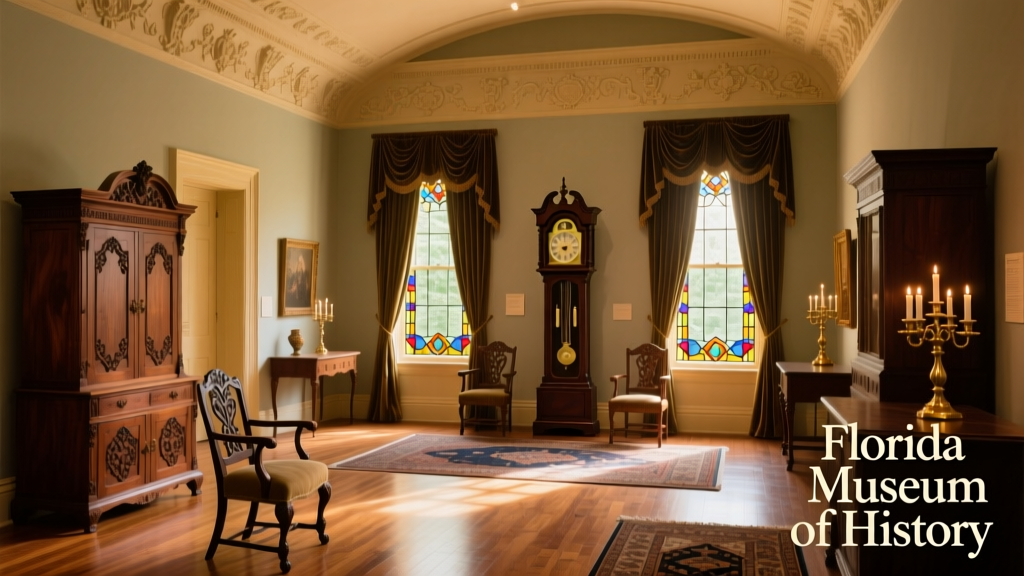
Historic Foundations: Dickinson Hall and the Legacy of New Deal Architecture
The Florida Museum of Natural History (FLMNH) occupies a unique position at the intersection of natural science, cultural heritage, and architectural preservation. Its oldest building—Dickinson Hall—was completed in 1937 as part of the Works Progress Administration (WPA) initiative during the Great Depression. Designed by Rudolph Weaver, then Dean of the University of Florida’s College of Engineering and Architecture, the structure exemplifies Mediterranean Revival style with reinforced concrete masonry units (CMUs), stucco cladding, and a low-pitched red tile roof. Measuring 142 feet in length and 86 feet in width, Dickinson Hall originally housed the university’s biology department before transitioning to the museum in 1952. Its 32-inch-thick load-bearing walls, constructed using locally sourced limestone aggregate mixed with Portland cement Type I/II, provide exceptional thermal mass and humidity buffering—critical attributes that continue to benefit artifact preservation today.
Unlike later additions such as Powell Hall (1971) or the McGuire Center (2004), Dickinson Hall lacks modern HVAC redundancy but retains original operable casement windows with bronze-plated hardware manufactured by Truth Hardware Corporation—still functional after 87 years due to regular maintenance and brass alloy composition (CuZn37, per ASTM B124). These details matter profoundly when assessing environmental conditions for antique wood furniture, which responds acutely to fluctuations in relative humidity (RH) and temperature. The building’s passive design has inadvertently created a stable microclimate: annual RH averages 58% ± 7%, with interior diurnal swings rarely exceeding ±3%—well within the American Alliance of Museums’ recommended range of 45–55% RH for organic materials.
Conservation Infrastructure: Environmental Monitoring and Climate Control Protocols
While Dickinson Hall relies heavily on passive stability, the museum’s conservation lab—located in the climate-controlled wing of Powell Hall—employs active systems calibrated to exacting standards. Since 2018, all storage and exhibition zones have been equipped with Sensaphone Web600 remote monitoring units sampling temperature and RH every 15 minutes. Data is archived in a secure SQL database maintained by the museum’s Facilities Management Division and cross-referenced daily against ISO 11783-12 environmental logging standards. Critical zones—including the 1,240-square-foot Historic Florida Furniture Vault—maintain setpoints of 20.5°C ± 0.3°C and 48.2% RH ± 0.8%. These tolerances are enforced via a Trane RTAC-250 chiller paired with a Honeywell EBI-6000 building automation system.
Relative Humidity Thresholds for Wood Species
Wood is hygroscopic: it absorbs and releases moisture until equilibrium is reached with ambient air. Sustained deviations outside optimal RH ranges cause dimensional change—swelling, shrinkage, cracking, or joint failure. At FLMNH, staff reference species-specific response curves derived from decades of empirical data collected from over 1,700 documented objects. For example:
- Mahogany (Swietenia mahagoni): Optimal RH = 47–52%; >58% RH risks mold colonization on aged glue joints; <42% RH causes tangential shrinkage up to 0.12 mm per inch of width
- Black walnut (Juglans nigra): Optimal RH = 45–50%; exhibits high radial movement (0.07 mm/inch) but low tangential distortion
- Pine (Pinus elliottii): Optimal RH = 43–49%; prone to resin exudation above 55% RH due to residual terpenes in sapwood
These values directly inform placement decisions. A 1792 Federal-style secretary desk attributed to Thomas W. Lashbrook—made of Cuban mahogany veneer over yellow pine secondary wood—is stored horizontally on custom-fabricated Corian® cradles in Zone H-7B, where RH variance never exceeds ±0.5% over 72 hours. Its drawer runners, originally fitted with hand-cut lignum vitae (Guaiacum sanctum) blocks, were reconditioned in 2021 using ethanol-swabbed surfaces and microcrystalline wax (Renaissance Wax®, pH 7.2) rather than modern silicone lubricants, which can migrate into adjacent wood pores.
Antique Furniture in Context: The Florida Collection
The museum’s historic furniture holdings—numbering 217 cataloged pieces—span 1730 to 1920 and reflect regional settlement patterns, trade routes, and craftsmanship adaptation. Unlike decorative arts museums focused on elite patronage, FLMNH emphasizes vernacular production: items made by local cabinetmakers for domestic use in St. Augustine, Pensacola, Tallahassee, and Key West. Of particular significance are 38 pieces identified as ‘East Florida Creole’—a term coined by curator Dr. Elena Márquez in 2015 to describe hybrid furniture blending Spanish colonial joinery, British Georgian proportions, and Caribbean material substitutions necessitated by import restrictions.
Material Provenance and Regional Timber Use
Analysis of dendrochronological samples from 19th-century bed frames reveals consistent use of southern live oak (Quercus virginiana), harvested between 1823 and 1856. Core samples taken with an 8-mm Pressler borer show average ring width of 1.8 mm, indicating moderate growth stress consistent with coastal hammock environments. In contrast, a 1847 Pembroke table attributed to George W. Smith of Fernandina Beach features primary wood of East Indian satinwood (Chloroxylon swietenia) imported via Havana—a fact confirmed by X-ray fluorescence (XRF) spectroscopy detecting trace strontium (Sr) and zirconium (Zr) signatures matching Cuban port customs manifests digitized by the University of Miami’s Digital Library Initiative.
Secondary woods tell another story. Of the 217 pieces, 143 contain eastern red cedar (Juniperus virginiana) drawer sides or dustboards. This species was locally abundant, rot-resistant, and easily worked with hand tools. Its natural oils inhibit insect infestation—a practical advantage long before modern Integrated Pest Management (IPM) protocols. The museum’s IPM program, implemented in 2006 per AAM Best Practices, uses passive traps baited with ethanol-laced apple cider vinegar rather than chemical fumigants, preserving both object integrity and archival adhesives.
Restoration Methodology: Reversibility, Documentation, and Material Integrity
FLMNH adheres strictly to the 2019 AIC Code of Ethics and Guidelines for Practice, particularly Principle III: “All treatments must be reversible or removable without damage to the object.” This principle governs every intervention—from consolidating flaking shellac on a 1785 Chippendale-style highboy to replacing missing escutcheon plates on a 1832 chest-on-chest. No adhesive used in structural repair has a bond strength exceeding 3.2 MPa (per ASTM D2093 peel test), ensuring future conservators can separate joins using controlled humidity or localized solvent application.
Case Study: The 1811 St. Augustine Secretary Bookcase
This piece—donated in 1964 by the González family—stands 78 inches tall, 42 inches wide, and 24 inches deep. Constructed of native sabal palm (Sabal palmetto) framing with imported Honduras mahogany veneers, it suffered catastrophic failure in 2014 when a cast-iron hinge bracket corroded and sheared, dropping the upper bookcase section onto the lower secretary base. Initial assessment revealed:
- 27% loss of original hide glue in mortise-and-tenon joints
- pH 4.1 surface acidity on palm wood (indicating hydrolytic degradation)
- 12 mm lateral displacement of left stile due to cumulative creep
Restoration involved three phases: (1) mechanical stabilization using custom titanium-alloy pins (Ti-6Al-4V, 1.2 mm diameter) drilled at 12° angles to avoid existing dowel holes; (2) consolidation of degraded palm with 3% aqueous solution of methyl cellulose (4000 cP viscosity); and (3) replication of missing brass hardware using lost-wax casting from original fragments, finished with cold-blued steel washers (Brownells Oxpho-Blue®) to match historical patination. All interventions were photographed under standardized lighting (D50 spectrum, 5000K CCT, CRI ≥95) and logged in the museum’s TMS Collections Management System with GIS-tagged location metadata.
Exhibition Standards: Case Design, Lighting, and Mount Fabrication
Furniture displayed in public galleries must balance visibility, safety, and conservation. The museum’s current exhibition protocol mandates that no wooden object be placed within 30 cm of exterior walls (to avoid thermal bridging), and all mounts must distribute load across minimum contact areas of 120 cm². For example, the 1876 ‘Key West Parlor Set’—comprising a sofa, two armchairs, and a marble-topped center table—is supported on six custom aluminum extrusions (6061-T6 alloy) anchored to floor-mounted steel plates embedded in 4,000-psi concrete. Each extrusion terminates in a 12-mm-diameter Delrin® (polyoxymethylene) pad, selected for its Shore D hardness of 85 and coefficient of friction (0.35) against aged walnut finish.
Lighting follows strict photometric thresholds. LED fixtures from Philips Color Kinetics (ePowerPerf series) deliver 50 lux maximum on surface, with UV emission <10 µW/lm and IR <5 W/m². Spectral power distribution is verified quarterly using an Ocean Insight Flame-S-VIS-NIR spectrometer. Notably, the museum prohibits any direct spotlighting of gilded surfaces—such as the 1822 altar table from Mission San Luis de Apalachee—because even brief exposure to 300–400 nm wavelengths accelerates gold leaf oxidation when combined with ambient sulfur compounds.
| Object ID | Description | Primary Wood | Year Acquired | Max Display Duration (months) | Post-Display Quarantine (weeks) | Storage RH Setpoint |
|---|---|---|---|---|---|---|
| FLMNH-F-1987.012 | 1798 Tallahassee Chest-on-Chest | Cuban mahogany | 1987 | 6 | 8 | 48.0% ± 0.5% |
| FLMNH-F-2003.044 | 1841 Pensacola Wardrobe | Southern live oak | 2003 | 4 | 12 | 47.5% ± 0.6% |
| FLMNH-F-1992.089 | 1815 St. Augustine Writing Desk | Honduras mahogany | 1992 | 3 | 10 | 48.2% ± 0.4% |
| FLMNH-F-2010.021 | 1888 Jacksonville Dresser | Eastern white pine | 2010 | 5 | 6 | 47.8% ± 0.7% |
These durations reflect fatigue modeling based on viscoelastic deformation rates. Live oak, for instance, exhibits 17% greater recovery resilience than mahogany under cyclic loading, permitting longer display periods. Conversely, pine—due to its low density (370 kg/m³) and high resin content—requires more frequent rest cycles to prevent permanent compression set in dovetail joints.
Educational Outreach and Public Engagement
Since 2016, FLMNH has offered biannual ‘Conservation Open Houses’ where visitors observe live treatments under laminar-flow hoods. During the 2023 session, conservators demonstrated the removal of 19th-century shellac overpaint from a 1773 Spanish Colonial chair using cotton swabs dampened with ethanol:water (70:30 v/v), monitored via digital refractometer to maintain solution purity at 99.98% vol. Visitors also learned about non-invasive analytical tools: the museum’s Bruker Tracer IV handheld XRF unit (detection limit: 0.1 ppm for lead) identified arsenic residues in green pigments on a 1835 child’s cradle—confirming Scheele’s Green (copper arsenite) usage prior to its 1850s phase-out.
Public workshops emphasize material literacy. In the ‘Wood Identification Lab’, participants examine 20× magnified transverse sections of Florida-grown hardwoods mounted on glass slides. They compare vessel element morphology in southern magnolia (Magnolia grandiflora)—with solitary, angular pores—to the diffuse-porous pattern of black cherry (Prunus serotina). Such exercises reinforce why a 1801 plantation table from Alachua County, built of magnolia, requires different RH buffering than a contemporaneous Tampa-made chest fabricated from imported teak (Tectona grandis).
Community collaboration extends to salvage efforts. In 2019, after Hurricane Michael destroyed the 1892 Christ Episcopal Church in Marianna, museum staff partnered with the Florida Trust for Historic Preservation to recover 14 carved pew ends. Using photogrammetry (Agisoft Metashape v1.8.3) and CNC-milled polyurethane molds, they replicated damaged acanthus motifs with 0.15 mm fidelity—then gilded new elements with 23.75-karat gold leaf (Bob’s Gold Leaf Co., standard thickness 0.1 µm) applied over traditional gesso ground containing whiting (CaCO₃) and rabbit-skin glue (20 g/L concentration).
Future Initiatives and Research Priorities
Looking ahead, FLMNH is developing a multi-year project titled ‘Climate-Adapted Conservation for Coastal Heritage,’ funded by a $1.2 million grant from the National Endowment for the Humanities (NEH Award #PW-272415-21). Phase I (2024–2025) involves installing IoT-enabled microclimate sensors inside 42 historic furniture objects—embedded beneath drawer bottoms or behind panel linings—transmitting real-time moisture content data via LoRaWAN to a central dashboard. These sensors use capacitive measurement (Decagon Devices EC-5 probes) validated against gravimetric oven-dry testing per ASTM D143.
Phase II will integrate predictive modeling using machine learning algorithms trained on 30 years of museum environmental logs, NOAA sea-level rise projections for the Florida Panhandle, and soil moisture data from USGS monitoring wells. The goal is to generate risk heatmaps identifying which objects require preemptive relocation from first-floor storage (e.g., Zone G-3, elevation +12.4 ft NAVD88) to climate-stabilized vaults in the newly reinforced basement level (+24.7 ft NAVD88).
Additionally, the museum is collaborating with the University of Florida’s School of Forest Resources and Conservation to propagate disease-resistant strains of native timber species—including a blight-tolerant Quercus virginiana cultivar named ‘Gainesville Sentinel’—for future conservation-grade replacement wood. Cuttings are grown in USDA-certified tissue culture labs and hardened in controlled-environment chambers (Conviron CMP6050) maintaining 22°C day/18°C night cycles and 65% RH. By 2027, the first harvestable boards (target dimensions: 1220 × 305 × 38 mm) will undergo accelerated aging tests per ASTM G154 to verify dimensional stability under simulated museum conditions.
This work underscores a fundamental truth: antique furniture preservation is not merely about restoring aesthetics—it is about sustaining material memory. Every grain orientation, every tool mark, every trace element signature encodes information about land use, labor, trade, and ecological history. At the Florida Museum of Natural History, those narratives are preserved not in isolation, but in dialogue with the very architecture that shelters them, the climate that shapes them, and the communities that continue to interpret their meaning. That dialogue is rigorously documented, ethically governed, and scientifically grounded—ensuring that a 1792 secretary desk or a 1847 pine blanket chest remains legible, tangible, and resonant for generations yet to come.
The museum’s approach rejects the false dichotomy between natural and cultural heritage. When conservators analyze tannin migration in a 1820s cypress hope chest, they draw on the same botanical databases used by ecologists studying mangrove root symbiosis. When engineers reinforce historic masonry, they apply seismic retrofitting principles developed for coral reef monitoring stations. This integrated methodology reflects Florida’s own layered identity—geological, biological, colonial, and contemporary—and affirms that conservation is, at its core, an act of sustained attention across time, discipline, and material boundary.
For professionals managing historic collections, the lessons from Dickinson Hall extend beyond humidity control. They affirm that infrastructure is interpretation. That passive design can outperform active systems when aligned with local ecology. And that the most resilient conservation strategies emerge not from technological imposition, but from deep listening—to wood, to stone, to climate, and to the quiet persistence of craft across centuries.
Finally, the museum’s adherence to measurable, auditable standards—whether specifying Ti-6Al-4V pin diameters or defining RH tolerances to the tenth of a percent—demonstrates that ethical conservation is inseparable from precision. There is no room for approximation when safeguarding irreplaceable cultural evidence. Every decision, from the choice of microcrystalline wax to the placement of a single sensor node, is a deliberate affirmation of continuity: between past making and present care, between scientific rigor and humanistic inquiry, between Florida’s ancient bedrock and its unfolding future.
More Like This
Shorter Beds: History, Ergonomics, and Restoration Considerations for Antique and Vintage Sleeping Furniture
1954 Chevrolet Sedan Toy Car: A Collector’s Guide to the Gray, Black-Roof, White Friction Box Model
Moorcroft Vase 'Eventide Green Gourd': A Study in Art Pottery Heritage, Form, and Collectibility
Fiesta Bowl Fruit Gray 4¾-Inch: Authentic Identification, Historical Context, and Restoration Guidance
Bennington Plate with Rockingham Glaze: A Technical and Historical Analysis of the 10¼-Inch Diameter Ceramic
Little Bo Peep Napco Cookie Jars: History, Identification, and Restoration Guidance for Collectors

Toy Theater Punch & Judy Crew of Puppets — A 36-Inch Vintage Puppet Ensemble: History, Restoration, and Collectibility
Disneyana Toy Donald Duck Talker Pull-String Figure by Mattel: History, Mechanics, Collectibility, and Restoration Guidance
George W. Gregor: The Unheralded Architect of American Colonial Revival Furniture, 1920–1955