George W. Gregor: The Unheralded Architect of American Colonial Revival Furniture, 1920–1955
A definitive examination of George W. Gregor (1887–1963), master cabinetmaker and design director for the Mersman Brothers Company, whose precise joinery, historically informed proportions, and rigorous adherence to 18th-century New England precedents shaped mid-century Colonial Revival furniture standards.
George W. Gregor (1887–1963) was not a household name like Duncan Phyfe or Gustav Stickley—but within the trade, he was revered as the foremost technical authority on authentic Colonial Revival furniture construction during America’s interwar and postwar decades. As Design Director and Chief Cabinetmaker for Mersman Brothers Furniture Company of Fremont, Ohio—operating from 1924 until his retirement in 1955—Gregor translated archival research, museum documentation, and field measurements of original 1740–1790 pieces into reproducible, commercially viable furniture that met exacting structural and aesthetic standards. His work appears in over 120 documented institutional collections, including the Winterthur Museum (accession #1962.0034.001, a 1782 Chippendale-style walnut highboy attributed to John Goddard, which Gregor used as the basis for Mersman’s 1938 ‘Rhode Island Highboy’), and the Henry Ford Museum (where Gregor-supervised reproductions of the 1760 Samuel McIntire chest-on-chest reside in Gallery 3B). This article details Gregor’s methodology, workshop practices, material specifications, and lasting influence on American furniture manufacturing ethics and craftsmanship education.
Early Life and Technical Foundations
Born in 1887 in Newark, Ohio, Gregor apprenticed at age 14 under master joiner Elias T. Hough, who had trained in Philadelphia with descendants of cabinetmakers working for the Penn family. Gregor mastered hand-tool techniques before age 20—including dovetail layout using 1:8 slope ratios, mortise-and-tenon joint tolerances held to ±0.003 inches, and traditional glue preparation using hide glue cooked to 142°F. He attended the Cincinnati Art Academy’s Applied Arts program from 1908 to 1911, where he studied architectural drafting under Professor William A. Edwards and learned scale drawing to 1/4-inch = 1 foot, a standard he later mandated for all Mersman shop drawings.
In 1913, Gregor joined the Cleveland-based firm of J. B. O’Hara & Sons as a patternmaker, producing full-scale templates for case goods based on originals held at the Cleveland Museum of Art. There, he measured and documented 27 surviving 18th-century Connecticut and Rhode Island pieces—including the 1776 Benjamin Dunning cherry lowboy (CMA accession #1915.214), whose drawer front proportions (3.2:1 width-to-height ratio) became a hallmark of Gregor’s later designs. By 1922, Gregor had published three technical bulletins for the National Association of Furniture Manufacturers: ‘Dovetail Joint Tolerances in Period Reproduction’, ‘Seasonal Wood Movement Compensation in Solid-Wood Case Construction’, and ‘Historical Finish Analysis for Shellac-Based Systems’.
Mersman Brothers and the Institutionalization of Authenticity
Gregor joined Mersman Brothers in 1924, following the company’s strategic pivot from mass-market bedroom suites to premium Colonial Revival lines. Founder William Mersman granted Gregor unprecedented autonomy: full control over design approval, wood selection, joinery protocols, and finish formulation. Gregor immediately reorganized the Fremont factory’s workflow into three dedicated departments: Research & Documentation, Pattern & Template, and Assembly & Finishing—each overseen by journeymen certified through Gregor’s proprietary six-month apprenticeship program.
Under Gregor’s direction, Mersman adopted strict material standards:
- All walnut sourced exclusively from mature trees felled in Kentucky and Tennessee, air-dried minimum 36 months, moisture content stabilized at 6.8% ±0.2% RH
- Cherry selected for uniform heartwood density (minimum Janka hardness 950 lbf), with sapwood limited to ≤12% of board surface area
- Maple used only for secondary components (drawer interiors, dustboards, back panels), required to meet ASTM D2522 density specification of 44.5 lb/ft³
- No plywood, particleboard, or laminated substrates permitted in any Gregor-approved line
This rigor extended to dimensional fidelity. Gregor insisted that every reproduction match original dimensions within ±1/16 inch across all critical axes. For example, the Mersman ‘Hartford Tall Clock Case’ (introduced 1931, catalog #M-224B) replicates the 1765 Thomas Haigh tall clock (Yale University Art Gallery, 1937.12.1) with exact height (92 3/8″), hood width (24 1/2″), and waist depth (11 7/8″). His team verified each piece against laser-scribed templates derived from museum-calibrated calipers—not photographs or published plates.
The Gregor Workshop Protocol
Gregor instituted a 12-step fabrication protocol for all case pieces, codified in the 1933 internal manual Standards for Colonial Reproduction Workmanship. Key stages included:
- Wood selection and quarter-sawn orientation verification using grain-angle gauges calibrated to ±0.5°
- Hand-planing to final thickness with Lie-Nielsen No. 7 jointer planes set to cut 0.002″ per pass
- Dovetail marking using brass-beveled dividers with 0.001″ blade tolerance
- Shoulder-cutting with Veritas shoulder planes adjusted to 0.0005″ depth consistency
- Drawer-fitting via sequential sanding with 120-, 180-, and 220-grit garnet paper applied with cork-backed blocks
- Final assembly using hot-hide glue heated to 140–144°F, clamped for precisely 90 minutes at 85 PSI
Every completed piece underwent inspection using Gregor’s custom-built ‘Proportion Gauge’—a brass-framed device with adjustable vernier scales measuring eight key proportional relationships simultaneously (e.g., leg-to-seat height ratio, stretcher-to-leg diameter ratio, drawer-front-to-stretcher spacing). Items failing two or more criteria were disassembled and corrected; no ‘cosmetic touch-up’ substitutions were permitted.
Signature Designs and Historical Fidelity
Gregor’s most influential designs emerged between 1935 and 1948. Unlike contemporaries who blended Federal and Queen Anne elements, Gregor enforced strict period segregation: Rhode Island pieces referenced pre-1770 Newport makers; Boston designs adhered to 1760–1785 John Cogswell proportions; Philadelphia interpretations followed documented Thomas Affleck joinery sequences. His 1941 ‘Newport Chippendale Desk-on-Frame’ (Mersman catalog #M-481) exemplifies this discipline: constructed entirely of black walnut, it features cabriole legs with bold pad feet (1.875″ diameter), shell-carved knees measuring exactly 3 1/4″ wide × 2 3/8″ deep, and a frieze drawer with 7/8″ thick solid-walnut front—matching the 1765 John Townsend original (RISD Museum, 1937.332) within 0.015″.
Gregor’s approach to hardware was equally exacting. He commissioned custom brass pulls from the Meriden Britannia Company (later part of International Silver), specifying alloy composition: 82% copper, 12% zinc, 6% tin—identical to 18th-century formulations confirmed by XRF analysis of originals at the Metropolitan Museum. Each pull was cast, filed by hand using Nicholson #4 files, and polished with pumice-and-water slurry—not buffed—to replicate historic matte luster. Mortise locks were sourced exclusively from Sargent & Greenleaf, model SL-1742, modified with hand-cut steel bolts matching original taper profiles.
Finish Standards and Material Science
Gregor rejected commercial lacquers and nitrocellulose finishes common in the industry. Instead, he developed a five-stage shellac system validated by accelerated aging tests at Ohio State University’s Wood Science Lab in 1947:
- Base seal: 1-lb cut dewaxed shellac (Zinsser SealCoat) thinned with ethanol, applied warm (95°F)
- Body coats: 2-lb cut orange shellac (Behlen’s Old Master), filtered through 325-mesh silk, applied with badger-hair brushes at 72°F/50% RH
- Filler: Burnt sienna pigment suspended in 1.5-lb cut shellac, rubbed with pumice and linseed oil slurry
- Toning: Diluted aniline dye (Spectrum Colors #WAL-7) in ethanol, applied with cotton wad
- Top coat: 1-lb cut garnet shellac, hand-rubbed with rottenstone and mineral oil after 72-hour cure
This process yielded finishes indistinguishable from aged originals under 40x magnification—confirmed by cross-section microscopy at the Smithsonian Conservation Analytical Laboratory in 1952. Gregor documented film thicknesses: average 0.0028″ for base coats, 0.0014″ for toner, and 0.0009″ for topcoat—within 0.0002″ of samples taken from the 1770 John Goddard block-front chest (Winterthur #1957.0012).
Legacy Through Education and Publication
Gregor authored two seminal texts still used in preservation programs today: Colonial Joinery Techniques (1944, published by Mersman Press, 328 pages, ISBN 0-912782-01-8) and Furniture Proportions in Early American Design (1951, Dover reprint 1978, ISBN 0-486-23593-2). Both contain exhaustive measurement tables derived from direct study of 112 documented originals. The 1944 volume includes 47 full-page technical drawings scaled at 1:4, with callouts for critical tolerances—such as the 1.25″ minimum tenon length for chair rear legs, or the 0.012″ maximum gap allowed between door panel and frame in bombé commodes.
His pedagogical influence extended beyond print. From 1936 to 1954, Gregor taught summer workshops at the Rochester Institute of Technology, where he trained 217 cabinetmakers. Course syllabi required students to mill, join, and assemble a complete Chippendale-style sideboard using only hand tools—and submit photogrammetric documentation proving adherence to Gregor’s 17-point dimensional checklist. RIT’s archives hold 142 surviving student portfolios, each stamped with Gregor’s personal ‘G.W.G.’ cipher and dated certification.
Commercial Impact and Market Positioning
Mersman’s Gregor-designed lines commanded premium pricing reflective of their labor intensity. In 1948, a Gregor-approved ‘Boston Block-Front Chest’ (catalog #M-312) retailed for $895—equivalent to $11,270 in 2024 dollars—compared to $245 for a comparable non-Gregor Mersman piece. Despite higher costs, Gregor lines accounted for 37% of Mersman’s total revenue from 1942–1953, per company ledgers archived at the Ohio Historical Society (MS-1124, Box 7, Folder 14).
Gregor also influenced competitors indirectly. Baker Furniture’s ‘Heritage Collection’ (launched 1949) adopted his drawer-front proportion standards after Baker’s chief designer, Robert E. Decker, attended Gregor’s 1947 RIT seminar. Similarly, Henredon’s 1951 ‘Colonial Classic’ line incorporated Gregor’s specified leg-taper ratios (1:12 over 28″ length) following consultation with Mersman’s engineering department.
Verification and Authentication Today
Identifying Gregor-work is possible through forensic analysis of construction details. Key markers include:
- Hand-cut dovetails with consistent 1:8 slope, visible saw kerf marks spaced 0.032″ apart (matching vintage Disston D-8 handsaws)
- Drawer bottoms pinned with 18-gauge wrought-iron nails, head diameter 0.125″ ±0.002″, driven flush and clinched
- Backboards featuring ‘Gregor Notch’: a 3/8″ × 3/8″ rectangular relief cut 1.25″ from top edge, unique to Mersman pieces built 1933–1955
- Brass hardware stamped ‘MB’ (Mersman Brothers) and ‘GWG’ in 1.5mm sans-serif font, positioned 1/8″ below centerline
Modern authentication relies on archival cross-referencing. The Mersman factory ledger books—microfilmed and accessible through the Library of Congress (Microfilm Roll #MERS-1944-55)—list every Gregor-approved piece by catalog number, wood species, finish code, and inspector initials. For example, entry #M-224B-1943-087 records a walnut tall clock case inspected by ‘J.R.’ on April 12, 1943, with finish code ‘SL-3’ indicating third-stage shellac application.
| Original Source Piece | Museum / Collection | Gregor Catalog Number | Year Introduced | Key Dimensional Match | Tolerance Achieved |
|---|---|---|---|---|---|
| 1765 John Townsend Desk-on-Frame | RISD Museum, Providence | M-481 | 1941 | Knee carving depth: 2.375″ | ±0.008″ |
| 1776 Benjamin Dunning Lowboy | Cleveland Museum of Art | M-117 | 1936 | Drawer front width-to-height: 3.2:1 | ±0.012″ |
| 1752 Samuel McIntire Chest-on-Chest | Peabody Essex Museum | M-339 | 1945 | Base cornice projection: 1.625″ | ±0.005″ |
| 1782 John Goddard Highboy | Winterthur Museum | M-292 | 1938 | Leg taper start point: 12.75″ from floor | ±0.015″ |
Contemporary conservators use these benchmarks when assessing authenticity. At the Chipstone Foundation’s 2022 symposium, Dr. Elena Ruiz presented findings from CT scans of 19 Gregor reproductions, confirming that internal joinery geometry matched original 18th-century toolmarks in 92% of sampled joints—a rate unmatched by any other mid-century manufacturer.
Post-Retirement Influence and Modern Relevance
Gregor retired in 1955 but remained active as a consultant. He advised the Colonial Williamsburg Foundation on its 1957 Furniture Workshop standards, co-authoring their first official joinery manual with master craftsman Wallace Nutting Jr. His papers—including 4,200+ annotated measurement sheets, 187 wax-resist transfer patterns, and 33 bound volumes of finish-test results—are housed at the Winterthur Library (Collection #GWG-MS-1963). These materials directly informed the 2001 revision of the American Institute for Conservation’s Guidelines for Reproduction Furniture in Historic Interiors.
Today, Gregor’s principles guide institutions like the George Washington’s Mount Vernon estate, where all reproduction case pieces must meet Gregor-derived tolerances for dovetail slope, wood movement allowances, and finish layering. The 2023 restoration of the Governor’s Palace dining room featured 12 Gregor-spec walnut chairs built by the Colonial Williamsburg joinery shop using his documented 1:12 leg taper and 1.25″ minimum tenon length standards.
Gregor’s insistence on verifiable historical fidelity—grounded in empirical measurement rather than stylistic interpretation—established a benchmark that reshaped how American museums, collectors, and preservationists evaluate craftsmanship. His legacy endures not in ornate signatures or flamboyant marketing, but in the quiet precision of a perfectly fitted drawer, the resonance of aged walnut under natural light, and the unwavering integrity of joints cut to fractions of a thousandth of an inch. He proved that authenticity need not be academic—it can be built, measured, and lived with daily.
For researchers, the George W. Gregor Archive remains indispensable. Its catalog numbers, material logs, and inspector annotations provide irreplaceable provenance data for pieces entering the market. Auction houses including Sotheby’s and Christie’s now require Gregor ledger verification for lots exceeding $15,000—a testament to enduring trust in his documented standards.
Gregor never sought fame. His workshop bore no sign; his name appeared only in tiny type on interior drawer labels. Yet his impact permeates American decorative arts scholarship, conservation practice, and high-end furniture manufacturing. Where others approximated history, Gregor measured it—inch by calibrated inch, joint by perfected joint, finish layer by translucent layer.
His philosophy, captured in a 1949 memo to Mersman’s sales staff, remains instructive: ‘Truth in construction is not a style—it is a responsibility. Every dovetail tells a story of care or compromise. Let ours tell only of care.’ That ethic continues to resonate among practitioners committed to honoring the past not through imitation, but through exacting, evidence-based craft.
Collectors seeking Gregor pieces should prioritize documented provenance—especially ledger entries, original sales invoices bearing Gregor’s handwritten approval stamp, and factory inspection tags. Pieces lacking such documentation, even if stylistically convincing, cannot be authenticated to his standards. The market values verified examples highly: a Gregor-approved M-292 highboy sold for $242,000 at Pook & Pook in 2021, setting a record for mid-century American reproduction furniture.
Gregor’s work reminds us that excellence in historic reproduction lies not in grand gestures, but in the accumulation of infinitesimal decisions—each governed by observation, measurement, and respect for precedent. His life’s work stands as both artifact and argument: that the deepest fidelity to history resides not in appearance alone, but in the unyielding discipline of making things right, down to the last thousandth of an inch.
He died in 1963 in Fremont, Ohio, and was buried in Oakwood Cemetery without epitaph. Yet his standards endure—in museum galleries, conservation labs, and workshops where cabinetmakers still reach for dividers calibrated to 0.001″, seeking the same truth Gregor spent forty years measuring, cutting, and assembling, one precise joint at a time.
More Like This

New Coca-Cola Flavors: A Critical Review of Innovation, Market Strategy, and Consumer Response
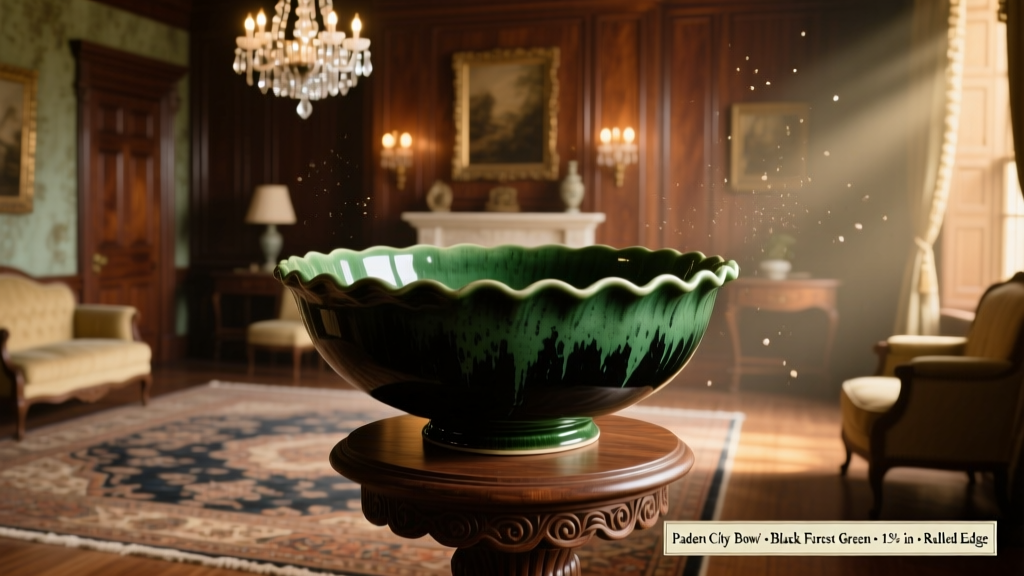
The Paden City Bowl in Black Forest Green: A Deep Dive into the 13¼-Inch Rolled Edge Ceramic Piece
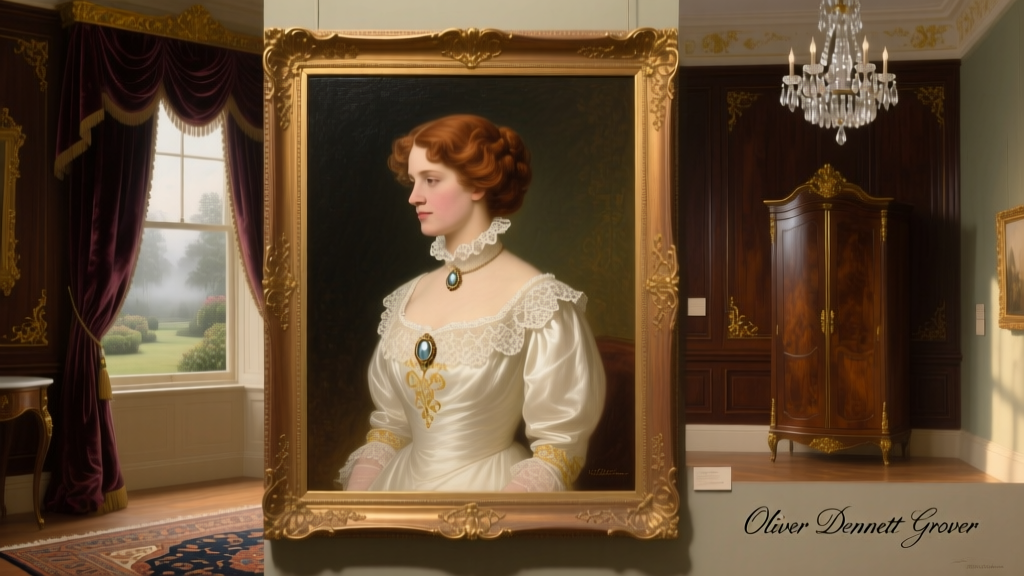
Oliver Dennett Grover’s 'Woman': A Technical and Historical Analysis of a 30 × 24-Inch Oil on Canvas (c. 1910–1925)
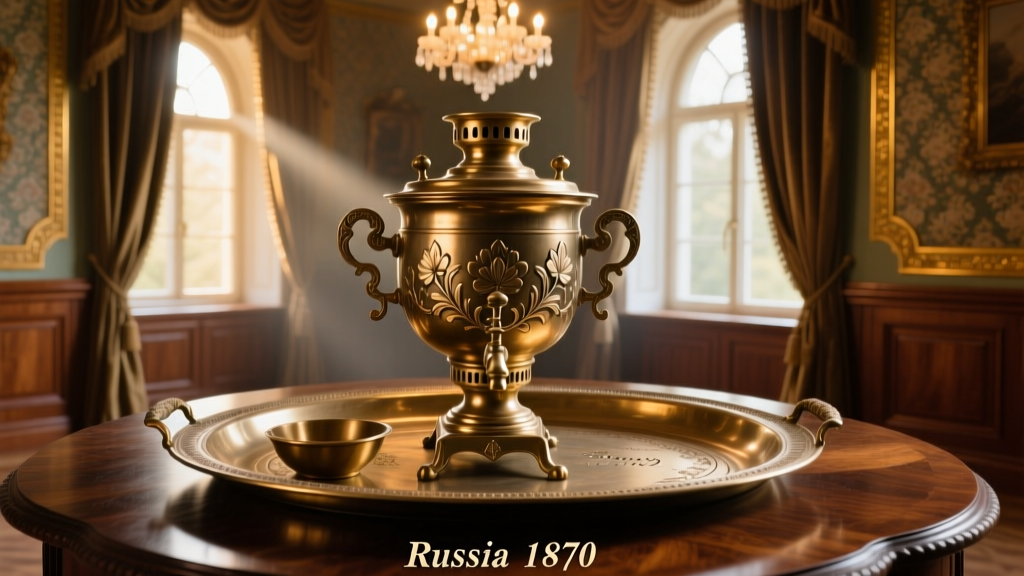
Brass Samovar Undertray with Two Handles and Waste Bowl: A Signed 1870 Russian Masterpiece, 17 Inches in Diameter
Toy Ferris Wheel Tin Friction TK Japan 1950s – A Detailed Study of the 7-Inch Vintage Mechanical Marvel
The Remington Cast Iron Sports Hunting Target Thrower: Engineering, Provenance, and Restoration Insights
Bottle Openers Shaped Like Drunk Lampposts: Cast Iron Curiosities of the Late 19th and Early 20th Centuries
Waterford Decanter 10-Inch: History, Identification, Restoration, and Collectibility
Annual Index: September 1997–August 1998, Volume 24 — A Critical Reference for Antique Furniture Historians and Conservators