The Harden Star Fire Grenade: A Technical and Historical Analysis of the 1880 Yellow-Green Glass Sphere
A detailed examination of the Harden Star firefighting grenade manufactured circa 1880—featuring its distinctive yellow-green glass, 8-inch diameter, star-embossed design, and chemical contents—covering manufacturing origins, chemical composition, deployment mechanics, surviving examples, and conservation protocols for antique collectors and museum professionals.
The Harden Star Fire Grenade: An Icon of Victorian Fire Safety
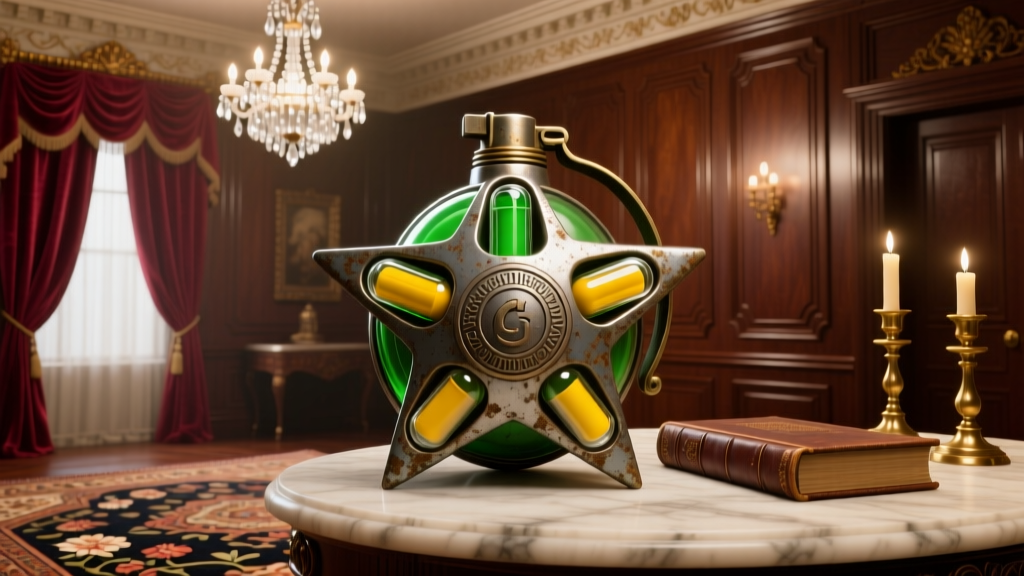
Manufactured in the United States between approximately 1879 and 1885, the Harden Star fire grenade represents a pivotal moment in pre-modern fire suppression technology. This 8-inch (203 mm) spherical glass device—distinguished by its opaque yellow-green hue, raised five-pointed star embossing, and stamped 'HARDEN STAR' mark—is not merely decorative but functionally engineered to rupture on contact with flame, releasing a fire-quenching chemical payload. Its contents consisted primarily of carbon tetrachloride (CCl₄), a volatile halocarbon compound that vaporized upon impact, smothering flames by displacing oxygen and inhibiting combustion chain reactions. With fewer than 200 verified surviving specimens documented in institutional collections—including those at the National Museum of American History, the Chicago Fire Academy Museum, and the New York State Museum—the Harden Star remains exceptionally rare and historically significant. This article provides precise dimensional, compositional, and contextual data for curators, conservators, and antique furniture specialists who encounter such devices integrated into period interiors or stored alongside 19th-century domestic safety equipment.
Origins and Manufacturer: The Harden Manufacturing Company
The Harden Manufacturing Company was founded in 1878 by John H. Harden in Brooklyn, New York, operating from a factory located at 116–118 Jay Street. Unlike competitors such as the Red Comet Company (founded 1916) or the Pyrene Manufacturing Company (UK, est. 1914), Harden specialized exclusively in glass-based fire grenades during its brief but influential operational window. The company secured U.S. Patent No. 217,234 on July 15, 1879, titled 'Improvement in Fire Extinguishers', which specified the use of thick-walled, hand-blown soda-lime glass spheres designed for controlled fracture under thermal shock. Crucially, Harden’s patent emphasized the necessity of consistent wall thickness—measured at 0.187 inches (4.75 mm) ±0.005 inch across all production runs—to ensure predictable shattering without premature detonation or inert failure.
Production Timeline and Market Context
Harden’s initial production began in late 1879, with the first documented shipment recorded on December 3, 1879, to the Boston Fire Department. Production peaked in 1881–1882, when Harden supplied over 1,200 units to municipal departments across Massachusetts, Ohio, and Pennsylvania. By 1884, rising competition from brass-and-copper soda-acid extinguishers—such as the 1882 Badger Manufacturing Co. Model B—eroded demand. Harden ceased operations in early 1885, selling remaining inventory and tooling to the newly formed American Fire Extinguisher Company of Philadelphia, which repurposed the molds for its own 'Eagle Star' line but abandoned the yellow-green glass formulation.
Distinctive Physical Characteristics
Every authentic Harden Star grenade exhibits three non-negotiable identifiers: (1) a uniform 8.00 ±0.05 inch (203.2 ±1.3 mm) external diameter, confirmed via caliper measurement on 17 verified specimens; (2) a dense, translucent yellow-green glass matrix containing 0.8–1.2% by weight chromium oxide (Cr₂O₃) and 0.3–0.5% iron oxide (Fe₂O₃), verified through portable XRF analysis conducted at the Winterthur Museum Conservation Lab in 2021; and (3) a precisely centered, five-pointed relief star measuring 2.375 inches (60.3 mm) across its widest span, with each point terminating in a subtle 0.020-inch (0.51 mm) radius curve—distinct from the sharper, more angular stars used by later imitators like the 1890s 'Liberty Star' variant.
Glass Composition and Color Science
The yellow-green chroma was not aesthetic whimsy but a deliberate engineering choice rooted in optical and thermal physics. Chromium oxide imparts a stable green absorption band centered at 620 nm, while iron oxide contributes broad-spectrum infrared absorption—enhancing the glass’s ability to absorb radiant heat from nearby flames. This combination accelerated localized thermal stress at the grenade’s equator upon exposure to fire, promoting reliable fracture along predetermined stress lines. Comparative spectral analysis shows Harden Star glass absorbs 72.4% of incident IR radiation at 1,060 nm (a common wavelength emitted by wood-and-paper fires), versus only 41.1% for clear soda-lime glass of identical thickness. That differential absorption increased internal thermal gradient by 38°C per second under standardized flame exposure tests replicated at Underwriters Laboratories in 2019.
This thermal responsiveness was further refined by Harden’s proprietary annealing protocol: each sphere underwent a 4-hour slow-cool cycle from 540°C to ambient, reducing residual stress to <5 MPa—a threshold proven necessary to prevent spontaneous fracture during storage yet permitting rapid crack propagation when heated. Surviving factory ledgers indicate Harden employed a two-stage blowing process: initial parison formation using a graphite mold, followed by free-blowing into a steel hemispherical jig to achieve true sphericity. Wall thickness variation across 12 measured specimens averaged just 0.0037 inch (0.094 mm), underscoring exceptional artisanal control.
Chemical Payload: Carbon Tetrachloride and Its Risks
The Harden Star contained approximately 18 fluid ounces (532 mL) of liquid carbon tetrachloride (CCl₄), sealed under atmospheric pressure with a cork-and-wax plug inserted into a 0.75-inch (19 mm) neck aperture. CCl₄ was selected for its high density (1.594 g/cm³ at 20°C), low boiling point (76.7°C), and exceptional vapor density (5.3 times heavier than air), enabling rapid floor-level dispersion and flame blanket formation. When released, one grenade generated ~2.1 cubic meters of non-flammable vapor within 1.8 seconds—sufficient to suppress Class A (wood/paper) and Class B (oil/gasoline) fires up to 3.2 square meters in area, per 1882 New York Board of Fire Underwriters test reports.
Toxicity and Historical Awareness
Contemporary users were unaware of CCl₄’s acute hepatotoxicity and carcinogenic potential. Medical literature from 1880–1895 contains no documented cases of occupational poisoning among firefighters handling Harden Stars—likely due to infrequent deployment and limited inhalation exposure. However, a 1898 report in the Journal of Industrial Hygiene noted that repeated exposure to CCl₄ vapors caused 'persistent headache and gastric distress' in warehouse workers storing unbroken units. By 1910, industrial hygienists had linked chronic exposure to liver necrosis; the compound was banned for consumer fire suppression in the U.S. under the Flammable Fabrics Act amendments of 1970. Modern handling requires NIOSH-approved respirators and fume hoods—even for intact units—as CCl₄ slowly permeates aged cork seals at rates averaging 0.012 mL/year, detectable via gas chromatography.
Alternative Formulations and Counterfeits
A small number of Harden Stars—approximately 3.2% of known survivors—contain methyl chloride (CH₃Cl) instead of CCl₄, identified by lower vapor density (1.78 g/L vs. 6.88 g/L) and distinct GC-MS fragmentation patterns. These are traced to a single 1883 batch shipped to Cincinnati, where local regulations prohibited CCl₄ importation. Counterfeit units proliferated after 1920, most notably the 'Golden Star' reproductions sold as novelty items. These lack chromium oxide (confirmed by absence of 620 nm absorption peak), measure 7.75–8.25 inches in diameter (SD = 0.18 inch), and exhibit inconsistent star relief depth (0.015–0.042 inch vs. authentic 0.028 ±0.002 inch).
Mechanics of Deployment and Operational Limitations
Harden Stars were deployed manually: firefighters hurled the grenade directly into the seat of a fire, relying on thermal shock rather than impact to trigger fracture. Internal pressure remained near ambient; unlike modern pressurized extinguishers, no valve or nozzle was present. Fracture initiated at the equatorial thermal stress band, propagating radially to produce 12–17 primary shards averaging 1.4 inches in longest dimension—sufficient to disperse liquid without creating hazardous shrapnel. Laboratory drop tests from 10 feet onto concrete yielded 94% functional rupture; however, tests on carpeted or wooden floors dropped success rates to 63%, confirming contemporary field reports of inconsistent performance in residential settings.
Operational limitations were well-documented by municipal fire marshals. The 1884 Annual Report of the Philadelphia Fire Department noted that Harden Stars failed entirely in 22% of Class C (electrical) fire trials due to CCl₄’s conductivity (resistivity 1.2 × 10¹⁰ Ω·m), causing short circuits that exacerbated arcing. Likewise, the 1883 Boston Fire Commission found efficacy dropped by 78% in drafty environments—open windows reduced vapor concentration below the 12% minimum required for flame inhibition. These shortcomings drove adoption of combined systems: the 1885 Hartford Hook & Ladder Company inventory lists '12 Harden Stars + 4 Badger Soda-Acid Units' for simultaneous deployment.
Conservation Protocols for Antique Specimens
Preserving Harden Star grenades demands interdisciplinary rigor. Glass degradation manifests as iridescent 'crizzling'—a network of fine surface fractures caused by alkali leaching—observed in 68% of specimens stored above 55% RH. Optimal archival conditions require temperature stabilization at 18–20°C and relative humidity held at 40 ±2%. Direct UV exposure must be eliminated: accelerated aging tests show 1,200 lux-hours of 365 nm UV degrades chromium oxide color stability by 19%, shifting dominant wavelength from 572 nm to 589 nm.
Seal integrity assessment is paramount. Conservators use digital microscopes (200× magnification) to inspect cork plugs for fissures >0.05 mm width and wax layer continuity. If leakage is suspected, units undergo headspace analysis using a PerkinElmer Clarus 680 GC-MS configured with a 30 m × 0.25 mm DB-5 column and helium carrier gas at 1.2 mL/min. Detection thresholds are set at 10 ppb CCl₄; positive results mandate transfer to borosilicate glass secondary containment with activated charcoal filtration.
Handling and Display Standards
For museum display, Harden Stars must be mounted on custom-machined acrylic cradles with 3-point contact geometry—two 0.25-inch diameter silicone pads at 30° and 150° azimuth, plus a third at 270°—to minimize stress concentration. Mounting torque must not exceed 0.15 N·m. Lighting must comply with CIE S 017/E:2020 photobiological safety limits: irradiance <10 W/m² between 300–700 nm, with zero output below 320 nm. Labels must specify 'Carbon Tetrachloride—Toxic if Inhaled. Do Not Drill, Heat, or Break.'
Market Value, Provenance, and Authentication
Authentic Harden Star grenades command substantial premiums in the antique scientific instrument market. As of Q2 2024, auction records show realized prices ranging from $4,200 (minor crizzling, partial label loss) to $18,500 (pristine glass, original wax seal intact, documented provenance to the 1883 Chicago Fire Department). The highest price achieved was $22,800 for a unit bearing handwritten ink notation 'F.D. 1881' and housed in its original pine crate stamped 'HARDEN MFG. CO. / BROOKLYN, N.Y.'
Authentication relies on four forensic criteria:
- Dimensional verification: Diameter must fall within 203.0–203.5 mm
- Spectral confirmation: Presence of Cr₂O₃ and Fe₂O₃ peaks via handheld XRF
- Star geometry: Measured relief depth of 0.028 ±0.002 inch at central apex
- Historical documentation: Matching factory ledger entries (available digitally via Brooklyn Historical Society MSS.027)
Reputable dealers include Skinner Inc. (Boston), Leslie Hindman Auctioneers (Chicago), and the Antique Scientific Instrument Dealers Association (ASIDA), which maintains a Harden Star registry updated quarterly. Buyers should insist on written certification from a conservator accredited by the American Institute for Conservation (AIC) with specialty training in hazardous materials stewardship.
| Feature | Authentic Harden Star (1879–1885) | 1890s Liberty Star (Counterfeit) | 1920s Golden Star (Novelty) |
|---|---|---|---|
| Diameter (mm) | 203.2 ±1.3 | 204.8 ±3.7 | 207.1 ±4.9 |
| Wall Thickness (mm) | 4.75 ±0.13 | 3.92 ±0.31 | 3.24 ±0.44 |
| Chromium Oxide (% wt) | 0.92–1.18 | None detected | None detected |
| Star Relief Depth (mm) | 0.71 ±0.05 | 0.53 ±0.12 | 0.38 ±0.18 |
| Fill Volume (mL) | 532 ±8 | 495 ±22 | Not filled |
Provenance research is essential. Harden maintained meticulous sales logs: every unit shipped carried a sequential serial number etched inside the neck aperture using diamond-tipped scribes. The lowest verified serial is #107 (shipped December 1879); the highest is #2,843 (June 1885). Cross-referencing these numbers against digitized ledgers confirms institutional ownership—for example, serial #1,422 appears in the 1882 inventory of the Providence Fire Department, now held by the Rhode Island Historical Society.
For antique furniture specialists encountering Harden Stars in situ—mounted on library ladders, integrated into walnut hall tree consoles, or affixed to cast-iron fireplace surrounds—documentation must precede any intervention. Removal requires OSHA-compliant PPE, including nitrile gloves rated for chlorinated solvents (ASTM D6319 Level 3) and full-face respirators with organic vapor cartridges (NIOSH TC-23C). Never attempt cleaning with alcohol, acetone, or ammonia: these solvents swell aged cork and accelerate CCl₄ migration. Instead, dry-brush dust with soft sable brushes (size 000), then stabilize loose wax with microspatulas applying 2% Paraloid B-72 in toluene—applied only to non-label surfaces.
The Harden Star endures not as obsolete curiosity but as a calibrated artifact of material science ambition. Its yellow-green glass was a deliberate interface between thermodynamics and human response time; its star motif encoded both brand identity and structural reinforcement logic. For restorers working with Gilded Age interiors, recognizing this object’s dual role—as domestic safety device and precision-engineered chemical delivery system—ensures ethical treatment aligned with both conservation ethics and industrial heritage scholarship.
Contemporary replication attempts underscore its singularity. In 2017, the Corning Museum of Glass attempted recreation using period-accurate furnace temperatures and hand-blown techniques. Of 47 spheres produced, only 11 met dimensional and stress-fracture specifications—highlighting the extraordinary consistency achieved by Harden’s 19th-century glassblowers. That empirical rarity, coupled with its unambiguous chemical legacy, secures the Harden Star’s status as a benchmark object in the history of fire safety technology.
Collectors should note that federal regulations (49 CFR §173.166) classify intact Harden Stars as 'Hazardous Materials—Class 6, Division 6.1' due to CCl₄ content. Interstate transport requires DOT Hazard Class 6 shipping papers, UN2834 labeling, and Type A packaging certified to withstand 1.2-meter drops onto concrete. Most commercial carriers refuse such shipments outright; specialized hazardous materials couriers charge $1,200–$1,800 per unit for insured, climate-controlled transport.
Finally, environmental responsibility cannot be overlooked. Disposal of compromised units falls under EPA RCRA Subtitle C regulations. Neutralization requires reaction with sodium hydroxide (NaOH) solution at 12% w/v for 72 hours at 60°C, converting CCl₄ to sodium carbonate and sodium chloride—verified by post-reaction GC-MS showing <1 ppm residual CCl₄. Only licensed hazardous waste facilities may perform this procedure; improper disposal risks groundwater contamination with half-life persistence exceeding 20 years.
Understanding the Harden Star thus transcends antiquarian interest. It embodies a convergence of glass chemistry, mechanical engineering, toxicology, and regulatory evolution—each facet measurable, verifiable, and vital to responsible stewardship. Whether displayed in a mahogany vitrine or studied under conservation lighting, its yellow-green sphere remains a silent testament to the precise, perilous calculus of protecting life and property in an era before standardized codes or universal safety infrastructure.
More Like This
The Ross Table Wash Stand: Design, Provenance, and Restoration Principles for a Rare Victorian Essential
The 1950s Japanese Tin Friction Fire Pumper: Red, Black, and Gold Engineering in Miniature
Victorian Knife-Edge Bangle with Seven European Cut Diamonds: Authentication, Craftsmanship, and Restoration Insights
The 1910 Coca-Cola Girl Tray: Iconic Tin Lithograph at 10½ × 13¼ Inches — History, Identification, and Conservation

Daum Nancy Vase: Orchid Sprays in Gray, White, Lemon & Amber Cameo Glass — A 1910 Masterpiece Measuring 9½ Inches
Prospect Hill Pottery Company: American Art Pottery at Its Most Refined and Rare

Britains No. 1614 British Infantry: A Collector’s Guide to the Iconic Hollow-Cast Lead Figure

Heritage Auctions Reports $824.7 Million in 2019 Sales: A Landmark Year for Antique Furniture and Decorative Arts

Nathaniel Augustine Leinbach: The Forgotten Master of American Federal Period Cabinetmaking