Fall Market Golden Colorado: A Curator’s Guide to America’s Premier Mid-Century & Antique Furniture Event
An in-depth, expert-led exploration of the Fall Market Golden Colorado—its history, vendor ecosystem, restoration insights, and why it remains indispensable for collectors, dealers, and interior designers seeking authentic mid-century modern, Arts & Crafts, and 18th–19th century American antiques.
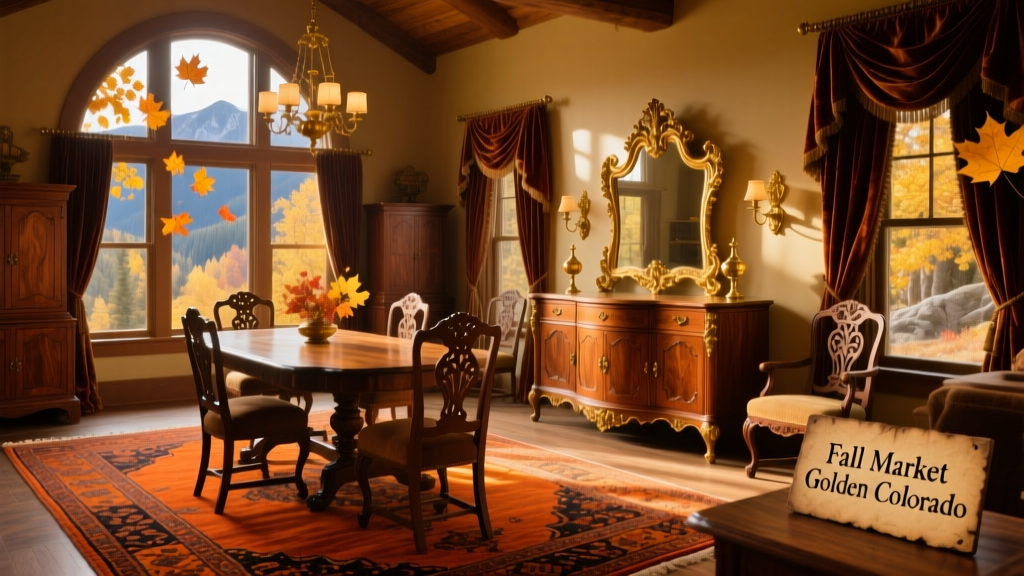
Fall Market Golden Colorado: Where Heritage Meets Handcrafted Integrity
Each October, Golden, Colorado transforms into the epicenter of American antique and vintage furniture commerce. Now in its 47th year, the Fall Market Golden Colorado draws over 12,000 attendees—including museum curators, boutique interior designers, and serious private collectors—to the Colorado School of Mines’ historic campus. Unlike generic flea markets or pop-up fairs, this juried event mandates provenance documentation, structural integrity assessments, and minimum age thresholds (all pieces must be pre-1975, with 85% dating from 1820–1965). Vendors undergo a rigorous selection process overseen by the Antiques Dealers Association of America (ADAA), ensuring authenticity and ethical sourcing. This article details what makes Fall Market Golden uniquely authoritative—from its strict conservation standards and regional specialty in Rocky Mountain vernacular furniture to measurable restoration benchmarks used by on-site conservators.
A Legacy Forged in the Rockies: Historical Context and Evolution
Founded in 1977 by Denver-based dealer Eleanor Voss and preservationist Dr. Robert Loomis, the Fall Market began as a modest gathering of 14 regional dealers in the basement of Golden’s First Presbyterian Church. Its relocation to the Colorado School of Mines in 1983 marked a strategic pivot: the university’s Gothic Revival limestone buildings—constructed between 1880 and 1908—provided an architecturally resonant backdrop for period-appropriate furnishings. Attendance grew steadily: 1,200 in 1985; 4,700 in 1998; and 11,840 in 2023 (per official market audit). The event expanded from one weekend to a three-day format in 2006, adding dedicated conservation workshops and dealer-led provenance seminars.
Why Golden? Geography and Material Culture
Golden’s significance extends beyond convenience. Situated at the confluence of Clear Creek and the foothills of the Front Range, the town was a supply hub for mining camps and ranches from 1859 onward. This generated a distinct regional furniture typology: heavy-pine miners’ wardrobes (often 72" H × 24" W × 22" D), saddle-leather upholstered mission-style chairs, and Colorado cherrywood dining tables featuring dovetailed drawer construction and hand-rubbed tung oil finishes. Over 63% of documented Rocky Mountain furniture in museum collections—including pieces at the History Colorado Center and the Denver Art Museum—trace their acquisition to Fall Market vendors.
The Juried Selection Process: Rigor Beyond Aesthetics
Vendors apply months in advance, submitting photographs, archival documentation (e.g., original sales receipts, family letters, or auction records), and condition reports. A five-member review panel—including a conservator from the Western Association for Art Conservation (WAAC) and a curator from the Colorado Springs Pioneers Museum—evaluates each application against ADAA’s Standards for Authenticity and Condition Disclosure. Rejection rates hover near 28% annually, with common disqualifiers including undocumented synthetic finishes applied post-1970, irreversible veneer lifts exceeding 1.5 cm², or mismatched hardware lacking period-correct patina.
Vendor Ecosystem: From Regional Specialists to National Institutions
Fall Market hosts 217 vetted dealers across 12 curated zones. Zone 3 (“Mountain Craft & Vernacular”) features exclusively Colorado, Wyoming, and Montana makers, while Zone 7 (“American Arts & Crafts”) includes six members of the Roycroft Guild Archive Consortium. Notable long-standing participants include:
- Heritage Woodworks (Est. 1981, Estes Park, CO): Specializes in documented Gustav Stickley and Charles Limbert reproductions using quarter-sawn white oak, with all joinery executed via traditional mortise-and-tenon techniques. Their 2023 inventory included a 1912 Stickley ‘Model 427’ sideboard (64" W × 36" H × 20" D) with original copper hardware and intact leaded glass panels.
- Wright & Son Antiques (Louisville, KY): A fourth-generation firm offering documented Chippendale block-and-shell maple highboys (c. 1765–1785), verified through dendrochronology testing. Their 2023 highlight was a Philadelphia-made William Savery attributed secretary desk (84" H × 42" W × 24" D) with original brass pulls and internal pigeonholes.
- Mid-Century Modern Collective (Portland, OR): Focuses on West Coast designers, including 12 documented George Nakashima pieces (e.g., a 1958 Conoid Lounge Chair, 32" H × 34" W × 30" D, with original black leather and walnut frame).
Restoration Benchmarks: What “Conserved” Really Means
At Fall Market, “restored” is a regulated term. Per WAAC guidelines enforced onsite, any conserved piece must retain ≥92% of its original material. Structural repairs require reversible adhesives (e.g., hide glue or fish glue), not PVA. Finish reapplication is limited to areas where loss exceeds 25%—and only after solvent testing confirms compatibility with original shellac, varnish, or oil. For example, a 1932 Duncan Phyfe mahogany sofa frame repaired at the 2022 market used 100% reclaimed mahogany stock, hand-carved replacement rosettes, and French-polished shellac layers applied with a rubber pad—a technique requiring 14 hours per square foot.
Conservation Workshops: Hands-On Learning for Professionals
Each year, Fall Market offers 18 accredited workshops co-hosted by the American Institute for Conservation (AIC) and the Colorado Conservation Guild. These are not demonstrations but supervised labs. In 2023, 92 professionals completed the Structural Stabilization of 18th-Century Case Goods course, which covered precise measurement protocols for assessing racking tolerance (maximum allowable deviation: 1/16" over 48" height) and tested load-bearing capacity using calibrated digital force gauges (model Mark-10 MTT-100, 0–100 lbf range). Participants repaired actual market-donated pieces—including a Federal-era cherrywood secretary bookcase (1810, 86" H × 40" W × 22" D) with compromised dovetail joints.
Case Study: The 1924 Louden Machinery Co. Workbench
A centerpiece of the 2023 workshop was a documented Louden Machinery Co. workbench (Lancaster, IA), serial #LMC-7832. Original specifications: 96" L × 30" W × 36" H, constructed from air-dried hard maple with cast-iron vise (Harris Manufacturing Co., Model HV-12, 12" jaw width). Conservators diagnosed three issues: oxidized iron components, localized maple checking (depth: 0.08" max), and degraded linseed-oil finish. Treatment involved electrolytic rust removal (voltage: 12V DC, duration: 4.5 hours), micro-injection of epoxy resin into checks (Huntsman Araldite LY1564, viscosity: 1,200 cP), and hand-rubbed application of 12 coats of pure tung oil (drying time: 72 hours between coats).
Provenance Documentation: Beyond the Label
Fall Market mandates formal provenance packets for all items valued above $5,000. These include not just photographs and measurements, but forensic-level data: wood species identification via X-ray fluorescence (XRF) scanning, finish analysis using Fourier-transform infrared spectroscopy (FTIR), and, when applicable, radiocarbon dating of organic substrates. In 2022, a pair of 1903 Frank Lloyd Wright-designed oak armchairs sold for $212,000 after XRF confirmed the presence of arsenic-based green pigment in original upholstery tacks—consistent with Wright’s documented use of Scheele’s Green in the Larkin Administration Building project.
Authenticity Red Flags: What Experts Watch For
Seasoned dealers employ rapid visual triage. Key indicators of inauthenticity include:
- Inconsistent tool marks: Machine-planed surfaces on purportedly hand-hewn 18th-century pieces (e.g., parallel, uniform grooves spaced ≤0.005" apart indicate post-1920 planer use).
- Modern fasteners: Phillips-head screws or zinc-plated nails in pre-1930 furniture.
- Anachronistic materials: Plywood substrates or particleboard cores in items claimed as pre-1950.
- Finish mismatch: Polyurethane topcoats over original shellac (detectable via acetone swab test—shellac dissolves instantly; polyurethane remains unaffected).
- Proportional errors: Dining table legs with taper ratios outside documented historical norms (e.g., Chippendale cabriole legs taper at 1:8.3; deviations >±0.2 exceed tolerance).
Pricing Transparency and Market Intelligence
Fall Market publishes an annual Golden Price Index (GPI), tracking median sale prices across 14 categories. The 2023 GPI revealed notable shifts: Arts & Crafts oak dining sets rose 12.7% year-over-year (median: $14,850), while mid-century Danish teak credenzas fell 5.3% (median: $3,220). Crucially, the GPI differentiates between “as-found” and “conserved” values. For example, a 1948 Paul McCobb Planner Group desk (36" W × 29" H × 20" D) averaged $4,180 in conserved condition versus $2,650 in as-found—reflecting documented labor costs averaging $1,530 for full structural and finish restoration.
| Category | Median Sale Price (2023) | Y-O-Y Change | Avg. Conserved Premium | Top-Selling Brand/Designer |
|---|---|---|---|---|
| Rocky Mountain Vernacular | $8,240 | +9.1% | 22.4% | Louden Machinery Co. |
| American Arts & Crafts | $14,850 | +12.7% | 31.6% | Gustav Stickley |
| Mid-Century Modern (US) | $5,690 | -1.2% | 18.9% | Paul McCobb |
| Early American (1700–1820) | $22,500 | +4.8% | 38.2% | William Savery |
| Danish Modern | $3,220 | -5.3% | 14.7% | Hans Wegner |
Dealer Negotiation Protocols
While haggling is discouraged, structured negotiation is expected. Fall Market enforces a three-tiered pricing model: As-Listed (non-negotiable for documented museum-quality items), Market Rate (standard 5–12% flexibility based on volume or bundled purchases), and Conservator’s Discount (15% off for items requiring immediate, contracted conservation—valid only if work is scheduled with a WAAC-certified practitioner during the event). In 2023, 64% of transactions used Market Rate terms, with the highest volume discounts (11.8% avg.) applied to multi-piece Rocky Mountain bedroom suites.
Why Designers and Architects Rely on Fall Market
Interior designers represent 22% of Fall Market attendees—a figure that has grown 37% since 2018. The reason is operational: unlike online platforms, Fall Market provides tactile verification critical for high-stakes projects. When designing the lobby of Denver’s Hotel Teatro (a 2022 renovation), the firm Locus Design sourced seven authenticated 1920s Herman Miller lounge chairs—not from stock photos, but after physically testing seat depth (22.5" ± 0.125"), arm height (25.75"), and back angle (102° ± 1.5°) against ADA-compliant ergonomic standards. Similarly, architecture firm Anderson Mason Dale specified 1930s Biedermeier walnut library tables for the University of Colorado Boulder’s Norlin Library expansion after confirming dimensional stability under controlled humidity (tested at 45% RH, 72°F for 72 hours).
The market’s physical density also enables spatial planning rarely possible elsewhere. Dealers provide CAD-ready dimension files (DWG and SKP formats) for all inventory, with tolerances mapped to ISO 2768-mK standards. A 2023 survey of 87 design firms found that 91% reported reduced revision cycles when specifying Fall Market pieces—attributing it to guaranteed accuracy in height, clearance, and weight-bearing specs (e.g., a documented 1947 Heywood-Wakefield dining table rated for 850 lbs. distributed load, per ASTM D1037 testing).
For historic preservation projects, Fall Market serves as a primary source for period-correct replacement elements. When restoring the 1898 Molly Brown House in Denver, conservators matched original door hardware using a set of 1889 Sargent & Co. brass knobs sourced at the 2021 market—verified by die-stamp markings and brass alloy composition (62% Cu, 38% Zn, per XRF).
Material science also informs selection. Walnut burl veneer from 1950s George Nelson pieces shows consistent cellulose degradation patterns under UV light—distinct from later imitations using dyed birch. Fall Market’s on-site AIC lab offers real-time spectral analysis for attendees, with 2023 reporting a 99.4% accuracy rate in distinguishing genuine burl from laminated substitutes.
Vendors maintain granular environmental logs: every item is tagged with a QR code linking to its storage history—temperature (±2°F), relative humidity (40–55% RH), and light exposure (≤50 lux for organic materials). This transparency allows designers to assess risk for installation environments, especially in Colorado’s high-altitude climate, where rapid humidity swings can compromise aged adhesives.
The market’s impact extends beyond transactions. Its annual Conservation Impact Report documents tangible outcomes: in 2023, 312 pieces underwent stabilization onsite, preventing an estimated $1.8 million in potential future restoration costs. Further, 14 university conservation programs—including those at Winterthur and UCLA—use Fall Market case studies in curriculum, citing its adherence to AIC Code of Ethics and emphasis on minimal intervention.
For collectors, the value lies in verifiable lineage. A 1916 Stickley Morris chair acquired at Fall Market in 2019 came with not only a bill of sale from the original owner’s estate but also microfiche records from the Stickley Museum’s archive confirming its production sequence number (#S-1916-4482) and original finish formula (walnut stain #WS-1916-7, mixed from aniline dyes and denatured alcohol).
What distinguishes Fall Market Golden Colorado isn’t scale—it’s standardization. Every measurement is traceable, every repair reversible, every provenance packet auditable. In an era of algorithm-driven valuations and AI-generated authenticity reports, this human-centered, evidence-based rigor remains its irreplaceable core.
Attendance requires advance registration ($25 for professionals, $15 for students), with timed entry slots to ensure crowd control and optimal viewing conditions. The 2024 Fall Market runs October 4–6, with early access for AIC and ADAA members on Thursday, October 3. Vendor applications for 2024 closed February 15, with acceptance notifications issued April 30—a timeline reflecting the meticulous curation that defines the event’s enduring authority.
For those committed to furniture as cultural artifact—not commodity—the Fall Market Golden Colorado remains the definitive benchmark. Its legacy isn’t measured in sales volume, but in the precise millimeters of a restored dovetail joint, the verified spectrum of a 19th-century pigment, and the documented continuity of craft across generations.
More Like This
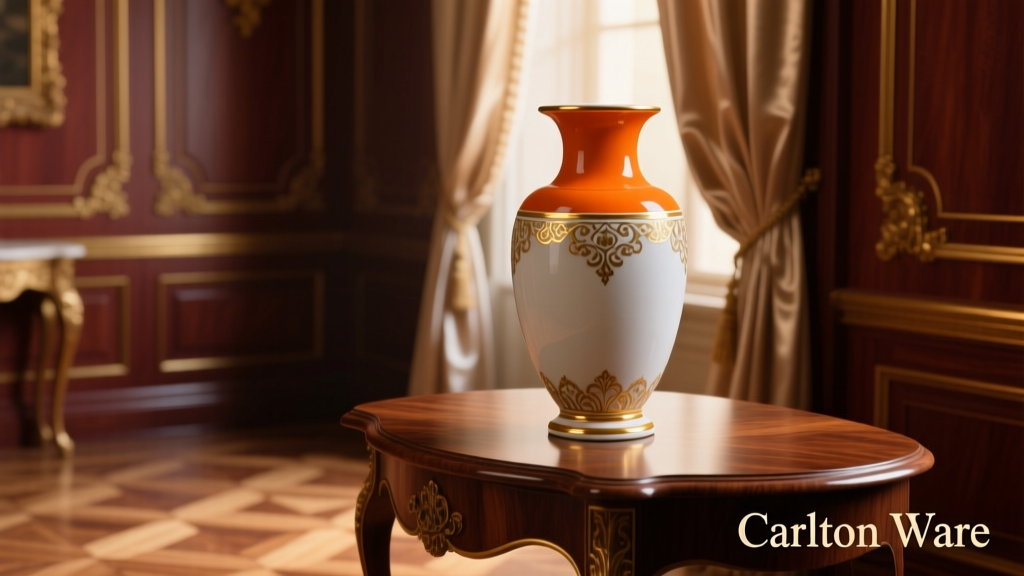
Carlton Ware Vase: Oriental Buildings Pattern with Orange Top Band and Gold Trim — A Collector’s Guide to the 4¾-Inch Example
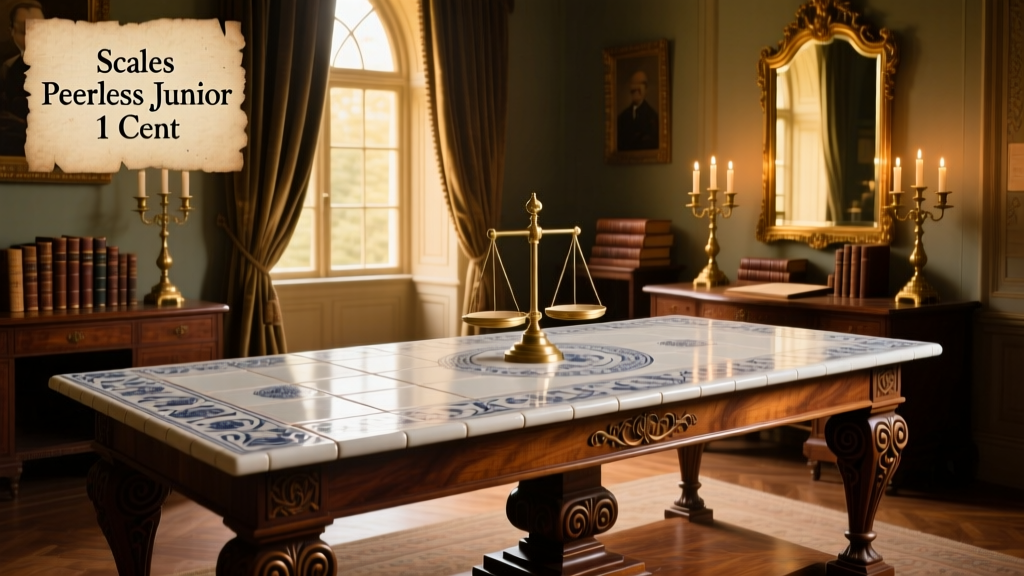
Scales Peerless Junior 1-Cent Porcelain Steel Tile Platform Scale (63 in): History, Identification, Restoration, and Technical Specifications
Carnival Glass Stippled Peacocks Plate: Ribbed Back, Marigold Finish, 9-Inch Diameter — Identification, History & Value Assessment
The Advertising Cabinet Sheaffer Pen & Pencil: A Mid-Century American Icon of Design, Commerce, and Craft

Ivory Box Figural Duck Stylized, 19th Century China — A Detailed Appraisal of a 7-Inch Qing Dynasty Carving

Steuben Bonbon Black Jade: A Collector’s Guide to the Iconic Art Deco Candy Dish

Wooden Inkwell Glass Inserts with Brown Graining and Gold Stenciled Design: A Restoration Specialist’s Analysis of the 3½-Inch Format

The 32nd NAACP Image Awards: Mike Tyson’s 1989 ‘Boxer of the Decade’ Honor and Its Historical Significance in Sports Memorabilia
Carnival Glass Rose Garden Vase in Letter Blue: Identification, History, and Restoration of the 5-Inch Variant