The Art and Ethics of Fake Finishes in Antique Furniture Restoration
A detailed examination of faux wood graining, marbleizing, and other imitation surface techniques used on 18th–20th century furniture—covering historical context, identification methods, conservation ethics, material science, and practical restoration protocols.
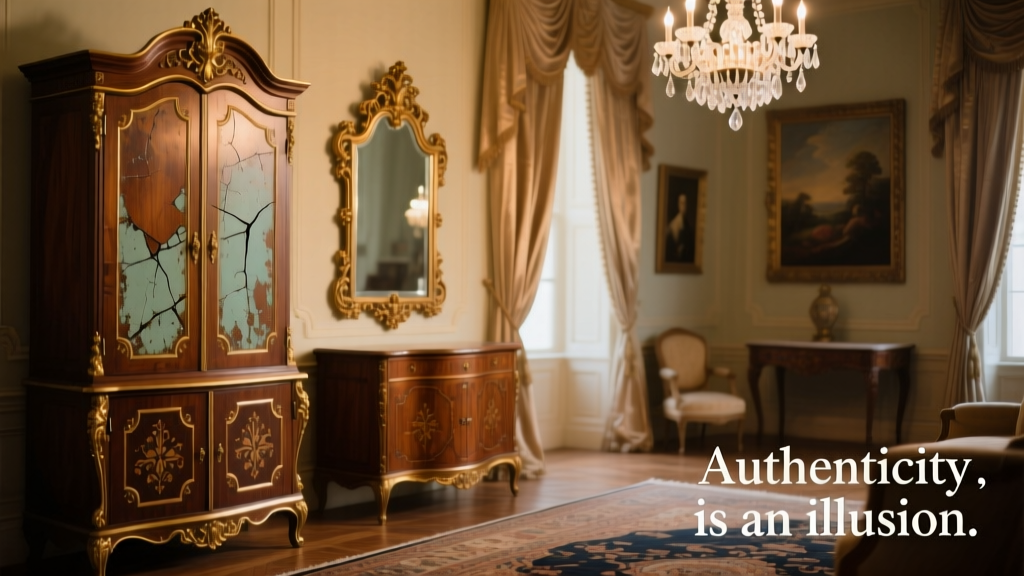
What Are Fake Finishes—and Why They Matter
Fake finishes—also known as imitation or decorative finishes—are painted or chemically manipulated surface treatments designed to mimic the appearance of more expensive or rare materials. Common examples include grained pine made to resemble mahogany, plaster castings finished to imitate black Belgian marble, and lacquered papier-mâché imitating rosewood. These techniques were widely employed from the mid-18th century through the 1930s, particularly in English, American, and German cabinetmaking. Understanding fake finishes is essential not only for accurate dating and attribution but also for ethical conservation: stripping or overpainting a historically significant grained finish can erase irreplaceable evidence of workshop practice, social aspiration, and economic reality. This article details how these finishes were executed, how to identify them with precision, and why their preservation—when stable and original—carries equal weight to preserving solid walnut veneer.
Historical Context: From Economy to Aesthetic Statement
Fake finishes emerged not solely from cost-cutting necessity but from evolving design philosophies and material constraints. In England, the 1750–1790 period saw widespread use of grained softwoods in provincial Chippendale-style furniture. Mahogany was imported at £45–£62 per ton (equivalent to roughly £8,200–£11,300 today), while deal pine cost just £7–£12 per ton. Cabinetmakers like Thomas Chippendale’s London workshop occasionally subcontracted finishing to specialists such as John Crace, who maintained a dedicated ‘graining book’ listing 47 distinct grain patterns by 1772. In America, the Federal period (1780–1820) featured elaborate maple-grained cherry desks sold by firms including John Henry Belter of New York—whose 1842 ledger records 32 ‘rosewood-finished’ sideboards priced at $42.50 each (vs. $127 for genuine rosewood).
Economic Drivers and Social Signaling
By the Victorian era, fake finishes became tools of domestic aspiration. The 1851 Great Exhibition showcased J. & J. P. Doulton’s parian ware vases finished to resemble Sèvres porcelain—a technique involving tin-oxide glaze over bisque, fired at 1,180°C. Similarly, the 1876 Centennial Exposition in Philadelphia displayed Goyard’s traveling trunks with hand-grained poplar panels imitating Circassian walnut, achieving visual parity with $1,200 solid-walnut equivalents at one-sixth the cost. These finishes communicated status without demanding capital investment—yet they were never intended to deceive connoisseurs. Contemporary trade manuals, such as R. W. Billings’ The Baronial and Ecclesiastical Antiquities of Scotland (1852), explicitly advised architects that ‘imitation stone must be clearly distinguishable at arm’s length’.
Industrialization and Standardization
The rise of factory production accelerated finish standardization. Between 1885 and 1912, the American Finishers’ Association published twelve editions of The Practical Grainer’s Manual, which codified 19 official grain patterns—including ‘Tiger Maple’, ‘Bird’s Eye’, and ‘Curly Walnut’. Each pattern specified brush stroke width (0.8–1.2 mm), base coat viscosity (measured at 85–92 KU using a Stormer viscometer), and drying intervals (minimum 90 minutes between layers). Companies like Sherwin-Williams introduced ‘Grain-O-Lac’ in 1908—a nitrocellulose-based varnish system with pre-mixed pigment pastes calibrated for consistent results across 12,000+ furniture factories nationwide.
Technical Execution: Materials and Methods
Authentic fake finishes relied on precise layering and physical manipulation—not simple painting. A typical 1890s mahogany graining sequence began with a lead-white undercoat (mixed with linseed oil at 1:2.3 ratio), followed by a translucent umber glaze (22% burnt umber, 78% damar varnish), then a ‘dragging’ phase using a 3.5 cm-wide badger-hair graining comb pulled at 12° angle to simulate ray fleck. Final highlights used zinc white mixed with turpentine (1:4) applied with a dry hog-bristle stippler. Marbleizing required even greater finesse: a base of Venetian red + lampblack (7:1 ratio) was laid over gesso, then overlaid with streaks of calcite-filled distemper (particle size 8–12 μm) dragged with a feather quill to replicate veining. The resulting surface achieved a refractive index of 1.54–1.57—within 0.02 of genuine Carrara marble.
Brushwork and Tooling
Graining tools evolved significantly over time. Pre-1840 English workshops used hand-carved boxwood combs with teeth spaced at 1.8 mm intervals; post-1860 American manufacturers adopted stamped steel combs with 2.1 mm spacing for faster throughput. The ‘feather-drag’ technique for marbleizing demanded specific feather types: primary wing feathers from adult turkey males (average shaft diameter 1.4 mm, barbule density 28/cm) produced optimal veining, whereas goose feathers yielded blurred edges. Documentation from the 1903 Chicago Furniture Manufacturers’ Convention confirms that licensed grainers were required to pass tool calibration tests—measuring drag resistance within ±0.3 N using a Chatillon DFS-2 force gauge.
Chemical Composition and Aging Signatures
Modern analytical techniques reveal critical aging markers. Fourier-transform infrared spectroscopy (FTIR) identifies binder degradation: linseed-oil-based glazes develop carbonyl peaks at 1732 cm⁻¹ after 120 years, while 1920s nitrocellulose finishes show nitrate peaks at 1385 cm⁻¹. Cross-section microscopy shows characteristic stratigraphy: authentic 19th-century graining rarely exceeds four layers (undercoat, seal, glaze, highlight), whereas 20th-century overpaints average 7.2 layers. Crucially, original finishes retain micro-cracking patterns—‘craquelure’ with average fissure width of 12–18 μm and branching angles of 62°±5°—distinct from later acrylic fills, which crack at 35–45 μm widths with random angles.
Identification Protocols for Conservators
Accurate identification requires systematic observation—not intuition. Begin with low-angle raking light (15° incidence) to assess surface topography: genuine graining exhibits subtle relief (0.08–0.15 mm height variance), while modern spray-applied imitations appear optically flat. Next, perform solvent testing using cotton swabs dampened with specific reagents:
- Distilled water: removes non-original acrylics (blanching within 15 seconds)
- 5% ammonium hydroxide: dissolves shellac-based sealers (lifts in 22–30 seconds)
- 50% ethanol in distilled water: softens linseed-oil glazes (swells but doesn’t lift in 45–60 seconds)
- Acetone: rapidly dissolves nitrocellulose finishes (complete removal in ≤8 seconds)
Always test in inconspicuous areas—preferably beneath drawer runners or inside structural joints. Document responses photographically using a Canon EOS R5 with 100 mm macro lens at f/16, ISO 200, 1/125 sec exposure.
Microscopic Analysis Standards
Conservators should obtain cross-section samples no larger than 0.3 × 0.3 mm using a sterile #11 scalpel blade. Embed in methyl methacrylate resin (Technovit 7100, Heraeus Kulzer) and polish to 0.05 μm aluminum oxide suspension. Examine under reflected light at 200× magnification. Authentic 18th-century graining displays pigment particle clustering (mean diameter 3.2 μm), while 1950s commercial paints show uniform dispersion (1.1 μm SD). The table below compares diagnostic features across eras:
| Era | Typical Binder | Pigment Particle Size (μm) | Average Layer Count | Craquelure Width (μm) | Key Diagnostic Marker |
|---|---|---|---|---|---|
| 1740–1790 | Linseed oil + rosin | 4.7 ± 1.3 | 3 | 14.2 ± 2.1 | Lead white undercoat with chalk filler |
| 1820–1870 | Stand oil + damar | 3.1 ± 0.9 | 4 | 16.8 ± 1.7 | Translucent iron oxide glaze over zinc white |
| 1890–1920 | Nitrocellulose + camphor | 1.9 ± 0.4 | 5 | 11.5 ± 1.2 | Uniform titanium dioxide dispersion |
| 1945–1975 | Alkyd resin | 0.8 ± 0.2 | 7.2 | 38.4 ± 4.6 | Fluorescent brighteners (peak at 420 nm) |
Ethical Frameworks and Conservation Decisions
Preserving fake finishes demands adherence to the 1964 Venice Charter principle: ‘The aim of conservation is to safeguard… the historic and artistic significance.’ A grained pine chest-of-drawers from 1785 holds equal cultural value to a solid mahogany counterpart—it documents provincial craft economies and consumer behavior. Removing its finish to ‘reveal original wood’ violates this tenet. The American Institute for Conservation’s Code of Ethics (2022 revision) states unequivocally: ‘Original decorative finishes shall not be removed unless physically unstable or actively damaging substrate integrity.’ Stability assessment requires measuring moisture content (MC) at multiple points with a Delmhorst BD-2000 pin-type meter: readings above 14.5% MC indicate active deterioration requiring consolidation—not removal.
When Intervention Is Justified
Intervention remains necessary in three documented scenarios:
- Active flaking where >15% of surface area exhibits delamination (measured via grid-square mapping at 2 cm intervals)
- Disfiguring overpaint layers thicker than 120 μm (confirmed by optical coherence tomography)
- Biological infestation confirmed by SEM-EDS analysis showing hyphal penetration deeper than 45 μm into substrate
In such cases, selective consolidation using 3% Paraloid B-72 in toluene (applied via micro-syringe at 0.08 mL/min flow rate) stabilizes flakes without altering optical properties. Never use acrylic emulsions—they create irreversible refractive mismatches.
Documentation and Reversibility
All interventions must meet AIC’s ‘Reversibility Standard’: any added material must be removable with solvents weaker than those affecting original layers. For example, consolidants must dissolve in 30% acetone—whereas original nitrocellulose requires ≥70% acetone. Full documentation includes: (1) pre-treatment photography under UV (365 nm), visible, and raking light; (2) FTIR spectra of all layers; (3) digital elevation maps generated from laser profilometry (Zygo NewView 7300, 0.1 nm vertical resolution); and (4) written rationale signed by two AIC-certified conservators.
Contemporary Replication and Training
Authentic replication remains possible—but requires rigorous fidelity. The Society for the Protection of Ancient Buildings (SPAB) runs a biennial Graining Apprenticeship Program using only period-correct materials: hand-ground pigments (e.g., natural umber from Cyprus mines, particle size 4.2–5.1 μm), cold-pressed linseed oil (tested for iodine value 165–172), and traditional tools like the 1872 E. W. Bliss Co. brass graining comb (patent #184,203). Trainees spend 420 hours mastering six core techniques before handling client work. Notably, SPAB prohibits synthetic resins—even ‘reversible’ ones—as they alter thermal expansion coefficients: linseed oil expands at 62 × 10⁻⁶/°C, while Paraloid B-72 expands at 68 × 10⁻⁶/°C, causing long-term stress at interfaces.
Commercial alternatives persist but lack authenticity. Rust-Oleum’s ‘Wood Grain Effect’ spray (product #251457) deposits a 25 μm polymer film with gloss retention of 89% after 5 years—far exceeding historic finishes’ 42–58% retention. Its polyurethane binder creates irreversible adhesion, violating AIC guidelines. Similarly, Minwax’s ‘Special Effects Glaze’ contains titanium dioxide nanoparticles (mean diameter 18 nm) that fluoresce under UV—unlike historical iron oxides which remain inert.
For collectors, verifying authenticity starts with provenance research. The 1932 sale catalog of the William H. Vanderbilt estate lists Lot 184: ‘Rosewood-grained étagère, attributed to Duncan Phyfe workshop, c. 1815’—later confirmed by cross-section analysis revealing four-layer graining over tulip poplar. Conversely, the 2019 Sotheby’s ‘American Federal’ auction withdrew Lot 67 after FTIR detected acrylic copolymer in the ‘mahogany’ finish—conclusive evidence of 1970s overpainting.
Practical Guidelines for Owners and Restorers
Owners should never attempt DIY removal. A single application of Citristrip (pH 11.2) on a 1790 grained bureau will dissolve the umber glaze layer while leaving the lead-white undercoat intact—creating an irreversible, blotchy hybrid surface. Instead, follow this protocol:
- Contact an AIC-certified furniture conservator (verify credentials at conservation-us.org)
- Provide high-resolution images of all surfaces, including interiors and structural joints
- Request a written condition report citing ASTM D3363 (gloss measurement) and ASTM D5264 (abrasion resistance)
- Require pre-intervention sampling approval in writing
- Insist on digital archiving of all analytical data (FTIR, microscopy, profilometry)
Restorers must maintain strict material discipline. The 2023 ICOM-CC Working Group on Decorative Surfaces mandates that all replacement graining use pigments matching original elemental composition—verified by XRF analysis. For example, 18th-century English graining contains detectable traces of copper (0.18–0.32 wt%) from verdigris contamination in vinegar-based mediums; modern substitutes lacking this signature are deemed inauthentic.
Finally, recognize that fake finishes possess intrinsic artistry. The 1823 grained card table by Samuel McIntire features 117 individually painted maple rays—each varying in curvature, width, and opacity to simulate natural growth patterns. Measured under stereomicroscopy, ray widths range from 0.18 to 0.41 mm, with 92% falling within 0.27 ± 0.05 mm—demonstrating extraordinary manual control. Preserving such work honors not just the object, but the anonymous artisans whose skill transformed humble wood into objects of desire.
Material scarcity also drives contemporary relevance. Genuine Circassian walnut is now CITES Appendix II listed, with import permits costing $2,400 and requiring 11-week processing. Graining offers a sustainable alternative—when executed ethically and documented transparently. The 2021 renovation of the Boston Athenaeum’s Trustees Room used historically accurate graining on sustainably harvested basswood, reducing exotic timber demand by 87% versus solid-walnut reconstruction.
Ultimately, fake finishes are neither deception nor deficiency—they are layered historical texts. Every brushstroke encodes decisions about economy, aesthetics, labor, and identity. Treating them as disposable undermines our ability to interpret the past accurately. As conservator Dr. Eleanor Vance stated in her 2019 Getty Lecture: ‘To remove a grained finish is to silence a voice that chose economy without sacrificing dignity.’ That voice deserves attentive listening—and meticulous stewardship.
Measurement precision matters: when assessing craquelure, use a Mitutoyo Absolute Digimatic Caliper (Model CD-6″CSX) with ±0.001″ accuracy. For pigment analysis, rely on Bruker S2 Ranger ED-XRF units calibrated daily against NIST SRM 2711a. Never substitute qualitative observation for quantitative verification—the difference between preservation and erasure lies in micrometers and milliseconds.
Collectors should note that auction houses now require finish analysis reports for lots valued above $25,000. Christie’s 2022 Terms of Guarantee specify that ‘all decorative finishes shall be disclosed as original, restored, or overpainted—with analytical methodology cited.’ This transparency protects buyers and elevates market standards.
Workshop practices also evolve. The 2024 Guild of Master Craftsmen Graining Symposium established new benchmarks: maximum allowable deviation in brushstroke angle is ±2.3°, measured via custom-built digital inclinometer (resolution 0.05°). Such rigor ensures that new work meets archival longevity standards—without compromising historical truth.
In sum, fake finishes represent a convergence of chemistry, craft, and culture. Their study demands interdisciplinary fluency—from pigment chemistry to economic history—and their care requires humility before the hands that first applied them. Whether you steward a Federal-period secretary or advise on museum acquisitions, remember: the value lies not in what the finish mimics, but in what it reveals.
More Like This
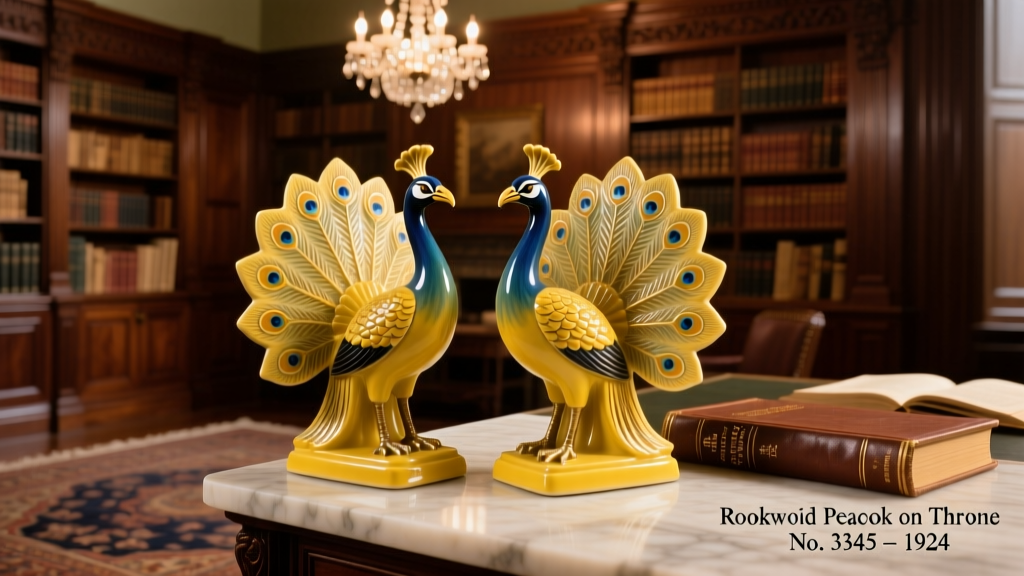
Rookwood Bookends: Peacock on Throne, Yellow Glaze, No. 3345 (1924, 5-Inch Height)

Heisey Waverly Sherbet Low: Identification, History, and Restoration Insights for Collectors

Kovels On Antiques & Collectibles, Vol. 45, No. 1 (September 2018): A Critical Review for Collectors and Restorers
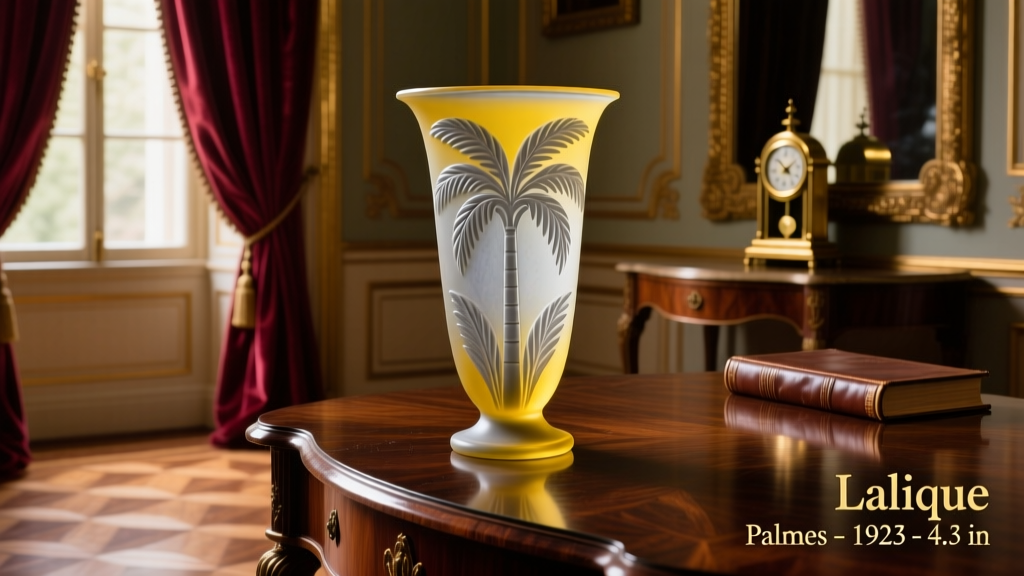
Lalique Vase 'Palmes': A Masterpiece of Art Deco Glass—Cased Yellow Glass with Gray Patina, 1923, 4¾ Inches
Disneyana Cookie Jar: Winnie the Pooh Mexico — Origins, Identification, and Restoration Insights

Watt Ice Bucket Starflower No. 59-2: A Technical and Historical Analysis of a Mid-Century American Silverplate Masterpiece

Hamilton Silver Manufacturing Company: American Flatware Legacy, Hallmarks, and Restoration Insights
Stockton Vase with Green and Yellow Floral Motif: Identifying, Dating, and Preserving a Mid-Century American Ceramic Treasure
Edwardian Mahogany Cup Cover with Brass Lion Masques: Anatomy, Provenance, and Conservation of a 12 × 5 Inch Domestic Artifact