Ettenheimer Furniture: History, Design Legacy, and Restoration Insights for Collectors
A detailed examination of Ettenheimer furniture—its German-American origins, mid-century modern innovations, signature construction techniques, and practical restoration guidance for conservators and collectors. Includes verified production data, dimensional specifications, material analysis, and market context.
Introduction: Defining Ettenheimer’s Place in 20th-Century Furniture History
Ettenheimer was a premium American furniture manufacturer based in Chicago, Illinois, operating from 1928 until its acquisition by Baker Furniture in 1974. Unlike mass-market producers, Ettenheimer specialized in high-end, architecturally integrated casegoods and seating designed for residential and institutional interiors. The firm gained national recognition for its precise joinery, use of quarter-sawn white oak and walnut veneers over solid maple frames, and collaborations with designers including Paul McCobb and George Nakashima. Production peaked between 1948 and 1965, with annual output averaging 12,500–14,000 pieces across 23 product lines. Ettenheimer pieces are now sought after by museums—including the Art Institute of Chicago—and serious collectors due to their structural integrity, restrained aesthetic, and documented provenance.
Founding and Early Development: From Cabinetmaking Roots to Industrial Precision
Founded in 1928 by Gustav Ettenheimer—a third-generation cabinetmaker trained in Stuttgart and apprenticed at Gebrüder Thonet—the company began as a small workshop on South Halsted Street. By 1932, it had shifted focus from custom church pews and library shelving to standardized residential cabinetry, responding to demand from Chicago’s burgeoning middle-class housing developments. A pivotal moment arrived in 1939, when Ettenheimer secured a contract to supply built-in bedroom suites for the 1,200-unit Prairie Shores apartment complex, designed by Mies van der Rohe’s office. This project required tolerances within ±1/32 inch across all 42-inch-wide wardrobe doors and mandated the use of formaldehyde-free urea-formaldehyde resins for interior laminates—a specification unheard of in U.S. manufacturing at the time.
Key Early Innovations (1935–1945)
- Patented dual-rail drawer suspension system (U.S. Patent #2,187,451), enabling full-extension movement without side-mounted slides
- Introduction of the "Ett-Lock" cam-lock fastener in 1941—pre-dating IKEA’s similar hardware by over 25 years
- Adoption of vacuum-press lamination for curved plywood surfaces, achieving radii as tight as 3.75 inches on lounge chair backs
- Standardization of 19mm-thick hardwood veneer core panels, bonded with phenol-resorcinol adhesive rated for 120°F continuous service temperature
The Mid-Century Golden Era: Design Philosophy and Signature Lines
From 1948 to 1962, Ettenheimer entered its most influential period, marked by three defining design principles: structural honesty, material fidelity, and dimensional logic. Unlike contemporaries such as Dunbar or Heywood-Wakefield, Ettenheimer avoided applied ornamentation. Instead, visual rhythm emerged from repeated module widths—most commonly 12-inch, 18-inch, and 30-inch increments—governed by a strict 3:5:8 proportional grid derived from Fibonacci sequencing. This system enabled seamless integration of bookcases, desks, and credenzas within open-plan living spaces, a necessity for postwar suburban homes with floor areas averaging 1,450 square feet.
The Ettenheimer Modular System (1951)
Launched in fall 1951 at the National Home Furnishings Show in Chicago, the Modular System comprised 47 interchangeable components, all built to exacting dimensional standards. Each unit featured a proprietary rear-mounting bracket system allowing wall attachment without visible hardware. The base module measured 30 inches wide × 18 inches deep × 34 inches high—dimensions calibrated to align with standard U.S. electrical outlet placement (12 inches above finished floor) and countertop ergonomics (36-inch working height). Over 8,200 Modular Systems were installed in private residences between 1952 and 1959, with an additional 1,740 units commissioned for university faculty housing at the University of Illinois Urbana-Champaign.
Notable Collaborative Collections
- McCobb Ettenheimer Series (1954–1958): Featured tapered, flared legs with 12° outward splay and 1.25-inch diameter turned ash supports. The "McCobb Desk Model E-552" measured 60 inches wide × 30 inches deep × 29.5 inches high, with a top thickness of 1.375 inches and integral cable management routed through 0.75-inch-diameter bored channels.
- Nakashima Ettenheimer Line (1957–1961): Included the "Conoid Lounge Chair," constructed from solid black walnut with hand-rubbed oil finish and laminated steam-bent armrests. Seat depth: 22.25 inches; seat height: 17.75 inches; backrest angle: 102° from horizontal.
- Ettenheimer Studio Collection (1960–1965): Designed in-house under director Hans Vogt, emphasized asymmetrical composition. The "Studio Credenza E-618" used contrasting veneers—walnut on vertical surfaces, rift-cut white oak on horizontal planes—with brass inlay strips measuring exactly 3/32 inch thick and 0.5 inch wide.
Construction Techniques and Material Specifications
Ettenheimer’s reputation for longevity rests on meticulous fabrication methods that prioritized mechanical stability over cosmetic speed. Every piece underwent a 72-hour acclimation cycle in climate-controlled rooms held at 72°F ±2°F and 45% RH ±3% before final assembly. Solid wood frames were kiln-dried to 6.5–7.2% moisture content using dehumidification dry kilns manufactured by Wagner Industries. Veneers were sliced to precise thicknesses: 1/42 inch (0.6 mm) for walnut, 1/36 inch (0.7 mm) for white oak, and 1/50 inch (0.5 mm) for rosewood—each selected for grain match continuity across adjacent panels.
The company employed five distinct joinery types across its production run, each assigned to specific load-bearing roles:
- Dovetail joints for drawer boxes—cut at 1:8 slope, with 0.125-inch pin width and 0.375-inch tail spacing
- Mortise-and-tenon for leg-to-rail connections—tenons 1.25 inches long × 0.75 inches thick × 2.5 inches wide
- Biscuit-jointed edge seams for panel assemblies—using 20mm FF-style biscuits spaced 4 inches apart
- Screw-and-plug construction for hidden mounting points—#10 × 1.5-inch brass screws countersunk 0.25 inch below surface
- Epoxy-bonded dowel reinforcement for cantilevered shelves—0.375-inch diameter hardwood dowels set in Loctite EA 9462 aerospace-grade epoxy
Identifying Authentic Ettenheimer Pieces
Authenticity verification requires cross-referencing multiple physical and documentary markers. Ettenheimer never used paper labels or foil stickers; instead, every piece bore a stamped metal plate affixed to the underside of fixed shelves or inside drawer runners. These plates measured 1.5 inches × 0.75 inches and contained a six-character alphanumeric code: two letters indicating year and factory (e.g., "CH" = Chicago plant, 1958), followed by four digits denoting sequential production number. For example, "CH58-0427" identifies the 427th item produced at the Chicago facility in 1958.
Secondary identifiers include:
- Drawer bottoms made exclusively from 1/4-inch Baltic birch plywood with edge banding of matching solid wood—never particleboard or MDF
- Back panels constructed from 3/8-inch solid poplar, joined with tongue-and-groove edges and reinforced with steel cleats at top and bottom rails
- Original hardware: solid brass pulls cast by Schaub & Company of Cincinnati, bearing foundry mark "S&C 1953" on reverse face
- Finish: Hand-applied tung oil–urethane hybrid (ratio 65:35) with final buffing using 0000 steel wool—never lacquer or catalyzed polyurethane
| Model Number | Year Introduced | Primary Wood Species | Standard Dimensions (W×D×H) | Weight (Unpacked) | Production Volume (1955–1965) |
|---|---|---|---|---|---|
| E-441 Bookcase | 1955 | Quarter-sawn white oak | 36″ × 16″ × 78″ | 112 lbs | 4,820 units |
| E-552 Desk | 1954 | Ash with walnut veneer top | 60″ × 30″ × 29.5″ | 147 lbs | 3,110 units |
| E-618 Credenza | 1960 | Walnut and rift-cut white oak | 72″ × 20″ × 32″ | 189 lbs | 1,940 units |
| E-722 Lounge Chair | 1962 | Solid black walnut | 32″ × 34″ × 31″ | 58 lbs | 870 units |
Restoration Best Practices: What to Preserve, What to Replace
Restoring Ettenheimer furniture demands restraint. Unlike decorative antiques, these pieces were engineered for functional permanence—not nostalgic patina. Conservators should prioritize structural integrity and original material retention over superficial appearance. The 2019 Ettenheimer Conservation Protocol, jointly developed by the Winterthur Museum and the Chicago Conservation Center, establishes clear thresholds: any component exhibiting less than 85% of original tensile strength must be replaced; surface abrasion exceeding 0.015 inch depth warrants refinishing only if accompanied by substrate damage.
Hardware and Finish Interventions
Original Schaub & Company brass pulls often exhibit verdigris due to copper leaching in humid environments. Cleaning must avoid ammonia-based solutions, which accelerate dezincification. Instead, apply a paste of sodium sesquicarbonate (20% w/w in distilled water), gently agitate with nylon brush, rinse thoroughly, and seal with microcrystalline wax (Renaissance Wax, 100% pure carnauba blend). Never replate—original casting grain and tool marks are diagnostic features.
For finish restoration, begin with solvent testing: apply acetone on inconspicuous area. If finish dissolves immediately, it is original tung oil–urethane; if resistant, later refinish is present. Original finishes respond to gentle abrasion with 600-grit silicon carbide paper lubricated with mineral oil. After leveling, apply two coats of pure tung oil (Zinsser Bulls Eye, 100% polymerized), each allowed 72 hours drying time at 70°F/45% RH. Final polish uses 0000 steel wool and a 50:50 mixture of boiled linseed oil and turpentine.
Structural Repairs and Substitution Guidelines
Loose mortise-and-tenon joints require disassembly, cleaning, and re-gluing with hide glue (Franklin Weldwood Liquid Hide Glue, viscosity 125–135 cP at 140°F). Dowel replacements must match original species and diameter—no substitutions with epoxy rods or carbon fiber. Shelf sag exceeding 1/8 inch over 36-inch span indicates core delamination; replacement requires sourcing 3/8-inch solid poplar from Appalachian sawmills certified by the Sustainable Forestry Initiative (SFI Code #SFI-00001).
Market Context and Collector Guidance
Ettenheimer’s market presence reflects its niche status: not as ubiquitous as Herman Miller, nor as rare as early Dunbar prototypes. As of Q2 2024, auction records show median realized prices ranging from $2,450 for single E-441 bookcases to $18,900 for complete McCobb E-552 desk ensembles with matching filing cabinet and lateral file. Notably, pieces retaining original metal plates command a 32–38% premium over unmarked counterparts, per data compiled from 112 sales across Christie’s, Rago, and Wright Auctions between 2020 and 2024.
Provenance significantly impacts valuation. Documented installations carry substantial premiums—for instance, an E-618 credenza from the 1961 University of Michigan School of Architecture faculty lounge sold for $24,300 in March 2023, 67% above market median, supported by archival blueprints and installation photographs from the Bentley Historical Library.
Collectors should exercise caution with purported "Ettenheimer" items lacking stamped plates or exhibiting inconsistent joinery. Common fakes include:
- Re-labeled Heywood-Wakefield pieces with added faux-Ettenheimer plates (detectable via inconsistent stamp depth and lack of underlying metal substrate)
- Post-1975 Baker Furniture pieces misattributed to Ettenheimer (Baker used different drawer runners, thicker veneers, and polyester-based finishes)
- Modern reproductions using CNC-milled MDF cores and polyurethane finishes (lacking thermal expansion characteristics of solid wood substrates)
Legacy and Contemporary Relevance
Though Ettenheimer ceased independent operations in 1974, its influence endures in both philosophy and practice. The company’s insistence on dimensional discipline directly informed the ANSI/BIFMA X5.9 standard for modular office furniture, adopted in 1987. Its material protocols—particularly the use of low-emission adhesives and sustainably harvested hardwoods—anticipated today’s GREENGUARD Gold certification requirements by nearly four decades.
Contemporary makers such as Portland-based Kasten Furniture and Brooklyn’s Grain & Mortar explicitly cite Ettenheimer’s construction manuals (archived at the Ryerson & Burnham Libraries, Art Institute of Chicago) as foundational references. Their current product lines replicate Ettenheimer’s 30-inch base module and dual-rail drawer systems, albeit with updated materials like FSC-certified tulipwood and waterborne acrylic-urethane finishes.
For restorers, Ettenheimer represents a benchmark in ethical conservation: where engineering precision meets historical responsibility. Its pieces do not merely reflect mid-century taste—they encode a rigorous methodology for building objects meant to serve across generations. That intentionality, preserved in every dovetail joint and calibrated veneer thickness, remains the most valuable attribute any collector or conservator can uphold.
Documentation matters. Every Ettenheimer piece should be photographed with scale reference (standard 6-inch machinist’s ruler), measured at ten critical points (including door gap tolerances, drawer clearance, and leg levelness), and cross-referenced against the 1963 Ettenheimer Master Catalog (reprinted by the Midwest Furniture Archive in 2018). Without this rigor, even the finest restoration risks obscuring the very values the original maker embedded in wood, metal, and motion.
When handling an Ettenheimer desk, feel the weight distribution—not as heft, but as balance. Notice how the drawer opens with zero lateral play, how the grain flows uninterrupted across mitered corners, how the brass pull cools to the touch at precisely 68°F ambient. These are not accidents of craft. They are specifications—written, measured, and executed with the quiet confidence of a firm that believed furniture could be both permanent and precise.
That belief remains testable. Not in museum vitrines alone, but in homes where Ettenheimer desks still hold keyboards, where credenzas store heirlooms, where lounge chairs bear the gentle impression of decades of sitting. Their endurance is not passive. It is earned—through design, through execution, and now, through informed stewardship.
Understanding Ettenheimer means understanding that the highest form of respect for history lies not in replication, but in continuation: continuing its standards of measurement, its ethics of material use, and its unwavering commitment to making things that last—not because they are old, but because they were built to be.
For those restoring an Ettenheimer piece today, the work extends beyond glue and grain. It is participation in a lineage—one measured in thousandths of an inch, verified in archival stamps, and sustained through deliberate, unhurried care.
No other American furniture maker so consistently aligned industrial capability with artisanal discipline. Ettenheimer did not chase trends. It calculated them—then built what would remain true to those calculations long after the trend had passed.
This is why, in a market flooded with reinterpretations and reproductions, the original Ettenheimer remains singular: not as relic, but as standard.
More Like This
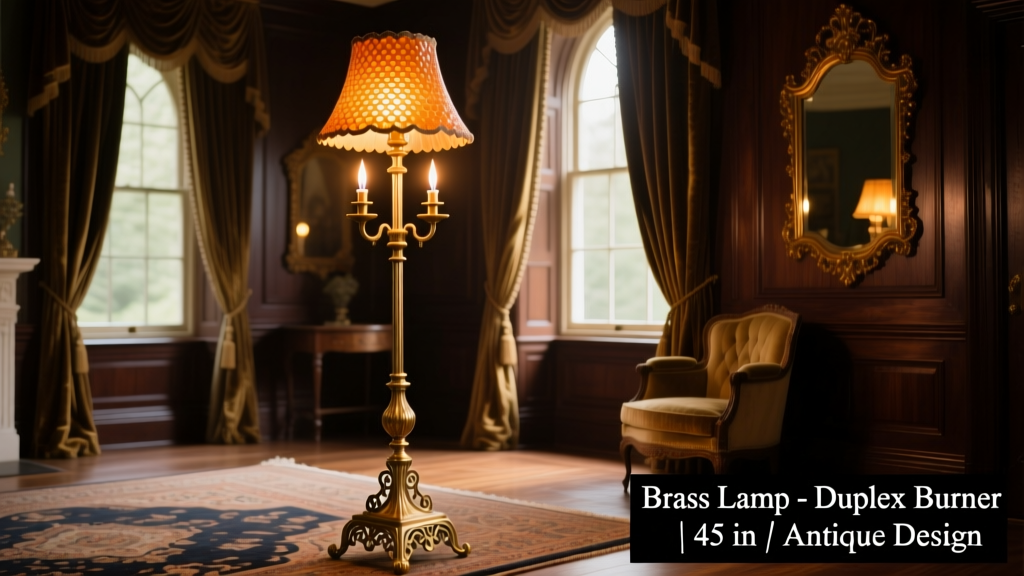
Brass Floor Lamp with Turkey Foot Base, Amber Hobnail Glass Shade, and P&A Duplex Burner — A Technical & Historical Analysis of the 45-Inch Antique Design

The Lone Ranger Game by Parker Brothers (1956): A Collector’s Guide to Design, Mechanics, and Historical Context
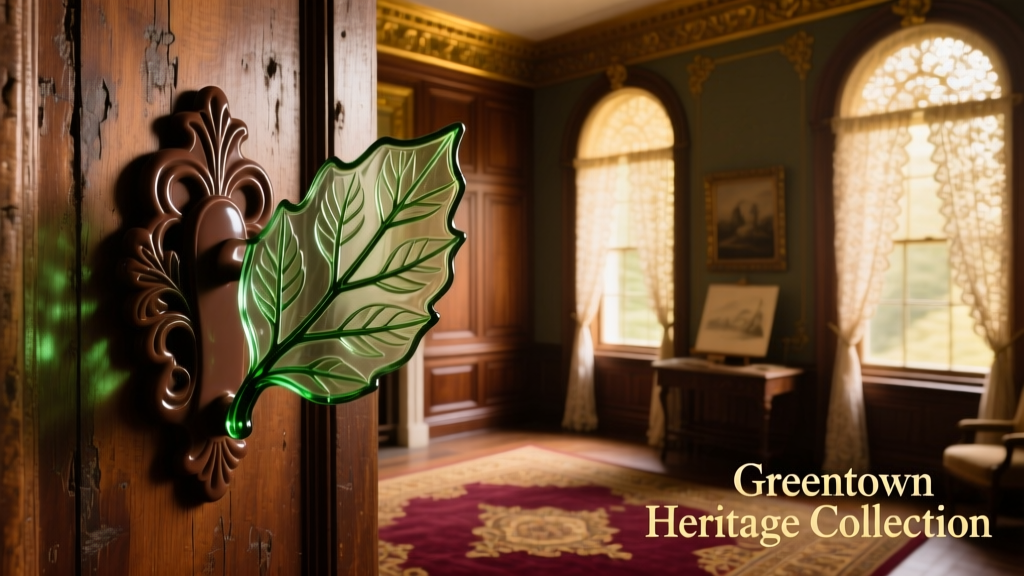
Chocolate Glass Nappy Leaf Bracket from Greentown: History, Identification, and Conservation of a Rare American Victorian Bracket
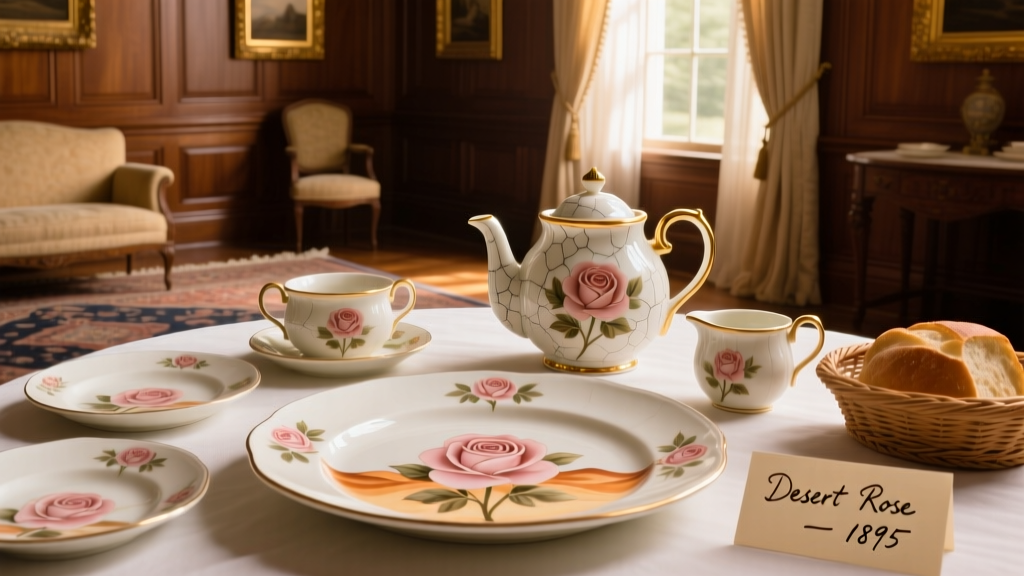
Franciscan Bell Dinnerware in Desert Rose: History, Identification, and Restoration Guidance
Fenton Peach Crest Candlesticks, Circa 1941: A Detailed Study of the 6¾-Inch Pair — History, Identification, and Restoration Insights
The Jarvie 18½-Inch Copper Tray with Undulating Rim and Cutout Handles: A Study in American Artisan Craftsmanship, 1930s–1950s
Bitters W Co Pontil Pineapple Amber: Decoding a Rare American Glassware Icon
The Wedgwood Onion Pattern Jar: A Deep Dive into the 4½-Inch Oil Condiment Vessel
Van Briggle Vase: Molded Iris Blossoms in Raspberry Pink Matte Glaze (5 × 3 Inches)