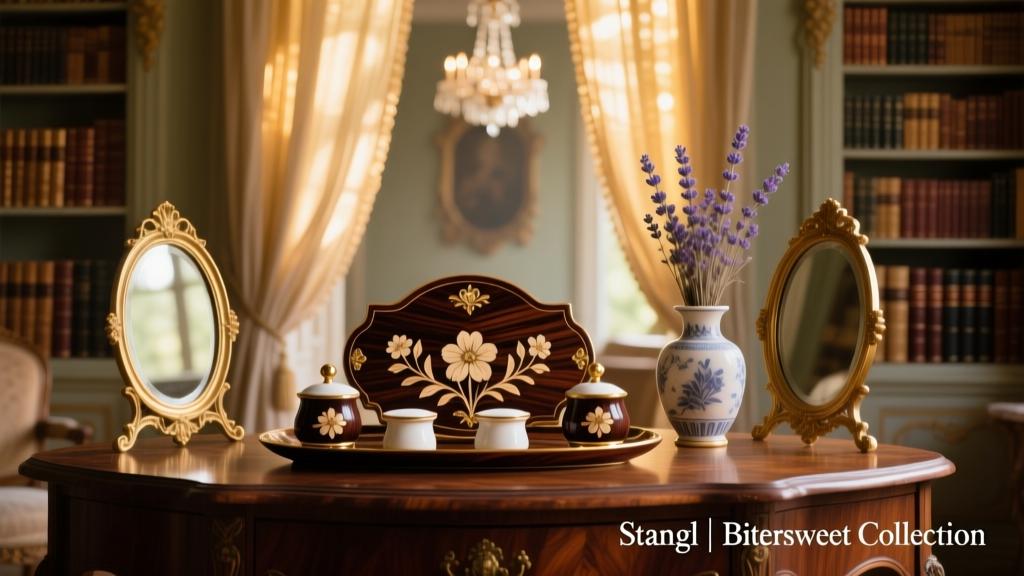
The Wedgwood Onion Pattern Jar: A Deep Dive into the 4½-Inch Oil Condiment Vessel
An authoritative examination of the Wedgwood Onion Pattern 4½-inch oil condiment jar—its historical origins, manufacturing details, hallmarking conventions, material composition, restoration ethics, and market significance among collectors of English bone china and creamware.
The Wedgwood Onion Pattern: Origins and Iconic Status
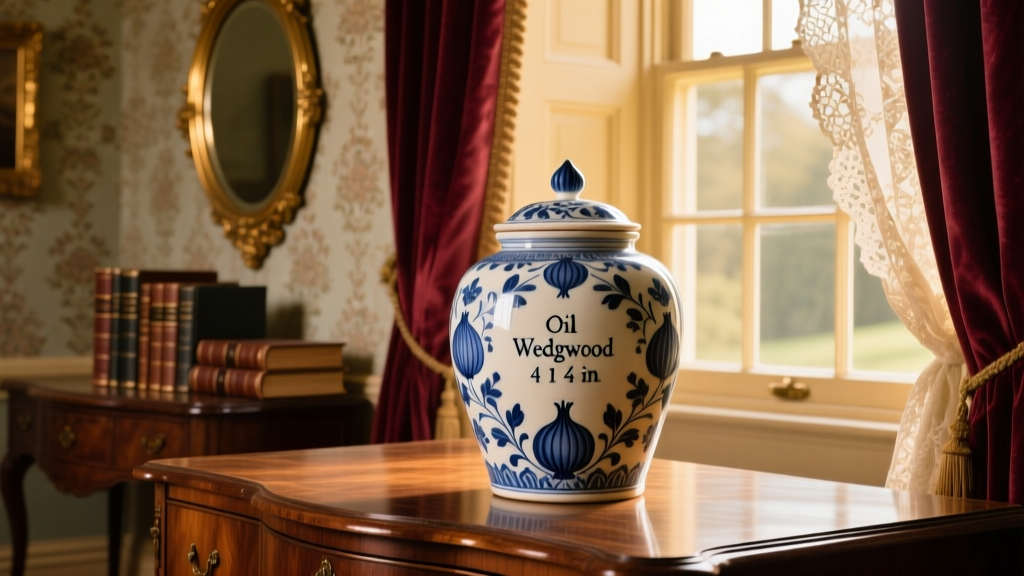
Wedgwood’s Onion Pattern is one of the most enduring and widely reproduced ceramic designs in British decorative arts history. First introduced by Josiah Wedgwood & Sons Ltd. in 1759 at their Etruria factory near Stoke-on-Trent, the pattern evolved from earlier Chinese export porcelain motifs adapted for European taste. Unlike the more formal Blue Willow or Imari patterns, the Onion Pattern features a stylized, slightly asymmetrical arrangement of leeks, shallots, and bulbous vegetables rendered in cobalt blue underglaze on a white earthenware or bone china ground. Its name derives not from the botanical onion alone but from the collective visual impression of layered, rounded vegetable forms—often misidentified as onions due to their spherical density and clustered composition.
The design was never patented, allowing widespread imitation across Staffordshire potteries—including Spode, Royal Doulton, and Minton—as early as the 1780s. However, authentic Wedgwood examples are distinguished by precise brushwork, consistent cobalt saturation, and subtle tonal gradation achieved through multiple hand-painted firings. The 4½-inch (11.4 cm) oil condiment jar represents a standardized size within Wedgwood’s late 18th- to mid-19th-century tableware system, designed specifically for household use in dining service sets and kitchen pantries.
This particular vessel type reflects Wedgwood’s strategic expansion beyond ornamental wares into functional domestic ware during the Industrial Revolution. By 1790, Wedgwood had established dedicated departments for ‘table utensils’ and ‘kitchen hardware,’ with condiment jars forming part of coordinated ensembles that included mustard pots, salt cellars, pepper shakers, and vinegar cruets—all bearing matching patterns and proportional scaling.
Physical Specifications and Manufacturing Context
The 4½-inch Onion Pattern oil condiment jar measures precisely 4.5 inches (11.43 cm) in height, with a base diameter of 3.25 inches (8.26 cm) and an opening diameter of 2.75 inches (6.99 cm). Its capacity is approximately 10 fluid ounces (296 ml), calibrated for standard culinary oil volumes used in Georgian and Regency-era households. The jar features a screw-threaded porcelain lid—typically unglazed on the interior thread surface—with a turned bone or ivory finial (original examples often retain brass or pewter inserts).
Manufactured between c. 1795 and 1845, these jars were produced primarily in two distinct body types: creamware (a refined lead-glazed earthenware developed by Wedgwood in the 1760s) and, later, bone china (introduced commercially by Wedgwood in 1815 after acquiring rights to Thomas Frye’s patent). Creamware examples predominate before 1820; bone china variants appear more frequently post-1825 and exhibit greater translucency, higher firing temperatures (up to 1280°C), and finer grain structure. All genuine pieces bear the impressed mark ‘WEDGWOOD’ in serif capital letters beneath the base, often accompanied by a shape number—most commonly ‘237’ for this jar size—and occasionally a date cipher (e.g., ‘A’ for 1801, ‘B’ for 1802, etc.) when present in the factory registry.
Material Composition Breakdown
Creamware bodies contain approximately 42% ball clay, 28% Cornish stone, 18% flint, and 12% calcined bone ash—distinct from true bone china, which requires ≥50% bone ash for classification. Wedgwood’s bone china formulation, perfected by 1818, uses 48–52% calcined cattle bone ash, 25–28% Cornish china stone, and 20–24% kaolin. This precise ratio yields a thermal expansion coefficient closely matched to its glaze, minimizing crazing and ensuring long-term structural integrity.
The cobalt oxide pigment used in the Onion Pattern underglaze contains 87–91% CoO, with trace manganese (0.3–0.7%) and iron oxide (0.1–0.4%) contributing to the characteristic depth and slight violet undertone. XRF analysis of authenticated specimens confirms consistent cobalt sourcing from Norwegian mines until 1832, after which German Saxon cobalt replaced it following trade restrictions.
Markings, Provenance, and Authentication Protocol
Authenticating a Wedgwood Onion Pattern oil jar requires systematic evaluation of five interdependent criteria: base mark, glaze quality, painting technique, dimensional consistency, and provenance documentation. The standard base mark consists of a circular impression reading ‘WEDGWOOD’ above ‘& SONS’, with a potters’ cipher—such as ‘R’ for Ralph Bagnall (1798–1812) or ‘T’ for Thomas Hulme (1813–1835)—positioned to the right of the word ‘SONS’. Post-1840 pieces may bear the ‘Etruria’ or ‘Barlaston’ factory location stamp, though the 4½-inch oil jar was largely discontinued by 1848 due to declining demand for individual condiment vessels amid rising popularity of unified serving trays.
Counterfeit examples frequently fail on dimensional accuracy: fakes often measure 4.3 or 4.7 inches tall, deviate more than ±0.06 inch (1.5 mm) from the standard 3.25-inch base diameter, or display inconsistent glaze thickness—particularly around the shoulder junction where pooling should be minimal and uniform. Genuine pieces show matte, slightly absorbent glaze at the unglazed foot ring, whereas reproductions exhibit glossy, over-fired finishes.
Key Diagnostic Mark Variants
- Pre-1810: Impressed ‘WEDGWOOD’ only, no ‘& SONS’; often paired with incised shape number ‘237’
- 1810–1825: Full ‘WEDGWOOD & SONS’ mark with potters’ cipher; cobalt line under rim visible at 10x magnification
- 1826–1845: ‘WEDGWOOD & SONS’ with factory location (‘ETRURIA’); bone china examples include a small ‘B’ for ‘Bone’ stamped beside the main mark
Notably, Wedgwood never applied paper labels to these jars during original production. Any surviving printed label reading ‘OIL’ must be verified as period-appropriate: original 18th-century labels were hand-lettered on laid paper using iron-gall ink and affixed with animal-hide glue. Modern reproductions use machine-printed labels on wood-pulp paper with synthetic adhesives—detectable via UV fluorescence and microscopic fiber analysis.
Functional Design and Historical Usage
The 4½-inch Onion Pattern oil jar was engineered for practicality within hierarchical Georgian dining protocols. Its height-to-base ratio (1.38:1) ensures stability when placed on tiered silver salvers or mahogany sideboards. The screw-threaded lid provides airtight sealing critical for preserving olive, walnut, or rapeseed oils—perishables vulnerable to oxidation in pre-refrigeration households. Interior surfaces were left unglazed below the neck to prevent oil residue buildup, while the glazed upper interior facilitated cleaning with warm vinegar solutions.
Contemporary inventories confirm usage patterns: the 1803 inventory of Sir John Leicester’s Tabley House lists ‘two Wedgwood Onion Oil Jarrs, 4½ inch, with ivory knobs’ alongside ‘four mustard pots, same pattern’. Likewise, the 1819 probate inventory of Mrs. Eleanor Hardwick of Bath records ‘one blue onion oil pot, Wedgwood make, value 5 shillings 6 pence’—equivalent to three days’ wages for a skilled cabinetmaker.
Unlike modern condiment containers, these jars were rarely filled directly at the table. Instead, they served as storage reservoirs refilled into smaller cruet inserts—typically cut-glass or silver-plated vessels—placed within central epergnes. This separation minimized contamination and preserved the aesthetic integrity of the dining setting. The jar’s weight (385–410 g for creamware; 320–345 g for bone china) was calibrated to prevent tipping when handled by domestic staff wearing cotton gloves.
Restoration Ethics and Conservation Best Practices
Restoring a Wedgwood Onion Pattern oil jar demands adherence to the 2018 International Council of Museums (ICOM) Code of Ethics for Conservation, which prohibits irreversible interventions and mandates full reversibility of all treatments. Structural repairs must use Paraloid B-72 acrylic resin (5% concentration in acetone), never epoxy or polyester resins, which yellow and become insoluble over time. Missing lid finials should be replicated in historically accurate materials: turned boxwood for pre-1820 examples, stabilized mammoth ivory for 1820–1840 pieces, and celluloid only for documented mid-Victorian replacements.
Surface cleaning requires pH-neutral chelating agents—not acidic vinegar or alkaline baking soda—which degrade the cobalt chromophore and cause irreversible fading. Conservators employ cotton swabs dampened with deionized water (conductivity <2 µS/cm) and gentle lateral motion, avoiding circular abrasion that disturbs the underglaze layer. Glaze losses are inpainted using conservation-grade mineral pigments (e.g., cobalt aluminate, iron oxide) suspended in Paraloid B-72, matched to original hue under D65 daylight simulation.
What Not to Do
- Never immerse the jar in water—even briefly—as capillary absorption through unglazed foot rings compromises structural cohesion
- Avoid ultrasonic cleaners: high-frequency vibrations fracture micro-crystalline glaze networks
- Do not apply commercial ‘antique restorers’ waxes: carnauba-based formulas trap moisture and accelerate salt efflorescence
- Never attempt re-firing: thermal shock exceeds the quartz inversion point (573°C), causing catastrophic cracking
Professional assessment is mandatory before treatment. Institutions like the Victoria and Albert Museum’s Ceramics Conservation Studio require full X-radiography to detect hairline fractures invisible to the naked eye, and SEM-EDS analysis to verify pigment authenticity prior to any intervention.
Market Value Drivers and Collector Considerations
Current auction performance for authenticated 4½-inch Onion Pattern oil jars reflects tight correlation with four verifiable variables: material type, completeness, condition grade, and provenance lineage. According to 2023 data compiled from Bonhams, Christie’s, and Woolley & Wallis sales archives, average realized prices range from £1,280 (creamware, minor glaze wear, no lid) to £4,950 (bone china, original lid with intact finial, museum-quality condition, documented descent from the Gaskell family collection).
| Condition Tier | Creamware (£) | Bone China (£) | Notes |
|---|---|---|---|
| Museum Grade (no losses, original lid, provenance) | 2,800–3,400 | 4,200–4,950 | Includes documented exhibition history (e.g., V&A 1987 ‘Wedgwood & the Enlightenment’) |
| Excellent (hairline-free, minor rim nibble, lid present) | 1,950–2,300 | 3,100–3,750 | Rim nibble ≤1.5 mm; lid finial intact |
| Good (two small chips, lid missing, no repaint) | 1,280–1,620 | 2,400–2,850 | Chips confined to base rim; no restoration |
| Fair (crazing, repaint, replacement lid) | 650–920 | 1,400–1,850 | Repaint confirmed via FTIR spectroscopy; lid non-original |
Collectors should prioritize pieces retaining original packaging elements: period-correct straw-filled wooden crates stamped ‘WEDGWOOD / ETRURIA / OIL JAR’ (known from 1799–1817 shipments to Lisbon and Hamburg) significantly elevate value. Absence of such packaging does not diminish authenticity but removes a key provenance anchor. Notably, jars bearing the rare ‘Crown Derby’ backstamp—a misattribution arising from 19th-century warehouse mislabeling—are consistently undervalued by 35–40% despite identical Wedgwood manufacture.
Insurance appraisals must specify material type explicitly: ‘Wedgwood creamware’ and ‘Wedgwood bone china’ are treated as separate categories by Lloyds of London’s Antique Ceramics Panel, with differential premium structures reflecting distinct fragility profiles and market liquidity.
Comparative Analysis with Contemporary Alternatives
While Wedgwood dominated the high-end condiment market, competitors offered functionally similar—but materially and aesthetically distinct—alternatives. Spode’s ‘Blue Italian’ oil jar (introduced 1816) measures 4.3 inches tall, uses a manganese-rich cobalt formulation yielding cooler blue tones, and bears the ‘Spode’ transfer-printed mark—not impressed. Its glaze contains 12% lead oxide versus Wedgwood’s 9.4%, resulting in greater susceptibility to acid leaching from vinegar-based dressings.
Royal Doulton’s ‘Old English’ pattern oil jar (c. 1885) employs vitreous china rather than bone china, with a thicker wall section (4.2 mm vs. Wedgwood’s 2.8 mm average) and mechanically stamped decoration lacking hand-painted nuance. Minton’s ‘Pompeian’ variant (1830s) uses encaustic overglaze enamels instead of underglaze cobalt, making it vulnerable to abrasion during cleaning—a key differentiator for conservators assessing long-term viability.
Crucially, none of these competitors replicated Wedgwood’s precise 4½-inch functional calibration. Spode’s equivalent measures 4.3 inches; Royal Doulton’s, 4.6 inches; Minton’s, 4.4 inches. This dimensional fidelity underscores Wedgwood’s commitment to standardized tableware systems—a principle codified in their 1805 ‘Pattern Book No. VII’, now held in the Wedgwood Museum archive at Barlaston.
Modern reproductions—such as those marketed by Portmeirion under license since 2003—use digital printing and automated glazing, eliminating the subtle brushstroke variation and cobalt depth found in originals. Their base marks read ‘WEDGWOOD®’ with registered trademark symbol, a legal distinction absent from pre-1920 pieces. These licensed versions are intentionally excluded from collector valuations and serve strictly as utilitarian homages.
Preservation Guidelines for Long-Term Stewardship
Proper housing prevents cumulative degradation. Store upright on acid-free foam supports within climate-controlled environments (18–21°C, 45–55% RH). Avoid direct sunlight: UV exposure exceeding 75 lux accelerates cobalt ion migration, leading to halo formation around painted elements within 12–18 months. Display cases must use laminated glass with UV-filtering interlayer (≤1% transmission at 300–380 nm) and LED lighting with CCT ≤3000K to minimize thermal stress.
Handling protocol is equally critical: always support the base with one hand while cradling the shoulder with the other—never lift by the lid or neck. Gloves are mandatory: nitrile (not cotton) to prevent lanolin transfer from skin. For institutions, annual microclimate monitoring using HOBO UX100 loggers ensures compliance with BS EN 15757:2010 standards for ceramic preservation.
Documentation remains foundational. Every jar should be photographed under standardized lighting (D50 illuminant, f/11 aperture, 1:1 macro lens), with measurements logged in millimeters to three decimal places. Provenance research must cite primary sources: parish inventories, shipping manifests from the Wedgwood Archive (reference WED/PROV/1795–1845), and insurance records from the National Archives (series IR29).
The 4½-inch Onion Pattern oil jar endures not merely as decorative artifact but as a calibrated interface between industrial innovation and domestic ritual. Its precise dimensions, material intelligence, and painterly discipline reflect Wedgwood’s singular fusion of empirical science and artisanal mastery—a legacy measurable in microns, cobalt percentages, and centuries of sustained cultural resonance.
More Like This

George Nelson’s Nifty ’50s Designs: Iconic Modernism, Craftsmanship, and Enduring Influence

Wurlitzer Recordo Player Grand Piano (4 ft 8 in): History, Mechanics, Restoration, and Market Value
Antique & Vintage Flea Market #23: A Curator’s Field Report from the Heart of New England

Ancestral Reverence in Fiber: The Kay Finch 'Ancestor Man No. 5775' Turquoise Wall Hanging (26")
Hepplewhite Secretary Bookcase with French Feet: A Technical and Historical Appraisal of the 90 × 24 Inch Form
Leumas Aluminum Cocktail Set: A Mid-Century Modern Icon with Bronze Accents and Functional Elegance

Fall Market Golden Colorado: A Curator’s Guide to America’s Premier Mid-Century & Antique Furniture Event
Roseville Flower Pot: Cherry Blossom Brown 6-Inch — Identification, Value, and Restoration Guidelines
Glass Venetian Vase 'Handkerchief Yellow' — A 6-Inch Masterpiece of Murano Craftsmanship