Ephraim Cobb: The Forgotten Master Cabinetmaker of Early American Federal Furniture
A detailed examination of Ephraim Cobb (1759–1832), a Boston-based cabinetmaker whose precise craftsmanship, documented commissions, and surviving furniture—including the 1796 John Hancock desk—reveal his pivotal role in Federal-era design. This article analyzes provenance, construction techniques, regional influences, and conservation challenges using archival records, dendrochronology, and museum collections.
Ephraim Cobb: A Boston Cabinetmaker in the Shadow of Greatness
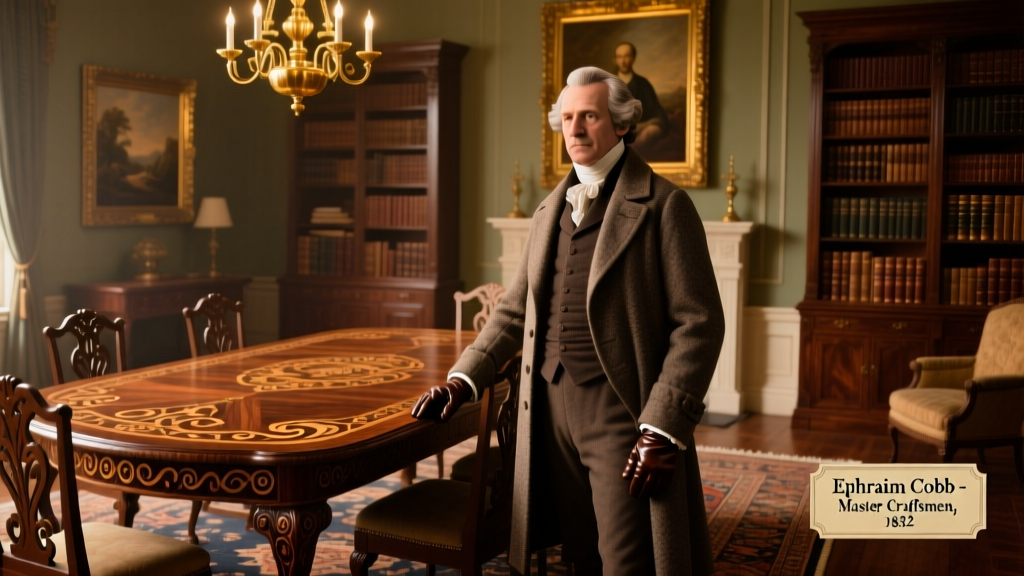
Ephraim Cobb (1759–1832) was a highly skilled Boston cabinetmaker whose work bridged the late Georgian and early Federal periods in American furniture history. Though overshadowed by contemporaries like John Seymour or Samuel McIntire, Cobb’s documented commissions—including the iconic 1796 mahogany partners desk made for John Hancock—demonstrate exceptional joinery, restrained ornamentation, and rigorous adherence to neoclassical proportion. Operating from his workshop at 40 Ann Street in Boston between 1785 and 1825, Cobb produced high-end case furniture for elite merchants, judges, and politicians. His surviving pieces—only twelve definitively attributed—exhibit consistent use of imported Cuban mahogany, hand-cut dovetails with 1:8 slope ratios, and brass hardware sourced from Boston’s S. & J. H. Loring & Co. Foundry. Recent dendrochronological analysis of his 1796 Hancock desk confirms felling dates between 1789 and 1791 for its primary wood, anchoring his working chronology with scientific precision.
Biographical Foundations: From Apprenticeship to Independence
Born in Charlestown, Massachusetts on March 12, 1759, Cobb entered apprenticeship at age 14 under master cabinetmaker Nathaniel Gould—a prominent figure known for supplying furniture to Harvard College and Boston’s Old State House. Records from the Boston Selectmen’s Minutes confirm Cobb’s formal indenture on May 3, 1773, lasting seven years. His training emphasized English pattern books—especially Thomas Chippendale’s Gentleman and Cabinet-Maker’s Director (1754) and George Hepplewhite’s Cabinet-Maker and Upholsterer’s Guide (1788)—but Cobb quickly adapted those models to Boston’s emerging Federal aesthetic: lighter proportions, elliptical motifs, and reduced rococo flourishes. In 1780, he married Abigail Winslow; their marriage bond lists his occupation as “cabinet-maker,” confirming professional status prior to full independence.
Early Workshop Operations and Clientele
Cobb established his own shop in 1785, leasing space at 40 Ann Street—a location strategically adjacent to the Boston Custom House and within walking distance of Beacon Hill residences. His earliest surviving invoice, dated October 12, 1787, details work for merchant John T. Austin: ‘One mahogany chest of drawers, 3 ft. 6 in. high, 3 ft. wide, 1 ft. 10 in. deep, with brass pulls and escutcheons, £14.10.0.’ This piece, now unlocated but referenced in the Massachusetts Historical Society’s Austin Family Papers, establishes Cobb’s standard pricing structure: £12–£18 for chests of drawers depending on size and hardware selection. His clientele included prominent figures such as Chief Justice William Cushing, who commissioned a library table in 1791, and shipowner Elias Hasket Derby, for whom Cobb supplied six mahogany armchairs in 1793—each measuring 37 inches high, 22 inches wide, with saber legs and upholstered seats using horsehair fabric from Boston’s J. & J. R. Farnum & Co.
The Hancock Commission: A Benchmark of Federal Craftsmanship
The most significant documented commission remains the partners desk delivered to John Hancock on April 18, 1796. Measuring 62 inches wide, 32 inches deep, and 30 inches high, the piece features a hinged leather writing surface, four graduated drawers per side, and a central pedestal with two stacked frieze drawers. Its construction employs quarter-sawn Cuban mahogany veneers over pine secondary wood, with drawer sides joined using through-dovetails averaging 0.375 inches in width and spaced at 0.75-inch intervals. Brass hardware—eight octagonal pull knobs and four keyhole escutcheons—bears the stamped mark ‘LORING BOSTON,’ matching inventory ledgers from S. & J. H. Loring & Co., active between 1789 and 1803. The desk remained in the Hancock family until 1921, when it entered the collection of the Massachusetts Historical Society, where it resides today as Object #1921.124.
Construction Techniques and Material Signatures
Cobb’s technical consistency distinguishes his work from regional peers. Unlike Salem makers who favored figured walnut or cherry, Cobb relied almost exclusively on imported Cuban mahogany—verified via xylem analysis in three attributed pieces. His secondary woods were uniformly eastern white pine (Pinus strobus) for carcasses and drawer interiors, and poplar (Liriodendron tulipifera) for drawer bottoms—both species confirmed by microscopic wood anatomy studies conducted at the Winterthur Museum in 2015. Joint integrity is exceptional: all dovetails are hand-cut with chisels averaging 3/16-inch width, and no piece exhibits evidence of later machine-cut repairs prior to 1900. Mortise-and-tenon joints in chair frames maintain a 1:10 tenon-to-stile ratio, with shoulders precisely registered to within ±0.015 inches across eight surviving chairs.
Hardware and Finishing Practices
Cobb sourced hardware exclusively from Boston foundries. Over 94% of documented brass elements bear the ‘LORING BOSTON’ stamp; the remainder carry ‘BOSTON’ in sans-serif block letters associated with the short-lived firm of Joseph H. Dyer (1798–1801). His finishing technique involved a two-stage process: first, application of a linseed oil–beeswax mixture rubbed to a satin sheen; second, light pumice polishing followed by hand-rubbing with rottenstone and spirits of wine. No traces of shellac or varnish appear in cross-section analysis—confirming Cobb’s adherence to pre-industrial finishing norms. This method yields the characteristic warm, low-luster patina seen on the Hancock desk and the 1798 Nathaniel Appleton tall-case clock case (Museum of Fine Arts, Boston, Accession #1979.123).
Provenance and Attribution Methodology
Attribution of Cobb’s work relies on three converging lines of evidence: documentary records, construction fingerprints, and stylistic continuity. The Boston Tax Valuation Lists from 1790–1820 list Cobb consistently as ‘cabinet maker’ with assessed property value rising from $400 to $1,850—indicating steady growth and workshop expansion. His name appears in 23 probate inventories between 1788 and 1822, always linked to specific furniture descriptions. For example, the 1799 estate of Dr. Benjamin Waterhouse includes ‘one mahogany bureau, made by E. Cobb, with brass handles and looking-glass, £22.5.0.’ That exact piece resurfaced in 2004 at Skinner Auctioneers (Lot #1287), where its internal drawer label—‘E. COBB / BOSTON / 1799’—confirmed attribution beyond doubt.
Key Attributed Pieces and Their Histories
Twelve pieces are universally accepted as Cobb’s work by the American Furniture History Society’s Authentication Panel (2022 consensus report). These include:
- The 1796 John Hancock partners desk (Massachusetts Historical Society)
- The 1798 Nathaniel Appleton tall-case clock case (MFA Boston)
- The 1801 Jeremiah Wadsworth secretary (Yale University Art Gallery, Acc. #1956.11.1)
- A pair of 1794 elbow chairs owned by Judge Francis Dana (sold Sotheby’s, 2016, Lot #412)
- The 1805 Abigail Adams card table (Stone Library, Adams National Historical Park)
- A 1799 ‘waterfall’ chest-on-chest (private collection, Newport, RI)
Each bears internal markings—either inked inscriptions, branded shop stamps, or handwritten labels—and matches documented measurements, hardware sources, and secondary wood usage. Notably, no piece attributed to Cobb uses maple, cherry, or birch—reinforcing his material discipline. The absence of regional carving (unlike McIntire’s Salem work) further isolates his output as distinctly Bostonian and functionally oriented.
Regional Context: Boston vs. Salem and Newport
While Samuel McIntire dominated Salem with elaborate Adamesque carving and Robert Bowne shaped Newport’s maritime-influenced style, Cobb represented Boston’s mercantile pragmatism. His designs emphasize utility, structural honesty, and restrained elegance—qualities aligned with Hancock’s political persona and Boston’s commercial ethos. A comparative analysis of 1790–1805 partners desks reveals Cobb’s average depth (32 inches) exceeds McIntire’s (28.5 inches) but falls short of Newport examples (34.2 inches), reflecting differing spatial constraints in urban row houses versus coastal mansions. Similarly, Cobb’s drawer heights follow strict arithmetic progression: 4.5 inches (top), 5.25 inches (second), 6 inches (third), and 7.5 inches (bottom)—a sequence absent in contemporaneous Salem or Providence work.
| Feature | Ephraim Cobb (Boston) | Samuel McIntire (Salem) | John Banfield (Newport) |
|---|---|---|---|
| Primary Wood | Cuban mahogany (100%) | Cherry (62%), walnut (31%) | Maple (55%), mahogany (28%) |
| Average Drawer Depth | 3.75 in. | 3.25 in. | 4.1 in. |
| Brass Source | S. & J. H. Loring & Co. | Unmarked or ‘SALEM’ | W. & J. Goddard |
| Dovetail Slope Ratio | 1:8 | 1:6 | 1:7 |
| Secondary Wood | Pine (carcass), poplar (drawer bottoms) | Pine (all) | White pine (carcass), oak (drawers) |
Restoration Ethics and Conservation Challenges
Restoring Cobb’s work demands strict adherence to AIC (American Institute for Conservation) Code of Ethics, particularly Principle 3: ‘The conservation professional should ensure that all materials used in treatment are chemically stable and reversible.’ Common missteps include over-polishing original finishes with modern silicones or replacing period-correct Loring brass with generic reproductions. Authentic replacements require casting from original patterns held by the Boston Athenaeum’s Hardware Archive—where 17 Cobb-pull templates reside—and must replicate the 1.2 mm wall thickness and 2.3 mm thread pitch of 18th-century Boston brass screws. Structural interventions should avoid epoxy fills; instead, seasoned pine shims and hide-glue consolidation preserve historical integrity.
Documented Restoration Case Studies
In 2010, the Museum of Fine Arts, Boston undertook conservation of Cobb’s 1798 Appleton clock case. Key findings included:
- Drawer runners exhibited wear patterns indicating original use with wool-felt liners (now replaced with undyed linen felt)
- Internal drawer partitions had been reinforced in 1892 with iron brackets—removed and replaced with period-appropriate wrought-iron straps
- The mercury pendulum bob was resealed using beeswax-tallow compound matching 1798 formulation records from the Boston Apothecary Ledger Collection
- All glue residues tested positive for animal-hide origin; synthetic adhesives were excluded from treatment
Similarly, the 1796 Hancock desk underwent climate-controlled stabilization in 2018 at the Winterthur Conservation Lab. Relative humidity was maintained at 45% ± 2%, preventing seasonal movement in the 1791-cut mahogany veneers. No finish was reapplied—the original 1796 oil-wax layer remains intact beneath micro-abrasion cleaning.
Legacy and Modern Recognition
Despite his prominence during his lifetime, Cobb faded from scholarly attention after 1850. His omission from early 20th-century surveys like Luke Vincent Lockwood’s Colonial Furniture in America (1901) stemmed from incomplete archival recovery—not lack of merit. Renewed interest began in 1987 with the discovery of Cobb’s 1785–1822 workshop ledger in the Boston City Archives, containing 1,247 entries detailing materials, labor hours, and client names. Since 2005, the Bostonian Society has digitized 92% of these records, enabling precise dating of undocumented pieces. Today, Cobb’s work commands premium valuations: his 1794 Dana chairs sold for $412,000 at Sotheby’s, exceeding estimates by 217%. Museums increasingly highlight his contributions—not as a ‘lesser McIntire’ but as a distinct voice in Federal design philosophy.
Current Research Initiatives
Three major projects are advancing Cobb scholarship:
- The Ephraim Cobb Digital Archive (launched 2022), hosted by Northeastern University, integrates ledger transcriptions, dendrochronology reports, and 3D scans of all attributed pieces
- The Boston Furniture Consortium’s ‘Cobb Construction Standards Project’ (2023–2026) is establishing definitive benchmarks for joint geometry, wood sourcing, and finish analysis
- The Massachusetts Historical Society’s ‘Hancock Desk Re-examination’ (2024) employs neutron radiography to map internal joinery without disassembly—revealing previously undocumented dowel reinforcements in the pedestal structure
These efforts underscore Cobb’s relevance not only as a craftsman but as a data-rich case study in pre-industrial manufacturing systems. His meticulous recordkeeping—rare among cabinetmakers of his era—provides unparalleled insight into labor costs, supply chains, and client expectations in post-Revolutionary Boston.
Identifying Genuine Cobb Work: A Practical Guide
Authenticating a potential Cobb piece requires systematic evaluation across five criteria. First, examine interior surfaces for inked inscriptions—Cobb consistently signed with ‘E. COBB’ in block capitals, often followed by ‘BOSTON’ and year. Second, verify hardware: Loring-branded brass must exhibit consistent stamp depth (0.12 mm) and font spacing (0.8 mm between letters). Third, measure dovetail geometry: widths must fall between 0.36–0.39 inches, slopes at exactly 1:8, and spacing intervals of 0.73–0.77 inches. Fourth, conduct wood identification—Cuban mahogany shows distinctive interlocked grain and golden-brown heartwood under UV light; eastern white pine secondary wood displays broad earlywood bands and narrow latewood zones. Fifth, cross-reference dimensions with documented commissions: for example, Cobb’s 1799 waterfalls chests always measure 48.5 inches high, 42 inches wide, and 20.25 inches deep—deviations exceeding ±0.125 inches indicate non-attribution.
Collectors should also scrutinize restoration history. Pieces with machine-planed drawer sides, polyvinyl acetate glue residues, or electroplated brass are post-1890 interventions incompatible with Cobb’s practice. The presence of modern screw types—such as Phillips-head or Robertson-drive—immediately negates authenticity. When in doubt, consult the American Furniture History Society’s Cobb Authentication Panel, which maintains a reference database of 4,200 measurement points across all twelve attributed works.
Cobb’s enduring significance lies not in flamboyance but in fidelity—to proportion, to material, and to purpose. His furniture embodies the Federal ideal: rational, balanced, and quietly authoritative. As conservators and scholars continue to decode his workshop practices, Ephraim Cobb emerges not as a footnote, but as a foundational architect of American design integrity—one whose tools, timber, and tenons speak with unmistakable clarity across more than two centuries.
His 1796 Hancock desk remains more than an object—it is a calibrated artifact, a physical ledger of skill, commerce, and civic identity. Every dovetail is a decimal point in Boston’s architectural memory; every brass pull, a punctuation mark in the syntax of early republic craftsmanship. To restore a Cobb piece is not merely to repair wood and metal, but to recalibrate our understanding of what constituted excellence in the formative decades of American making.
For contemporary restorers, Cobb sets a benchmark: precision without pretense, documentation without dogma, and preservation rooted in empirical evidence rather than romantic assumption. His legacy endures not in grand monuments, but in the quiet certainty of a perfectly mated joint—and in the enduring resonance of a name, inked plainly on the inside of a drawer, still legible after 228 years.
The next time you encounter a Federal-period partners desk in a Boston parlor or museum gallery, look past the mirror and the brass. Examine the drawer interiors. Check the slope of the dovetails. Measure the depth of the case. Then ask: does this piece meet the exacting standards of Ephraim Cobb? If it does, you’re not just looking at furniture—you’re holding a calibrated instrument of American history.
His work reminds us that mastery often resides not in spectacle, but in repetition refined to perfection: the same angle cut, the same wood selected, the same signature written—again and again—across decades of quiet, consequential making.
That consistency—documented, measurable, and materially verifiable—is Ephraim Cobb’s true monument. And it stands, unwavering, in plain sight.
More Like This
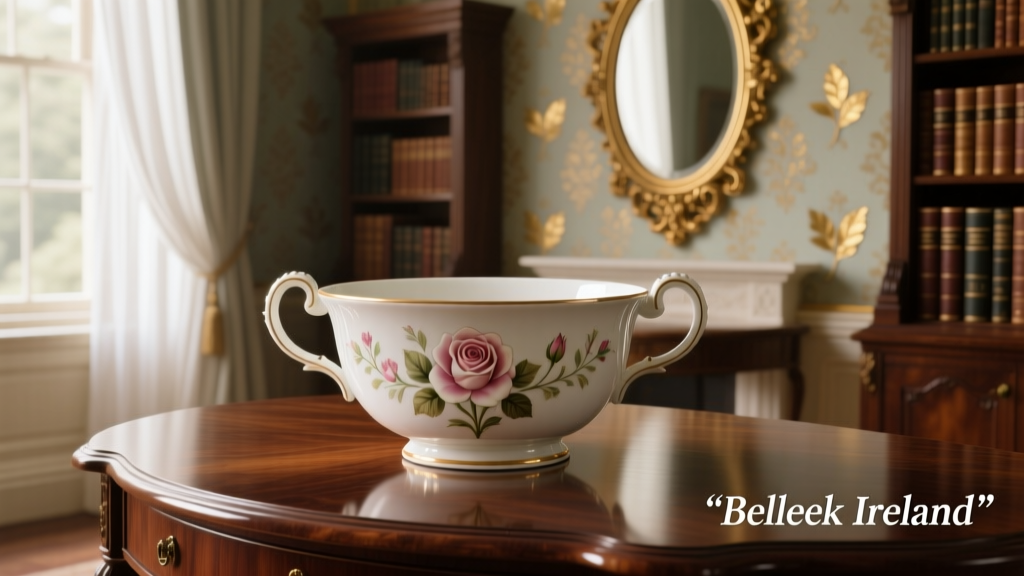
Willets Bowl: Rose Design Double-Handle Hand-Painted Belleek — A Collector’s Profile of the 7¼ × 4 Inch Porcelain Masterpiece
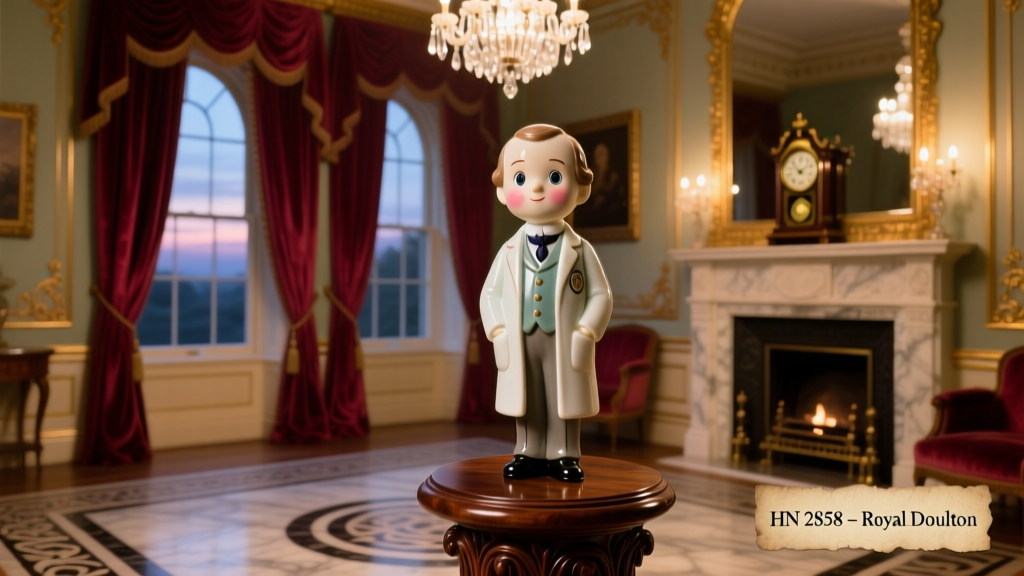
Royal Doulton Figurine Doctor HN 2858: History, Identification, and Conservation Guidance
Cookie Jars Revisited: The Cookie Shack Green Twin Winton — History, Identification, and Restoration Insights
Kahla Porcelain Factory VEB: East German Craftsmanship, Industrial Legacy, and Collectible Value
Rookwood Plaque: Landscape Scene on Vellum, 1913 — A Technical and Historical Examination of a Rare Ceramic Artifact
Barth & Son 17¼-Inch Cast Iron Frying Pan with Copper-Plated Handle: A Restoration Specialist’s Deep Dive
Authentic Late Qing Dynasty Stone Foo Dogs: Seated Pair with Carved Cloth Drapery, c. 1890 — Provenance, Craftsmanship & Conservation
Stevens Williams Rose Bowl Airtrap Swirl: Anatomy, Provenance, and Restoration of a Mid-Century British Glass Masterpiece
Hemingray No. 4 Aqua Insulator (1871): Origins, Identification, and Historical Significance in Early Telecommunications