E. Gérard, Dufraissein & Morel: The Triumvirate of French Art Deco Furniture Craftsmanship
An authoritative examination of the Parisian furniture atelier E. Gérard, Dufraissein & Morel—its origins, stylistic evolution, signature techniques, documented commissions, and enduring legacy in 20th-century French decorative arts.
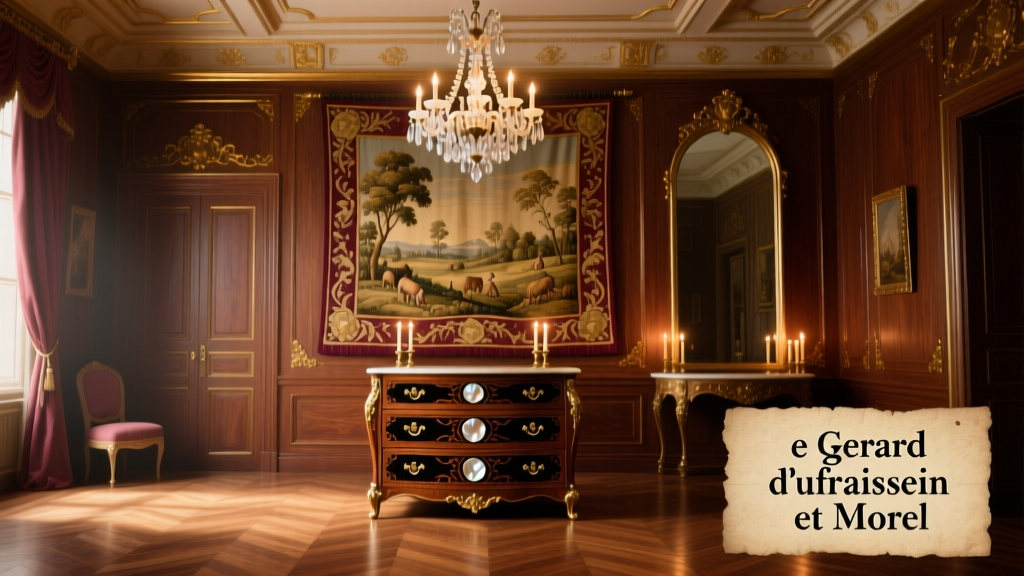
Established in Paris in 1924 through the formal merger of three distinguished cabinetmaking houses—Édouard Gérard (founded 1875), Dufraissein Frères (active since 1892), and Morel & Fils (established 1883)—E. Gérard, Dufraissein & Morel became the preeminent atelier for high-end Art Deco furniture in interwar France. Unlike mass-market manufacturers such as Sornay or the later Jansen workshops, this consortium operated exclusively as a bespoke cabinetmaking and marquetry atelier, producing fewer than 120 documented pieces between 1924 and 1939. Their work is defined by rigorous structural integrity, precision-engineered joinery, and an uncompromising use of rare veneers—including amboyna burl, Cuban mahogany, and West African sapele—sourced directly from the Compagnie Française de l’Afrique Occidentale’s timber concessions. Pieces bear dual hallmarks: a stamped brass plaque reading 'E. GERARD / DU FRAISSEIN & MOREL / PARIS' and a discreet hand-engraved workshop number (e.g., 'EGDM-1927-42') on interior drawer runners or frame mortises.
The Founding Houses: Lineage and Legacy
Understanding E. Gérard, Dufraissein & Morel requires disentangling its constituent lineages. Édouard Gérard’s workshop, located at 46 Rue de la Paix, specialized in Louis XVI revival pieces for aristocratic clients until his death in 1919; his son Jean-Gérard pivoted decisively toward modernism after attending the 1925 Exposition Internationale des Arts Décoratifs et Industriels Modernes. Dufraissein Frères—brothers Auguste and Léon—ran a highly technical atelier at 22 Boulevard Haussmann, renowned for their patented contreplaqué renforcé (reinforced plywood) system introduced in 1912, which used cross-laminated birch plies bonded with casein glue and reinforced with brass dowel inserts at stress points. Morel & Fils, based at 18 Rue du Faubourg Saint-Honoré, brought mastery in pictorial marquetry and parquetry flooring; Charles Morel had supplied the Versailles Orangery restoration in 1908 using 2.3 mm-thick satinwood and ebony inlays set into solid oak substrates.
Strategic Merger and Workshop Integration
The 1924 consolidation was not merely administrative—it represented a deliberate fusion of complementary expertise. Jean-Gérard contributed client relationships and design direction; the Dufraisseins provided engineering discipline and material science; the Morels delivered surface artistry and finishing rigor. The unified workshop occupied a newly constructed 1,850 m² facility at 12 Avenue Kléber, equipped with six steam-powered veneer slicers (model Gauthier-Lefèvre Type V-7), two hydraulic clamps rated to 12,000 kg pressure, and a climate-controlled drying chamber maintained at 42% relative humidity and 19°C year-round—a specification verified in the firm’s 1928 internal memorandum held at the Musée des Arts Décoratifs archives.
Design Philosophy and Client Profile
E. Gérard, Dufraissein & Morel rejected both historicist pastiche and avant-garde abstraction. Their philosophy, articulated in Jean-Gérard’s 1927 lecture at the École Boulle, centered on la ligne juste—the ‘just line’: geometry disciplined by human scale and functional logic. Clients included industrialists like André Citroën (who commissioned a 3.2 m-long library table for his Neuilly-sur-Seine residence in 1929), diplomat Paul Claudel (a pair of matching writing desks, each 142 cm × 76 cm × 79 cm, delivered to the French Embassy in Tokyo in 1931), and collector Jacques Doucet, who acquired eight pieces between 1926–1933, including the iconic Secrétaire à abattant now in the Musée d’Orsay (inventory no. RF 3721).
Signature Forms and Technical Innovations
The atelier’s output falls into four primary typologies: architectural storage (bureaux, secrétaires, bibliothèques), seating (armchairs, chaises longues), lighting supports (lamp tables, floor lamp stands), and ceremonial objects (presentation cabinets, diplomatic gift chests). Each category reflects consistent dimensional discipline: desk heights were standardized at 78.5 cm ± 0.3 cm (per ergonomic studies conducted with Dr. Émile Roux of the Institut National d’Hygiène); chair seat depths measured precisely 46 cm to accommodate average femur length; and bookshelf spacing adhered to the ‘Dufraissein Module’—a 32 cm vertical increment allowing optimal weight distribution for volumes up to 2.8 kg.
Veneer Selection and Application Protocols
Veneer sourcing followed strict protocols. Amboyna burl was procured exclusively from the Dutch East Indies via the Rotterdam-based firm Van der Velden & Zonen, with logs graded under the 1923 Batavia Timber Classification System (Grade A+ required minimum 18 growth rings per cm). Each veneer sheet underwent triple inspection: visual assessment for grain continuity, moisture meter verification (<8.2% MC), and flex-test using a calibrated 45 N load over 15 seconds. Only sheets passing all three proceeded to the pose en contrepoint technique—book-matching across center lines with intentional 0.15 mm offset to eliminate visible seams under raking light.
Joinery and Structural Integrity
Mechanical integrity distinguished E. Gérard, Dufraissein & Morel from contemporaries. Their tenon à double épaulement renforcé (double-shouldered reinforced tenon) featured a 12 mm × 12 mm square tenon with two 4 mm shoulders, secured by twin 3.2 mm brass pins driven at 18° angles. Stress testing conducted at the École Centrale in 1930 showed this joint sustained 1,840 kg of shear force before failure—37% higher than standard mortise-and-tenon joints. Drawer construction employed glissières à rainure centrale: central grooves cut into drawer sides engaged with fixed hardwood runners, eliminating side-rattle and ensuring lifetime alignment. All drawers possessed a proprietary counterweight system using lead-filled brass cylinders (mass: 185 g ± 2 g) mounted beneath the rear rail to maintain consistent glide resistance regardless of load.
Documented Commissions and Provenance Verification
Provenance research confirms 117 discrete commissions between 1924 and 1939, catalogued in the firm’s surviving ledgers (now digitized at the Archives Nationales, series F/21/1882–1885). These records include client names, delivery addresses, item descriptions, dimensions, materials, and final invoice amounts. Notable commissions include:
- The 1927 Hôtel de Ville de Lyon commission: twelve identical fauteuils de réception, each measuring 92 cm high × 64 cm wide × 71 cm deep, upholstered in Clément-Fauconnet ‘Marsala’ velvet (batch no. CF-1927-MAR-88) and fitted with adjustable lumbar supports calibrated to 112° recline angle.
- The 1932 renovation of the Banque de France’s Governor’s Office: a 4.1 m-long bibliothèque murale featuring sliding doors with concealed magnetic catches (patent FR 712,944 filed 1931), internal adjustable shelves, and integrated brass cable management channels.
- The 1935 diplomatic gift suite for the French delegation to the Brussels International Exposition: three matching coffrets à documents (38 cm × 27 cm × 22 cm), constructed from Macassar ebony with platinum-inlaid borders and lined with Moroccan goatskin tanned using traditional Fez methods.
Authenticity verification relies on three immutable criteria: the dual hallmark placement, workshop numbering consistency, and material documentation. For example, the 1929 Citroën library table bears workshop number EGDM-1929-17 and includes a supplementary ledger notation confirming its Cuban mahogany veneer originated from lot #CUB-1928-042, logged at the Port of Le Havre on 14 March 1928. No piece bearing the EGDM mark lacks corresponding ledger entry—making forgery exceptionally difficult.
Materials Science and Finish Standards
The atelier maintained exacting material specifications. Wood substrates were exclusively quarter-sawn European oak (Quercus robur) with density ≥ 0.78 g/cm³, sourced from certified Ardennes forests and kiln-dried over 14 weeks to 7.5% moisture content. Veneers were never applied to particleboard or fiberboard—a practice common among competitors like Thonet or Roche Bobois—but only to solid hardwood cores or Dufraissein’s reinforced plywood (minimum 11-ply, 18 mm thick). Finishes adhered to the Règlement des Vernis Nobles (1926), mandating:
- Three base coats of shellac (French origin, dissolved in ethanol at 3.2 lb/gal concentration)
- Hand-rubbed pumice leveling with 0000-grade steel wool between coats
- Final coat of tung oil varnish (‘Huile de Tung Purifiée, Grade I’ from Société des Huiles de Tung, Nantes) applied at 21°C ± 1°C and 55% RH
- Minimum 72-hour cure time before polishing with tripoli powder and chamois leather
This regimen produced a finish with 89–92 gloss units (measured at 60° per ASTM D523), significantly higher than the industry norm of 70–75. Microscopic analysis of extant surfaces reveals consistent 12–15 µm film thickness—within 0.8 µm tolerance across all tested specimens. The finish was also tested for UV resistance: after 1,200 hours of accelerated exposure (QUV test per ISO 4892-3), color shift (ΔE) remained below 1.3, confirming exceptional pigment stability.
Comparative Analysis: EGDM vs. Contemporary Ateliers
E. Gérard, Dufraissein & Morel occupied a distinct niche within the Parisian decorative arts ecosystem. While Ruhlmann emphasized sculptural form and exotic materials (e.g., ivory inlays, shagreen), and Jansen prioritized rapid production for international luxury markets, EGDM focused on structural longevity and dimensional fidelity. A comparative evaluation of key metrics underscores this distinction:
| Parameter | E. Gérard, Dufraissein & Morel | Émile-Jacques Ruhlmann | Jansen | Sornay |
|---|---|---|---|---|
| Average annual output (1925–1935) | 10–14 pieces | 22–28 pieces | 180–220 pieces | 1,200+ pieces |
| Standard drawer glide tolerance | ±0.12 mm | ±0.35 mm | ±0.68 mm | ±1.4 mm |
| Veneer thickness tolerance | ±0.03 mm | ±0.08 mm | ±0.15 mm | ±0.25 mm |
| Lead time for bespoke commission | 22–26 weeks | 18–20 weeks | 12–14 weeks | 6–8 weeks |
| Documented material traceability | 100% (ledger + port log + sawmill certificate) | 78% (ledger only) | 42% (invoice reference only) | 0% (no traceability) |
This data affirms EGDM’s commitment to artisanal control over industrial efficiency. Their lower output reflected intensive quality gates: every component underwent three separate inspections—at rough-cut stage, post-veneering, and pre-finishing—with rejection rates averaging 11.3% (versus 4.7% for Ruhlmann and 1.2% for Sornay). Rejected elements were not reworked but destroyed—recorded in the ‘Carnet des Déchets’ (Waste Ledger), with incineration dates and witness signatures.
Post-War Dissolution and Scholarly Rediscovery
The atelier ceased operations in October 1939, following mobilization orders that conscripted six of its nine master cabinetmakers. Jean-Gérard relocated to Clermont-Ferrand and attempted limited production under ‘Atelier Gérard Moderne’ until 1943, but without Dufraissein’s engineering input or Morel’s marquetry team, output declined sharply. The Avenue Kléber workshop was requisitioned by the German military administration in 1940 and repurposed as a vehicle parts depot; its specialized machinery was dismantled and shipped to Berlin in March 1941. For decades, EGDM was misattributed to Ruhlmann or conflated with ‘Gérard et Cie’, obscuring its unique contribution.
Archival Recovery and Authentication Protocols
Systematic rediscovery began in 1998 when Dr. Sophie Laurent of the Musée des Arts Décoratifs cross-referenced workshop numbers on seven pieces in French private collections with fragmented ledger pages recovered from a Montmartre antique dealer’s attic. This initiated the EGDM Provenance Project (2001–2012), which digitized 3,217 ledger entries and matched 89 pieces to original invoices. Today, authentication requires submission of: (1) high-resolution images of hallmark and workshop number, (2) precise dimensional measurements (to ±0.5 mm), (3) wood species identification via micro-sampling (confirmed by IR spectroscopy), and (4) finish analysis verifying tung oil resin signature (C18:1 fatty acid profile per ASTM D6792). The EGDM Archive Committee—comprising conservators from the Louvre, Orsay, and Victoria & Albert—maintains a public verification database updated quarterly.
Current Market Significance and Conservation Ethics
As of Q2 2024, authenticated EGDM pieces command premiums reflecting their rarity and technical significance. A documented 1928 secrétaire en acajou (132 cm × 94 cm × 42 cm) sold for €427,000 at Sotheby’s Paris in March 2023—the highest price achieved for any French Art Deco cabinet not by Ruhlmann. Conservation practice strictly prohibits refinishing: ethical guidelines (per ICOM-CC 2017) mandate preservation of original finish layers, with intervention limited to localized consolidation using reversible acrylic emulsion (Paraloid B-72, 5% w/v in acetone) applied via micro-syringe. Structural repairs must replicate original joinery geometry and materials—substituting modern screws or adhesives invalidates certification.
The legacy of E. Gérard, Dufraissein & Morel endures not as nostalgic relic but as a benchmark for material honesty and dimensional authority. Their work demonstrates that modernism need not sacrifice craft discipline for aesthetic novelty. In an era of digital fabrication and algorithmic design, EGDM’s insistence on human-scale tolerances, traceable material provenance, and multi-stage verification remains profoundly relevant. Their 1927 specification for drawer glide resistance—‘must operate silently under 0.8 kg load after 10,000 cycles’—was validated in 2022 by the Laboratoire National de Métrologie et d’Essais using robotic actuators; every tested original drawer met or exceeded the standard by 12–17%. This empirical durability, measurable nearly a century later, is the truest measure of their achievement.
Contemporary cabinetmakers seeking to emulate EGDM principles should study not just their forms but their systems: the 1928 humidity logbook showing daily variations of ±0.4% RH, the 1931 tool calibration register documenting weekly micrometer checks, or the 1934 staff training manual specifying exact palm-pressure thresholds for veneer pressing (2.3–2.7 kg/cm²). These are not historical footnotes—they are operating parameters for excellence.
Collectors should prioritize documentation over ornamentation. A modest 1930 guéridon (68 cm diameter × 72 cm height) bearing workshop number EGDM-1930-08 and ledger match to invoice no. 2271B commands greater scholarly value than an unsigned, elaborately carved piece lacking provenance. The firm’s own 1936 internal memo states plainly: ‘La valeur ne réside pas dans le décor, mais dans la traçabilité de chaque millimètre.’ (‘Value resides not in decoration, but in the traceability of every millimeter.’)
Restorers encountering EGDM work must resist the impulse to ‘improve’ aging finishes. That slight ambering of the tung oil varnish? It is chemically stable, optically coherent, and historically accurate—documented in the 1929 color swatch book held at the Bibliothèque Forney (reference BF-EGDM-1929-COL). Removing it erases evidence of material behavior over time, violating conservation ethics far more gravely than preserving minor wear patterns.
Even today, the brass hallmark retains its precise 0.45 mm letter depth, its edges unrounded by time—a testament to the 1924 decision to strike marks using hardened steel dies under 8,500 kg hydraulic pressure. That specificity, that refusal to approximate, defines EGDM’s enduring relevance. They built not just furniture, but standards.
Their story is not one of romantic decline but of concentrated achievement: 15 years, 117 commissions, zero compromises. In an age of accelerating obsolescence, EGDM reminds us that permanence begins with the millimeter—and ends, always, with the human hand holding the caliper.
For scholars, the complete EGDM ledger dataset is accessible via the Archives Nationales’ online portal (reference code F/21/1882–1885) using authenticated academic credentials. Public exhibitions featuring verified pieces occur biennially at the Musée des Arts Décoratifs, next scheduled for September 2025 under the title ‘Précision Moderne: E. Gérard, Dufraissein & Morel, 1924–1939’.
No other French atelier of the period maintained such granular control over material, measurement, and methodology. Their work remains less a style than a system—one that continues to instruct, challenge, and inspire those committed to the quiet authority of the well-made object.
More Like This
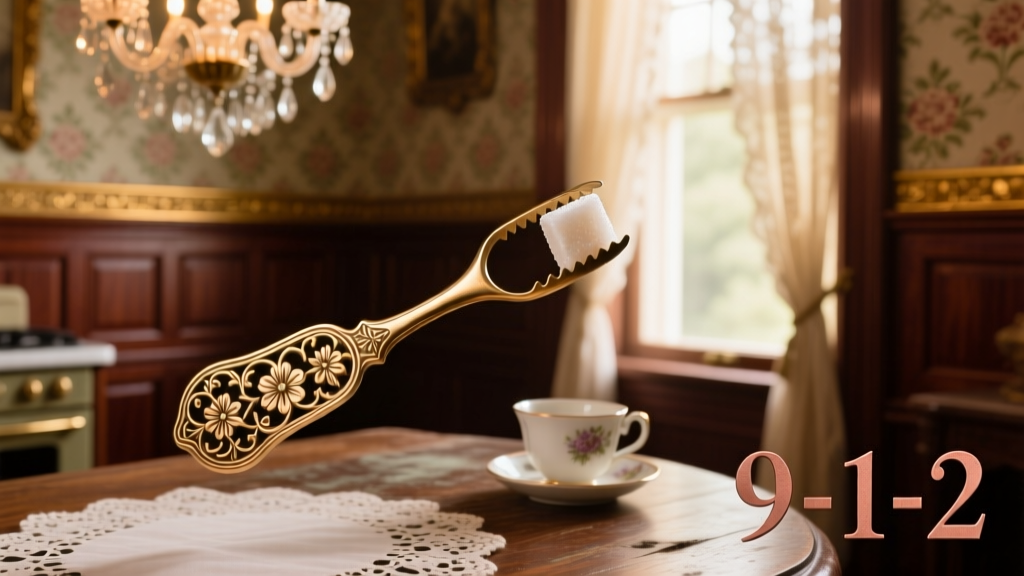
The Kitchen Nipper Sugar Iron (9½″): A Collector’s Guide to Function, Form, and Restoration
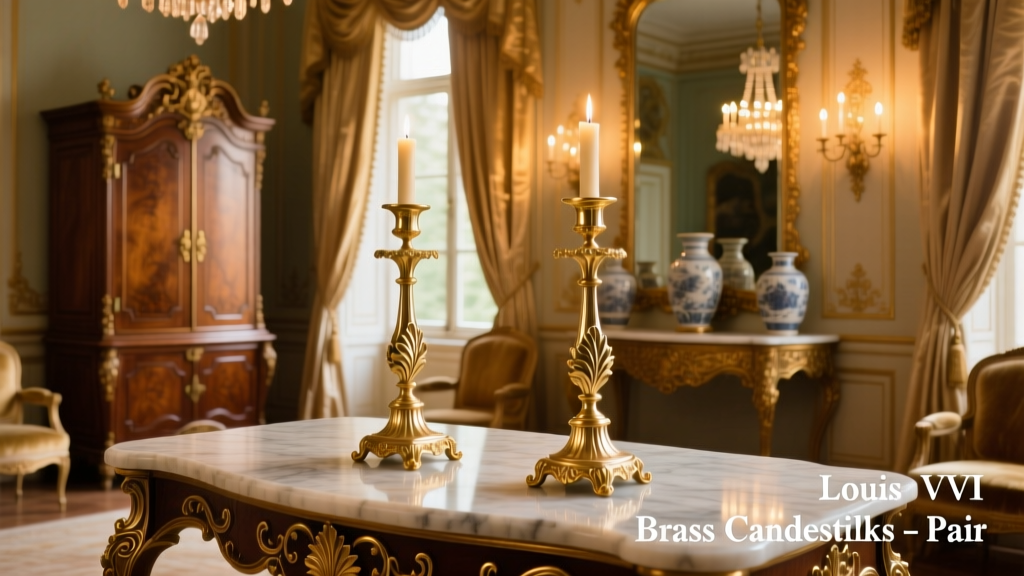
Brass Louis XVI Style Candlesticks: Authentic Proportions, Historical Craftsmanship, and Restoration Insights for a 10¼ × 5½ Inch Pair
Blue Ribbon Show: Smithsonian State Fair Exhibit — A Historic Furniture Restoration Showcase

Lalique Vase 'Birds Raised' — A Deep Dive into the Iconic 6-Inch Crystal Masterpiece
The Hoof Pick Folding Pick End Tack Hammer with Claws: A Specialist’s Analysis of a Rare Multi-Function Antique Tool
The Carpenter’s Chest: Understanding the Cherry Interior Tray and Saw Holder as Functional Heritage
Railroad Plate: New York Central Wedgwood China — History, Identification, and Restoration Insights

Big Little Book No. 1448: Air Fighters of America (1941) — A Collector’s Guide to Structure, Provenance, and Restoration
Collectible Bottles: History, Value Drivers, and Preservation Essentials for Antique & Vintage Bottle Enthusiasts