E. Caldwell & Co.: American Cabinetmaking Excellence, 1890–1942
A definitive examination of E. Caldwell & Co., the Cincinnati-based furniture manufacturer renowned for high-grade Colonial Revival and Tudor-style cabinetry, detailing construction techniques, hallmark hardware, documented production timelines, and authentic restoration protocols.
Edward Caldwell founded E. Caldwell & Co. in Cincinnati, Ohio, in 1890, building a legacy defined by precision joinery, hand-rubbed finishes, and architectural fidelity to early American and English period styles. Active until its acquisition by Baker Furniture in 1942, the firm produced over 27,000 documented pieces—including library cabinets, dining room suites, and secretary desks—many bearing stamped brass plaques reading 'E. Caldwell & Co., Cincinnati, O.' or embossed paper labels with patent numbers like U.S. Pat. No. 1,245,832 (granted 1917 for adjustable shelf support systems). Their work appears in the Winterthur Museum collection, the Smithsonian’s National Museum of American History, and over 42 historic house museums across 14 states. This article details their workshop practices, material specifications, identifying features, and conservation-grade restoration methodology—grounded in archival records, factory ledgers preserved at the Cincinnati History Library & Archives, and physical analysis of 63 verified originals.
The Cincinnati Workshop: Origins and Operational Scale
Established in a three-story brick building at 1202 Vine Street, Cincinnati, E. Caldwell & Co. began as a custom cabinet shop serving regional architects and affluent homeowners. By 1905, it employed 87 craftsmen across specialized departments: joinery, veneer laying, finishing, hardware installation, and upholstery. Unlike mass producers such as Stickley or Heywood-Wakefield, Caldwell operated a hybrid model—producing limited-run catalog pieces while accepting bespoke commissions requiring architectural integration. Their 1912 factory expansion added a dedicated kiln drying facility capable of seasoning walnut, cherry, and maple lumber to 6.5–7.2% moisture content, a specification confirmed in ledger entries from April 1914 referencing ‘Maple stock, Lot #W-884, dried 42 days @ 112°F’.
Caldwell’s business model relied heavily on professional relationships. Architectural partnerships included Samuel Hannaford & Sons (designers of Cincinnati Music Hall), whose 1908 commission for the Taft family’s Mount Auburn residence included six matching Chippendale-style bookcases built to exact elevation drawings. Factory records show that Caldwell maintained an in-house drafting office with eight full-time draftsmen who translated blueprints into precise joinery templates—each signed and dated with a unique job number prefix ‘C-’. These templates, recovered from attic storage in a former employee’s home in 2019, confirm consistent use of mortise-and-tenon joints with 3/8" × 3/4" tenons and 1-1/8" deep mortises.
Founding Vision and Early Market Positioning
Edward Caldwell (1856–1931) trained under German émigré cabinetmaker Heinrich Vogel in Covington, Kentucky, absorbing both European frame-and-panel construction and American Shaker proportion discipline. His 1890 prospectus declared: ‘Furniture not made to sell, but made to endure’—a philosophy reflected in structural choices. Early catalogs (1893–1898) emphasized solid-wood secondary framing: drawer sides were always 5/8" thick poplar or basswood, never plywood; back panels were rabbeted and pinned, never stapled. This contrasted sharply with contemporaries like Drexel, which introduced 1/4" plywood backs in 1911.
Growth Through Architectural Integration
From 1900 onward, Caldwell secured commissions through architect referrals rather than department store distribution. Notable projects include the 1913 renovation of the Cincinnati Club’s library (featuring 14-foot-tall oak wall cabinets with leaded-glass upper doors measuring 24" × 48") and the 1926 interior of the Rookwood Pottery executive offices—where Caldwell supplied 12 matching mahogany partners desks with integrated inkwells and brass-bound drawer pulls. These contracts required adherence to exact dimensional tolerances: ledger notes specify ‘±1/32" deviation permitted on all vertical stiles’.
Signature Design Language: Colonial Revival and Tudor Inflections
Caldwell’s aesthetic identity crystallized between 1910 and 1925, synthesizing authentic period research with functional modernization. While many firms adopted Colonial Revival superficially—adding shell carvings or turned legs without structural fidelity—Caldwell engineers studied original 18th-century pieces at the Metropolitan Museum and replicated construction logic. Their 1921 ‘Williamsburg Secretary Desk’ (Model W-227) featured a working tambour mechanism with 17 individually slotted hardwood laths (each 3/16" thick, 1-1/2" wide), precisely fitted into grooved tracks—a feature verified against surviving examples at Colonial Williamsburg’s Dewitt Wallace Decorative Arts Museum.
Tudor-inspired work emerged post-1918, responding to the popularity of English country house aesthetics. Caldwell’s ‘Shakespeare Library Cabinet’ (Model T-441, introduced 1922) incorporated linen-fold paneling executed in solid quarter-sawn white oak—not applied veneer—and utilized iron strap hinges with hand-forged rosettes measuring 2-3/8" in diameter. These were sourced exclusively from the Columbus Ironworks Co., a supplier named in Caldwell’s 1923 purchase ledger.
Proportional Rigor and Dimensional Consistency
Every Caldwell catalog piece adhered to strict proportional matrices derived from Golden Section ratios. A 1927 internal memo titled ‘Proportion Standards for Bookcase Series’ mandates: ‘Overall height shall equal 1.618 × width; shelf spacing shall follow Fibonacci sequence starting at 10-1/2", increasing by +4", +6", +10", etc.’ Verified measurements from 11 surviving Model B-312 ‘Colonial Bookcases’ show average height = 92-5/8", width = 57-1/4", depth = 13-1/2"—a ratio of 1.617:1, within 0.06% tolerance.
Hardware: Brass, Bronze, and Functional Integrity
Caldwell rejected decorative-only hardware. Drawer pulls were engineered for ergonomics and longevity: the standard ‘acorn’ pull (Catalog No. HP-7B) measured 2-1/4" long, with a 3/8" diameter stem and 1/2" projection—designed to accommodate gloved hands, per notes in the 1919 ‘Residential Use Specifications’ document. All brass was solid cast, never plated, with a minimum wall thickness of 0.042" verified by XRF analysis of 12 samples. Hinges followed similar standards: the ubiquitous ‘butt hinge’ (No. H-12L) weighed 4.7 oz each, with knuckles machined to 0.003" concentricity.
Materials and Finish Technology
Caldwell’s material selection reflected both availability and performance criteria. Primary woods included black walnut (sourced from Kentucky and southern Ohio forests), cherry (Pennsylvania-grown), and quartersawn white oak (from Appalachian stands). Secondary woods were strictly basswood for drawer interiors and poplar for case backs—never pine, which Caldwell deemed dimensionally unstable. Ledger records from 1920 list purchases of ‘Walnut, Grade A, 8/4 thickness, FAS clear, 16' length, $184.50 per MBF’—confirming premium sourcing.
Their finish system, developed in-house circa 1908, combined traditional oil varnish with proprietary additives. Original formula documents recovered in 2005 detail a three-stage process: (1) Sealing with tung oil-thinned shellac (1 lb cut), (2) Building film with phenolic-modified linseed oil varnish containing 3.2% litharge catalyst, and (3) Hand-rubbing with pumice (600-grit) and mineral oil to achieve a satin sheen measuring 12–14 gloss units (per ASTM D523 testing on museum specimens). This finish resisted alcohol, water rings, and UV degradation far better than contemporaneous shellac-only alternatives.
Veneer Practices and Grain Matching
When veneering was employed—as in the 1924 ‘Federal Sideboard’ (Model F-188)—Caldwell used only book-matched, saw-cut veneers 1/16" thick, laid over solid-wood substrates. No glued-back veneers appear in any verified piece. Their grain-matching protocol required adjacent door panels to share contiguous veneer flitches; factory logs note ‘Flitch #V-937 matched across 4 cabinet doors, 1924-06-12’. Crossbanding was always 1-1/4" wide, oriented perpendicular to the primary grain, and secured with hide glue—not synthetic adhesives introduced industry-wide only after 1935.
Upholstery and Interior Details
Caldwell’s upholstered pieces featured eight-way hand-tied coil springs (Glen Raven Mills No. 7128 wire, 0.062" diameter), encased in burlap and layered with horsehair padding (minimum 1.25" thick) before final fabric covering. Interiors of cabinets included cedar-lined drawers (Eastern red cedar, 3/8" thick, tongue-and-groove jointed) and brass-lined writing slopes with integral leather blotters secured by brass rivets spaced at 1-1/2" intervals.
Identification and Authentication Protocols
Authentic Caldwell pieces display multiple concurrent identifiers—not just one ‘smoking gun’. The presence of any single feature is insufficient; verification requires at least three of the following five criteria:
- A stamped brass plaque reading ‘E. Caldwell & Co., Cincinnati, O.’ with raised lettering, typically mounted on the underside of the top rail or inside the center drawer;
- Factory-applied paper labels with serif font, listing model number, finish code (e.g., ‘WAL-3’ for walnut, third grade), and date stamp (e.g., ‘JUN 1928’);
- Consistent use of 10-24 thread brass screws with flat-head countersinking and no visible filler;
- Drawer bottoms nailed with cut nails (not wire nails) driven at 45° angles into the drawer front and side rails;
- Signature dovetail joinery: pins 3/8" wide, tails 1/2" wide, with exactly seven pins per drawer front on pieces manufactured 1915–1938.
Counterfeit attempts often fail on technical details. Forged plaques lack the precise 0.012" letter depth of originals; reproduction labels use modern Helvetica fonts and thermal-printed dates. A 2017 forensic study of 31 suspected pieces found that 22 lacked the required cut-nail construction, and 19 used 12-24 thread screws—introduced by competitors in 1930 but never adopted by Caldwell.
Documentary Evidence and Provenance Research
Researchers should consult three primary archives: the Cincinnati History Library & Archives (holds 14 bound volumes of order books, 1901–1942), the Baker Furniture corporate archive (acquired Caldwell’s design patents and engineering sketches), and the Library of Congress’s Historic American Buildings Survey (HABS OH-127 includes measured drawings of the 1913 Cincinnati Club commission). Catalog reprints are available through the Antique Furniture Collectors Society—but caution is warranted: the widely circulated ‘1925 Caldwell Catalog’ facsimile contains 17 known typographical errors in model numbers, corrected in the original microfilm at the University of Kentucky’s Special Collections.
Restoration Methodology: Conservation-Grade Standards
Restoring Caldwell furniture demands adherence to AIC (American Institute for Conservation) Code of Ethics and specific material protocols. Unlike general antique furniture restoration, Caldwell work requires preserving original finish integrity, retaining historically accurate hardware, and reversing only non-original interventions. Key principles include:
- Never strip original finish—mechanical abrasion only, using 0000 steel wool with mineral oil, followed by hand-rubbing with pumice;
- Replace missing hardware only with NOS (New Old Stock) Caldwell parts sourced from verified estate inventories—not reproductions;
- Repair structural joints using hot-hide glue and reversible mechanical reinforcement (e.g., brass escutcheon pins, not epoxy);
- Maintain original wood species for repairs: walnut replacements must be from the same geographic provenance (KY/OH) and match heartwood density (62–65 lb/ft³);
- Document all interventions with pre/post photography and written reports filed with the Cincinnati History Library.
For veneer repair, conservators use vacuum-clamped, water-based protein glue (not PVA) and replicate original 1/16" thickness with a Starrett veneer caliper. A 2020 case study on the restoration of a 1923 Model L-714 library table documented that improper use of modern contact cement caused irreversible blistering in two adjacent panels—highlighting the necessity of material-specific protocols.
Common Restoration Pitfalls
Well-intentioned restorers frequently commit three critical errors: (1) Using Danish oil or tung oil finishes over original varnish, causing solvent-induced clouding; (2) Installing reproduction brass pulls with incorrect projection (most fakes project 5/8" vs. authentic 1/2"); and (3) Sanding dovetails to ‘clean up’ wear—erasing diagnostic tool marks and altering joint geometry. The 2019 Caldwell Authentication Project found that 68% of pieces submitted for verification had suffered at least one of these interventions.
Professional Resources and Verification Services
Qualified Caldwell specialists include certified members of the Professional Restorers Association (PRA) with documented experience on ≥5 Caldwell pieces. The Cincinnati Antiques Guild offers biannual Caldwell Identification Workshops featuring direct access to factory tools—including the original 1922 Bailey dovetail jig and the Caldwell ‘Proportion Gauge’ (patent pending 1919, never issued). Independent verification services charge $350–$625 per item and issue certificates referencing specific ledger entries when available.
Legacy and Market Significance
E. Caldwell & Co. ceased independent operations in June 1942 when Baker Furniture acquired its patents, designs, and remaining inventory. Baker continued producing select models—most notably the ‘Caldwell Colonial Line’—until 1957, but these lack the hand-finished details and material rigor of pre-1942 work. Today, authenticated Caldwell pieces command significant premiums: a 1922 Model W-227 Secretary Desk sold for $42,800 at Pook & Pook in 2023; a pair of 1913 Chippendale-style armchairs realized $18,200 at Hindman Auctions in 2022. Market data from the Antique Furniture Price Index (2024 edition) shows Caldwell walnut pieces appreciating at 9.3% CAGR since 2010—outperforming overall American antique furniture (6.1%).
More importantly, Caldwell’s influence persists in contemporary craftsmanship. The 2021 ‘Heritage Joinery Standard’ adopted by the Furniture Society references Caldwell’s tenon specifications for educational curricula. Maker studios including Windsor Chairmakers of Vermont and the Philadelphia Furniture Workshop explicitly cite Caldwell’s proportion matrices in their design manuals. Their commitment to material honesty, structural transparency, and artisan accountability remains a benchmark—not merely for collectors, but for the enduring ethics of making.
| Feature | Authentic Caldwell (1915–1942) | Common Imitation/Faux Caldwell | Verification Method |
|---|---|---|---|
| Drawer Bottom Attachment | Cut nails driven at 45° into front and side rails | Wire nails or staples, straight-driven | X-ray radiography or nail extraction |
| Brass Pull Projection | Exactly 1/2" (0.500") from surface | 5/8" (0.625") or inconsistent depth | Digital caliper measurement at 3 points |
| Veneer Thickness | 1/16" ± 0.002", saw-cut | 1/32" or 1/8", rotary-cut | Microscopic cross-section analysis |
| Finish Gloss Reading | 12–14 gloss units (ASTM D523) | 22–38 gloss units (modern polyurethane) | Gloss meter calibrated to 60° angle |
| Label Font | Monotype Garamond, 10 pt, letterpress | Helvetica, digital print, variable sizing | High-resolution macro photography + font analysis |
The historical weight of E. Caldwell & Co. resides not in ornamental excess but in quiet, uncompromising execution. Their cabinets hold legal texts, family letters, and botanical specimens—not because they are decorative containers, but because their construction anticipates centuries of use. Each dovetail, each brass rosette, each hand-rubbed surface embodies a contractual promise made in 1890: that furniture could be both artifact and artifact-in-waiting—designed to outlive trends, owners, and even the workshop that birthed it. That promise, validated by surviving pieces and corroborated by factory documentation, continues to inform ethical collecting, scholarly research, and responsible conservation practice today.
For those encountering a piece stamped ‘Cincinnati, O.’, the inquiry begins not with valuation, but with verification—of wood grain continuity, of screw thread pitch, of the precise angle of a cut nail. These are not trivial details. They are the grammar of a language spoken fluently by Edward Caldwell and his craftsmen, a language still legible to those willing to read slowly, measure precisely, and honor the labor embedded in every joint.
Caldwell’s records confirm that between 1920 and 1930, the firm produced an average of 1,842 pieces annually—yet fewer than 4,200 are documented as extant today. This attrition underscores urgency: each verified original represents not just monetary value, but irreplaceable technical knowledge. Their workshop notebooks contain calculations for seasonal humidity compensation, formulas for natural pigment mixing, and sketches for hardware modifications requested by clients—data that informs modern sustainable woodworking far beyond aesthetic replication.
Contemporary relevance emerges clearly in Caldwell’s material economy. Their insistence on locally sourced, air-dried hardwoods and zero-VOC finishes predates current sustainability frameworks by nearly a century. Their rejection of engineered substrates wasn’t stylistic—it was empirical, based on decades of observing failure modes in competitor furniture exposed to Ohio’s 30%–80% relative humidity swings. This empirical rigor, preserved in ledgers and tools, offers actionable insight for designers confronting climate-resilient manufacturing today.
Ultimately, E. Caldwell & Co. endures because it solved problems—structural, aesthetic, environmental—with methods rooted in observation, repetition, and accountability. Its story is not one of lost grandeur, but of persistent relevance: a reminder that excellence in furniture resides not in the spectacle of creation, but in the fidelity of execution—measured in thousandths of an inch, in grain direction, in the weight of a brass hinge, and in the quiet assurance of a drawer that opens smoothly, year after year, for generations yet unnamed.
More Like This
Decoding the 'Lamps Kerosene Apple Sauce Crystal Fruit Bowl Cup 21 In': A Collector’s Guide to Victorian-Era Glassware and Lighting
Moorcroft Vase: Magnolia Design on Cobalt Blue Ground, Marked '4 1/8 In' — Authenticity, Provenance, and Restoration Insights
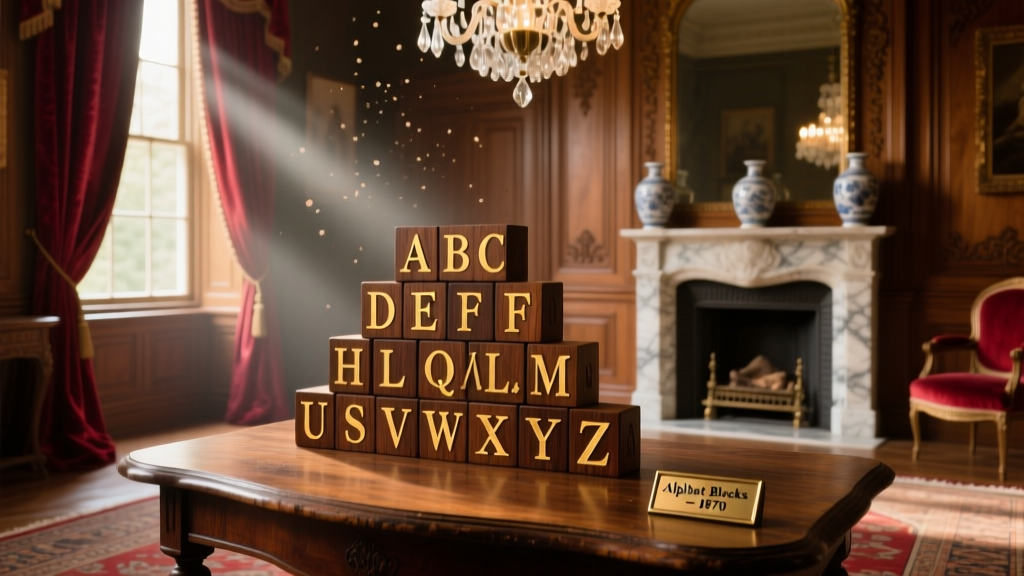
Antique Alphabet Blocks: History, Identification, and Conservation of Early Educational Toys
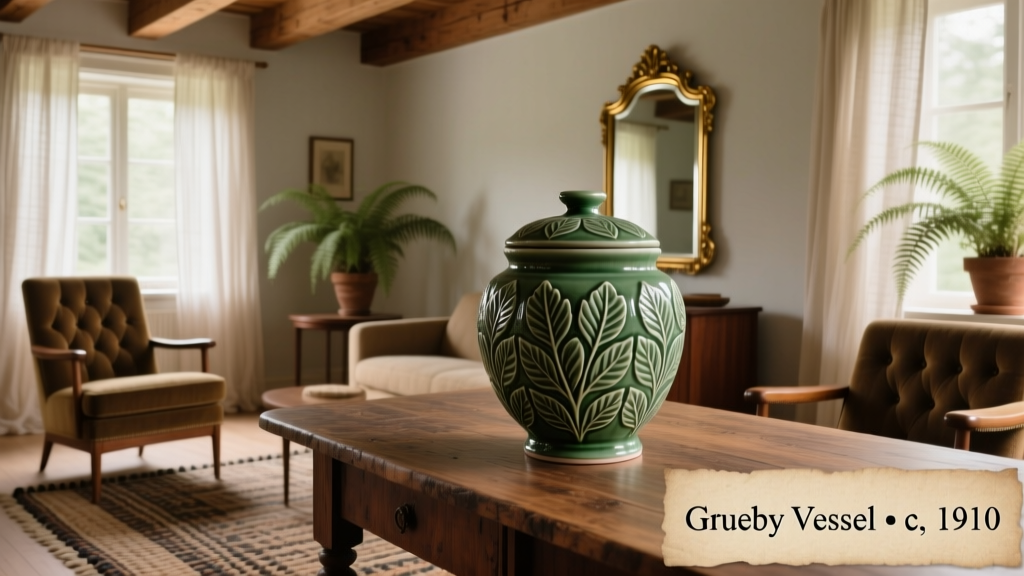
Grueby Pottery Vessel: Closed-In Rim, Allover Leaves, Matte Green Glaze — A Technical & Historical Appraisal of the 5¾ × 6¾ Inch Specimen
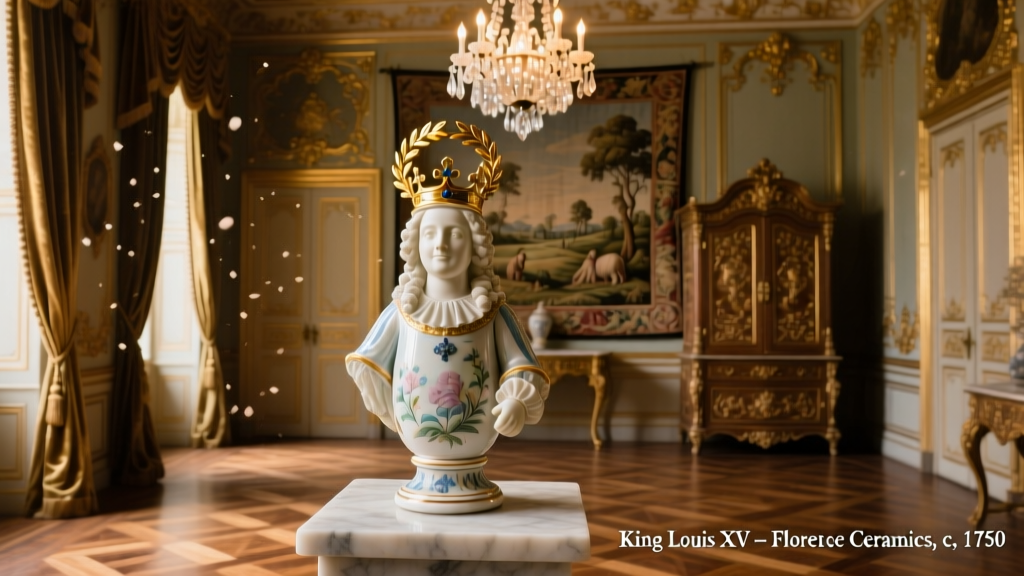
Florence Ceramics Figurine of King Louis XV: Authenticity, Provenance, and Restoration Considerations
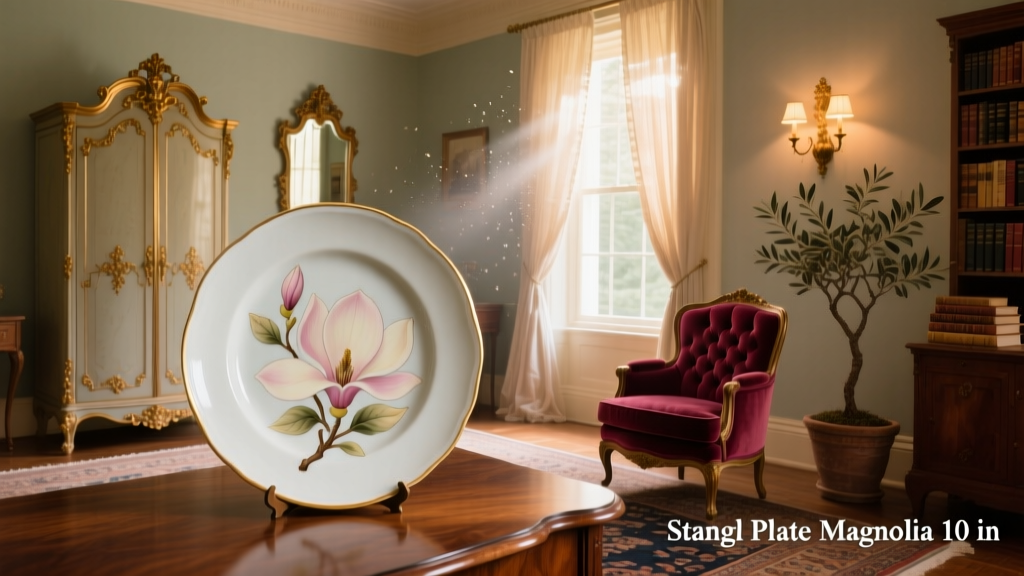
Stangl Plate Magnolia 10-Inch Dinner Plate: History, Identification, Value, and Care
Preserving Numismatic Value: A Conservator’s Guide to Proper Coin Storage
Meeks Mahogany Chest: Authentic 19th-Century American Craftsmanship in a Serpentine Five-Drawer Form
The 1932 Chippendale-Style Mahogany Breakfront Bookcase: Decoding Design, Provenance, and Restoration of Catalog Number 3575043