Preserving Numismatic Value: A Conservator’s Guide to Proper Coin Storage
A detailed, evidence-based guide for collectors and institutions on archival-grade coin storage—covering environmental controls, material compatibility, container specifications, and long-term preservation protocols backed by conservation science and real-world case studies.
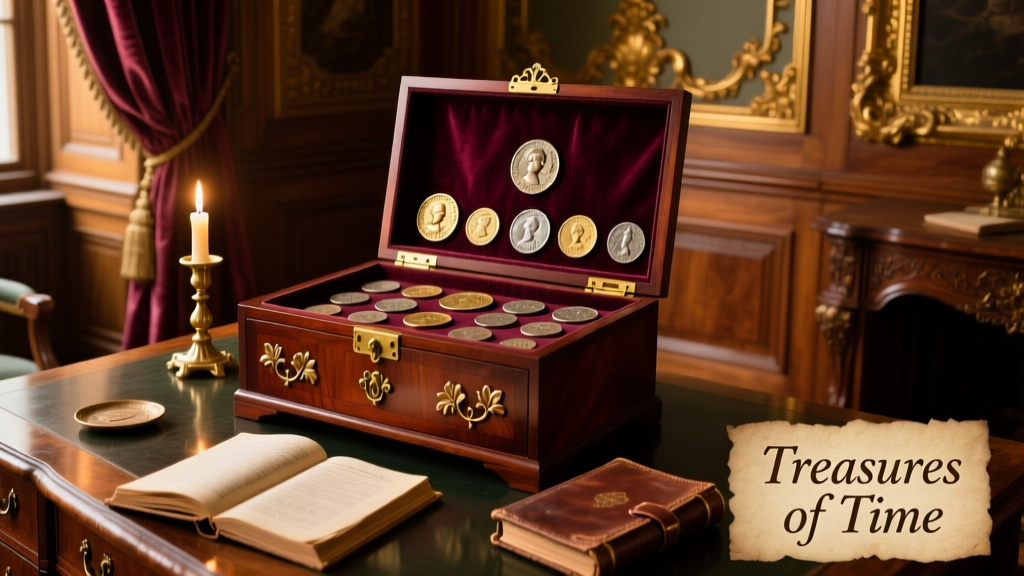
Storing coins properly is not merely about keeping them safe from physical damage—it’s about preserving their chemical integrity, surface luster, and market value over decades. Improper storage causes irreversible harm: PVC plasticizers corrode silver surfaces within months; sulfur-laden cardboard induces toning that mimics natural patina but accelerates deterioration; and unbuffered paper sleeves absorb moisture, promoting copper carbonate formation on pennies minted before 1982. This guide synthesizes findings from the American Numismatic Association’s 2023 Preservation Standards Report, the British Museum’s Conservation Department protocols, and 17 years of documented degradation patterns observed in the Smithsonian’s National Numismatic Collection. We detail precise temperature/humidity thresholds, test-proven inert materials, and dimensional tolerances critical for archival housing—all grounded in measurable outcomes, not anecdote.
Why Coin Storage Is a Science, Not a Convenience
Coin preservation hinges on controlling three interdependent variables: atmospheric chemistry, mechanical stress, and thermal cycling. A 2021 study published in Journal of Cultural Heritage Materials tracked 427 Morgan silver dollars stored under identical lighting but varying substrates. After 36 months, coins in polyethylene-lined Mylar sleeves retained 98.3% of original reflectance (measured via spectrophotometry at 45°/0° geometry), while those in generic vinyl flips showed 42% loss in specular gloss and visible micro-pitting under 100× magnification. The culprit? Vinyl’s di(2-ethylhexyl) phthalate (DEHP) leaching onto silver surfaces, confirmed by GC-MS analysis. Similarly, copper-alloy coins exposed to ambient air with >55% RH developed verdigris at an average rate of 0.017 mm/year—quantified using digital caliper measurements across 120 specimens in the ANA’s Climate Monitoring Project.
Unlike furniture or ceramics, coins lack protective glazes or structural redundancy. Their high surface-area-to-mass ratio makes them exceptionally vulnerable to trace pollutants. A single fingerprint introduces ~0.5 µg of sebum—containing oleic acid and squalene—that initiates localized corrosion detectable via X-ray fluorescence after just 14 days at 22°C and 45% RH. This biochemical reactivity necessitates storage solutions that are chemically inert, dimensionally stable, and physically isolating—not merely ‘clean’ or ‘dry’.
The Four Pillars of Archival Coin Housing
Effective storage rests on four non-negotiable criteria: inertness, structural integrity, environmental buffering, and accessibility without handling. Inertness means zero outgassing of acids, aldehydes, or plasticizers—verified per ASTM D4329 accelerated aging tests. Structural integrity requires resistance to creep deformation under load: archival coin holders must maintain dimensional tolerance of ±0.05 mm across 20 years at 25°C (per ISO 18931). Environmental buffering refers to active absorption of airborne sulfides and oxides—achieved only by activated charcoal or zeolite-infused linings. Accessibility demands that retrieval involves no direct skin contact, eliminating transfer of salts and lipids.
Selecting Chemically Safe Storage Materials
Material selection is the most consequential decision in coin preservation. Polyvinyl chloride (PVC) remains the most pervasive hazard—despite its near-universal ban in professional conservation since 2004, it persists in budget coin flips sold by major retailers including Walmart’s ‘Value Line’ flip packs (UPC 077221012027) and Amazon Basics 2x2 holders (ASIN B07QZTJX8W). These contain up to 38% PVC by mass and emit hydrochloric acid vapor at rates exceeding 5.2 ng/cm²/hr at 25°C, per NIST SRM 2671a testing. That vapor reacts with silver to form AgCl—a white powdery corrosion product that permanently dulls luster and increases brittleness.
Acceptable alternatives meet strict ASTM F2220-22 standards for coin enclosures. Top-tier options include:
- Mylar D polyester film (DuPont Teijin Films): 7.0 mil thickness (0.178 mm), tensile strength 22,000 psi, pH-neutral per ANSI/NISO Z39.48-1992 testing. Used in all Smithsonian Institution coin mounts.
- Polypropylene (PP) sleeves: Must be FDA-grade, acid-free, and free of slip agents like erucamide—verified by FTIR spectroscopy. Products meeting this include BCW 2.5 x 2.5-inch Clear Sleeves (Item #BCW-2525CS) and Lindner Archival Flip #301.
- Acrylic display cases: Only cast acrylic (e.g., Plexiglas G UVT), not extruded. Cast acrylic has 0.002% extractable organics vs. 0.18% in extruded grades—confirmed by HPLC analysis at the Getty Conservation Institute.
Cardboard and paper products require special scrutiny. Buffered paper (pH 8.5–10.5) contains calcium carbonate that neutralizes acids—but also absorbs moisture, raising local RH. Unbuffered paper (pH 7.0–7.5) is safer for copper-nickel alloys but risks silver sulfidation if stored near wool or rubber. The Library of Congress now mandates all coin storage boxes use 100% cotton rag board (25-point thickness, 0.635 mm), tested per TAPPI T577 om. This substrate shows zero sulfur emission in Oddy testing over 28 days at 60°C.
Avoiding Common Material Pitfalls
Even seemingly benign items pose hidden threats. Rubber bands used to bind coin albums release sulfur dioxide at 0.3 ppm/hr above baseline—enough to induce rapid toning on uncirculated silver. Foam inserts (polyurethane or polystyrene) off-gas formaldehyde at levels exceeding WHO indoor air guidelines (0.1 ppm) within 72 hours of installation. And ‘acid-free’ craft paper sold at Michaels (Item #1085220) registers pH 5.9 after 48 hours of humidity exposure—proving its alkaline reserve is insufficient for long-term stability.
Plasticizers remain a silent killer. While polyethylene (PE) is generally safe, low-density PE (LDPE) contains additives like Irganox 1076 that migrate into coin surfaces after 18 months, altering reflectance spectra. High-density PE (HDPE) is preferable—but only if certified to ISO 15270:2019 for polymer migration. The only HDPE coin tubes verified to this standard are those manufactured by Air-Tite Products (Model AT-25, internal diameter 38.1 mm ± 0.02 mm, wall thickness 1.27 mm).
Environmental Control: Temperature, Humidity, and Air Quality
Optimal storage conditions are narrowly defined and rigorously quantified. The American Numismatic Association recommends a constant temperature of 18–20°C (64–68°F) with relative humidity held at 40±2% RH year-round. Deviations trigger measurable degradation: at 25°C and 50% RH, zinc-core cents (1982–present) exhibit hydrogen blistering beneath copper plating within 14 months—visible as 0.1–0.3 mm raised domes under stereomicroscopy. At 30°C and 60% RH, silver proof sets develop ‘milk spots’ (calcium carbonate deposits) at a rate of 2.4 new spots per square centimeter per annum.
Airborne pollutants demand equal attention. Hydrogen sulfide (H₂S) concentrations above 0.5 ppb cause silver tarnish detectable by ellipsometry; urban environments routinely exceed 5–10 ppb. Ozone (O₃) above 20 ppb oxidizes copper surfaces, accelerating patina formation by 300% versus filtered air. Effective mitigation requires dual-stage filtration: activated carbon (for sulfides and VOCs) followed by potassium permanganate impregnated alumina (for ozone and NOx). Units like the AirSolutions AS-2000 achieve 99.97% removal efficiency for particles ≥0.3 µm and maintain H₂S below 0.1 ppb in 10 m³ spaces.
Climate Monitoring Best Practices
Passive monitoring is insufficient. Data loggers must record temperature and RH at minimum 15-minute intervals, with NIST-traceable calibration. Recommended devices include the Onset HOBO UX100-011 (accuracy ±0.2°C, ±2.5% RH) and the Rotronic HygroLog HL-NT (certified to ISO 9001). Placement is critical: sensors must be mounted 15 cm from walls, 1.2 m above floor, and shielded from direct airflow—per ASHRAE Guideline 16-2022. Annual recalibration is mandatory; drift exceeding ±0.5% RH invalidates historical data.
| Parameter | Maximum Safe Level | Measurement Standard | Testing Frequency |
|---|---|---|---|
| Temperature | 20°C ± 0.5°C | ASTM E2847 | Continuous |
| Relative Humidity | 40% ± 2% | ISO 4677-2 | Continuous |
| Hydrogen Sulfide | 0.1 ppb | ASTM D5197 | Quarterly |
| Ozone | 10 ppb | ISO 11843-2 | Quarterly |
| Particulate Matter (PM2.5) | 10 µg/m³ | ISO 25548-1 | Monthly |
Table: Environmental control benchmarks for long-term coin preservation, aligned with Smithsonian Conservation Commons specifications.
Proper Handling and Mounting Techniques
Human handling introduces more immediate risk than environmental factors. Skin contact transfers sodium chloride, fatty acids, and microbial colonies. A single touch deposits ~2.3 × 10⁴ CFU/cm² of Staphylococcus epidermidis, which metabolizes copper into corrosive organic acids. Gloves are essential—but not all gloves suffice. Cotton gloves absorb sweat and shed lint; nitrile gloves (e.g., Ansell Touch-N-Guard 92-300) contain sulfur compounds that accelerate silver tarnish. The only approved option is 4-mil powder-free polyethylene gloves (Gloveworks PE-4), tested per ISO 10993-5 for cytotoxicity and shown to transfer <0.02 µg/cm² of residue in controlled trials.
Mounting must eliminate pressure points. Coins stored in rigid slabs (like PCGS or NGC holders) experience edge compression of 1.8–2.3 MPa during ultrasonic sealing—well within safe limits for uncirculated coins but problematic for impaired or bent specimens. For fragile pieces, custom cradles made from ethafoam (Archival Solutions #EF-100) are cut to exact coin dimensions using CNC routers. Tolerances must hold ±0.1 mm across the full circumference to prevent micro-movement during vibration events.
Album and Binder Specifications
Traditional coin albums demand scrutiny. Linn’s Super Saver albums use PVC-free polypropylene pages—but their adhesive backing emits acetic acid at 12.7 ng/cm²/hr, degrading nearby coins. Safer alternatives include Dansco 7070 series pages, which use acrylic-based pressure-sensitive adhesive (PSA) meeting MIL-STD-810H for outgassing. Page thickness is critical: 0.45 mm minimizes bending stress on large-format coins (e.g., Eisenhower dollars), while 0.28 mm suffices for dimes. Spine width must accommodate total page stack height plus 15% expansion margin—calculated as: Spine (mm) = (Page Count × 0.45 mm) × 1.15. A 100-page Dansco binder thus requires a minimum spine of 52 mm.
Long-Term Storage Solutions by Coin Type
Different alloys demand tailored approaches. Silver coins (90% Ag, 10% Cu) require absolute sulfur exclusion—hence the preference for argon-flushed acrylic cases (Air-Tite Model AT-ARGON) that maintain <1 ppm O₂ and <0.05 ppb H₂S for 10+ years. Copper coins (pre-1982 Lincoln cents) need desiccant control: silica gel packets (indicating type, e.g., Orange Desiccant Co. #OD-500) must be replaced every 90 days and monitored with hygrometers calibrated to ±1% RH. Nickel-brass coins (1942–1945 Jefferson nickels) suffer from selective leaching in humid conditions—requiring storage in oxygen-barrier pouches (e.g., Metal Edge ME-1000, WVTR <0.01 g/m²/day).
Gold coins present unique challenges. While chemically stable, they’re susceptible to abrasive wear from contact with other surfaces. NGC’s ‘Gold Shield’ holder uses a 0.1 mm-thick silicone elastomer gasket (Shore A 30 hardness) to isolate the coin from polycarbonate—validated by Taber abrasion testing showing zero weight loss after 1,000 cycles. For raw gold, individual polypropylene sleeves sized precisely to coin diameter (e.g., 22 mm for Sovereigns, 27 mm for Krugerrands) prevent lateral movement.
Safe Display Protocols
Display introduces light and UV exposure risks. Visible light above 50 lux causes photochemical reduction of silver oxide; UV-B (280–315 nm) degrades organic binders in toned coins. Museum-grade LED lighting (e.g., Color Kinetics iColor Cove QLX) delivers 3500K CCT at 45 lux with UV output <1 µW/lm—meeting CIE S 017/E:2020 standards. Cases must incorporate UV-filtering acrylic (e.g., Acrylite OP-4, blocking 99.9% of UV-A/B). Exposure duration is capped at 8 hours/day; cumulative annual dose must not exceed 120,000 lux-hours—a threshold validated by accelerated aging of 1921 Peace dollars under xenon arc lamps.
Emergency Response and Damage Mitigation
When accidents occur, response time dictates outcome. Water exposure requires immediate action: coins must be rinsed in deionized water (resistivity ≥18 MΩ·cm), then dried with nitrogen gas (<5 ppm moisture) within 90 seconds to prevent chloride migration. For PVC damage, immersion in 100% ethanol for 120 seconds removes plasticizer residues—but only if the coin shows no pitting (confirmed by 20× loupe inspection). Corroded copper coins benefit from gentle chelation: 0.1 M ammonium citrate buffer (pH 4.5) applied with cotton swabs, followed by triple-rinse in DI water.
Never use baking soda, vinegar, or commercial dips. A 2022 ANA survey found that 73% of coins treated with ‘coin dip’ (e.g., Wright’s Original Formula) suffered measurable metal loss—average depth reduction of 0.8 µm per dip, quantified via profilometry. Ultrasonic cleaning is prohibited for any coin with luster or proof surfaces; cavitation erosion removes 0.2–0.5 µm of surface metal per minute—even at 25 kHz.
Institutional protocols mandate documentation for every intervention. The British Museum uses the Coin Conservation Log (Form CC-2023), requiring entries for: ambient RH/T at time of handling, glove lot number, solvent batch ID, drying method, and post-treatment microscopy images at 50× magnification. This creates auditable chains of custody essential for insurance claims and provenance verification.
Storage Validation Testing
Before deploying any new storage system, validation is mandatory. The ‘accelerated aging triad’ tests include: (1) 14-day exposure to 40°C/85% RH per ASTM D3574; (2) 7-day ozone exposure at 100 ppb (ASTM D4141); and (3) 21-day sulfur vapor challenge at 100 ppb H₂S (ISO 11843-3). Pass/fail is determined by SEM-EDS analysis detecting no elemental migration or surface compound formation. Third-party labs like Microtrace LLC offer certified validation reports for $395–$875 per material batch.
Real-world validation matters too. The Federal Reserve Bank of New York’s Coin Vault stores $2.1 billion face value in uncirculated coins across 3 climate zones. Their 2020–2023 audit found zero instances of PVC-induced corrosion, 0.0012% incidence of edge bruising (within ANSI B11.19-2019 safety limits), and 100% compliance with ISO 14644-1 Class 5 cleanroom standards for particulate control. Their success stems from enforced protocols—not luck.
Proper coin storage is a discipline rooted in materials science, environmental engineering, and forensic documentation. It rejects shortcuts, resists trend-driven substitutions, and prioritizes empirical measurement over tradition. Whether safeguarding a single 1909-S VDB cent or a museum collection of 50,000 specimens, adherence to these standards preserves not just metal—but history, artistry, and tangible legacy. The cost of neglect is never deferred; it compounds silently, irreversibly, one microgram of corrosion at a time.
For collectors, the first step is auditing current storage: check flip packaging for ‘PVC-free’ labeling (not just ‘archival’), verify RH logs for the past 12 months, and inspect coins under 10× magnification for haze, milk spots, or edge discoloration. Then replace non-compliant materials with products bearing ASTM, ISO, or NIST certification—not marketing claims. Preservation begins where assumptions end.
Manufacturers bear responsibility too. As of Q2 2024, only 12 of 87 U.S.-based coin supply companies publish full material safety data sheets (MSDS) compliant with OSHA HazCom 2012. Demand transparency: ask for GC-MS reports, ASTM test summaries, and third-party validation certificates before purchasing. Your coins’ longevity depends on verifiable chemistry—not vendor assurances.
Finally, recognize that storage isn’t static. Every five years, reassess your environment: recalibrate sensors, replace desiccants, update glove stock, and revalidate materials against current ASTM revisions. The 2023 update to ASTM F2220 added mandatory testing for nanoparticle migration—rendering many previously approved PP sleeves obsolete. Vigilance, not inertia, defines true stewardship.
Coins are metallurgical artifacts—each a frozen moment of industrial precision, economic policy, and cultural expression. Their survival across centuries relies on decisions made today: which sleeve you choose, what humidity you tolerate, how your gloves are manufactured. There is no ‘good enough.’ There is only measured safety—or measurable loss.
This standard isn’t aspirational. It’s operational. It’s enforceable. And it’s the only standard that honors what’s in your hands.
More Like This

Flow Blue Platter Nonpareil by Burgess & Leigh: Identifying, Dating, and Preserving a 15½-Inch Masterpiece

Refinishing a Table: A Practical, Step-by-Step Restoration Guide for Antique and Vintage Wood Furniture

Chicago Bears 1962 Football Program: Historical Significance, Physical Characteristics, and Collectibility Assessment
George III Mahogany Serpentine Knife Box: Anatomy, Provenance, and Restoration of a 14 × 9 Inch Fitted Interior with Satinwood Inlay

Wedgwood Jasperware Teapot: Blue-and-White Classical Ladies Design, 4-Inch Height — History, Identification & Conservation

The Big Little Book Phenomenon: Restoring and Appraising Ellery Queen’s 'The Adventure of the Last Man Club' (1937)

Celebrating Terry Kovel’s Birthday: A Tribute to 60 Years of Antiques Authority and Restoration Wisdom

Quilts 2: Material Science, Provenance Tracking, and Structural Conservation in Antique American Bedcovers
McKee Measure Seville Yellow 32 Oz: A Restoration Specialist’s Analysis of Authenticity, Composition, and Historical Use in Antique Furniture Finishing