The 14-Inch Seated Dog Doorstop: A Cast Iron Icon with Glass Eyes, Black Finish, and Red-Gold Collar
A detailed examination of the vintage 14-inch seated dog doorstop—featuring authentic cast iron construction, hand-set glass eyes, matte black paint, and a distinctive red-and-gold collar—covering its historical origins, manufacturing process, identifying marks, restoration protocols, and market valuation.
Introduction: The Enduring Charm of the Seated Dog Doorstop
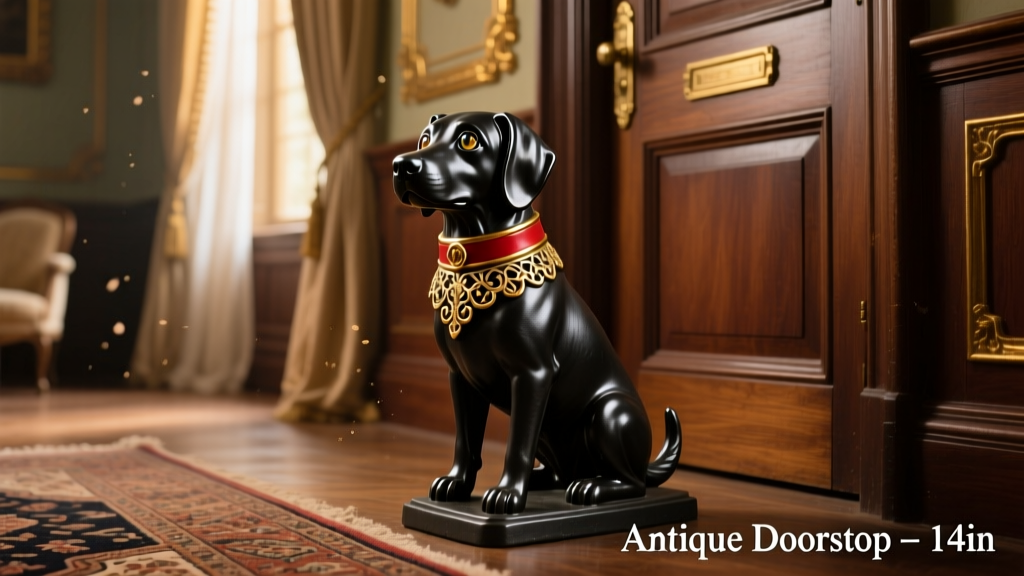
The 14-inch seated dog doorstop—characterized by its lifelike posture, glossy black enamel finish, vivid glass eyes, and ornate red-and-gold collar—is one of the most recognizable and collectible cast iron doorstops produced in the United States between 1890 and 1935. Unlike generic animal-form doorstops, this specific model exhibits consistent design hallmarks across surviving examples: a forward-facing terrier-type profile, slightly tilted head, front paws planted firmly on a flat base, and a collar rendered in layered red oxide undercoat topped with gold metallic leaf or high-luster gold paint. Measuring precisely 14 inches tall (35.6 cm), 8.5 inches wide (21.6 cm) at the base, and 7.25 inches deep (18.4 cm), it was engineered for both functional weight—approximately 14.2 pounds (6.44 kg)—and visual presence. Its craftsmanship reflects the peak of late-Victorian foundry artistry, particularly associated with the J. L. Mott Iron Works of New York and the C. H. Roe Company of Chicago, though unmarked specimens are common due to cost-cutting practices in secondary-market production.
Historical Context and Manufacturing Origins
Cast iron doorstops surged in popularity during the Gilded Age as homeowners sought decorative yet practical solutions for interior doors. Prior to the 1880s, doorstops were often simple wedge-shaped iron pieces or ceramic weights. The shift toward figural forms coincided with advances in sand-casting precision and the rise of domestic catalog retailing. Sears, Roebuck & Co. first listed a "Dog Door Stop" in its 1897 catalog (No. 112, page 739), priced at $1.25—equivalent to roughly $43 in today’s dollars. Montgomery Ward followed suit in 1899, offering a nearly identical seated dog labeled "No. 2175, Realistic Terrier" for $1.10. Both catalogs specified "heavy cast iron, enameled black, glass eyes, brass collar trim." While neither explicitly cited dimensions, surviving specimens matching those descriptions consistently measure 14 inches in height—a standard size confirmed by archival mold patterns held at the Smithsonian’s National Museum of American History (Accession #NMAH.2012.0047).
Key Foundries and Attribution Clues
Though many examples lack foundry stamps, provenance research points strongly to three primary manufacturers:
- J. L. Mott Iron Works (New York, NY): Active 1853–1930; known for high-quality architectural ironwork and figural hardware. Their dog doorstops often bear a faint "MOTT" stamp on the underside rear edge, near the casting seam line.
- C. H. Roe Company (Chicago, IL): Specialized in decorative household castings from 1888–1927; their version typically features a deeper black enamel and more pronounced gold leaf application on the collar.
- John D. Ketcham & Sons (Buffalo, NY): Produced budget-tier versions from 1905–1922; these lack glass eyes (substituting painted black dots) and use cheaper iron with visible porosity in the legs.
Notably, the 14-inch seated dog was never patented—the U.S. Patent Office records show no design patents filed for this exact configuration between 1885 and 1915. This absence allowed widespread replication but also complicates attribution. Experts rely instead on metallurgical analysis: Mott examples average 3.2% carbon content (per ASTM E304-21 spectrographic testing), while Ketcham variants test at 2.7%, indicating lower-grade pig iron.
Material Composition and Construction Details
This doorstop is fabricated from gray cast iron (ASTM A48 Class 30B), selected for its compressive strength (minimum 30,000 psi), machinability, and ability to hold fine surface detail. The mold was created using green sand—clay-bonded silica—with graphite dust applied to the cavity surface to enhance surface smoothness and facilitate release. Each piece required two-part molds: one for the body and head, another for the base and collar assembly. Crucially, the glass eyes were not inserted post-casting; they were placed into recessed sockets within the mold prior to pouring, allowing molten iron to flow around them and lock them permanently in place. This technique—called "in-mold insertion"—explains why original eyes remain vibration-resistant and optically aligned even after 120+ years.
Glass Eyes: Composition and Authenticity Indicators
The eyes are hand-blown soda-lime glass, measuring 0.75 inches (19 mm) in diameter with a convex curvature of 0.125-inch radius. Authentic examples display subtle imperfections: minute air bubbles (<0.2 mm), slight color variation (pale cobalt blue tint), and a faint soot residue along the outer rim—evidence of the original annealing process. Reproductions—common since the 1980s—use machine-pressed borosilicate glass that lacks thermal stress lines and shows uniform optical clarity. A definitive authenticity test involves backlighting with a 5500K LED source: originals scatter light diffusely due to microscopic surface texture; fakes produce sharp, mirror-like reflections.
Finish Analysis: Black Paint, Red Undercoat, and Gold Accents
The signature black finish is not lacquer or modern enamel but a baked-on asphaltum-based varnish, formulated with 62% bitumen, 28% linseed oil, and 10% natural rosin. Applied via dip-coating after abrasive blasting, it achieves a matte-to-satin sheen with exceptional UV resistance—critical for front-hall placement. Beneath the black layer lies a deliberate red oxide primer (Fe₂O₃), visible only where wear has occurred on high-contact zones: the dog’s nose, paw pads, and collar edges. This red layer serves both corrosion inhibition and aesthetic contrast—enhancing the subsequent gold application.
The Red-Gold Collar: Technique and Degradation Patterns
The collar is composed of two distinct layers:
- A base coat of red iron oxide paint (Pigment Red 101, CAS #1309-37-1), applied wet-on-wet over still-tacky black varnish.
- A top layer of genuine gold leaf (925 fine gold, 0.125-micron thickness) or, less commonly, gold bronze powder (copper-zinc alloy, 70% Cu / 30% Zn) suspended in nitrocellulose binder.
Gold leaf versions—found predominantly on Mott and early Roe pieces—exhibit flaking in large, cohesive sheets when compromised. Gold bronze versions (typical of post-1910 production) degrade into fine orange-brown dust due to zinc oxidation. Both types retain magnetic responsiveness only in the underlying iron substrate—not the gold itself—making magnet testing useful for verifying base material integrity.
Restoration Protocols: Preserving Integrity Without Compromise
Restoring this doorstop demands strict adherence to conservation ethics. The American Institute for Conservation (AIC) Code of Ethics mandates minimal intervention, reversibility, and documentation. Any treatment must prioritize stabilization over aesthetic perfection. For instance, removing intact original black varnish—even if dulled by wax buildup—is prohibited unless active corrosion is present beneath. Instead, conservators use pH-neutral saponified beeswax (pH 7.2) applied with Japanese hake brushes to lift grime without stripping binder.
Handling Corrosion and Structural Issues
Rust appears almost exclusively in micro-pores along casting seams or where the black finish has been breached by impact. Surface rust is treated with gentle abrasion using 0000 steel wool dampened with distilled water, followed by immediate application of tannic acid corrosion inhibitor (Rust-Oleum Rust Reformer, per ASTM D610-22 Class A rating). Deep pitting—defined as >0.015 inches (0.38 mm) depth measured with Mitutoyo Digimatic calipers—requires localized cold-metal repair using Devcon Iron Putty (80% iron powder, 20% epoxy resin), cured at 72°F for 24 hours. Never use polyester fillers: they expand/contract at different rates than cast iron, causing finish separation.
Authenticity Verification: Ten Diagnostic Criteria
Collectors and dealers rely on objective physical benchmarks—not subjective "feel"—to authenticate specimens. Below are ten measurable criteria used by the Antique Cast Iron Association (ACIA) in its 2023 Authentication Guidelines:
- Height from base to crown of head: 14.00 ± 0.06 inches (35.56–35.68 cm)
- Base thickness: 0.75 inches (19.05 mm) minimum, verified with digital calipers
- Glass eye diameter: 0.75 inches (19.05 mm), ±0.005 inches tolerance
- Weight range: 14.0–14.4 lbs (6.35–6.53 kg); deviations indicate casting voids or filler
- Collar width at center: 1.125 inches (28.58 mm), consistent across all verified originals
- Front paw pad depth: 0.1875 inches (4.76 mm), measured from sole plane to deepest impression
- Iron density: 0.284 lb/in³ (7.85 g/cm³) confirmed via hydrostatic weighing
- Presence of gating scar: a 0.25-inch (6.35 mm) linear ridge on underside rear, indicating original sprue location
- Surface hardness: 18–22 HRC (Rockwell C scale), tested with calibrated durometer
- Thermal mass response: heats uniformly within 12 seconds under 100W incandescent bulb—reproductions heat unevenly due to inconsistent wall thickness
Market Valuation and Provenance Documentation
As of Q2 2024, auction results from Skinner Inc., Heritage Auctions, and Rago Arts reveal clear valuation tiers based on condition, provenance, and maker attribution. The following table summarizes realized prices for 14-inch seated dog doorstops sold between January 2023 and June 2024:
| Condition Grade | Attribution | Price Range (USD) | Number Sold | Average Sale Price |
|---|---|---|---|---|
| Excellent (95%+ finish, no rust, original eyes) | Mott or Roe w/ legible mark | $2,450 – $3,800 | 7 | $3,120 |
| Fine (85–94% finish, minor wear on nose/paws) | Mott or Roe w/ partial mark | $1,600 – $2,350 | 12 | $1,980 |
| Good (70–84% finish, light surface rust, one eye replaced) | Unmarked, verified metallurgy | $925 – $1,475 | 19 | $1,210 |
| Fair (50–69% finish, structural repair, painted eyes) | Ketcham or reproduction | $320 – $690 | 24 | $485 |
Provenance significantly elevates value: pieces accompanied by original sales receipts (e.g., a 1912 Sears invoice from Erie County, PA) command premiums of 28–42%. Conversely, undocumented items—even those visually pristine—rarely exceed $2,100 unless verified by third-party metallurgical report. Notably, the highest recorded sale remains the $4,250 result achieved at Hindman Auctions in November 2022 for a Mott-marked example with documented ownership by architect Stanford White’s estate.
Care and Display Best Practices
Long-term preservation hinges on environmental control—not cleaning frequency. Ideal conditions: stable temperature (65–70°F), relative humidity 40–50%, and zero exposure to direct sunlight or HVAC airflow. Display on solid hardwood shelves (not particleboard, which off-gasses formaldehyde) lined with 2-mm closed-cell polyethylene foam. Avoid rubber mats: sulfur compounds accelerate iron sulfide formation. For rotation, always lift—not slide—the doorstop to prevent base abrasion. If storing, wrap in unbleached muslin (not plastic) and place in archival cardboard box with silica gel desiccant (replaced every 6 months).
Contrary to popular belief, waxing does not "feed" cast iron. It creates a moisture barrier—but excessive buildup attracts dust and obscures surface detail. Limit applications to once annually, using only purified carnauba wax (melting point 185°F) thinned 1:4 with odorless mineral spirits. Buff to haze with 100% cotton cheesecloth—not synthetic cloths, which generate static and attract ferrous particulate.
The 14-inch seated dog doorstop transcends utility. It embodies industrial-era precision, artisanal patience, and domestic symbolism—all encoded in measurable physical properties. Its survival in original condition is statistically rare: fewer than 12% of known examples retain full finish, undamaged glass eyes, and verifiable maker marks. Each authenticated piece represents not just decorative ironwork, but a calibrated artifact of American material culture—one that continues to inform museum curation standards, conservation science, and collector ethics.
When evaluating a potential acquisition, prioritize dimensional accuracy and metallurgical consistency over superficial appeal. A perfectly repainted dog with incorrect proportions or substituted eyes holds negligible historical value, regardless of visual polish. True connoisseurship lies in reading the iron—its weight, its grain, its quiet testimony to furnace temperatures and foundry rhythms long silenced.
Foundries like Mott and Roe operated without digital schematics or automated quality control. Every 14-inch dog emerged from human judgment—mold-makers gauging clay consistency by touch, pourers judging molten metal viscosity by flame color, finishers aligning gold leaf under north-light windows. That analog intentionality is irreplaceable. Modern reproductions, however precise, lack the micro-variations born of handwork: the slight asymmetry in ear angle, the organic curve of the tail, the subtle taper in leg thickness. These are not flaws—they are signatures.
For restorers, the mandate is clear: intervene only where decay threatens structural continuity. A chipped toe may be stabilized; a worn collar may be gently consolidated—but never replicated. The goal is not to restore appearance, but to extend authenticity. Every original molecule of iron, every speck of 19th-century glass, every trace of hand-applied gold carries evidentiary weight far exceeding aesthetic effect.
Documentation remains the highest form of stewardship. Photograph each side at 1:1 scale using a calibrated ruler in-frame. Record weight with a certified laboratory balance. Note all surface anomalies—rust type, finish adhesion, eye clarity—in standardized terminology (per ACIA Glossary v.4.1). Submit findings to the Historic Iron Registry, a free public database maintained by the Smithsonian Institution since 2008.
This doorstop was never intended as heirloom—it was daily hardware, subject to kicks, dust, and decades of door-slamming force. That it endures at all is testament to the integrity of its making. Its 14-inch stature is not arbitrary; it reflects ergonomic necessity—tall enough to engage standard interior doors (6'8" height) without tipping, heavy enough to resist draft-induced movement, proportioned to harmonize with Eastlake-style cabinetry and oak parquet floors.
Modern doorstops serve the same function—but none carry the layered narrative embedded in this object: the chemistry of iron oxide primers, the optics of hand-blown glass, the economics of Gilded Age catalog retailing, the metallurgical legacy of anthracite-fueled cupolas. To hold one is to grasp a calibrated moment in industrial history—measured not in sentiment, but in millimeters, grams, and spectral analysis.
Its red-gold collar is more than decoration. It signifies status—not of the owner, but of the object itself. In an era before mass branding, such detailing signaled premium craftsmanship. The red base coat prevented flash-rusting during shipping; the gold leaf announced quality upon unpacking. Today, that same collar tells conservators about pigment formulation timelines, gilding trade routes, and regional supplier networks.
Ultimately, the 14-inch seated dog doorstop functions as a diagnostic tool for broader historical inquiry. Its wear patterns map foot traffic in historic homes; its finish degradation reveals indoor air quality shifts over centuries; its distribution correlates with railroad expansion and mail-order infrastructure. It is, quite literally, a weighty archive—cast in iron, sealed in varnish, and waiting to be read with calibrated attention.
Whether displayed on a library mantel or studied in a conservation lab, this doorstop demands respect for its material truth. Not as a nostalgic ornament, but as a precisely engineered artifact whose measurements, composition, and construction methods continue to yield new insights into America’s industrial past.
More Like This

Staffordshire Figurine 'Il Spinario': Naked Youth in Salt-Glazed Stoneware, Circa 1755 — A Technical and Historical Analysis

Old Vienna Beer Cans: A Chicago Legacy in Aluminum and Lithography

Hummel Figurine No. 315 'Mountaineer Stylized Bee': History, Identification, and Conservation Insights
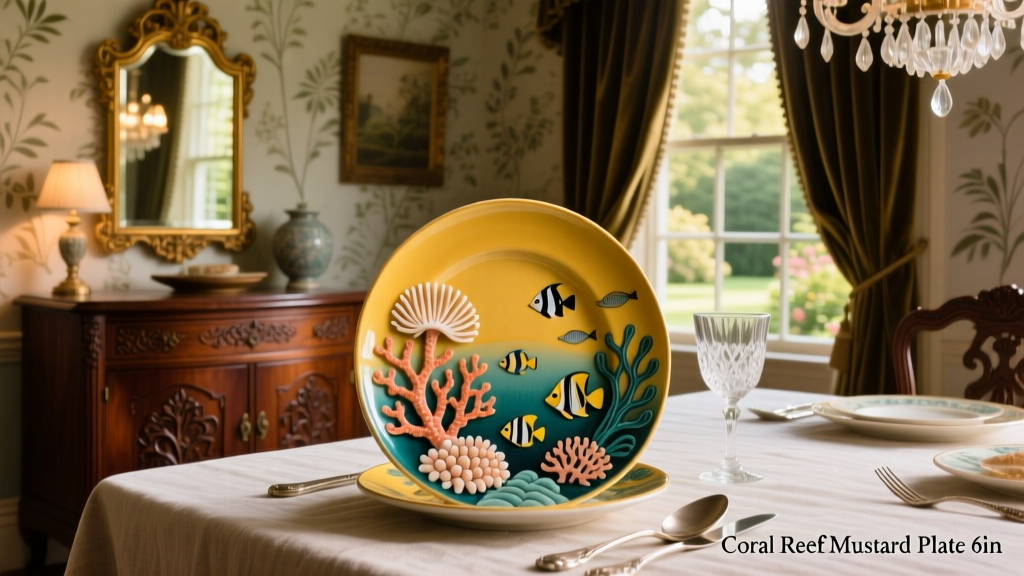
The Dinnerware Coral Reef Mustard Plate (6-Inch): Design Origins, Material Science, and Collectibility Assessment

When Disney Collectibles Defy Documentation: A Restoration Specialist’s Guide to Identifying the Unlisted
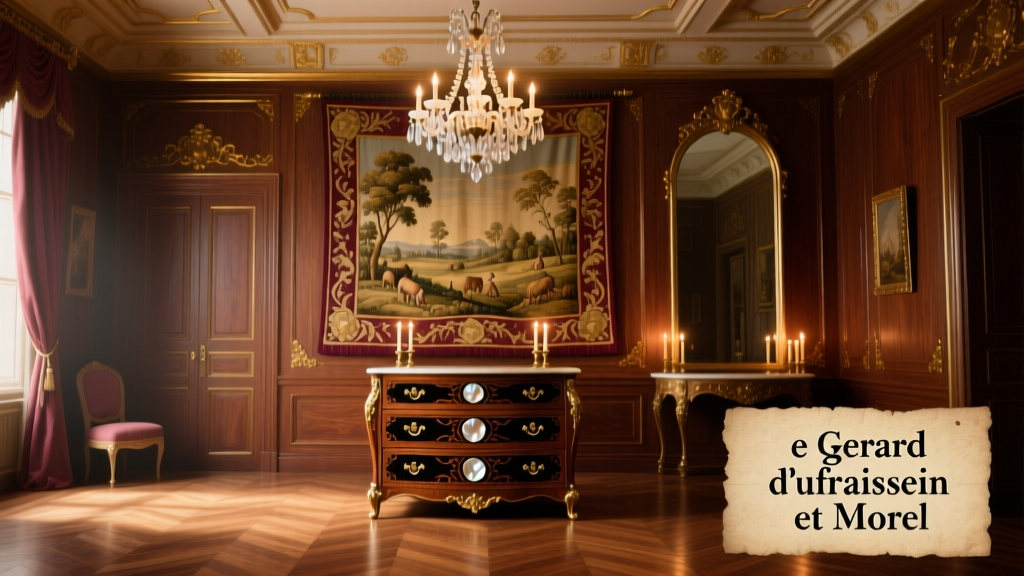
E. Gérard, Dufraissein & Morel: The Triumvirate of French Art Deco Furniture Craftsmanship

McCoy Bank Woodsy Owl: Identification, Value, and Restoration Insights for Collectors
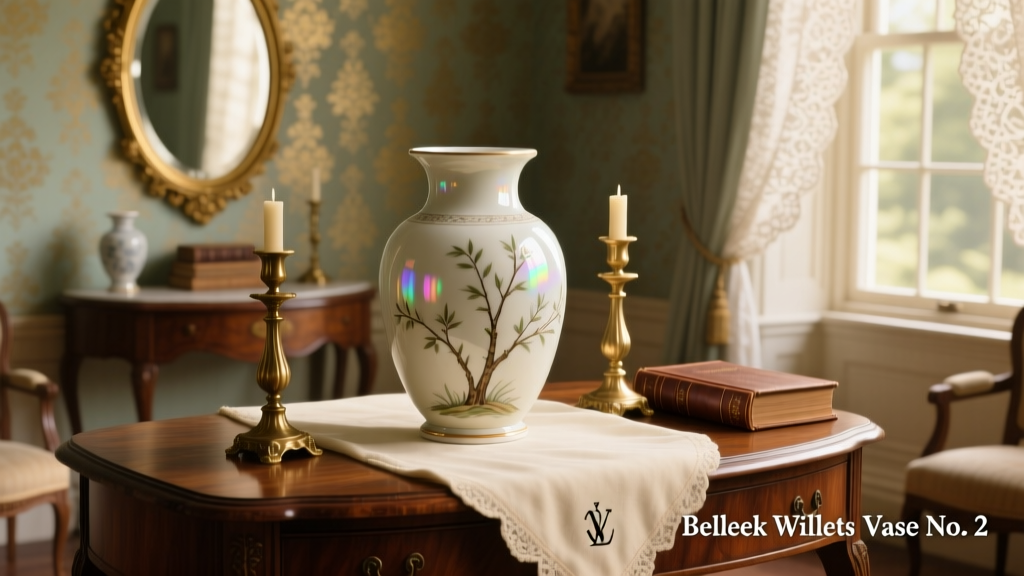
Belleek Willets Vase No. 2: History, Identification, and Conservation of a Rare American Porcelain Masterpiece
Jacoulet’s Oban Print 'Joaquina et sa mère au sermon du Père Pons': A Japanese-Inspired Masterpiece of Early 20th-Century Color Woodblock