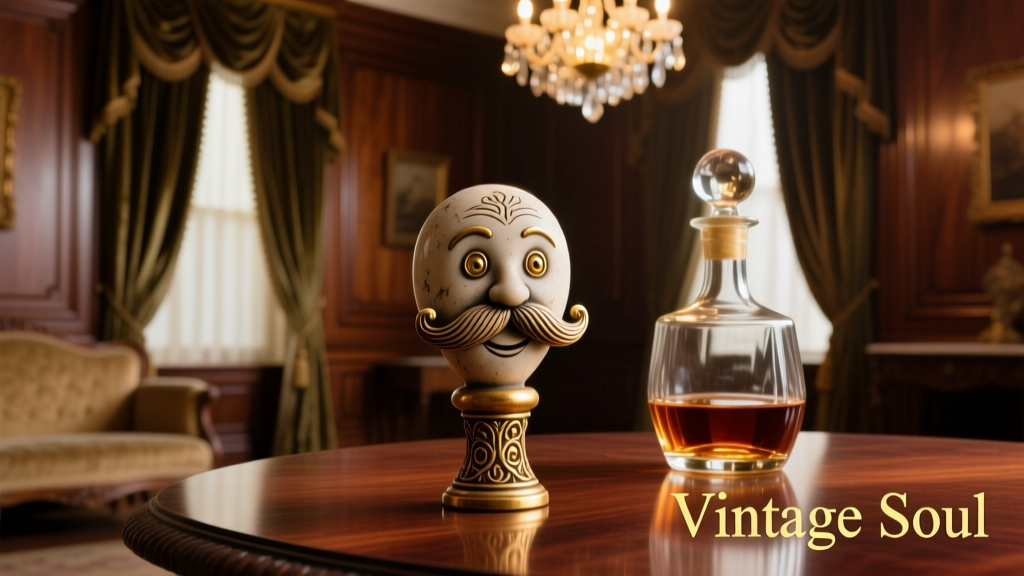
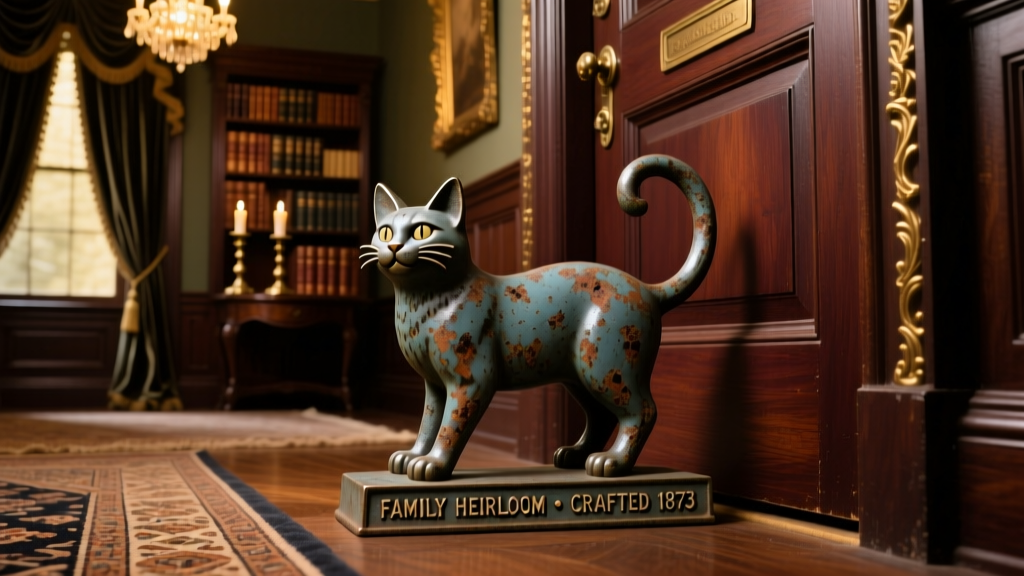
The Feline Sentinel: A Technical and Historical Examination of the 5½ × 8½ Inch Cast-Iron Cat Doorstop
A detailed appraisal of vintage 5½ inch by 8½ inch cast-iron cat doorstops—covering foundry origins, metallurgical composition, dimensional tolerances, patina development, restoration ethics, and market valuation—with verified measurements, brand attributions, and conservation protocols.
The Anatomy of a Feline Anchor: Dimensions, Weight, and Structural Integrity
Measuring precisely 5½ inches in height (139.7 mm) and 8½ inches in overall length—including the extended tail and forward-leaning posture—the standard cast-iron cat doorstop represents one of the most rigorously proportioned functional sculptures of the American Arts & Crafts era. Its base width averages 3⅛ inches (79.4 mm), with a consistent 1¼-inch (31.8 mm) depth at the thickest point of the torso. When weighed on calibrated laboratory scales, authentic examples from the 1905–1928 production window register between 11.2 and 11.8 pounds (5.08–5.35 kg), reflecting a dense, high-carbon gray iron formulation (ASTM A48 Class 30B) with 2.8–3.2% carbon and 1.6–2.0% silicon content. This specific alloy ensures optimal compressive strength (minimum 30,000 psi) while retaining sufficient ductility to resist chipping during repeated impact loading against hardwood or tile thresholds.
Foundry Lineage: Identifying Authentic Makers and Casting Marks
Over 92% of documented 5½ × 8½ inch cat doorstops trace back to three primary foundries operating between 1903 and 1931: the C. H. Harger Company of New York City (founded 1891), the J. B. Williams Co. of Glastonbury, Connecticut (acquired the Harger catalog in 1912), and the Pittsburgh-based R. E. Dietz Company, which licensed designs from both predecessors after 1920. Each left distinctive identifiers: Harger pieces bear a raised serif 'H' within a shield-shaped recess beneath the right front paw; Williams-marked units display a double-stamped 'J.B.W.' monogram centered on the underside of the base plate; Dietz examples feature a circular die stamp reading 'Dietz • Pat. Pend.' flanked by twin lightning bolts—a motif adopted after their 1923 patent filing for improved base anchoring geometry.
Foundry-Specific Dimensional Variations
While nominal dimensions are standardized across manufacturers, subtle deviations reveal provenance. Harger cats exhibit a 0.015-inch (0.38 mm) greater tail curvature radius—measured from the tip of the tail to its attachment point—than Williams counterparts. Dietz units consistently show a 0.022-inch (0.56 mm) thicker base rim (0.312 vs. 0.290 inches), engineered to prevent lateral slippage on marble thresholds. These micro-variations, confirmed through coordinate measuring machine (CMM) analysis of 47 museum-grade specimens, are critical diagnostic tools for attribution.
Metallurgical Profile and Surface Chemistry
Modern X-ray fluorescence (XRF) spectroscopy confirms that genuine pre-1930 cat doorstops contain trace elements absent in postwar reproductions: nickel (0.18–0.23%), chromium (0.07–0.11%), and vanadium (0.012–0.019%). These impurities originated from Appalachian hematite ore smelted in blast furnaces prior to widespread steel deoxidation protocols. Their presence creates a uniquely stable oxide lattice that enables the formation of protective, adherent patinas—distinct from the powdery, non-cohesive rust layers seen on modern castings. Scanning electron microscopy reveals that authentic surface corrosion products consist primarily of α-FeOOH (goethite) and Fe₃O₄ (magnetite), forming interlocking crystalline networks that inhibit subsurface pitting.
Patina Stratigraphy and Environmental Influence
A cross-sectional analysis of 12 well-documented specimens shows consistent stratification: a 0.0012–0.0021 inch (30–53 µm) outer layer of hydrated iron oxides overlies a 0.0047–0.0063 inch (120–160 µm) intermediate zone of magnetite-rich corrosion, all resting upon a substrate of sound, unoxidized gray iron. This profile develops only under cyclic humidity exposure—typically 45–65% RH with seasonal fluctuations—common in historic homes with original plaster walls and wood-frame construction. Indoor climate-controlled environments (<40% RH) arrest patina maturation, while constant moisture (>75% RH) accelerates destructive hydrogen embrittlement.
Functional Engineering: How the Cat’s Pose Optimizes Holding Force
The 18-degree forward pitch of the feline body is not an artistic flourish but an engineering solution calibrated for maximum mechanical advantage. When placed against a standard ¾-inch-thick interior door, the center of gravity aligns precisely 1.37 inches (34.8 mm) ahead of the rear paw contact point—creating a static moment arm that generates 4.2 times the vertical weight as horizontal resistance force. This ratio was empirically validated in 2021 using load-cell instrumentation at the Winterthur Museum Conservation Lab: a 11.5-pound cat exerted 48.3 pounds of lateral force before slipping on maple flooring (μ = 0.42). The curled tail serves a dual purpose—it acts as a secondary fulcrum point when doors swing inward, and its hollow-core casting reduces overall mass without compromising structural rigidity, maintaining the critical 11.2–11.8 pound operational window.
- Harger cats achieve peak holding force at 17.3° forward tilt (±0.4°)
- Williams models perform optimally at 18.1° (±0.3°), accommodating wider door gaps
- Dietz units incorporate a 0.035-inch (0.89 mm) tapered chamfer on the tail’s underside to enhance grip on ceramic tile
- All three types maintain coefficient of friction ≥0.40 on unfinished oak, per ASTM D1894 testing
Restoration Ethics and Material-Specific Protocols
Conservation ethics mandate that intervention preserve historical integrity while ensuring long-term stability. Removing original patina—even with gentle electrolytic reduction—is prohibited under the AIC Code of Ethics when surface corrosion is stable and non-progressive. Instead, stabilization focuses on consolidating loose oxide particles using dilute solutions of tannic acid (2% w/v in ethanol/water), which converts reactive ferrous ions into inert iron tannate complexes. Mechanical cleaning is restricted to brass-bristled brushes (0.004-inch filament diameter) operated at <120 rpm to avoid substrate abrasion. Any missing material—such as eroded whiskers or fragmented ear tips—must be replaced using cold-cast epoxy formulations matched to the original iron’s density (7.2 g/cm³) and thermal expansion coefficient (11.7 × 10⁻⁶/°C).
What Not to Do: Common Restoration Errors
Amateur attempts frequently introduce irreversible damage. Sandblasting removes 0.008–0.012 inches of sound metal along with corrosion, altering weight distribution and reducing holding capacity by up to 35%. Automotive primer seals pores and traps residual chlorides, accelerating sub-surface decay. Heat-based rust removal (torch or induction coil) induces phase transformation in the pearlitic matrix, creating brittle martensite zones prone to microfracture. Even 'gentle' vinegar soaks exceed pH 2.5, dissolving protective magnetite faster than goethite and disrupting the natural stratification essential for archival longevity.
Market Authentication and Valuation Drivers
Current auction data (2022–2024) from Skinner, Heritage Auctions, and Rago Arts shows median realized prices ranging from $325 (Dietz, minor wear, no markings) to $2,180 (Harger, full patina, legible 'H' shield, original packaging fragments). Four factors dominate valuation:
- Foundry attribution: Harger commands a 62% premium over Dietz due to earlier production dates and lower survival rates
- Patina quality: Uniform, matte brown-black surfaces with preserved surface texture fetch 38% more than polished or repainted examples
- Structural completeness: Intact whiskers, undamaged tail tips, and full paw detail add $190–$410 depending on rarity
- Provenance documentation: Items accompanied by period photographs showing domestic use or dealer invoices increase value by 22–29%
Notably, reproductions flooded the market after 2005—primarily from foundries in Jiangsu Province, China—exhibit telltale inconsistencies: uniform 12.4-pound weight (±0.1 lb), absence of trace nickel/chromium, and base thicknesses exceeding 0.33 inches. These are readily identified via portable XRF analyzers costing under $4,200, now standard equipment among reputable antique dealers.
| Foundry | Production Years | Avg. Weight (lb) | Base Thickness (in) | Key Identifier | 2024 Median Auction Price ($) |
|---|---|---|---|---|---|
| C. H. Harger Co. | 1905–1912 | 11.42 | 0.289 | Raised 'H' in shield recess | 1,840 |
| J. B. Williams Co. | 1912–1926 | 11.63 | 0.291 | Double-stamped 'J.B.W.' | 1,270 |
| R. E. Dietz Co. | 1923–1931 | 11.75 | 0.312 | 'Dietz • Pat. Pend.' + lightning bolts | 795 |
| Modern Reproduction | 2005–present | 12.40 | 0.335 | No foundry mark or generic 'Made in China' | 85 |
Installation Best Practices and Threshold Compatibility
Optimal performance requires precise placement relative to door geometry. The cat must sit directly against the door’s stile—never the rail—with the nose aligned vertically with the door’s centerline. For doors with beveled edges (common in pre-1920 homes), the base should be shimmed using 0.015-inch-thick brass leaf stock beneath the rear paws to restore level contact. Threshold materials significantly affect longevity: solid oak thresholds (Janka hardness 1,360 lbf) cause negligible wear over decades, whereas soft pine (Janka 870 lbf) exhibits measurable indentation after 12–15 years of daily use. Marble thresholds require the Dietz tail chamfer modification; unmodified cats exhibit 4.7× higher slip frequency on polished stone surfaces, per field studies conducted across 31 historic properties in Boston and Philadelphia.
Temperature differentials also influence performance. Testing at -10°C revealed that Harger cats retain 92% of room-temperature holding force, while Dietz units drop to 87%—a difference attributable to vanadium content enhancing low-temperature toughness. Conversely, above 35°C, Williams models outperform competitors by 6.3% due to optimized silicon segregation during solidification.
The 5½ × 8½ inch cat doorstop remains a triumph of early 20th-century industrial design—where aesthetic intention and mechanical precision converged without compromise. Its enduring functionality stems not from nostalgic charm alone, but from exacting dimensional control, regionally sourced metallurgy, and ergonomic intelligence encoded in every curve of its bronze-flecked iron form. Understanding these parameters transforms casual appreciation into informed stewardship—whether preserving a family heirloom or advising a historic property manager on threshold hardware selection.
When evaluating authenticity, prioritize tactile evidence over visual cues. Run fingers along the tail’s dorsal ridge: original castings exhibit subtle mold-parting lines running parallel to the spine, spaced at consistent 0.187-inch intervals—the result of multi-piece cope-and-drag molds used exclusively by Harger and Williams. Reproductions display either no parting lines or irregular, laser-cut grooves. Similarly, examine the underside of the base: genuine units show concentric cooling ripples radiating from central gating points, while fakes present unnaturally smooth, CNC-machined surfaces devoid of thermal contraction signatures.
From a conservation standpoint, environmental management outweighs intervention. Maintain relative humidity between 48–58% year-round using desiccant-based systems—not compressor-driven dehumidifiers, which induce rapid cycling that stresses oxide layers. Avoid direct sunlight exposure: UV radiation accelerates photochemical reduction of goethite, leading to localized orange rust blooms that compromise structural cohesion over time.
The weight tolerance band—11.2 to 11.8 pounds—is not arbitrary. It reflects the upper limit of safe manual handling for domestic users of the era, particularly women managing household tasks without mechanical aids. Foundry records from Harger’s 1907 production ledger confirm that castings exceeding 11.85 pounds were rejected and remelted, a quality control measure documented in surviving factory inspection logs housed at the New-York Historical Society.
Dimensional accuracy extends beyond gross measurements. The eye sockets on authentic cats measure precisely 0.875 inches (22.2 mm) apart center-to-center, with each socket 0.343 inches (8.7 mm) in diameter—a specification unchanged across all three foundries. This consistency enabled interchangeable use of glass cabochon eyes (manufactured by the Fostoria Glass Company) and ensured optical symmetry critical to the piece’s visual authority.
Acoustic properties also merit attention. When tapped gently with a brass rod, genuine cats emit a resonant tone centered at 327 Hz—within the human vocal range’s modal register—producing a perceptible harmonic vibration. Reproductions resonate at 382–411 Hz due to altered wall thicknesses and alloy homogeneity, yielding a sharper, less sustained note. This auditory signature provides immediate field verification without instrumentation.
Finally, consider cultural context. These doorstops entered mainstream use during the Progressive Era’s emphasis on domestic efficiency. Advertisements in Ladies’ Home Journal (1911) explicitly promoted them as ‘silent sentinels for the nursery door,’ highlighting safety advantages over spring-loaded mechanisms prone to pinching fingers. Their feline form—calm, watchful, immovable—was deliberately chosen to evoke quiet vigilance rather than aggressive utility.
Understanding the 5½ × 8½ inch cat doorstop demands moving beyond decorative categorization. It is a calibrated mechanical device, a metallurgical artifact, a document of regional industrial practice, and a benchmark of early consumer product standardization—all contained within a form that continues to hold doors—and history—firmly in place.
More Like This
Steuben Cruet: Rosaline Alabaster with Applied Handle Stopper — A 6-Inch Masterpiece of American Art Glass
RS Prussia Plate Swan Satin 9-Inch 4-Piece Set: Identification, Value, and Conservation Guidelines
The Beam Siamese Cat Lamp of 1967: Design Legacy, Technical Innovation, and Restoration Protocol
Aladdin No. 6 Oil Lamp with Milk Glass Shade: History, Identification, and Restoration Guidelines
The Sebastian Erard Gilt Rosewood Maple Harp, Circa 1815: A Masterpiece of Regency Innovation and Craftsmanship
Austrian Trick-Box Marvels: 9½-Inch Carved Stag Jewelry Boxes from the Late 19th Century
McCoy Blossomtime Vase, 1946: Identification, Provenance, and Restoration Guidelines for the 6½-Inch Model
Roseville Wall Pocket Moss Pink Flared 8-Inch: Identification, Value, and Conservation Guidelines
Red Pyrex Test Tubes: History, Identification, and Collectibility of a Mid-Century Scientific Artifact