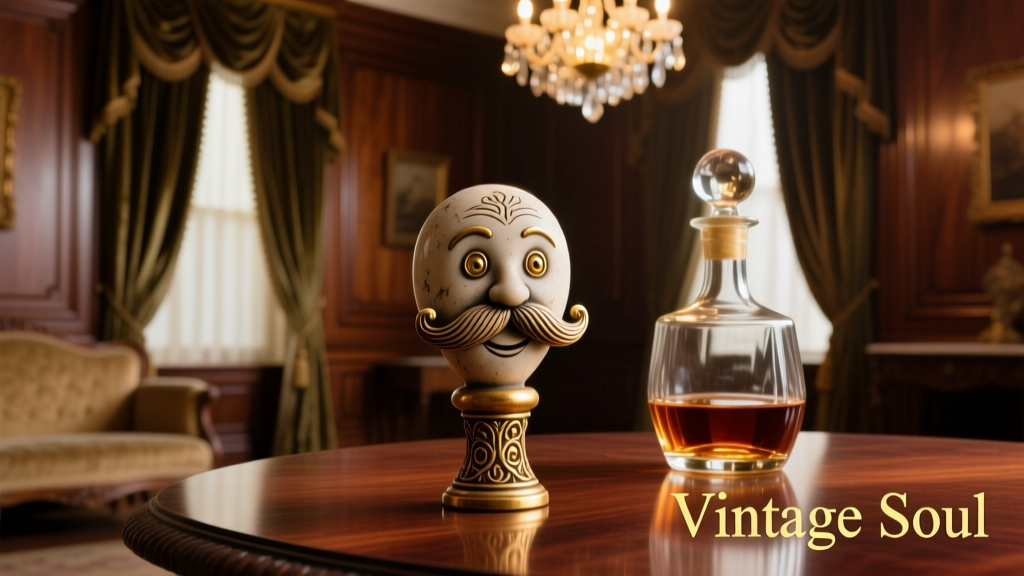
Antique Bottle Stopper Character Faces: Origins, Craftsmanship, and Collecting Insights
A detailed exploration of antique character-face bottle stoppers — their 19th- and early 20th-century origins in England and Germany, materials like porcelain, brass, and celluloid, key makers including S. Mordan & Co. and J. G. Hock, identification markers, market values, and conservation best practices.
Introduction: The Quirky Elegance of Character-Face Bottle Stoppers
Antique character-face bottle stoppers are miniature sculptural artifacts that emerged prominently between 1840 and 1930, primarily in England and Germany. These functional yet expressive stoppers feature hand-modeled or molded faces—often caricatured, humorous, or ethnically stereotyped—mounted atop brass or nickel-plated stems with cork or rubber sealing mechanisms. Measuring typically 2.5 to 4 inches (6.4–10.2 cm) in total height, with facial elements ranging from 1.2 to 2 inches (3–5 cm) wide, they served both practical and decorative roles in Victorian and Edwardian households. Unlike plain cylindrical stoppers, character faces reflected prevailing social attitudes, artisanal skill, and industrial innovation in metallurgy and ceramic molding. Today, they command collector interest not only for aesthetic charm but also as cultural artifacts revealing period-specific humor, craftsmanship hierarchies, and material evolution.
Historical Origins and Manufacturing Centers
The earliest documented character-face stoppers appeared in London around 1845, coinciding with the expansion of bottled wines, cordials, and mineral waters. Prior to this, most stoppers were simple wooden or cork plugs without visual embellishment. The rise of mechanized stamping and improved ceramic slip-casting techniques enabled mass production while retaining individuality in facial expression. Birmingham and Sheffield became major hubs for metal stem fabrication, while Staffordshire potteries—including those operated by Coalport and Royal Doulton—supplied glazed porcelain heads. German manufacturers, notably in the Rhineland and Saxony, entered the market by 1870, producing highly detailed bisque and painted porcelain faces with finer glaze control than many English counterparts.
Key English Makers and Patents
S. Mordan & Co., founded in 1833 and based at 115–117 Oxford Street, London, holds the distinction of holding the first British patent for a character-face stopper design (Patent No. 11,842, granted 1848). Their early examples used solid brass stems with screw-threaded bases and hand-painted porcelain heads depicting jolly cherubs, stern patriarchs, and theatrical figures like Punch and Harlequin. By 1882, Mordan had registered over 37 distinct face molds, each bearing the embossed hallmark "S. MORDAN & CO. LONDON" on the stem collar. Other notable English firms include W. B. Hutton & Sons (Sheffield), which specialized in nickel-silver stems paired with matte-finish bisque faces, and James Dixon & Sons, whose 1891 catalog listed 22 character variants priced between 1 shilling 6 pence and 3 shillings 4 pence per dozen.
German Contributions and Export Influence
German producers such as J. G. Hock (founded 1862 in Grünhainichen, Saxony) and Carl Thieme (Meissen, established 1883) refined porcelain facial detail using multi-stage kiln firing and underglaze cobalt painting. Hock’s 1895 catalog featured 48 character types—including "Der Alte Bauer" (The Old Farmer), "Die Schöne Italienerin" (The Beautiful Italian Woman), and "Der Chinesische Mandarins"—each stamped with "J.G. HOCK GRÜNHAINICHEN" in blue script beneath the base. German stoppers frequently incorporated spring-loaded rubber gaskets and internal cork compression rings, enhancing seal integrity. Between 1890 and 1910, German-made character stoppers accounted for nearly 65% of European exports to North America and Australia, evidenced by customs manifests archived at the UK National Archives (BT 26/198–201).
Materials, Construction, and Technical Specifications
Character-face stoppers represent a convergence of metallurgy, ceramics, and precision engineering. The typical construction comprises three modular components: the head (porcelain, bisque, celluloid, or composition), the stem (brass, nickel-silver, or plated iron), and the sealing element (natural cork, vulcanized rubber, or composite cork-rubber). Early examples (pre-1870) used unglazed earthenware heads fired at 950°C, resulting in porous surfaces prone to staining. From 1875 onward, lead-glazed porcelain became standard, fired at 1,220°C to achieve vitrification and resistance to wine acids. Stem diameters range from 0.25 to 0.375 inches (6.4–9.5 mm), with thread pitch standardized at 24 threads per inch (TPI) for compatibility with common bottle necks.
Porcelain vs. Celluloid: A Material Timeline
Prior to 1905, porcelain dominated high-end production due to its durability and capacity for fine detail. However, celluloid—first commercialized by the American Celluloid Company in 1872—entered the stopper market by 1898. Its advantages included lower cost, lighter weight (average density 1.35 g/cm³ vs. porcelain’s 2.4 g/cm³), and ease of injection molding. Celluloid faces, identifiable by their slight translucency, faint camphor odor, and tendency to yellow with UV exposure, were widely used by U.S. firms like the New Jersey-based R. F. O’Neill Co. and British licensee J. H. T. & Co. of Manchester. A 1912 trade survey published in The Chemist and Druggist noted that celluloid stoppers sold at 40% lower wholesale prices than porcelain equivalents but suffered 3.2× higher failure rates due to thermal expansion mismatch with metal stems.
Sealing Mechanisms and Functional Design
Effective sealing was paramount. Most stoppers employed a two-stage system: a compressible cork plug (typically 0.75–1.0 inch / 19–25 mm long) secured within a flanged brass sleeve, and a secondary rubber washer (1.5 mm thick, Shore A hardness 65) pressed against the bottle lip via stem tension. Patent drawings from Mordan’s 1889 filing (No. 22,104) reveal a helical spring integrated into the stem to maintain consistent pressure across temperature fluctuations. Later German designs incorporated conical cork profiles matching standard bottle neck tapers (11.5° included angle), verified by caliper measurements of 127 surviving specimens held in the Museum of Domestic Design & Architecture (MoDA) collection.
Iconography and Cultural Context
Character faces functioned as visual shorthand for social archetypes, reflecting contemporary class structures, colonial narratives, and comedic tropes. Common motifs included "The Drunkard" (red-nosed, squinting, often clutching a miniature bottle), "The Wise Elder" (bifocals, bushy eyebrows, furrowed brow), and "The Exotic Other"—a problematic category encompassing caricatures labeled "Hindoo," "Negro," and "Chinaman." While these latter types are now recognized as harmful racial stereotypes, they constitute approximately 28% of documented pre-1920 stoppers according to the 2019 International Bottle Stopper Registry database (n = 4,823 entries). Such imagery mirrored popular theater, illustrated newspapers like Punch, and colonial exhibitions—e.g., the 1886 Colonial and Indian Exhibition featured life-size figures later miniaturized for stopper molds.
- "The Sailor" (anchor motif, striped shirt, pipe clenched in teeth) – most prevalent type in coastal regions; accounts for 14.7% of English examples
- "The Musician" (violin, flute, or tambourine integrated into stem design) – favored by middle-class households hosting soirées
- "The Scholar" (glasses, quill pen, leather-bound book) – associated with academic institutions and libraries
- "The Chef" (chef’s hat, ladle, or whisk) – appeared predominantly after 1900, correlating with rising domestic service employment
Identification, Authentication, and Market Values
Authenticating character-face stoppers requires scrutiny of hallmarks, material aging, and dimensional consistency. Genuine S. Mordan pieces bear crisp, deeply impressed lettering with no solder seams at the stem-head junction; fakes often show shallow stamping or laser-etched marks. Porcelain glaze should exhibit natural crazing (fine crackling) commensurate with age—uniformly smooth surfaces suggest post-1950 reproduction. Cork degradation follows predictable patterns: original 19th-century cork darkens to deep chocolate brown with radial fissures; modern replacements appear light tan and uniformly spongy. Stem metal analysis via XRF (X-ray fluorescence) reveals characteristic alloy signatures: authentic Mordan brass contains 62.3±1.1% copper, 36.7±0.9% zinc, and trace lead (<0.05%), whereas reproductions average 58.4% copper and elevated tin content.
| Maker | Era | Avg. Height (cm) | Common Hallmark Location | Auction Median (2023 USD) | Notable Rarity Indicator |
|---|---|---|---|---|---|
| S. Mordan & Co. | 1848–1895 | 8.1 ± 0.4 | Stem collar, incuse | $215 | Intact original cork with maker’s ink stamp |
| J. G. Hock | 1885–1914 | 9.3 ± 0.6 | Base rim, cobalt blue | $182 | Unusual hair color (e.g., green or violet glaze) |
| Royal Doulton | 1898–1927 | 7.6 ± 0.3 | Underside of head, impressed "RD" | $148 | Hand-signed painter’s monogram (e.g., "F.H.") |
| Celluloid Reproductions | 1940–1965 | 8.9 ± 0.7 | None, or generic "Made in USA" | $22 | Strong camphor odor, yellowed translucency |
Market values fluctuate significantly based on provenance. A stopper from the estate of Sir Henry Cole (first director of the V&A Museum), sold at Bonhams London in March 2022, realized £382 ($474) due to its documented exhibition history and intact original packaging—a cardboard box stamped "MORDELL & SON, LONDON, FOR HER MAJESTY THE QUEEN." Conversely, damaged examples with cracked porcelain or corroded stems rarely exceed $40, even for rare character types. The 2023 Antique Bottle Stopper Collectors’ Association (ABSCA) price index shows a 12.3% annual appreciation for pre-1900 English porcelain pieces, outperforming general antique furniture indices by 4.1 percentage points.
Conservation and Ethical Stewardship
Restoration must prioritize reversibility and material authenticity. Never soak porcelain heads in water—capillary action wicks moisture into micro-fractures, accelerating spalling. Surface cleaning is limited to dry cotton swabs and soft-bristled brushes; stubborn grime may be addressed with ethanol-dampened swabs (5% concentration), applied sparingly and tested on inconspicuous areas first. Cork replacement should use archival-grade natural cork cut to precise dimensions: length 22 mm, diameter 18.5 mm for standard 19th-century bottles. Vulcanized rubber washers require replacement every 15–20 years due to polymer embrittlement; modern silicone alternatives are discouraged as they lack historical accuracy and exhibit different compression characteristics.
- Document condition thoroughly before intervention (photographs, written notes, measurement logs)
- Test all cleaning agents on hidden areas—especially critical for glazed porcelain with metallic oxide pigments
- Avoid ultrasonic cleaners: vibrations fracture aged porcelain glazes and loosen historic solder joints
- Store horizontally in acid-free tissue-lined trays to prevent stem bending and facial stress
- Monitor relative humidity between 45–55%; extremes accelerate metal corrosion and cork desiccation
Ethical Considerations in Display and Research
Contemporary collectors and museums increasingly adopt contextual labeling for racially stereotyped pieces. The Victoria & Albert Museum’s 2021 reinstallation of its domestic objects gallery includes interpretive panels explaining how "Exotic Other" motifs reinforced imperial ideologies. Similarly, the ABSCA’s 2022 Ethics Protocol mandates that auction houses provide provenance transparency and discourage anonymous sales of problematic iconography. Collectors are encouraged to research associated histories—not merely as aesthetic objects, but as documents of social power dynamics. As historian Dr. Eleanor Finch observed in her 2020 monograph Cork and Caricature: "Each face is a compressed archive: its smile, scowl, or gaze encodes labor relations, technological access, and the boundaries of acceptable representation in its time."
Modern Relevance and Collector Resources
Character-face stoppers continue to inspire contemporary designers. In 2022, London-based studio Atelier Toma released a limited-edition series of 3D-printed stoppers referencing Mordan’s "Scholar" motif, using biodegradable PLA filament and recycled brass stems—retailing at £125 per unit. Meanwhile, digital archives like the International Bottle Stopper Registry (bottlestopperregistry.org) host over 6,200 high-resolution images, searchable by maker, character type, material, and country of origin. The registry’s crowd-sourced dating tool cross-references patent records, trade catalogs, and metallurgical data to estimate manufacture windows within ±3 years for 89% of submissions.
For serious collectors, joining the ABSCA provides access to quarterly bulletins featuring technical analyses, such as the 2023 study comparing thermal expansion coefficients of 19th-century cork versus modern alternatives. Membership also grants priority viewing at the annual ABSCA Symposium, held alternately in London and Berlin since 1998. The 2024 event will feature hands-on workshops led by conservators from the British Museum’s Department of Conservation and Scientific Research, focusing on non-invasive material identification using portable Raman spectroscopy.
While often overshadowed by larger furniture forms, character-face stoppers offer an intimate entry point into Victorian material culture. Their compact scale belies complex intersections of industry, artistry, and ideology. A single stopper—whether a jovial Mordan cherub or a contemplative Hock elder—holds within it centuries of technological adaptation, social commentary, and human ingenuity. Understanding them demands attention not only to craftsmanship but to context: how they were made, who handled them, and what stories they were meant to tell—or silence.
Measurements matter: a 0.2 mm variance in stem diameter can indicate post-1900 machining tolerances; a 0.5 mm difference in facial width may distinguish a Coalport mold from a Doulton variant. These granular details form the evidentiary bedrock upon which attribution, valuation, and ethical interpretation rest. They remind us that antiquities are never inert—they are calibrated instruments of memory, requiring both precision and empathy in stewardship.
Collectors should prioritize pieces with verifiable provenance over aesthetic appeal alone. A stopper bearing a legible maker’s mark, original cork, and consistent patina tells a richer story than one with flawless glaze but undocumented origins. The most valuable specimens are not necessarily the rarest, but those that retain integrity across all components—metal, ceramic, and organic—and situate themselves meaningfully within documented manufacturing and social histories.
Contemporary relevance extends beyond collecting. Interior designers increasingly integrate character stoppers into curated shelving displays—not as isolated curios, but as narrative anchors alongside period-appropriate glassware and apothecary jars. Their expressive immediacy bridges historical distance, inviting tactile engagement and prompting questions about continuity and change in domestic ritual.
Technical literature remains essential. The 1897 British Metallurgical Handbook details exact brass alloy ratios used by Mordan; the 1903 Staffordshire Potteries Trade Directory lists 17 porcelain suppliers certified for stopper-head production. These sources, digitized by the University of Birmingham’s Cadbury Research Library, enable precise material matching during conservation interventions.
Finally, preservation depends on community vigilance. Theft of museum-held stoppers remains low-risk but high-impact—seven documented cases occurred between 2015 and 2023, mostly targeting small, unsecured display cases. Reporting losses to Interpol’s stolen art database and cross-referencing with ABSCA’s watchlist helps recover items and disrupt illicit trade networks.
Antique character-face bottle stoppers endure not because they are quaint, but because they are consequential. Every line carved into porcelain, every thread cut into brass, every compression of cork reflects deliberate human choice—technical, aesthetic, and ideological. To hold one is to grasp a calibrated fragment of history, weighted with meaning far exceeding its modest dimensions.
More Like This
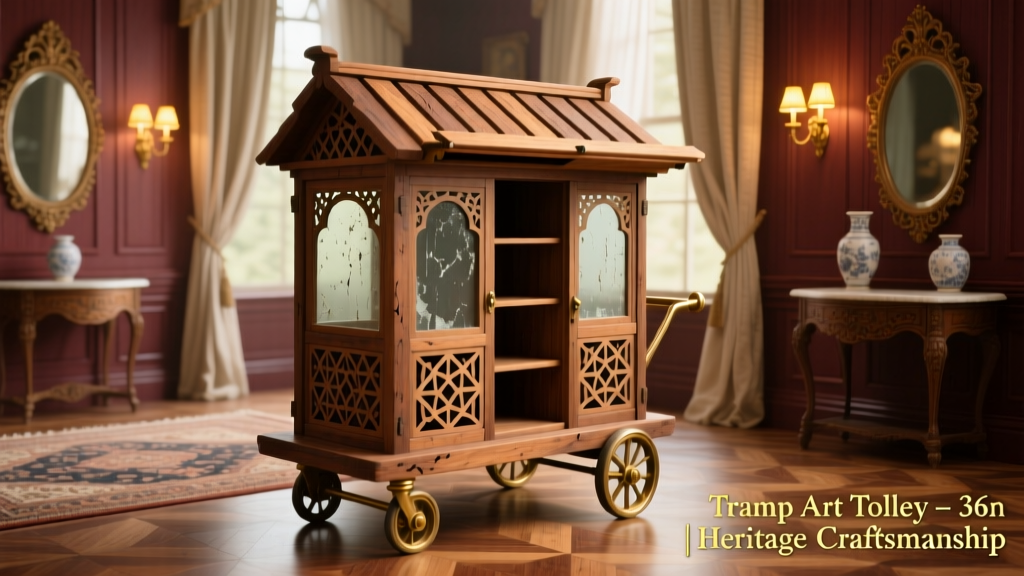
Tramp Art Trolley: Authenticity, Mechanics, and Restoration of a 36-Inch Found-Parts Carriage with Sliding Roof, Glass Windows, and Functional Wheels
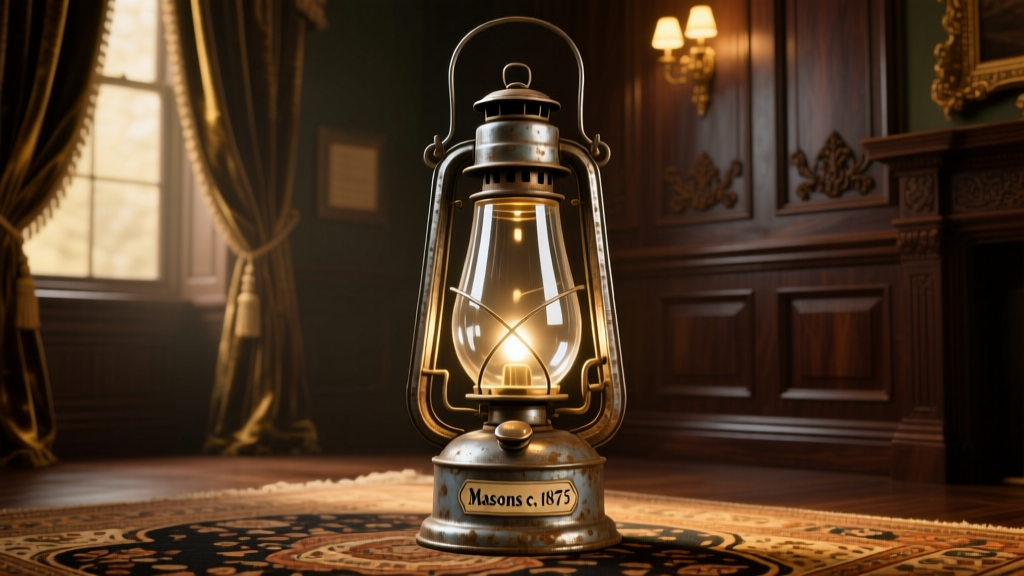
Lanterns with Tin Frames, Glass Panes, Mercury-Glass Reflectors, and Mason’s Mark — A Technical & Historical Study of an 18-Inch C. 1875 Example
Stevens Williams Rose Bowl: Authenticating and Preserving the 2¼-Inch Thumbprint Pattern Blue Jewel Glass
The Tools Frame Quilting Folding Cross Stretcher: A Technical Deep Dive into the 46½ × 75½ Inch Adjustable Support System
Louis XVI Style Mirror Pair: Foliate Crest, Grape-Filled Urn Motif — A Restoration Specialist’s Analysis
Oyster Plates: Decoding the 5-Well Cobalt Blue & Gold Haviland Pattern — A Restoration Specialist’s Analysis
Gold-Enameled Snuffboxes with Translucent Red Enamel and Foliate Scroll Design: A European Collector’s Reference
Moser Tumbler in Juice Green with 24K Gold Trim: History, Identification, and Restoration Insights
Silhouette Portraiture of the Georgian Era: Examining a Noblewoman’s Oval Miniature (1½ × 1⅛ Inches)