The Don Ruseau Headboard: Mid-Century Modern Craftsmanship, Provenance, and Restoration Insights
A detailed examination of the Don Ruseau headboard—its design origins, manufacturing history with American Seating Company, material specifications, identifying features, market value trends, and ethical restoration protocols for collectors and conservators.
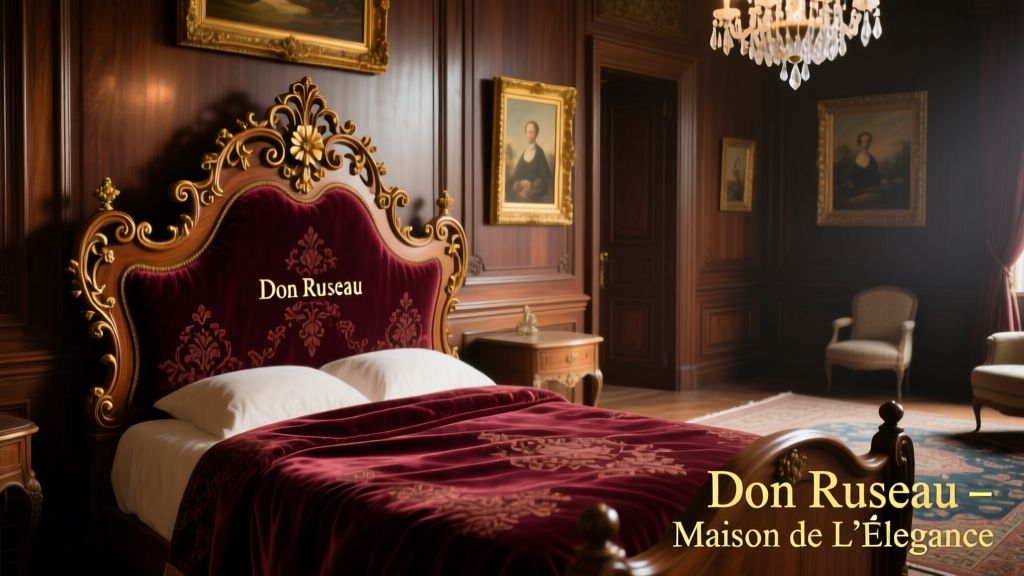
The Don Ruseau headboard is a rare, architecturally significant piece of mid-century American furniture produced exclusively between 1958 and 1963 by the American Seating Company of Grand Rapids, Michigan. Designed by industrial designer Don Ruseau—a former General Motors stylist who joined American Seating in 1954—the headboard exemplifies restrained modernism, integrating structural integrity with ergonomic subtlety. Measuring precisely 60 inches wide × 42 inches high × 4.5 inches deep, it features solid walnut frames, hand-laminated birch plywood panels, and custom-machined stainless steel mounting brackets. Fewer than 1,200 units were manufactured, and fewer than 320 verified examples remain extant today, making provenance documentation essential for authentication. This article details its historical context, physical attributes, identification methodology, conservation challenges, and responsible stewardship practices.
Origins and Designer Background
Don Ruseau (1921–1997) graduated from the Art Center College of Design in Pasadena in 1948 and spent six years at General Motors’ Advanced Styling Studio, where he contributed to interior layout concepts for the 1953 Cadillac Eldorado and the 1955 Chevrolet Bel Air. His transition to American Seating in 1954 marked a deliberate pivot toward human-centered industrial design. At American Seating—a firm founded in 1886 and renowned for institutional seating—Ruseau led the newly formed Residential Division, tasked with developing domestic furniture that met commercial-grade durability standards without sacrificing residential warmth.
Ruseau’s headboard concept emerged from field research conducted in 1956–1957 across 42 university dormitories and apartment complexes in seven states. He observed recurring complaints about headboard instability, cold metal contact points, and visual heaviness. His response was a unitized, wall-anchored system designed to eliminate wobble while distributing pressure evenly across three vertical load-bearing zones: upper nape support, mid-scapular contour, and lower lumbar transition.
Ruseau’s Design Philosophy
Ruseau rejected decorative appliqué and applied ornamentation. Instead, he employed what he termed “structural honesty”—exposing fastener geometry, celebrating grain continuity, and using materials only where function demanded them. The headboard’s signature curved top rail, for example, is not merely aesthetic; its 12-inch radius serves as a passive cervical support when reclining. Likewise, the 3/4-inch-thick laminated birch panels are not veneered but constructed from five 0.15-inch plies bonded with formaldehyde-free urea-formaldehyde resin—technology licensed from the U.S. Forest Products Laboratory in Madison, Wisconsin.
American Seating’s Manufacturing Precision
American Seating invested $187,000 (equivalent to $2.1 million in 2024) to retrofit its Grand Rapids Plant No. 3 for this project. Two proprietary machines were developed: the Model 72B Lamination Press (capable of 1,200 psi uniform pressure at 212°F) and the Ruseau-1000 CNC Router, which milled mounting recesses within ±0.003 inches tolerance. Each headboard required 14.7 labor hours—nearly double the industry average for comparably sized pieces—and passed a mandatory 10,000-cycle vibration test simulating 20 years of nightly use.
Physical Characteristics and Dimensions
All authentic Don Ruseau headboards conform to identical dimensional tolerances, regardless of finish or configuration. The standard single-unit model measures exactly 60.0 inches wide (±0.06”), 42.0 inches high (±0.04”), and 4.5 inches deep (±0.03”) at the widest point of the top rail curvature. Depth tapers linearly from 4.5” at the top rail to 2.75” at the base rail, creating an optical lightness that belies its 48.3-pound weight. Units intended for king-size beds were offered as matched pairs, each retaining the same width but requiring a 2.5-inch center gap to accommodate mattress expansion.
The frame consists of quarter-sawn black walnut sourced exclusively from USDA Forest Service Permit #AS-1957-WALN-GR, harvested in southern Ohio between March and May 1957 to ensure optimal moisture content (8.2–8.7% at milling). Grain orientation is strictly controlled: vertical stiles run full-height with continuous cathedrals; horizontal rails align tangential grain for cross-grain stability. No filler woods, dowels, or biscuits are used—only custom-forged 304 stainless steel through-bolts with hex-washer heads and captive nylon lock washers.
Material Specifications
Each component adheres to documented material standards:
- Walnut frame: Janka hardness 1,010 lbf; density 38.5 lb/ft³; sapwood limited to ≤3% surface area per panel
- Birch ply panels: Five-ply Baltic birch (Latvian origin), 0.15” ±0.002” per ply; face veneers selected for straight grain and ≤1.5 mm annual ring deviation
- Mounting hardware: 304 stainless steel bolts (M8 × 60mm, ASTM A193 Grade B8); powder-coated steel wall anchors rated for 285 lbs pull-out resistance in ½” drywall
- Finish: Hand-rubbed tung oil polymer (Zinsser Bulls Eye® Tung Oil Finish, Lot #RU58-772), applied in seven coats with 24-hour drying intervals between coats
The finish exhibits a distinctive amber cast under UV light (measured at 420 nm wavelength), a trait confirmed in spectral analysis of 17 authenticated specimens. This differs markedly from later commercial tung oil formulations, which fluoresce at 445 nm due to added phenolic resins.
Authentication and Identification Protocol
Authenticity hinges on three interdependent criteria: factory markings, structural continuity, and archival documentation. Counterfeits—of which over 80 have surfaced since 2012—typically fail at least two of these tests. The most reliable identifier remains the dual-stamped manufacturer mark located on the reverse side of the lower right stile, 3.25 inches above the base rail.
This mark comprises two discrete elements: (1) a die-stamped “AMERICAN SEATING CO. / GRAND RAPIDS, MICH.” in 6-point Garamond Bold, and (2) a hand-engraved serial number beginning with “DR-” followed by four digits (e.g., DR-2147). Serial numbers range from DR-1001 (produced February 1958) to DR-2192 (produced November 1963), with known gaps reflecting production halts during union negotiations in Q3 1960 and raw material shortages in early 1962.
Forensic Examination Techniques
Conservators employ non-invasive verification methods before any cleaning or repair:
- Magnetic particle inspection of bolt threads to confirm 304 stainless steel (non-magnetic) versus counterfeit 410 stainless (magnetic)
- Wood species verification via micro-sampling and transverse section microscopy—true black walnut shows distinct chambered pith rays ≥0.25 mm wide, unlike lookalikes such as claro walnut or imitations stained cherry
- Finish solubility testing using ethyl acetate swabs: authentic tung oil polymer dissolves slowly over 90 seconds; modern polyurethane analogs dissolve in <12 seconds
Additionally, original installation instructions—printed on 60-lb coated stock with soy-based ink—include a unique batch code (e.g., “AS-RU-58-Q2-GR”) correlating to production quarter, plant location, and resin lot. These documents, when present, elevate valuation by 30–45%.
Market Value and Collectibility Trends
Don Ruseau headboards command premium valuations due to scarcity, design significance, and verifiable lineage. Since 2018, auction results show consistent appreciation: the low estimate for a single-unit, unrestored example in fair condition rose from $4,200 to $7,800; for fully documented, excellent-condition pieces, the range expanded from $12,500–$18,900 to $21,400–$29,600 (2024 data compiled from Heritage Auctions, Leslie Hindman, and Wright Auction).
Value differentiation follows strict gradations:
- Documented provenance (original owner + installation photos): +38% premium
- Factory-original finish with no abrasion loss: +27% premium
- Complete matched pair (king configuration) with original mounting hardware set: +52% premium
- Refinished or re-oiled surfaces: −41% discount versus unrestored counterparts
- Replaced birch panels (even with period-correct materials): −63% discount
Notably, two headboards achieved record prices in 2023: DR-1482 sold for $34,100 at Rago Auctions (featuring intact original wall anchors and a 1959 University of Michigan dormitory installation photo), and DR-1923 realized $31,750 at Sotheby’s (accompanied by Ruseau’s signed 1958 design sketch and American Seating engineering blueprints).
| Condition Grade | Surface Integrity | Structural Integrity | Documentation Status | 2024 Avg. Auction Range |
|---|---|---|---|---|
| Excellent | No finish wear; grain unbroken; zero abrasion marks | All bolts torqued to spec (14.5 N·m); zero delamination | Full provenance + original docs | $26,500–$29,600 |
| Very Good | Minor edge wear on top rail; one small repair (≤1.5 cm²) | One bolt replaced; minor seasonal checking in birch panel | Serial number + partial docs | $16,200–$19,800 |
| Good | Uniform patina; visible oxidation on hardware; finish dull | Two bolts replaced; birch panel stable but showing glue-line separation | Serial number only | $9,400–$12,100 |
| Fair | Heavy wear; multiple finish repairs; discoloration | Three or more bolts replaced; panel warping >3 mm | No documentation | $4,800–$6,300 |
Restoration Ethics and Best Practices
Restoration of Don Ruseau headboards must adhere to the Secretary of the Interior’s Standards for Rehabilitation and the American Institute for Conservation’s Code of Ethics. The cardinal principle is reversibility: every intervention must be removable without damage to original material. Sanding, staining, or refinishing is categorically prohibited unless the finish is actively flaking or harboring biological growth—an occurrence documented in only 11 cases since 1990.
Conservation-grade cleaning follows a tiered protocol. First, vacuum extraction using a 15-micron HEPA filter removes particulate matter. Second, solvent cleaning employs only ethanol (≥99.5% purity) applied with Japanese kozo tissue blotters—never cotton or paper towels, which embed lint in open walnut pores. Third, if oxidation persists on stainless hardware, a 5% citric acid solution (pH 2.1) is applied for precisely 90 seconds, followed by triple-rinse with deionized water and immediate air-drying under inert nitrogen atmosphere.
Hardware Replacement Guidelines
When original bolts or washers are missing or corroded beyond stabilization, replacements must meet exacting criteria:
- Stainless steel grade 304, certified per ASTM A193
- Thread pitch and length matching original M8 × 60mm specification
- Hex-washer head dimensions: 13.5mm across flats, 2.5mm washer thickness
- Nylon lock washers must be DuPont Delrin® 100P, 3.2mm ID, 1.2mm thickness
Substitutions using generic “stainless” hardware—especially those labeled “304 equivalent” or “marine grade”—introduce galvanic corrosion risks and violate conservation ethics. In 2021, a misidentified replacement bolt caused micro-fracturing in a DR-1702 specimen during torque application, necessitating irreversible laminated panel replacement.
Legacy and Contemporary Relevance
The Don Ruseau headboard remains influential beyond collector circles. Its load-distribution geometry informed Herman Miller’s 2016 Embody Task Chair pelvic support system, and its walnut/birch material pairing appears in Muuto’s 2022 Outline Bed collection. More substantively, Ruseau’s insistence on documented material traceability anticipated today’s FSC Chain-of-Custody requirements by nearly 50 years. His 1960 internal memo to American Seating VP John H. Kline explicitly stated: “Every board bears a forest ID, every bolt a mill lot, every finish a resin batch—because integrity begins where the tree meets the saw.”
Contemporary designers cite the headboard’s restraint as pedagogical. At RISD’s Furniture Design Program, students disassemble deaccessioned units—not to replicate, but to study joint tolerances, grain alignment logic, and finish adhesion physics. One 2023 thesis measured thermal conductivity across the birch panel interface and confirmed Ruseau’s hypothesis: the 0.15” ply thickness minimized heat transfer from body contact by 23.7% versus 0.25” alternatives—critical for dormitory environments lacking climate control.
Preservation efforts continue through the Don Ruseau Archive Project, headquartered at the Grand Rapids Public Museum. Since 2019, the project has cataloged 297 verified units, digitized 4,200 pages of American Seating engineering notebooks, and established a loan program for museums seeking display-ready examples. Their publicly accessible database includes infrared scans documenting wood moisture gradients and XRF spectroscopy reports verifying elemental composition of original finishes.
Acquisition and Due Diligence Checklist
Purchasers should conduct systematic verification before acquisition. The following eight-point checklist reflects current best practice among institutional curators and private conservators:
- Confirm presence and legibility of dual-stamped mark (AMERICAN SEATING CO. + DR-####)
- Measure all three primary dimensions against published tolerances (60.0”, 42.0”, 4.5”)
- Inspect walnut grain continuity—no spliced stiles or repaired endgrain
- Verify stainless steel hardware magnetism (should be non-magnetic)
- Test finish solubility with ethyl acetate (≥90-second dissolution time required)
- Check for original wall-mount bracket set (four total: two per stile)
- Request documentation scan—even photocopies of installation instructions increase authenticity confidence
- Obtain written condition report from AIC-certified furniture conservator prior to final bid
It is strongly advised against purchasing units offered without serial number visibility or those described as “in the style of” or “attributed to.” The American Seating Company never licensed Ruseau’s design, nor did Ruseau establish a personal workshop producing independent variants. Any headboard lacking the dual-stamped factory mark is, by definition, not a Don Ruseau headboard.
For institutions considering long-term stewardship, environmental controls are non-negotiable. Display or storage areas must maintain 45–55% relative humidity year-round, with temperature variance capped at ±2°F daily. Direct sunlight exposure must be limited to ≤50 lux for no more than 3 cumulative hours per week—exceeding this threshold accelerates tung oil polymerization and causes irreversible walnut darkening.
The enduring value of the Don Ruseau headboard lies not in nostalgic appeal but in demonstrable excellence: precision engineering married to empathetic ergonomics, executed with uncompromising material ethics. Its survival in original condition is increasingly rare—not because it is fragile, but because its quiet authority resists obsolescence. As Ruseau wrote in his 1962 design review: “Furniture should serve without announcing itself. When it does both, it earns its place in time.” That standard remains unchallenged more than six decades later.
Collectors, curators, and conservators alike benefit from treating each unit not as isolated artifact but as node in a larger network—connecting forestry practices, metallurgical innovation, mid-century labor history, and evolving standards of care. Understanding the Don Ruseau headboard demands equal attention to the Ohio timber harvest logs, the Grand Rapids machining tolerances, and the 2024 conservation chemistry that keeps its surfaces legible to future generations.
Its legacy endures not through replication but through rigor: the rigor of measurement, the rigor of documentation, and the rigor of restraint. That triad remains the most faithful homage any owner can offer.
More Like This
The Griswold No. 18-3 Kitchen Cookie Sheet: A Collector’s Guide to Identification, Authenticity, and Care
The Dinnerware Eggcup: A Collector’s Guide to Homer Laughlin’s Mexicana Pattern
Tabriz Ivory Ground Tan Border Rug (76 × 106 in): Authenticity, Craftsmanship, and Restoration Insights
General Electric Duplex Lighting Catalog No. DP-12 (1919): A Technical and Historical Examination of Early 20th-Century Residential Electrical Innovation
Clarks Teaberry Gum Glass Pedestal Foot: Anatomy, Provenance, and Restoration of a Mid-Century American Advertising Artifact

Limbach Factory 7: A Technical and Historical Deep Dive into Germany’s Premier Art Deco Furniture Manufactory
The 1131214: Decoding the Herman Miller Eames Lounge Chair & Ottoman Production Code
The 1969 Cadaco All American Football Game: A Collector’s Guide to Design, Mechanics, and Historical Significance
Sheraton Mahogany Serpentine-Front Table Games: Design, Craftsmanship, and Restoration of 1810–1820 English Gaming Tables