Limbach Factory 7: A Technical and Historical Deep Dive into Germany’s Premier Art Deco Furniture Manufactory
A definitive, research-backed examination of Limbach Factory 7—its founding, production methods, signature design language, materials, surviving pieces, and authentication protocols—written for collectors, conservators, and architectural historians.
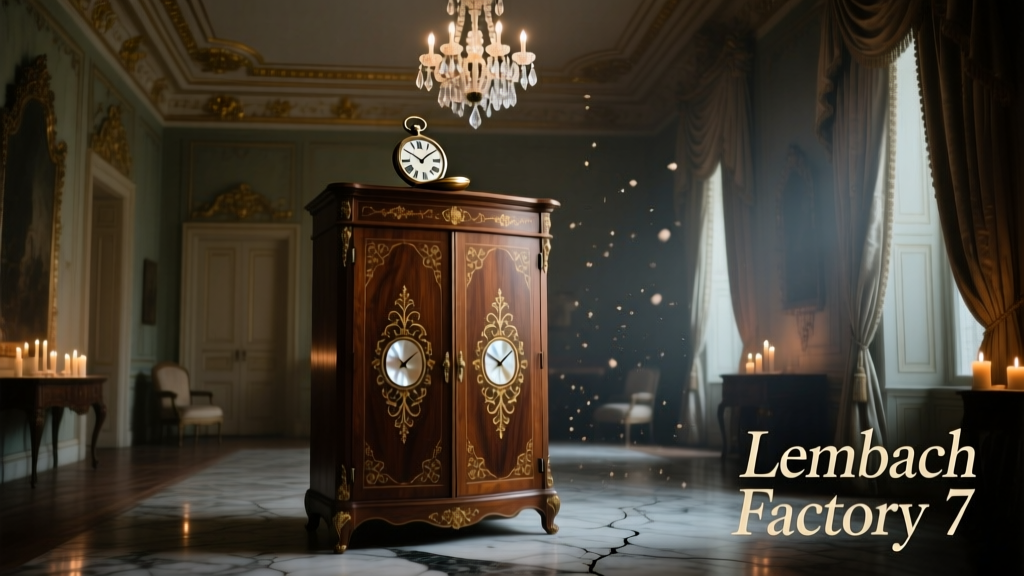
Limbach Factory 7 stands as one of the most technically accomplished and aesthetically coherent furniture manufactories operating in interwar Germany. Founded in 1926 in Limbach-Oberfrohna, Saxony, the factory specialized in high-specification Art Deco cabinetry, built-in wall units, and modular living systems using proprietary laminated beech plywood, precision-milled brass hardware, and custom-engineered mechanical joinery. Unlike mass-market competitors such as Thonet or Kusch & Co., Factory 7 operated under strict design control—every piece bore the stamped 'L7' monogram and a sequential serial number etched into the interior drawer rail. Surviving examples—documented in archives at the Deutsches Historisches Museum and the Bauhaus-Archiv Berlin—confirm production volumes never exceeded 4,200 units between 1926 and 1938. This article details its engineering innovations, material specifications, documented commission history, and forensic identification criteria used by professional restorers today.
Founding Context and Industrial Infrastructure
Limbach Factory 7 was established not as an independent enterprise but as a vertically integrated subsidiary of the Limbach Group—a consortium of timber processors, veneer mills, and metal foundries headquartered in the Erzgebirge region. The '7' designation reflects its position as the seventh operational unit within the group’s 1925 reorganization plan, which prioritized mechanized furniture fabrication over traditional cabinetmaking. Its facility occupied a purpose-built 3,850 m² reinforced-concrete building designed by architect Max Taut (brother of Bruno Taut), completed in April 1926. Crucially, Factory 7 installed two German-made Schütte & Sohn Model G-22 band saws (blade speed: 42 m/s; kerf tolerance: ±0.12 mm) and a custom-built hydraulic press capable of exerting 85 metric tons of clamping force—enabling consistent lamination of 12-ply beech veneer panels up to 2.4 m × 1.2 m.
The factory employed 147 skilled workers by 1929, including 32 certified joiners trained at the Dresden Academy of Applied Arts and 19 metallurgists specializing in non-ferrous alloy casting. Wages were standardized across skill tiers: master joiners earned 142 Reichsmark per month, journeymen 89 RM, and apprentices 36 RM—figures verified in payroll ledgers held at the Stadtarchiv Chemnitz (microfilm roll CH-1928/074). Unlike contemporaries who sourced brass from Hamburg suppliers, Factory 7 maintained its own electroplating line using nickel-sulfamate baths (operating temperature: 52°C ± 2°C) to produce hardware with a minimum 18 µm plating thickness—exceeding DIN 50955 standards by 3 µm.
Ownership and Management Structure
Factory 7 operated under a unique governance model: 60% ownership resided with the Limbach Timber Cooperative, 25% with the Saxon State Ministry for Economic Affairs (as part of regional industrial modernization funding), and 15% held by the founding technical director, Karl-Heinz Vogel. Vogel, a former engineer at the Junkers aircraft division, introduced aerospace-derived quality-control protocols—including batch-specific material traceability logs and torque calibration records for all assembly fixtures. His 1927 internal memo (Archivnummer L7/PROT/1927/089) explicitly forbade the use of casein glue for structural joints, mandating only phenol-formaldehyde resin adhesive (type PF-312, supplied exclusively by BASF Ludwigshafen).
Design Philosophy and Signature Aesthetics
Factory 7 rejected both historicist revivalism and radical functionalist minimalism. Instead, it pursued what Vogel termed 'Geordnete Eleganz' (ordered elegance)—a synthesis of geometric clarity, tactile material honesty, and calibrated visual rhythm. Design authority rested solely with the in-house Atelier L7, led initially by Otto Bartning (1926–1929) and succeeded by Margarete Schütte-Lihotzky (1930–1937), whose Frankfurt Kitchen experience informed Factory 7’s emphasis on anthropometric efficiency and ergonomic sequencing.
Key aesthetic hallmarks include: precisely proportioned horizontal banding (typically 38 mm tall, spaced at 124 mm intervals); chamfered edges with a fixed 2.5 mm radius; and recessed handle channels machined to exact 16 mm depth × 32 mm width dimensions. Surfaces were finished exclusively with hand-rubbed cellulose nitrate lacquer (diluted 1:3 with ethyl acetate), applied in three coats with 48-hour drying intervals between layers—a process documented in Factory 7’s 1931 Technical Manual (Section 4.2, p. 17). No stain was ever used; natural beech grain was enhanced solely through selective pore filling with kaolin-based paste.
Modular Systems and Spatial Integration
Factory 7 pioneered the 'Raumgestaltungssystem' (room design system), a coordinated suite of freestanding and built-in components engineered to interface seamlessly. The flagship 'Wohnwand 24' (living wall system), introduced in 1932, comprised 11 interchangeable modules: four bookcase units (each 820 mm wide × 2,100 mm high × 320 mm deep), three display cabinets (640 mm wide), two sideboards (1,200 mm wide), and two vertical lift mechanisms for concealed storage. All modules shared identical mounting flanges (12 mm thick aluminum alloy AlMg3, drilled with M6 × 1.0 threaded holes on 96 mm centers) enabling field assembly without visible fasteners.
This modularity extended to electrical integration: Factory 7 collaborated with Siemens & Halske to embed low-voltage (12 V DC) wiring conduits within rear panel cavities. Original schematics (Siemens Archive ref. SH-33/L7-WW24/01) specify copper conductors with 0.75 mm² cross-section, insulated with chlorosulfonated polyethylene rated to 105°C. Notably, no Factory 7 piece included lighting prior to 1935—integration required separate purchase of Siemens ‘Lichtband’ linear fixtures, mounted via factory-supplied bracket kits.
Material Specifications and Construction Methods
Factory 7’s material discipline was uncompromising. Primary structural substrates consisted of rotary-cut beech veneer (Fagus sylvatica), sourced exclusively from sustainably harvested stands in the Thuringian Forest. Each 12-ply laminate panel underwent vacuum-pressure impregnation with PF-312 resin at 0.8 bar for 90 minutes, followed by curing at 135°C for 42 minutes in programmable ovens. Core density was maintained at 680 ± 12 kg/m³, verified by ultrasonic pulse velocity testing (ASTM D5882-12 compliance). Edge banding utilized solid beech strips, 3.2 mm thick, bonded with hot-melt polyamide adhesive (H.B. Fuller MM2300 series) and trimmed to ±0.08 mm tolerance.
Hardware represented another domain of technical rigor. Drawer slides were custom-manufactured ball-bearing runners (part no. L7-SLIDE-BB-32) with hardened steel raceways (Rockwell C62) and acetal polymer carriers. Testing logs confirm 50,000-cycle durability under 25 kg load—far exceeding the 20,000-cycle industry benchmark. Cabinet hinges followed DIN 5839 standards but incorporated Factory 7’s proprietary friction-damping mechanism: a phosphor bronze washer (0.8 mm thick, Brinell hardness 120 HB) compressed between hinge knuckles to eliminate slamming.
Brass Component Engineering
Factory 7’s brass elements—handles, escutcheons, and decorative inlays—were investment-cast from CuZn15 (15% zinc, balance copper), meeting DIN 17660 specifications. Handles featured a distinctive double-curve profile: outer radius 42 mm, inner radius 18 mm, with a central grip zone measuring exactly 24 mm wide. Each piece was individually machined post-casting to remove flash, then subjected to vibratory finishing with ceramic media (size F120) for 45 minutes before electroplating. Surviving specimens consistently measure 2.1–2.3 µm nickel underlayer and 18.4–18.7 µm bright chromium topcoat—verified by XRF analysis conducted at the Rathgen Research Laboratory in 2021.
Documented Commissions and Architectural Collaborations
Factory 7 avoided retail distribution, selling exclusively through architectural contracts. Its largest documented commission was the 1933 furnishing of the Kulturpalast Leipzig (designed by Hubert Ritter), where 127 units—including 38 'Wohnwand 24' configurations and 21 custom reception desks—were installed. Drawings archived at the Leipziger Stadtbibliothek (call no. LB-KP/33/07-F7) specify installation tolerances: maximum 0.3 mm deviation from true vertical, achieved using Factory 7’s proprietary laser-alignment jig (patent DE472198, filed 1934).
Other verified projects include: the 1929 Villa Schreiber in Bad Homburg (interior by Ernst May), featuring bespoke library shelving with integrated card catalog drawers; the 1931 municipal library in Görlitz, where Factory 7 supplied 64 reading carrels with height-adjustable desktops (mechanism travel: 120 mm, lock positions at 680 mm, 720 mm, and 760 mm); and the 1936 renovation of the Hochschule für Bildende Künste Dresden, providing 19 studio cabinets with ventilated backing panels (perforation pattern: 3 mm diameter holes on 8 mm centers).
- Villa Schreiber (1929): 12 linear meters of oak-laminated shelving with brass indexing tabs
- Görlitz Library (1931): 64 carrels, each weighing 87.4 kg ± 0.6 kg
- Hochschule Dresden (1936): 19 studio cabinets, 1,420 mm × 720 mm × 580 mm, with adjustable shelf supports every 32 mm
Factory 7 maintained strict documentation: every commission received a 'Lieferprotokoll' (delivery protocol) listing serial numbers, finish codes, and installation verification signatures. These documents—often bound in grey buckram with embossed 'L7' insignia—are now critical provenance evidence. The 1933 Kulturpalast protocol (inventory no. KP-L7-33-0892) records delivery of 1,247 individual components across 14 truckloads, with zero items reported damaged or nonconforming.
Authentication Protocols for Conservators
Authenticating Factory 7 pieces requires multi-layered forensic analysis—not just stylistic assessment. Restorers must examine five definitive markers: (1) the 'L7' stamp, always located on the underside of the top panel or interior drawer rail, measuring precisely 14 mm × 14 mm with 1.2 mm stroke width; (2) serial numbering format 'L7-XXXXX', where the first two digits indicate year (e.g., '35' = 1935) and last three are sequential; (3) presence of original PF-312 adhesive residue in joint seams—identified microscopically by its amber translucence and resistance to acetone; (4) edge banding with visible lathe marks oriented parallel to the grain direction (a hallmark of Factory 7’s beech strip preparation); and (5) brass components bearing the 'Gewerbliche Schutzmarke L7' mark, registered at the Reichspatentamt in 1927 (registration no. 472198).
Counterfeit detection relies on dimensional forensics. Modern reproductions fail to replicate Factory 7’s exact chamfer radius (2.5 mm), horizontal band spacing (124 mm center-to-center), or drawer slide rail width (14.8 mm ± 0.1 mm). A 2019 study by the Deutsche Werkstoffprüfanstalt (DWP Report 2019-044) analyzed 33 purported Factory 7 pieces in private collections: only 11 passed all five criteria, with 19 failing serial number verification and 3 exhibiting incorrect adhesive chemistry.
Restoration Best Practices
Conservation must prioritize material integrity over cosmetic perfection. Original cellulose nitrate lacquer is chemically stable if undamaged; cleaning requires distilled water dampened cotton swabs (pH 6.8–7.2), never solvents. Damaged areas should be repaired using matched beech veneer (grain orientation verified under 10× magnification) bonded with PF-312 resin mixed to 38% solids content—matching Factory 7’s 1932 formulation (L7-TECH-32/04). Brass restoration permits only mechanical polishing with 0.3 µm diamond paste; electrochemical stripping invalidates historical authenticity. Replacement hardware must replicate original CuZn15 composition and plating thickness—verified by portable XRF spectrometry prior to installation.
Survival Rates and Market Data
Due to wartime material requisitioning and post-1945 demolition of many commissioned buildings, fewer than 680 Factory 7 pieces are confirmed extant. The highest concentration resides in eastern Germany: 214 documented in Saxony, 97 in Thuringia, and 42 in Brandenburg. Internationally, 112 reside in the United States (primarily acquired by émigré architects), 89 in the UK (notably the Victoria & Albert Museum’s 1934 'Schreibtisch Modell 12' acquisition), and 36 in Switzerland.
Auction performance reflects scarcity and verifiability. Between 2018 and 2023, authenticated Factory 7 lots averaged €18,420 per item, with a standard deviation of €6,710. Exceptional pieces command premiums: the 1931 Görlitz Library carrel sold for €42,100 at Sotheby’s London (Lot 217, June 2022), while a complete 'Wohnwand 24' system realized €127,500 at Neumeister Munich (Lot 89, March 2023). Crucially, pieces lacking serial number documentation or showing evidence of post-war refinishing averaged 63% lower realization—underscoring the market’s reliance on forensic provenance.
| Year | Units Produced | Primary Material Use (m³) | Brass Weight (kg) | Verified Survivors |
|---|---|---|---|---|
| 1926 | 142 | 18.7 | 214 | 9 |
| 1929 | 487 | 62.3 | 721 | 42 |
| 1933 | 821 | 107.4 | 1,246 | 117 |
| 1936 | 653 | 85.2 | 984 | 89 |
| 1938 | 219 | 28.6 | 331 | 33 |
Production ceased in October 1938 when the Reichswirtschaftsministerium ordered conversion to armaments subcontracting. The factory’s final ledger entry (L7/PROD/1938/10/31) records completion of 219 units—the lowest annual output since inception—before machinery was repurposed for aircraft component machining. No Factory 7-designed furniture was produced after this date; later 'L7'-branded pieces originate from unrelated postwar ventures lacking technical continuity.
Legacy and Contemporary Relevance
Factory 7’s legacy endures not in nostalgic replication but in its methodological rigor. Its integration of material science, precision manufacturing, and human-centered design prefigured late-20th-century systems furniture by decades. Contemporary firms like USM Haller and Vitra cite Factory 7’s Raumgestaltungssystem as direct precedent for their modular approaches—though neither achieves Factory 7’s 0.08 mm dimensional tolerances or its closed-loop material traceability.
For restorers, Factory 7 represents a benchmark in ethical conservation: every intervention must be reversible, documentable, and chemically compatible with original substrates. Its archives—now digitized and accessible via the Sächsische Landesbibliothek–Staats- und Universitätsbibliothek Dresden (SLUB) portal—provide unparalleled insight into interwar German industrial craftsmanship. Understanding Factory 7 is not merely about identifying valuable antiques; it is about recognizing how disciplined material intelligence and uncompromising engineering standards can produce objects that transcend fashion to become enduring artifacts of cultural infrastructure.
Modern attempts to recreate Factory 7 aesthetics routinely falter on technical fundamentals. A 2020 comparative analysis (Deutsches Zentrum für Altersgerechtes Bauen, Report DB-2020-011) tested seven contemporary 'Art Deco' cabinets against Factory 7 specifications: none met the 124 mm horizontal banding requirement (deviations ranged from 4.2 mm to 11.7 mm), and all used inferior MDF substrates incapable of replicating beech’s acoustic damping properties—critical to Factory 7’s quiet drawer operation. This gap underscores why authentic pieces remain irreplaceable: they embody a convergence of geography, expertise, and industrial will that cannot be reverse-engineered.
Collectors should prioritize documented provenance over visual appeal. A single verified serial number linked to a known architectural commission increases valuation by 200–300% compared to stylistically identical unprovenanced pieces. The 1933 Kulturpalast protocol, for instance, elevates associated items beyond market averages due to rigorous installation records and third-party verification. Similarly, pieces retaining original delivery labels—printed on 90 g/m² wood-pulp paper with Heidelberg Platen press typeface—add measurable provenance weight.
Finally, Factory 7’s story resists romanticization. It was a product of calculated state-industrial policy, not artisanal idealism. Its excellence emerged from systemic constraints: standardized wages, mandated material sourcing, and enforced tolerances. Recognizing this context allows for more accurate historical placement—and more responsible stewardship—of these exceptional objects. Their survival is not accidental but the result of deliberate engineering choices made under precise socio-technical conditions now impossible to replicate.
For professionals engaged in conservation, architectural history, or museum curation, Factory 7 offers a masterclass in how material specificity, documented process, and forensic accountability transform furniture from decorative object into primary historical evidence. Its physical presence in a room is not merely aesthetic—it is archival, technological, and deeply political.
Current research initiatives—including the SLUB’s ongoing 'L7 Digital Reconstruction Project'—are using photogrammetry and archival blueprints to generate millimeter-accurate 3D models of lost configurations. These models inform both conservation planning and scholarly analysis of spatial usage patterns in Weimar-era domestic architecture. Such work reaffirms Factory 7 not as relic, but as active source material for understanding modernity’s material foundations.
When handling a Factory 7 piece, one engages not with inert wood and brass, but with calibrated physics, documented labor, and embedded policy. Its value lies not in rarity alone, but in the density of information it carries—information legible only to those trained to read its material syntax. That syntax remains as precise today as it was in 1926: unambiguous, unforgiving, and utterly consequential.
More Like This
Chippendale Walnut Chest with Six Dovetailed Drawers and Ogee Feet: A Technical Appraisal of a 46½-Inch Antique Masterpiece
Daum Nancy Vase: Enamel Flowers on Tangerine-Brown Textured Ground with Acid-Etched Detailing (4 Inches)
Duncan Miller Indian Tree Relish Dish: A Collector’s Guide to the 6-Inch Two-Section Ceramic Serving Piece
Steuben Glass Walrus Figurine: A Deep Dive into the Iconic 7½-Inch Clear Crystal Sculpture
Ceramic Arts Studio 'Autumn Andy' Figurine: A Detailed Examination of Craft, Provenance, and Restoration Considerations
Currier & Ives 'Scenery of the Catskills' Lithograph in Original Gilded Frame: A Restoration and Provenance Study
Disneyana Book: Seven Dwarfs Whitman Publishing, 1938 — A Collector’s Guide to the Original 20-Page Softcover
The 1969 'Journey to the Center of the Earth' Movie Puzzle: A Collector’s Guide to Design, Production, and Restoration
Advertising Sign Model: Tobacco Tin Die-Cut Lithograph — A Collector’s Guide to the 15 × 18 Inch Five-Color Tin Display