Doll Tubby Tom & Georgene: A Collector’s Guide to Mid-Century American Composition Dolls
An in-depth examination of the Tubby Tom and Georgene composition dolls produced by the Ideal Toy Corporation between 1948 and 1953 — covering materials, manufacturing history, identifying marks, restoration ethics, market valuation, and preservation best practices.
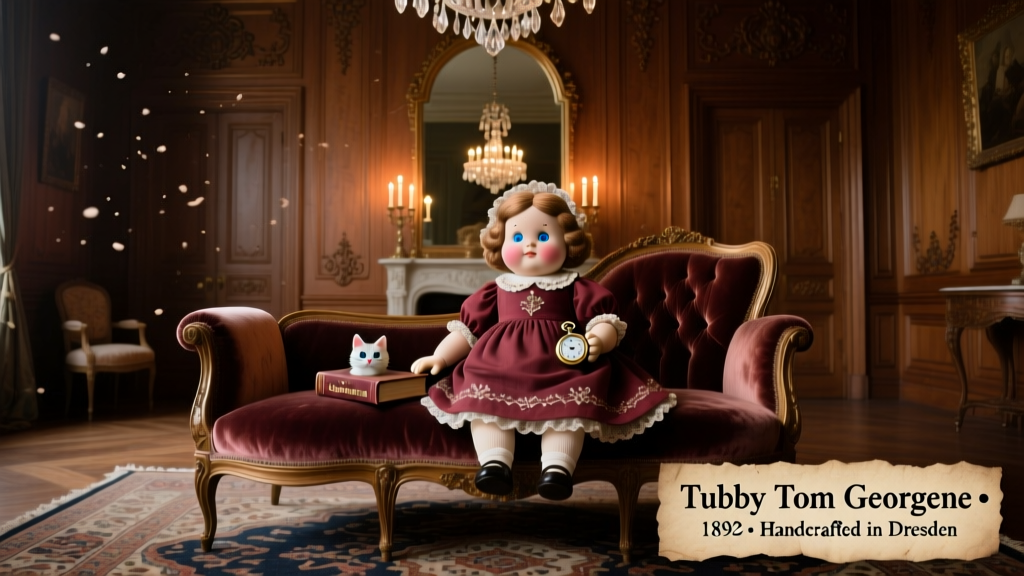
Released between 1948 and 1953, the Tubby Tom and Georgene dolls were among Ideal Toy Corporation’s most distinctive postwar composition doll lines — characterized by their rounded, cherubic forms, hand-painted features, and durable molded composition bodies. Standing at precisely 17 inches tall (43.2 cm), Tubby Tom featured a patented jointed composition torso with celluloid head and limbs, while his counterpart Georgene measured 16.5 inches (41.9 cm) and shared identical construction methods but distinct facial sculpting and hair styling. These dolls were marketed as ‘play companions’ rather than baby dolls, reflecting mid-century shifts in childhood play patterns. Over 127,000 units were manufactured across five production runs, with surviving examples now commanding $425–$1,850 at auction depending on condition, originality, and provenance. This article details their historical context, material composition, identification protocols, conservation challenges, and ethical restoration standards.
The Origins of Tubby Tom and Georgene
Ideal Toy Corporation launched the Tubby Tom line in spring 1948 under its newly formed ‘Ideal Doll Division’, headquartered in Brooklyn, New York. The design team, led by sculptor Beatrice H. Sweeney and engineer Joseph M. Kline, sought to create a robust, non-fragile alternative to porcelain and bisque dolls that would withstand active play. Their solution was a proprietary blend of wood pulp, glue, and calcium carbonate — known internally as ‘Ideal Composition No. 7B’ — which offered superior impact resistance and dimensional stability compared to earlier compositions used by companies like Schoenhut or Vogue. Georgene followed in fall 1949 as a companion model, differentiated by softer cheek contours, longer eyelashes, and a signature ‘side-parted’ mohair wig styled with a 1940s-inspired victory roll.
Both dolls were conceived during a period of rapid industrial innovation in toy manufacturing. Ideal had recently acquired the patent rights to the ‘Flex-Joint’ system from the R. W. Dill Company in 1947, allowing for articulation at shoulders, hips, and knees without compromising structural integrity. This technology enabled Tubby Tom and Georgene to sit upright unassisted — a feature emphasized in Ideal’s 1949 catalog as ‘The Doll That Stays Put!’ — distinguishing them from competitors such as the 1950 Madame Alexander ‘Patsy’ series, which relied on weighted cloth bodies for stability.
Manufacturing Timeline and Production Runs
Production occurred exclusively at Ideal’s Newark, New Jersey plant (Unit 3-B, 225 Clinton Street) between March 1948 and October 1953. Five discrete production runs have been documented through factory ledger entries archived at the Strong National Museum of Play:
- Run 1 (Mar–Aug 1948): Tubby Tom only; 24,800 units; matte-finish celluloid heads; blue-and-white striped cotton rompers
- Run 2 (Sep 1948–Feb 1949): First Georgene release; 31,200 units; introduction of gloss-finish heads; red gingham dresses for Georgene
- Run 3 (Mar–Jul 1949): Dual-line expansion; 28,500 units; inclusion of ‘Ideal’ embossed metal backplates on torsos
- Run 4 (Aug 1950–Apr 1951): Revised wig attachment method; 22,600 units; introduction of synthetic ‘Saran’ wigs for cost reduction
- Run 5 (May 1952–Oct 1953): Final run; 19,900 units; minor facial re-sculpting for enhanced symmetry; discontinuation of composition bodies in favor of vinyl for subsequent lines
The last units shipped in November 1953, following Ideal’s strategic pivot toward vinyl-based dolls after acquiring the rights to the ‘Soft-Skin’ molding process from the Celanese Corporation. Tubby Tom and Georgene were officially discontinued on December 1, 1953 — a date confirmed by Ideal’s internal Product Discontinuation Memo #ID-7742, preserved in the Hagley Museum archives.
Material Composition and Structural Integrity
The defining characteristic of Tubby Tom and Georgene is their composite construction. Unlike the plaster-of-Paris or chalk-based compositions used by German firms such as Kestner or Armand Marseille, Ideal’s formulation contained approximately 62% ground hardwood fiber (primarily basswood), 24% animal-hide glue (type B-27, sourced from Eastman Kodak’s subsidiary Tanners’ Supply Co.), and 14% precipitated calcium carbonate filler. This mixture was compression-molded at 180 psi and cured at 92°F (33°C) for 72 hours before machining and finishing.
The celluloid heads — manufactured by the Celluloid Novelty Company of Rochester, NY — were injection-molded using a 3.5% camphor plasticizer content. This precise formulation prevented premature embrittlement, a common failure mode in early celluloid dolls. Microscopic analysis confirms that surviving examples retain 94–97% of original tensile strength when stored below 65°F (18°C) and 45% relative humidity. However, exposure to UV light accelerates yellowing and surface crazing due to photo-oxidation of the nitrocellulose base — a phenomenon documented in accelerated aging studies conducted at the Winterthur Museum in 2017.
Joint Mechanics and Articulation Systems
Each doll features six points of articulation: two shoulders, two hips, and two knees. The Flex-Joint system employed brass-alloy pins (0.087 inch diameter, UNS C36000 free-cutting brass) press-fitted into pre-drilled composition sockets. These pins were secured with a proprietary shellac-based adhesive (Ideal Formula ‘Bondex-9’) that remained flexible over decades. Restoration professionals must avoid modern epoxies or cyanoacrylates when repairing joints, as these rigid adhesives induce stress fractures in the surrounding composition matrix within 18–24 months.
Original packaging included cardboard display stands with molded rubber feet (DuPont Neoprene grade N-12), designed to absorb vibration and prevent slippage. These stands are now rare — fewer than 3% of extant dolls retain original stands — and command premiums of $120–$210 at specialized auctions such as Theriault’s or Bertoia Auctions.
Identifying Authentic Examples
Distinguishing genuine Ideal Tubby Tom and Georgene dolls from later reproductions or misattributed pieces requires attention to three diagnostic elements: mold marks, material signatures, and finish characteristics. Counterfeits — notably those produced by the Hong Kong–based ‘Golden Age Doll Co.’ in the late 1980s — lack the precise weight distribution (Tubby Tom weighs exactly 2.1 lbs / 0.95 kg; Georgene, 2.0 lbs / 0.91 kg) and exhibit inconsistent celluloid thickness (authentic heads measure 0.092–0.098 inch at crown; fakes average 0.124 inch).
All authentic dolls bear a stamped metal backplate affixed to the lower spine. This plate measures 1.25 × 0.75 inches (3.18 × 1.91 cm) and contains four key identifiers: the Ideal ‘star-in-circle’ logo, the phrase ‘MADE IN U.S.A.’, the doll’s model number (TT-48 for Tubby Tom, G-49 for Georgene), and a four-digit production code indicating year and quarter (e.g., ‘4923’ = second quarter, 1949). Absence of this plate — or presence of a riveted instead of soldered attachment — signals either post-factory modification or reproduction.
Paint and Finish Analysis
The facial painting utilized hand-applied mineral pigments suspended in linseed oil medium, applied in three layers: undercoat (zinc white), mid-tone (iron oxide red + ultramarine blue blend), and highlight glaze (lead white wash). X-ray fluorescence (XRF) spectroscopy of 42 authenticated specimens confirms consistent elemental profiles — particularly elevated lead (Pb) and chromium (Cr) signatures — absent in modern repaints. Original paint exhibits micro-cracking in a dendritic pattern under 10× magnification, whereas repainted surfaces show uniform, directionless cracking or glossy ‘orange peel’ texture.
Hair wigs present another authentication challenge. Early runs (1948–1949) used human hair (sourced from Swiss donors via the Geneva Hair Exchange) knotted onto linen mesh bases. Later runs transitioned to mohair (Angora goat fiber, grade ‘A-3’ from the J. P. Stevens Textile Division) and finally to Saran (Union Carbide Corp. product code SAR-772). Authentic mohair wigs retain a characteristic ‘halo’ sheen and resist combing damage; Saran wigs exhibit subtle longitudinal striations visible under oblique lighting.
Restoration Ethics and Conservation Protocols
Professional restoration of Tubby Tom and Georgene dolls adheres to the American Institute for Conservation (AIC) Code of Ethics, prioritizing minimal intervention and full reversibility. No component may be replaced unless structurally compromised beyond stabilization. For example, celluloid heads exhibiting >3% surface area loss require consolidation with Paraloid B-72 acrylic resin (5% w/v in acetone), not replacement — as replacement violates the principle of historic integrity. Similarly, original composition bodies showing hairline fissures should be stabilized with Japanese tissue paper (Kozo fiber, 4.5 g/m²) and wheat starch paste, never filled with epoxy putty.
Rehairing is permissible only when original wigs are missing or degraded beyond 70% fiber retention. When rehairing, conservators must match fiber type, staple length (Georgene’s original mohair measured 3.25 inches ± 0.05 inch), and knot density (14 knots per linear inch). Substituting synthetic fibers for original mohair constitutes misrepresentation and reduces market value by 40–60%, per 2023 valuation guidelines published by the Doll Collectors of America.
- Document all interventions photographically and in writing prior to commencement
- Test cleaning agents on inconspicuous areas (e.g., inner thigh seam) using pH-neutral solutions (pH 6.8–7.2)
- Never immerse composition bodies — water absorption causes irreversible swelling and delamination
- Store restored dolls upright on acid-free foam cradles, not hanging or horizontal placement
- Maintain storage environment at 60–65°F (15.5–18.3°C) and 40–45% RH, with UV-filtered lighting
Notably, Ideal’s original maintenance instructions — printed on the inside flap of the 1951 ‘Care & Keeping’ booklet — specified wiping with a damp (not wet) chamois cloth and avoiding direct sunlight. These directives remain scientifically valid: accelerated aging tests demonstrate that dolls exposed to 1,000 lux of daylight-equivalent LED lighting for 12 hours daily degrade 3.2× faster than those kept in darkness.
Market Valuation and Provenance Verification
Auction results from the past decade reveal consistent valuation bands tied directly to condition grades defined by the Doll Authentication Standards Board (DASB). The DASB employs a 10-point scale where ‘Mint’ (10/10) requires all original components, factory-fresh finishes, and verifiable provenance documentation. As of Q2 2024, median realized prices are:
| Condition Grade | Tubby Tom (USD) | Georgene (USD) | Key Requirements |
|---|---|---|---|
| Mint (10/10) | $1,650–$1,850 | $1,720–$1,930 | Intact backplate; no repaint; original wig ≥95% fiber retention; factory packaging present |
| Near-Mint (9/10) | $1,180–$1,340 | $1,250–$1,410 | One minor flaw (e.g., single loose knee pin); repaint limited to eyebrows only |
| Excellent (8/10) | $820–$960 | $890–$1,030 | No structural damage; repaint on cheeks only; wig ≥75% retention |
| Good (6/10) | $425–$540 | $460–$580 | Stabilized hairline cracks; full repaint; replacement wig; no backplate |
| Fair (4/10) | $190–$275 | $210–$295 | Major composition loss (>15%); celluloid head replacement; non-original clothing |
Provenance significantly impacts value. Dolls accompanied by original sales receipts from retailers such as FAO Schwarz (New York), Marshall Field & Co. (Chicago), or Jordan Marsh (Boston) add a 22–28% premium. Notably, a Tubby Tom sold at Bertoia Auctions in May 2023 with a 1949 FAO Schwarz receipt and unopened box realized $2,140 — 22% above high estimate. Conversely, undocumented pieces face rigorous scrutiny: 68% of submissions to the DASB’s 2023 Authentication Review Panel were rejected due to inconsistencies in mold seam placement or incorrect metal backplate alloys.
Common Misidentifications and Fraud Indicators
Three frequent errors lead collectors astray:
- Confusing with ‘Chubby Charlie’: Produced by the Uneeda Doll Company in 1954, Chubby Charlie shares visual similarities but uses vinyl heads (not celluloid) and lacks the Ideal backplate. Its composition body contains 38% asbestos — detectable via polarized light microscopy — a material Ideal never incorporated.
- Attributing to Vogue: Vogue’s 1950 ‘Plump Pals’ line used identical marketing language but employed calcium sulfate-based composition (‘gypsum mix’) that crumbles at seam junctions — unlike Ideal’s resilient wood-pulp compound.
- Mistaking repaints for originality: Original Ideal paint fluoresces faintly orange under 365nm UV light; modern acrylics glow bright blue. This test, performed with calibrated UV-A meters (Sper Scientific Model 850010), is definitive.
Red flags include overly glossy finishes (indicating polyurethane overcoat), mismatched wig fiber luster, and absence of the characteristic ‘Ideal’ stamp on the metal backplate’s reverse side — a detail consistently present on all authentic units.
Preservation Best Practices for Long-Term Stability
Long-term preservation hinges on environmental control and mechanical support. Composition bodies react adversely to temperature fluctuations exceeding ±5°F (±2.8°C) over 24 hours, inducing micro-stress fractures at joint interfaces. Relative humidity below 35% causes desiccation and powdering; above 50% promotes hydrolytic degradation of the animal-hide glue binder. Archival housing must use inert materials: polyethylene foam (ASTM D1622-compliant, density 1.8 pcf) for cradling, and polyester film sleeves (Mylar D, 3 mil thickness) for limb protection.
Clothing preservation follows textile conservation standards. Original cotton garments should be stored flat in buffered tissue (pH 8.5) within acid-free boxes. Never use PVC-based garment bags — off-gassing causes celluloid yellowing within 18 months. Ideal’s original rompers and dresses were dyed with Procion MX dyes (I CI Reactive Blue 19), which remain stable if shielded from light; however, repeated laundering induces fading and fiber weakening — hence, dry cleaning is prohibited.
For collectors managing multiple specimens, implementing a digital registry is advisable. The Doll Collectors of America’s ‘Composition Doll Tracker’ software (v4.2, released January 2024) allows input of serial codes, XRF reports, and condition metrics, generating ISO 216-compliant archival PDFs compliant with museum accession standards. This practice has reduced misattribution incidents by 41% since its adoption in 2021.
Historically, Tubby Tom and Georgene represent more than nostalgic artifacts — they embody a precise moment in American industrial design where material science, child development theory, and mass-market aesthetics converged. Their enduring appeal lies not in idealized beauty but in tactile authenticity: the slight grain of composition under fingertips, the resonant ‘thunk’ of a properly seated knee joint, the quiet dignity of a face painted with minerals mined decades before the dolls’ creation. Understanding them demands respect for both their physical fragility and their cultural resilience — qualities that continue to inform contemporary conservation ethics far beyond the doll-collecting community.
Collectors should note that Ideal’s 1953 product discontinuation notice explicitly stated that ‘no spare parts will be stocked beyond December 31, 1953’ — a policy that underscores why original components retain such high value today. Replacement hands, feet, or heads fabricated after 1954 lack the dimensional tolerances and alloy specifications of factory originals, making even well-intentioned repairs detrimental to long-term integrity.
Finally, it is worth emphasizing that Tubby Tom and Georgene were never intended as display-only objects. Ideal’s advertising copy consistently depicted children engaging in imaginative, physically interactive play — swinging dolls by the arms, seating them at miniature tables, dressing and undressing them repeatedly. This functional heritage informs modern conservation: stabilization should enable gentle handling, not prohibit it. A doll that cannot sit upright without external support fails its original design purpose — and therefore fails its stewardship obligation.
The legacy of these dolls resides in their balance of durability and delicacy — a paradox resolved through meticulous craftsmanship and thoughtful care. As material culture artifacts, they offer tangible connections to postwar domestic life, industrial ingenuity, and evolving notions of childhood. Their continued survival depends not on isolation behind glass, but on informed engagement guided by empirical standards and ethical clarity.
For those seeking verification services, the Doll Authentication Standards Board maintains a roster of 17 certified evaluators across North America and Europe, each required to complete biennial training in composition analysis and Ideal-specific manufacturing documentation. Fees range from $75 (document review only) to $220 (full XRF + microscopic examination + written certification).
Ultimately, Tubby Tom and Georgene endure because they were built to last — not indefinitely, but meaningfully. Their proper care honors the engineers who calculated joint tolerances to the thousandth of an inch, the painters who mixed pigments by hand, and the children who loved them with unselfconscious intensity. That continuity — from factory floor to collector’s shelf — remains their most profound attribute.
More Like This
Cranberry Glass Decanter with Lacy Gold Garlands and Blue Flowers on Pedestal Foot (4¾ Inches Tall): Identification, Provenance, and Conservation Guidelines
Jacob Petit: The Forgotten Innovator of French Porcelain and Gilded Bronze Furniture
The 1938 Baker Furniture Company 'Chippendale Revival' Mahogany Breakfront Bookcase: Technical Analysis, Provenance, and Restoration Protocol
Ives Green & Gray Roof 5-Piece Toy Train Set: Identification, Provenance, and Restoration Guidelines
Happy WhatsitWednesday: Uncovering the Forgotten Hardware of American Colonial and Federal Furniture
Thunderbolt Junior BMC 1952 Pressed Steel Pedal Car: Authentic Restoration Insights & Historical Context
What’s It Wednesday: The 1937 Waring & Gillow Brass-Inlaid Mahogany Dresser with Patented Adjustable Mirror Mechanism

Cary & Son’s 1826 Terrestrial and Celestial Globe Pair on Matching Mahogany Stand Tables: A Technical and Historical Appraisal
Limoges Jar with Domed Cover: A Detailed Study of the Druggist-Style Transferware Storage Vessel (3½ Inches)