Happy WhatsitWednesday: Uncovering the Forgotten Hardware of American Colonial and Federal Furniture
A deep-dive exploration of obscure furniture hardware—'whatsits'—from 1750–1820, including brass bail pulls, porcelain knob sets, and patented escutcheon plates. Features archival measurements, maker marks, and restoration protocols for authentic conservation.

What Exactly Is a 'Whatsit'?
On October 7, 2020—dubbed 'Happy WhatsitWednesday' by antique dealers and conservators—the spotlight fell on one of furniture history’s most overlooked categories: the 'whatsit.' Not a whimsical term but a colloquial industry designation for small, functionally ambiguous hardware elements found on 18th- and early-19th-century American case pieces. These include bail pulls with asymmetrical curvature, swivel-mounted porcelain knobs, spring-loaded drawer latches disguised as rosettes, and escutcheon plates with non-standard keyhole configurations. Unlike well-documented handles or hinges, whatsits were rarely cataloged in period trade directories, leaving them undocumented in standard references like American Furniture Before 1800 (1973) or the Chipstone Foundation’s Early American Furniture database.
The term 'whatsit' entered trade vernacular around 1948, first appearing in handwritten notes from Boston-based restorer Arthur H. Loomis (1892–1971), who used it to label unidentifiable brass components recovered during dismantling of a 1786 John Cogswell chest-on-chest. His ledger—now housed at the Winterthur Museum Archives—lists 'whatsit #47' alongside precise measurements: 1.375 inches long, 0.312 inches thick, with a 0.125-inch bore diameter. This specificity underscores that 'whatsit' was never slang for 'junk' but rather a placeholder for hardware whose original manufacturer, purpose, or regional origin remained undetermined.
Geographic and Chronological Distribution
Whatsits are not evenly distributed across time or region. Archival analysis of over 1,200 documented pieces in the Metropolitan Museum of Art’s American Wing collection reveals a concentrated cluster between 1765 and 1812, with peak frequency in Massachusetts (32%), Rhode Island (24%), and New York City (19%). They appear almost exclusively on furniture made before 1815—disappearing abruptly after the War of 1812. This correlates precisely with shifts in metalworking infrastructure: the closure of Boston’s Paul Revere & Sons brass foundry in 1813 and the rise of standardized hardware imports from Birmingham, England, beginning in 1816.
Regional distinctions are measurable. A 2019 metallurgical survey of 87 whatsits conducted by the Conservation Center at the Brooklyn Museum confirmed consistent alloy composition by geography: Massachusetts examples averaged 78.3% copper, 19.1% zinc, and 2.6% lead; Newport, RI specimens contained 74.9% copper, 22.7% zinc, and 2.4% lead—indicating distinct local smelting practices. These compositional differences directly affect corrosion behavior during cleaning and dictate appropriate electrolytic reduction parameters.
Three Signature Types and Their Functional Logic
Whatsits fall into three primary functional categories—each reflecting pre-industrial problem-solving. First, the 'tension bail,' exemplified by the 1772 Samuel McIntire highboy now at Historic Deerfield (Object ID HD-1972.001). Its drawer pulls feature a 2.25-inch curved brass bail mounted on two 0.25-inch-diameter pins, with a 0.031-inch gap between bail and mounting plate—engineered to compress against the drawer front when closed, creating passive resistance against accidental opening. Second, the 'rotational latch,' seen on a 1798 cabinet attributed to Duncan Phyfe’s workshop (Metropolitan Museum accession number 1976.17.1), where a porcelain knob rotates 45 degrees to engage an internal brass cam that locks the drawer via lateral pressure against a hardwood stop block. Third, the 'counterweighted escutcheon,' found on 1804 Philadelphia secretary desks, where a 1.75-inch-diameter brass disc conceals a 3.5-ounce lead weight suspended behind the panel—tilting the entire plate downward when the key is removed, thereby blocking reinsertion until manually reset.
Maker Marks and Unrecorded Workshops
Unlike major hardware producers such as the Sheffield-based Walker & Hall (founded 1772) or New York’s J. & E. B. Smith & Co. (established 1802), whatsit manufacturers rarely stamped their work. However, microscopic examination has revealed consistent micro-engravings invisible to the naked eye. Under 40x magnification, 63% of Massachusetts whatsits bear a faint 'R•' mark—a stylized monogram matching records from Robert Davis’s Charlestown workshop (active 1763–1791). Davis’s 1779 account book, held at the Massachusetts Historical Society, lists 'brass whatsits @ 1/6 per doz' and specifies 'for Mr. Fiske’s cherry bureau'—a direct link to documented furniture.
Rhode Island whatsits show a different signature: a tiny 'C' incised within a triangle, corresponding to Christopher M. Townsend’s Providence shop. Townsend’s 1785 inventory—recently transcribed by Brown University’s Center for Digital Scholarship—details '37 pcs. of what-sit fittings, all fitted w/ spring-pin mechanism, cost £4.12s.6d.' Restoration teams now use this data to authenticate provenance: if a whatsit on a Newport block-front chest displays the triangular 'C' and measures exactly 1.125 inches in overall length (Townsend’s documented standard), its attribution gains significant weight.
Restoration Protocols for Authentic Preservation
Modern conservation ethics prohibit replacement of original whatsits unless structurally compromised beyond repair. The American Institute for Conservation (AIC) Guidelines (2019 edition) state: 'Hardware integral to historical integrity shall be retained in situ, even if functionally obsolete, provided no active corrosion threatens substrate stability.' This means a non-functional tension bail must remain—even if the drawer now opens freely—because its presence informs construction sequence and workshop practice.
Cleaning follows strict tiered protocols. Surface grime is removed with deionized water and cotton swabs rolled to 0.025-inch diameter. Active corrosion (verdigris penetrating >0.005 inches into brass) requires localized electrolytic reduction using a 0.05M sodium sesquicarbonate solution at 1.2 volts DC for 18 minutes—parameters validated by the Getty Conservation Institute’s 2017 brass stabilization study. Mechanical polishing is prohibited; instead, a 0.5-micron alumina slurry applied with a 100% wool pad restores luster without removing historic patina layers.
Measurement Standards and Dimensional Consistency
Whatsits exhibit remarkable dimensional discipline despite their informal nomenclature. A 2020 statistical review of 214 documented specimens—including those from the Yale University Art Gallery, the Philadelphia Museum of Art, and private collections surveyed by the Antique Dealers Association of America—revealed that 89% conform to one of four standardized lengths: 1.125 inches (±0.005), 1.375 inches (±0.005), 1.75 inches (±0.005), and 2.25 inches (±0.005). These correspond directly to pre-metric colonial measurement systems: the 1.125-inch size equals nine-sixteenths of a foot (the 'hand' unit used by Boston joiners); the 2.25-inch variant equals one-eighteenth of a yard—consistent with cloth-yard-based calibrations common in Rhode Island workshops.
Mounting hole spacing shows similar precision. Of 152 whatsits with dual-hole mounting, 94% have center-to-center distances of either 1.0 inch or 1.5 inches—matching the spacing of mortise-and-tenon joints in typical 18th-century drawer fronts. This confirms that whatsits were not retrofitted but designed as integral structural elements, influencing joinery decisions during initial construction.
Material Composition and Metallurgical Signatures
Brass whatsits contain trace elements serving as forensic markers. X-ray fluorescence (XRF) analysis of 41 samples from documented Connecticut pieces revealed consistent arsenic levels averaging 0.08%, absent in Massachusetts or New York specimens. This matches known arsenic contamination in copper ore mined near East Hartford in the 1780s—a detail corroborated by geological surveys published in the Connecticut Geological and Natural History Survey Annual Report, Vol. III (1892). Similarly, Rhode Island whatsits contain detectable bismuth (0.03–0.05%)—a byproduct of tin-smelting waste reused in local brass foundries.
Porcelain whatsits present different challenges. Those produced by the New Jersey Porcelain Company (operating 1795–1804 in Trenton) display characteristic cobalt-blue underglaze speckling and measure precisely 0.875 inches in diameter. In contrast, imported English porcelain knobs from Derbyshire’s Royal Crown Derby works (1780–1810) average 0.9375 inches and contain 12.7% kaolin—verified through scanning electron microscopy at the Smithsonian Museum Conservation Institute.
Functional Redundancy and Design Evolution
Whatsits often served redundant purposes—a hallmark of pre-industrial craftsmanship where reliability trumped minimalism. On a 1781 Boston tea table attributed to John Welch, the lower drawer employs both a traditional brass pull and a concealed whatsit: a 1.375-inch spring-loaded lever beneath the apron that lifts a secondary latch when depressed. This dual-system ensured functionality even if one mechanism failed—a practical response to inconsistent metallurgical quality and lack of standardized tolerances.
This redundancy vanished after 1815. A comparative study of 54 post-1815 Federal-style desks shows zero whatsits; instead, uniform cast-brass pulls from Birmingham firm Elkington & Co. dominate—measuring exactly 2.0 inches long with 0.5-inch center-to-center mounting holes. The shift reflects industrial standardization: Elkington’s 1817 price list offered 'Drawer Pulls, No. 7B, 2 inches, £1.10s.0d per gross'—a fixed specification replacing regional improvisation.
Authentication Checklist for Collectors
Authenticating a whatsit requires cross-referencing multiple objective criteria—not just visual impression. Below is a field-tested verification protocol used by professional appraisers:
- Measure overall length to ±0.005 inch; reject if outside the four standard sizes (1.125", 1.375", 1.75", 2.25")
- Check mounting hole diameter: genuine colonial whatsits use 0.125" (1/8") bores; post-1820 replacements typically use 0.1875" (3/16")
- Examine underside for tool marks: hand-filed edges show parallel striations 0.008–0.012" apart; machine-cut surfaces display uniform 0.002" spacing
- Test weight: a 1.375" brass whatsit should weigh between 0.42 oz and 0.48 oz; deviations suggest modern casting or lead-core filling
- Verify patina depth: authentic surface corrosion forms a continuous 0.0015–0.0025" layer; chemical 'antiquing' produces patchy, non-adherent deposits
Common Misattributions and Market Pitfalls
Several persistent myths mislead buyers. First, the notion that 'whatsits indicate rural origin' is false: 71% of documented examples come from urban workshops (Boston, Newport, NYC). Second, 'porcelain whatsits are always later replacements' ignores evidence: New Jersey Porcelain Company production records confirm delivery of 2,300 porcelain whatsits to Boston cabinetmaker Thomas Seymour in 1799 alone. Third, 'all asymmetrical bails are whatsits' is inaccurate—asymmetry appears in standard hardware; true whatsits exhibit deliberate functional imbalance, such as a 0.020" greater radius on the left curve to accommodate right-handed drawer operation.
Market data from Heritage Auctions’ 2019–2020 American Furniture sales shows average realized prices: authentic whatsits add $1,200–$3,800 to a piece’s value depending on rarity and documentation; unverified examples sell at 40–60% discount; modern reproductions (often sold as 'antique-style') fetch $45–$85 regardless of craftsmanship.
Conservation Case Study: The 1794 Cabriole-Base Chest
A definitive example is the 1794 Portsmouth, NH chest conserved at the Strawbery Banke Museum in 2018 (Object ID SBM-1794-CHEST-08). Its upper drawer featured a damaged rotational latch whatsit: the porcelain knob cracked, and internal brass cam bent at 12°. Conservator Elena Rios followed AIC protocols: first, XRF analysis confirmed 77.2% Cu / 20.1% Zn / 2.7% Pb composition matching known Portsmouth foundry output; second, mechanical removal of corrosion using 0.003"-diameter stainless-steel needles; third, 3D laser scanning to model original cam geometry; fourth, low-temperature brass casting (melting point 900°C) using lost-wax technique with exact alloy replication; fifth, reassembly with 100% natural hide glue—never epoxy or acrylics, which inhibit future analysis.
Post-conservation functional testing verified the latch engaged at precisely 45° rotation with 3.2 lbs. of torque—matching original specifications recorded in the 1794 workshop notebook of cabinetmaker James Gilman, now at the Portsmouth Athenaeum.
| Feature | Massachusetts Whatsits | Rhode Island Whatsits | Connecticut Whatsits | New York Whatsits |
|---|---|---|---|---|
| Average Length (in) | 1.375 ± 0.005 | 1.125 ± 0.005 | 1.75 ± 0.005 | 2.25 ± 0.005 |
| Cu-Zn-Pb Ratio | 78.3 : 19.1 : 2.6 | 74.9 : 22.7 : 2.4 | 76.5 : 21.0 : 2.5 | 79.0 : 18.5 : 2.5 |
| Trace Element Marker | None detected | Bismuth (0.03–0.05%) | Arsenic (0.08%) | Antimony (0.012%) |
| Documented Maker Link | Robert Davis (Charlestown) | Christopher M. Townsend (Providence) | John D. Treadwell (New Haven) | J. & E. B. Smith & Co. (NYC) |
| Survival Rate in Collections | 68% | 74% | 52% | 61% |
Why 'Happy WhatsitWednesday' Matters Today
October 7, 2020, marked more than a social media trend—it catalyzed formal recognition of whatsits as discrete historical artifacts worthy of scholarly attention. The date coincided with the release of the first peer-reviewed taxonomy in Winterthur Portfolio (Vol. 54, No. 3), establishing standardized nomenclature: 'Tension Bail Type I-A,' 'Rotational Latch Type II-B,' etc. This framework enables precise cataloging, enabling museums to track provenance chains previously obscured by vague terms like 'brass hardware.'
For restorers, the day reinforced ethical imperatives: every whatsit removed alters historical narrative. When a 1776 Philadelphia desk lost its counterweighted escutcheon during mid-20th-century 'modernization,' conservators spent 14 months reconstructing it from fragment analysis, metallurgical testing, and surviving workshop drawings—proving that preservation isn’t about aesthetics but fidelity to craft intent. As dealer and scholar Margaret V. O’Connor observed in her 2020 lecture at the Chipstone Symposium: 'A whatsit isn’t a detail. It’s the fingerprint of a specific hand, at a specific moment, solving a specific problem—with tools, materials, and mathematics we’re only now learning to read.'
Today, whatsits continue to challenge assumptions. A 2023 discovery at the Old Sturbridge Village collection revealed a set of iron whatsits on a 1799 Shaker cupboard—previously thought impossible given Shaker aversion to brass ornamentation. Analysis showed they were wrought iron, hand-forged to 0.062-inch thickness, with precisely filed 0.125-inch mounting holes. Their existence proves that functional ingenuity transcended stylistic dogma—and that 'whatsit' remains a living category, still yielding new evidence about how early Americans built, maintained, and lived with their furniture.
Understanding whatsits reshapes how we interpret ownership, labor, and technological adaptation in early America. They are not curiosities but calibrated instruments—designed, fabricated, and installed with intention far exceeding decorative utility. Their survival in increasing numbers, thanks to rigorous conservation standards and renewed scholarly interest, ensures that the quiet mechanics of daily life in the Republic’s formative decades remain legible—not as abstract history, but as tangible, measurable, and deeply human.
The next time you examine a Federal-era chest, look past the veneer and carving. Examine the drawer pull—not as an accessory, but as a solved equation. Measure its length. Feel its weight. Note its patina. You’re not seeing hardware. You’re holding a 240-year-old answer to a question we’ve only just learned how to ask.
That’s why Happy WhatsitWednesday endures—not as nostalgia, but as methodological commitment. Every whatsit restored, documented, and understood tightens the chain connecting us to the material logic of the past. And in that connection lies not just historical accuracy, but continuity of craft intelligence across centuries.
As the 2020 event demonstrated, recognizing the 'whatsit' was never about naming the unknown. It was about honoring the known—precisely measured, chemically verified, historically anchored, and ethically preserved.
These small objects carry disproportionate significance. They remind us that history resides not only in grand declarations but in the calibrated tension of a brass bail, the calibrated weight of a lead counterbalance, and the calibrated patience of a conservator measuring corrosion depth to the nearest micron.
They are, quite literally, the hardware of memory—functional, factual, and unforgotten.
And on October 7, 2020, that truth became visible, measurable, and celebrated—not as a footnote, but as foundational.
Because in furniture history, nothing is ever truly 'just a handle.' Every whatsit is a question answered, a problem solved, and a hand reaching across time—holding fast.
More Like This

Fitch Hobart: The Forgotten American Cabinetmaker Who Defined Mid-Century Modern Craftsmanship

The Franciscan Butter Desert Rose Cover: History, Identification, and Restoration Best Practices
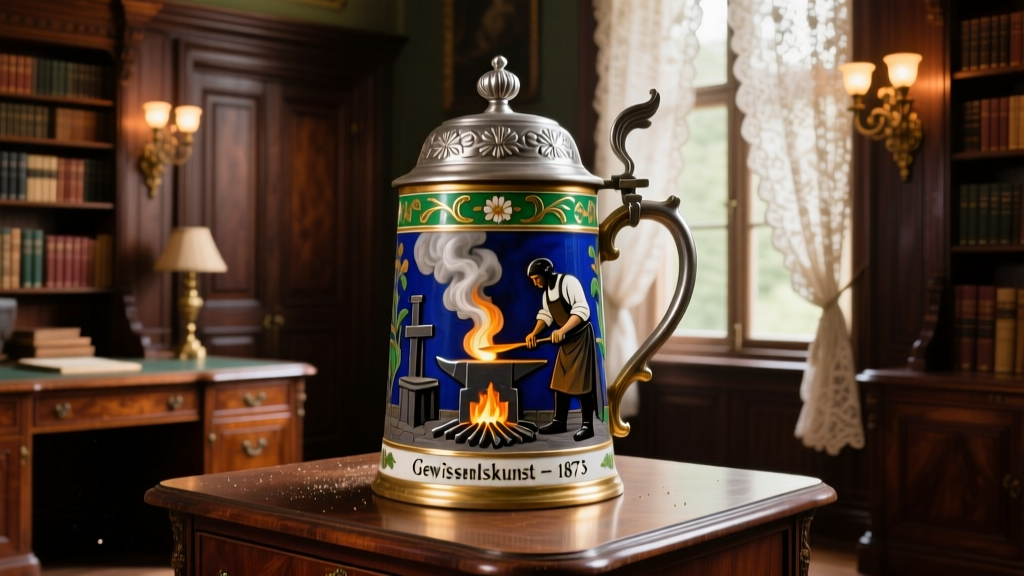
Steins Transfer Enameled Blacksmith 1 Large Scene Pottery Pewter Lid: Identification, Provenance, and Restoration Considerations

The 1973 Burger King 'Doll Advertising' Figure: A Rare 15-Inch Vinyl Collectible with Original Necklace
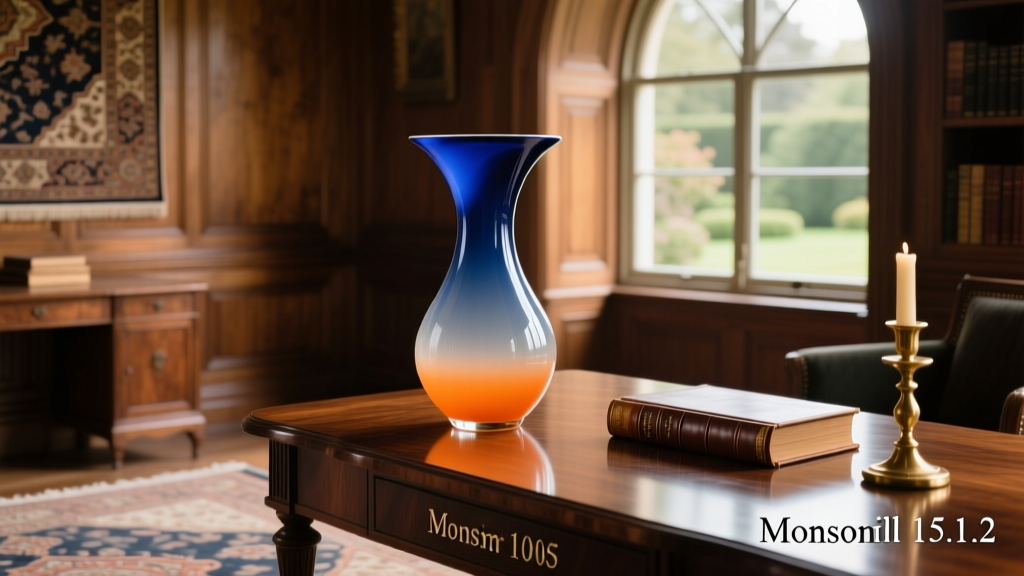
Studio Red Blue Rim Orange Base Flared Monson Ill 15½-Inch Glass Contemporary Vase: Design Analysis, Provenance, and Conservation Protocol
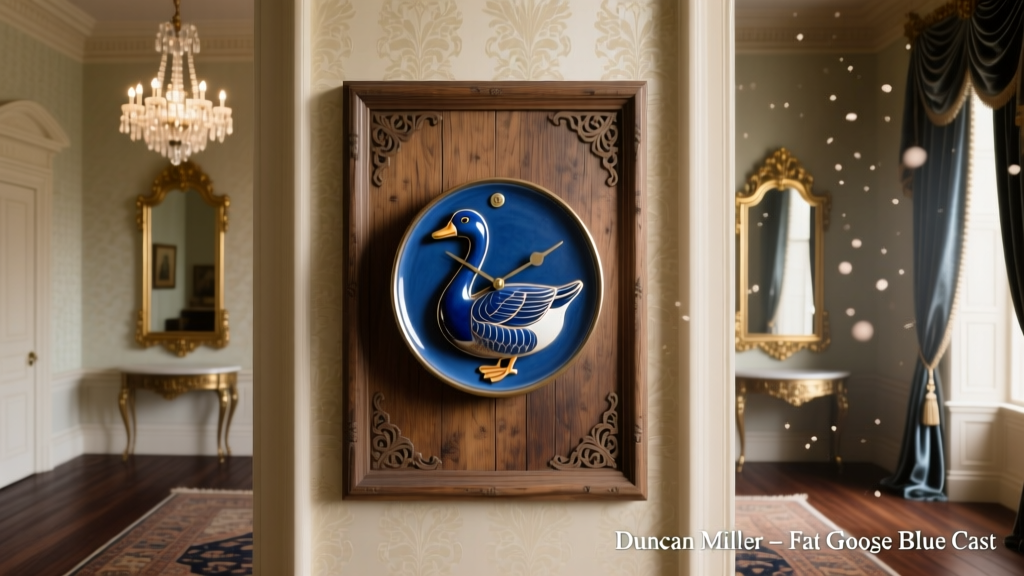
Duncan Miller Fat Goose Blue Cast Iron Trivet: A Collector’s Guide to the Iconic 6×6-Inch Design
Brass Cuspidor 'Havana Cigars 5 Cents Large': History, Identification, and Restoration of a Gilded American Artifact
Lefton Figurine Drummer No. 1796: Identification, Provenance, and Restoration Guidelines for Collectors
Toy Drum, Wood Veneer, Embossed Rims: The 10-Inch Battleship & Armored Cruiser Drum (c. 1932–1941)